Isaac Felt the Walls Heat When Esau Returned
Isaac feared he had blessed the wrong son. Then Esau stood in the doorway wailing that Jacob had once bought his birthright with a bowl of lentils.
Table of Contents
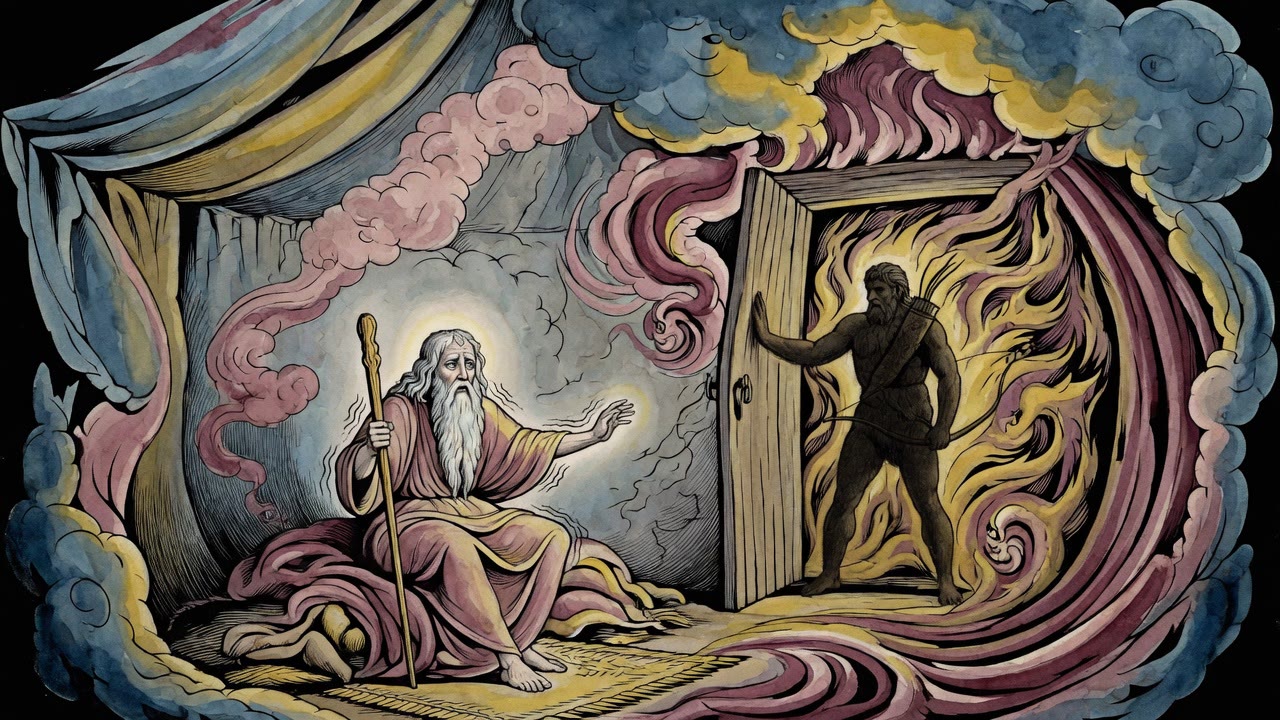
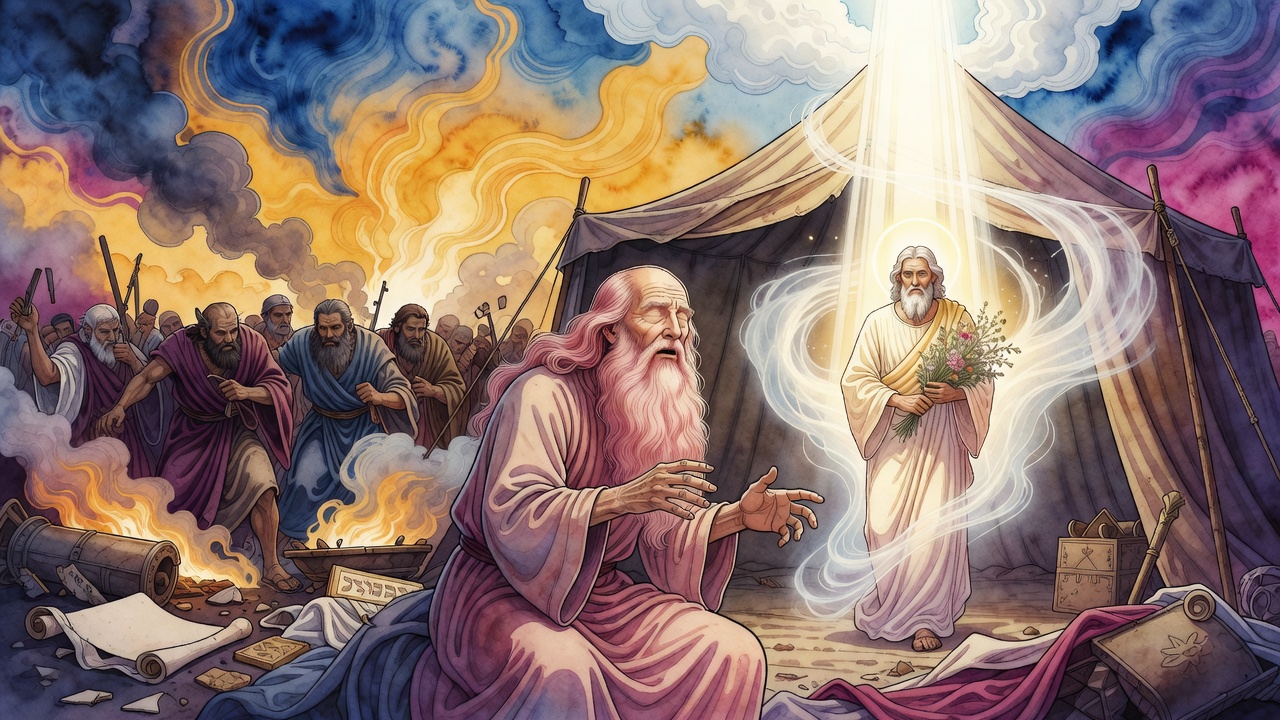
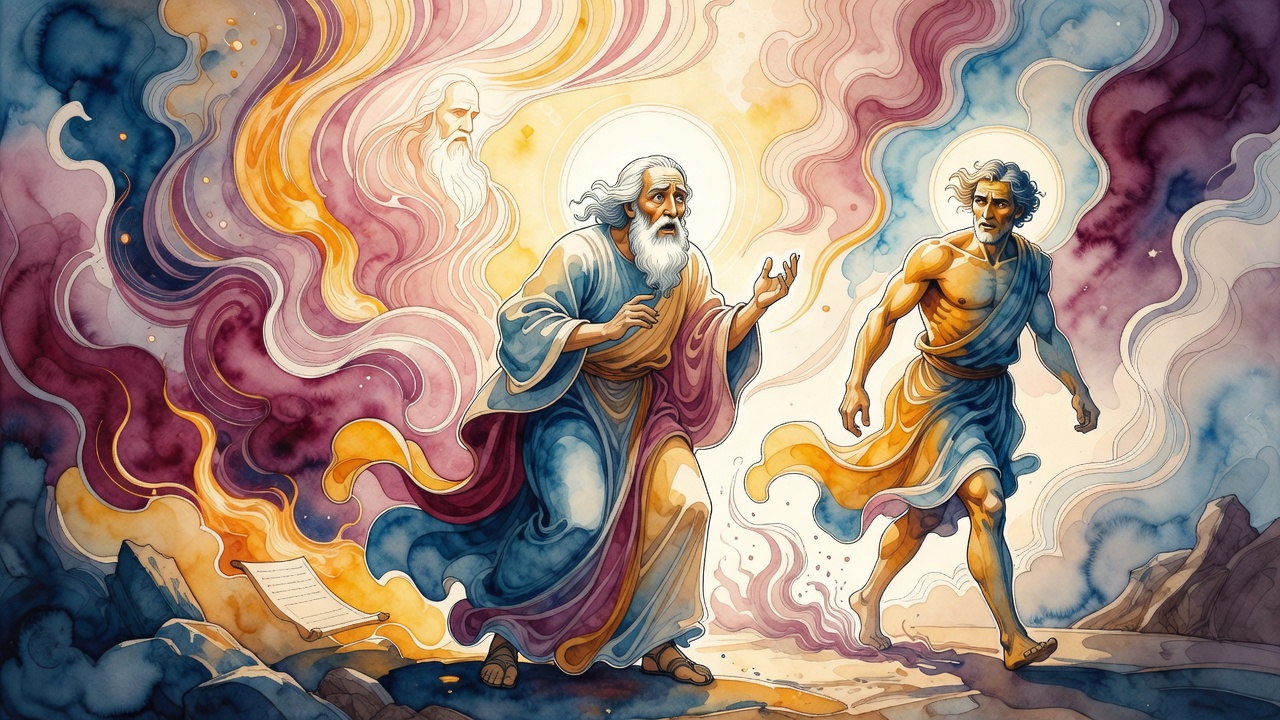
Isaac sat in the dim house and felt the air change before he saw the face. The walls warmed. Heat crawled along the plaster as if a forge had opened in the doorway. Esau stepped in from the hunt, and Gehinnom (גיהנום), the place of burning after death, clung to his heels like a second shadow. Isaac's blind eyes could not catch the shape of it, but his skin knew. The house itself seemed to flinch. Clay jars ticked as they expanded in the sudden warmth.
 Click for full size
He cried out, voice cracked with age and terror. "Who will be burnt down yonder, I or my son Jacob?" A divine voice answered without softening the image. "Neither thou nor Jacob, but the hunter." The fire was not for the tent of the covenant. It walked with the son who carried blood on his hands and hunger in his mouth. Isaac gripped the edge of his bed and waited for the next breath of heat.
The Meal That Tasted Like Every Desire
Isaac tried to steady himself by speaking of food. He told Esau of the meal Jacob had set before him earlier, meat so strange that every wish found its flavor. Bread if he wanted bread. Fish if he wanted fish. Locusts, flesh of animals, any dainty the tongue could name. It was a taste of Olam Ha-Ba, the world to come, sitting on a blind man's plate in a mortal kitchen. Each bite had answered a silent request before he finished forming it.
"I know not what the meat was," Isaac said. He only knew that desire had answered desire, dish after dish, without the ordinary limits of a single pot. Esau heard the word "flesh" and broke. He wailed that Jacob had once given him a thin bowl of lentils and taken the birthright in exchange. "What must he have taken from thee for flesh of animals?" The hunter who had walked in with Gehinnom (the realm of judgment after death) at his heels now measured his own old bargain against a meal he had never tasted. Spittle and fury mixed. The bow he had leaned by the door stayed unused while the old sale rose up to choke him.
The Blessing That Stopped Trembling
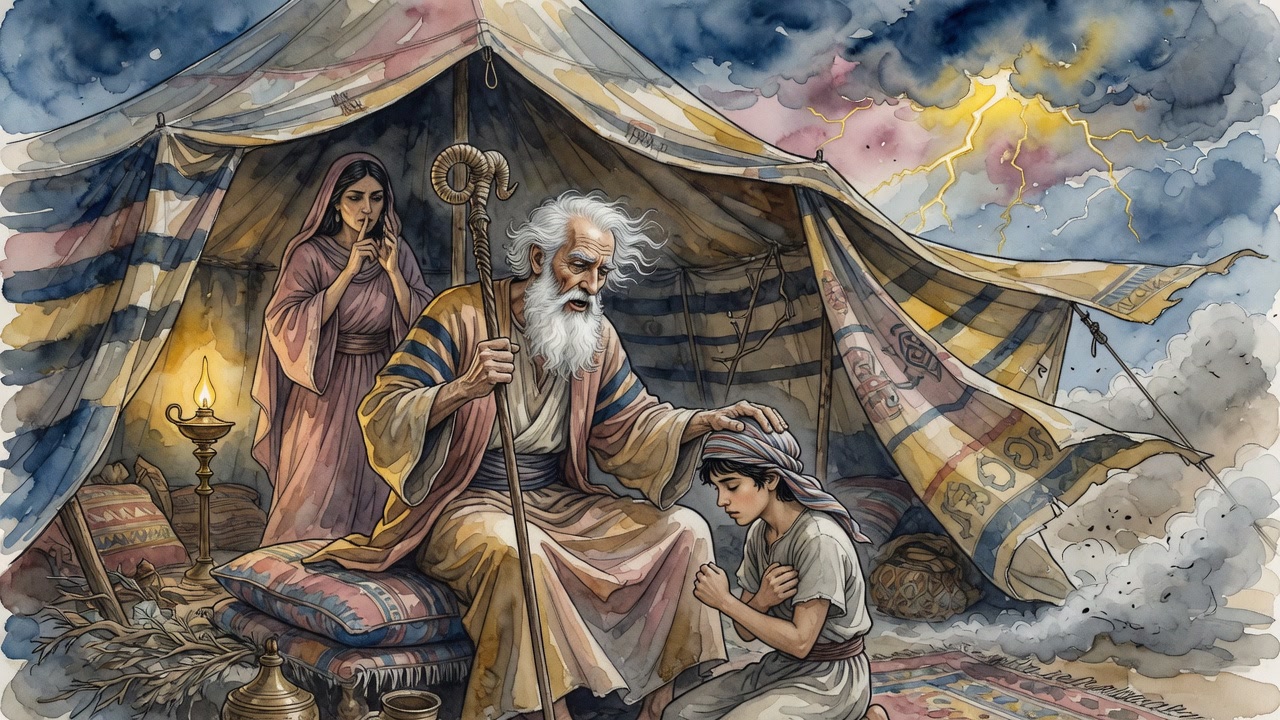
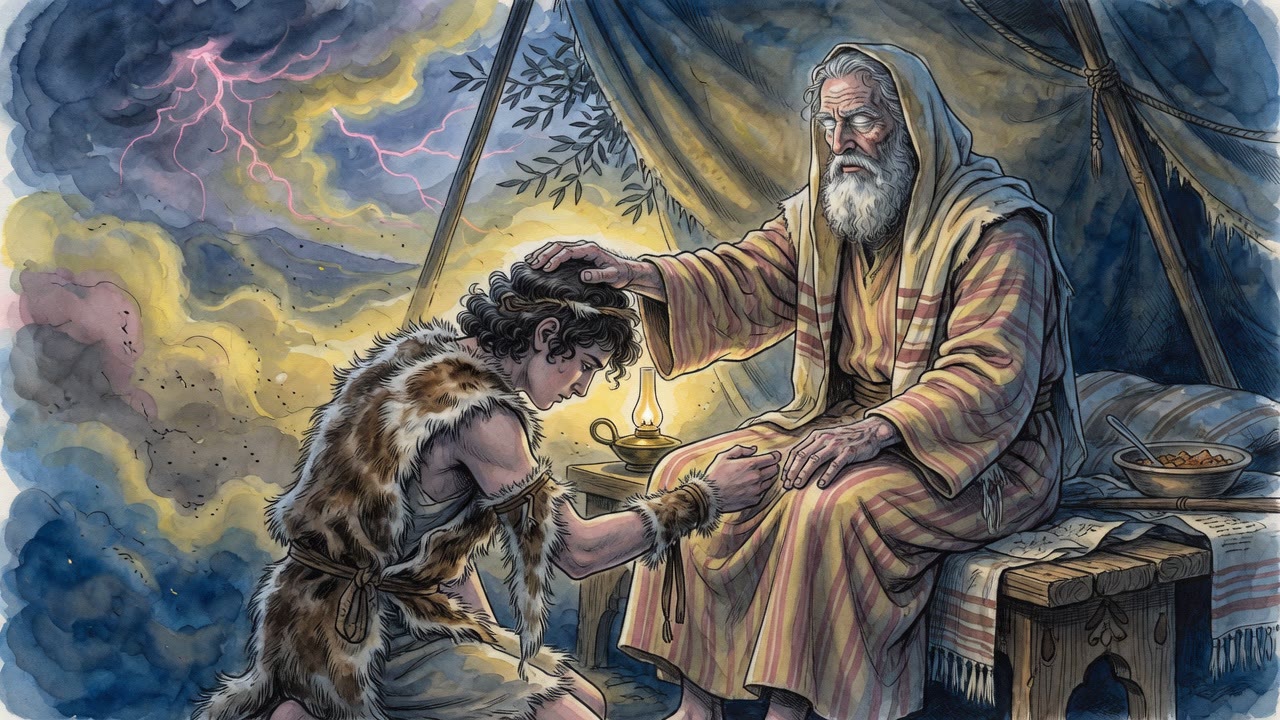
Until that hour Isaac had lived with a private torment. He had blessed the younger son while the elder was still in the field. Law and custom named Esau firstborn. A father could err. A blind man could be tricked. Isaac had feared he had poured the future into the wrong hands. Night after night the question returned: had the hands that once lay under a knife on Moriah now given away a birthright that was not his to reassign?
Esau's cry about the lentils changed the room again, not with heat this time but with clarity. The birthright had already moved by Esau's own mouth and hunger. Jacob had not only stolen a moment of disguise. He had held a title Esau had sold for a full stomach. Isaac straightened against the cushions. "I gave my blessing to the right one!" The words landed hard enough to still the servants in the outer room. The house still smelled of the other fire, but the doubt in Isaac's chest went out like a lamp pinched between fingers.
At Another Gate, Another Father
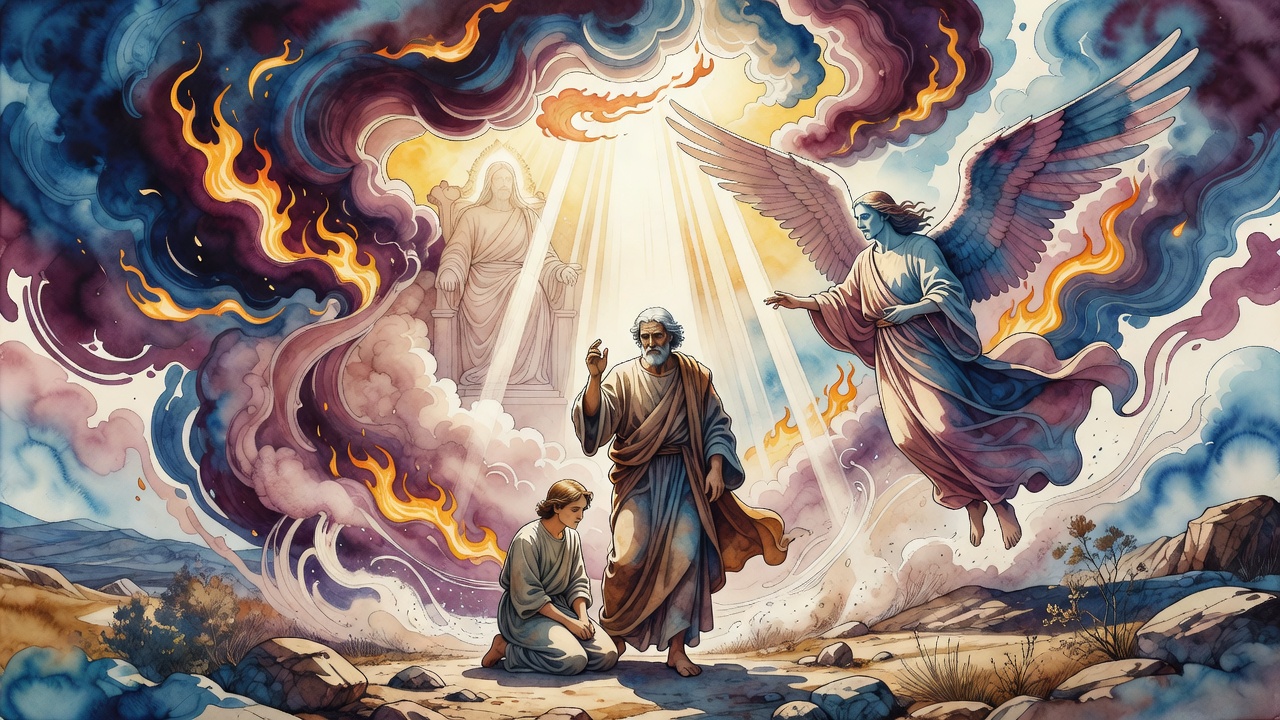
Far beyond that tent, the same household of covenant keeps a different post. Tradition places Abraham at the gates of Gehenna on the Day of Judgment, Yom haDin, watching who approaches the fire. Anyone who kept the covenant of circumcision, the brit milah, finds the patriarch seated there so that the flame does not take them in. The grandfather who once argued for Sodom still stands between burn and belonging, a body at a threshold instead of a theory about mercy.
In Hebron, where the Cave of Machpelah holds Abraham, Sarah, Isaac, Rebekah, Jacob, and Leah, a small Jewish community once fought over guests the way other towns fight over coin. Strangers who came to pray at the tombs were claimed as spoil of hospitality. Neighbors argued in doorways. The winner of the argument rejoiced as if he had found treasure, because a traveler fed under that roof continued the old open door Abraham had set when angels still walked the dust of Mamre.
Two Thresholds, One Line
Isaac's threshold heated when Esau returned. Abraham's threshold cools when a marked body approaches Gehenna. Between them runs the same stubborn line: the covenant does not treat every son the same, and fire is not a metaphor when it warms the walls. Esau carried Gehinnom into the house and left with a father's settled word against him. Jacob had already carried a taste of the world to come into the same house on a plate while his brother was still scraping game from the field.
Isaac's hands, which had shaken on the blessing, rested. The hunter stood in the heat of his own arrival. Outside, the field waited with its empty traps. Inside, the blind man no longer asked which of his sons the fire would claim. The voice had named the hunter. The lentils had named the sale. The walls cooled only when Esau turned to go, and the plaster stopped ticking as the heat withdrew with his steps.
← All myths