Jacob Asked God to Leave His Name Off Korah's Family Line
Numbers lists the rebel as Korah son of Yitzhar son of Kehat son of Levi, and stops there. The next name in that line should have been Jacob.
Table of Contents
 Click for full size
My World, My World
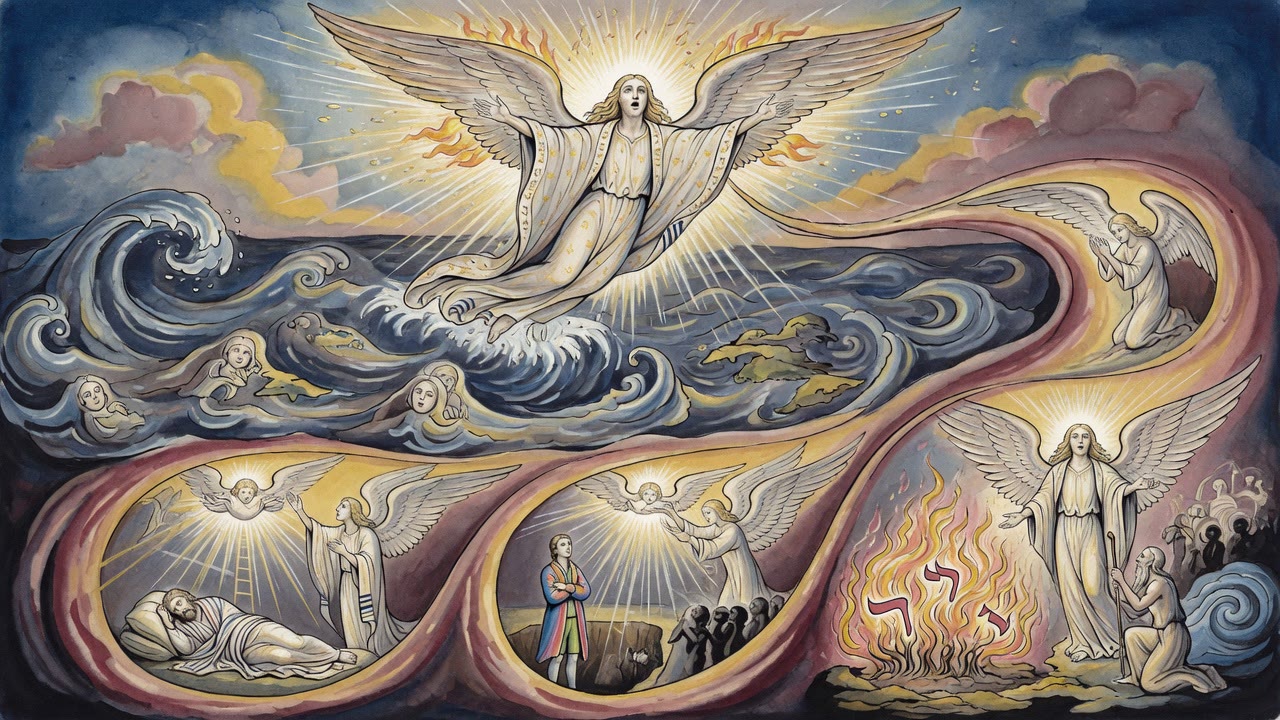
God turned and spoke to the world.
"My world, my world. Let me tell you who created you and who shaped you. Jacob created you. Jacob shaped you."
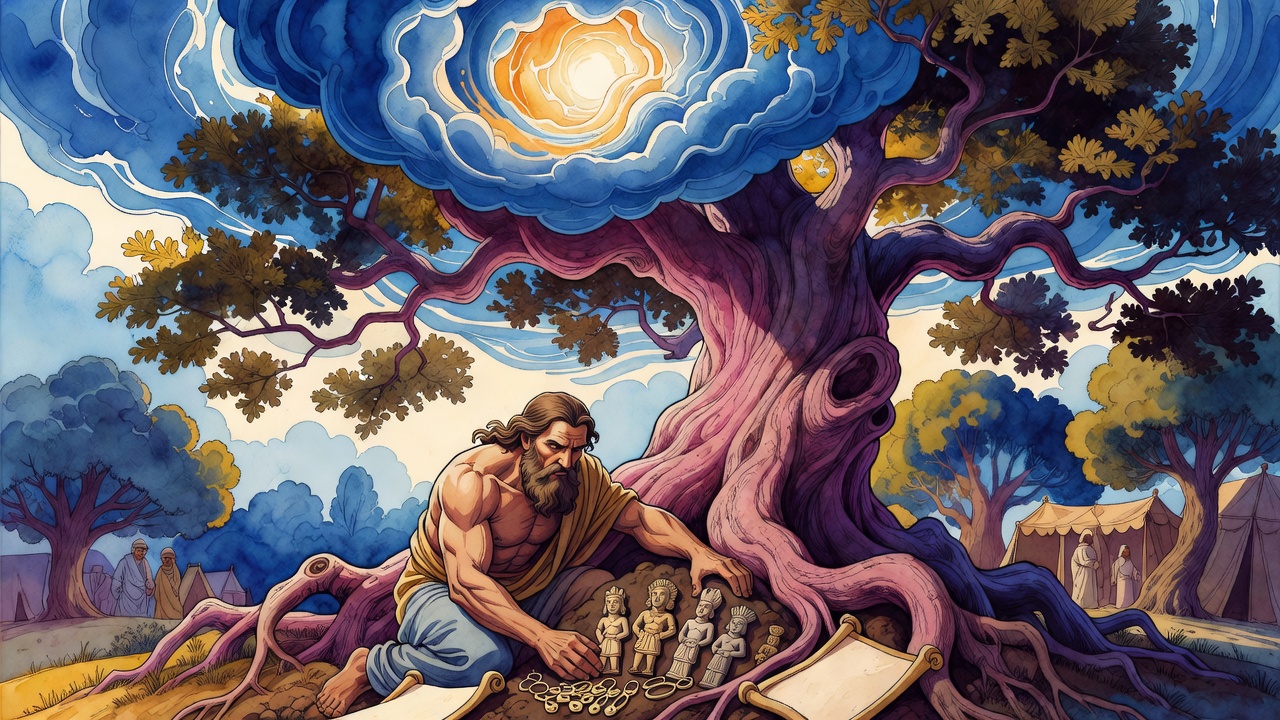
Behemoth, the beast that eats a thousand hills bare and finds them green again in the morning, was made for the sake of one man's merit, and Rabbi Levi named the man as Jacob. When Abraham was sentenced to Nimrod's furnace, God looked forward the way a king looks forward when he learns that the condemned man will one day father the queen, and let him walk out of the fire for the sake of a grandson who did not exist yet.
A name like that does not stop working when the man stops breathing. So he was careful, at the end, about where he let it go.
The Blessing He Stopped in the Middle
Egypt. The old man on the bed with his twelve sons around it, working down the line, giving each one what was coming to him.
He reached Levi and stopped.
"Let me not come into their council. Let my glory not be joined to their assembly."
He had seen two things standing far out in front of him, in a generation none of the men in that room would live to meet. Scouts, coming back from a country nobody had walked into yet, talking the nation out of it. And a quarrel inside Levi's own house that would split the camp.
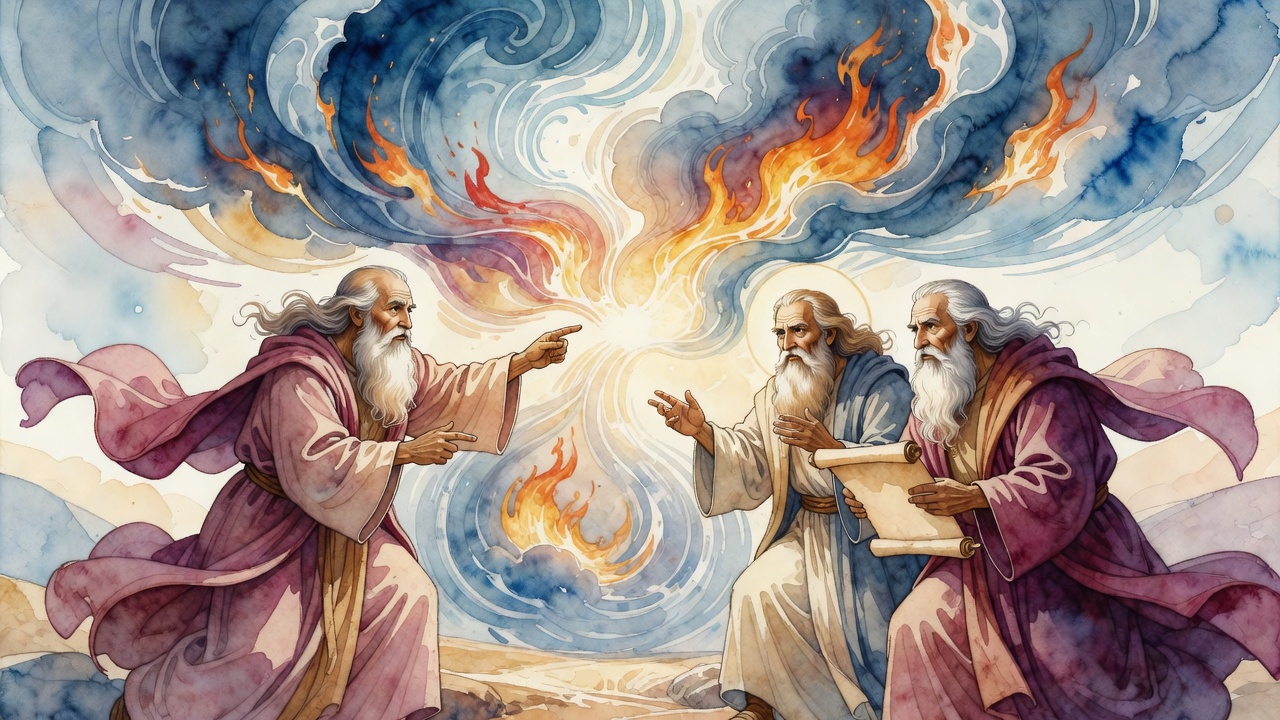
He took it straight to God from the bed. "Master of the universe. Not the spies, and not Korah's dispute. Do not let my name be said in the same breath as those men."
Then he named the terms for getting it back. "When their descendants are standing on the platform and somebody reads out their line, put me in it."
The Door His Name Held Shut in Egypt
He died and his name kept working.
As long as one man who had come down into Egypt with Jacob was still breathing, the Egyptians did not dare put the Hebrews to work. Not one brick. The last of them died and the door came off its hinges.
Even then Pharaoh dragged his feet. "Come and deal with this nation," his court told him, and he called them fools. "Up to now we have been eating what belongs to them. If not for Joseph none of us would be alive." They took the throne away from him for three months over it, and when he finally said, "Anything you want, I am with you," they gave it back.
The Roll Call With a Hole in It
The camp in the wilderness had an address system, and it decided things.
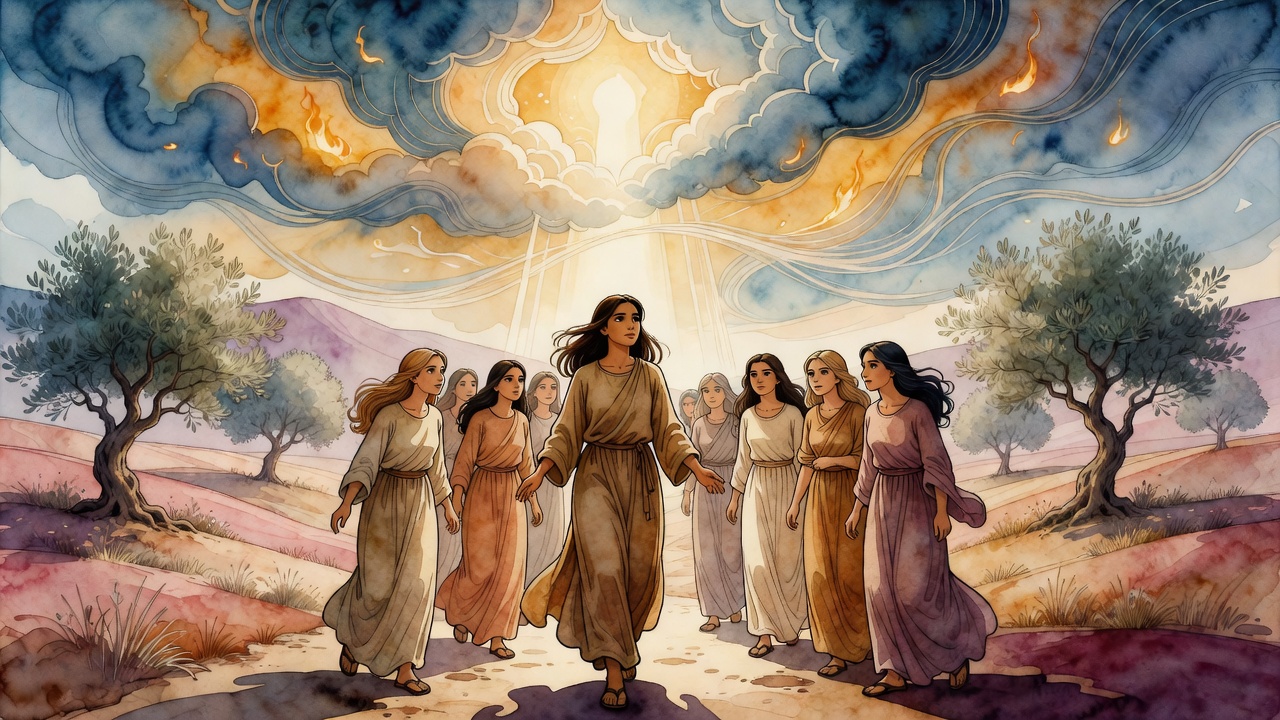
The families of Kehat pitched on the south side of the Tabernacle, and the banner of Reuben stood on the south with them, which put Datan and Aviram a short walk from Korah's tent flap. On the east side were Judah, Issachar, and Zebulun, and directly in front of the Tent of Meeting on that same east side were Moses and Aaron. The three tribes camped next to the Torah became the tribes that carried it. Judah produced the lawgivers, Issachar produced the men who understood the times, Zebulun produced the scribes. Datan and Aviram camped next to an argument. Woe to the wicked man, and woe to his neighbor.
When Korah stood up against Moses and the whole thing was finally written down, the record opened with his pedigree. Korah, son of Yitzhar, son of Kehat, son of Levi.
And it stopped there.
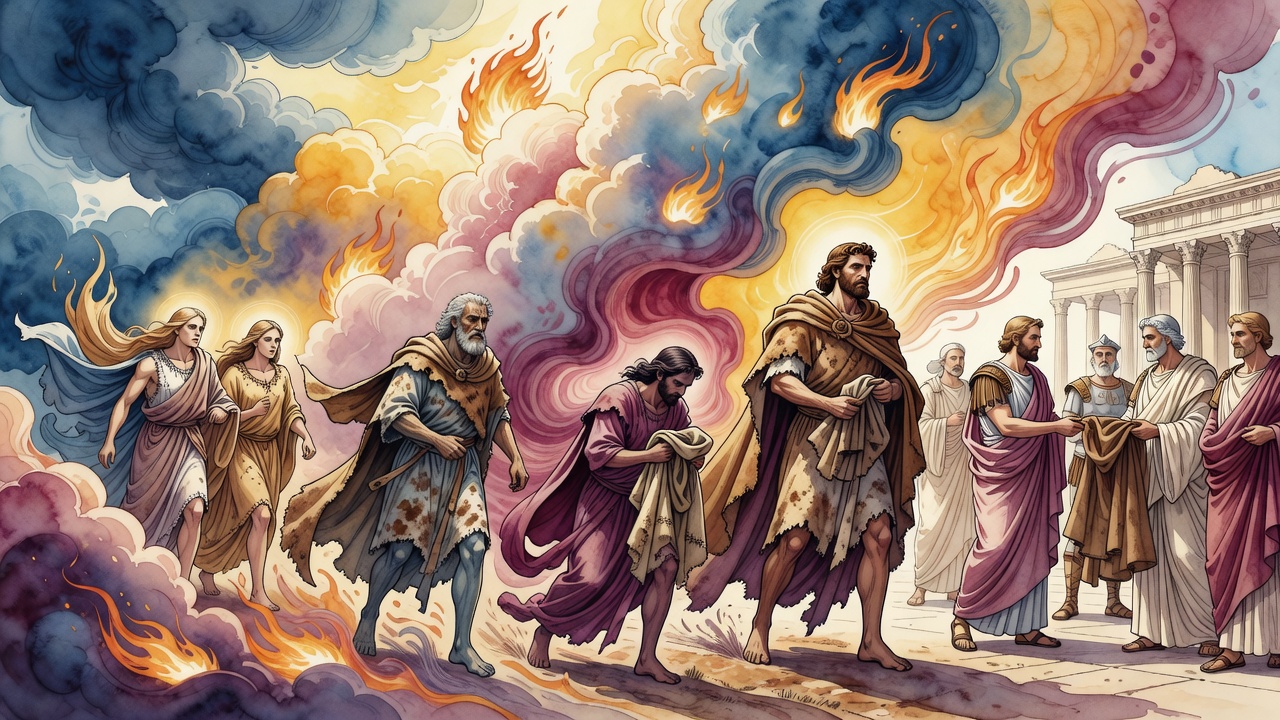
Every man who heard it knew the next name. Levi son of Jacob. A rebel who wanted to be remembered as a prince of Israel went into the book with his line cut off one generation short, and the ground opened under him and took him down, and Datan and Aviram went into the hole with him.
A King Took Off His Crown Over a Pile of Stones
Long before any of that, Jacob and Laban had piled up stones in a field between them and sworn over the heap. "Neither of us crosses this toward the other for harm." Rabbi Yohanan heard the word for setting up that pillar as the word for a man throwing a spear. It was a boundary and a threat in one gesture, and it said harm, which left commerce open.
Centuries later Joab marched north for David toward Aram Naharayim, and the Edomites came out and produced their document. "Enough of you going around this mountain. You are on your brothers' border." Then the Moabites produced theirs. "Do not besiege Moab." Joab sent word back to Jerusalem. "I cannot touch them, they have paper."
David took off the purple. He lifted the crown off his own head, wrapped himself in an ordinary cloak, and walked into the Sanhedrin like a man with a question.
"My masters. I came here only to teach. If you give me permission, I will teach."
Then he argued it. "They wave their documents at me, but who broke the fence first. Eglon of Moab gathered Ammon and Amalek against us. Moab sent for Balaam and paid him to curse us."
Stones raised in a field by two men who had been dead for four hundred years were holding an army on the road, and a king had to take his crown off to get past them.
The Name Came Back on the Platform
Korah's line did not end in the hole. His sons lived, and their sons after them, and generations later they were singers in the house of God.
When Chronicles lists them standing at their posts, it runs the pedigree all the way down without stopping. Son of Tahat, son of Asir, son of Evyasaf, son of Korah, son of Yitzhar, son of Kehat, son of Levi. Son of Israel.
The old man on the bed in Egypt had set the terms himself. Keep me out of the quarrel. Put me back in when they sing.
← All myths