Parshat Bo5 min read

Jacob Built Booths and Israel Built Them Again at Succoth

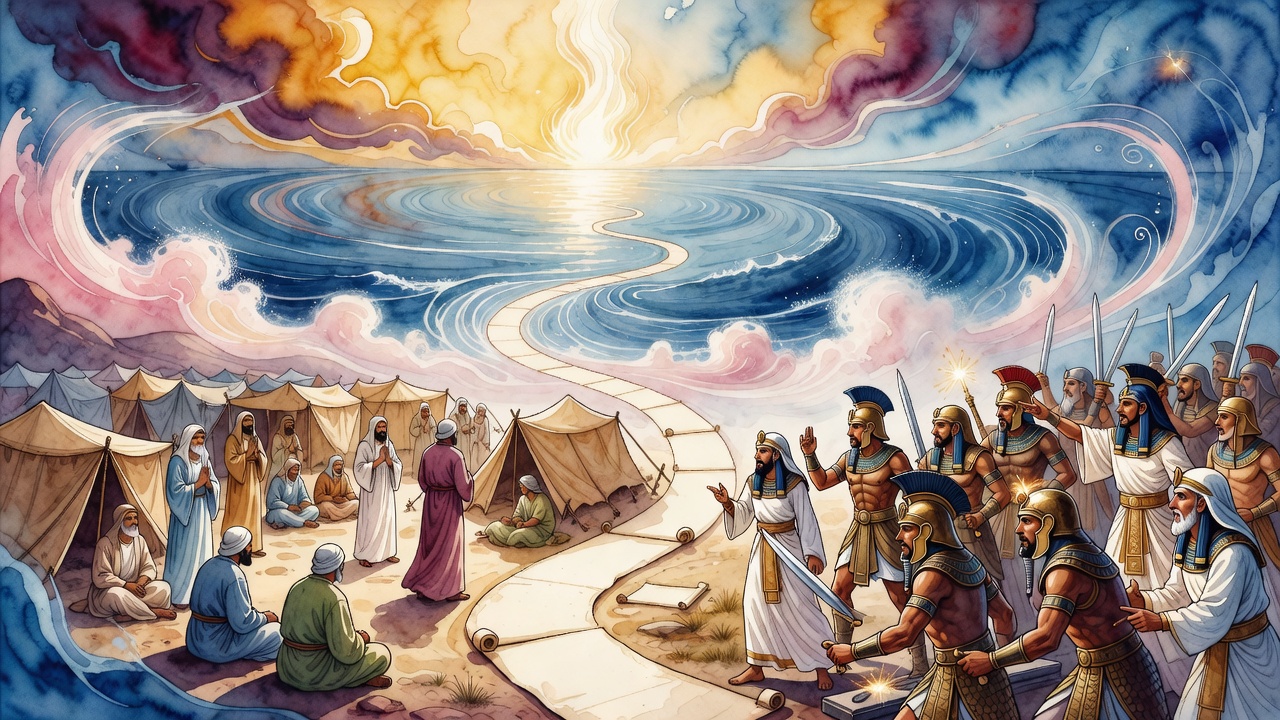
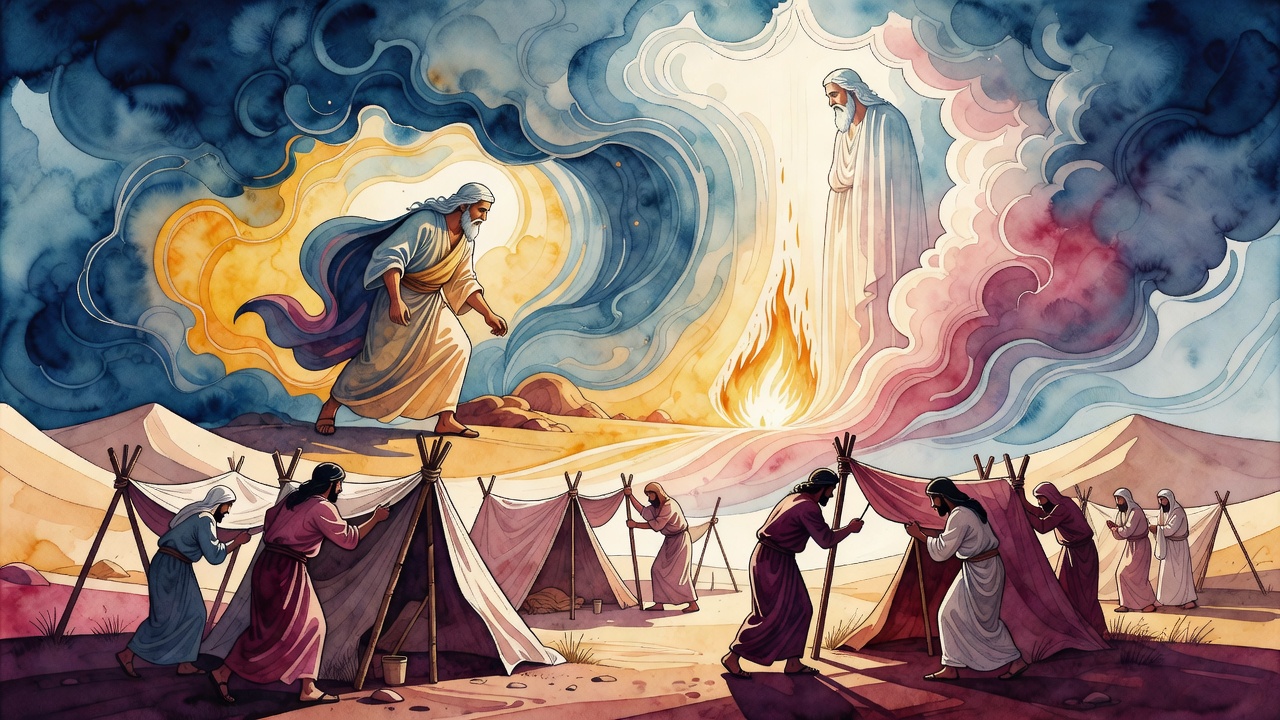
The first night out of Egypt, a man cut branches and leaned them into a frame nobody had measured for him. The roof leaked starlight.

Curated by Arthur · Told by Maggid ·
Table of Contents
  1. Walls That Belonged to Other Men
  2. The First Night Nobody Owned Them
  3. The King Who Asked Last
  4. A Day That Nobody Could Claim

Jacob crossed the river with a limp, and he met his brother, and when Esau offered to travel on with him he said no with as much courtesy as he could manage. So he stopped in open country instead, on ground with nothing built on it. He had children who needed shade and cattle that needed more, but he did not raise a house, because a house is a claim and he was in no condition to make one. He cut branches and made booths for the livestock, and the place took the name of the work he did there: Succoth (Genesis 33:17).
Jacob Built Booths and Israel Built Them Again at Succoth Click for full size

Walls That Belonged to Other Men

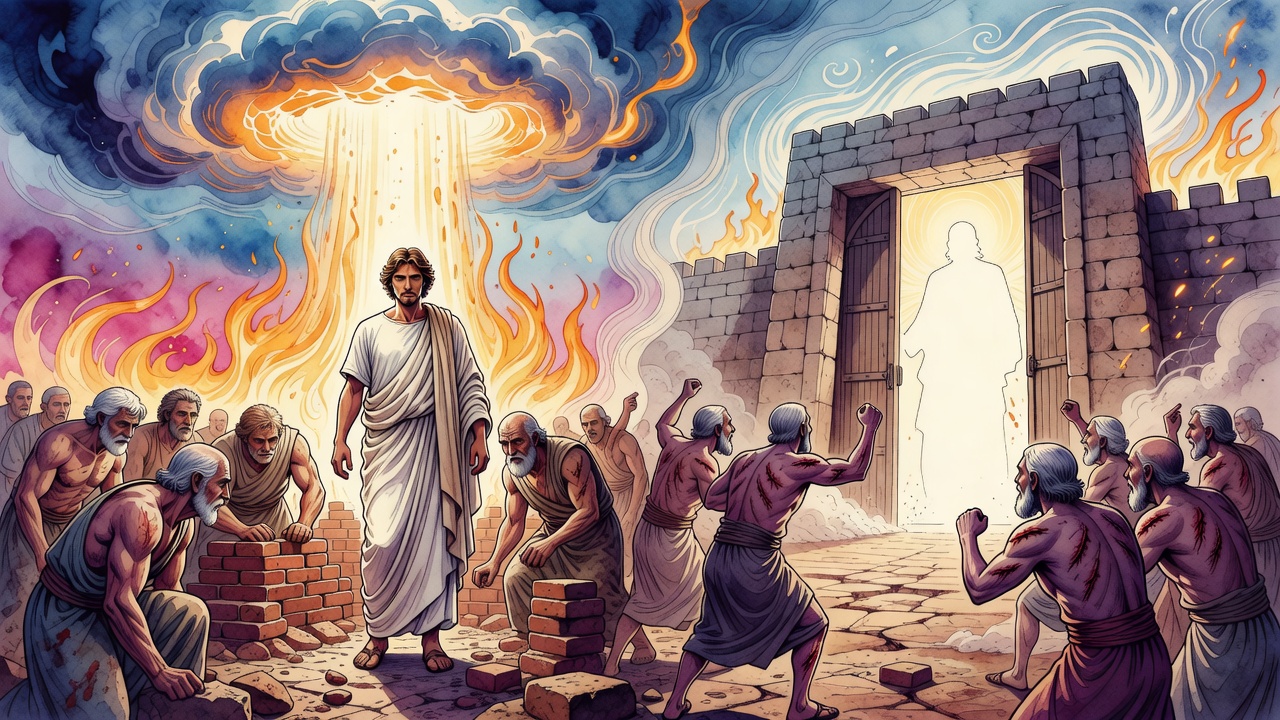
His great-grandchildren laid brick in Egypt, and not one course of it was theirs. A man who builds all day and sleeps where he is told stops thinking of a wall as shelter and starts thinking of it as a measurement of somebody else's wealth, so when the night finally came and the order was to go, they carried dough that had not risen and walked out of Rameses with nothing on their backs that an overseer had assigned them.

The first place they stopped was called Succoth (Exodus 12:37).

The First Night Nobody Owned Them

One of them went out with a knife at dusk to cut branches, and his hands did not know what to do at first, because every wall he had ever raised had gone up on another man's order and to another man's line. Nothing here was measured. He cut what he could reach, dragged it back, and leaned it into a frame that would have been laughed at in the brick yards. The roof leaked starlight. The wall was a suggestion. It took him less than an hour, and when he crawled in under it and his children crawled in after him, the thing above their heads was his.

He did not invent the shape. The name of the ground had been waiting for four generations, since a frightened man with a limp had once cut branches on country like this for his cattle and left the word behind him.

The King Who Asked Last

Nobody had asked him for his loyalty yet. That came at the end, after everything else, and he was there for all of it. He walked between the standing walls of the sea with dry sandals while the chariots behind him did not come out the other side. He went out in the grey mornings after that and gathered bread off the desert floor that had not been there the night before. He drank from Miriam's well when there was no water in that country, ate quail when the meat gave out, and stood with a spear against Amalek when Amalek came for the stragglers.

Only then did the offer come: "I will rule over you."

There was a gap before the answer, and in that gap he thought about the overseer's list and the man who used to own his mornings, because that was the only kind of rule he had ever lived under, and rule had always meant a hand on the back of his neck. Then he counted the order of things again. The sea had come first, and the bread, and the water, and the meat, and the spear. He said yes, and then he said it again, and everyone standing near him said it twice as well.

A Day That Nobody Could Claim

Later the seventh day came to him as a gift and not as a schedule. It was a holy day and a day of the holy kingdom, and it was given to Israel to eat on, to drink on, to be filled with joy on, and to cease from all the work that men do. Frankincense still went up and the offerings still went before the Lord on it, because ceasing was never the same thing as having nothing to bring, and the smoke stood in for the camp day after day as a memorial that pleased Heaven.

He ate sitting down on those days. In Egypt a man ate standing, because the work was waiting and the work belonged to somebody else. The branches he had cut at Succoth had kept off almost no weather, and the seventh day kept off almost no trouble, and he slept under both of them with nothing owed in the morning.


← All myths
From the tradition

Sources

3 sources

The texts behind this telling. Some cards carry a translation of the source; others are our own retelling of it, and each card says which. Every card links out to the original.

Mekhilta Tractate Pischa 14:3Mekhilta DeRabbi Yishmael

Retold in our words. Read the original at the link below.Mechilta, translated by Rabbi Shraga Silverstein · CC-BY

The Mekhilta, the tannaitic midrash on Exodus, takes up a question about the Israelites' first stop after leaving Egypt: a place called Succoth. "And they traveled from Rameses to Succoth" (Exodus 12:37). But what was Succoth? The rabbis disagree about whether this was a literal place name or a description of what the Israelites built there.

Rabbi Eliezer argues that "succoth" should be understood literally, as "booths." The Israelites arrived at this location and constructed temporary shelters, just as their ancestor Jacob had done centuries earlier. The proof text comes from (Genesis 33:17): "And Jacob traveled to Succoth, and for his cattle he made succoth (booths), for which reason the place was named Succoth."

Rabbi Eliezer's reading creates a powerful parallel between Jacob and his descendants. When Jacob fled from his brother Esau and settled temporarily at Succoth, he built booths for his livestock. Generations later, when Jacob's descendants fled from Egypt, they arrived at the same kind of place and did the same thing, erected temporary structures for shelter.

The name Succoth thus carries a family memory. It connects the Exodus to the patriarchal period, linking the national liberation to the personal journey of Jacob himself. The first act of the newly freed Israelites, building booths, echoed what their forefather had done when he too was a refugee seeking safety. Freedom began, as it had for Jacob, with the simplest form of shelter.

Full source
Mekhilta Tractate Bachodesh 5:2Mekhilta DeRabbi Yishmael

Retold in our words. Read the original at the link below.Mechilta, translated by Rabbi Shraga Silverstein · CC-BY

Before God ever asked Israel to accept His kingship, He proved Himself through action. The Mekhilta lays out the sequence with deliberate precision, and the order matters.

First, God took Israel out of Egypt. He shattered the most powerful empire on earth to free a nation of slaves. Then He split the sea, turning an impassable barrier into dry land while the pursuing Egyptian army drowned behind them. He brought down manna from heaven, bread that appeared fresh every morning on the desert floor, feeding an entire nation in a place where no food could grow. He raised the miraculous well of Miriam, a source of water that followed the Israelites through the wilderness. He sent quail when they craved meat. And He waged war against Amalek, the first nation to attack Israel after the Exodus.

Only after all of this, after liberation, miracle, sustenance, water, food, and military protection, did God say to them: "I will rule over you."

They responded: "Yes! Yes!"

The double affirmation is not accidental. The Mekhilta presents a model of legitimate sovereignty. A ruler does not demand allegiance first and deliver benefits later. God demonstrated His worthiness through deeds before asking for a single thing in return. The covenant at Sinai was not imposed on an unwilling people. It was offered to a nation that had already witnessed, firsthand, what their King could do. Their "Yes!" was not coerced. It was earned.

Full source
Book of Jubilees 50:14Book of Jubilees

Retold in our words. Read the original at the link below.Sefaria Community Translation · CC-BY

The Book of Jubilees, an ancient Jewish text that expands on the Torah, gives us a glimpse. It paints a picture of a day so special, so infused with the divine, that it forever alters the rhythm of life for Israel.

A day not just of rest, but of profound honor. A day where the Lord bestows a gift upon Israel: to eat, to drink, to be filled with joy, and to cease from all the usual toils of humanity. That’s what the Book of Jubilees describes. It's a vision of a "holy day, and a day of the holy kingdom," a day eternally etched into the calendar of Israel.

What does this rest really entail? Is it simply a cessation of all activity? The Book of Jubilees clarifies: not entirely. There’s an exception, a sacred duty that even transcends the usual Sabbath restrictions: "burning frankincense and bringing oblations and sacrifices before the Lord for days and for Sabbaths." Even on the most sacred of days, there’s still a call to connection, to offering, to acknowledging the divine presence. This offering isn’t a burden, but a privilege, a pathway to atonement.

This ritual act, performed within the sanctuary of the Lord, serves a vital purpose: "that they may atone for Israel with sacrifice continually from day to day for a memorial well-pleasing before the Lord." It’s a constant, unwavering act of devotion, a way to ensure that God receives them always, day after day, according to the divine commandment.

About the balance between rest and action, between ceasing our own labors and actively engaging with the divine. This passage from the Book of Jubilees invites us to consider what it truly means to make a day "holy," not just by what we abstain from, but by what we actively offer. It encourages us to see our actions, even on days of rest, as opportunities to create a "memorial well-pleasing before the Lord." What kind of "memorial" are we building with our days, holy or otherwise?

Full source