Jacob Tried to Kill Joseph's Dream Aloud
Joseph told of sun, moon, and stars bowing. Jacob rebuked him because Rachel was dead. Heaven answered that soft prophecy breeds later mouths that silence…
Table of Contents
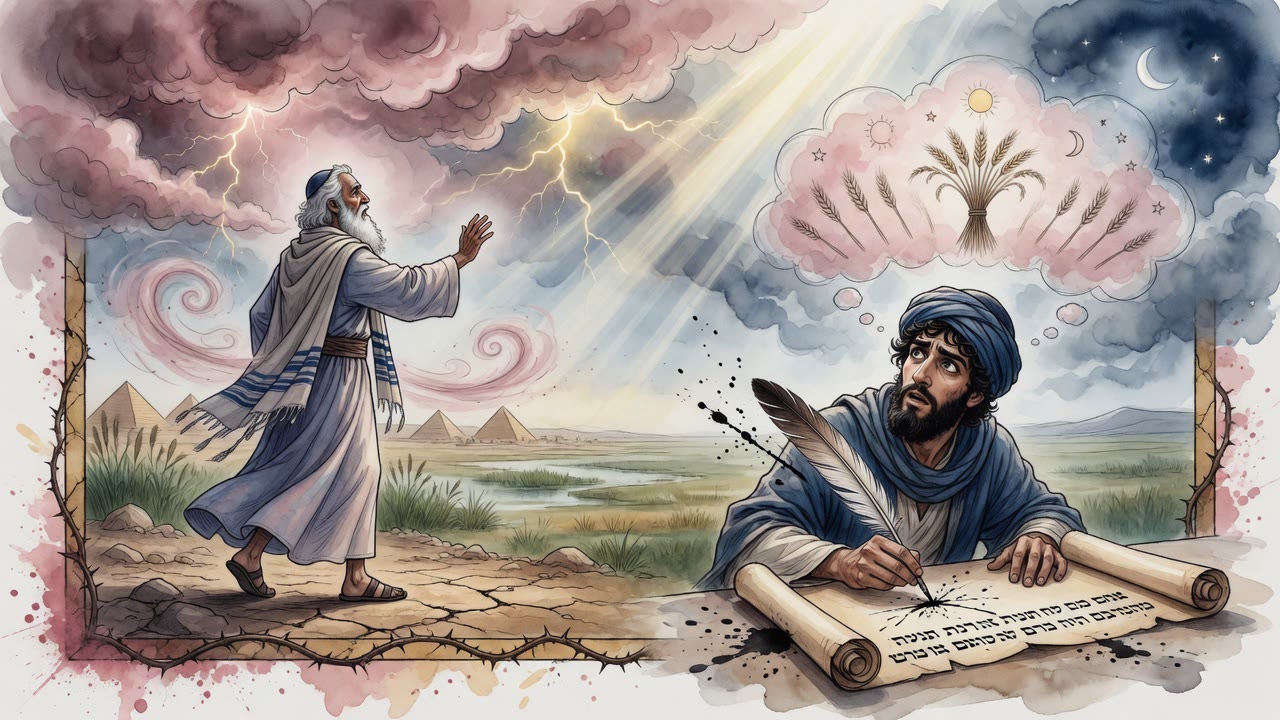
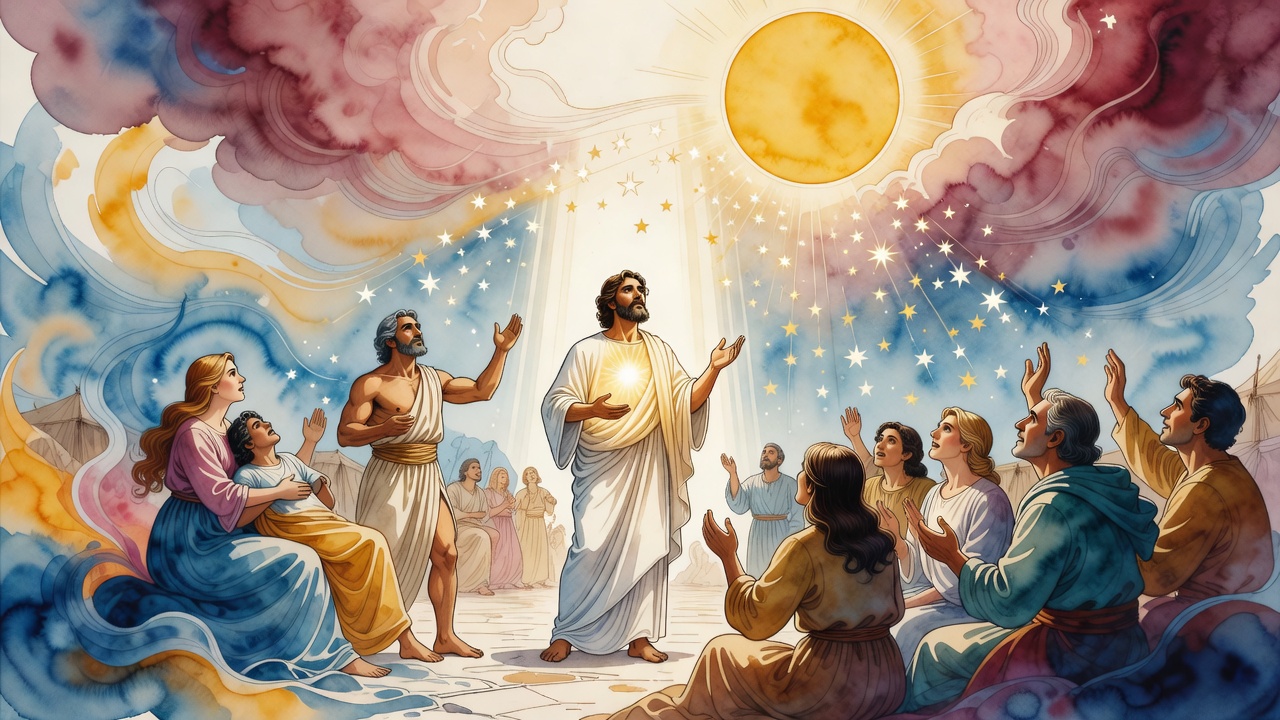
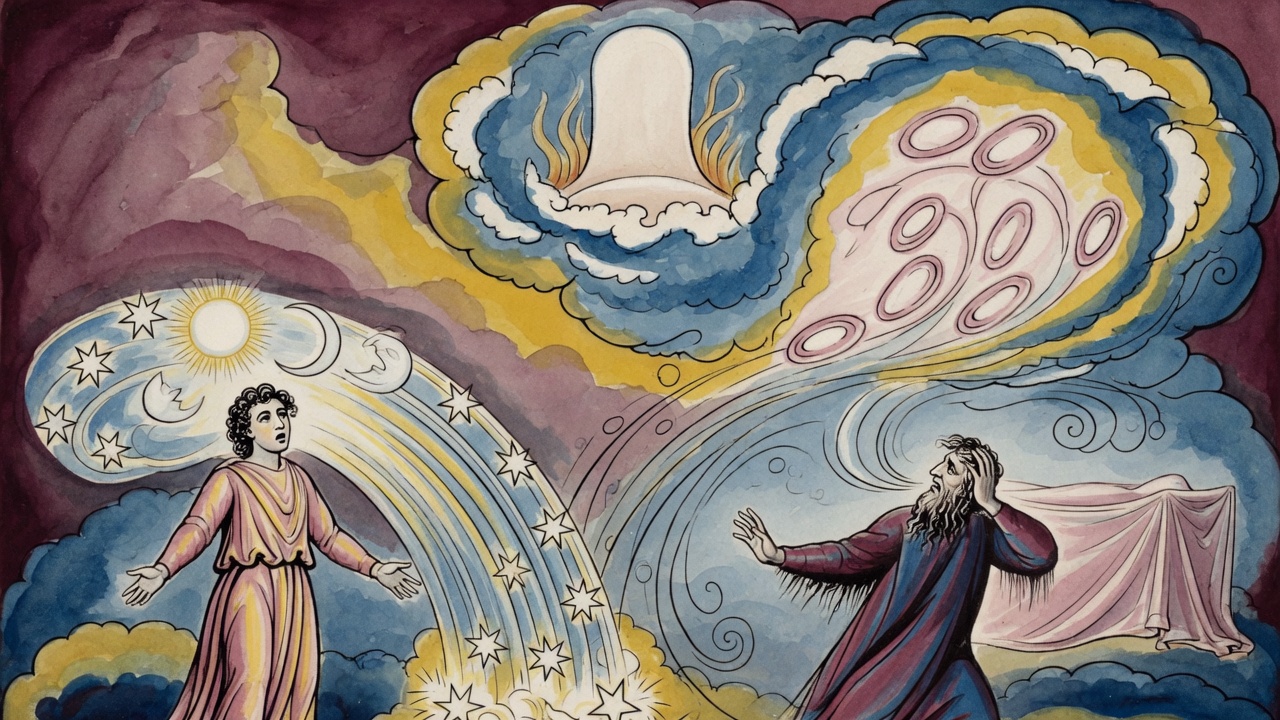
Joseph stood in his father's tent with the dream still bright behind his eyes and no lock on his mouth. He told the brothers. He told Jacob. Sheaves had already bowed in an earlier night; this time the sky itself bent. Sun, moon, and eleven stars bowed to him (Genesis 37:9). The room did not applaud. Heat climbed the brothers' necks. Jacob heard the moon in the dream and reached for the one fact that could kill the vision in public.
 Click for full size
"I and your brethren, that makes some sense," Jacob said. "But I and your mother? That's inconceivable, for your mother is dead."
The rebuke landed like a hand on a boy's face. Rachel was in the ground on the road to Ephrath. The moon could not bow if the mother was bone. Jacob made the logic clean so the brothers might cool. He failed. They hated Joseph more, not less, because even a softened reading still smelled like a throne.
Heaven Heard the Softening
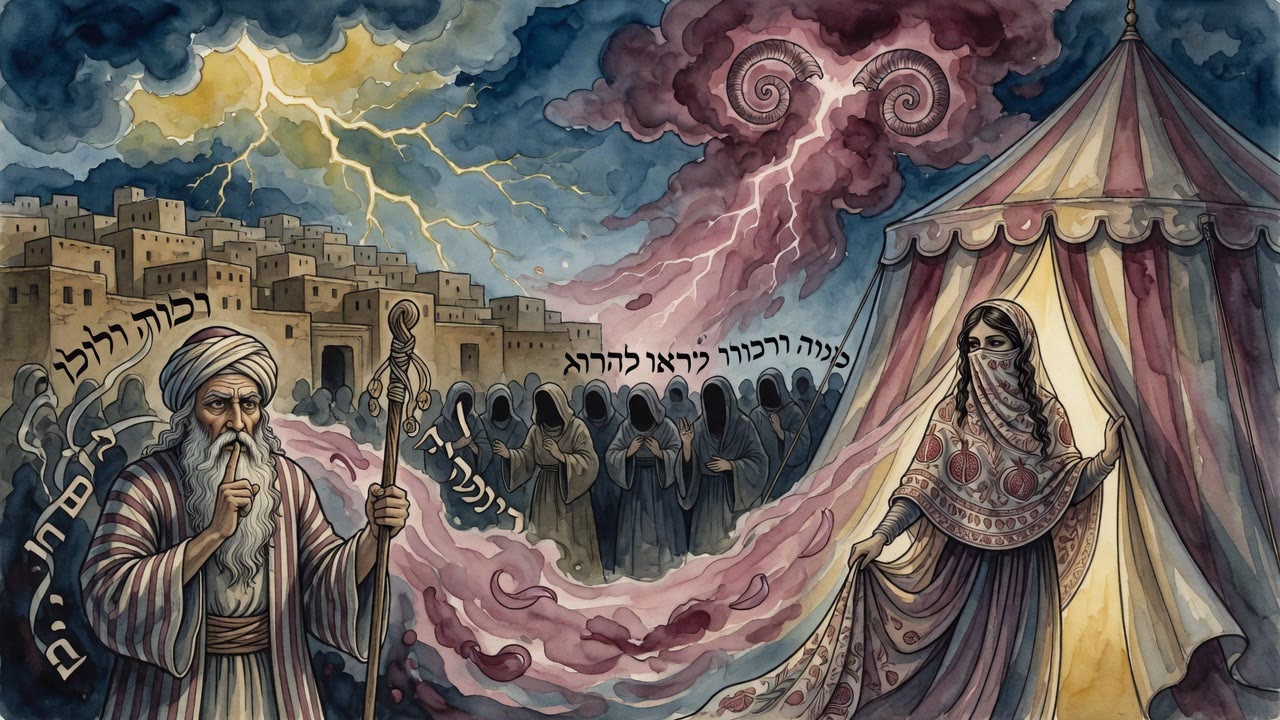
God did not thank Jacob for the parental rescue. The rebuke drew a divine rebuke of its own. Softening a true dream trains a line of mouths that will later try to stop Jeremiah from delivering hard prophecy. A father who kills a vision to keep peace teaches descendants that peace is worth more than a word from above. Jacob had meant to shield Joseph from envy. Heaven heard a precedent for silencing seers.
Jacob knew, under the performance, that the dream held weight. He had recorded his own dreams in other nights and recognized the family grammar of heaven's speech. He chose the wrong tool anyway: public doubt as safety. The brothers envied on. The coat still burned their eyes. The pit still waited a few bad decisions away. A softened sentence does not unmake a future that God has already written in sleep.
Joseph left the tent with his dream intact and his father's cover story stuck to it like a cheap patch. The patch would not hold. Egypt was already practicing its hunger for a Hebrew who would read kings' nights.
Why Rachel Stayed on the Road
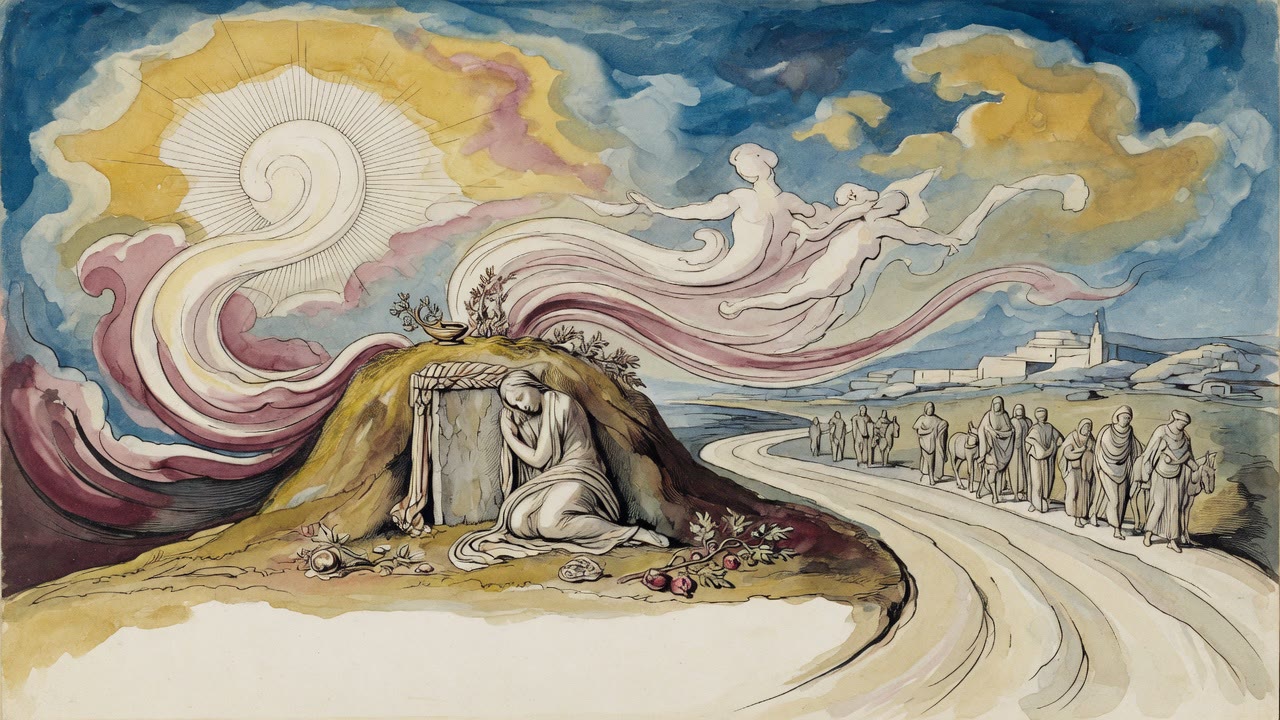
Rachel had died giving birth to Benjamin and was buried on the road to Ephrath, Bethlehem, not in the cave of Machpelah with Abraham, Sarah, Isaac, and Rebekah (Genesis 35:19). Jacob's choice of roadside ground was not poverty of feeling. He foresaw exile. He saw descendants driven toward Babylon with dust in their throats and no strength left for long prayers. They would pass Rachel's grave. She would rise in intercession when living mouths failed, weeping for her children until mercy moved.
The mother Jacob had used as a logical block in Joseph's dream was the same mother planted as a permanent plea on the exile road. Dead for the moon argument. Alive for the long rescue. Jacob could silence a boy's vision for an hour. He could not silence Rachel's future crying when columns of captives walked her path.
After her death he kept a couch in the tent as memorial. When he moved Bilhah's couch into that space, Reuben took it as insult to Leah and swapped the beds. Asher told the brothers. They froze Asher out as an informer until Reuben confessed. Grief made the household clumsy. Loyalty turned into furniture wars. The dream of bowing stars did not pause for any of it.
A Diviner Points at a Hebrew Child
In Egypt another night-reader took the opposite tack from Jacob. A king woke troubled. Balaam stood ready with old interpretations and fresh poison. He reminded the king of a prior dream Balaam himself had read, then pointed at a Hebrew child filled with the spirit of God. Do not dismiss him for his age, Balaam warned. Wisdom sits in him. He has chosen Egypt through understanding. Then the wider smear: this is the manner of all the Hebrews, to deceive kings and magnates, to make the thrones of the earth stumble.
Where Jacob had tried to shrink a dream to protect a son, Balaam inflated a child's gift into a racial threat to protect a throne. Same raw material: a Hebrew who hears heaven. Opposite weapons. One softens for family peace. One hardens for court fear. Joseph would grow into the man both instincts circled, the dreamer brothers hated and the interpreter kings would need, the boy Balaam's type of mouth would brand as danger before he ever stood in linen at Pharaoh's side.
Balaam's counsel dripped into a room already wet with anxiety. A child became a symbol. A people became a plot. The Accuser's work on earth often sounds like prudence in a royal ear.
What Would Not Stay Buried
Joseph's brothers sold him anyway. The dream did not ask their permission. Years later they bowed in Egypt without knowing the face, sheaves completed in a grain office, stars completed in a famine. Jacob who had said the moon was impossible would come down and bow too, in the long math of survival. Rachel's roadside bones still waited for the exile she would greet with tears. Balaam's style of warning would outlive Balaam, always ready to turn a gifted Hebrew into a crisis.
In the tent that started it, a boy had spoken a sky. A father had tried to talk the sky down. Heaven had marked the attempt as training for future silencers. What changed for good was not the sale and not the throne. It was the moment Jacob chose a dead mother's logic over a living dream, and God refused to let that choice become the family method for handling hard truth.
Joseph kept the dream behind his teeth after that day more carefully, and still it leaked through every coat, pit, and prison until Egypt itself had to bow to a reading. The moon Jacob removed from the sentence returned as Rachel on the road, still in the story, still bending the future toward mercy when the children finally walked past her name in chains.
← All myths