Parshat Vayigash5 min read

Joseph Hid a Goblet and Judah Would Not Leave

Joseph planted his silver cup in Benjamin's sack, offered the rest peace, and watched Judah refuse a road home that left Rachel's last son in chains.

Curated by Arthur · Told by Maggid ·
Table of Contents
  1. Keep the Boy, Go Home in Peace
  2. Judah Names the Father and the Dead Brother
  3. Come Near and Examine Me
  4. A Message for the Old Man

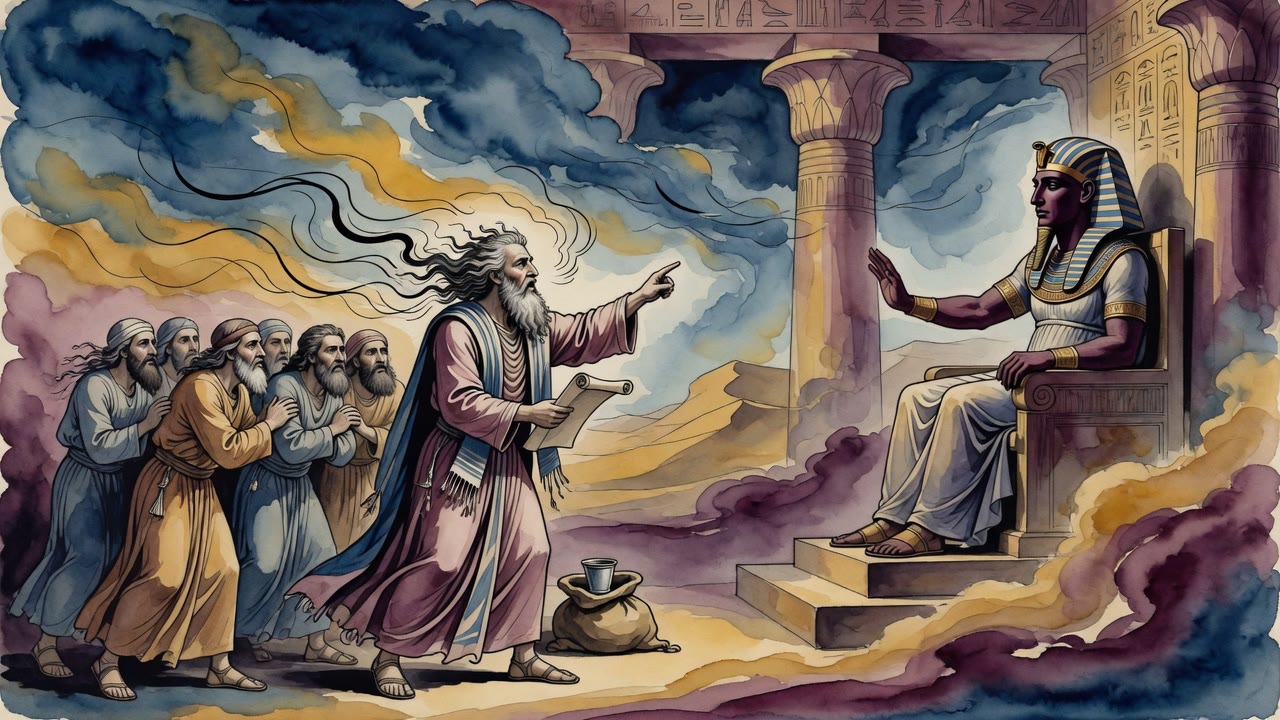
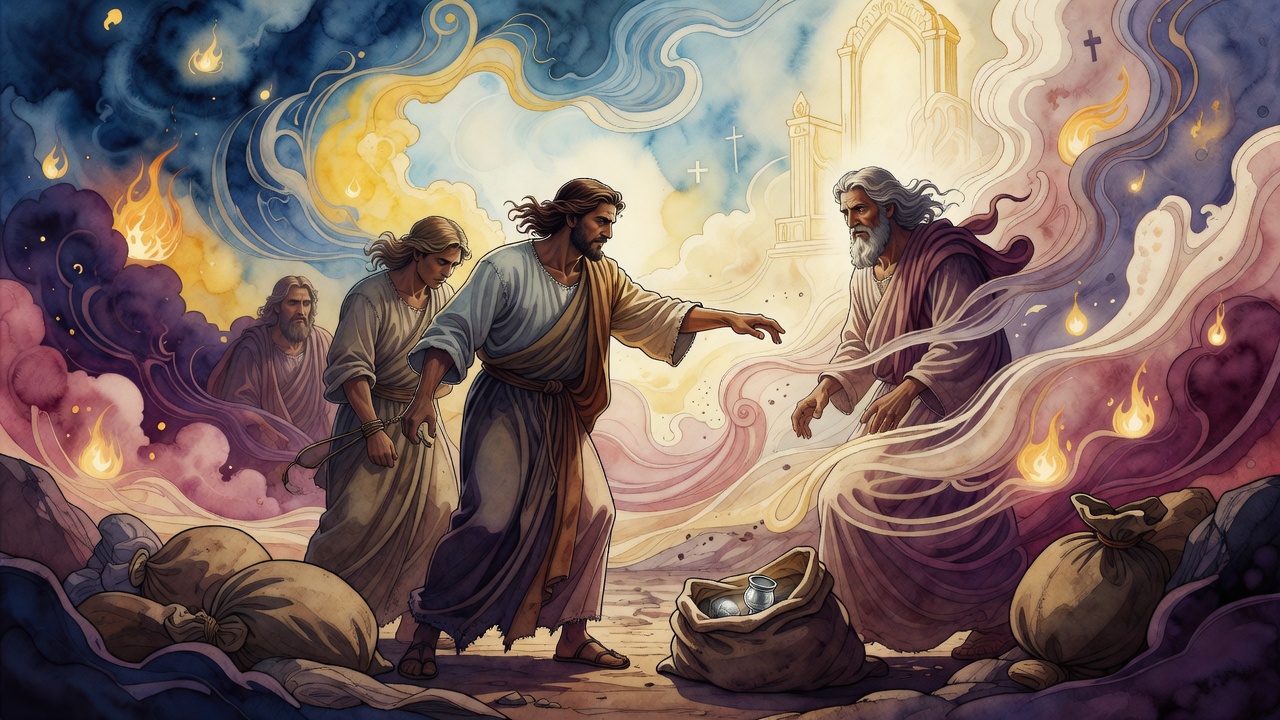
Joseph waited until the sacks were full and the road north was almost open. Then he gave the order that would either finish his brothers or remake them. "Put my cup, the silver cup, in the mouth of the sack of the youngest, and his purchase money" (Genesis 44:2). The servant did it while the brothers still tasted last night's wine. Metal kissed grain. Benjamin walked out of the city carrying a theft he had not committed, laughing with men who thought the worst was over.
Joseph Hid a Goblet and Judah Would Not Leave Click for full size

The chase was theater with real ropes. The steward overtook them on the road, accused them of returning evil for good, searched from the oldest to the youngest, and found the cup where Joseph had planted it. Garments tore. Voices broke. Donkeys shifted under sudden weight of shame. The road back to the viceroy's house felt shorter than the years since the pit.

Keep the Boy, Go Home in Peace

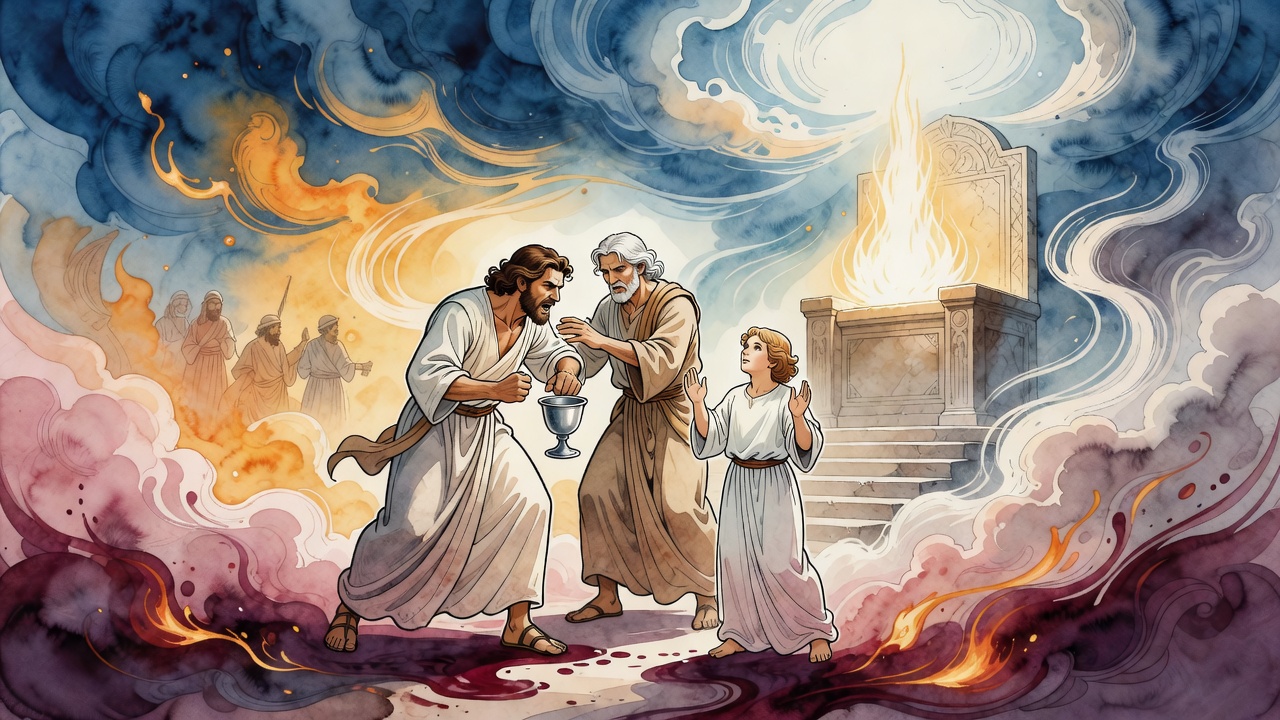
Joseph's final test arrived dressed as mercy. "Far be it from me to do thus," he said. "The man in whose hand the chalice has been found shall be my slave; but you, go up in peace to your father" (Genesis 44:17).

Peace. The word was a blade. He offered them the exact bargain they had once chosen for him: one brother lost, the rest free to live with a story they could tell on the way home. If they took it, the sale was still alive in their blood. If they refused, something in the family had finally changed under famine pressure. Joseph watched their faces the way a judge watches men who think they are still bargaining with a stranger.

Judah Names the Father and the Dead Brother

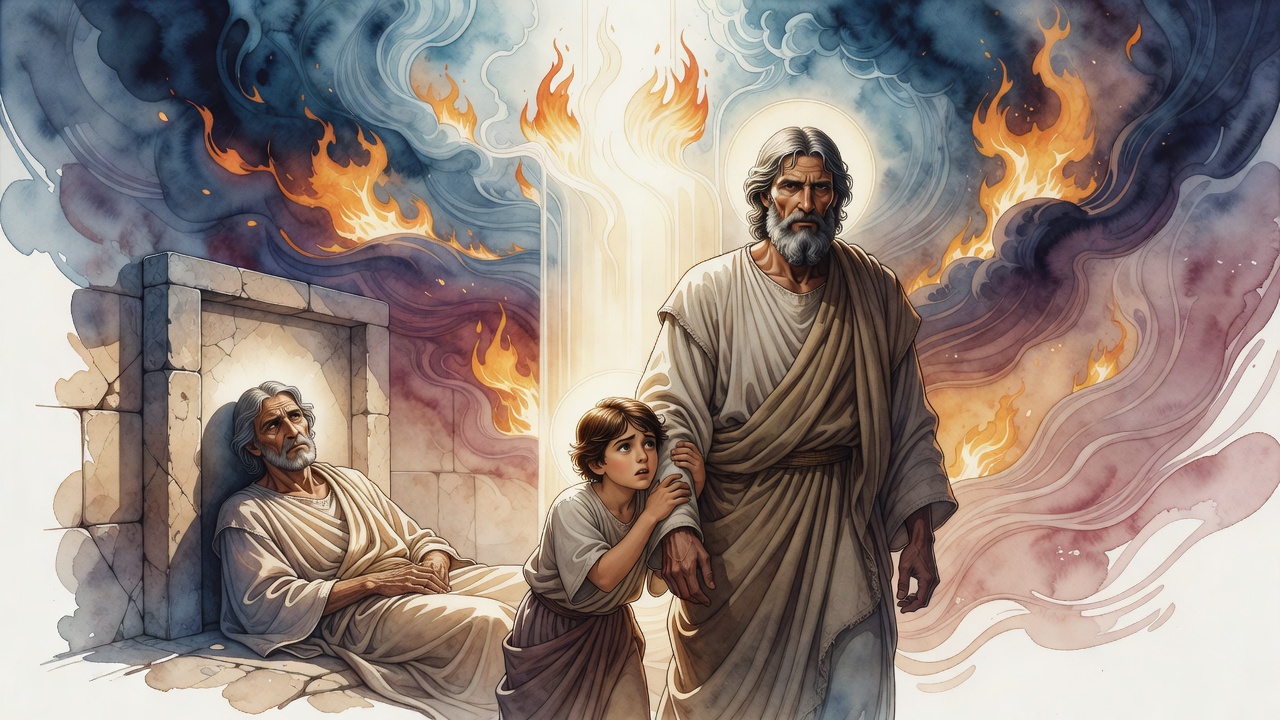
Judah stepped forward because the pledge in his mouth left him no rear exit. He told the stranger about an aged father and a son of old age, a little one whose brother is dead, who alone remains of his mother, and whom the father loves for that reason (Genesis 44:20). He did not know he was describing Joseph's own ghost and Joseph's own living half to Joseph's own face.

He put Jacob's life on the table. He put Rachel's empty place on the table. He put his own neck where Benjamin's chains wanted to go. The speech was not pretty. It was a man trying to stop a second funeral while the first one still lived in a father's eyes. Brothers who once sat silent while a coat was dipped in blood now heard Judah refuse the cheap peace of leaving a boy behind. Joseph's control, built over years of dungeon and court, began to fail in the small muscles of the face.

Come Near and Examine Me

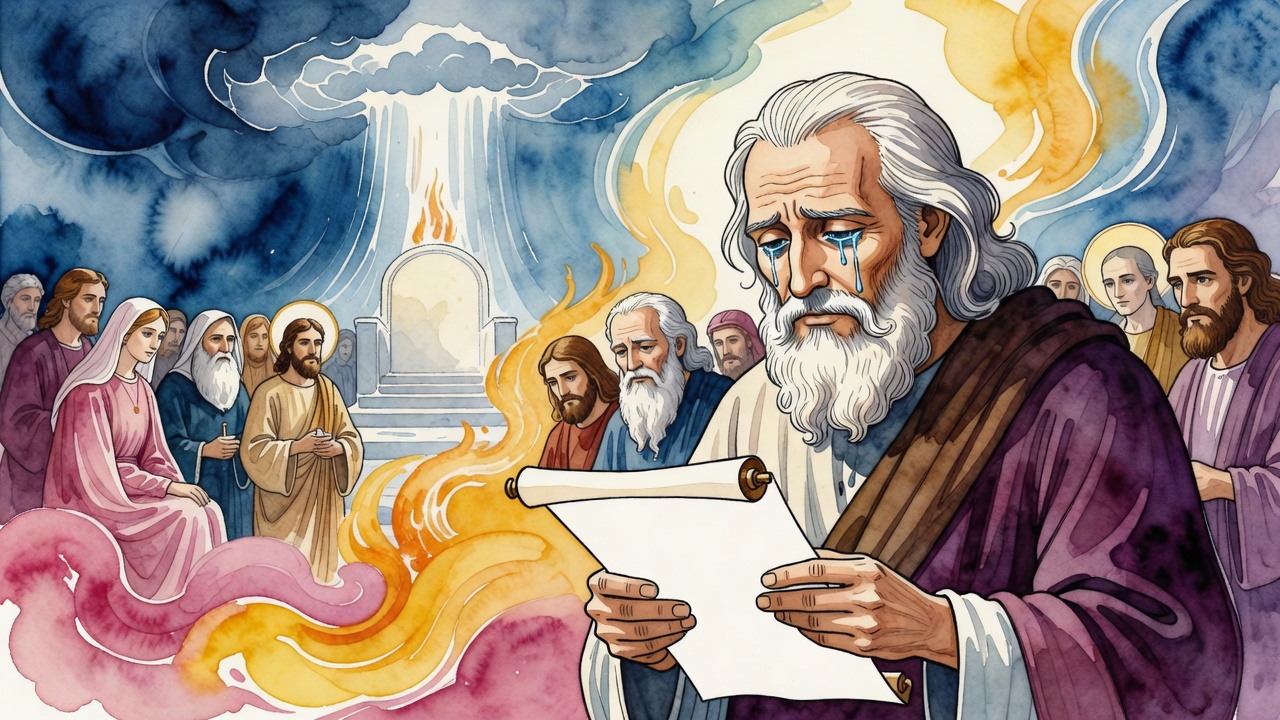
He cleared the Egyptians out until the room held only the family that had broken itself. Then he said to his brothers, "Come near, I pray, and examine me." They came near. "I am Joseph your brother, whom you sold into Mizraim" (Genesis 45:4).

Examine. Not applaud. Not collapse into poetry. Look at the body. Look at the mouth. Look at the man the beard had hidden. The sale was no longer a private shame. It was a named event in a room where the sold boy held the power of Egypt and still wanted them close enough to study his skin. Weeping followed the sentence the way weather follows heat. The house of Pharaoh heard. The brothers, who had entered through separate gates against the evil eye, now stood inside one revelation with nowhere to split.

A Message for the Old Man

"Make haste," Joseph said, "and go up to my father, and say to him, Thus says your son Joseph: The Lord has set me for a chief over all the Egyptians; come down to me, delay not" (Genesis 45:9). The goblet had been a lie that told the truth. The invitation was the truth without the lie. Benjamin would not stay a slave. Judah would not go home alone. Jacob would hear that the dead son was alive and feeding nations.

One planted cup. One refused road of cheap peace. One examination that ended a twenty-two-year costume. The family that once sold a dreamer had been forced to buy him back with the only currency left: the refusal to abandon Rachel's last boy. Joseph sent them north with wagons already forming in Pharaoh's mind, and with a story no father should have to wait another night to hear.

Benjamin stood free while Judah's throat still held the offer of his own neck. The silver cup went back to being a cup. The brothers went back to being a family that had to learn a new language for an old crime. Joseph wiped his face and became, for a few breaths, only a brother again, before Egypt's business returned and the message for Jacob had to be spoken clearly enough to raise a dead hope from a father's chest.


← All myths
From the tradition

Sources

5 sources

The texts behind this telling. Some cards carry a translation of the source; others are our own retelling of it, and each card says which. Every card links out to the original.

Targum Pseudo-Jonathan on Genesis 44:2Targum Pseudo-Jonathan on Genesis

Retold in our words. Read the original at the link below.The Targum of Jonathan ben Uzziel, trans. J. W. Etheridge, London, 1862 · Public Domain

A small silver cup changes the course of Jewish history. Joseph hands it to his steward with a single instruction.

"Put my cup, the silver cup, in the mouth of the sack of the youngest, and his purchase money. And he did according to the word which Joseph had spoken" (Genesis 44:2). Targum Pseudo-Jonathan preserves the vizier's unblinking economy. The cup and the silver together. In the youngest's sack. No further explanation.

The cup is the same one Joseph pretended to use for divination at the feast the night before. It is, in every visible sense, the most important object in the viceroy's household, the ritual goblet of the ruler of Egypt. Planting it in Benjamin's bag is a capital charge waiting to be discovered.

Yet the Targum says the steward acted l'mai'mar, "according to the word." No hesitation. Menasheh, Joseph's son, understands the plan even if he does not yet understand the reason. The detail matters: the person setting up this deception is Joseph's own child, and Joseph has evidently trusted him enough to bring him into the secret.

The sages worry about the ethics here. Is it permitted to frame an innocent person, even temporarily, to elicit repentance from others? The midrash notes that the cup was never going to stay lost. Joseph's plan had a known end: Benjamin would be cleared, the brothers tested, the family revealed. This is not slander. It is carefully constructed drama.

Still, the cup sits in the sack like a coiled spring. When it is discovered tomorrow morning on the road, Judah will finally deliver the speech that will break his brother's disguise and end the long exile of the house of Jacob.

Full source
Targum Pseudo-Jonathan on Genesis 44:17Targum Pseudo-Jonathan on Genesis

Retold in our words. Read the original at the link below.The Targum of Jonathan ben Uzziel, trans. J. W. Etheridge, London, 1862 · Public Domain

Joseph's counter-offer is designed to look generous. It is in fact the most dangerous trap he has set yet.

"Far be it from me to do thus; the man in whose hand the chalice hath been found shall be my slave; but you, go up in peace to your father" (Genesis 44:17). Targum Pseudo-Jonathan preserves the vizier's velvet reasonableness. I will not punish the innocent. Only the guilty will remain. The rest of you, go home.

Hear what Joseph is really offering. Leave Benjamin behind. Return to Jacob without him. Make your peace with one more lost son of Rachel. He is giving his brothers the exact deal they once took twenty-two years earlier. A brother stays behind, enslaved in Egypt. The rest walk home. Tell your father whatever you want.

This is the trap. If the brothers accept, they have not changed. They will simply have traded Joseph for Benjamin, twenty years apart. If they refuse, they will have committed themselves, with their own mouths, on the road, in front of armed guards, to standing with the youngest rather than abandoning him.

The sages call this Joseph's masterstroke. He does not accuse his brothers of their old crime. He simply recreates the conditions and lets them choose again. This is the essence of teshuvah in Maimonides' ruling (Mishneh Torah, Laws of Repentance 2:1): repentance is only complete when the same opportunity returns and you refuse it.

The offer sits in the air like a blade. Go in peace. Leave the boy. Repeat the sin.

What Joseph does not say aloud. But waits to hear, is whether Judah will finally answer differently this time. He is about to.

Full source
Targum Pseudo-Jonathan on Genesis 44:20Targum Pseudo-Jonathan on Genesis

Retold in our words. Read the original at the link below.The Targum of Jonathan ben Uzziel, trans. J. W. Etheridge, London, 1862 · Public Domain

In the middle of Judah's speech, a sentence lands that should have broken Joseph's composure on the spot.

"We told my lord, We have an aged father, and a son of his old age, a little one, whose brother is dead, and he only remains of his mother; and his father on that account loveth him" (Genesis 44:20). Targum Pseudo-Jonathan preserves the phrasing exactly. Whose brother is dead. He only remains of his mother.

Judah is speaking of Benjamin, but he is also, unwittingly, speaking to the brother he thinks is dead. Joseph is standing three paces away, alive, listening to his own obituary spoken by the brother who helped sell him.

The words are painful in both directions. For Joseph, they confirm that his brothers never told Jacob the truth. They have been living under the lie of his death for twenty-two years. Rachel had two sons. Now, in Jacob's understanding, only one remains. Benjamin. And that surviving son is loved by his father "on that account", because he is the last remnant of the beloved wife.

For Judah, the words are a confession dressed as explanation. He is admitting that Benjamin occupies the place Joseph once occupied. He is admitting that the family has been shaped around a single loss for two decades. He is admitting, though he cannot yet name it, that another such loss would kill Jacob.

The sages hear in this verse the entire theology of pikuach nefesh, the preservation of a life. Judah is about to offer his own life because he has finally grasped that one more disappearance will end his father. He learned this lesson, at least in part, because he once caused a disappearance himself.

The dead brother listens, and weeps inside his chest, and says nothing yet.

Full source
Targum Pseudo-Jonathan on Genesis 45:4Targum Pseudo-Jonathan on Genesis

Retold in our words. Read the original at the link below.The Targum of Jonathan ben Uzziel, trans. J. W. Etheridge, London, 1862 · Public Domain

The brothers cannot answer. So Joseph does something astonishing. He invites them closer.

"Joseph said to his brothers, Come near, I pray, and examine me. And they came near. And he said to them, I am Joseph your brother, whom you sold into Mizraim" (Genesis 45:4). Targum Pseudo-Jonathan preserves the invitation with the verb bidku, examine, investigate, look closely.

The midrash explains what the examination involved. Some sages say Joseph showed them he was circumcised, proof he was a son of the covenant of Abraham, not an Egyptian. Others say he spoke to them in the lashon ha-kodesh, the sacred Hebrew tongue, without an interpreter, so they could hear the voice of the boy they once knew. Either way, the Targum preserves the intimacy of the moment: not a courtroom, but a private recognition.

Then Joseph says the thing he has never once said in their hearing. I am Joseph your brother, whom you sold into Mizraim. The accusation is in the sentence, whom you sold. But the emphasis is elsewhere. Notice the word order. I am Joseph your brother. The relationship comes first. The crime comes second.

The sages treasure this phrasing. Joseph names the wrong. He does not pretend it did not happen. But he names the relationship before the wound. Ach-chem, your brother, is spoken before m'chartem, whom you sold. The identity of kinship is placed in front of the fact of betrayal.

This is the Jewish grammar of reconciliation. You do not paper over the sin. You do not make it the headline either. You lead with I am your brother, and then you acknowledge what was done, and you make both true at the same time.

Full source
Targum Pseudo-Jonathan on Genesis 45:9Targum Pseudo-Jonathan on Genesis

Retold in our words. Read the original at the link below.The Targum of Jonathan ben Uzziel, trans. J. W. Etheridge, London, 1862 · Public Domain

Joseph has reconciled with his brothers. Now he needs them to deliver a message, quickly.

"Make haste, and go up to my father, and say to him, Thus saith thy son Joseph, The Lord hath set me for a chief over all the Mizraee; come down to me, delay not" (Genesis 45:9). Targum Pseudo-Jonathan preserves the urgency. Ocheyu, hurry. Lo te'achar, do not delay.

The message has a specific theological frame. Joseph does not say, Pharaoh made me ruler. He does not say, my dream interpretation earned me the post. He says, Adonai, the Lord, hath set me. The credit goes to the Holy One of Israel, not to Egypt. In the Targum's Aramaic, shanyani Adonai l'rabba, the Lord has set me as chief. Joseph wants Jacob to know that the son he thought was swallowed by the Egyptian wilderness has, in fact, been held in the hand of the God of his fathers the whole time.

The haste matters too. Joseph has just learned that the famine has two years left to run (Genesis 45:6). Canaan cannot survive those years. The only way to keep the family alive is to bring them down into Mizraim, under his protection, where he can allocate grain by executive order.

The sages also note a quieter reason for the urgency. Joseph has not seen Jacob in twenty-two years. His father is old. If there is any window left at all, it is narrow. Every delayed hour is an hour of a reunion that may not come.

"Come down to me, delay not." A son's command to his father. A viceroy's command to a patriarch. Either way, love drives the imperative.

Full source