Parshat Vayeshev5 min read

Judah Confesses Tamar Is More Righteous Than He

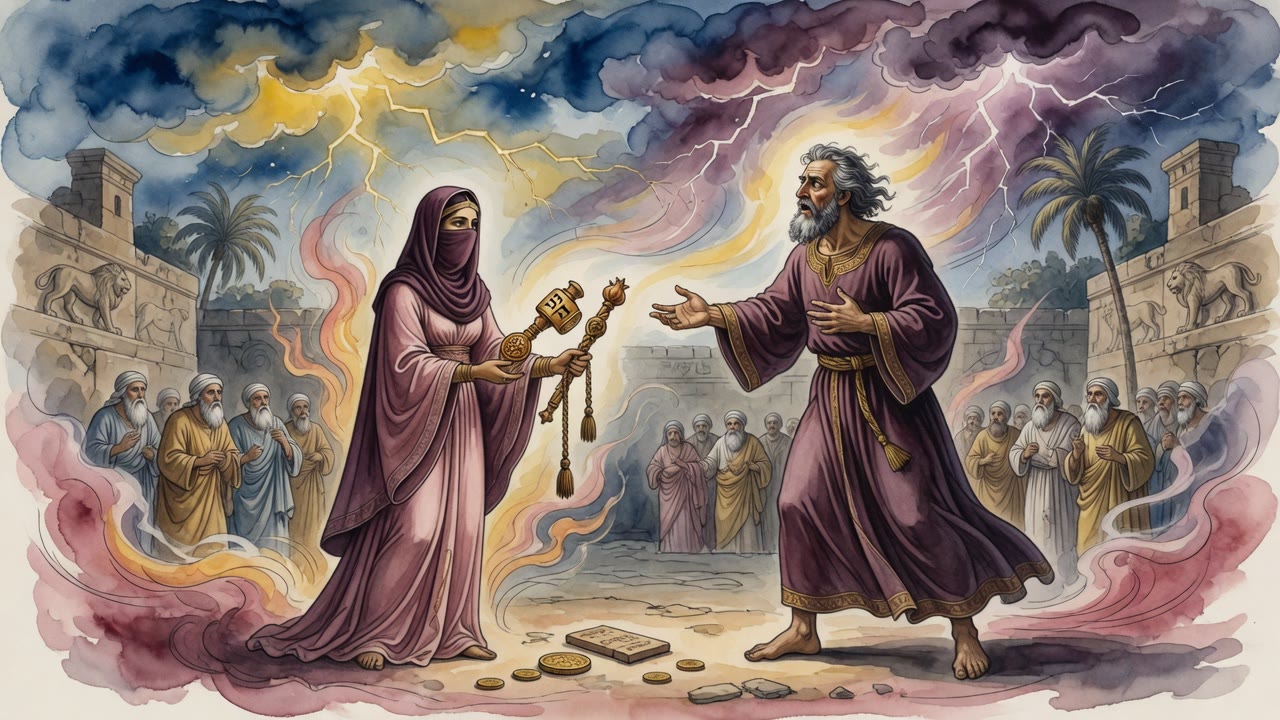
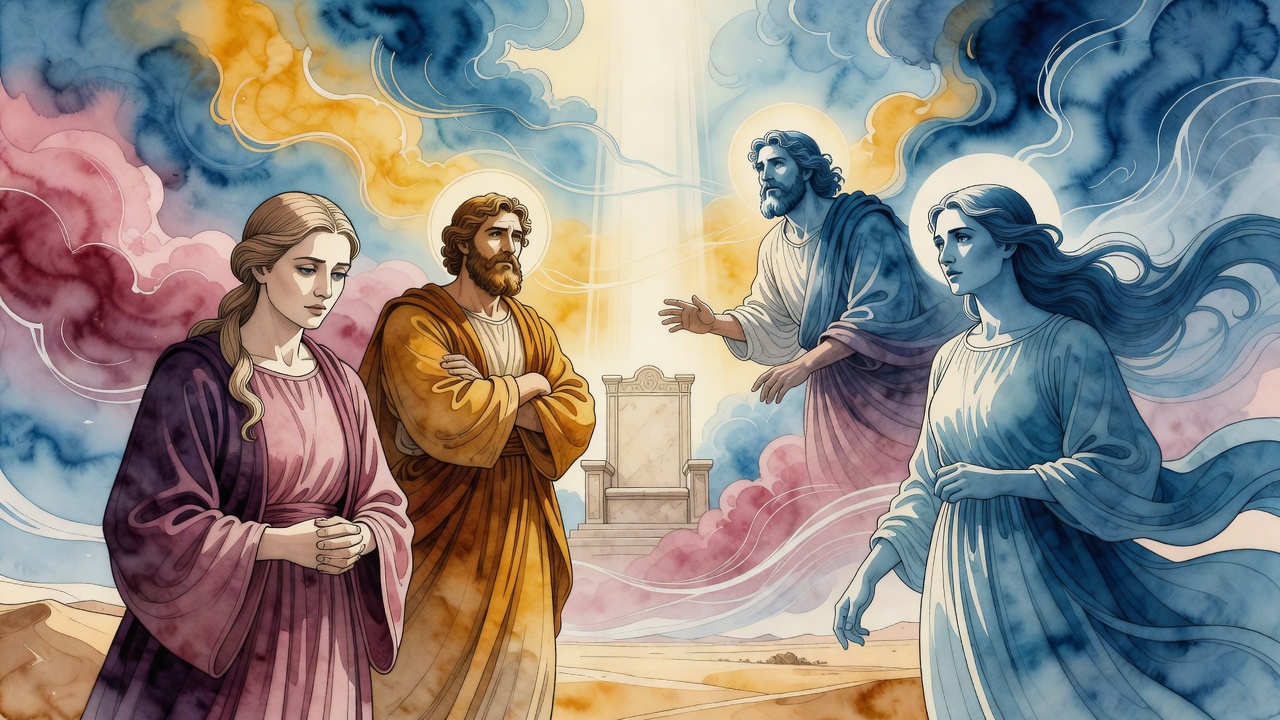
When Tamar revealed the signet ring and staff, Judah faced a choice, deny everything or admit that he had wronged her. He chose to speak.

Curated by Arthur · Told by Maggid ·
Table of Contents
  1. The Road to Timnah
  2. The Sentence and the Evidence
  3. The Moment of Recognition
  4. The Confession in Full
  5. What Gehenna Almost Had

The Road to Timnah

Tamar had been waiting for years. Her first husband, Er, died without children. Judah promised his next son, Onan, to give her an heir, Onan died too. There was still Shelah, the youngest, but Judah kept finding reasons to delay. She saw the pattern. He was not going to give her Shelah. He had decided, in his private accounting, that Tamar was bad luck for his sons, and he had left her in her father's house wearing widow's clothes while Shelah grew up and married someone else entirely.

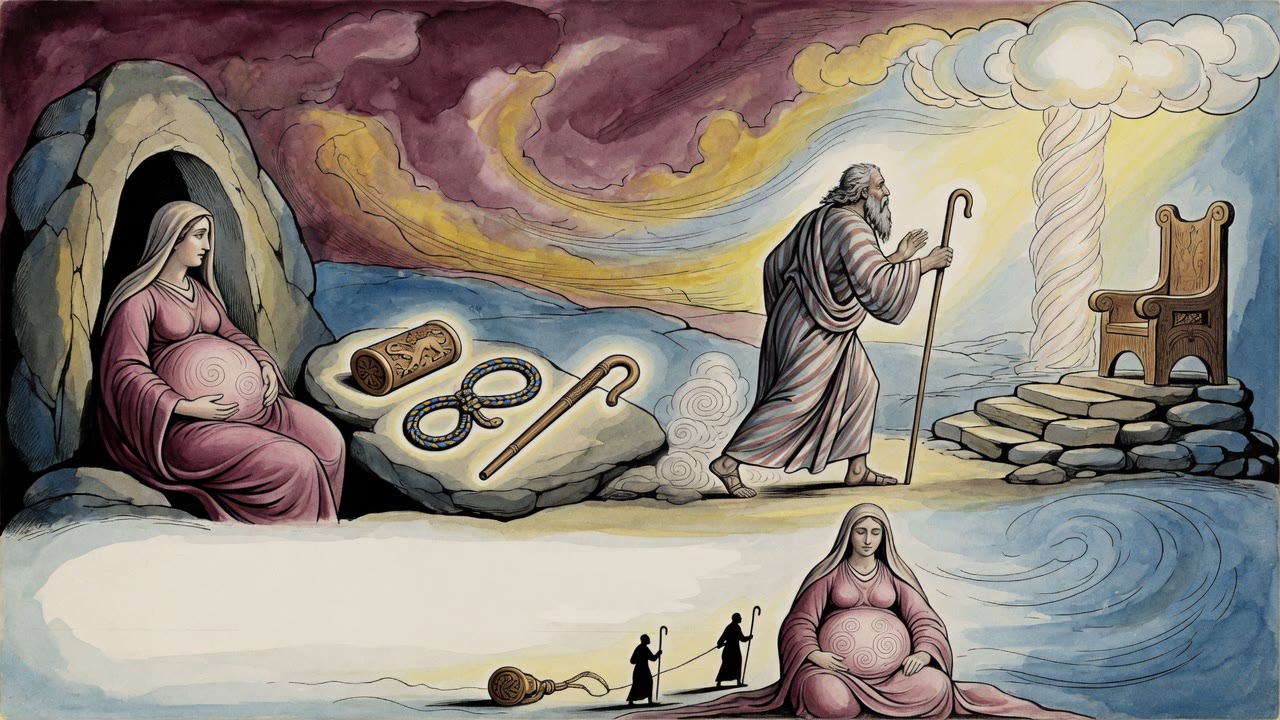
So when Judah's own wife died and his mourning period ended and he traveled to Timnah for the sheepshearing, Tamar removed her widow's garments and veiled herself and sat at the road's entrance. Judah passed by and did not recognize his daughter-in-law. He negotiated with the veiled woman for her services and offered a kid from his flock as payment, but he had nothing to leave as a pledge except what he carried on his person: his signet ring, his cord, and his staff. She took them. He went on his way.

The Sentence and the Evidence

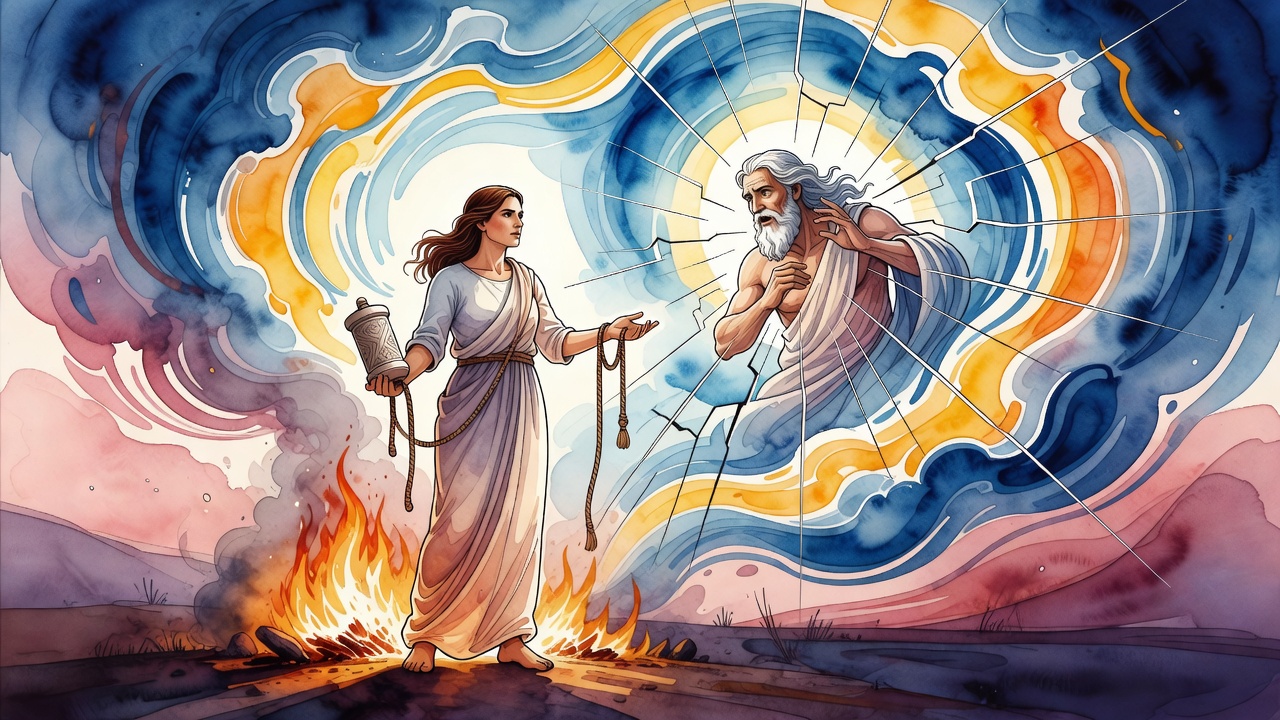
Three months later, Judah received word that Tamar was pregnant, and that the pregnancy was the result of harlotry. He issued the sentence before he heard the evidence. "Take her out and let her be burned."

Tamar did not argue. She sent the signet ring, the cord, and the staff ahead of her to Judah with a single message: "The man to whom these belong, I am with child by him." She added nothing further. She did not demand an apology or a reversal. She simply let the objects speak.

The Moment of Recognition

Judah recognized them. He had no room to deny it; the objects were his and could not belong to anyone else. What he did next was not the minimum the situation required. He could have kept quiet, revoked the sentence on technical grounds, and hoped the story dissolved into silence. He was a man of standing. He had options that most people do not have.

Instead, he spoke aloud: "She is more righteous than I, since I did not give her my son Shelah." He named his own failure specifically, not the vague transgression with the veiled woman but the original wrong that had driven Tamar to the road in the first place. He had withheld what was owed. She had taken what she needed. Between those two acts, hers was the more just.

The Confession in Full

The Book of Jubilees preserves a fuller version of what Judah said afterward, addressed not to Tamar but to his own descendants. He confessed that his downfall had begun with pride. He had boasted, in his own heart, that beautiful women had never tempted him. He had criticized his brother Reuben for a transgression he considered beneath himself. And then, as Judah put it with cold precision: "While I boasted, the spirit of passion and unchastity gained possession of me." Pride had opened a door he thought he had locked.

He warned his children directly: do not walk after the desire of your hearts. Do not boast about the sins you have not committed. The moment you are certain you are safe from a particular failure is the moment you have made yourself vulnerable to it. This was what Judah had paid to understand.

What Gehenna Almost Had

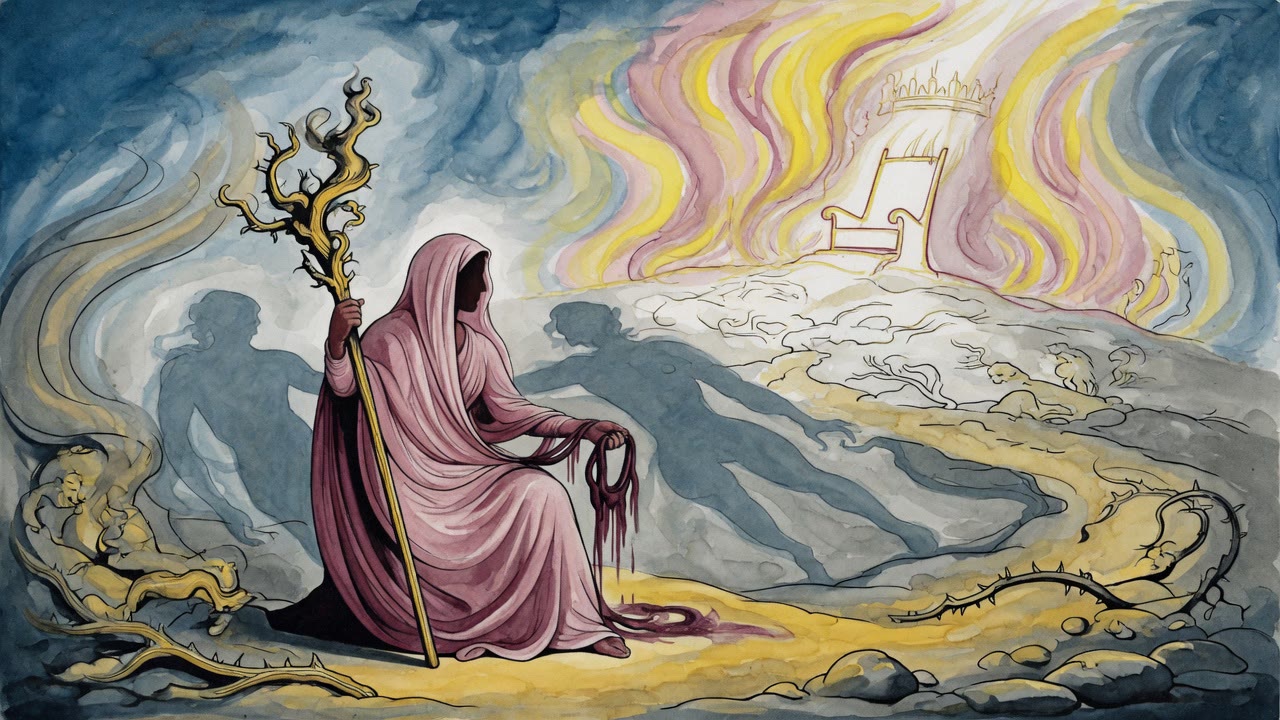
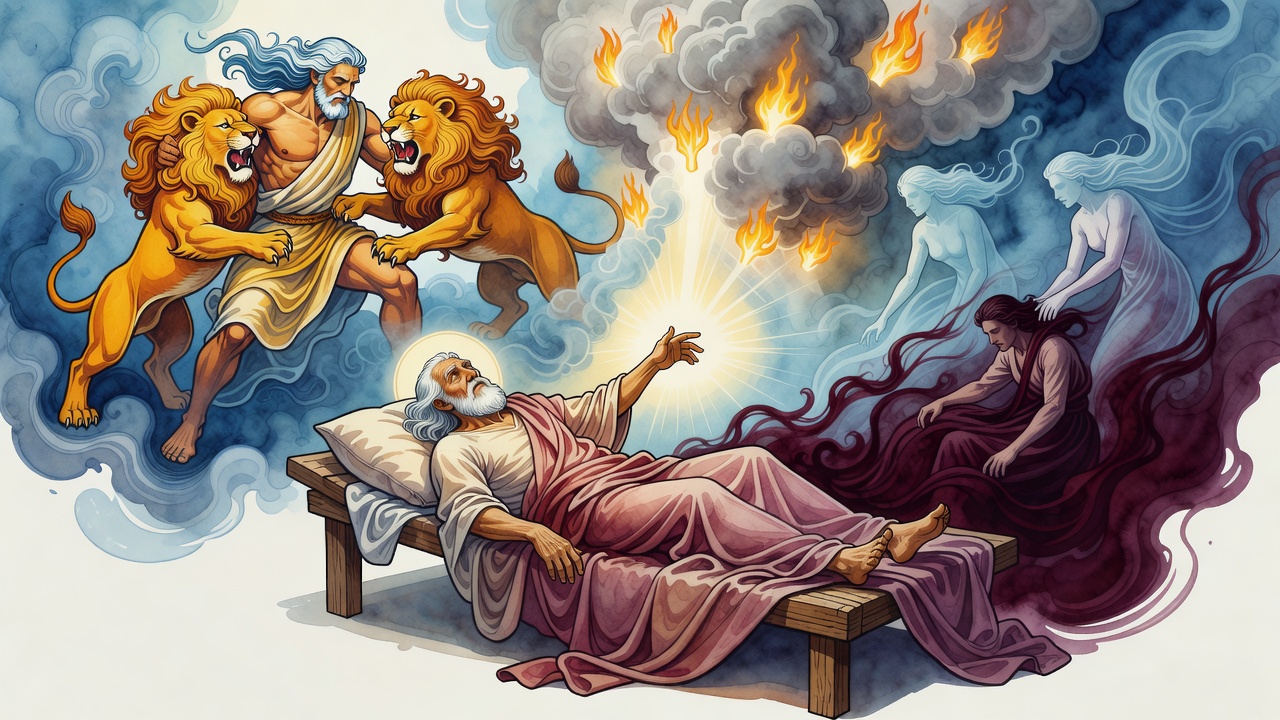
The Book of Jubilees does not treat the encounter as a private failing between two people. It frames incestuous union, Judah with his daughter-in-law, as a transgression serious enough to warrant fire, both as legal punishment and as cosmic consequence. The fire that Judah had ordered for Tamar was the same fire she was carrying in Gehenna's ledger on Judah's behalf. She had held those flames in her hands, literally, in the form of the burning order, and when she sent back the signet ring, she extinguished them for them both.

This is what the rabbis saw in the story: Tamar's courage saved not just herself from the literal fire but Judah from the spiritual one. Her choice to reveal the evidence rather than let herself be executed in silence, her refusal to humiliate him publicly even while he condemned her, is what the sources call righteous. Not passive. Not meek. Precisely calculated, and in the end, merciful.


← All myths
From the tradition

Sources

5 sources

The texts this telling draws on, in full. Open a card to read inline, or expand it for a wider, quieter read.

Book of Jubilees 41:13Book of Jubilees

Book of Jubilees turns to Tamar Disguises Herself and Confronts Judah.

Judah's life wasn't easy. He had just lost his wife. According to Jubilees, after the mourning period, Tamar took matters into her own hands. She removed her widow's garments, veiled herself, and positioned herself at the entrance to Timnah.

Then Judah appears. He sees her, but doesn't recognize her, believing her to be a zonah, a prostitute. He says to her, "Let me come in unto thee."

She agrees, but, being no fool, immediately asks for her payment. Judah, caught a bit off guard, responds, "I have nothing in my hand save my ring that is on my finger, and my necklace, and my staff which is in my hand." A ring, a necklace, a staff. These weren't just objects; they were symbols of his identity, his authority, his lineage.

Tamar, ever resourceful, says, "Give them to me until thou dost send me my hire." Judah agrees, promising to send a young goat, a "kid of the goats," as payment and hands over the items.

What's going on here? Why this elaborate charade? The Book of Jubilees fills in some gaps, offering a perspective on Tamar’s motivations and the cultural context of the time. This was a society deeply concerned with lineage and continuation. The stakes were high, and Tamar was playing for keeps. The stories are far from straightforward. And there are layers upon layers of meaning embedded within them.

Full source
Book of Jubilees 41:24Book of Jubilees

Book of Jubilees turns to Judah Confesses That Tamar Is More Righteous.

Remember the story? Judah's wife dies. He’s supposed to give his youngest son, Shelah, to his widowed daughter-in-law, Tamar, to provide her with an heir. But Judah, fearing Shelah will also die, withholds him. Tamar, resourceful and determined, takes matters into her own hands. She disguises herself as a prostitute and seduces Judah himself.

The result? She becomes pregnant.

When Judah learns of Tamar's pregnancy, believing she has acted immorally, he orders her to be burned alive. But Tamar, in a stroke of brilliance, reveals the truth. She sends Judah the signet ring, cord, and staff he gave as payment, proving he is the father.

And here, in Jubilees 41, we find Judah's response. "Judah acknowledged, and said: 'Tamar is more righteous than I am. And therefore let them burn her not.'" It's a moment of profound honesty. He admits his wrongdoing. Tamar’s actions, though unconventional, were driven by a desire to uphold the law of yibbum, levirate marriage, ensuring her husband’s line continued. Judah, in his fear and selfishness, had failed her.

The verse reads, "And for that reason she was not given to Shelah, and he did not again approach her." Shelah remains unmarried to Tamar. The consequences of Judah's actions ripple outwards.

Following this dramatic confrontation, Tamar gives birth to twins: Perez and Zerah. Jubilees specifies this occurs in "the seventh year of this second week," a detail that anchors the narrative within its specific chronological framework. And this birth has huge ramifications! Perez, as we know from the Book of Ruth, becomes an ancestor of King David and, ultimately, of the Messiah. From this complicated, ethically murky situation, emerges the lineage of Jewish royalty.

The Book of Jubilees doesn't shy away from Judah's internal struggle. "And Judah acknowledged that the deed which he had done was evil, for he had lain with his daughter-in-law, and he esteemed it hateful in his eyes, and he acknowledged that he had transgressed and gone astray; for he had uncovered the skirt of his son." This isn't just a legal acknowledgement; it's a deeply personal one. He recognizes the moral weight of his actions. The phrase "uncovered the skirt of his son" is a euphemism for a grave transgression, violating the boundaries of family and lineage.

What's so compelling about this passage is its unflinching portrayal of human fallibility. Judah, a patriarch, a leader, makes a mistake. He tries to cover it up. But ultimately, he is confronted with the truth and forced to acknowledge his wrongdoing. It's a evidence of the power of truth and the possibility of repentance.

This story, found in Jubilees, reminds us that even in our imperfections, even in our moments of failure, we can still contribute to something greater. Judah's mistake, and his subsequent acknowledgement of it, becomes part of a story that leads to redemption. It’s a powerful reminder that the path to righteousness is rarely straight, but it's always possible to turn towards it. What do you think? Can good really come from such complicated beginnings?

Full source
Legends of the Jews 2:34Legends of the Jews

It's a moment of vulnerability that resonates across millennia. Judah, a man known for his strength and leadership, admits to a profound moral failing. He warns us, his descendants, "Do not walk after the desire of your hearts, and vaunt not the valiant deeds of your youth. This, too, is evil in the eyes of the Lord."

Why such strong words?

Judah reveals that his downfall began with pride. He boasted that the allure of beautiful women had never tempted him during wartime. He even criticized his brother Reuben for his transgression with Bilhah (Genesis 35:22). But as readers often see, pride comes before a fall.

"While I boasted... the spirit of passion and unchastity gained possession of me," he confesses. This led him to marry Bath-shua, and, as the text delicately puts it, "trespassed with Tamar, though she was the affianced of my son." (Genesis 38).

The story of Judah and Tamar is complex and layered, full of cultural nuances that might seem strange to modern ears. What's key here is the underlying struggle with temptation and the consequences of succumbing to it.

Judah recounts how he initially intended to consult his father, Jacob, before marrying Bath-shua. But Bath-shua's father, a king, presented him with overwhelming wealth and adorned his daughter with irresistible beauty. Then, during a meal, he had her pour the wine. "The wine turned my eyes awry, and passion darkened my heart," Judah laments. Blinded by desire, he ignored both God's commands and his father's wishes.

Did he get away with it? Not quite.

"The Lord gave me a recompense according to the counsel of my heart, for I had no joy in the sons she bore me." His choices had consequences, a painful reminder that our actions have repercussions, not just for ourselves, but for those around us as well.

Judah's story is a powerful lesson in humility, reminding us that even the strongest among us are susceptible to temptation and that boasting about our virtues can be a dangerous trap. It encourages us to be vigilant, to seek guidance, and to remember that true strength lies not in resisting temptation perfectly, but in acknowledging our failures and striving to learn from them.

Full source
Book of Jubilees 41:32Book of Jubilees

Book of Jubilees turns to Judah and the Fires of Gehenna of Tamar.

Our focus today is on a snippet from chapter 41. What's it about? The text lays down some pretty stark directives concerning sexual misconduct, specifically, incestuous relationships. It commands, "And do thou command the children of Israel that there be no uncleanness amongst them, for every one who lieth with his daughter-in-law or with his mother-in-law hath wrought uncleanness."

The penalty? Intense. "With fire let them burn the man who hath lain with her, and likewise the woman, and He will turn away wrath and punishment from Israel." Woah. Strong stuff. It's a chilling reminder of the severity with which certain sexual boundaries were guarded. The act isn't just a personal transgression; it’s portrayed as something that defiles the entire community, inviting divine wrath. The prescribed punishment is intended to cleanse Israel and restore divine favor.

Here's where it gets even more interesting. The text then turns to the story of Judah and Tamar. Remember that one? Judah, thinking his daughter-in-law Tamar was a prostitute, unknowingly slept with her after she cleverly disguised herself.

The Book of Jubilees puts its own spin on this well-known narrative. It explains: "And unto Judah we said that his two sons had not lain with her, and for this reason his seed was established for a second generation, and would not be rooted out."

In other words, the text emphasizes that Judah's line was preserved because his sons didn't commit incest with Tamar. It's as if Jubilees is doubling down on its stance against these forbidden relationships.

And the story continues, "For in singleness of eye he had gone and sought for punishment, namely, according to the judgment of Abraham, which he had commanded his sons, Judah had sought to burn her with fire." Judah, the text stresses, acted righteously in seeking to punish who he thought was an adulteress by burning, in accordance with the precedent set by Abraham.

What are we to make of all this? Well, the passage reveals a society deeply concerned with maintaining purity and order. The emphasis on severe punishment emphasizes the gravity with which these transgressions were viewed. The reference to Abraham connects these laws to a long-standing tradition and reinforces their authority.

It's a window into a world vastly different from our own in many ways, a world where communal purity and lineage were paramount. The Book of Jubilees provides a fascinating, if sometimes unsettling, glimpse into the moral landscape of ancient Judaism, inviting us to consider the enduring power of these ancient narratives and their continued resonance – or lack thereof – in our own lives.

Full source
Bereshit Rabbah 85:12Bereshit Rabbah

Sometimes, it takes more than human testimony. Sometimes, it requires a little…divine intervention.

Our story begins with Judah, of the tribe of Judah, and Tamar, his daughter-in-law. A complex situation unfolds involving deception, hidden identities, and ultimately, justice. When Judah realizes Tamar's righteousness, he declares, "She is more righteous than I" (Genesis 38:26). But the real question is, how did he know for sure?

Bereshit Rabbah (Genesis Rabbah), a collection of rabbinic homilies on the Book of Genesis, explores this very question. Specifically, Bereshit Rabbah 85, brings up a fascinating concept: the appearance of the ruach (spirit) hakodesh, the divine spirit, in moments of truth. Rabbi Yirmeya, in the name of Rabbi Shmuel bar Rav Yitzchak, suggests that this divine spirit manifested in three specific instances.

The first, right here with Judah and Tamar. Judah acknowledges his role, but how can he be certain he’s the only one involved? Rabbi Yirmeya, again in the name of Rabbi Yitzchak, suggests a profound interpretation of Judah's words, "She is more righteous than I [mimeni]." The rabbis cleverly interpret mimeni not just as "than I," but also as "from Me," meaning from God.

The Zohar tells us that the Holy One, blessed be He, essentially said, "You will attest to what is revealed, and I attest to what is concealed." Judah could only vouch for his own actions, but a divine voice emerged to confirm what was hidden: that Tamar conceived solely from Judah. It's a powerful idea – that God Himself steps in to ensure justice and truth prevail. Think of it as divine providence guiding the narrative, as suggested in Kohelet Rabba (Ecclesiastes Rabbah) 10:16.

Bereshit Rabbah then points to two other instances. Remember the famous story of King Solomon and the two women claiming the same baby? The verse states, "She is his mother" (I (Kings 3:2)7). Rabbi Shmuel suggests that a divine voice audibly declared, "She is certainly his mother!" No ambiguity, just pure, unadulterated truth revealed by the divine.

And what about Samuel, the prophet? In I (Samuel 12:3-5), Samuel challenges the people to accuse him of any wrongdoing. The people respond that the Lord is their witness that Samuel is innocent. According to our text, a divine voice then emerged and said, "He is witness," solidifying Samuel's integrity. God Himself testified to Samuel's honesty.

Now, the text takes an interesting turn, addressing potential criticisms of other biblical figures. What about Eli's sons, who were accused of terrible sins? The text in I (Samuel 2:17) says, “The sin of the lads was [very] great…” and I (Samuel 2:22) mentions them “lying with the women who would assemble…” Can we really believe the sons of a righteous man would do such things?

The text offers a fascinating interpretation. Perhaps they weren't literally engaging in those acts. Instead, because they were slow in performing the bird offerings (essential after childbirth), they delayed the women's return home, and the Torah ascribes the act to them. It wasn't literal sin, but a consequence of their actions.

Similarly, regarding Samuel's sons, who were accused of taking bribes (I Samuel 8:3), Rabbi Berekhya suggests they merely prioritized personal business over public needs. A caravan would pass in Beersheba, and they would forsake the needs of the public and engage in their own business. Again, the Torah ascribes the act of bribery to them, even if it wasn't a direct act of corruption. This reminds us to look beyond the surface, to consider the context and nuances of actions.

Finally, the text circles back to Tamar, reminding us, as previously discussed in section 7, that she didn't actually act as a harlot, despite what the surface reading of (Genesis 38:14) might suggest.

So, what does all this mean? This passage from Bereshit Rabbah offers a profound reflection on truth, justice, and divine intervention. It suggests that even in the murkiest situations, a higher power can step in to reveal what is hidden, to ensure that righteousness prevails. And it reminds us to be careful in our judgments, to look beyond the surface, and to consider the complexities of human actions. Perhaps, just perhaps, we too can hear that still, small voice guiding us toward truth.

Full source