The Letter Yod That Flew From Sarai to Joshua
When God renamed Sarai, the tiny letter yod flew to the throne and complained until it was set first in Yehoshua, the name of Moses' heir.
Table of Contents
 Click for full size
The Smallest Letter Refused to Vanish
The decree came like a coronation and a theft at once. "As for Sarai your wife, you shall not call her name Sarai, but Sarah shall be her name" (Genesis 17:15). One Hebrew letter, the tiny yod, was lifted from the end of her name. Sarai had been princess of her own people. Sarah would be princess of all who enter the world. The blessing widened. Youth returned in the midrash's bold reading. Milk would answer a child. A womb would open for a body that had waited too long. Nations would be silenced so none could taunt her as barren.
But the letter did not dissolve into air like a mistake corrected. The smallest mark of the alphabet had been torn from a righteous woman, and it knew it. Ink has no mouth in ordinary physics. In this telling it has a case, and it files it in the only court that can reassign letters.
Complaint Before the Throne
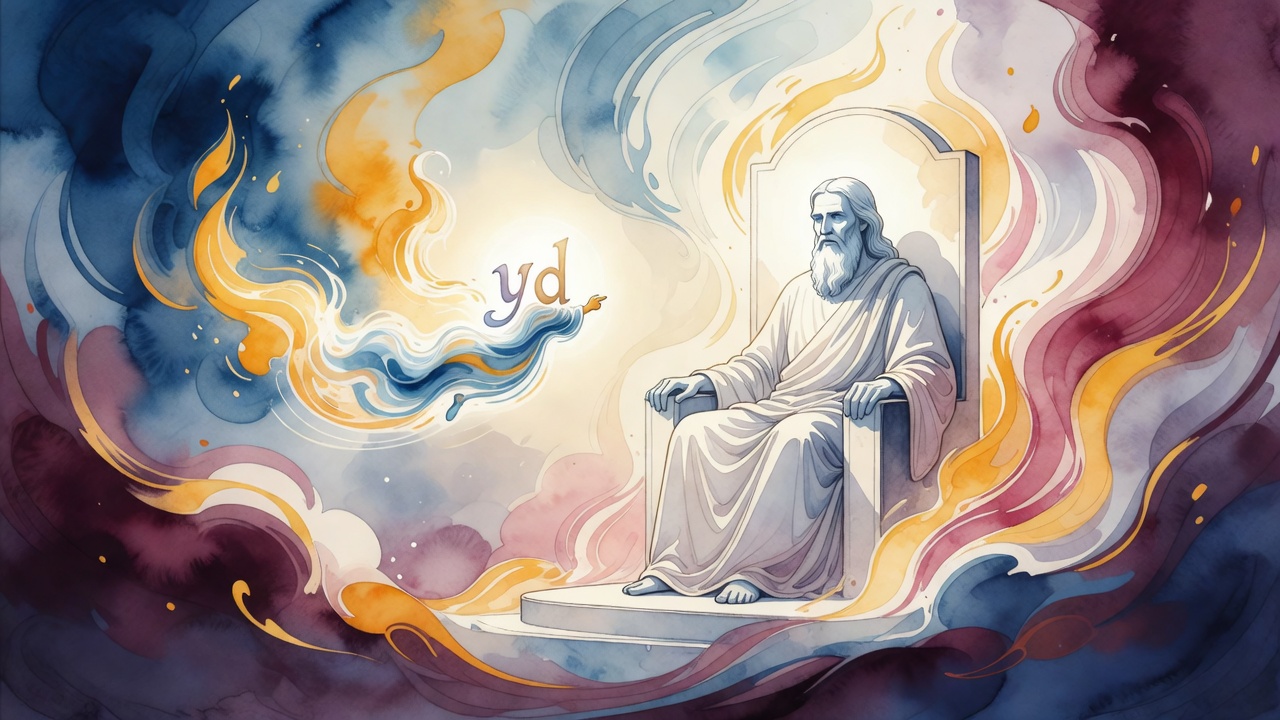
In one telling the yod is split, half remaining in Sarah's new name as the breath of change, half rising into Abraham's own renaming from Abram. In a bolder telling the whole letter goes flying, hovering around the throne of God, and complains aloud. It is the tiniest of all the letters, it cries, and still it was cut from the name of a woman who had walked with the covenant. Why should the least be the first discarded? Why should size decide who is expendable?
God answers with a promotion, not a scolding. The loss is not erasure. The yod will reappear at the head of a man's name, no longer last and trailing, but first and leading. It will sit where the eye begins, not where the mouth finishes. The letter waits in the air above the throne like a bird that has been promised a better branch. The generations turn. A young man named Hoshea son of Nun stands beside Moses in the tent and never leaves the study while his master lives. He tends Torah the way a careful man tends a fig tree, season after season, until fruit is not a surprise but a wage.
The Fig Tree and the Crown
The faithful fig-tender eats the fruit he has watched for years. Joshua tended Torah at Moses' side through heat and doubt and rebellion, and so God Himself appointed him and spoke to him as Israel's leader. From there the midrash turns to a verse about a woman of valor, a crown to her husband, and reads it as Sarah. Rabbi Chiyya noted the asymmetry that overturns ordinary household power. Abraham was elevated through Sarah, but Sarah was never elevated through Abraham. She was the one who lifted him. God told Abraham, "All that Sarah says to you, listen to her voice" (Genesis 21:12). The man who usually gives orders is ordered to hear.
Then Rabbi Shimon ben Yochai returns to the wandering letter. When God renamed Sarai, the yod flew up and cried before the throne. God comforted it: you will no longer sit small at the end of a name, but stand at the head of a hero's name. And so the letter was set first in Yehoshua, the new name Moses gave Hosea son of Nun. The smallest mark loses nothing in God's accounting. It is only waiting for its higher place. Even the alphabet has a career path under heaven.
Two Falls and a Restored Sign
When Abraham heard he would father a son, he fell on his face and laughed. The sages do not mock the laughter. They measure it. He falls twice, and those two falls are linked to two later lapses when his descendants let circumcision slip, in Egypt and in the wilderness, until Moses and then Joshua restored the sign of the covenant. Names and flesh and inheritance move together. Sarah's new name and Joshua's new letter are two ends of one rope. Even Abraham's plea for Ishmael is honored with a blessing, while the covenant itself is reserved for Isaac. Mercy fans outward. The core of the promise stays tight.
A princess of one people becomes mother of multitudes. A letter of complaint becomes the first stroke of a conqueror's name. The man who never left the tent of study carries, on his forehead in every written word, the mark that once sat at the end of a matriarch's name and refused to die quietly.
What the Alphabet Still Remembers
Call it grammar if you like. The tradition calls it justice for ink. No letter that has lived inside a righteous name is trash. No woman who has carried the covenant is reduced when heaven renames her. The crown sits where God places it, sometimes on a husband lifted by his wife's voice, sometimes on a general whose name begins with a mark that once complained in the highest court there is. Sarah laughs later, and the world is changed. Joshua marches, and the Jordan stacks itself like walls. Between them flies a letter no bigger than a breath, and it is enough to bind matriarch to heir across centuries of dust and rewriting.
Every time a scribe sets a yod at the head of Yehoshua, the complaint is answered again. The least was not discarded. It was promoted. The woman was not diminished. She was widened. The student who stayed in the tent inherited more than strategy. He inherited a letter that had argued with God and won a better seat.
← All myths