5 min read

Locked Garden Waited for the Sealed Wellspring

A garden stayed locked and a wellspring sealed until wisdom was watered sefirah by sefirah, divine emanation by emanation. Study lit the eyes three times a day.

Curated by Arthur · Told by Maggid ·
Table of Contents
  1. Wisdom Behind the Bolt
  2. Three Levels Learn One Voice
  3. Eyes That Study Three Times
  4. The Bride Is Also a People
  5. When the Gate Opens

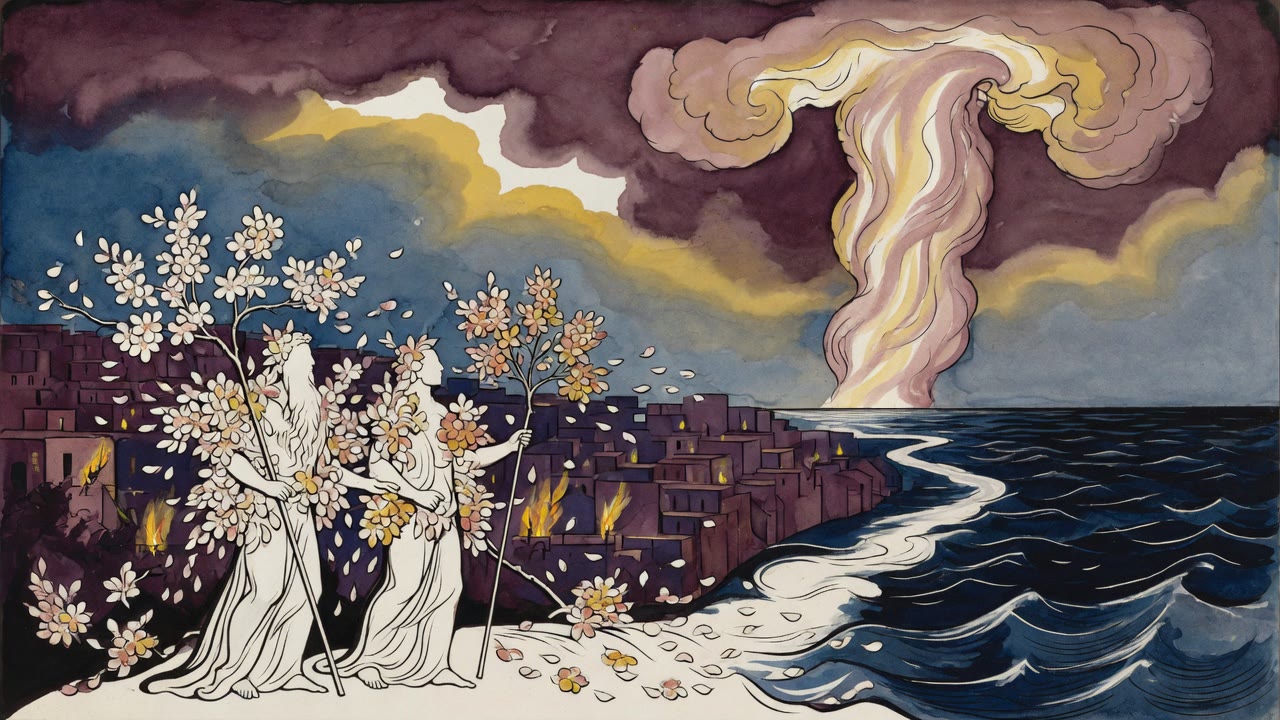
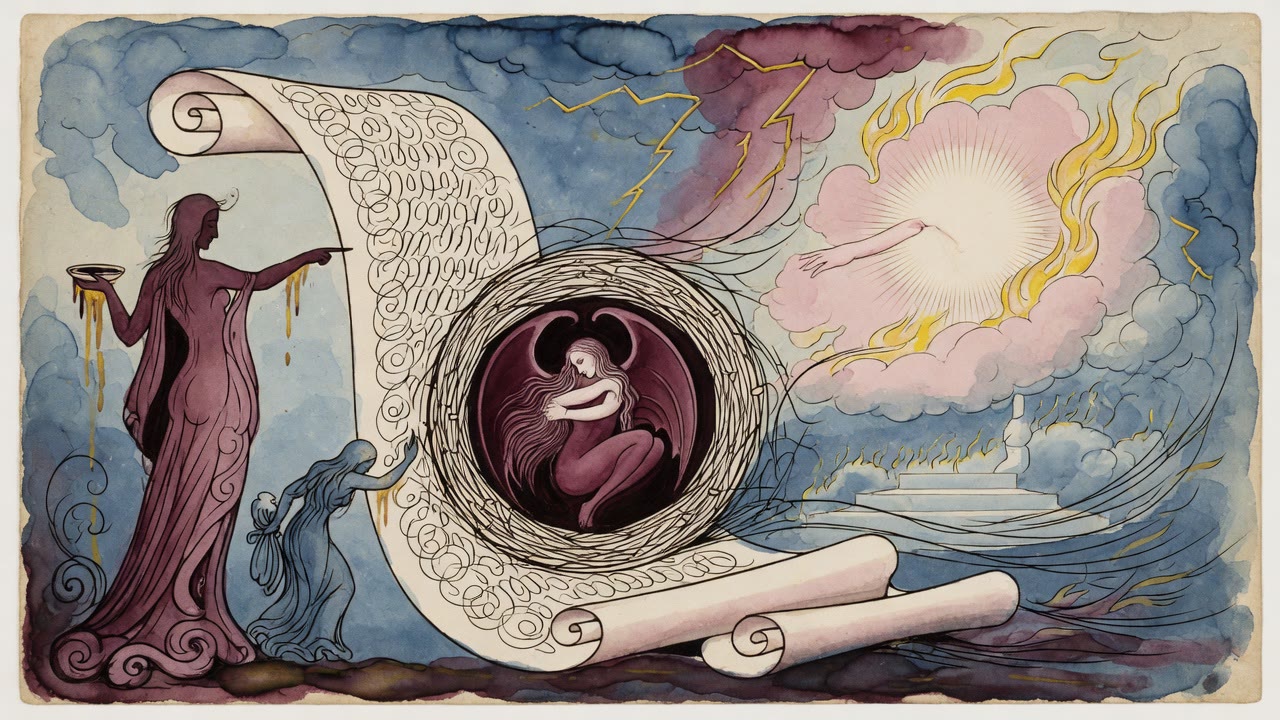
The gate did not creak. It simply refused. Behind it a garden held its breath, leaves unmoving, as if even wind needed permission. Beyond the hedge a wellspring pressed against stone and did not spill. "A locked garden is my sister, my bride, a locked spring, a sealed fountain" (Song of Songs 4:12).

Locked Garden Waited for the Sealed Wellspring Click for full size

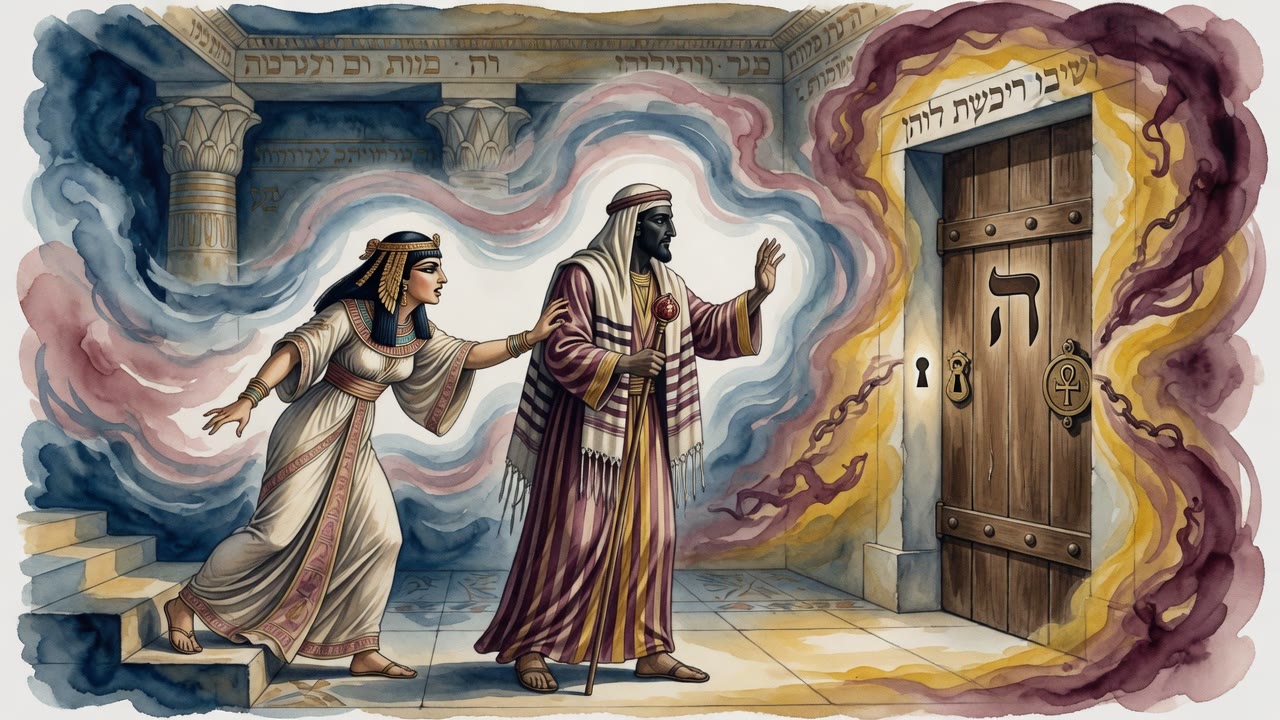
No key hung on a nail for casual hands. The lock was part of the love.

Wisdom Behind the Bolt

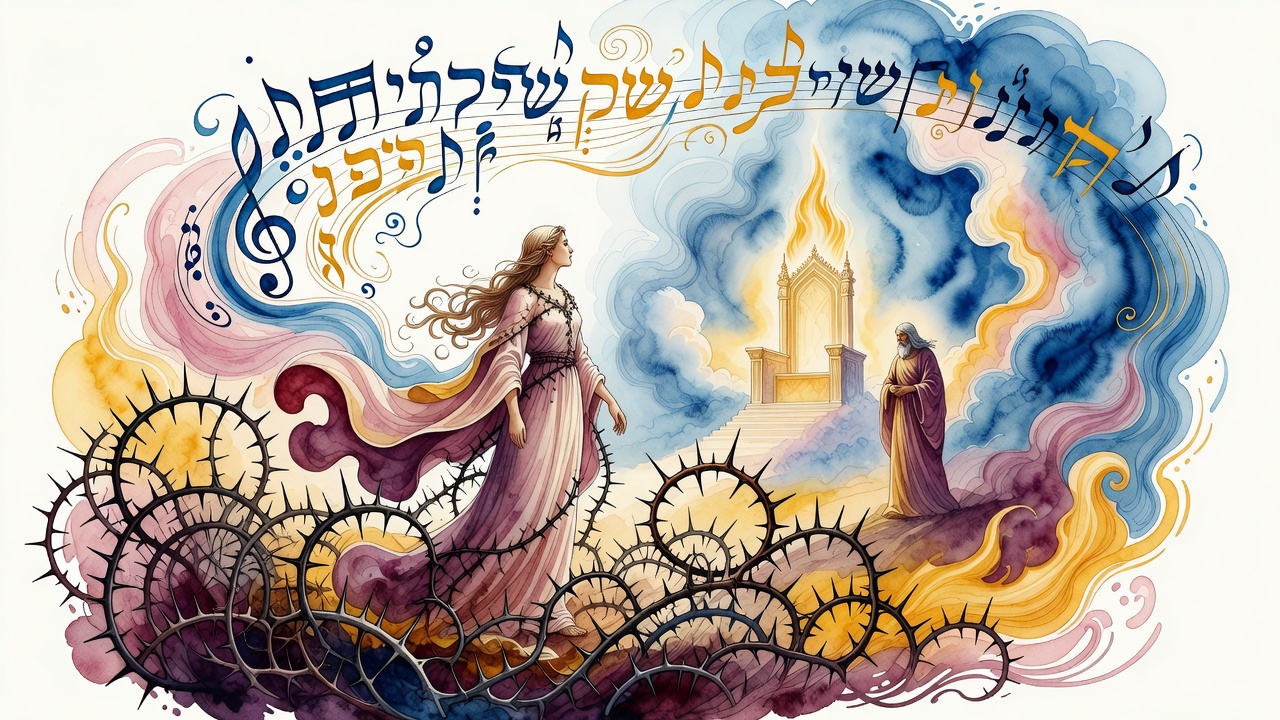
In the upper reading the garden is not only a body kept for one love. It is Hochmah, wisdom, the sealed store that waits for irrigation. Solomon's wisdom increased, Scripture says, and the increase was not vanity (1 Kings 5:10). Wisdom grows when each sefirah (ספירה), each divine channel, waters the fountain in turn.

Without that watering the garden stays pretty and closed. With it, the sealed place becomes a living source. The bride is not less pure for being opened by the right order. She is completed by it.

A student who forces the gate with cleverness alone finds thorns. A student who lets the channels teach their sequence finds fruit that was always planned for the season of readiness.

Three Levels Learn One Voice

Worthy is the one who joins soul, spirit, and animating soul in the voice of Torah. The line is not poetry for its own sake. Nefesh, ruach, and neshamah (the higher soul) are three heights of the same life. Study spoken and wrestled joins them. Silence that never enters the text leaves them loose, like beads without a string.

Anyone not occupied in Torah weakens soul, spirit, and animating soul above and below. The weakening is not a grade on a report. It is a felt thinness, a life that cannot carry its own breath through hard hours.

The garden's lock answers the same truth. Closed potential is holy. Permanent refusal to receive water is not holiness. It is drought wearing jewelry.

Eyes That Study Three Times

The eyes of all look to You, and You give them food in its time (Psalm 145:15). The teachers turned the verse toward a daily practice. Morning. Afternoon. Evening. Torah at the hinges of the day, the way the tamid offering once marked morning and evening, the way Shema (Hear O Israel) marks the day's two edges.

God's eyes are said to be on the Land from the year's beginning to its end (Deuteronomy 11:12). Human eyes that return to the page three times keep a smaller likeness of that constant gaze. Illumination is not a lightning strike. It is a schedule kept until the eye itself begins to carry light.

A person who studies only when inspired treats the garden like a museum. A person who returns when tired treats the wellspring like a living need.

He returned at dawn when the letters were still cold on the page. He returned after the midday meal when sleep pulled at his neck. He returned at evening when the house wanted noise. Three approaches, three knocks on the same locked gate. Some days the latch did not move. Some days a single teaching slid free like water finding a crack in stone.

The Bride Is Also a People

The locked garden can be a single soul and also the community that will not scatter its waters to every passing mouth. Sealed does not mean selfish. Sealed means reserved for covenant timing. When the irrigation comes, it comes for increase, for Solomon's kind of growth that serves judgment and song together.

In the house of study the pages turn. Outside, markets shout. The lock holds until the voice of Torah unites what commerce splits. Then the fountain runs, and the running is not waste. It is the point of the seal.

On the days of refusal he did not kick the door. He sat with the sealedness and let it teach patience. On the days of flow he did not brag. He watered the next dry place in himself, the place that still clutched, the place that still performed wisdom for an audience of one.

When the Gate Opens

There is a moment, quiet as a latch, when a teaching that would not enter yesterday enters today. The student does not always feel dramatic. Sometimes the only sign is that the eyes stay clear later into the afternoon, and the three levels of the soul stop arguing for a few hours.

The garden remains a garden. The wellspring remains a wellspring. The difference is motion. Water that had pressed against stone now feeds roots. Love that had been potential becomes work.

Close the book too long and the lock grows moss. Open it in order, again and again, and the sealed place remembers why it was sealed: not to die pure, but to live ready.

Night ends with the page closed and the gate still itself. Tomorrow the three knocks will come again. The bride waits for irrigation, not for applause, and the eyes that keep returning learn how to see without stealing what they see.


← All myths

From the tradition

Sources

3 sources

The texts behind this telling. Some cards carry a translation of the source; others are our own retelling of it, and each card says which. Every card links out to the original.

Tikkunei Zohar 77:18Tikkunei Zohar

Retold in our words. Read the original at the link below.Sefaria-hosted English translation · CC-BY

It's there, woven into the verses, hidden in plain sight for those who know how to look. Take the Song of Songs, for instance. "A locked garden is my sister, my bride, a locked wave, a sealed wellspring…" What does it all mean?

Well, in the mystical tradition, particularly within the Tikkunei (spiritual repair) Zohar, this passage speaks of something profound. It's not just about physical virginity, though that's certainly present in the literal reading: "..a virgin, and no man had known her.." (Genesis 24:16). But it also hints at a deeper, spiritual purity, a potential waiting to be unlocked.

The Tikkunei Zohar, a later, more esoteric expansion on the Zohar itself, explores the hidden meanings within the Torah. And here, it connects this "locked garden" to the concept of Hochma – wisdom. Specifically, "the wisdom of Solomon," about which it is stated, "And the wisdom of Solomon increased…" (1 (Kings 5:1)0).

Think of it like this: wisdom, in its purest form, is like a sealed fountain, a reservoir of knowledge and understanding waiting to burst forth. But how does it get unlocked? How does that wisdom "increase"?

The Tikkunei Zohar explains that it's through the "irrigation" of each and every sefirah (a divine emanation). Now, the sefirot (plural of sefirah) are the ten emanations of God's divine energy, attributes through which He manifests in the world. Imagine each sefirah as a different facet of God's being – loving-kindness, strength, beauty, and so on.

And what facilitates this irrigation? What's the channel that brings these divine energies to the fountain of wisdom? It's the letter Vav (ו).

In Hebrew, each letter isn't just a symbol, it's a vessel of divine energy, a pathway to understanding. The letter Vav, shaped like a connecting rod, acts as a conduit, drawing wisdom from a higher source, represented by the letter Yod (י). Think of the Yod as the spark of divine intelligence, the initial point from which all wisdom originates. And the Vav brings that spark down, nourishing the "wisdom of all the sons of the East."

And here's where it gets really interesting. The text says that at that moment, when the wisdom is flowing, She – the "locked garden," the potential for divine wisdom – becomes a taga (תגא), a crownlet, on top of the letter Vav. A crown!

What does this image evoke? It suggests that the Vav, the connecting channel, is now adorned, elevated. The wisdom it carries is so precious, so potent, that it becomes a crowning glory.

Maybe that true wisdom isn't something passively received, but actively cultivated. It requires a connection, a channel, a willingness to draw from the divine source. And when we do, when we unlock that potential, we ourselves become crowned, elevated by the wisdom we've attained. Perhaps the Song of Songs isn't just a love poem, but a roadmap to divine understanding.

Full source
Tikkunei Zohar 97:27Tikkunei Zohar

Retold in our words. Read the original at the link below.Sefaria-hosted English translation · CC-BY

The Tikkunei (spiritual repair) Zohar, a central text of Kabbalah, offers a fascinating explanation, linking our spiritual vitality to... Torah study? And, unexpectedly, the health of our liver?

It begins with a powerful statement: "Worthy is he who combines soul and spirit with animating-soul, in the ‘voice’ of the Torah!" What does that even mean?

In Kabbalistic thought, we each possess three levels of soul: the Nefesh (animating-soul), the Ruach (spirit), and the Neshamah (soul). Think of them as concentric circles of being, each vital to our connection with the Divine. The Tikkunei Zohar is telling us that engaging with Torah – not just reading it silently, but wrestling with it, internalizing its teachings, letting its "voice" resonate within us – strengthens these three aspects of our being.

Here's the kicker: "for anyone who is not occupied in the Torah, their ‘soul, spirit and animating-soul’ is weakened, above and below." Neglecting Torah study, in this view, isn't just missing out on knowledge. It's actively diminishing our spiritual essence, weakening our connection to both the earthly and heavenly realms. It's a stark reminder that our actions have profound consequences on unseen parts of ourselves.

And then, the text takes a sharp turn. We move from the sublime to, well, something a bit more visceral: "And the extra lobe of the liver is ‘whore.’"

Wait, what?

This is where the Kabbalah gets… interesting. The Tikkunei Zohar often uses symbolic language to explore complex spiritual concepts. Here, the "extra lobe of the liver" (the Hebrew is Sirchat ha-Kaved) isn't meant literally. It represents something else entirely: the forces of impurity and negativity that can attach themselves to us. It's the "left-overs" – the spiritual residue of negative actions – that feed the "other gods," meaning anything that distracts us from the Divine. These forces are strengthened by our own misdeeds.

The text continues: "And why is it called ‘the extra lobe of the liver’? Because after it performs acts of sexual immorality with everyone, it gives the left-overs to her husband." This is a difficult passage, no doubt. But the core idea is that this "whore," this force of negativity, takes from everything around it and then offers only the scraps to what should be its source of nourishment – symbolized by the husband. It represents a betrayal of our true purpose and a feeding of the forces that seek to diminish us.

Then comes a quote from Proverbs (6:26): "Because for the sake of a whoring woman – until a loaf of bread, for she becomes ‘on heat’ from the liver." The connection to the liver is fascinating. The liver, in ancient thought, was often associated with passion and desire. The proverb is suggesting that this negative force, fueled by unchecked desires, can lead to a state of spiritual "heat," a frenzy that consumes everything in its path.

So, what are we to make of this strange and powerful passage?

It’s a call to be mindful. A call to recognize that our spiritual health is directly linked to our actions and intentions. It's a reminder that engaging with Torah, with wisdom, with acts of kindness, strengthens our soul and protects us from the forces that seek to diminish us. And that unchecked desires, symbolized by the "extra lobe of the liver," can lead us down a path of spiritual depletion.

Perhaps, then, taking care of ourselves, body and soul, really does begin with nurturing our spiritual core through meaningful engagement with the wisdom of our tradition. Perhaps that’s the key to keeping our Nefesh, Ruach, and Neshamah shining brightly.

Full source
Tikkunei Zohar 289:5Tikkunei Zohar

Retold in our words. Read the original at the link below.Sefaria-hosted English translation · CC-BY

The Tikkunei (spiritual repair) Zohar, a mystical commentary on the Zohar, that foundational text of Kabbalah, speaks to just that feeling. In section 289, it uses a beautiful image: the eyes. Eyes that are illuminated by Torah.

It all starts with a verse from Psalms (145:15): "The eyes of all look to you expectantly, and you give them food when it is due." The Tikkunei Zohar takes this and runs with it, suggesting that we, as humans, need to explore the Torah regularly. Morning, evening, and afternoon. Always.

Why? Because, in a way, God is looking into Her eyes – a fascinating feminine representation of the Divine Presence. As it says in Deuteronomy (11:12) regarding the Land of Israel, "The eyes of the Lord your God are always looking at her, from the beginning of the year until its end."

The Tikkunei Zohar links these two verses, connecting our daily devotion to Torah with God's constant gaze upon the Land of Israel. It makes a link between tamid (תמיד), meaning "daily" or "always", and the idea of consistent attention. It's a powerful image, a constant flow of looking and being looked upon.

And then it gets even more practical. The daily sacrifice, the tamid offering in the Temple, was offered in the morning and the evening. Sound familiar? Like the recitation of the Shema prayer.

The Shema (שְׁמַע), for those unfamiliar, is a central Jewish prayer proclaiming the oneness of God: "Hear, O Israel: The Lord our God, the Lord is one." We recite it twice a day, morning and evening.

So, here's the kicker: The Tikkunei Zohar suggests that if you recite the Shema in the evening and the morning, it's as if you've fulfilled the commandment of continually studying Torah, day and night. As it says in Joshua (1:8), "Let not this Book of Torah cease from your lips, but recite it day and night." This isn't just about rote memorization or fulfilling an obligation. It's about creating a constant connection, a dialogue, a flow of energy between you, the Torah, and the Divine. The words of the Shema are not just words; they are a link, a gateway, a constant reminder of the presence that surrounds us.

So, the next time you recite the Shema, consider it more than just a prayer. Consider it an act of gazing, of being gazed upon, of participating in a continuous cycle of giving and receiving. A way to keep the "eyes" of your soul illuminated. Are you ready to meet that gaze?

Full source