Manna Filled Every Limb Until Nothing Was Left
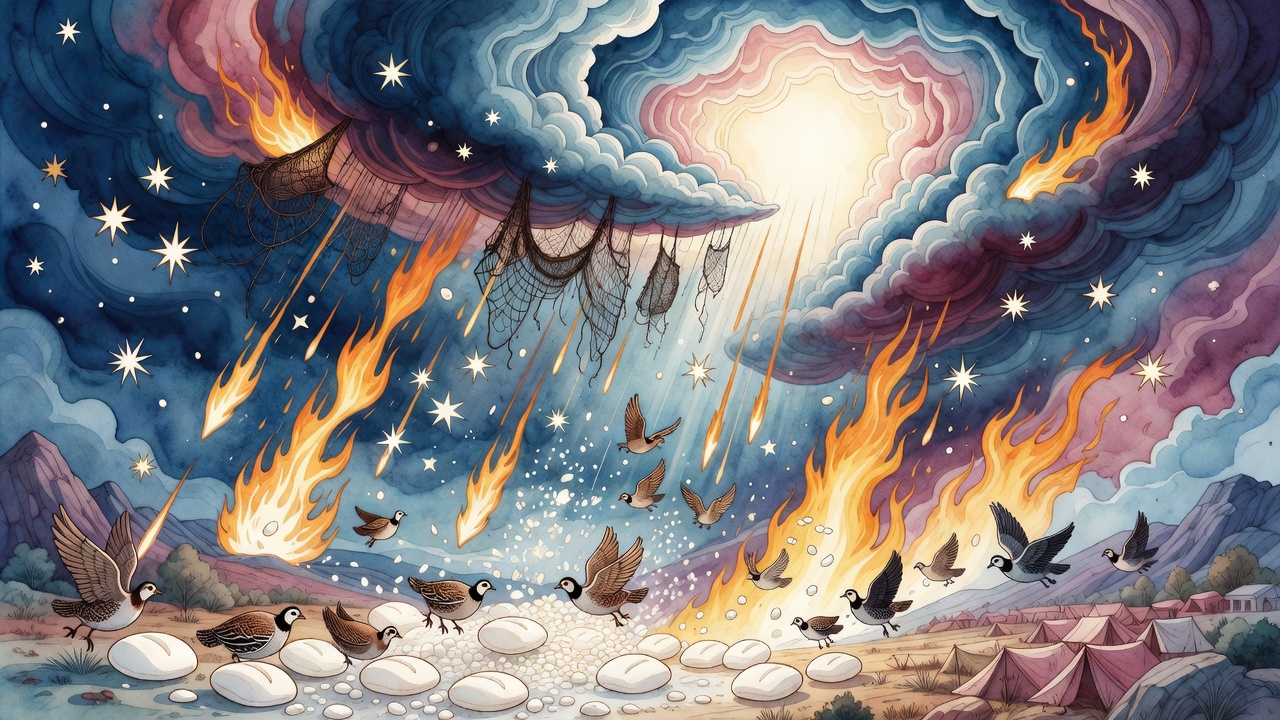
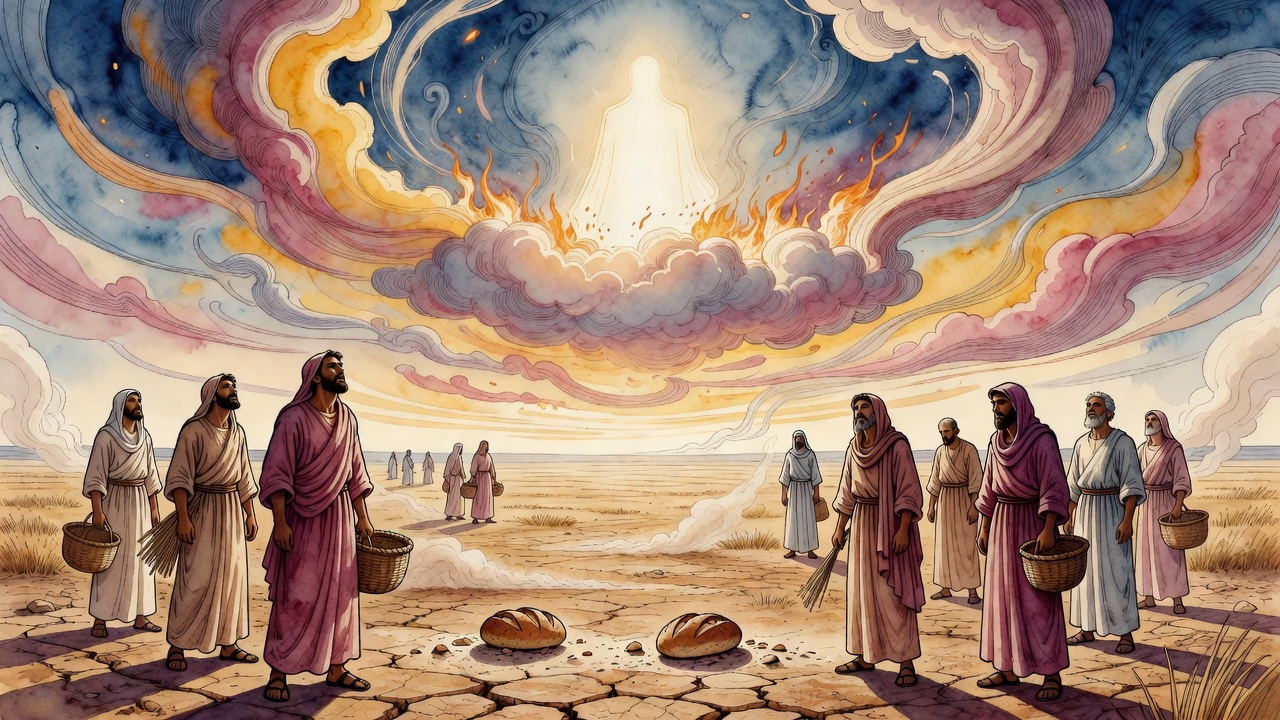
When the dew lifted, Israel found scale-like bread whose letters count to 248 limbs, angel-ground food that left no waste in the body.
Table of Contents
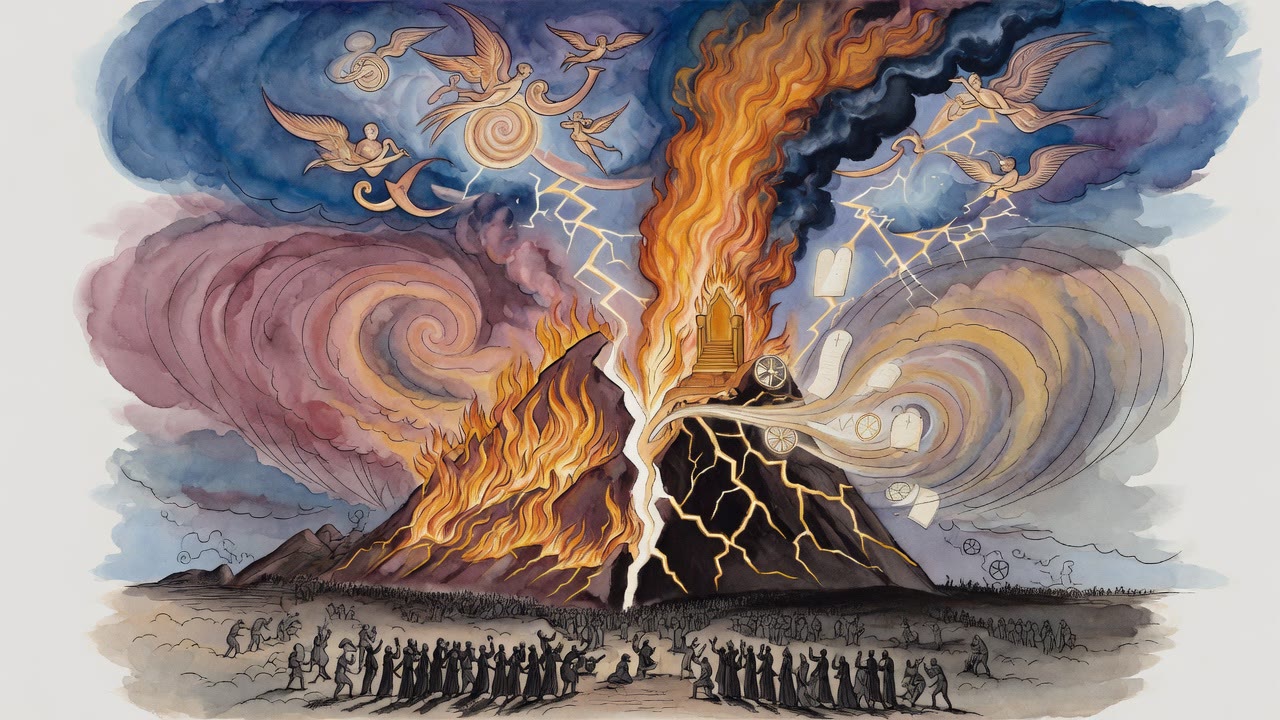
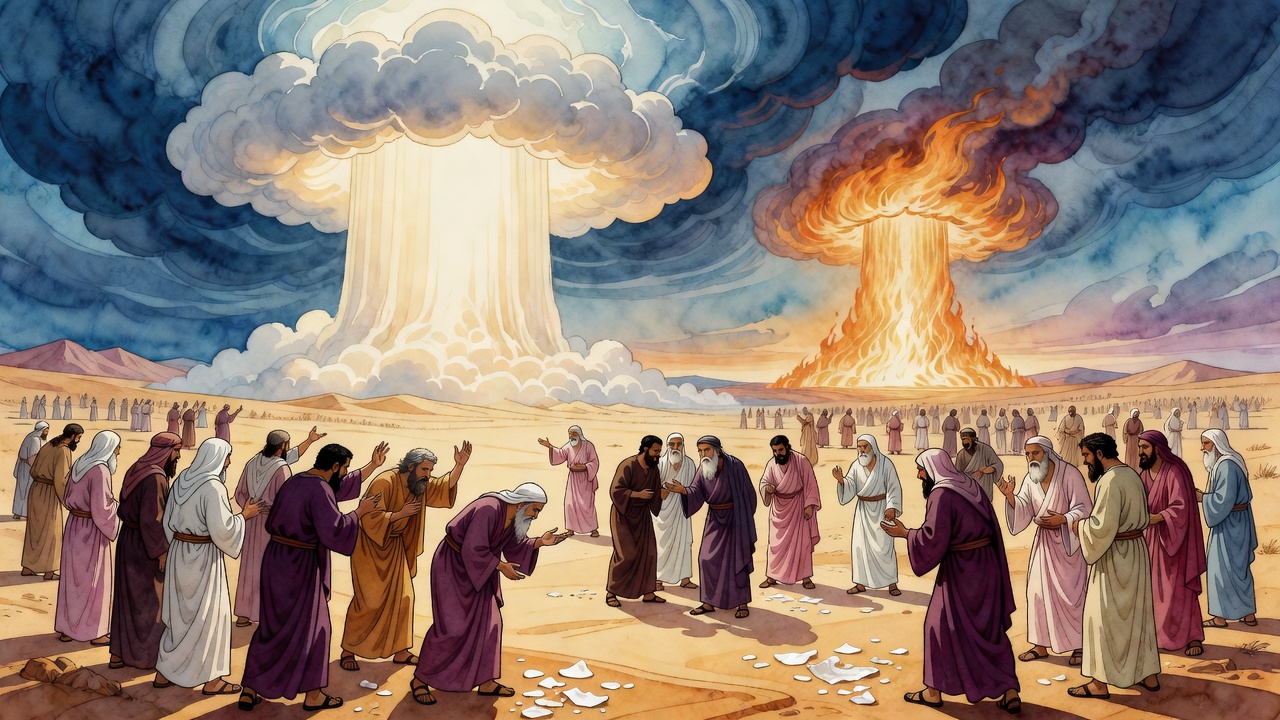
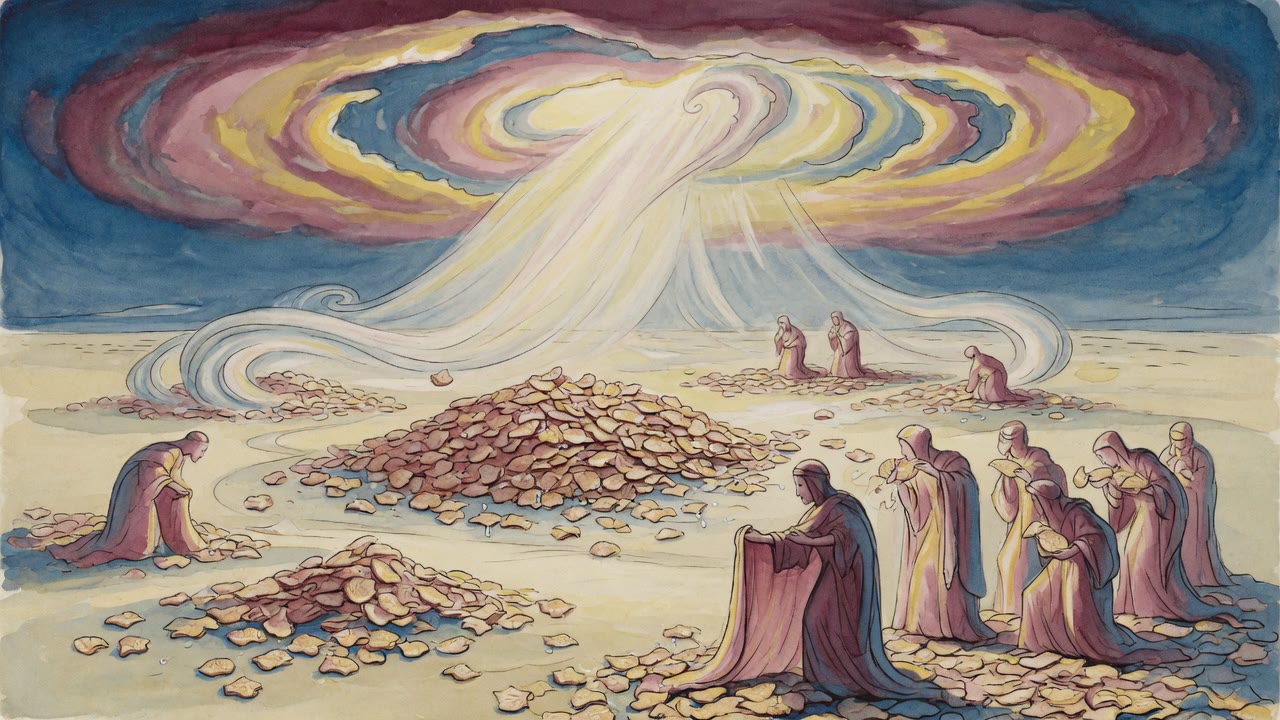
The dew lifted off the desert floor and left a fine, scale-like film on the sand. Children scooped it before their parents finished arguing over its name. The Torah called it mechuspas, and Bar Kappara counted its letters like coins on a market table. Mem forty. Chet eight. Samech sixty. Peh eighty. Samech sixty again. Two hundred and forty-eight. The number of limbs in a human body. A woman crushed a flake between her teeth and felt it dissolve too cleanly, as if it had already decided to become part of her.
 Click for full size
Bread of the Limbs, Not Only of the Mighty
"Each one ate the bread of the mighty," says the psalm (Psalms 78:25). Bar Kappara hears abirim, the mighty, and answers with eivarim, the limbs. Ministering angels ground the grain in the heights. It drifted down into mortal mouths and entered every joint so completely that nothing was left over to be cast away. Not one of them needed to relieve himself of what he had swallowed, because the manna became light inside the flesh.
A people who had left brick and Nile mud now walked with angel flour in their blood. Hunger still came each evening as a teacher, but the morning answered with a bread that refused to become waste. Elders who remembered garlic of Egypt joked that light has no aftertaste. Younger men stretched their arms and said their bones felt counted.
The camp's ordinary rhythms bent around this food. What heaven sent, the body kept. What the body kept, the midrash named as a map of 248.
What Belongs to the Lord Opens the Womb
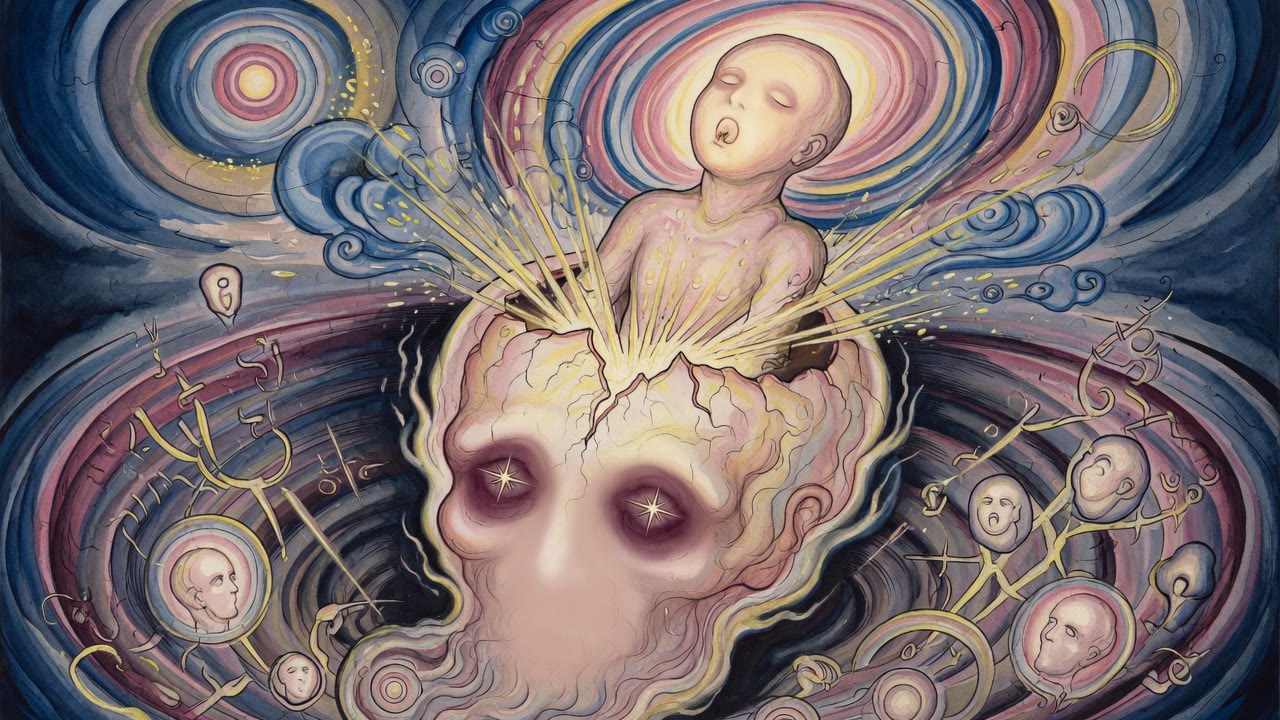
On another register of the same Exodus story, the Torah claims every firstborn that opens the womb as the Lord's (Exodus 13:12). Life that begins belongs upward first. The manna story and the firstborn claim share a pressure: the body is not a private warehouse. What fills the limbs and what opens the womb both answer a claim older than appetite.
A father in the camp held his newborn and felt that double ownership. The child's first cry and the morning's scale-bread both said the same thing in different tongues. You live on what is given, and the Giver keeps the first portion.
Mothers who had lost firstborns in Egypt held living infants tighter when the claim was read. The wilderness was free of Nile mud, not free of cost.
Take for the Household, Not Only for the Self
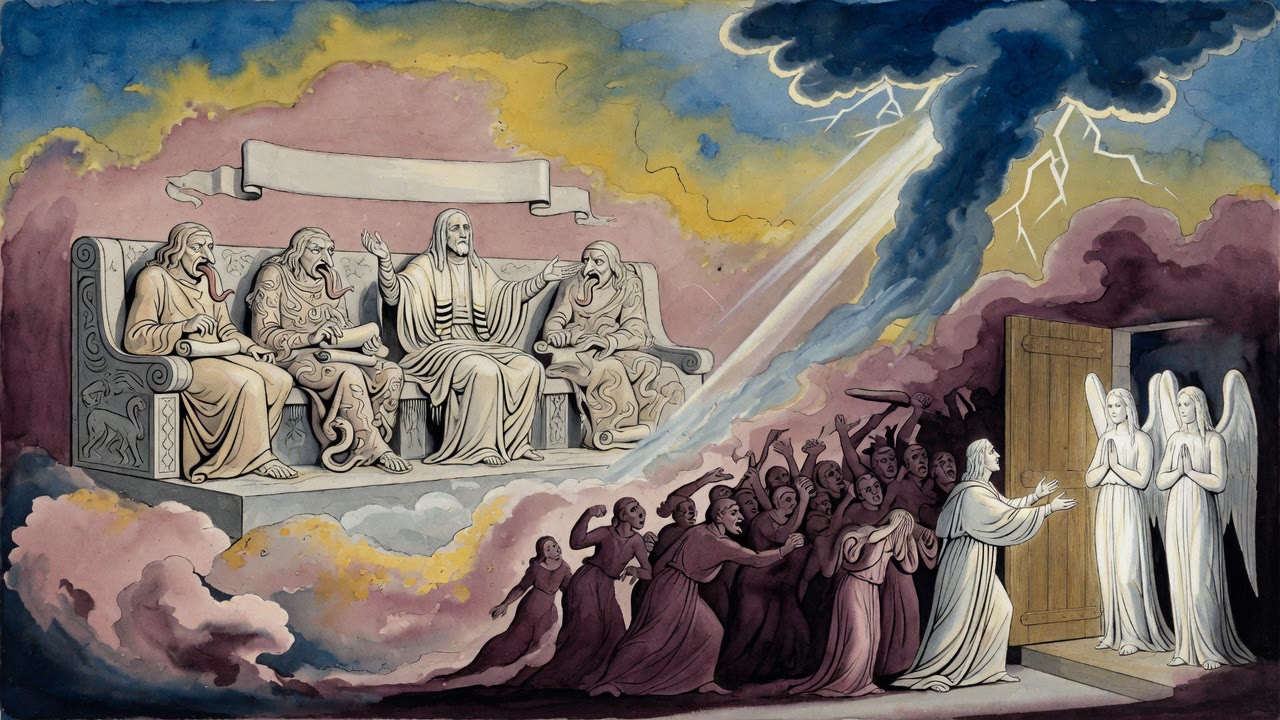
When the Pesach instructions press the people to take a lamb "for the number of souls," the Mekhilta hears the extra "shall you take" as a fence against a lone eater. The lamb is not a private feast for one strong man. It is sized to mouths around a table. The manna had already trained the same muscle. Gather what you need. Do not hoard for a private empire of the gut.
On some mornings a person tried to keep two days' worth against the rules and found worms. On other mornings the weak gathered as much as the strong. The bread that filled 248 limbs also refused to become a tool of class inside the camp.
A family that had quarreled over portions the night before woke to find the ground fair again. They ate in silence that was not peace exactly, but something like training.
Light in the Bone
Imagine a walker on the third day out from a bitter water station. His calves burn. He lifts the white film to his mouth and feels not fullness alone but a quiet arranging in the body, as if each limb were being counted and answered.
Israel did not become angels. They became people whose food had passed through angel hands. They still argued. They still feared. They still built a calf when fear outran memory. But for a stretch of wilderness time their waste was not the measure of their eating, and their limbs were the measure of the gift.
At dusk the film was gone. Stars took the sky. Stomachs remembered tomorrow's need. The map of 248 stayed in the teaching, a way to say that heaven once fed not only the mouth but the entire human outline, joint by joint, until nothing of the gift was left to throw away.
On a later journey a child asked why the manna did not taste like the pots of Egypt. His mother said that Egypt fed the gut and starved the limbs of free people. This bread fed the limbs first. The child did not understand every word. He understood enough to stop asking for Nile recipes for one more morning.
← All myths