Parshat Beshalach6 min read

Moses at Rephidim, Facing a Mob and Then an Army

At Rephidim, Moses faced a mob ready to stone him and then an army attacking without cause. The Mekhilta reads both crises as a single lesson about Moses.

Curated by Arthur · Told by Maggid ·
Table of Contents
  1. The People at Rephidim
  2. What the Midrash Heard in the Cry
  3. The Instruction to Walk Forward
  4. Amalek
  5. Write This Down
  6. The Altar Named for a Miracle

The People at Rephidim

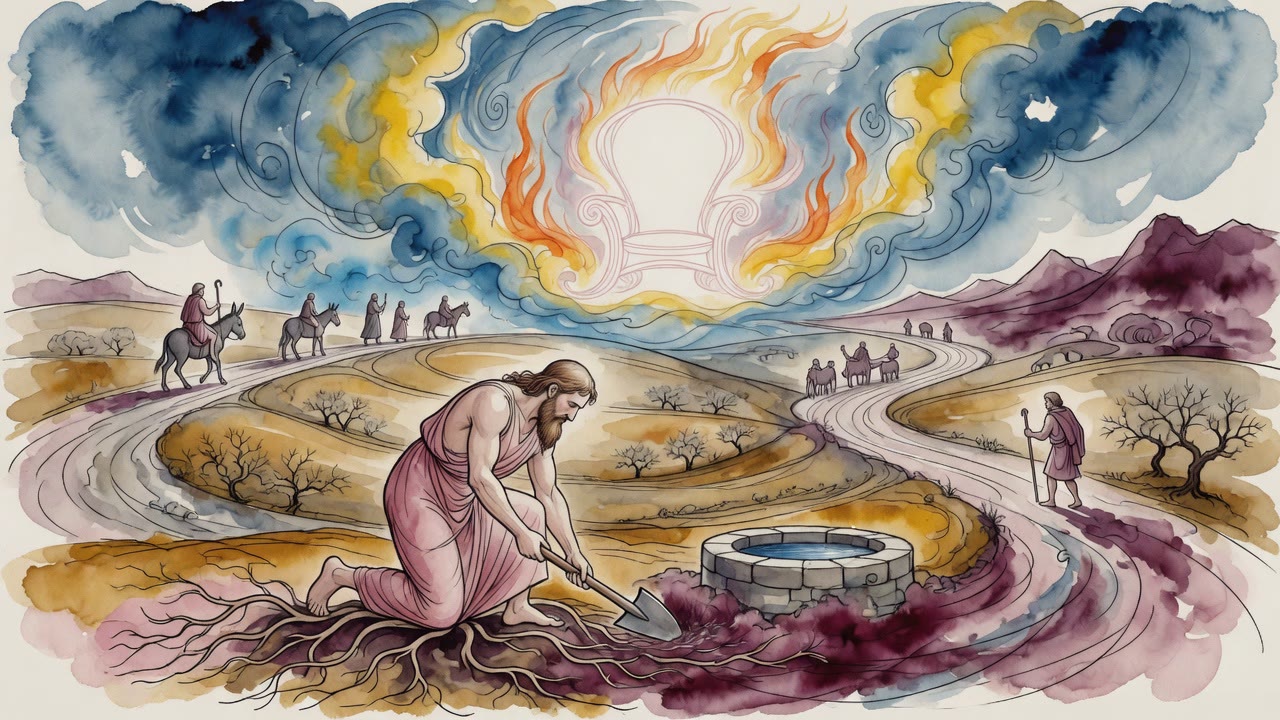
Moses had led them out of Egypt. He had stood before Pharaoh. He had stretched his staff over the sea. He had been their advocate before God on multiple occasions when they had given God reasons to abandon them. At Rephidim, those same people were ready to stone him.

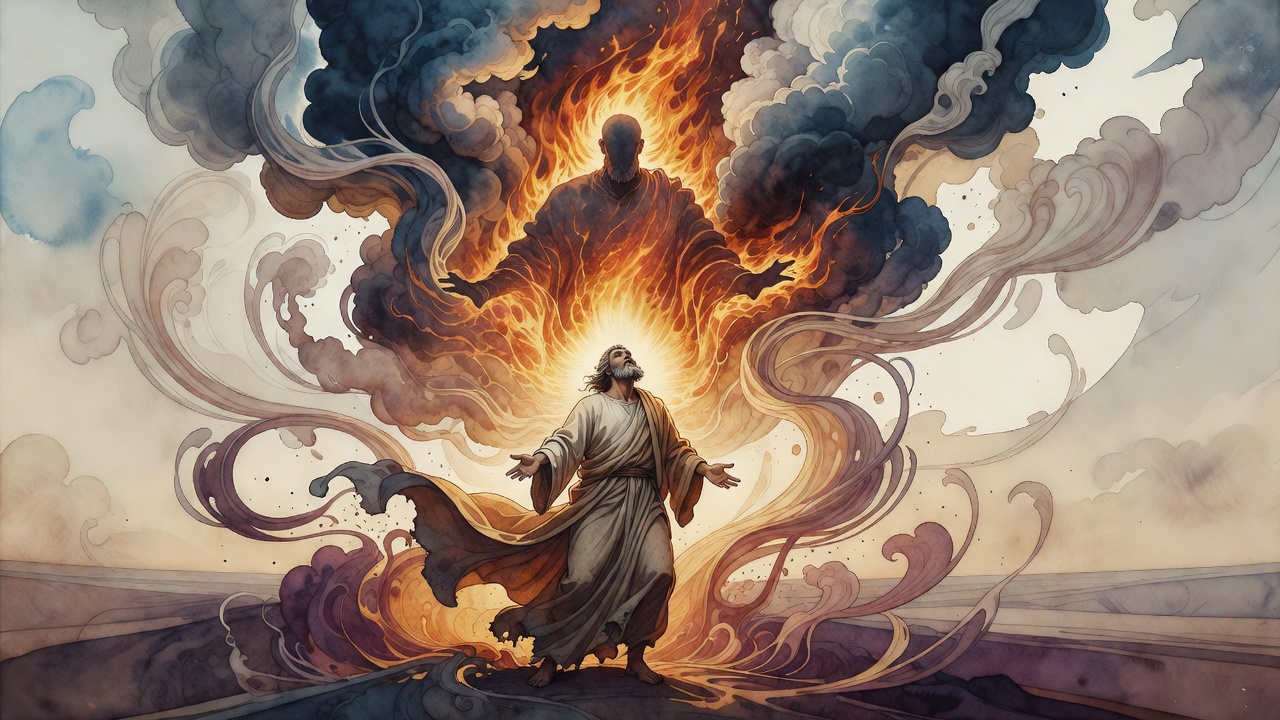
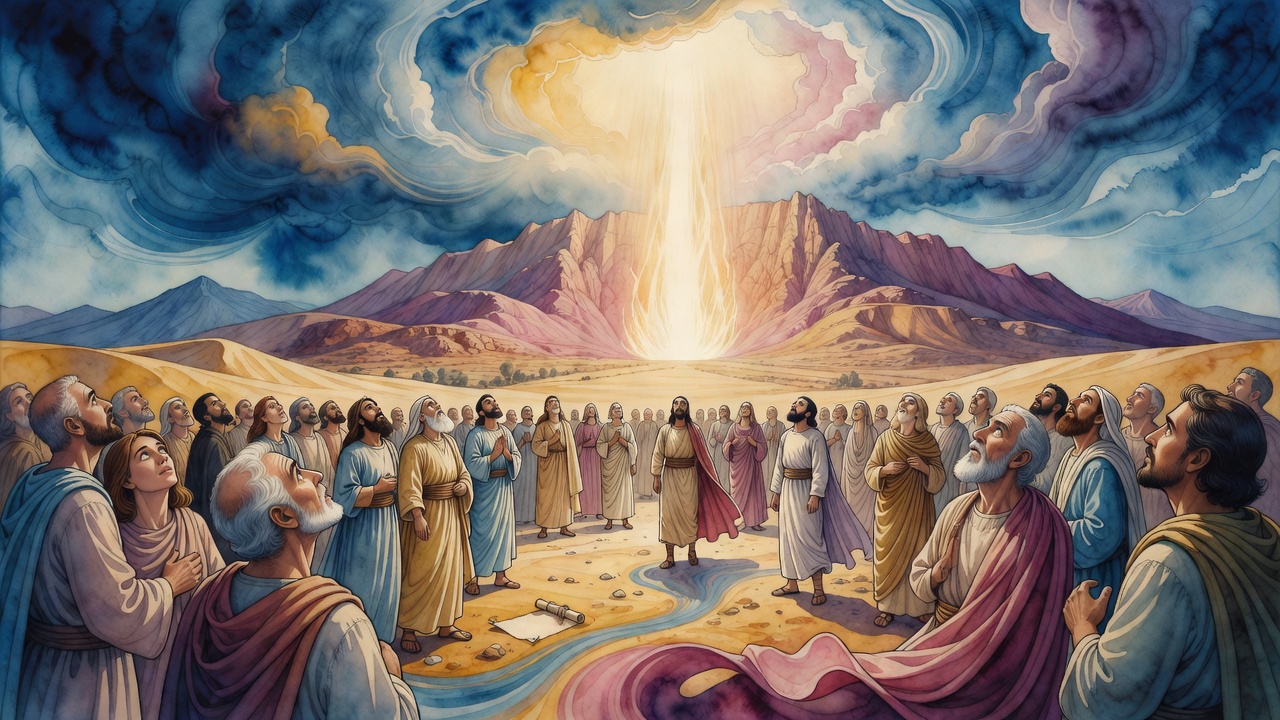
They had no water. The thirst was real and the complaint was real and their desire to kill the man responsible for their situation was real. Moses cried out to God: "What shall I do with this people? A little more and they will stone me." He was not exaggerating for effect. He was reporting the situation accurately, and asking God for instructions before it deteriorated further.

What the Midrash Heard in the Cry

The Mekhilta DeRabbi Yishmael heard something in Moses's cry that the plain reading of the verse does not make explicit. It said: we are hereby informed of Moses's greatness. A lesser man, facing a mob, might have thought: since they are quarreling with me, I will not intercede for them. Moses did the opposite. He prayed for the people who were threatening to kill him. He turned not against them but toward heaven and cried out on their behalf.

The midrash dramatized what Moses said in that prayer. He told God: "I am caught between you and them. They are complaining about water, and their thirst is genuine. If I tell them I cannot help them, they will say: he has no power. If I tell them I can help them, and then you do not provide water, they will say: he led us into the wilderness to die. Master of the universe, I cannot satisfy them, and I cannot abandon them. What am I supposed to do?"

The Instruction to Walk Forward

God told Moses: "pass over before the people. Strike the rock. Water will come from it." The Mekhilta heard at least three different meanings in "pass over."

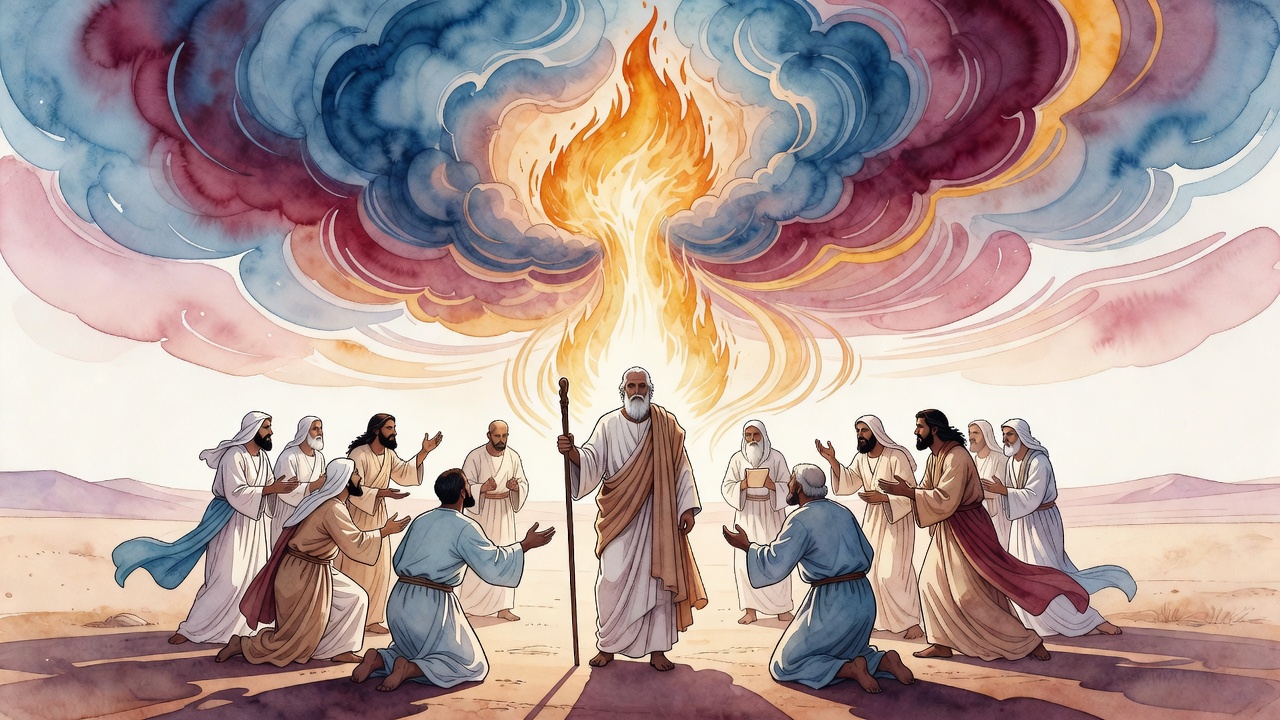
The first: overlook. Ignore their harsh words. Let their complaints wash past you. Do not take their quarreling as personal. The second, from Rabbi Yehudah: walk past them, toward the rock, because the solution is ahead of you, not behind you in the argument. The third, from Rabbi Nechemiah: forgive. Release them from the guilt of what they have said. Move forward without carrying it.

The instruction was not just practical. It was a characterological demand: Moses was being asked to absorb insult without hardening, to move toward the solution while the insult was still fresh, to forgive people who had just threatened to kill him and keep leading them forward. He did it. The water came.

Amalek

Then Amalek attacked. They came at Rephidim, while the Israelites were still encamped, still recovering from the crisis of the water. The attack was unprovoked in the sense that Amalek had nothing at stake in the Israelite camp's survival or destruction, they were not defending territory, not responding to a threat. They attacked because the Israelites were there and appeared vulnerable, and Amalek attacked the weak.

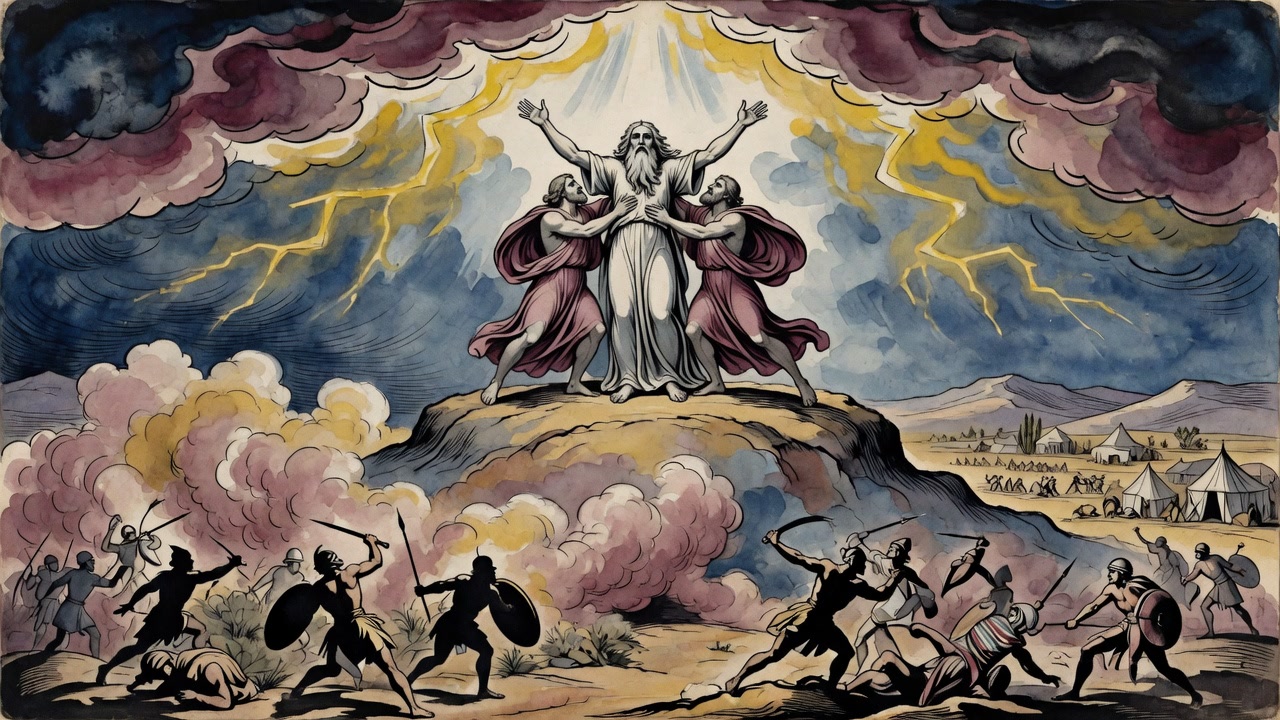
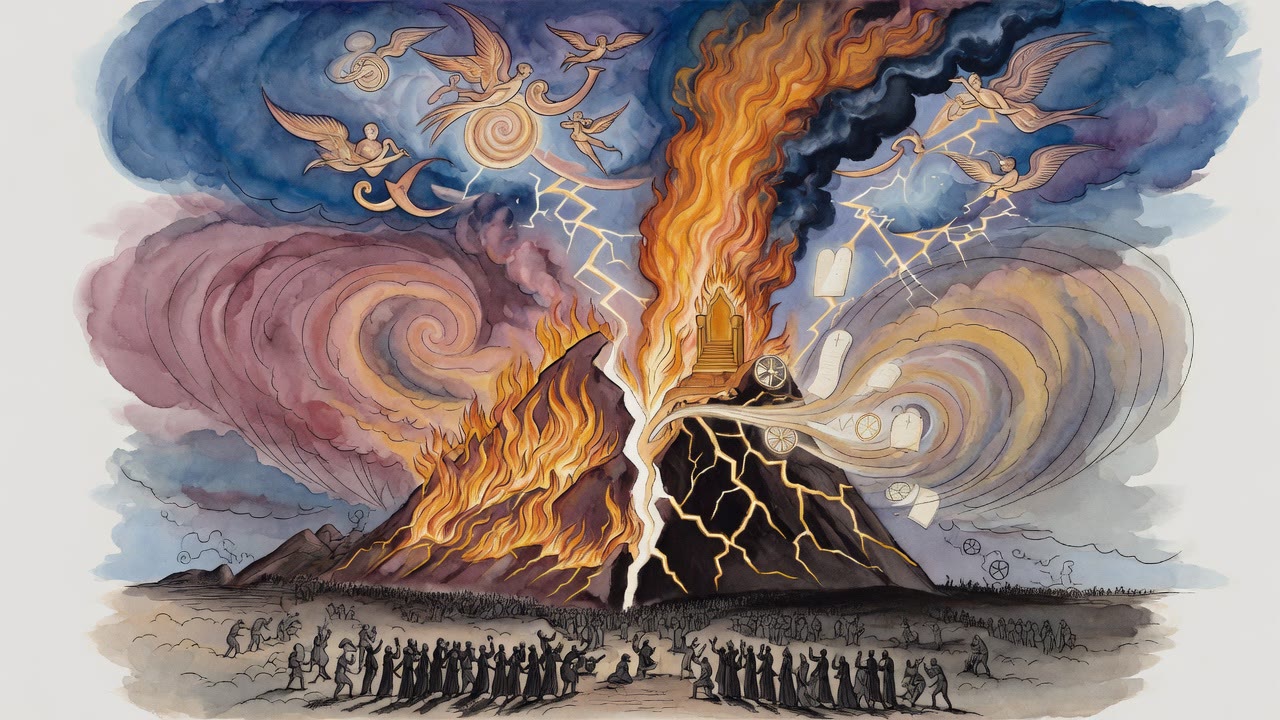
Moses told Joshua to choose men and fight. He himself went to the hill above the battle with Aaron and Hur. As long as his hands were raised, Israel prevailed. When his hands dropped, Amalek prevailed. Aaron and Hur held his hands up from either side, steady until sunset. Israel prevailed.

The Mekhilta observed something specific about what the victory meant. When Moses held his hands up, it was not his personal strength that turned the battle. His raised hands pointed the people's eyes toward heaven, and when their eyes were toward heaven, God fought for them. The posture was a theology: the battle was not won by Israel's soldiers but by the direction of Israel's attention.

Write This Down

After the battle, God told Moses to write it in a book and put it in Joshua's ears: "Blot out, I will blot out the remembrance of Amalek from under the heaven." The Mekhilta read the double verb as an assurance that extended across time: so is it with all the generations. The rod with which Israel is smitten will in the end smite itself. Amalek had come to destroy and would itself be destroyed. Pharaoh had enslaved Israel and had been drowned in the sea. Every people and kingdom that arose to harm Israel would be harmed by the same measure it used. "As one metes it out, so is it meted out."

The instruction to write it down was also a statement about memory. The war with Amalek was not finished at Rephidim. It was a pattern, a recurring structure in history. Each generation would encounter it in some form. Writing it down and placing it in Joshua's ears was the mechanism of transmission, the next leader had to understand what he was inheriting, not just a military victory but a principle about how history worked and what it asked of those who led Israel through it.

The Altar Named for a Miracle

Moses built an altar after the victory and named it: "The Lord is my miracle." The Mekhilta parsed the name carefully. He did not name it "God saved us" or "God fought for Israel." He named it for what the miracle was for, for the sanctification of God's name. When God intervened at Rephidim, the primary purpose was not to rescue Moses from the mob or Israel from Amalek. It was to demonstrate, through the rescue, what God was. The miracle was God's self-disclosure, and the altar's name recorded that.


← All myths
From the tradition

Sources

6 sources

The texts this telling draws on, in full. Open a card to read inline, or expand it for a wider, quieter read.

Mekhilta Tractate Vayassa 7:8Mekhilta DeRabbi Yishmael

This teaching from the Mekhilta DeRabbi Yishmael unfolds during the crisis at Rephidim, where the thirsty people quarreled with their leader and were ready to stone him. Commenting on (Exodus 17:4) "and Moses cried out to the L-rd," the rabbis say we are hereby apprised of the eminence of Moses. A lesser man, facing a mob, might have said: since they are quarreling with me, I will not implore mercy for them. Moses did the opposite. Though they threatened his life, he turned not against them but toward Heaven, and "Moses cried out to the L-rd" on their behalf.

The midrash then dramatizes his prayer. When Moses said "What can I do to this people?" he spoke before the Holy One Blessed be He as one caught between two impossible demands. He pleaded: Master of the universe, between You and them I will be killed. On one side stood the people, ready to take his life over water; on the other stood God's own charge to deal gently with them. The rabbis recall (Numbers 11:12) "For You say to me: Bear them in your bosom as a nurse bears a nursling," reading it as the divine instruction not to be harsh. Moses protests the strain: You command me to carry them tenderly like a nursing infant, yet they want to kill me. The teaching exalts him precisely because, pressed from both sides, he still cried out for mercy rather than abandoning the people who had risen against him.

Full source
Mekhilta Tractate Vayassa 7:10Mekhilta DeRabbi Yishmael

When God told Moses, "Pass over before the people" (Exodus 17:5), the instruction sounds like a simple command to walk ahead of the crowd. But the Mekhilta hears at least three different meanings in those two words.

The first interpretation: "Pass over" means overlook. God was telling Moses to ignore the people's harsh words. Let their complaints wash over you. Do not take their quarreling personally. Just move forward.

Rabbi Yehudah offers a second reading: "Pass by them", physically walk past them toward the rock, "and you will find water for them." The solution to the crisis is ahead of you, not behind you in the argument. Stop debating and start walking.

Rabbi Nechemiah provides a third interpretation: "Pass over" means forgive. God was asking Moses to release the people from their sin before performing the miracle. First pardon them, then provide for them. Mercy must precede miracles.

A fourth, unnamed interpretation offers perhaps the boldest reading: "Pass before the people, and whoever is bothered, let him speak!" Walk right through the crowd. Let anyone with a grievance confront you face to face. This turns Moses into a figure of radical transparency, not hiding from criticism but inviting it. Four rabbis, four readings of the same two words, each revealing a different model of leadership: patience, pragmatism, forgiveness, and fearless openness.

Full source
Mekhilta Tractate Amalek 2:1Mekhilta DeRabbi Yishmael

(Exodus 17:14) "And the L–rd said to Moses: Write this as a remembrance in the book and place it in the ears of Joshua": The early elders said: So is it with all the generations. The rod with which Israel is smitten, in the end, will be smitten itself. Let all men learn from Amalek, who came to smite Israel, and whom the Holy One Blessed be He "smote" out of this world and the world to come. As it is written (Ibid.) "for blot out will I blot out the remembrance of Amalek." And thus, the wicked Pharaoh, who subjugated Israel, the Holy One Blessed be He drowned him in the Red Sea, viz. (Psalms 136:15) "And He shook out Pharaoh and his hosts in the Red Sea." And thus, every people and kingdom that arises to harm Israel will be harmed in the same manner. "As one metes it out, so is it meted out to him," viz. (Exodus 18:11) "for (they were destroyed) by the (very) thing (water) whereby they devised evil against them."

Full source
Mekhilta Tractate Amalek 2:45Mekhilta DeRabbi Yishmael

After Israel's victory over Amalek at Rephidim, Moses built an altar and gave it a striking name. The verse records: "And Moses built an altar and he called its name 'the L-rd is my miracle'" (Exodus 17:15). The Mekhilta DeRabbi Yishmael explains what Moses meant by this dedication, and the answer reveals something profound about how the rabbis understood the purpose of miracles.

Moses did not name the altar "God saved me" or "God fought for Israel." He named it "the L-rd is my miracle," and the Mekhilta interprets this to mean that the miracle God wrought was not ultimately for Moses or even for Israel. It was for God Himself, for the sanctification of His name.

This is a subtle but important theological point. When God intervenes in history, the primary purpose is not merely to rescue His people, though that is certainly part of it. The deeper purpose is Kiddush (the sanctification blessing over wine) Hashem, the sanctification of the divine name. Every miracle testifies to God's sovereignty over the world. Every act of deliverance declares to the nations that the God of Israel is real and active.

By naming the altar this way, Moses demonstrated a level of spiritual understanding that went beyond gratitude. He recognized that he was not the point. Israel was not the point. The point was God's glory made manifest through action. The altar at Rephidim became a permanent marker of this truth: that when God performs miracles, He is not merely solving problems for human beings. He is revealing His nature to the world, sanctifying His own name through the drama of history.

Full source
Legends of the Jews 1:126Legends of the Jews

The battlefield was set, the armies were engaged, but the real battle, according to Legends of the Jews, wasn't on the ground at all. It was happening on a nearby height, where Moses stood. He wasn't wielding a sword or commanding troops. His weapons were prayer and his influence over the people.

Moses didn't go it alone. He had Aaron, of the tribe of Levi, and Hur, from the tribe of Judah, by his side. Think of them as the ultimate support team. They represented two noble tribes, and together, they were about to play a crucial role. Moses, was fervently imploring God for aid.

He wasn't shy about reminding God of his past accomplishments either. "O Lord of the world!" he cried, essentially saying, "Hey, remember me? I brought Israel out of Egypt! I parted the sea! Now, lend us victory!" He even pointed out, with a touch of exasperation, that this "sinful nation" of Amalek would fight until sunset, unlike other nations.

Here’s where it gets really interesting. Moses didn't just pray silently. He raised his hands toward heaven, signaling the entire nation to join him in prayer and trust in God. And here's the kicker: when his hands were raised, and the people prayed with him, Israel was victorious. But when Moses lowered his hands, and the people's faith wavered, Amalek gained the upper hand. It was a literal, visible representation of the power of belief.

Imagine the scene. The battle raging below, the sun beating down, and Moses, arms outstretched, a conduit between heaven and earth. Talk about pressure!

But, of course, holding your arms up for hours is exhausting, even for a prophet. And here's where the story takes a turn. According to the Legends, this struggle was also a divine reminder to Moses. He had been, shall we say, a bit "negligent" in preparing for this very war. So, Aaron and Hur had to physically hold up his arms, assisting him in his prayer.

It wasn't just about physical support, though. Moses, unable to stand for so long, sat on a simple stone, refusing a comfortable seat. "So long as Israel is in distress," he declared, "I shall share it with them." It was a powerful act of solidarity, reminding us that even leaders must share in the suffering of their people.

So, what do we take away from this story? Is it just a tale of an ancient battle? Or is it a deeper lesson about the power of prayer, the importance of faith, and the need for leaders to stand with their people, even when their arms get tired? Maybe, just maybe, the battles we face in our own lives aren't so different. Perhaps the real victory lies not just in our strength, but in our unwavering belief and our willingness to lift each other up when the fight gets tough. As we find in the Midrash Rabbah, sometimes the smallest actions – a raised hand, a shared burden – can have the most profound impact.

Full source
Yalkut Shimoni on Torah 261:17Yalkut Shimoni on Torah

"And the people thirsted there for water" (Exodus 17:3). But elsewhere what does it say? "And they came to Marah, and they could not drink the waters of Marah" (Exodus 15:23). Up to that point thirst had not yet touched them, but here thirst touched them, (and the people quarreled with Moses). From here Rabbi Joshua used to say: When the house has fallen, woe to the nail [when the strong are stricken, how much more the weak]. They put their cattle on a level with their own bodies. From here they said: A man's beast is his very life, for a man traveling on the road, if his beast is not with him, suffers greatly.

"And Moses cried out" and so forth (Exodus 17:4). This is to make known the praise of Moses, that he did not say, Since they are quarreling with me I will not seek mercy on their behalf, but rather, "And Moses cried out to the LORD." He said before the Omnipresent: Master of the world, between You and them I am being killed. You told me not to be strict with them, as it is said, "For you say to me, Carry it in your bosom" (Numbers 11:12), yet they sought to kill me.

"And the LORD said to Moses" (Exodus 17:5). Here the Omnipresent lowers and Moses raises; and elsewhere the Omnipresent raises and Moses lowers, as in the matter of which it is said, "And now leave Me alone" (Exodus 32:10), after which what does it say? "And Moses entreated" and so forth (Exodus 32:11).

Full source