Parshat Ki Tisa5 min read

Moses Begged to See Why the Righteous Suffer

A king struck his wife, and her father demanded to know why. The king sent back five sealed letters. The fifth one named what she had done.

Curated by Arthur · Told by Maggid ·
Table of Contents
  1. The King, the Wife, and Five Letters
  2. Thirteen Names of Mercy
  3. Aaron Between Neighbors
  4. Isaiah's Ready Mouth

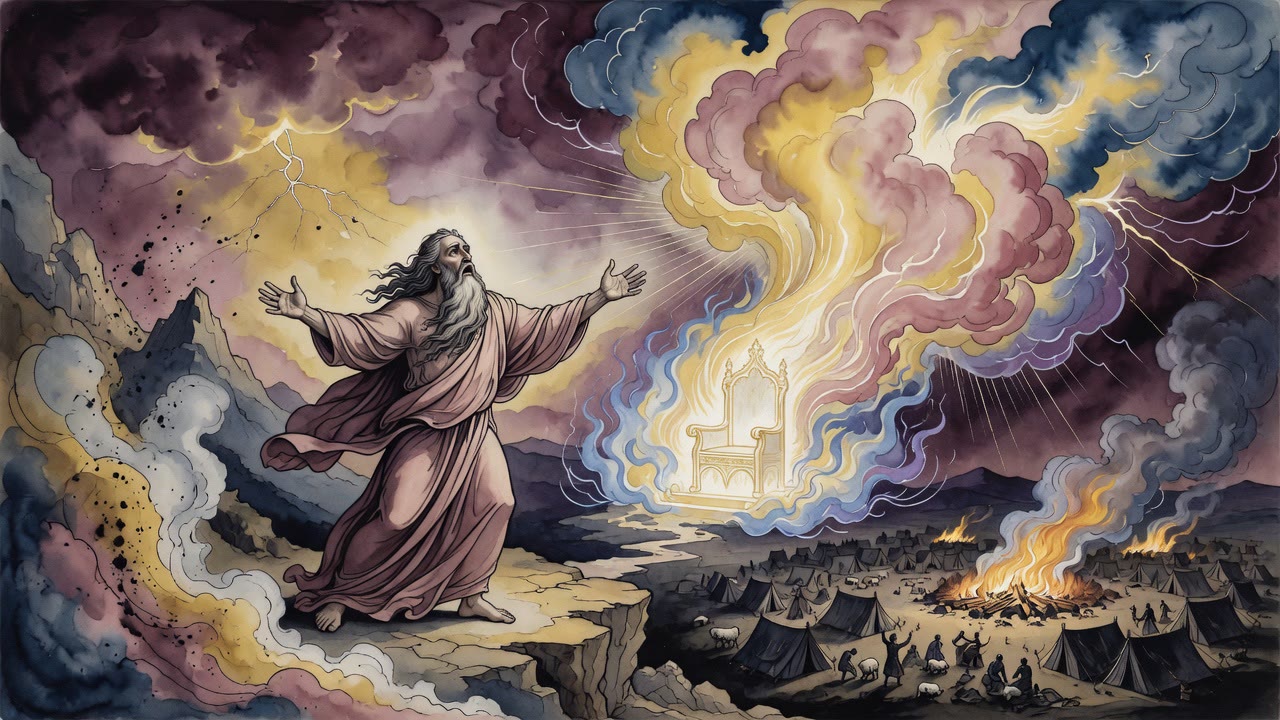
Moses stood in the aftermath of a stiff-necked people and could not stop turning one thought over: there must be a righteous man who suffers, and if Israel's sentence is sealed, the blows might never end.

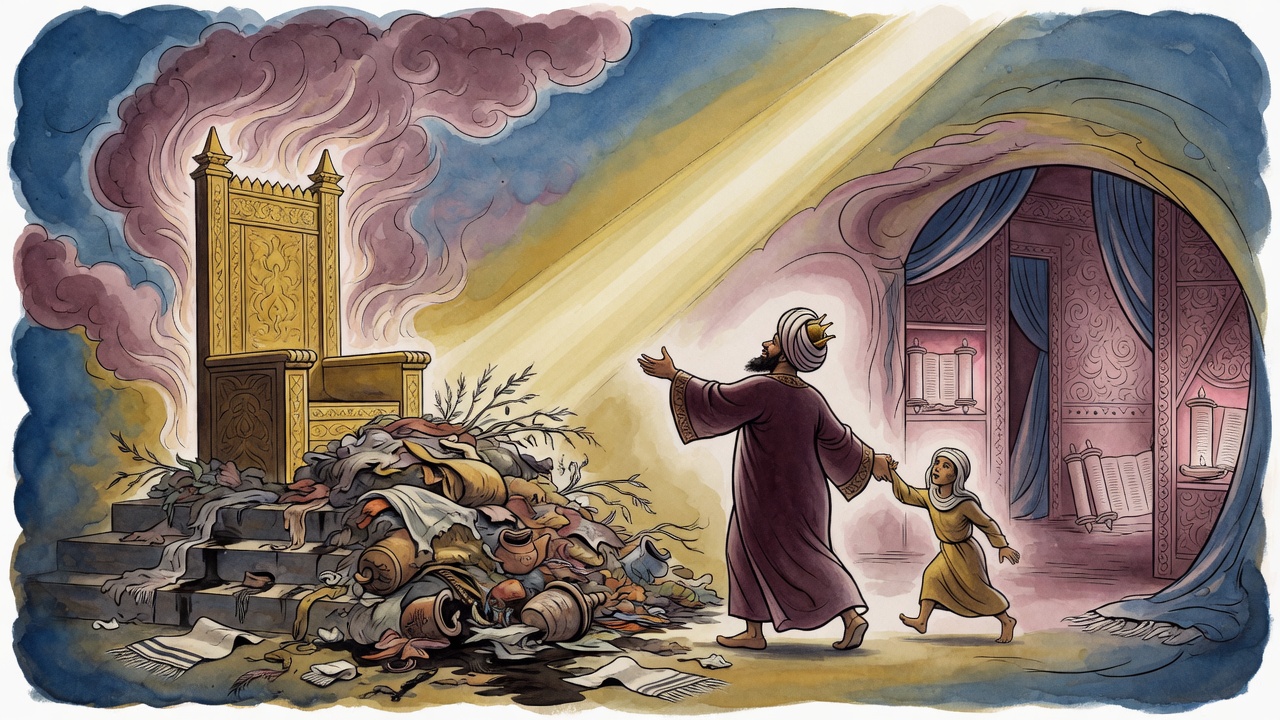
Moses Begged to See Why the Righteous Suffer Click for full size

God's mercy fills the world, so why command charity for the poor at all? Because some people bring trouble on themselves, and the penalty can fall across four generations. Moses wanted the map of that justice before the next plague of history fell on the camp.

The King, the Wife, and Five Letters

A parable answered him. A king married a woman, brought her to his royal city, and struck her when she sinned. She fled to her father, who suspected cruelty and sent a messenger demanding the cause. The king replied with many gifts and five sealed letters. The first four praised the fruits. The fifth, hidden among them, named the wife's actual sin. The father-in-law told his daughter plainly: the king loves justice, and he struck you lawfully.

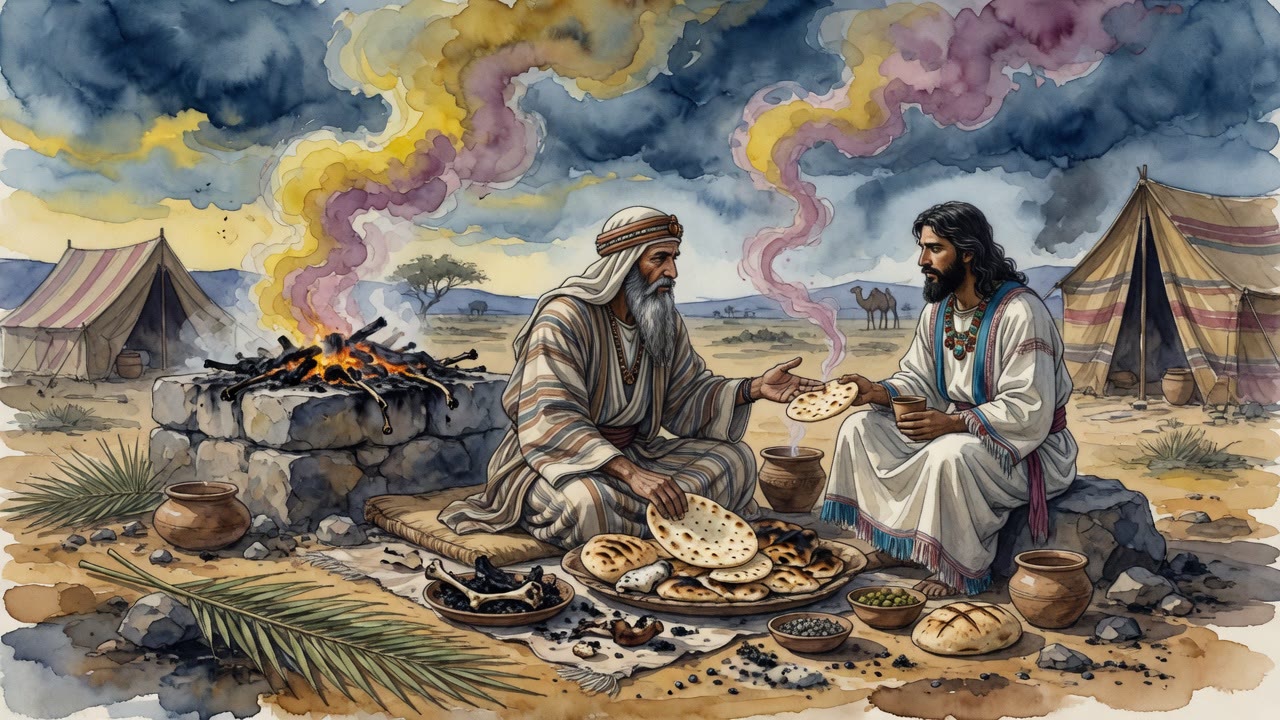
So Moses asked, "Show me now Your way." The Holy One opened the depths of the question, showing him generation after generation with its sages, leaders, prophets, and teachers. Moses could not grasp all the divine measures, but some were given. Even people with no merit of Torah or good deeds, who only stand and bless and pour out prayer, are answered and given doubled sustenance.

Thirteen Names of Mercy

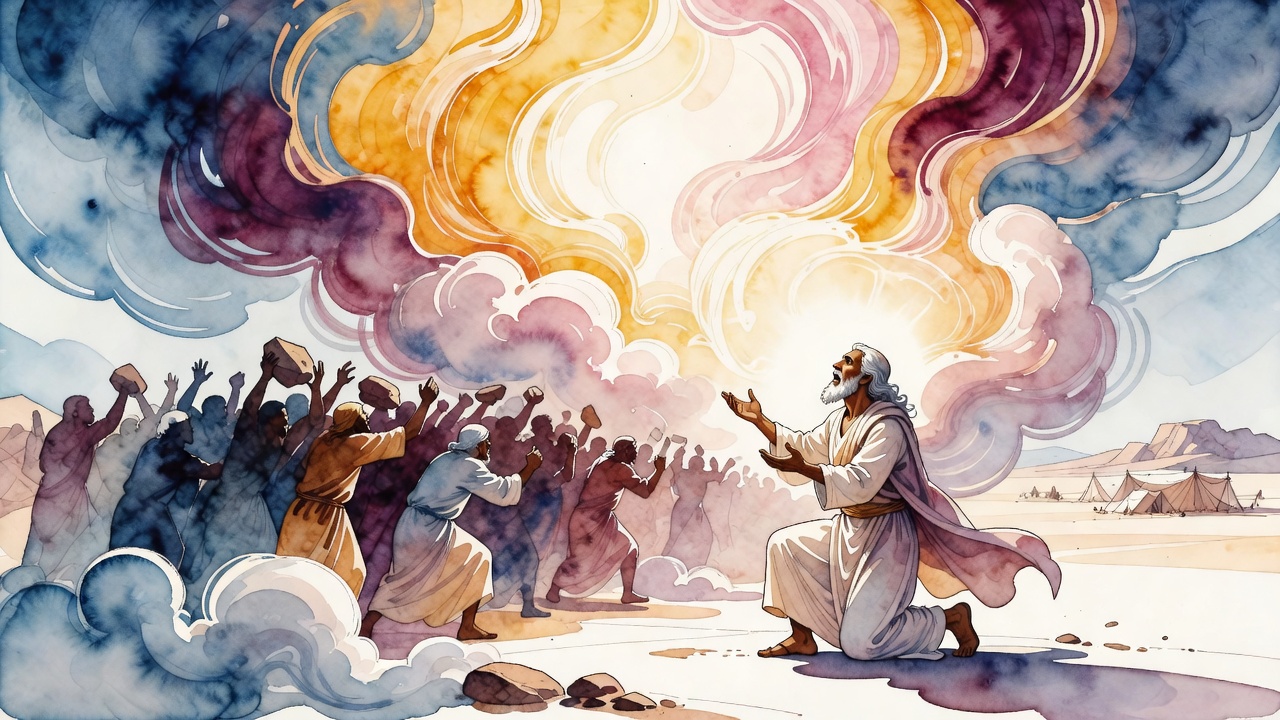
Then came the Thirteen Attributes: merciful, gracious, slow to anger, abundant in kindness and truth, forgiving iniquity. Seeing that God's measure is mercy, Moses bowed at once and begged pardon for the stiff-necked people. Because the verse says "all My goodness" rather than merely "My goodness," the days of the son of David are held inside that promise.

The climb did not erase suffering. It showed Moses a court that prefers mercy even while it keeps ledgers.

Aaron Between Neighbors

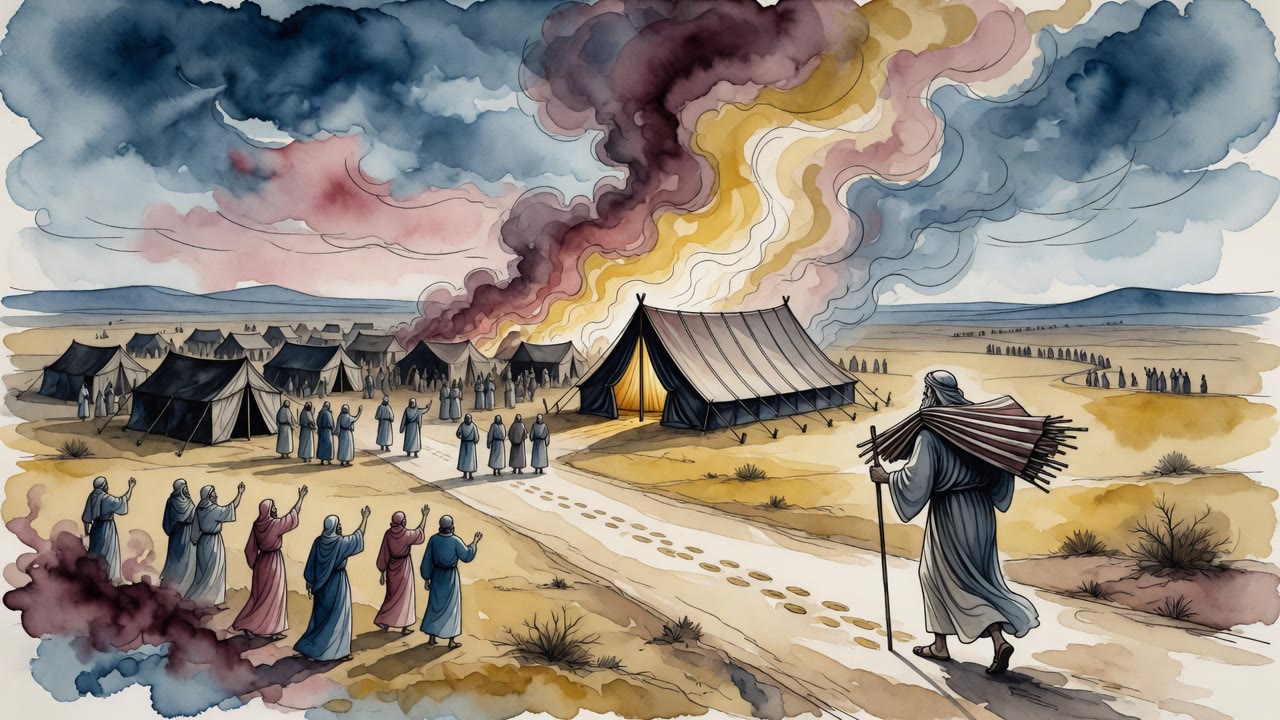
Below the mountain another work ran. Peace begins at the top. God keeps peace among the myriads of ministering angels who sanctify His Name day and night, and among the seventy nations. So a person should make peace between neighbors and between husband and wife. Aaron the priest did exactly this, reconciling Israel with their Father in heaven, the sages with one another, neighbor with neighbor, husband with wife. God, who tests hearts, rewarded him with sons who atone for Israel and who proclaim the priestly blessing of peace over them every day.

Against Aaron stands Ahithophel, a great scholar destroyed by arrogance. When the law about carrying the Ark on the shoulder slipped everyone's mind, the Ark hung in midair and Uzzah grabbed it and died, while Ahithophel held the forgotten law in his throat and would not share it. Measure for measure, he died by strangling his own throat. His last counsel to his household was the opposite of his life: never quarrel, never rebel against the house of David.

Isaiah's Ready Mouth

Of all the prophets Isaiah spoke the most comfort because he answered God's call with pure joy: "Here am I, send me." Longevity in the first ten generations had been given so people could do kindness for one another, and Noah alone took in the living ancestors and warned for a hundred and twenty years. Kindness and readiness still mark who can carry a hard word without turning it into pride.

Moses came down holding mercy's names. Aaron kept walking between quarreling doors. Isaiah would one day run toward the mission. The question of the righteous who suffer did not vanish. It was answered with attributes, peacemaking, and a willingness to be sent, three different postures under one God who still prefers mercy when the ledgers look full.

Moses wanted a system he could trust when the next generation of the innocent would pay for the sins of the guilty. The five letters of the parable did not give him a machine. They gave him a king who loves justice and still sends gifts, a sealed truth among open praises. Generations unrolled before his eyes like a scroll of faces: sages, leaders, prophets, teachers, each carrying a measure he could not fully hold. Prayer without merit still drew doubled bread. That detail undid something hard in him.

When the Thirteen Attributes arrived he bowed before he argued. Mercy, grace, slowness to anger, kindness, truth, forgiveness of iniquity: names that behave like doors. He walked through them on behalf of a stiff-necked people and found the promise of the son of David folded into "all My goodness." Aaron, meanwhile, knocked on human doors. Husband and wife. Neighbor and neighbor. Sage and sage. Peace as daily labor, not as a speech.

Ahithophel's closed throat is the anti-image: knowledge hoarded until a man dies by the silence he chose. Isaiah's open mouth is the other pole: "Here am I, send me," joy first, mission second. Moses stood between them, holding questions that never fully close and attributes that never fully stop answering. The righteous still suffer. The peacemaker still walks. The ready prophet still runs. Mercy still prefers to speak first when the ledgers look full.


← All myths

From the tradition

Sources

3 sources

The texts behind this telling. Some cards carry a translation of the source; others are our own retelling of it, and each card says which. Every card links out to the original.

Tanna debei Eliyahu Zuta 6:1Tanna DeBei Eliyahu Zuta

Translation of the source text.Tanna debei Eliyahu Zuta, Warsaw 1880 · Public Domain

From the measure of the ways of the Holy One, blessed be He, you learn that His mercies are abundant in the world. And why did He say, "Give charity to the poor and the destitute"? He says this only concerning a person who did things improperly and a penalty of evil was imposed upon him for up to four generations, as it is said, "visiting the iniquity of the fathers upon the children and upon the children's children, unto the third and unto the fourth generation" (Exodus 34:7).

At that hour Moses said in his heart, "If so, there is a righteous man to whom it goes ill." Moreover, Moses our teacher reasoned by an a fortiori argument within himself and said in his heart, "Perhaps not all Israel desire anything but only not to stand in the ways and commandments of the Holy One, blessed be He, Heaven forbid, and their sentence has been sealed against them, and behold they are struck at every hour."

They told a parable: to what may the matter be compared? To a king who married a woman and led her from city to city and from province to province until he brought her to his province and to his royal city; and when his wife sinned against him, the king would strike her. What did his wife do? Immediately she ran to her father's house. The king's father-in-law said in his heart, "Did the king strike my daughter for nothing, unjustly and without law?" Immediately the king's father-in-law sent a messenger to the king and said to him, "Tell me, what is the matter in which my daughter sinned against you, and what is the thing you wish my daughter to do according to your will so that she may attend to all your needs?" Immediately the king sent his father-in-law many kinds of fruit and folded five letters together corresponding to them, and the thing he wished his wife to do and the way she had sinned against him he wrote in the fifth letter among them. When the messenger reached the king's father-in-law, he read the first letter and found written in it, "These fruits are of such-and-such a kind," and so the second, and so the third, and so the fourth, until he reached the fifth letter and found written in it the thing the king wished and how his wife had sinned against him. Immediately the king's father-in-law called his daughter and said to her, "My daughter, the thing the king wishes is true, and the king loves peace and loves justice, and you sinned against him, and he struck you justly and lawfully."

So it appeared regarding Moses at that hour, as it is said, "And now, if I have found favor in Your eyes, show me now Your way" (Exodus 33:13). Immediately the Holy One, blessed be He, descended to the depth of Moses' intent and showed him generation after generation and its sages, generation after generation and its leaders, generation after generation and its prophets, generation after generation and its expounders, and showed him His measures by which He conducts Himself in this world and His measures by which He conducts Himself in the world to come.

And He said to Moses, "Behold, you say, Why is there a righteous man to whom it goes well and a righteous man to whom it goes ill, a wicked man to whom it goes well and a wicked man to whom it goes ill, as you said, Show me now Your way." The Holy One, blessed be He, said to Moses, "Moses, you cannot stand upon all My measures, but behold I will make known to you some of My measures: when I see people who, although they have no praise of Torah and good deeds, neither in their own deeds nor in the deeds of their fathers, yet only because they stand and give thanks and bless and praise and multiply supplications before Me, I attend to them and double their sustenance," as it is said, "He has turned to the prayer of the destitute, and has not despised their prayer" (Psalms 102:18). And it is written, "And He said, I will make all My goodness pass before you" (Exodus 33:19), it does not say "My goodness" but "all My goodness"; these are the thirteen attributes, as it is said, "The LORD, the LORD, God, merciful and gracious, slow to anger, and abundant in lovingkindness and truth, keeping lovingkindness for thousands, forgiving iniquity and transgression and sin, and acquitting" (Exodus 34:6-7). For here it says, "And I will proclaim the Name of the LORD before you" (Exodus 33:19), and there it says, "And the LORD passed before him and proclaimed, The LORD, the LORD, God, merciful and gracious" (Exodus 34:6).

When Moses saw that the measure of the Holy One, blessed be He, is one of lovingkindness and of mercy, immediately he wrapped himself and stood in prayer before the Holy One, blessed be He, as it is said, "And Moses made haste and bowed his head toward the earth and worshiped, and he said, If now I have found favor in Your eyes, O Lord, let the Lord, I pray, go in our midst, for it is a stiff-necked people, and pardon our iniquity and our sin, and take us for Your inheritance" (Exodus 34:8-9).

Another interpretation: had it said "My goodness" and not "all My goodness," I would say there are no days of the son of David here; but when it says "all My goodness," there are here the days of the son of David, may he come speedily in our days, Amen, Selah.

Full source
Tanna Debei Eliyahu Rabbah 31:1Tanna DeBei Eliyahu Rabbah

Translation of the source text.Tanna debei Eliyahu Rabbah, Warsaw 1880 · Public Domain

From within peace, how so? Just as the Holy One, blessed be He - may His great Name be blessed forever and ever - aims and makes peace among the four hundred ninety-six thousand myriads of ministering angels who stand before Him continually and sanctify His Name continually - from sunrise to sunset they say, "Holy, holy, holy is the LORD of hosts; the whole earth is full of His glory" (Isaiah 6:3), and from sunset to sunrise they say, "Blessed is the glory of the LORD from His place" (Ezekiel 3:12) - and so He aims and makes peace among the seventy tongues and among all who come into the world that He created in His world, as it says, "He makes peace in His heights" (Job 25:2). So should a person make peace between every person and his fellow, and between a man and his wife. And thus Aaron the priest would do: he would aim and make peace between Israel and their Father in heaven, and between Israel and the sages, and between one sage and his fellow, and between one Israelite and his fellow, and between a man and his wife. Of him it says, "Say of the righteous that it shall go well, for they shall eat the fruit of their deeds" (Isaiah 3:10), and of him it says, "Thus says the LORD: Keep justice and do righteousness" (Isaiah 56:1).

The Holy One, blessed be He, who tests hearts and innermost parts, said to Aaron: You aimed for good and made peace between Me and the children of Israel; I will bring forth from you sons who atone for Israel every single year, and peace is proclaimed over them every single day, and they shall say to them, "The LORD bless you and keep you; the LORD make His face shine upon you and be gracious to you; the LORD lift up His face to you and grant you peace" (Numbers 6:24-26).

By the same token you may say: Ahithophel the Gilonite was a sage and a master of Torah, and because of the arrogance that was in him he was uprooted from this world and from the world to come; and of him it says, "Woe to the wicked, it shall go ill, for the recompense of his hands shall be done to him" (Isaiah 3:11). What was the beginning of Ahithophel's evil deeds? When all Israel gathered with David, the masters of Judah, to bring up the Ark of the LORD from the house of Abinadab on the hill, the law was forgotten by them. At once they all said, "Just as the Ark of the LORD came from the field of the Philistines only on a cart, so on a cart let it come to the house of David, king of Israel." But the Holy One, blessed be He, had sworn by His great Name, on the day Amram married Jochebed his aunt as a wife for the sake of Heaven, that the Ark with the Torah would be taken up and given into the arm of Amram's seed, as it says, "But to the sons of Kohath he gave none, because the service of the holy things was upon them; they were to carry it on the shoulder" (Numbers 7:9). At once they took the Ark and loaded it onto the cart, and immediately the Ark hung in the air between heaven and earth, neither rising up to heaven nor descending to earth. Uzzah was standing there; at once Uzzah stretched out his hand and seized the Ark. At that moment the transgressors of Israel said, "Had Uzzah not stretched out his hand and seized the Ark, the Ark would already have fallen to the ground." What did the Holy One, blessed be He, do at that moment? At once He put Uzzah to death, and his hand was torn away from the Ark, and the matter became known, that the Ark hangs in the air between earth and heaven, neither rising up to heaven nor descending to earth.

Blessed is the Omnipresent, blessed is He, before whom there is no favoritism: just as Ahithophel held back the law in his throat and did not tell it to the public, therefore he was strangled in his throat and died by strangling, which is one of the four deaths handed to the court, as it says, "And Ahithophel saw that his counsel was not taken, and he saddled his donkey and arose and went to his house, to his city, and gave charge to his household and strangled himself" (2 Samuel 17:23). And what was the charge he gave to his household? He charged them, "Never be in dispute," and he said to them, "Never rebel against the kingdom of the house of David." When David heard these words, at once David came before the Divine Presence and bowed his full height to the ground and said, "My Father in heaven, may Your great Name be blessed forever and ever, and may You have contentment from Israel Your servants in all their dwellings, for You have made us great and sanctified us and praised us and exalted us and bound for us a crown in the Torah from one end of the world to the other, as it says, 'Therefore You are great, O LORD God, for there is none like You, and there is no God besides You, according to all that we have heard with our ears' (2 Samuel 7:22); but the deeds we do are not fitting before You, such as the deed of Doeg the Edomite and the deed of Ahithophel the Gilonite."

And not this alone, but they said: anyone in whom there is arrogance is uprooted from the world. So too the generation of the Flood: arrogance was in them, and by it they were uprooted from the world, as it says, "They said to God, Depart from us; we do not desire knowledge of Your ways. What is the Almighty that we should serve Him, and what profit shall we have if we entreat Him?" (Job 21:14-15). And what did they do? They would strip off their garments and lay them on the ground and walk naked in the marketplace, as it says, "naked they go about without clothing" (Job 24:10). And what was their punishment in this world? The Holy One floated them on the face of the waters like skins, as it says, "He is swift on the face of the waters" (Job 24:18); and it says, "Be afraid of the sword, for wrath brings the punishments of the sword, that you may know there is judgment" (Job 19:29) - do not read "a judgment" [shadun] but "there is judgment" [she-din], that there is judgment on high.

So too the men of the Tower: arrogance was in them, and by it they were uprooted from the world, as it says, "And the whole earth was of one language... and they said, Come, let us build us a city, with its top in the heavens, and let us make a name for ourselves, lest we be scattered over the face of the whole earth" (Genesis 11:1, 4). Come and see the great kindness the Holy One did with them, with which they rebelled against Him. A parable of a man exiled from province to province: when he sees his fellow speaking with him in his own tongue, his mind is set at ease. And they rebelled with it, as it says, "And they said one to another, Come, let us make bricks... and they said, Come, let us build us a city." Corresponding to their saying "Come," the Holy One also said "Come" against them, as it says, "Come, let us go down" (Genesis 11:7). At once the Holy One came down from the highest heaven of heavens and confounded their tongue and scattered them to the four winds of the world, as it says, "And the LORD came down to see the city and the tower... and the LORD scattered them from there... therefore its name was called Babel, for there the LORD confounded the language of all the earth" (Genesis 11:5, 8-9).

So too the men of Sodom: arrogance was in them, and by it they were uprooted from the world, as it says, "And the men of Sodom were wicked and great sinners against the LORD" (Genesis 13:13) - "wicked" in robbery, and "sinners" in sexual immorality, "against the LORD" in the profaning of the Name. So too Sennacherib: arrogance was in him, and by it he was uprooted from the world. And so too Nebuchadnezzar: arrogance was in him, and by it he was uprooted from the world, as it says, "But you are brought down to Sheol, to the depths of the Pit" (Isaiah 14:15). They said of the wicked Nebuchadnezzar that he was short in stature, and when he went from province to province and from city to city, all the people of the city gathered and went out toward him and made sport with one another and said to one another, "Is this the one who will rule from one end of the world to the other?" as it says, "Those who see you stare at you, they ponder over you: Is this the man who shook the earth, who made kingdoms tremble?" (Isaiah 14:16). So too Pharaoh: arrogance was in him, and by it he was uprooted from the world, as it says, "And Pharaoh said, Who is the LORD that I should obey His voice to let Israel go?" (Exodus 5:2). So too the generation of the wilderness: arrogance was in them, therefore they died in the wilderness and did not enter the land of Israel, as it says, "And the people spoke against God and against Moses, Why have you brought us up from Egypt to die in the wilderness?" (Numbers 21:5), and the like in four or five places. So too King Saul: arrogance was in him, therefore he was slain and the kingship was uprooted from him, as it says, "And Samuel said, What then is this bleating of sheep in my ears?... And Saul said, They brought them from the Amalekites" (1 Samuel 15:14-15).

They told a parable. To what may the matter be compared? To a king of flesh and blood who said to his son, "My son, why did you not do all that I charged you?" The son said, "And what is the thing you charged me with that I did not do?" At once the son brazens his face against his father and says to his father, "But I did all that you charged me." So too King Saul, to whom Samuel the prophet said, "Why did you not obey the voice of the LORD?" and Saul answered Samuel, "Not so; rather, I obeyed the voice of the LORD," as it says, "And Samuel came to Saul, and Saul said to him, Blessed are you to the LORD, I have fulfilled the word of the LORD. And Samuel said, What then is this bleating of sheep in my ears?... And he said, They brought them from the Amalekites, which the people spared... And Samuel said... Why then did you not obey the voice of the LORD, but swooped on the spoil and did evil in the eyes of the LORD? And Saul said to Samuel, I did obey the voice of the LORD and went on the way the LORD sent me... And Samuel said... Because you have rejected the word of the LORD, He has rejected you from being king" (1 Samuel 15:13-23).

And not only that, but Saul kept jealousy and vengeance in his heart against Israel in all their dwellings on account of David. In what he was commanded to do, he did not do; for Samuel told him that the Holy One said, "Now go and strike Amalek... and put to death man and woman, child and infant" (1 Samuel 15:3), and he did not do so, but kept alive Agag king of Amalek and the best of the sheep and cattle. And what he was not commanded to do, he did: Nob, the city of priests, he struck down, as it says, "And Nob the city of priests he struck with the edge of the sword, man and woman, child and infant, ox and donkey and sheep, with the edge of the sword" (1 Samuel 22:19). And he made light of forbidden unions, in that he gave Michal his daughter, the wife of David, to Palti son of Laish, and he inquired of a medium and a familiar spirit, and he did many abominations in Israel; therefore he was slain and the kingship of the house of Israel was uprooted from him.

So too the children of Israel: I [the Holy One] atoned for them in all their dwellings. When they were in the land of Israel arrogance was in them, and by it they were exiled from their land; and even after they were exiled from their land, Israel asked Ezekiel son of Buzi the priest: A priest who buys a slave, may the slave eat of the heave-offering? He said to them, "Yes, he is permitted to eat of the heave-offering." They said to him, "But if his master sold him to others, may he eat of the heave-offering?" He said to them, "He is not permitted to eat heave-offering." They said to him, "So too with us: when we were in the city and the temple of the Holy One, blessed be He, we served the Holy One, blessed be He; now that we have been exiled among the nations, let us be like the nations and like the families of the earth." Ezekiel said to them: Even if your bones are broken and your eyes are gouged out and the blood of your mouth flows to the ground, you must accept upon yourselves the kingship of the King of kings of kings, the Holy One, blessed be He, because thus you accepted Him upon yourselves at the first and said, "All that the LORD has spoken we will do and we will hear" (Exodus 24:7), and the Holy One, blessed be He, made His kingship reign over you, as it says, "You have affirmed this day that the LORD is your God, to walk in His ways and keep His statutes and His commandments... and to obey His voice; and the LORD has affirmed this day that you are His treasured people, as He spoke" (Deuteronomy 26:17-18). And he said to them, "And what comes into your mind shall never come to be, that you say, We will be like the nations and like the families of the lands, serving wood and stone. As I live, says the Lord GOD, surely with a mighty hand and an outstretched arm and outpoured wrath I will reign over you" (Ezekiel 20:32-33).

Blessed is the Omnipresent, blessed is He, before whom there is no favoritism. If it says "shall be," why does it say "shall never be"? Rather, what you say - "We will be like the nations and like the families of the lands, to serve wood and stone" - this shall never be; and what you say - "Nebuchadnezzar shall not come and conquer Jerusalem" - this shall surely be. After all these matters, "abomination" is said of idolatry, as it says, "And you shall not bring an abomination into your house" (Deuteronomy 7:26), and "abominations" is said of arrogance, as it says, "Everyone proud of heart is an abomination to the LORD" (Proverbs 16:5). And even the Holy One, blessed be He, to whom all belongs and all is the work of His hands, cannot bear the arrogant, as it says, "The haughty of eye and proud of heart, him I cannot endure" (Psalms 101:5); for it says, "Whom did He consult that He might give Him understanding and teach Him the path of justice, and teach Him knowledge and show Him the way of understanding?" (Isaiah 40:14). And from whom did the Holy One take counsel when He created the world? You must say He took counsel only with the Torah, as it says, "Then I was beside Him as a nursling [amon], and I was His delight day by day" (Proverbs 8:30) - do not read "nursling" [amon] but "craftsman" [uman], like a craftsman engaged in his craft.

Full source
Tanna Debei Eliyahu Rabbah 16:1Tanna DeBei Eliyahu Rabbah

Translation of the source text.Tanna debei Eliyahu Rabbah, Warsaw 1880 · Public Domain

Once I was sitting in the great house of study in Jerusalem, and a certain disciple came and asked me a matter as a son asks his father, and said to me: For what reason were the earlier generations distinguished from all the generations, that their days were many and they prolonged days and years? I said to him: My son, for this they prolonged years, so that they could perform acts of lovingkindness with one another. From where do you know that it is so? Go out and learn from the first ten generations: Adam, Seth, Enosh, Kenan, Mahalalel, Jared, Enoch, Methuselah, Lamech, Noah. Adam came into the world; Seth his son came after him; they said to Seth, Serve your father, he fed him and sustained him and provided for him. Seth came into the world; Enosh his son came after him; they said to Enosh, Serve your father, he fed him and sustained him and provided for him. They said to Enosh, Serve your father's father; Enosh said to them, I am not obligated to him. Enosh came into the world; Kenan his son came after him; they said to Kenan, Serve your father, he fed him and sustained him and provided for him; they said to Kenan, Serve your father's father; Kenan said to them, I am not obligated to him. And so on until Noah. Noah came into the world; they said to him, Serve your father, he fed him and sustained him and provided for him; they said to Noah, Serve your father's father, he took it upon himself and fed his father's father and all his ancestors who were alive at that time. And not only that, but he would go out and protest with words all those hundred and twenty years before the Flood came. Therefore the verse came and told concerning him for the generations that he was righteous, as it is said (Genesis 7:1), "For you I have seen righteous before Me" (a variant: "Noah was a righteous man, blameless"). From here they said: Merit is brought about through one who is meritorious, and liability through one who is liable. And by this measure for all the families of the earth, whether for Israel or for the gentiles. From here they said: The prime of a person's life is one hundred and twenty years, and afterward he comes to the world to come in great joy. And thus they said: The day that Adam died, they made it a festival and a day of feasting and joy. And likewise there was joy in the world for three things: for the angel of death, and for the evil inclination, and for sitting in the privy.

And he said to me: My master, for what reason do you rejoice in the angel of death? I said to him: My son, were it not for the angel of death, what would we do for our Father in heaven? Go out and learn from the first ten generations, that the Holy One, blessed be He, poured upon them good as a foretaste of the world to come, and they arose to destroy the whole world. And he said to me: My master, for what reason do you rejoice in the evil inclination? I said to him: My son, were it not for the evil inclination, all that honor would not come to Israel. From where? When they go up to Jerusalem on the festivals, as it is said (Exodus 23:17), "Three times a year all your males shall appear," just as we are destined to go up and bow down three times a year to the King of kings, the Holy One, blessed be He, as it is said (Zechariah 14:16), "And it shall be that everyone who is left of all the nations that came against Jerusalem shall go up year by year to bow down to the King, the LORD of hosts, and to celebrate the festival of Sukkot." And when they are walking on the road, they will say each man to his brother, What offering shall we bring up in our hands? Are not the silver and gold His, the precious stones and pearls His? What offering shall we bring up in our hands? Immediately they go and bring the children of Israel in great honor, as it is said (Isaiah 66:20), "And they shall bring all your brothers from all the nations as an offering to the LORD, on horses and in chariots and in litters and on mules and on camels, to My holy mountain Jerusalem, says the LORD, as the children of Israel bring the offering in a pure vessel to the house of the LORD." And if they find among the children of Israel one a year old or two years old, the princesses nurse him; and if one ten years old or fifteen years old, the kings raise them, as it is said (Isaiah 49:22-23), "Thus says the LORD, Behold, I will lift up My hand to the nations and raise My banner to the peoples, and they shall bring your sons in their bosom and carry your daughters on their shoulder; and kings shall be your foster fathers and their princesses your nursing mothers; with faces to the ground they shall bow to you and lick the dust of your feet." And when they are walking on the road they will embrace and hug and kiss them and lick the dust of their feet, as it is said, "and the dust of your feet they shall lick." And then all Israel will be righteous, and the Holy One, blessed be He, will remove the evil inclination from them, and they will come to Scripture and to Mishnah and to learning and to proper conduct and to doing the will of their Father in heaven.

He said to me: My master, what is the matter of sitting in the privy? And I said to him: My son, the Holy One, blessed be He, is destined to redeem Israel from among the gentiles and bring them the days of the son of David and the redemption, and these three things will be removed from them forever, as it is said (Song of Songs 1:13), "A bundle of myrrh is my beloved to me, between my breasts he lodges." And when we recall these three things, we bless and praise and magnify and sanctify our Father in heaven.

And he said to me: My master, tell me, how many prophets prophesied to Israel? I said to him: My son, forty-eight prophets prophesied to Israel. And he said to me: My master, and how is forty-eight different from forty-five or from fifty? I said to him: My son, corresponding to the forty-eight cities of refuge that were given to the Levites. And the Sages said that the prophets diminished nothing at all from what is written in the Torah and added nothing at all to what is written in the Torah, but they are all clear to one who understands and upright to those who find knowledge.

And to what is the house of Israel comparable in this world before their Father in heaven? To a king of flesh and blood who has many sons and servants. He arose and built many houses and many palaces and many open spaces without end. The king raised a matter in his mind and said, I will test my servants and my sons: who is it that loves me and fears me, and who is it that fears me but does not love me? What does the king do? He arises and builds an alley four cubits by four cubits, and makes within it a courtyard four handbreadths by four handbreadths, and makes within it a small wicket gate that opens into great open spaces, to receive through the small wicket gate the face of the king. And the king's sons and his servants come and stand in the courtyard and in the alley, and the king knows in his mind who loves him and fears him, and who fears him but does not love him. The one who loves and fears the king pains his body and enters through the small wicket gate that opens into the great open spaces to receive the king's face; and the one who fears the king but does not love him stands in the courtyard and in the alley and does not pain his body to enter through the small wicket gate. So the Holy One, blessed be He, said to Israel: My children, what have you done? I came to receive your face, and you did not come to receive My face, as it is said (Song of Songs 8:13), "You who dwell in the gardens," and it says (Isaiah 43:8), "Bring out a people blind though it has eyes, and deaf though it has ears." "Bring out a people blind though it has eyes", these are the unlearned who have proper conduct and the other commandments and keep themselves far from robbery and from every ugly thing. "And deaf though it has ears", these are the Torah scholars who gave themselves over to Scripture, to Mishnah, to laws and to aggadot; and of these it is said (Isaiah 42:7), "to open blind eyes, to bring out the prisoner from confinement, those who sit in darkness from the prison house."

And he said to me: My master, how is Isaiah son of Amoz different from all the prophets, that he prophesied all the good things and all the consolations to Israel more than all the prophets? I said to him: My son, because he accepted upon himself the yoke of the kingdom of Heaven with joy more than all the other prophets, as it is said (Isaiah 6:8-11), "And I heard the voice of the LORD saying, Whom shall I send, and who will go for us? And I said, Here am I, send me." And it is written after it, "And He said, Go and say to this people, Hear indeed but do not understand, and see indeed but do not know; make the heart of this people fat and its ears heavy and its eyes shut, lest it see with its eyes and hear with its ears and its heart understand and it turn and be healed." And it says, "How long, O LORD? And He said, Until cities lie waste without inhabitant." And it entered the mind of Isaiah that the Holy One, blessed be He, does not desire the repentance of Israel, God forbid. A parable: to a king who had an only son in a province; he sent a messenger to him and said to the messenger, Slaughter for my son many oxen and many sheep and feed my son much meat and give my son much aged wine to drink, and be lazy in the work of the field and in the work of the irrigated field. And all this, why? So that the king's son not go out with you to do work, and the king his father come and find no satisfaction of spirit from him. But the king, the Holy One, blessed be He, knows that Isaiah did not give a fitting reply in its place. Surely the One who said (Zechariah 2:8-9), "Jerusalem shall be inhabited as open towns from the multitude of people and beasts within her, and I will be to her, says the LORD, a wall of fire around, and for glory I will be in her midst," and likewise said (Zechariah 8:4-5), "Old men and old women shall yet dwell in the streets of Jerusalem, each with his staff in his hand from the multitude of days, and the streets of the city shall be full of boys and girls playing in its streets", He would say to Isaiah (Isaiah 6:11), "Until cities lie waste without inhabitant and houses without people." Surely a person should know before whom he stands and before whom he speaks, and know what he says, and know what the matter is that he speaks, when he stands and speaks before one greater than he. And the Sages taught: Do not appease your fellow at the hour of his anger.

And he said to me: My master, in how many years did Isaiah prophesy all those good things and consolations that he prophesied to Israel? I said to him: My son, had Israel repented out of their love, the Holy One, blessed be He, would have built them the last Temple immediately at that hour. And all the more so that the Holy One, blessed be He, would embrace them and hug them and kiss them and seat them in His bosom forever and ever.

Full source