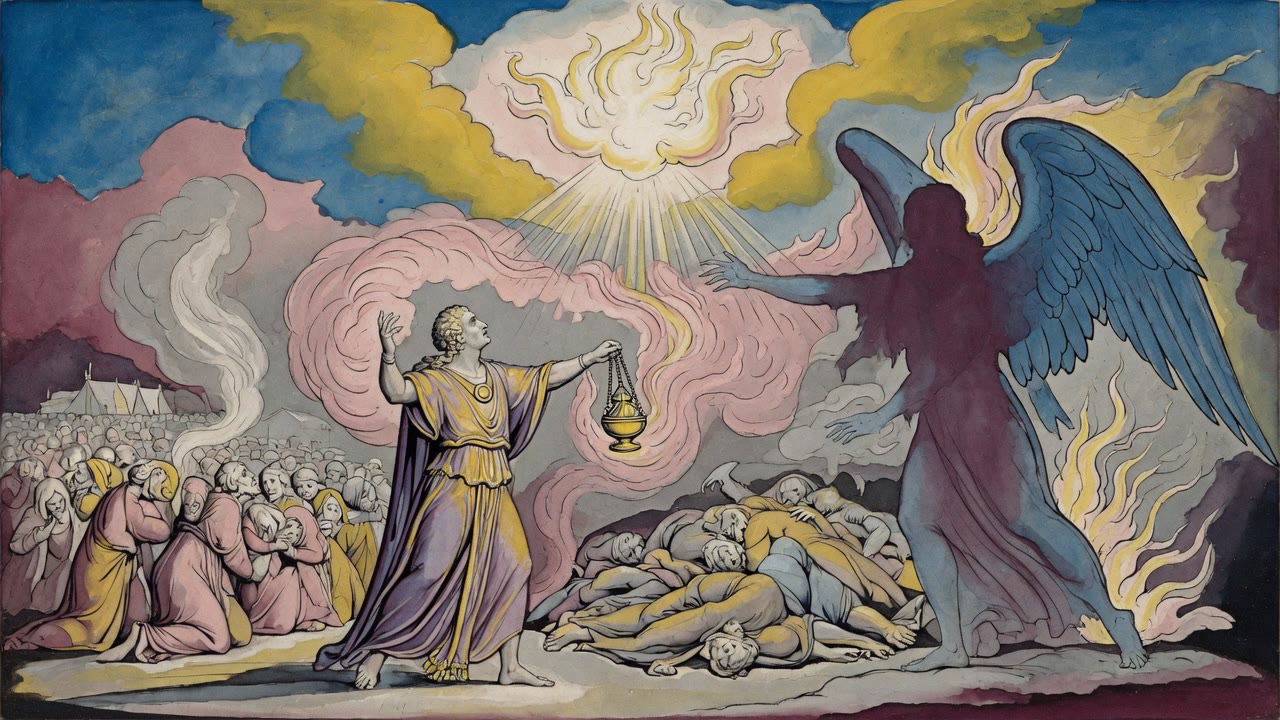
Moses Refuses Life if Israel Must Perish
God would break one vow, not two. Live, and the people fall. Moses looked at both ends of the rope and left his own life on the table.
Table of Contents
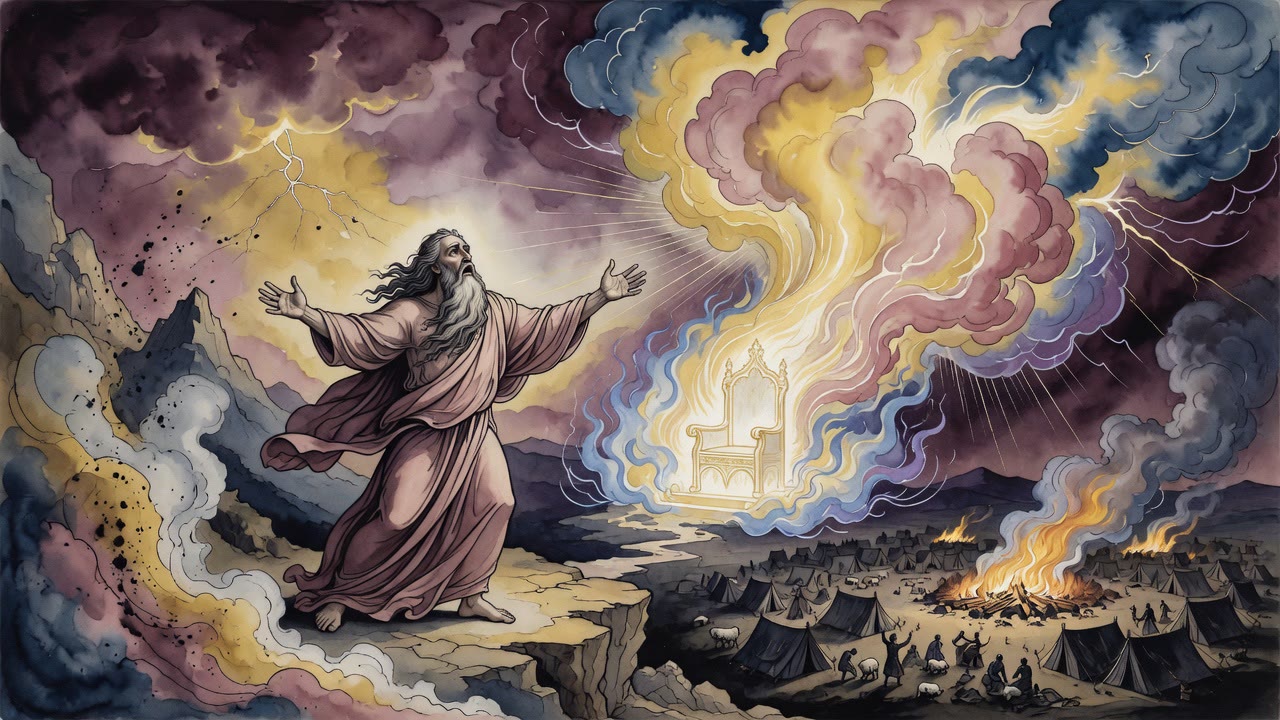
God was angry because Moses would not sit down under a death already sealed. The doom had been written. Moses kept arguing. The air on the mountain went thin with it.
 Click for full size
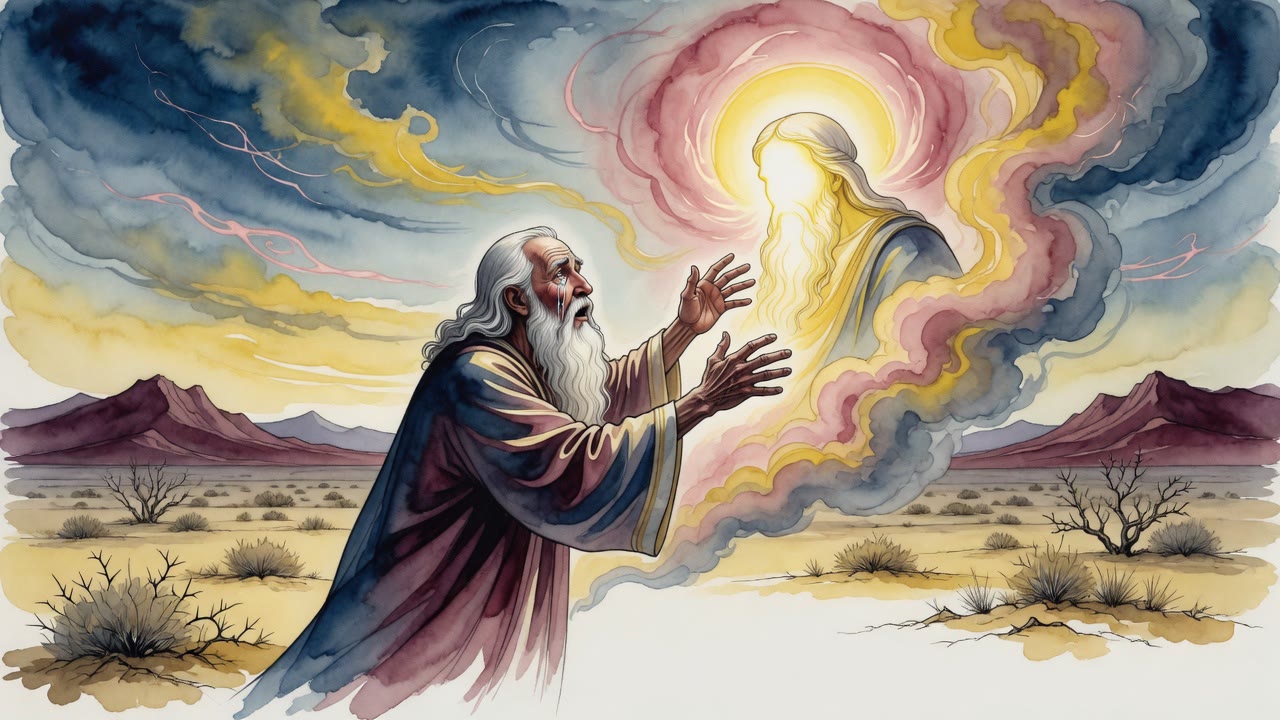
Then Moses spoke the thirteen names of mercy, the ones that had passed before him in the cleft of the rock. "The Lord, the Lord, a God full of compassion and gracious, slow to anger, and plenteous in mercy and truth; keeping mercy for thousands, forgiving iniquity and transgression and sin" (Exodus 34:6-7).
The anger left. Moses had not flattered. He had held God's own names up and asked them to look back.
The Rope Seized at Both Ends
God spoke kindly then, which was harder than wrath. "I have registered two vows, one that thou art to die, and the second that Israel is to perish. I cannot cancel both. If therefore thou choosest to live, Israel must be ruined."
Moses heard the trap shut. "Lord of the world! Thou approachest me artfully. Thou seizest the rope at both ends."
Live, and the camp falls. Die, and the camp stands. No third vow sat on the table, nothing soft enough for a man who had carried them from bricks to a smoking mountain. His hands, empty of tablets for years, still remembered their weight.
A Thousand of His Kind
"Rather shall Moses and a thousand of his kind perish than a single soul out of Israel."
He did not trade a corner of the camp for his own breath. He multiplied himself into something cheap. One ordinary Israelite, set against a thousand Moseses, still looked to him like a bargain he would take.
Then the human edge showed. "Will not all men exclaim, Alas! The feet that trod the heavens, the face that beheld the Face of the Shekinah (שכינה), and the hands that received the Torah, shall not be covered with dust!"
He was ready to die for them. He still wanted the dust to mean something when it settled.
God did not cancel the death. He turned the plea. The people would say, if a man like Moses, who climbed into heaven, stood peer of the angels, spoke face to face, and took the Torah from fire, cannot stand justified, how shall a mortal of flesh stand, who comes with no deeds and no study? Moses had asked for the camp. He had not asked to be used as a warning.
The Angel's Sword
"I want to know," God said, "why thou art so much aggrieved at thy impending death."
Moses did not dress it. "I am afraid of the sword of the Angel of Death."
God told him to speak no more in this matter. He would not deliver Moses into that hand. Moses still would not yield. A promise against the sword was not a promise of life. It was not a promise of the Land. The Angel could be held back and the grave could still open on the wrong side of the Jordan.
Jochebed's Grief and Joshua's Hour
"Shall my mother Jochebed, to whom my life brought so much grief, suffer sorrow after my death also?"
He had been the baby in the river, the son she hid, the boy she nursed under Pharaoh's roof. Now he asked that her last years not be spent on a grave she would never find.
God said the course of the world had been in His mind before the world. Every generation has its learned men. Every generation has its leaders. Every generation has its guides. Until now it was Moses' duty to lead. The hour had ripened for his disciple Joshua to take the office destined for him.
The office would move. The vow of death would not.
A Later Mouth in a Ruined City
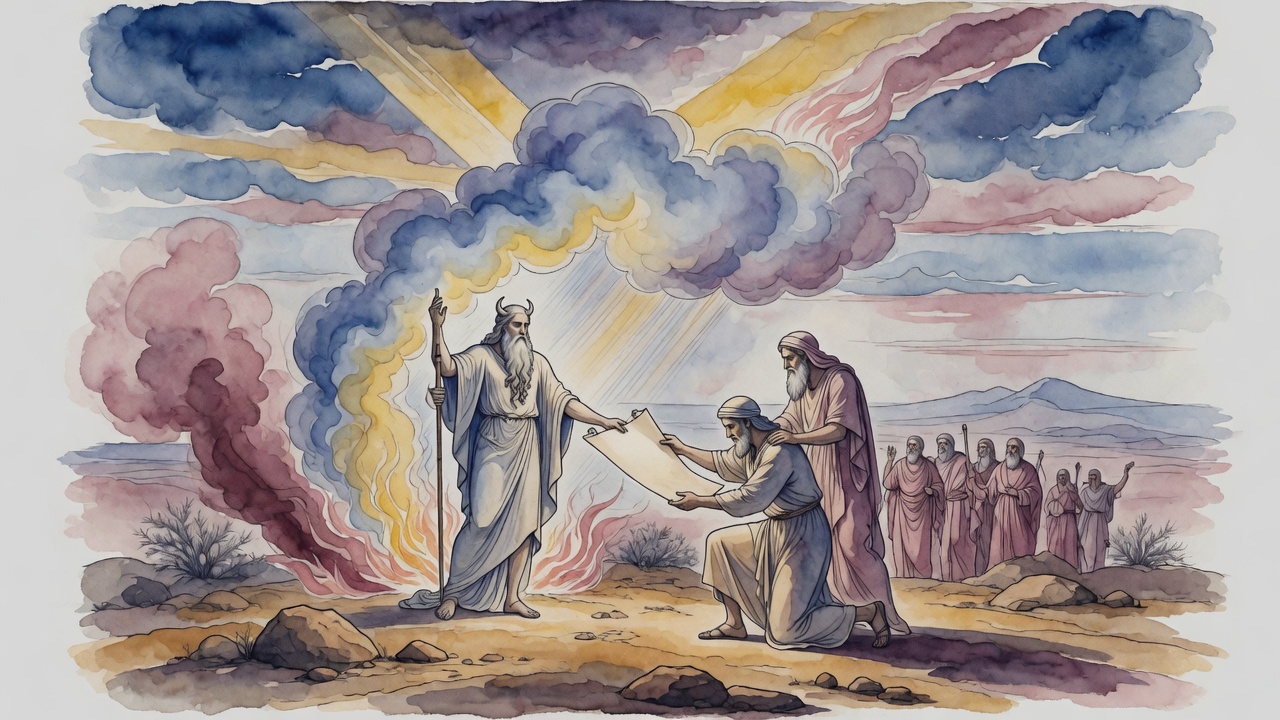
In a courtyard of broken walls, centuries down the road, Ezra unrolled a Torah that had gone quiet in the people's mouths. Dust lived in the letters. He cut the reading into the week's length, Sabbath after Sabbath, until a returned people could hear it again. He had the five books rewritten in the Assyrian hand. He opened extra schoolrooms even where the old ones still had benches, and set the new against the old so the children would have to run.
They measured him by Moses. If Moses had not stood first, Ezra would have received the Torah. He restored what had fallen into neglect and looked, for a moment, like a second first mouth.
On the last ridge Moses looked at the Land the way a thirsty man looks at a river he may not enter. Valleys lay open. Cities waited. The people who would cross without him were already practicing a future that did not include his staff at the front. He did not unsay the refusal. He had chosen their life. A wind came up the slope smelling of far fields. He breathed it once, named the thirteen mercies under his breath, and prepared to become the hidden grave.
The camp moved at morning. Children asked where Moses was. Adults pointed toward a mountain and then toward the Jordan, and had no sentence that held both gestures.
← All myths