Parshat Ki Tisa5 min read

Moses Lived on Shekhinah Light for Forty Days

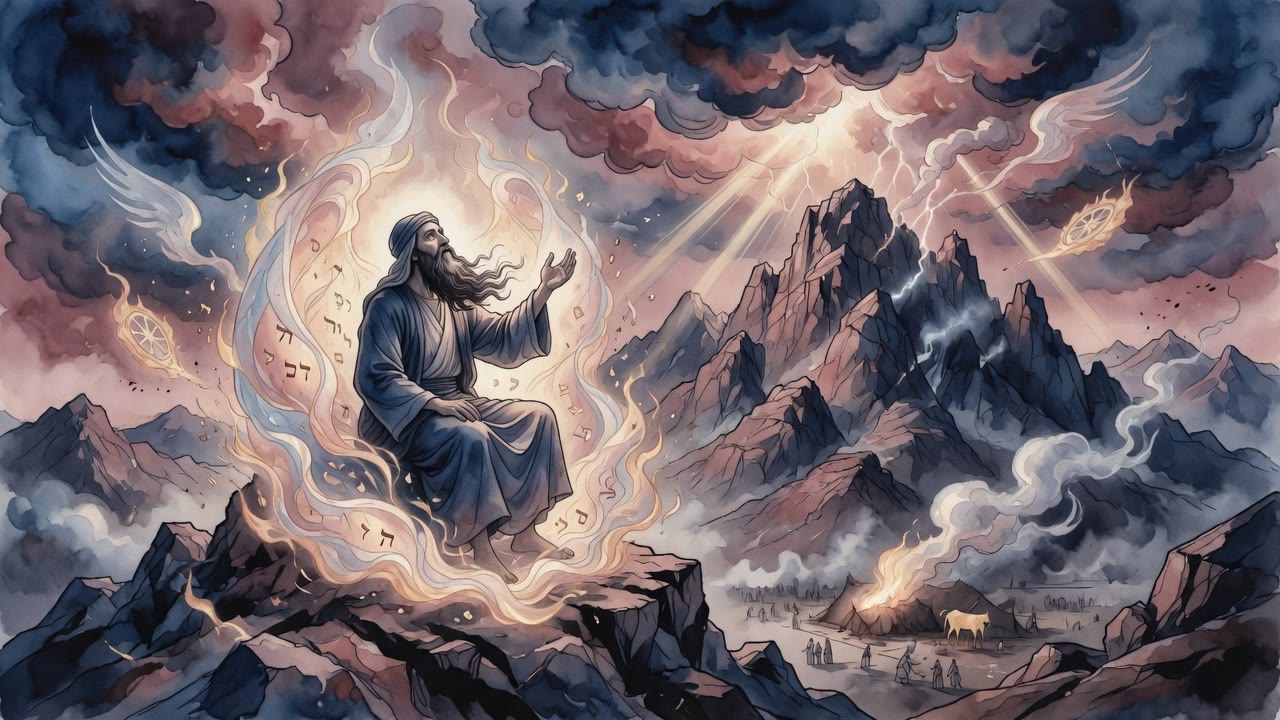
On Sinai Moses ate no bread. The Shekhinah, the Divine Presence, fed him while letters fled the first tablets and he carved the second set.

Curated by Arthur · Told by Maggid ·
Table of Contents
  1. Forty Days Without Bread
  2. Bread of Torah, Water of Torah
  3. A Vineyard Sold for Forty Days
  4. Letters That Flew
  5. What Fed Him After the Fracture
Moses Lived on Shekhinah Light for Forty Days Click for full size

Forty Days Without Bread

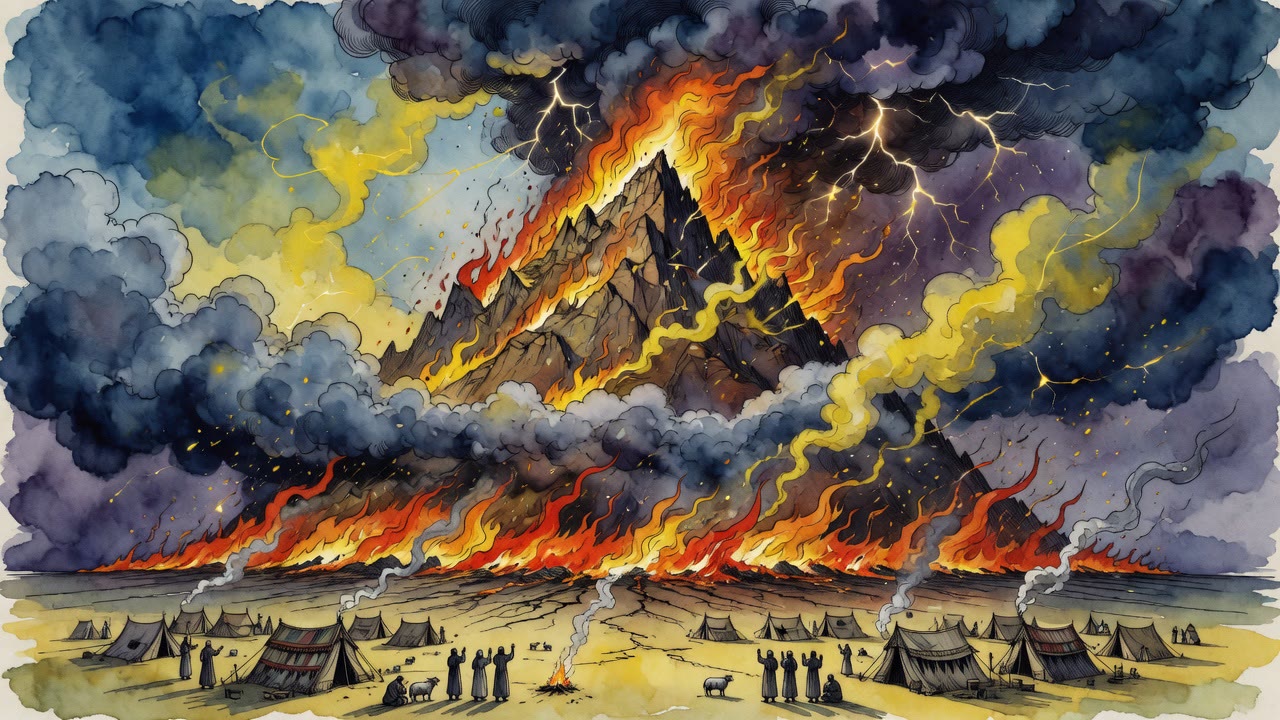
"He was there with the LORD forty days and forty nights; he did not eat bread, and he did not drink water" (Exodus 34:28). Flesh that needs food climbs a mountain that does not serve meals. Stone underfoot. Fire overhead. No wineskin. No crust. How does a man survive a month and more in a place that refuses the body's ordinary treaties?

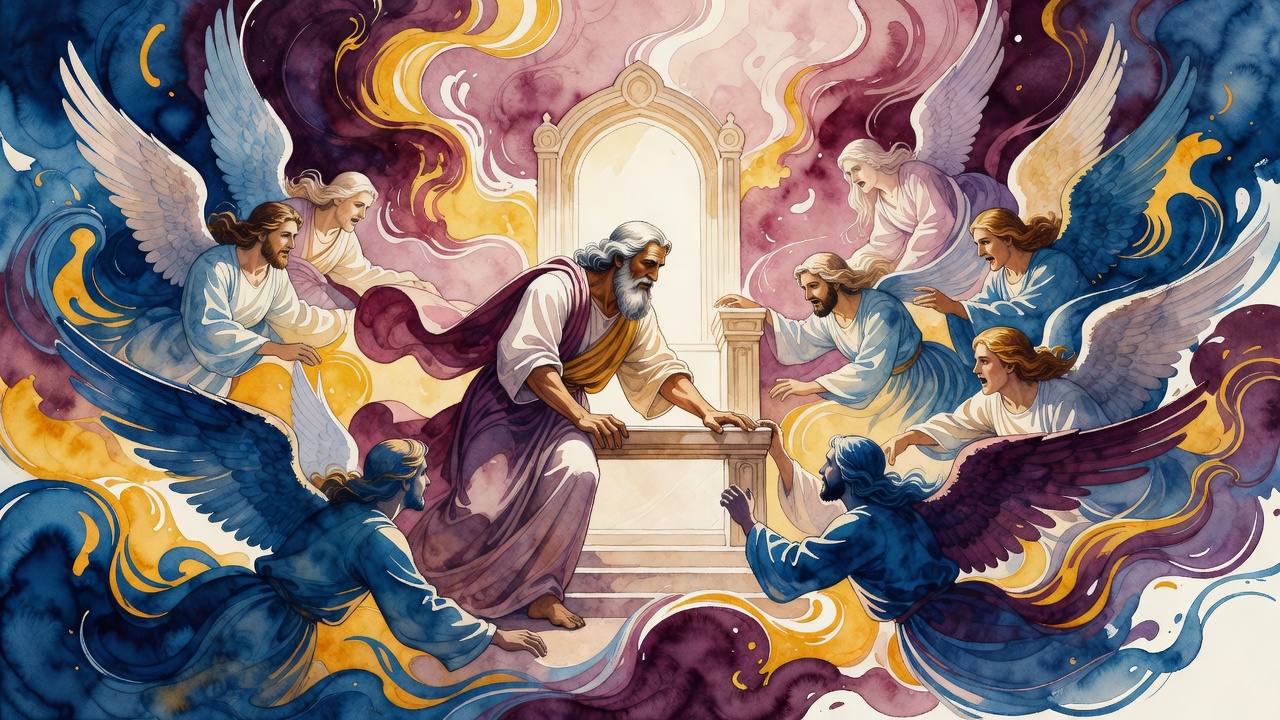
Rabbi Meir's teaching, passed through the chain of Rabbi Tanhuma, is blunt as a traveler's rule: when you go to a city, follow its conventions. Above, where angels do not eat, Moses becomes like the angels. Below, where humans eat, angels visiting Abraham appeared to take food under the tree (Genesis 18:8). Rabbi Yohanan says the bites vanished; the show of eating was courtesy to the host. Worlds keep their customs. Moses crossed into the upper custom and lived. The body learned the etiquette of the place it entered, and etiquette there is radiance, not bread.

Bread of Torah, Water of Torah

If he did not eat bread, he partook of the bread of Torah. If he did not drink water, he drank the water of Torah. By day he learned from the mouth of the Holy One. By night he turned the teaching over alone, expounding it to himself, fixing each word so it would not slip when he returned to a camp that forgets easily. The twofold labor was for Israel's sake. The leader models the discipline he will demand: toil in the words by day and by night, never letting the lamp go dark between sessions.

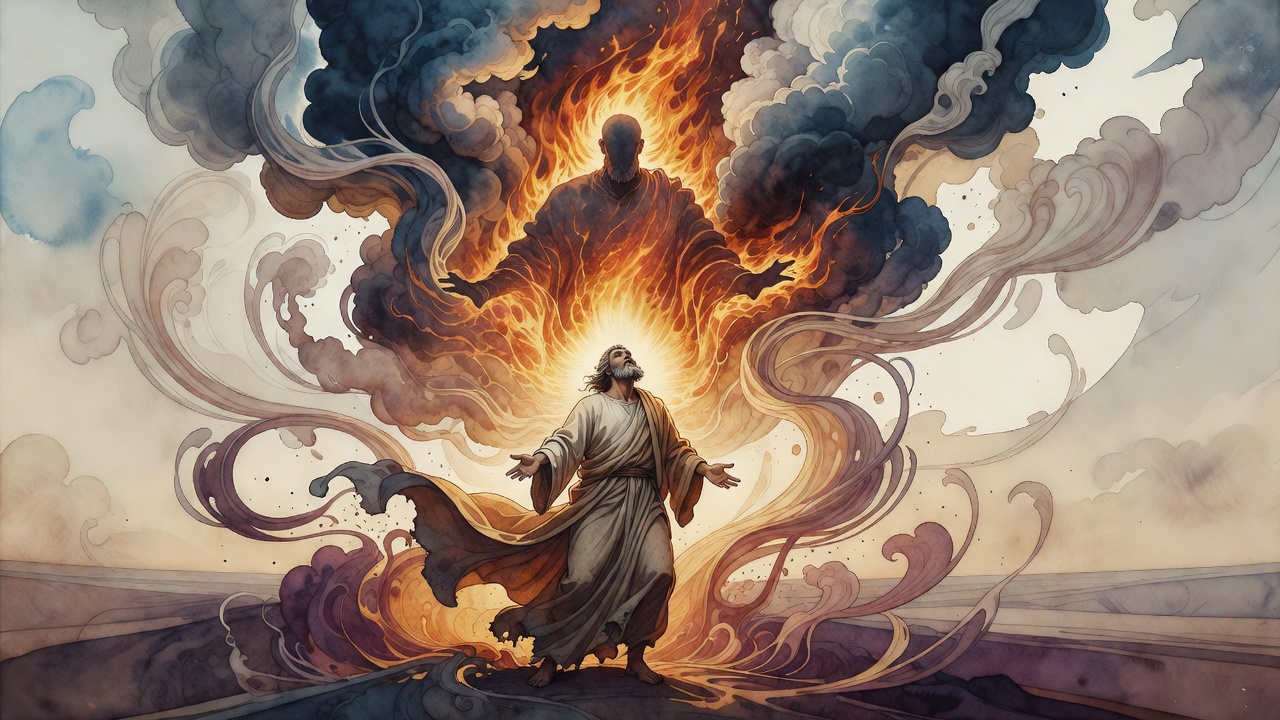
From where was he sustained when the body should have failed? From the splendor of the Shekhinah (שכינה), the Divine Presence. That radiance was his food and drink. He who clings to the Torah and to the One who gives it is fed by a light no famine can touch. Hunger still exists as a category in the world below. It simply finds nothing left to claim in a man filled with Presence on the peak.

A Vineyard Sold for Forty Days

Later, on the road from Tiberias to Tzippori, Rabbi Yohanan pointed out a vineyard he had once owned and sold. His student Rabbi Hiya worried aloud: did you leave nothing for your old age? The master answered with the mountain still in his math. Is it small in your eyes that I sold what was created in six days and acquired what was given in forty? The world's produce is a six-day thing. Torah is a forty-day gift. The exchange is not poverty. It is clarity about which food lasts when the body and the purse both argue for grapes.

Moses on the peak and the sage on the road share a single economy. Bread is not denied as evil. It is outranked by something that takes forty days to give and a lifetime to digest.

Letters That Flew

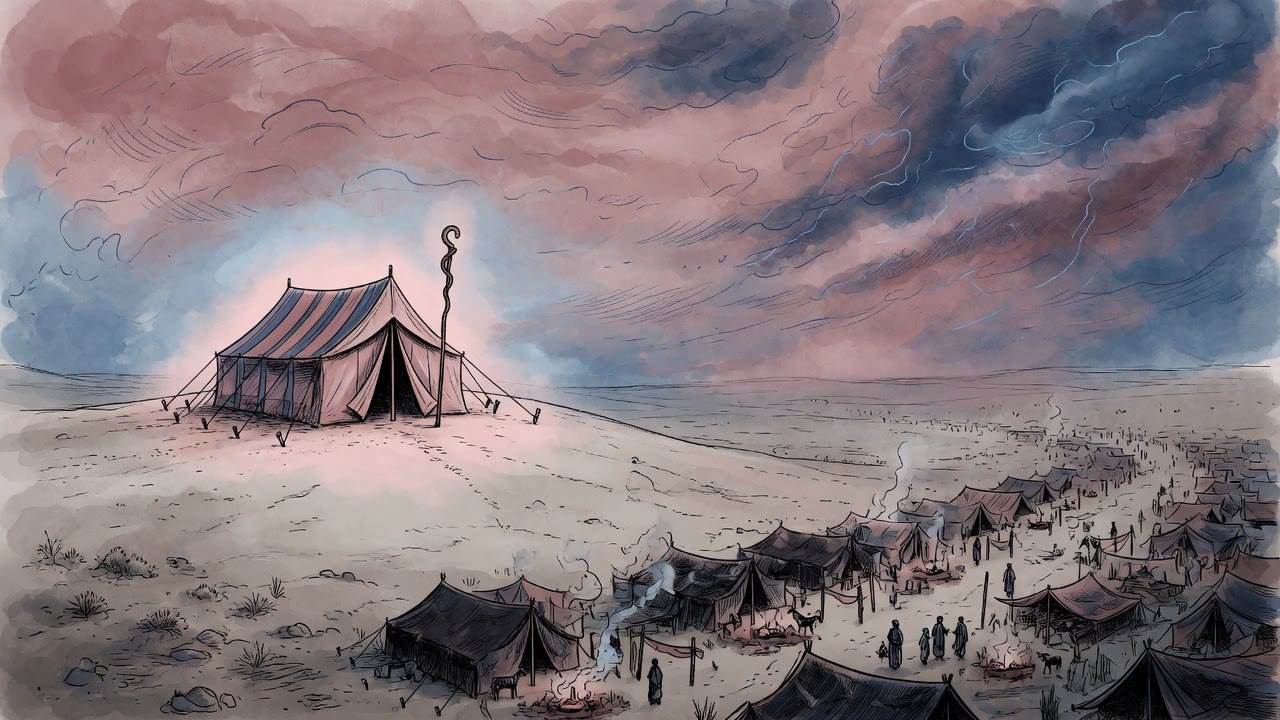
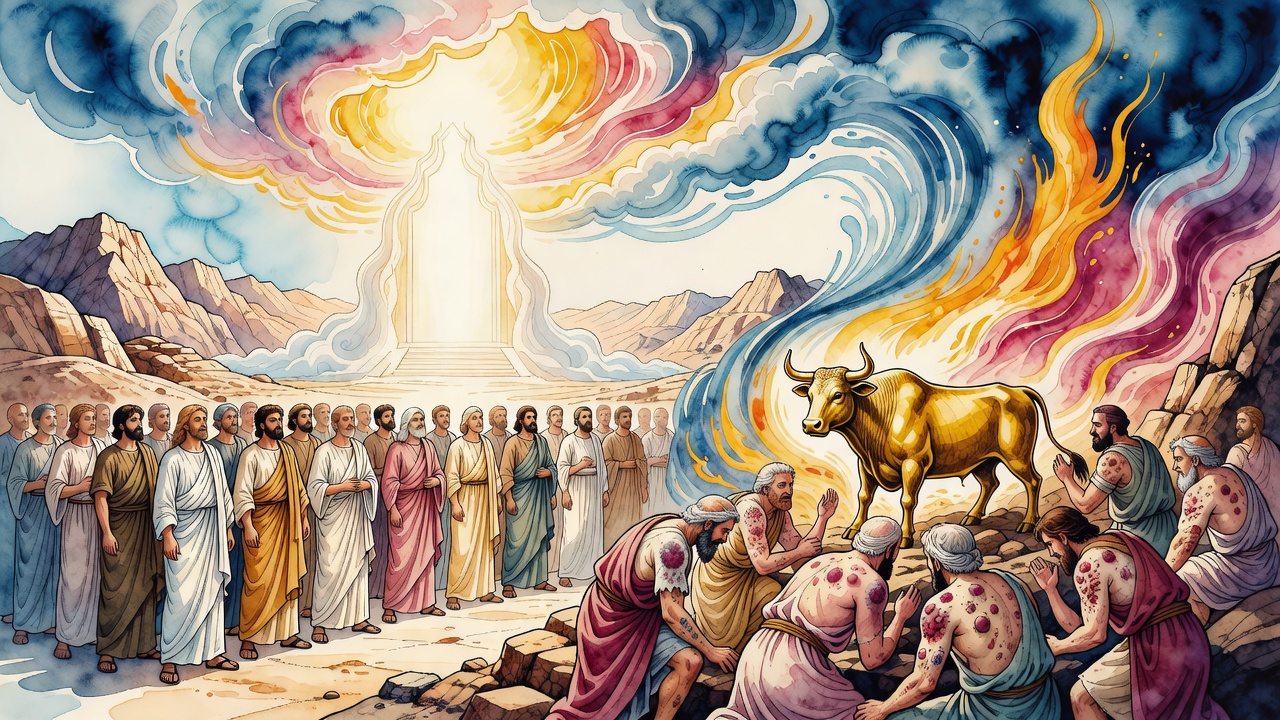
While Moses lived on light, the camp below melted gold. "Go, descend, for your people have acted corruptly" (Exodus 32:7). He comes down with tablets still warm from Heaven's writing. He does not shatter them on rumor alone. He waits until his eyes take in the calf and the dancing. Even a trustworthy report, the Midrash says, is not acted on until the eye confirms. Then the stone breaks under a grief that has finally found its image in a circle of idolaters.

Another reading is harder. The letters themselves fly off when Israel sins. Moses sees the writing vanish, the contract empty, and breaks what is already incomplete. A trusted friend tears a marriage contract when the bride is accused, so she will be judged as unmarried, not as faithless under vows. Moses becomes that friend for Israel. The second tablets will be carved by his own hand: "Hew for yourself two tablets of stone like the first" (Exodus 34:1). Heaven writes again. The partnership is more intimate after the break. The man who lived on Shekhinah (the Divine Presence) light must now cut stone with human strength so that Heaven may write a second time on a surface that remembers the first shatter.

What Fed Him After the Fracture

Forty days of Shekhinah-light, then a people on their knees before metal, then stone that must be cut again. Moses does not come down thinner. He comes down brighter and angrier and more bound to them than before. The same Presence that fed him on the peak sends him back into the valley with dust of tablets on his hands and a second set still to be made in sweat and chips of rock.

The body that needed no bread learned a hungrier work: to carry law for a nation that had already broken it once. Light fed him so he could descend into a camp that had chosen a glinting calf over the invisible fire. He will climb again. He will fast again. He will return with writing that remembers the first fracture and still offers a path for a people who do not deserve the second draft and receive it anyway.


← All myths
From the tradition

Sources

3 sources

The texts behind this telling. Some cards carry a translation of the source; others are our own retelling of it, and each card says which. Every card links out to the original.

Shemot Rabbah 47:5Shemot Rabbah

Retold in our words. Read the original at the link below.The Sefaria Midrash Rabbah, 2022 · CC-BY

The Torah tells us, "He was there with the Lord forty days and forty nights; he did not eat bread, and he did not drink water. He wrote upon the tablets the words of the covenant, the ten precepts" (Exodus 34:28). But how could a person survive that long without food or water?

That's the question the ancient rabbis grappled with. In Shemot Rabbah, a collection of rabbinic interpretations on the Book of Exodus, Rabbi Tanhuma shares an idea in the name of Rabbi Elazar ben Rabbi Avin, citing Rabbi Meir: "You went to the city, follow its conventions." It’s like saying, "When in Rome, do as the Romans do."

Above, on the mountain, where there’s no eating or drinking, Moses ascended and became like the angels. Below, in our world, where we do eat and drink, the angels themselves came down and partook in food when visiting Abraham, as we see in (Genesis 18:8): "He stood over them beneath the tree and they ate."

Of course, there's a fascinating discussion about whether the angels actually ate. Rabbi Yohanan suggests they only appeared to be eating, with each bite mysteriously vanishing!

The text then shares a story involving Rabbi Yohanan himself. He was traveling from Tiberias to Tzippori with his student, Rabbi Ḥiya, when he pointed out a vineyard he had once owned and sold. Rabbi Ḥiya was concerned: "Did you not leave anything for your old age?" Rabbi Yohanan replied, "Is it insignificant in your eyes that I sold an item that was created in six days and I acquired an item that was given in forty days?" He was saying that the fleeting pleasures of this world, created in six days of creation, pale in comparison to the eternal wisdom of the Torah, which was given over forty days on Sinai.

So, if Moses wasn't eating bread or drinking water, what sustained him? The text offers a beautiful answer: "He did not eat bread, but he partook of the bread of Torah. He did not drink water, but he drank the water of Torah." He was immersed in the divine wisdom, studying Torah by day and interpreting it by night. This wasn't just for himself, though. It was, the text says, to teach Israel the importance of toiling in Torah both day and night.

There's a debate about the best time for Torah study. Rabbi Shimon ben Lakish encouraged his students to study during the day so that the material would become clear at night. His idea was that you memorize during the day and analyze at night. Rabbi Yohanan, however, felt that Torah study was best undertaken during the day. Yet, even he conceded that "the song of Torah is only at night," referencing verses from Lamentations (2:19) and Proverbs (31:15) that speak of rising at night to sing or seek wisdom.

The Rabbis, striving for balance, instituted study sessions both morning and evening, echoing the verse from (Joshua 1:8): "This book of the Torah shall not depart from your mouth, and you shall ponder it day and night." The goal? Constant connection to Torah.

Finally, the text offers one more perspective, a glimpse into the world to come. In this world, Moses abstained from earthly food and drink. But in the world to come, he. And perhaps we, will partake of the true bread and water of Torah. In the meantime, what sustained him on Sinai? He was nourished by the aura of the Divine Presence, the very same sustenance that keeps the heavenly beasts bearing the Throne alive.

What are we truly feeding ourselves with, day and night? And how can we, like Moses, draw closer to the Divine Presence and find sustenance in the Torah's eternal wisdom?

Full source
Midrash Tanchuma Buber, Ki Tisa 19:4Midrash Tanchuma Buber, Ki Tisa

Translation of the source text.Midrash Tanchuma (Buber), Public Domain, on Sefaria · CC-BY-SA

{As it is stated:} (Exodus 34:28:) "And he was there with the LORD." He was learning Torah by day and expounding it by night, by himself. Why? Only to teach Israel that they should labor in the Torah by day and by night. And from where was he nourished those forty days? From the splendor of the Divine Presence.

Full source
Shemot Rabbah 46:1Shemot Rabbah

Retold in our words. Read the original at the link below.The Sefaria Midrash Rabbah, 2022 · CC-BY

The Book of Exodus (34:1) tells us that after the Golden Calf incident, God instructs Moses: "Carve for yourself two tablets of stone like the first, and I will write on the tablets the words that were on the first tablets, which you shattered." Seems straightforward. But the Rabbis, ever keen to examine the layers of meaning, ask why Moses broke those first tablets in the first place.

Shemot Rabbah, a classic collection of rabbinic interpretations on the Book of Exodus, delves deep into this question. It begins with a quote from Job (11:6): “He would tell you the secrets of wisdom." According to the Midrash (rabbinic interpretive commentary), this verse alludes to the wisdom inherent in God’s command to Moses to carve the second set of tablets.

Remember the scene: God tells Moses, "Go, descend, for your people have acted corruptly" (Exodus 32:7). Imagine Moses, descending Mount Sinai with the freshly-inscribed tablets, the very word of God in his hands. He's told of Israel's sin, but he doesn't believe it until he sees it with his own eyes. Only then, witnessing the idolatrous revelry, does he shatter the tablets.

Was Moses doubting God? The Rabbis are quick to defend him! Shemot Rabbah suggests Moses was actually teaching Israel a vital lesson about proper conduct. Even if you hear something from a trustworthy source, you shouldn't act on it until you see it for yourself.

But there's another, even more striking interpretation. The Midrash offers that the letters on the tablets actually flew off when Israel sinned. As Deuteronomy (9:16) states: "I saw, and, behold, you had sinned against the Lord your God." Moses saw the sin, and he saw that the divine writing had vanished. In this view, Moses didn’t break the tablets out of anger; he broke them because they were already rendered… incomplete.

The Midrash beautifully illustrates this with a parable: a prince takes a wife and gives her marriage contract to a trusted friend. When rumors of her infidelity surface, the friend tears up the contract, hoping to protect her. "It is preferable that she be judged as a single woman and not as a married woman." That’s what Moses was doing! He understood that with the Tablets intact, the people of Israel would face harsher judgment for violating their covenant with God. As it says in Exodus (22:19) "One who sacrifices to gods shall be destroyed". He chose to break the tablets, hoping to mitigate the consequences of their actions. He was advocating for his people.

But here's the most powerful part: Moses identifies himself with the people. He tells God, "They sinned and I sinned, as I broke the tablets. If you pardon them, pardon me as well" (Exodus 32:32). He's willing to be erased from God's book if it means saving Israel. What an act of selfless leadership!

Rabbi Aha adds that Moses didn't leave the mountain until he secured forgiveness for the people. "Moses turned [vayifen] and descended" (Exodus 32:15), the Hebrew word vayifen is linked to the word pina, meaning "cleared." He descended after clearing their sin.

But after all this, Moses is said to have regretted breaking the tablets. He wonders, who will plead on his behalf? And here, God offers comfort. "Do not regret the first tablets," He says, "as they were only the Ten Commandments alone. But on the second tablets that I am giving you there will be halakhot (laws), midrash (interpretations), and aggadot (stories)." (Based on Job 11:6).: the first set of tablets was a concise statement of divine law. The second set? It represents a richer, more nuanced understanding of that law, filled with layers of interpretation and narrative. The broken tablets, in a way, paved the way for a deeper, more complex relationship between God and Israel, one not just based on commandment, but on ongoing dialogue and interpretation. It is from this moment forward that oral tradition became more important.

They're a reminder that even in moments of apparent failure, there's the potential for growth, for deeper understanding, and for a more profound connection to the divine.

Full source