5 min read

Moses Saw Six Kingdoms in the Hebrew Servant

At Sinai Moses fears Israel will be sold into exile, so God opens with a servant freed in the seventh year, six kingdoms of bondage already counted.

Curated by Arthur · Told by Maggid ·
Table of Contents
  1. Six Kingdoms Hidden in Six Years
  2. Freedom That Arrives Early
  3. A Word Without a Go-Between
  4. Letters Leave the Stone
  5. Empty-Handed Is Not How Freedom Ends

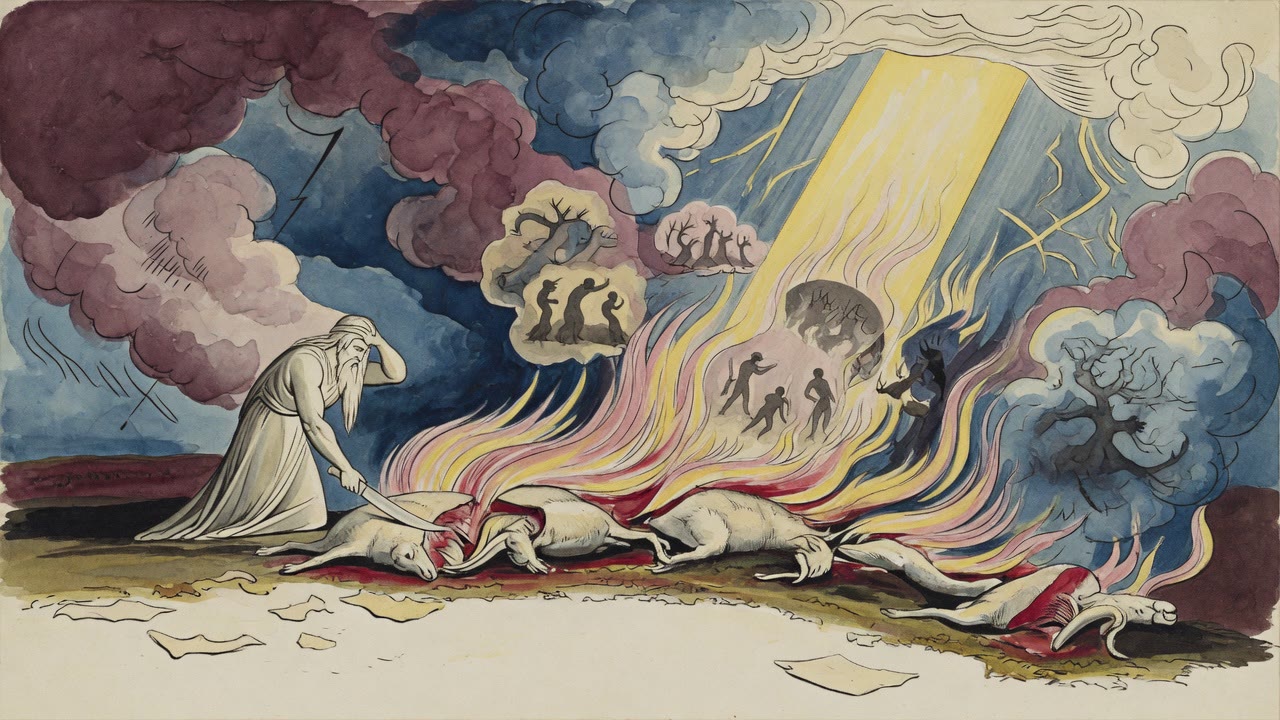
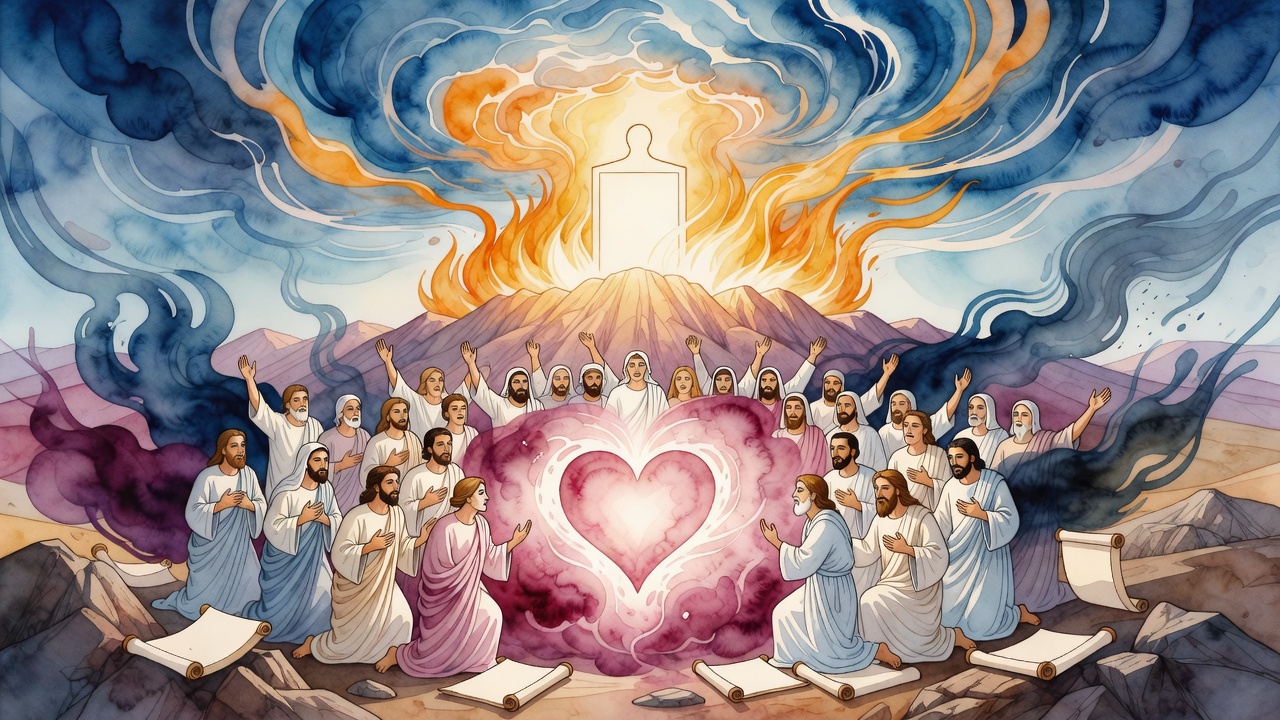
Moses came down from the mountain with fire still in his ears and saw a law that looked too small for the height he had just left. After the thunder of Sinai, the Torah opened civil cases with a Hebrew servant sold into labor.
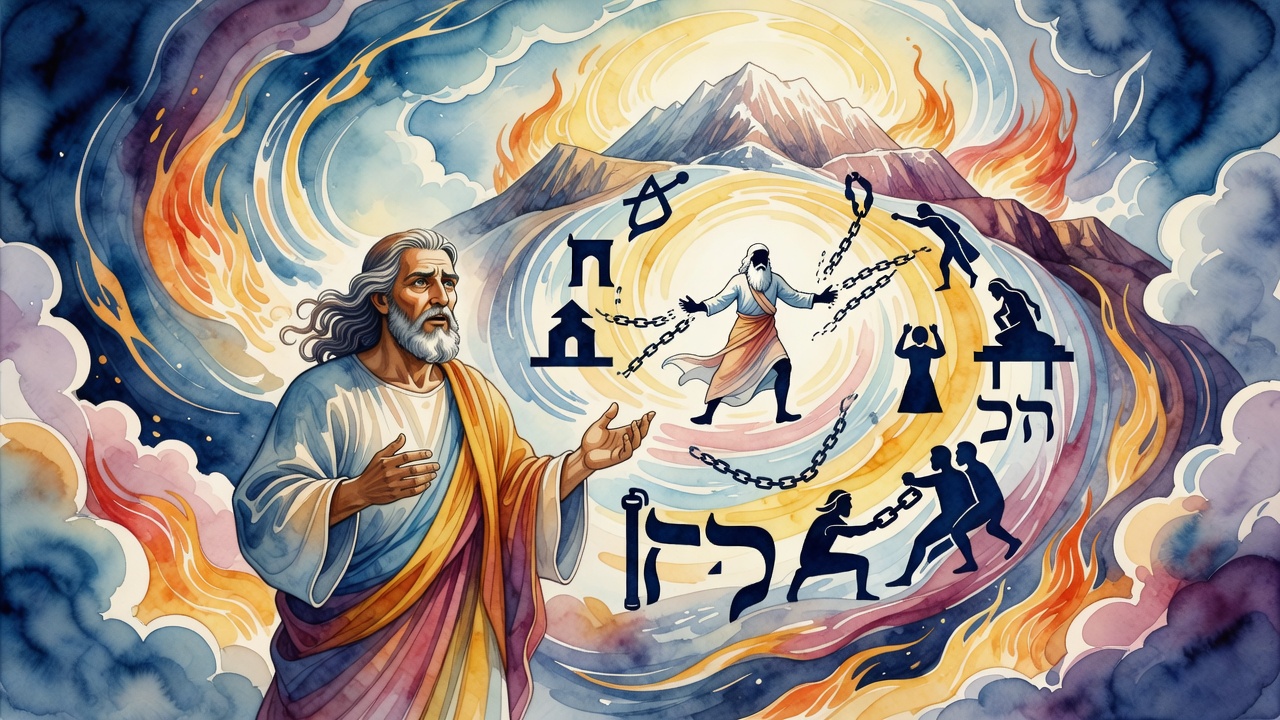
Moses Saw Six Kingdoms in the Hebrew Servant Click for full size

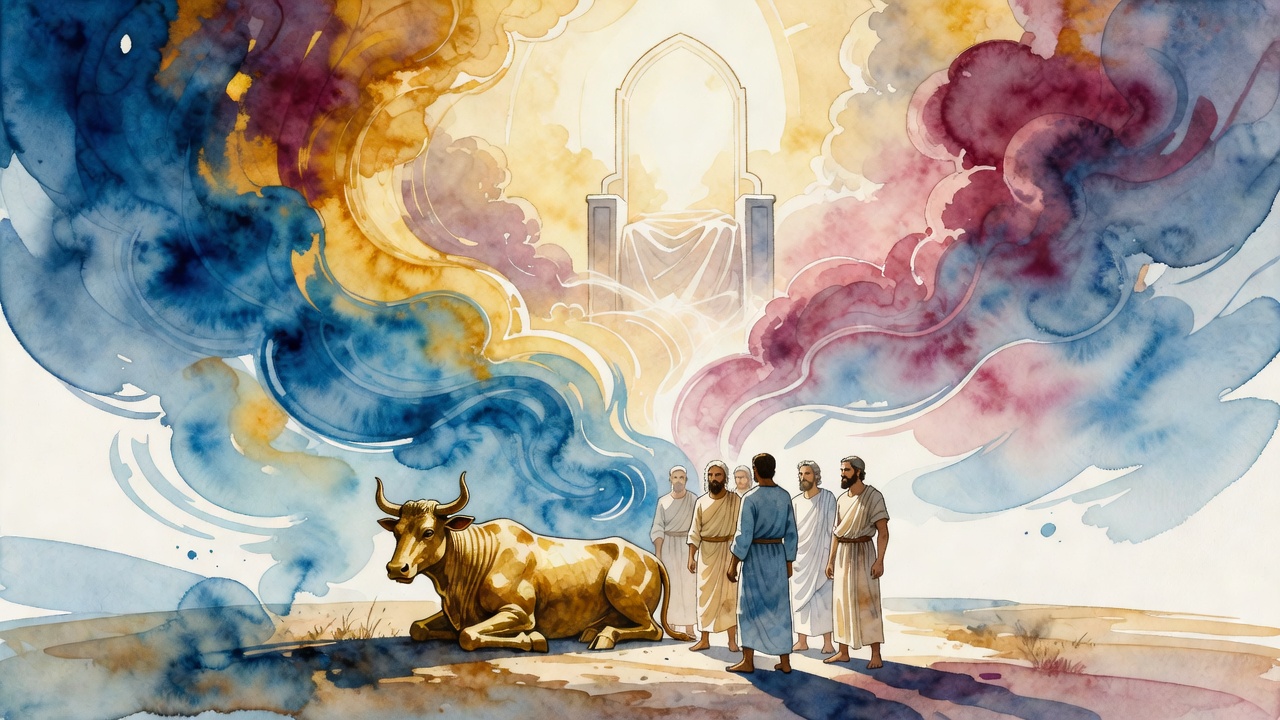
Moses understood the fear under the statute before he understood the statute. "Master of the world," he had already pleaded, "what if the evil inclination leads Your children to sin, and You exile them and sell them into bondage?"

God answered with six years and a seventh of freedom.

Six Kingdoms Hidden in Six Years

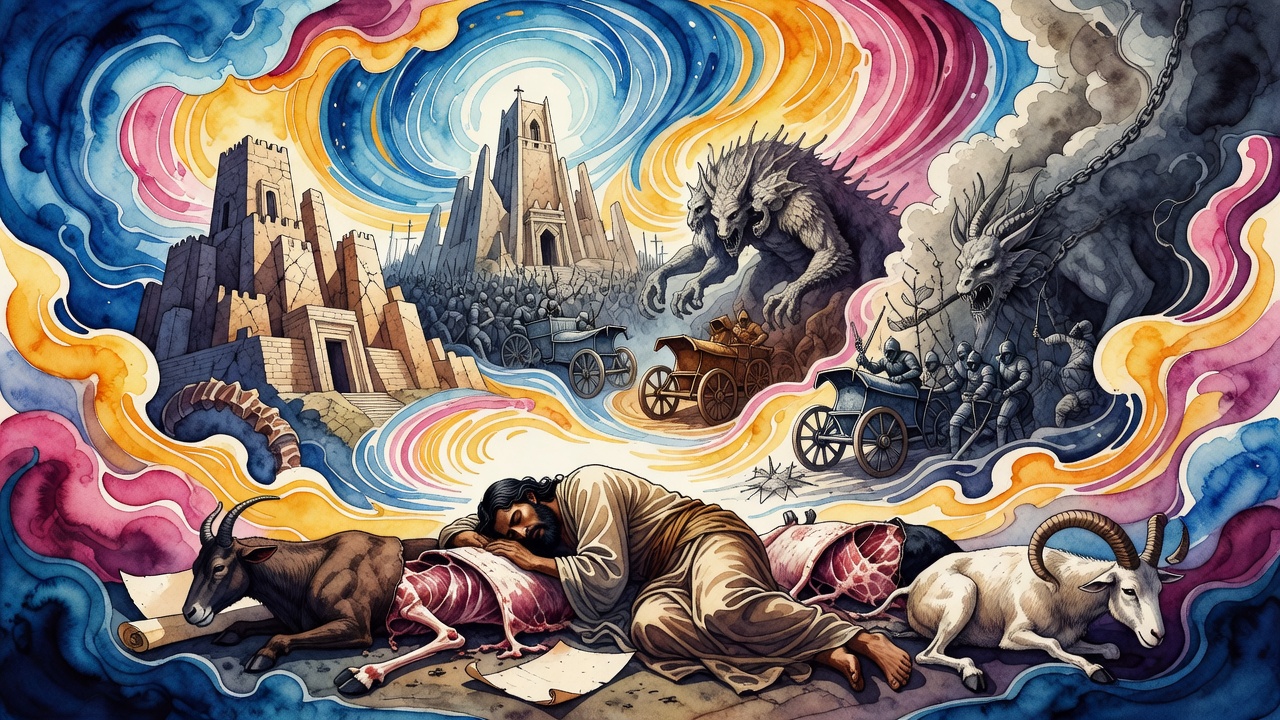
The servant works six years and goes free in the seventh. The Mekhilta of Rabbi Shimon hears six kingdoms of exile inside those years: Babylon, Media, Persia, Greece, Assyria, and Rome. No empire may hold Israel forever.

"Without payment" becomes Moses's plea that redemption come by mercy, not earned by suffering piled high enough to buy it. Even the odd phrase "by his wing" is heard as a prayer: let Israel not be carried off on enemy wings like hunting eagles, but lifted on wings of trust, flying home like doves to their windows.

The lowly case of a sold man was a map of nations and a promise of exit.

Freedom That Arrives Early

The law insists on details that feel like tenderness once exile is in view. A man may sell himself into service, but a father's authority does not let a daughter sell herself. The servant is freed at the start of the seventh year, not its end, and never empty-handed. The master must furnish him generously as he goes.

Five paths lead to freedom: the passing years, the Jubilee, repayment, a document of release, or the master's death without an heir. Bondage is temporary. Freedom is the destination written into the contract from the first day of labor.

A Word Without a Go-Between

The same Mekhilta refuses to let another line pass as formula. "And the LORD spoke to Moses, saying, speak to the children of Israel." The weight falls on the direct address. Prophets as a rule receive the divine word at a distance, filtered. Moses is permitted near enough that nothing stands between the Speaker and the ear that must carry the speech outward.

The chain of teachers and disciples begins at its purest point: a word given straight from its Author into the one chosen to bear it. When Moses fears six kingdoms, he is not guessing from the marketplace. He is hearing from the place where no messenger dilutes the voice.

Letters Leave the Stone

Later, when Moses came down and saw how the people had defiled themselves, he looked at the tablets and watched the letters fly off the stone. Speechless, he broke them at the foot of the mountain. From that hour it was decreed that Israel would learn Torah amid pain and hardship and want, with the promise that God will repay the suffering double in the days of the son of David.

The hunger Amos named is not only for bread. It is a famine for the word of God. The servant who waits for the seventh year and the people who wait for Rome to loosen its wing are students in the same school: freedom timed by heaven, spoken first without a go-between, then carried through broken stone and long exile.

Moses set the servant law at the head of the judgments because he had already seen the auction block of history and refused to leave Israel without an exit year.

Empty-Handed Is Not How Freedom Ends

The master who sends the servant out must load him with gifts. Freedom that arrives starving is not the freedom this law imagines. Moses heard that rule with exile already flickering behind his eyes. When Babylon or Rome finally loosed their grip, Israel was not meant to stumble home with nothing but scars.

Five doors out of service stand open so no single lock can hold a person forever. Years end. Jubilee sounds. Debt is repaid. A document cuts the bond. A master dies without heir and the claim dissolves. The Mekhilta stacks exits the way a careful builder stacks gates in a wall: if one jams, another still opens toward daylight.

Direct speech to Moses and letters fleeing broken stone frame the same teacher. Close enough to hear without a messenger, then broken enough to learn Torah under hunger. The servant law sits between those poles: nearness that knows the danger of six kingdoms, and a people who will study even when the word itself feels like famine, waiting for the double repayment promised for the days of David's son.

Rome is the last name in the Mekhilta's list, and it hangs longest in the mind. Six years of service become centuries of empire, and still the seventh year is written as if it cannot be edited out. Moses feared the auction block of history. God answered with a statute that treats bondage as an interval, not a nature.

When the letters fled the first tablets, Israel learned Torah under want. When the servant walks out loaded with gifts, Israel is taught how redemption should look: not bare survival, but dignity restored at the doorway.


← All myths

From the tradition

Sources

3 sources

The texts behind this telling. Some cards carry a translation of the source; others are our own retelling of it, and each card says which. Every card links out to the original.

Mekhilta DeRabbi Shimon Ben Yochai 21:2Mekhilta DeRabbi Shimon Ben Yochai

Translation of the source text.Mechilta de-Rabbi Simon b. Jochai, ed. D. Hoffmann, Frankfurt 1905 · Public Domain

"When you buy a Hebrew servant" (Exodus 21:2), and yet it should not have been juxtaposed to "these are the ordinances" but rather "when [men] strive," "when [men] contend," and "when a man strikes," which are laws. The expounders of hidden meanings say: because they were commanded at Marah concerning the laws, and He gave them the Ten Commandments, Moses said, "Master of the world, perhaps the evil inclination will lead Your children astray and they will transgress the commandments and You will exile them from before You and sell them as servants; therefore He opened with 'When you buy a Hebrew servant', when You make them a possession to the kingdoms, let them not be enslaved by them more than six kingdoms: 'six years he shall serve', Babylon and Media and Persia and Greece and Assyria and Rome." "And in the seventh he shall go out free, for nothing." He said before Him, "Master of the world, let them not be sunk in the hand of Rome; rather, do merit with them for nothing," "and in the seventh he shall go out free, for nothing." "If he comes in by himself" (be-gappo), the verse should have said "if he comes in alone, alone he shall go out"; what is "by himself" (be-gappo)? He said, God forbid, if sins have caused it, enemies come upon them with wings (agappim), like eagles that soar in the heavens, as it is written (Lamentations 4:19), "Our pursuers were swifter than the eagles of the heavens." "Master of the world, like a soul of trust give them: 'Who are these that fly like a cloud, and like doves to their cotes?'" (Isaiah 60:8). ... [If not, give me permission that I may speak before You. Rabbi Elazar ben Arach was expounding until a fire blazed all around him. When Rabban Yochanan ben Zakkai saw that the fire was blazing all around him, he got down from the donkey and kissed him and said to him, "Rabbi Elazar ben Arach, happy is she who bore you! Happy are you, Abraham our father, that this one came forth from your loins!" He used to say: If all the sages of Israel were in one pan of a balance and Rabbi Elazar ben Arach in the other pan, he would outweigh them all.] Section: "When you buy a Hebrew servant." [From where] that when you acquire, you shall acquire none but a Hebrew servant? Scripture teaches, "when you buy a Hebrew servant." [And from where] that when he is sold, he is sold only to you? Scripture teaches (Leviticus 25:39), "and is sold to you." [And from where] that when the court sells him, they sell him only to you? Scripture teaches (Deuteronomy 15:12), "if your brother the Hebrew is sold to you." ["When you buy a Hebrew servant", this is one who sells himself; and below it says "if your brother the Hebrew or Hebrewess is sold to you", this is one whom the court sells to you. The verse comes to teach you in brief form: "when you buy a servant", a servant whether he sells himself or whether the court sells him to you.] "When you buy a Hebrew servant", you acquire him from himself, but you do not acquire a Hebrew maidservant from herself. For it would be logical: just as a Hebrew servant, whose father does not sell him, behold he sells himself, a Hebrew maidservant, whom her father does sell, is it not logical that she should sell herself? Scripture teaches, "when you buy a Hebrew servant", a Hebrew servant you acquire from himself, but you do not acquire a Hebrew maidservant from herself. [An a fortiori argument for a Hebrew, that his father should sell him? Scripture teaches (verse 7), "when a man sells his daughter as a maidservant", a man sells his daughter, but a man does not sell his son. Rabbi Ishmael says: The verse speaks of a Hebrew servant. You say a Hebrew servant, but perhaps it is only a Canaanite servant? And how do I make the comparison? (Leviticus 25:46), "and you shall make them an inheritance for your children after you, to inherit as a possession", concerning one who buys a servant from a Gentile; but concerning one who buys a servant from an Israelite, you might think he goes out at six years; Scripture teaches, "when you buy a Hebrew servant… six years," and below it says (Deuteronomy 15:12), "if your brother the Hebrew or Hebrewess is sold to you", he of whom it is said so is also he of whom it is said below "your brother," even your brother's son.] "A Hebrew" (Ivri), these commandments were stated concerning a Hebrew servant by the merit of Eber. Another interpretation: by the merit of Abraham, who was from across (me-ever) the river. Another interpretation: by the merit of Israel, who spoke in the Hebrew tongue, as it is said (Exodus 3:18), "they said, 'The God of the Hebrews has met with us.'" "Six years he shall serve", even the son. You might think even the heir; [Scripture teaches (Deuteronomy 15:12), "and he shall serve you six years."] Since the verse both included and excluded, I bring in the son, who stands in the father's place for designation and for an ancestral field, and I exclude the heir, who does not stand in the father's place for designation and for an ancestral field. Another interpretation: "six years he shall serve", even if he flees, for if he flees he is [obligated] to complete the years of service. Another interpretation: "six years he shall serve", to include the one strolling in the market and to include the one who is sick and lying on the bed, for it counts for him toward the reckoning. Another interpretation: "he shall serve", that he not sell his craft to another; he shall not make him a public bath-attendant, a public barber, a public baker, a public money-changer. You might think even if such was his craft; Scripture teaches, "he shall serve." Rabbi Yose says: provided that he does not introduce to him any new craft. "And in the seventh he shall go out." You might think at the beginning of the year or at its end. Behold, you reason: the seventh year sends out servants and the Jubilee sends out servants; just as we find with the Jubilee, at its beginning and not at its end, so too this is at its beginning and not at its end. Or take this approach: the seventh year sends out servants and the Sabbatical year releases a loan; just as we find with the release of a loan, at its end and not at its beginning, so too this is at its end and not at its beginning. Let us see to which it is more similar: we derive a matter that depends on the Jubilee from a matter that depends on the Jubilee, and let the release of a loan, which does not depend on the Jubilee, not prove otherwise. Or take this approach: we derive a matter that does not require the sanctification of the court from a matter that does not require the sanctification of the court, and let the Jubilee, which requires the sanctification of the court, not prove otherwise. Scripture teaches, "six years he shall serve," etc.; say from now on, from its beginning and not at its end. Another interpretation: "and in the seventh he shall go out", there are times when he serves in the seventh, for if the Sabbatical year falls within the six, he serves in it, for the Sabbatical does not release servants; but if a Jubilee year reaches him, even in the second year of his sale he goes out, as it is said (Leviticus 25:13), "in this year of the Jubilee you shall return, each man to his possession." "He shall go out free, for nothing." From the general statement that is said (Deuteronomy 15:13), "and when you send him out free from you," this teaches that it is a commandment to say [to him], "Go out." You might think that if he said to him "Go out" he goes out, and if not, he does not go out; Scripture teaches, "he shall go out free, for nothing." "For nothing" (chinam), since "free" is said here and "free" is said below (verse 26), you might think: just as the "free" stated below requires a document, so too the "free" stated here requires a document; Scripture teaches "for nothing", he does not require a writ of release. Another interpretation: "for nothing", you might think that if he was sick and lying in bed and his master spent expenses on him, he would need to give it to him; Scripture teaches, "he shall go out free, for nothing." Another interpretation: "for nothing", you might think without a severance gift; Scripture teaches (Deuteronomy 15:13-14), "and when you send him out free from you, you shall not send him away empty; you shall surely furnish him." Another interpretation: to include the deduction of money. Another interpretation: "he shall go out", to include a document. From here they said: a Hebrew servant is acquired by money and by document, and acquires himself by five things: by years, by the Jubilee, by the deduction of money, by a writ of release, and by the death of the master without a son.

Full source
Mekhilta DeRabbi Shimon Ben Yochai 31:1Mekhilta DeRabbi Shimon Ben Yochai

Translation of the source text.Mechilta de-Rabbi Simon b. Jochai, ed. D. Hoffmann, Frankfurt 1905 · Public Domain

"And the LORD spoke to Moses, saying, speak to the children of Israel": you, not by means of an interpreter and not by means of a messenger.

Full source
Tanna Debei Eliyahu Rabbah 21:2Tanna DeBei Eliyahu Rabbah

Translation of the source text.Tanna debei Eliyahu Rabbah, Warsaw 1880 · Public Domain

Another interpretation of "who faint with hunger": the Sages said: when Moses came down from Mount Sinai and saw the foulness with which Israel had befouled themselves by their deeds, Moses looked at the tablets and saw that their writing had flown off from them. At once Moses broke them beneath the mountain; Moses was struck dumb and could not answer a word. At that time a decree was decreed upon Israel that they would learn Torah amid pain and amid servitude and amid wandering and amid harrying and amid pressure and amid having no food; and in reward for that pain the Holy One, blessed be He, is destined to pay their reward in the days of the son of David doubled and redoubled, as it is said, "Behold, the Lord GOD comes with might... behold, His reward is with Him" (Isaiah 40:10), and it says, "Who has given to Me first, that I should repay him? Whatever is under all the heavens is Mine" (Job 41:3). And as the Sages said: for his good the leg of his cow was broken so that his wage would be complete, so Aaron said: had it not been for Korah, that covenant would not have stood firm for me, as it is said, "a memorial for the children of Israel, so that no stranger, who is not of the seed of Aaron, should draw near to burn incense before the LORD" (Numbers 17:5); and Aaron said: for my good the leg of my cow was broken.

Another interpretation of "who faint with hunger": "hunger" is nothing other than for words of Torah, as it is said, "Behold, days are coming, says the LORD, when I will send a famine in the land, not a famine for bread nor a thirst for water, but for hearing the words of the LORD" (Amos 8:11). From here the Sages said: a person should learn Torah in dread and in fear, in trembling and in sweat, and let a person look at himself and know what will be of him after death. Therefore let a person lift his eyes and look at the heavens and say: Who created the stars and the constellations in the firmament and gave a place and a way and a path to each one? And likewise let him look at the earth and see how many towers the idolatrous kingdom built; who cut them down and threw them to the ground? And how many towers the kingdom of Media built; who cut them down and threw them to the ground? Who kicked over the first tower and put its head in one place and its body in another, twenty-one miles between this and that? as it is said, "Your heart shall meditate on the dread; where is the scribe, where is the weigher, where is he who counted the towers?" (Isaiah 33:18).

From here the Sages said: a person should always be in fear of Heaven, complete fear, fear upon the truth, acknowledging the truth and speaking truth in his heart; and every single day let him rise early and say: Master of all the worlds and Lord of lords, it is not on account of our righteous acts that we cast our supplications before You, but on account of Your abundant mercies. What are we, what is our life, what is our kindness, what is our righteousness, what is our salvation, what is our strength, what is our might? What shall we say before You, O LORD our God and God of our fathers? Are not all the mighty as nothing before You, and the men of renown as though they never were, and the wise as without knowledge, and the discerning as without understanding? For most of their deeds are emptiness, and the days of their life are vanity before You, and the advantage of man over beast is nothing, for all is vanity. But we are Your people, the children of Your covenant, the children of Abraham who loved You, to whom You swore on Mount Moriah; the seed of Isaac his beloved, who was bound upon the altar; the congregation of Jacob Your son, Your firstborn, whom out of Your love for him and Your joy in him You called by the name Israel and Jeshurun.

Therefore we are obligated to give thanks to You and to praise You and to glorify You and to bless and sanctify and give praise and thanksgiving to Your name. Happy are we, how good is our portion, and how pleasant our lot, and how beautiful our inheritance. Happy are we who rise early and stay late, evening and morning, and say twice each day, "Hear, O Israel, the LORD is our God, the LORD is One." Blessed be the name of the glory of His kingdom forever and ever. You are He before You created the world, and You are He since You created the world; You are He in this world, and You are He in the world to come. Sanctify Your name over those who sanctify Your name, and sanctify Your name in Your world, and in Your salvation raise and lift up our horn. Blessed are You, O LORD, who sanctifies His name among the multitude. You are the LORD our God in heaven and on earth and in the highest heaven of heavens. You are true; You are first and You are last, and besides You there is no God. Gather those who hope in You from the four corners of the earth, so that all who come into the world will recognize and know that You alone are God over all the kingdoms of the earth. You made the heavens and the earth, the sea and all that is in them, and who among all the works of Your hands, above or below, can say to You, What are You doing? Our Father in heaven, deal with us in charity and kindness for the sake of Your great name that is called upon us, and fulfill for us, O LORD our God, what is written, "At that time I will bring you in, and at the time I gather you, for I will make you a name and a praise among all the peoples of the earth, when I restore your fortunes before your eyes, says the LORD" (Zephaniah 3:20).

Full source