Moses Praised the Torah's Gifts Then Named Its Penalties
No one walked out. They asked to hear the words of their King from Himself, not from a messenger, and were given two days to purify.
Table of Contents
 Click for full size
First the Honey, Then the Edge
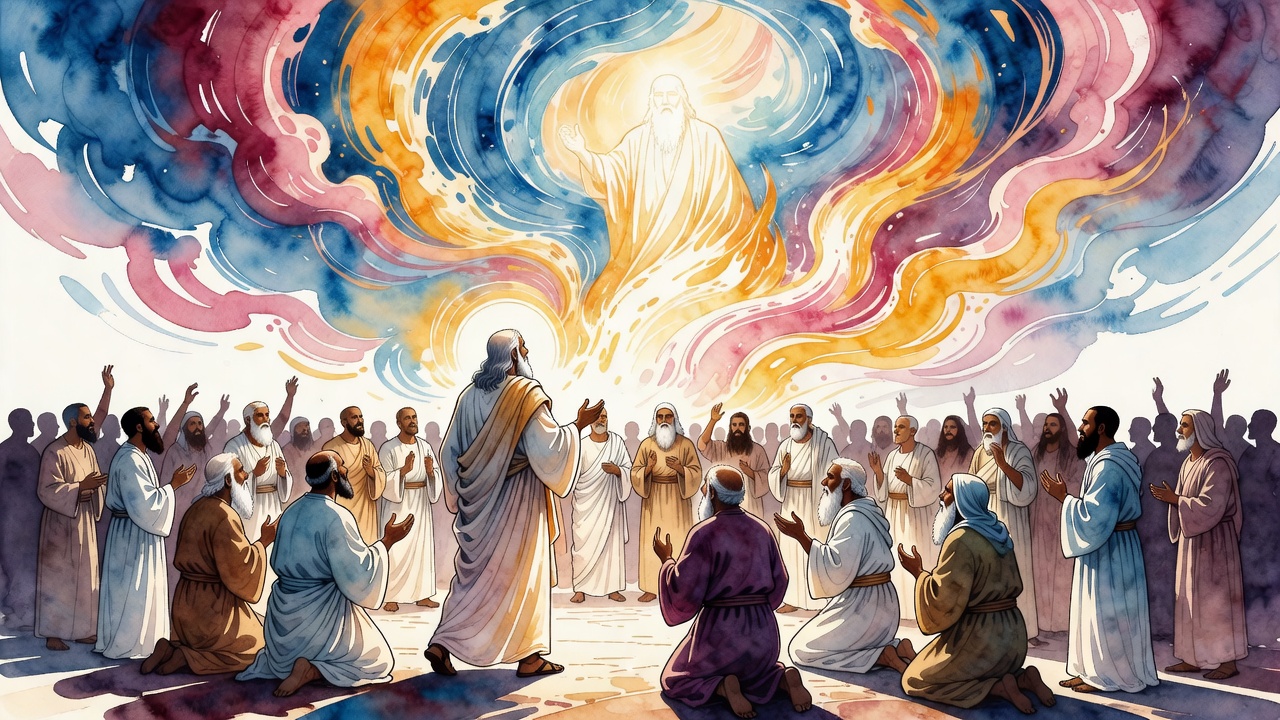
Moses came back to the people with a changed tone. The first time he spoke of the Torah, he painted its gifts until the heart leaned forward. He wanted them to want the Law. The second time he opened the other side. He named the serious effects that follow a people who take the gift and throw it down. The air tightened. No one walked away.
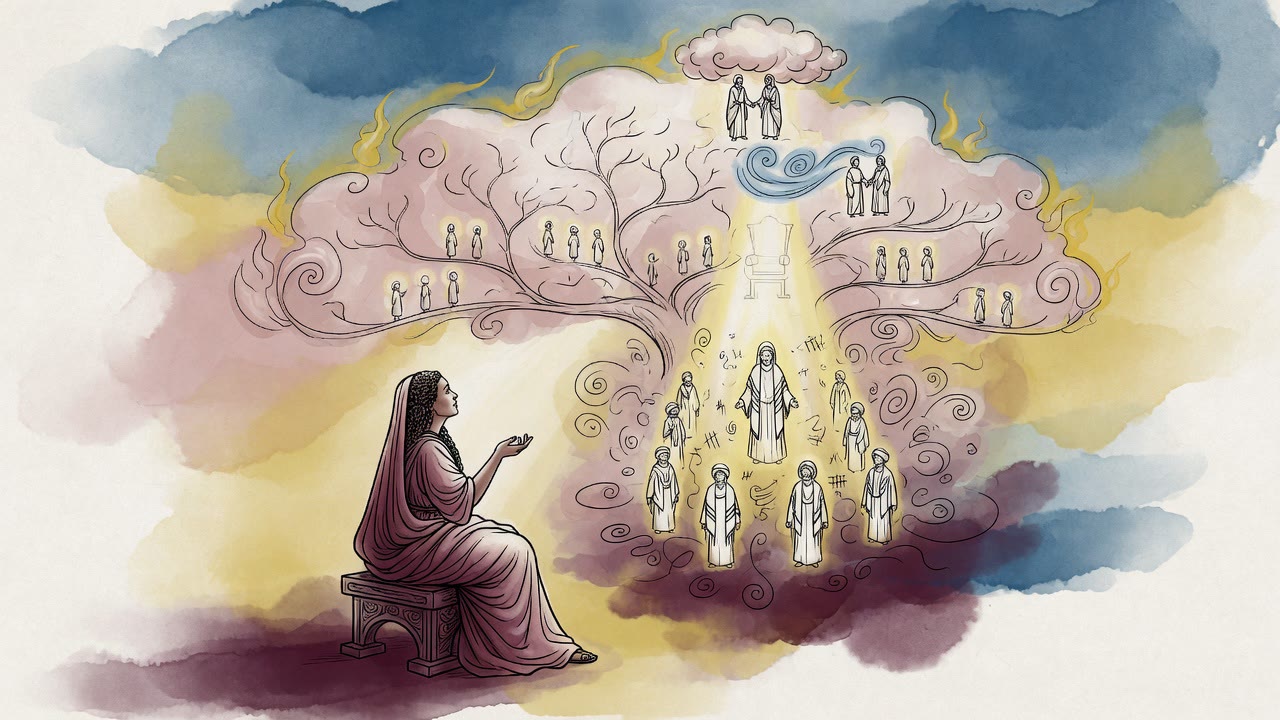
Their resolution held. Joy at receiving the Torah did not die when the penalties were spoken. They asked for more, not less. "We want to hear the words of our King from Himself," they said. A messenger was not enough. Hearing, they knew, is not like seeing. They wanted the Presence, not only the report.
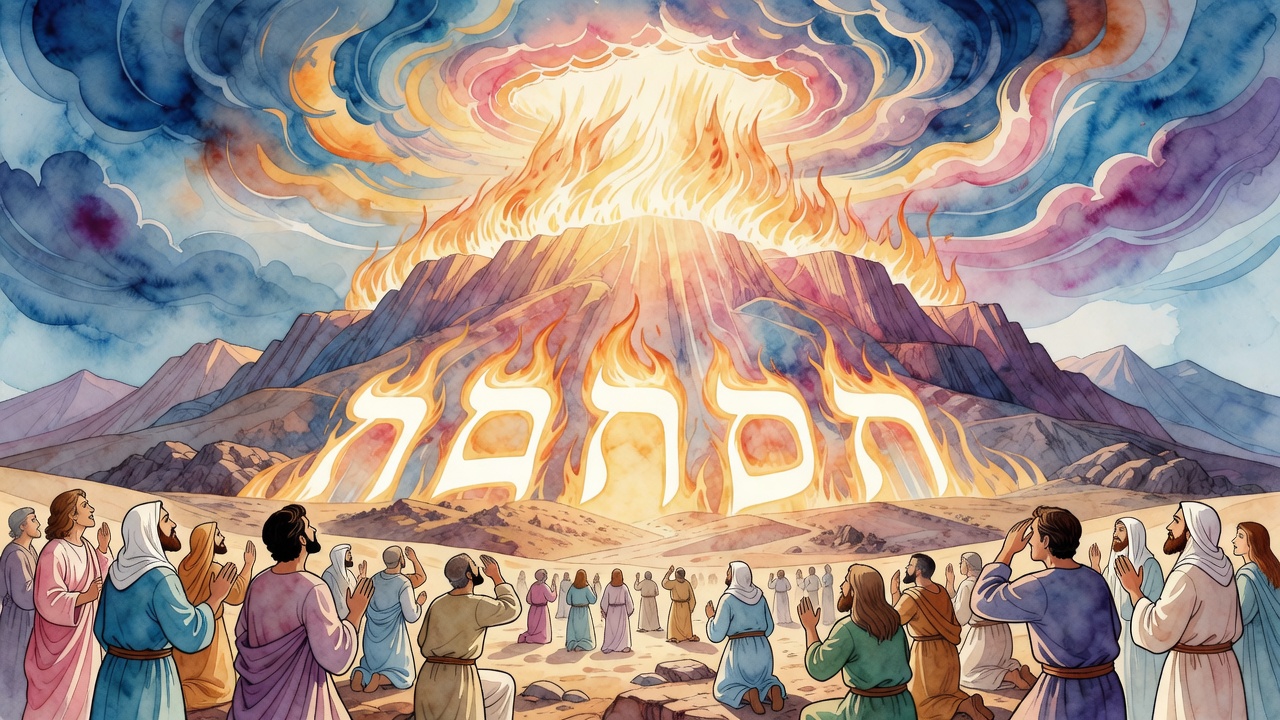
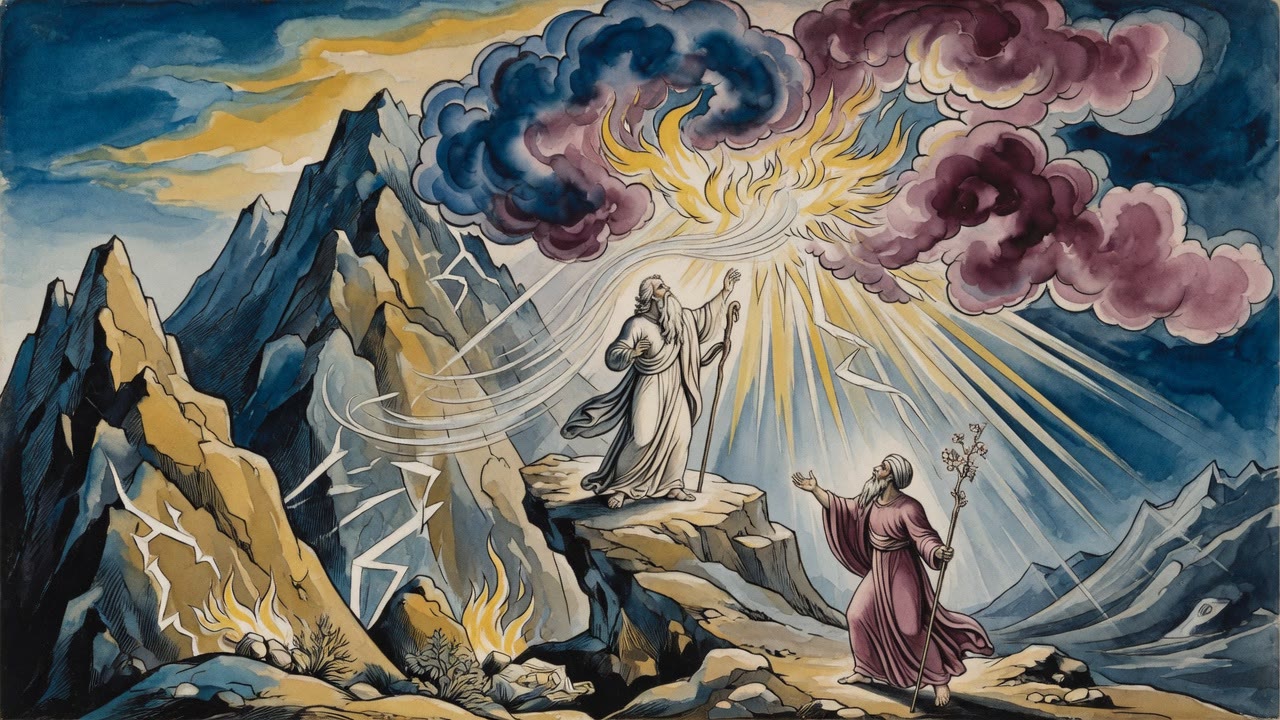
God granted the audacity. Moses was told to prepare them for two days of purification. Fresh from slavery, they stood under a mountain and waited for a voice that would burn and bind. Reward and punishment had both been named. They still chose the fire. That choice is the first drama of Sinai: not innocence, but consent after both doors have been opened.
Fire, Water, and the Bare Place
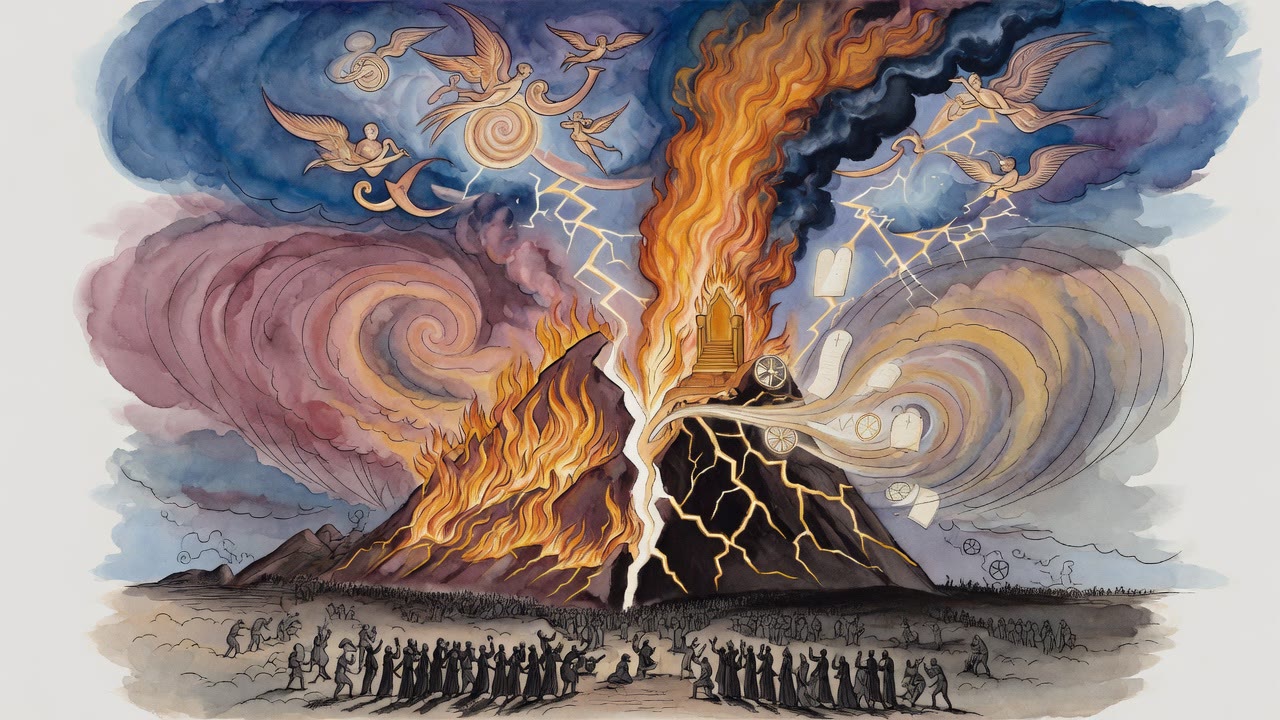
Bamidbar Rabbah opens Numbers with honor sharp enough to cut. "The Lord spoke to Moses" singles one man out of the host. Then it names the place: the wilderness of Sinai. The Sages taught that Torah was given with three free things: fire, water, and wilderness. Fire smoked on the mountain when God descended (Exodus 19:18). Water poured in the poetry of the heavens (Judges 5:4). The wilderness itself held no landlord and no fence.
Why those three? Because they belong to everyone, as Torah belongs to everyone. Isaiah cried, "Ho, everyone who is thirsty, go to the water" (Isaiah 55:1), and urged ears to incline so the soul might live (Isaiah 55:3). Only a person who makes himself like a wilderness, open and without pretense, can take wisdom in. Ego is a roof that keeps the rain off. Humility is the ground that drinks.
Moses' double speech, reward then penalty, lands in that same bare place. The Law is free and costly. It is water for the thirsty and fire for the proud, and it will not stay with a people who refuse to become open ground.
Not for Moses Alone
In the Mekhilta, a master taught that God spoke to Moses in the merit of Israel. Rabbi Shimon ben Azzai answered with the study-hall formula of respect: he did not come to detract, only to add. The rule was larger. Not to Moses alone did God speak in the people's merit, but to all the prophets. Prophecy rises and falls with Israel's standing.
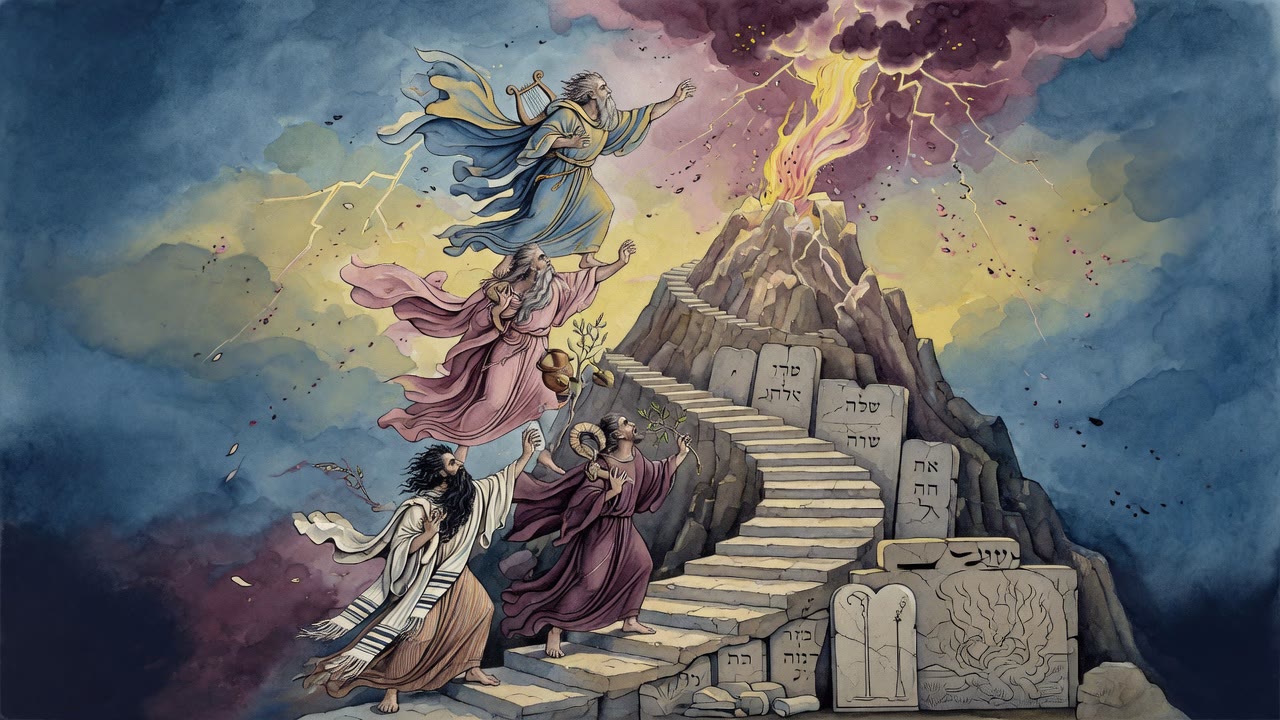
He proved it from Ezekiel, who sat seven days mute among the exiles before the word returned (Ezekiel 3:15-17), and from Jeremiah, who received the word after the people came asking for guidance (Jeremiah 42:7). The prophetic mouth is not a private jewel. It is a pipe that opens when the nation needs water and closes when the nation is not ready to drink.
So Moses' warnings were never the scolding of a lonely genius. They were the voice of a man whose speech existed because a people stood behind him, waiting to become a wilderness fit for fire. When he named punishments, he spoke as their agent, not as their rival.
Counted in Love, Spared in Silence
Bamidbar Rabbah reads the censuses under the banners as affection. God tallied Israel again and again, generally and individually, the way a person recounts a treasure. "I have such and such hosts in My world who perform My will," He rejoices. Then the Levites are not counted with them. The exclusion looks like slight. The midrash hears protection. When the decree after the spies fell on the counted generation, the Levites, left outside that tally, were not swept into the same doom.
Love sometimes numbers. Love sometimes refuses to number. Moses, who brought both reward and punishment into speech, stood inside that same careful care. The God who warns is the God who counts, and the God who withholds a count to save a tribe. Warning and census are two faces of the same attention.
They Chose the Mountain Anyway
Honey first, then the edge. Wilderness open enough to receive. Prophets whose words hang on the people's merit. Censuses that love by counting and save by not counting. The drama at Sinai is not naive optimism. It is a nation that heard both sides of the Law and still demanded the King's own voice.
Moses did not trick them with sweetness alone. He showed the fire after the feast and watched them step closer. That step is the story. A people that accepts only reward has not accepted Torah. A people that accepts the penalty and still prepares for two days of purity has begun to become the wilderness where speech can land. The mountain waited for that beginning, and the double speech made it possible.
← All myths