5 min read

Moses Split a Sea and Was Stopped at the Jordan

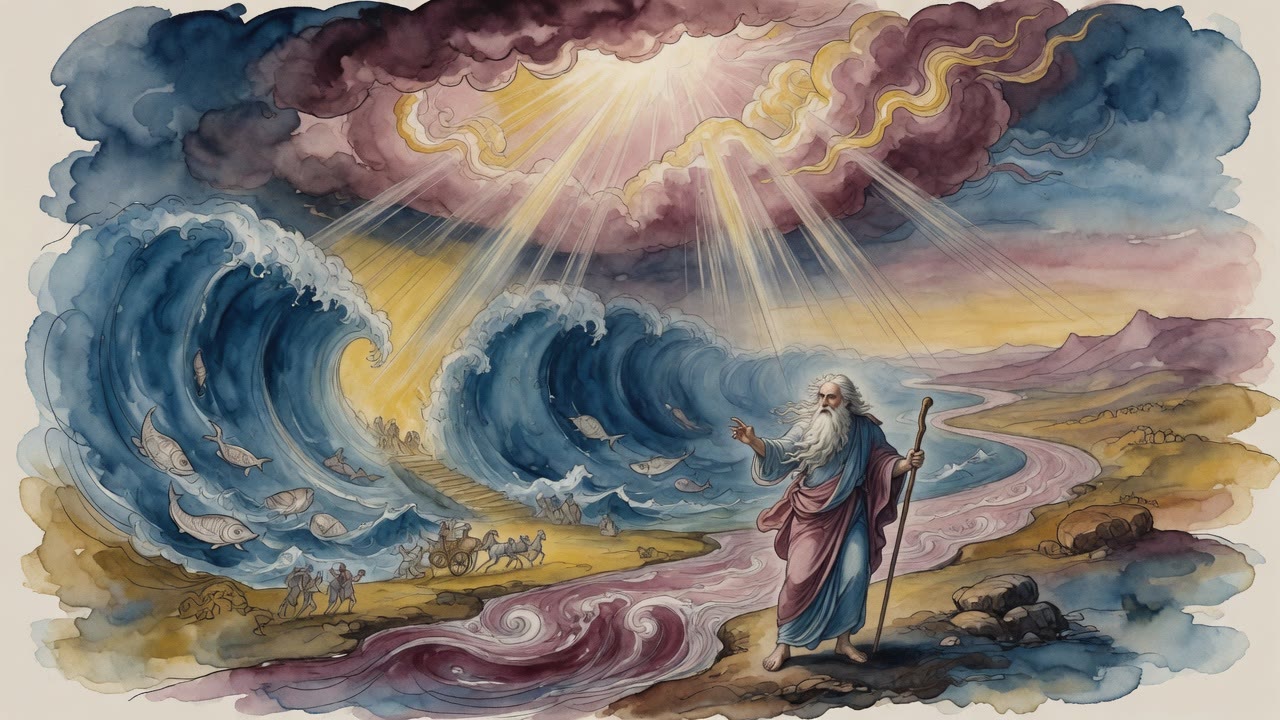
A sea had stood up in walls when he raised his staff. The Jordan in front of him was a morning's walk across, and God had told him he would not go over it.

Curated by Arthur · Told by Maggid ·
Table of Contents
  1. The Ford He Was Not Allowed to Use
  2. Yesterday He Went Up Like an Eagle
  3. The Brick That Used to Be Under God's Feet
  4. He Prayed Like a Man With Nothing
  5. What He Got Instead of a Crossing
Moses Split a Sea and Was Stopped at the Jordan Click for full size

The Ford He Was Not Allowed to Use

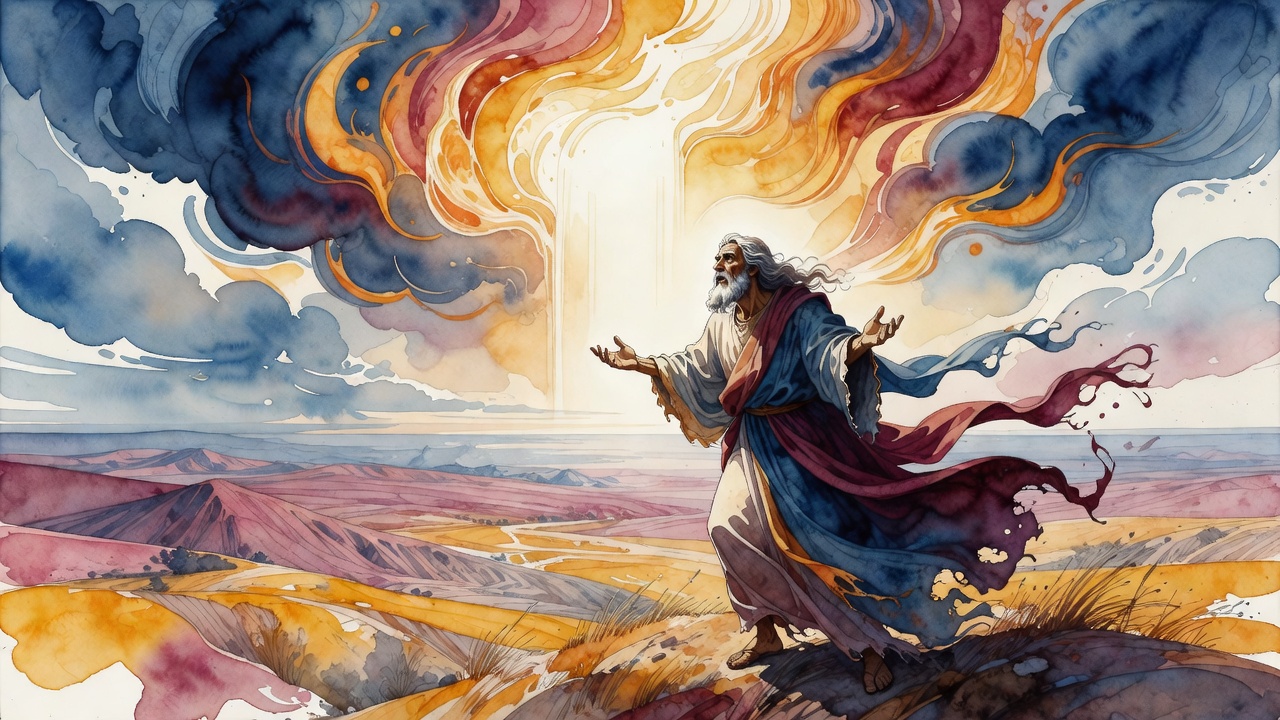
Moses stood on the plains of Moab and looked at the water. The Jordan at that season was nothing much, brown and ordinary, moving between its banks the way rivers move. Men drove flocks across fords like that one every week of their lives.

He had gone into a sea once with a staff in his hand and the sea had stood up on both sides and let a nation walk through on dry ground. He was one hundred and twenty years old, his eye was not dim, and the word had come and stopped him where he was. You will not cross this Jordan.

The camp behind him went on packing.

Yesterday He Went Up Like an Eagle

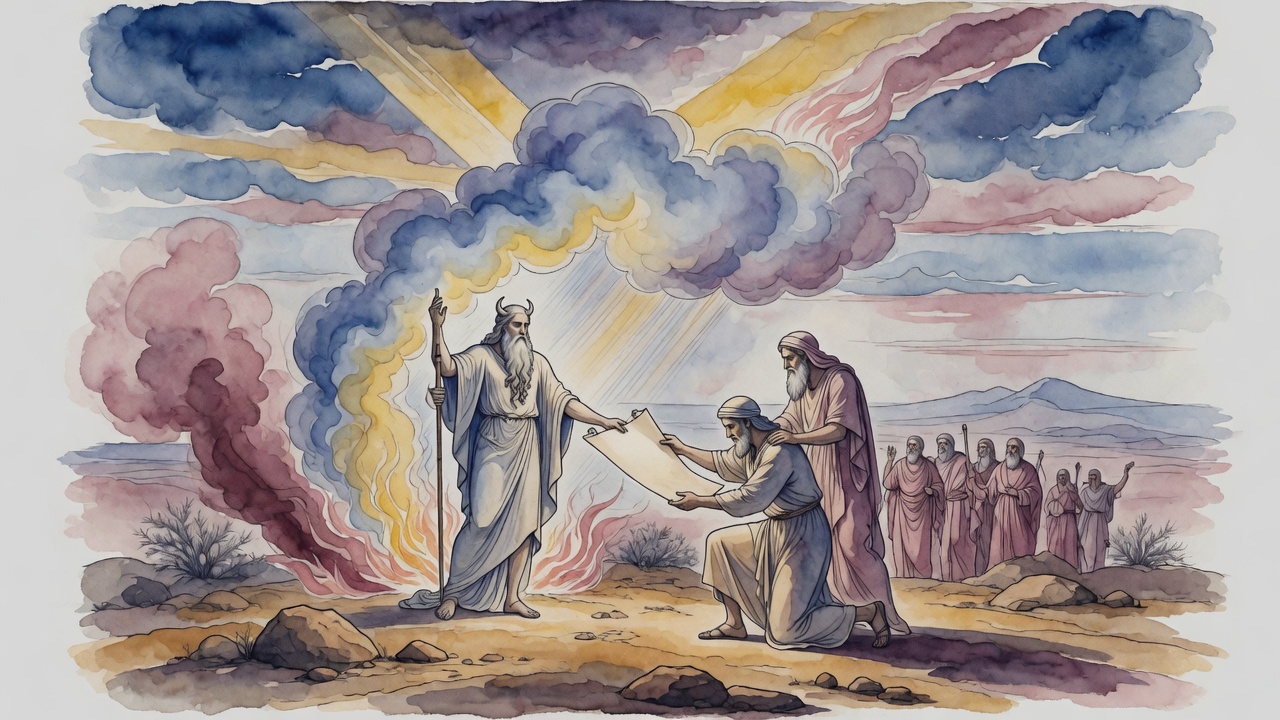
Yesterday, if you measured his life in days, he had climbed into heaven like an eagle. He had gone up the burning mountain and stayed forty days in a cloud without bread or water, and the angels of the place had trembled when he walked among them.

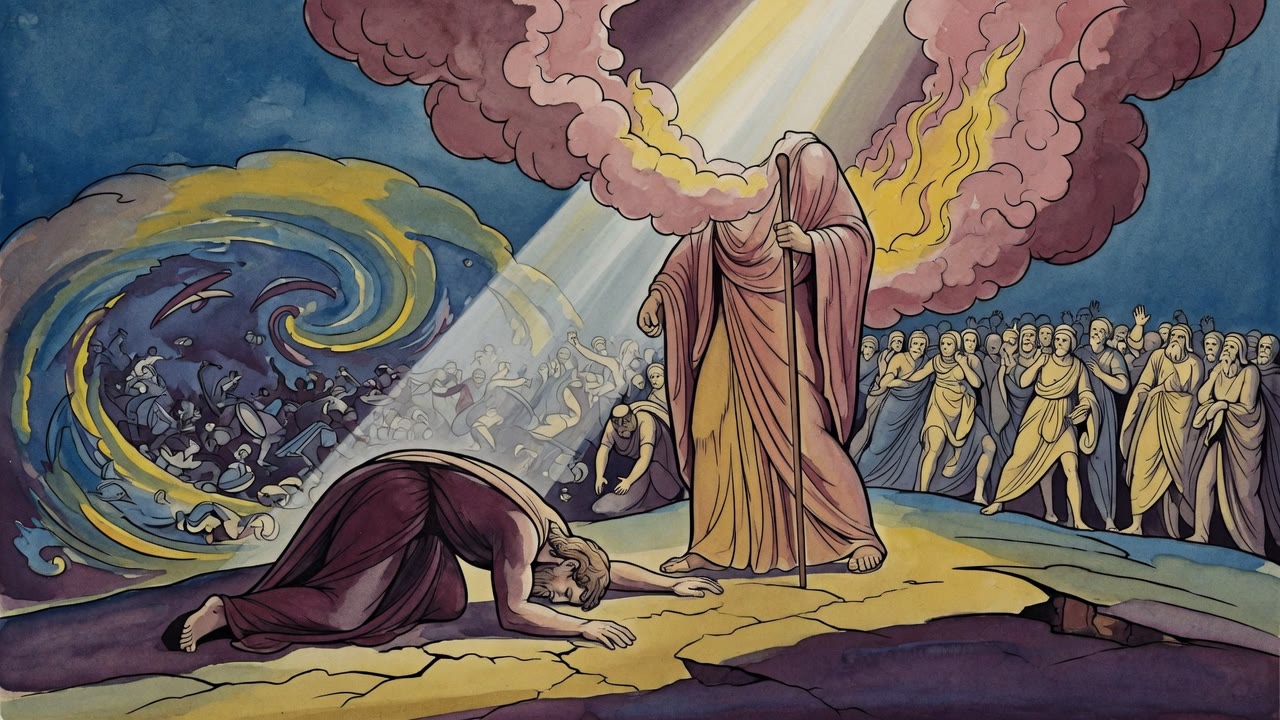
Now he was telling the people, in his own voice, in front of everybody, that he had been afraid. Afraid of the anger and the burning wrath that had gone up against them at the calf, so afraid that he had thrown himself on the ground for another forty days and begged.

The man whose wisdom had gone up against fortified cities and pulled down their strength was watching that same wisdom get handed across to Joshua son of Nun while he was still standing there breathing.

The Brick That Used to Be Under God's Feet

He had seen something at Sinai that he could not unsee. He and Aaron and Nadab and Abihu and seventy elders had gone up, and they had seen the God of Israel, and under His feet there was the work of a sapphire brick, and above it the sky was clear as heaven itself when the clouds are gone.

A brick. While Israel was down in Egypt with mortar under their fingernails and straw in their hair, hauling bricks in the sun, God kept a brick under His own feet.

After the redemption the brick was put away in the place bricks are put away, and the basket went with it, and the trowel went with it. Before that day the mark of it could be seen up in the sky. Afterward there was nothing to see but the pure heavens, cloudless, swept.

Moses had lived on both sides of that change. He had watched God set the slavery down. It had not bought him the crossing.

He Prayed Like a Man With Nothing

Once he had spoken to heaven like a rich man with credit. Turn back from your burning anger. Pardon the sin of this people. He had said those things standing up, and God had turned back.

At the river he begged. The word he used was the word a beggar uses, asking for something free, something owed to nobody. Let me cross over. Let me see the good land beyond the Jordan, that good hill country, and the Lebanon.

He prayed it for seven days. On the seventh the answer came, and it was four words wide. Your days are drawing near.

He knew how to move God. He had done it before, more than once, and the whole nation behind him was alive because of it. The skill did not fail him at the end. The permission did.

What He Got Instead of a Crossing

He got a mountain. God took him up Pisgah and told him to lift his eyes north and south and east and west and look at all of it, because his feet were not going any farther.

So he looked. Then he came down and blessed the tribes one by one, and laid his hands on Joshua in front of the people, and taught them a song to sing after he was gone so that the words would still be in their mouths when he was not.

The Jordan opened later, for the priests and the ark and a nation walking through on dry ground for the second time in forty years. Moses was already buried in a valley in Moab by then, in a grave nobody has ever found. The swiftest runner of his generation finished on the near bank, in sight of the far one, while everyone he had carried out of Egypt went over without him.


← All myths
From the tradition

Sources

2 sources

The texts behind this telling. Some cards carry a translation of the source; others are our own retelling of it, and each card says which. Every card links out to the original.

Devarim Rabbah 9:2Devarim Rabbah

Retold in our words. Read the original at the link below.The Sefaria Midrash Rabbah, 2022 · CC-BY

Devarim Rabbah, a collection of rabbinic teachings on the Book of Deuteronomy, explores the meaning of a verse from Ecclesiastes (9:11): "I again saw under the sun that the race is not to the swift…" But what does that really mean?

Rabbi Tanhuma, a prominent sage, offers a fascinating interpretation: This verse, he says, is actually talking about Moses. Just yesterday, Moses could ascend to the heavens like an eagle! He was in direct communication with God, a towering figure, a leader without equal. And yet, here he is, yearning to cross the Jordan River into the Promised Land, a seemingly simple act, but he's denied. As God says in Deuteronomy (3:27), "You will not cross this Jordan."

It’s a gut-wrenching moment. How could the man who led the Israelites through the desert, who received the Torah at Sinai, be stopped at the very threshold of his dream?

The verse continues, "And the war is not to the valiant." Again, Rabbi Tanhuma sees Moses. Remember how the angels themselves trembled before him? But now, Moses confesses, "For I was daunted due to the wrath and the fury" (Deuteronomy 9:19). The man who faced down Pharaoh, who split the Red Sea, admits to being afraid.

Then comes, "Also not to the wise is bread." This, Rabbi Tanhuma explains, relates to Moses’ wisdom. He quotes Proverbs (21:22): "The wise man goes up against the city of the mighty and removes the strength of its stronghold." Moses possessed unparalleled wisdom; some would say it came directly from Heaven. Yet, the mantle of leadership, the "bread" of authority, was taken from him and given to Joshua, son of Nun.

"And also not to the clever is wealth." Yesterday, Moses spoke with the confidence of a wealthy man, interceding with God on behalf of his people. He pleaded, "Relent from Your enflamed wrath" (Exodus 32:12), and "please pardon the iniquity of this people" (Numbers 14:19). But now, he speaks like a beggar, an indigent man. He says, "I pleaded [vaetḥanan]" (Deuteronomy 3:23), begging God to do it for him for nothing, for ḥinam, as a free gift.

Finally, "And also not to the knowledgeable is favor." Moses knew how to appease his Creator. He knew the power of prayer, the right words to say at the right time. He’d proclaimed, "Arise, Lord" (Numbers 10:35), and "repose, Lord" (Numbers 10:36), directing God's presence. But now, after pleading for seven long days, the Holy One, Blessed be He, simply tells him: "Your days are approaching."

What are we to make of this? It’s a sobering reminder that even the greatest among us face limitations. That life isn't always fair. The race isn't always to the swift, the war isn't always to the valiant. Sometimes, despite our best efforts, our deepest desires remain just out of reach.

Perhaps the lesson isn't about Moses' failure to cross the Jordan. Maybe it's about his response to that failure. He pleaded, he begged, he poured out his heart to God. Even in the face of disappointment, he never stopped striving, never stopped believing. And maybe, just maybe, that's the real victory. The unwavering faith, the persistent prayer, the acceptance of a reality we cannot change. It's a powerful message, and one that resonates just as strongly today as it did centuries ago.

Full source
Vayikra Rabbah 23:8Vayikra Rabbah

Retold in our words. Read the original at the link below.The Sefaria Midrash Rabbah, 2022 · CC-BY

Vayikra Rabbah turns to Moses the Lawgiver of Israelites.

Vayikra Rabbah, a fascinating Midrashic (rabbinic interpretive commentary) collection, quotes Job (37:21), "Now they do not see the light," and then dives into a beautiful idea. It teaches that when you see the sun in its full brightness, the moon in its roundness, the planets in their orbit, or the signs of the zodiac aligned, you should recite a blessing: "Blessed…Who performed the act of Creation." It’s a moment of recognizing the divine artistry constantly unfolding around us.

Rav Huna even adds a little practical wisdom: this blessing is best recited after a few rainy days when the sky clears, and the sun finally breaks through. If you haven't seen the sun or moon for three days because of clouds, that first glimpse becomes an opportunity for profound gratitude.

The Midrash doesn't stop there. It takes us into even deeper waters, exploring the idea of God's presence and how it relates to the suffering and redemption of the Jewish people. Rabbi Berekhya and Rabbi Yirmeya, citing Rabbi Levi bar Sisi, offer a powerful interpretation of (Exodus 24:10): "They saw the God of Israel, and under His feet was like a configuration of sapphire brick, and like the very heavens in purity."

Before the Exodus, before the redemption from Egypt, God had a "sapphire brick" under His feet, a symbol of identification with the Israelites' suffering, specifically their hard labor "with mortar and bricks" (Exodus 1:14). The Zohar, a central text of Kabbalah, also touches on this idea of God metaphorically sharing in human suffering, a concept that can be both comforting and challenging.

But after the redemption, everything changed. The brick was no longer under God's feet. Instead, there was a view "like the very heavens in purity." It's as if once the Israelites were freed, God's presence shifted to reflect their newfound freedom and clarity.

Rabbi Berekhya clarifies that the verse doesn't say "sapphire brick," but "like the configuration." It emphasizes the symbolic nature, suggesting that the brick and all its tools – its basket and trowel – were "placed" away. Bar Kappara adds another layer, saying that before the redemption, the imprint of that brick was even visible in the sky. But after, it vanished, leaving only the clear, unblemished heavens.

What does it all mean? Perhaps it’s a reminder that God is with us in our suffering, bearing witness to our struggles. And perhaps it's evidence of the transformative power of redemption, of moving from hardship to a state of clarity and peace.

Next time you look up at the sky, especially after a storm, remember the sapphire brick. Remember the suffering and the freedom. And maybe, just maybe, offer a blessing for the act of Creation, for the constant renewal and the enduring promise of light after darkness.

Full source