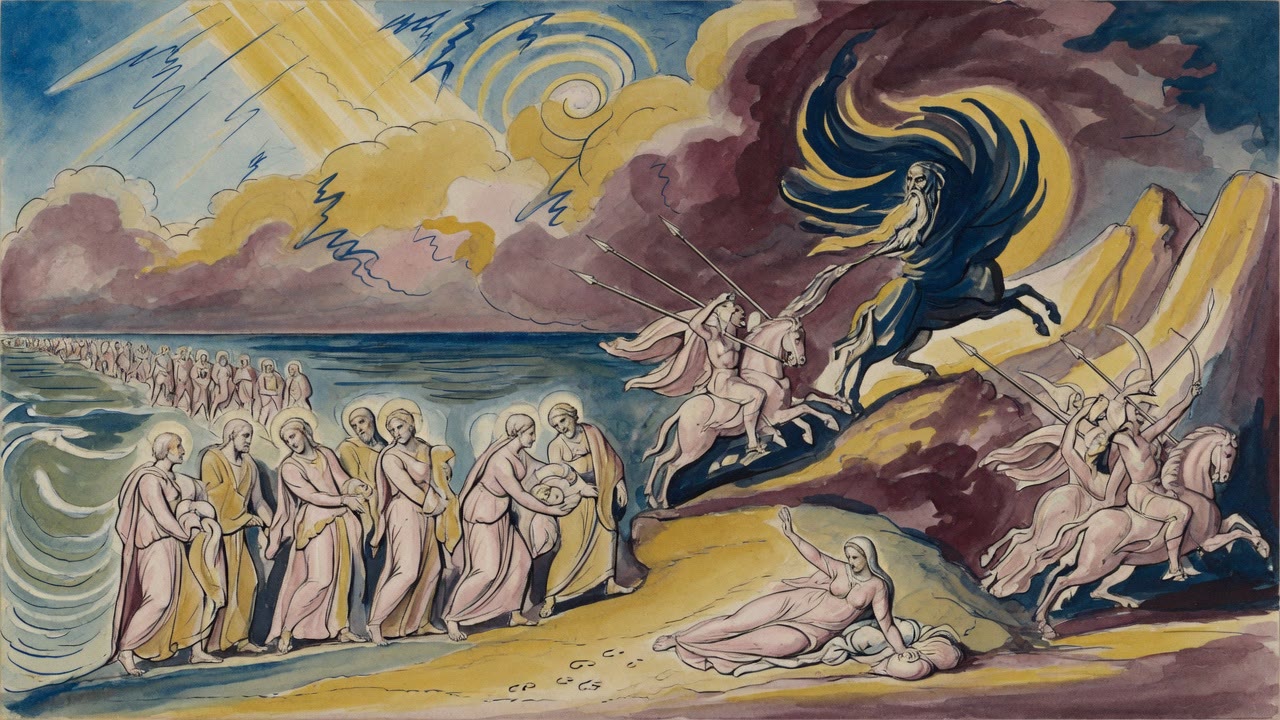
Moses Throws Himself Down as Korach Opens the Ground
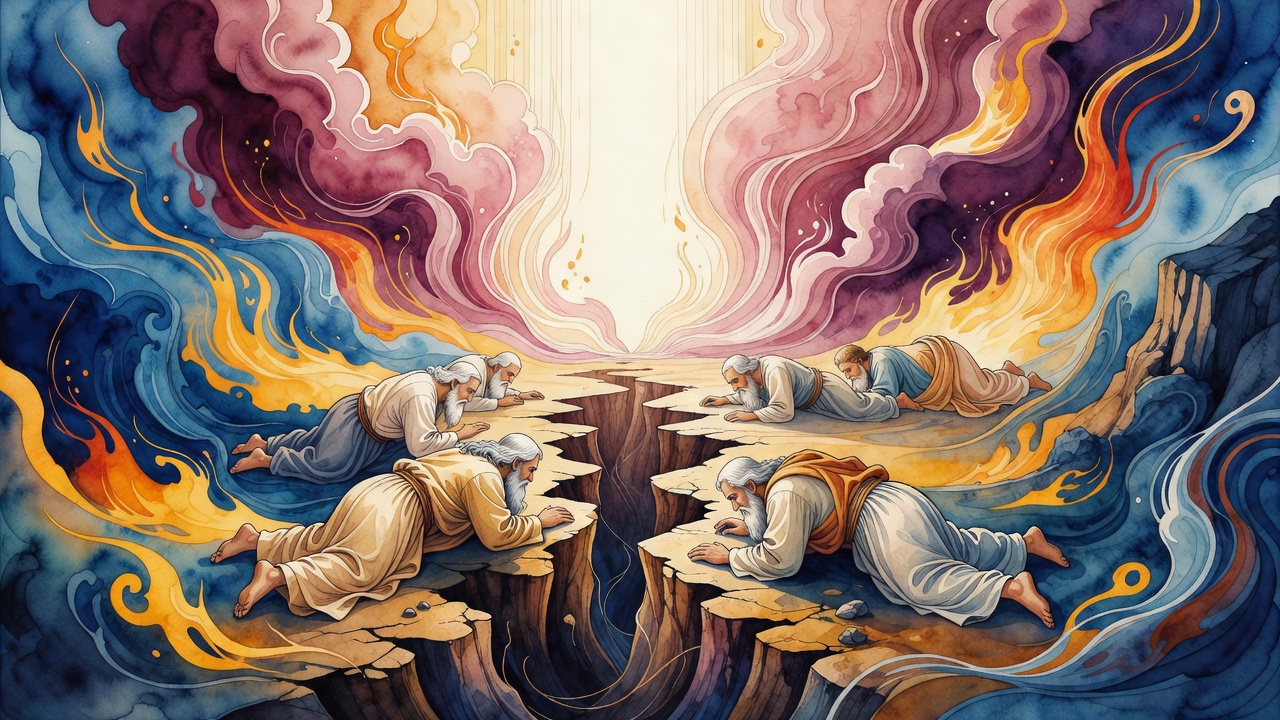
As the earth split under Korach, Moses and Aaron fell on their faces and begged God to judge each spirit alone, not the whole camp with one blow.
Table of Contents
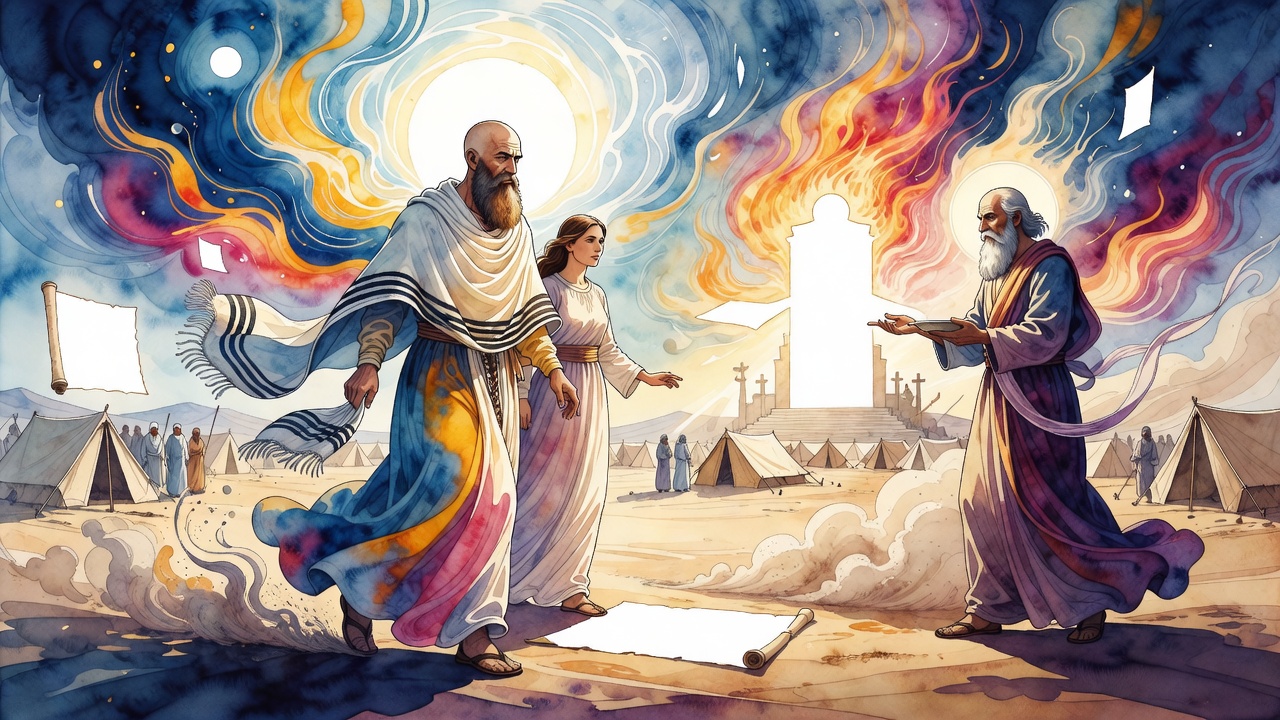
Moses felt the sand jump under his palms before he heard the scream. The ground in front of Korach's tent lifted like a cloth yanked by a giant hand, then tore. Dust rose in a brown sheet. Children were already running. Aaron hit the earth beside him, face down, and Moses pressed his forehead into grit that still held yesterday's dew.
 Click for full size
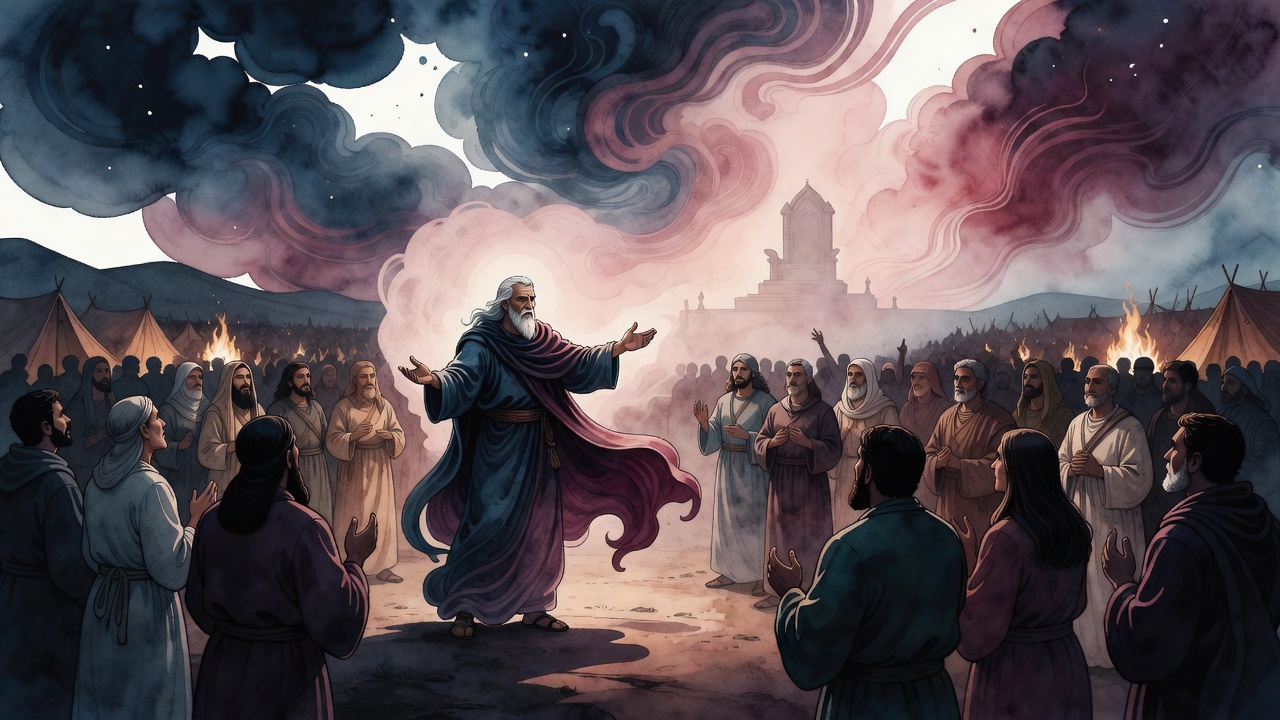
"O God, the God of the spirits of all flesh!" The cry tore out of him raw. Behind them the camp of Israel watched two hundred fifty pans of incense still smoking in hands that no longer knew whether to drop them or hold on.
The Province That Rose Against Its King
Moses did not argue first about priesthood. He argued about how a king of flesh and blood puts down a revolt. When a province rises, that king sends soldiers who cut the wicked and the righteous together, because a mortal cannot open a heart and read it. He does not know which subject hates him and which one still loves him, so he levels the street and calls it peace.
"But You are not like that," Moses said into the dust. "You know the spirits of every human being. You see who trusts Your word and who does not. Will You rage against the good and wipe them out as if they were wicked? Shall one man, Korach, sin, and Your anger fall on the whole congregation?"
The crack in the earth widened. Someone near the pans sobbed once and then bit the sound back. Moses kept his face down. He had learned, long before this morning, that Heaven sometimes waits for a body to finish its sentence before it moves the world.
Five Angels of Destruction on the Mountain
The memory of another crisis walked into this one without knocking. When Moses had climbed the high place and stayed too long for a people still smelling of brick dust, Israel made a calf of gold in the valley. The midrash does not leave him alone with a legal argument. It places five angels of destruction at his side, coupled to him like a cord of fire, while he prayed until wrath bent.
He did not come down, Rabbi Yitzhak taught, until he had turned all of Israel's faces from their angry expressions. The verse that records his descent is only the outer skin of that struggle. Under it, a man stood between a people and five destroyers and refused to move his feet until repentance showed in the eyes of those who had danced below.
That was the school where he learned this posture. Fall. Plead. Name the difference between one sinner and a nation. Do not let judgment travel in a herd.
One Man and the Whole Congregation
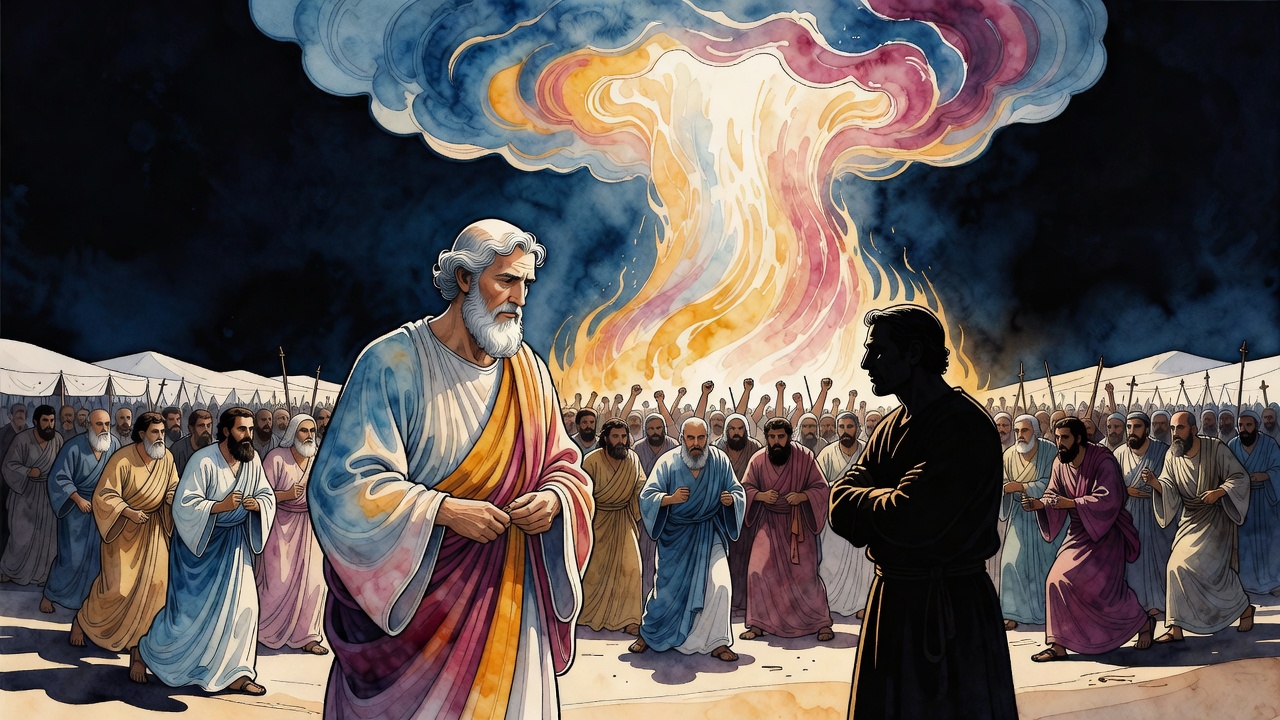
Korach wanted the whole camp painted with his quarrel. That was the danger Moses named. If Heaven answered Korach's claim by swallowing everyone who had stood near enough to hear the speeches, then the measure of judgment would become as blunt as a mortal army. The people who had never lifted a fire-pan would go down with the men who had.
Moses forced the case into a narrower channel. Judge spirits, not crowds. Separate the man who sinned from the women still grinding grain, from the boys who only watched, from the elders who had not joined the shout. Far be it from You, he said, to make the righteous and the wicked one pile of dust.
The ground did not close because Moses was clever. It closed because the plea matched the way God already claims to work. The God of the spirits of all flesh does not need a massacre to prove sovereignty. He needs a camp that still believes mercy can tell persons apart.
When the Earth Shook and Trembled
On the mountain of the calf, the earth had shaken while Moses turned faces. Here the earth opened while he turned the verdict. Same body in the dirt. Same refusal to let one disaster write the end of a people. Psalm language later remembered the shaking. Wilderness sand remembered the crack under Korach.
Aaron's hands were empty of incense. He had not joined the two hundred fifty. Still he lay beside Moses, because priesthood without intercession is only costume. The pans that remained above ground cooled. Smoke thinned. Somewhere a woman found her child and held the small skull against her chest until the heartbeat under her palm matched her own again.
The Measure Turned Aside
Moses rose only when the ground sealed. Dust settled on his beard. Korach's place was no longer a tent row. It was a closed mouth of earth that would not answer questions. The congregation that had almost been treated as one guilty province stood in pieces again: families, names, separate spirits.
He had turned the measure of judgment aside by insisting that the One who fashions every spirit also judges each spirit alone. That is not softness. It is harder work than a blanket fire. It leaves survivors who must still choose, tomorrow, whether they will stand with the next Korach or fall on their faces before the next crack.
← All myths