Sun and Moon Froze Until Korach Was Judged
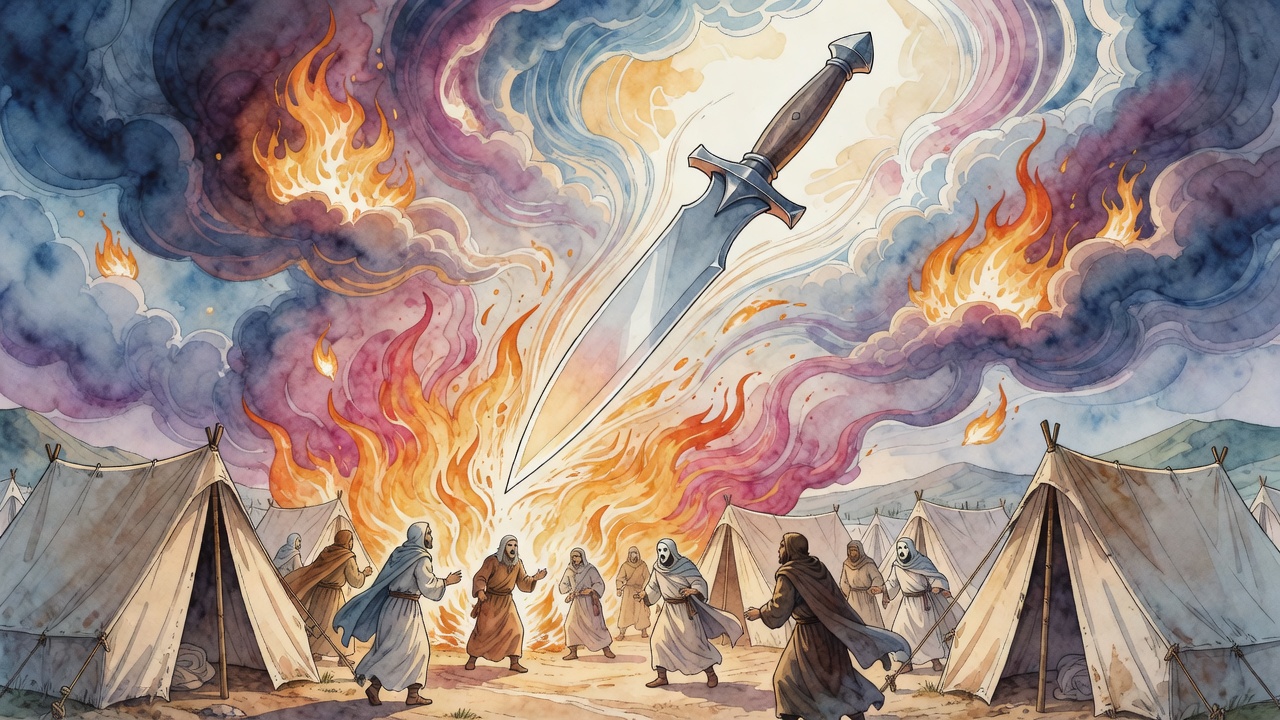
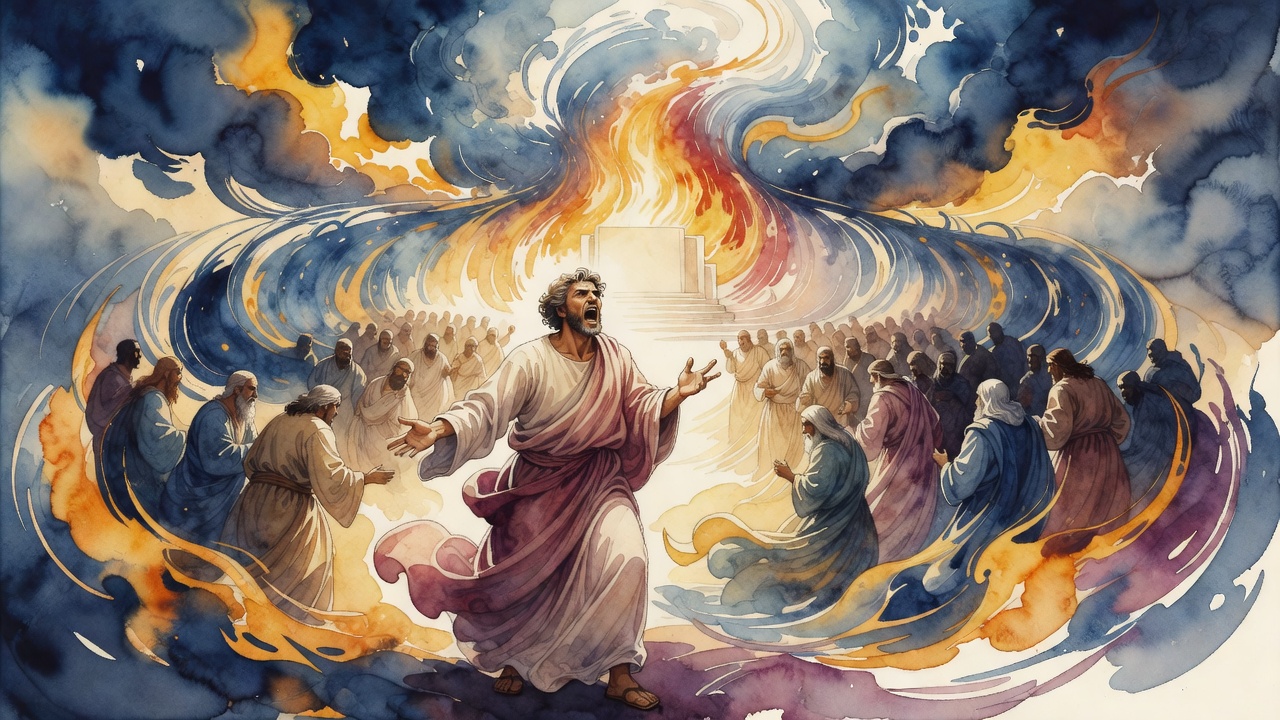
Sun and moon climb to Zebul and refuse to shine until God judges Korach, while smoke from the chasm still answers travelers.
Table of Contents
 Click for full size
Light Stops for the Son of Amram
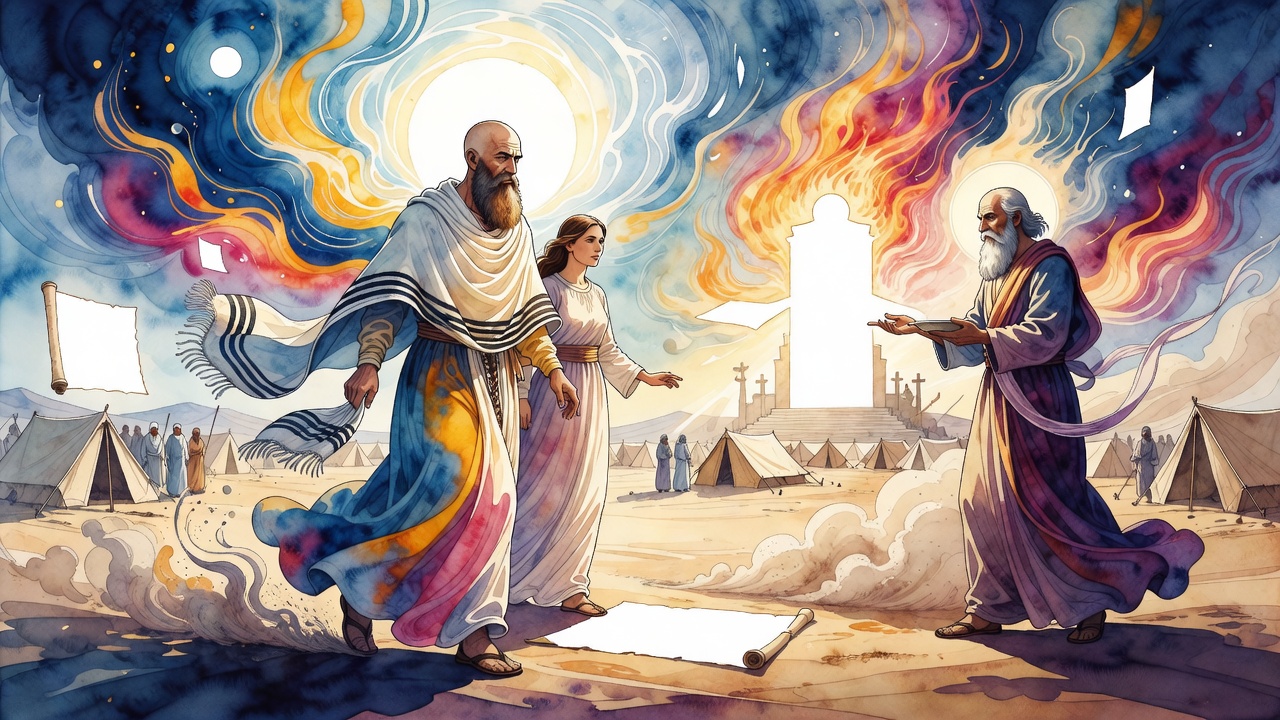
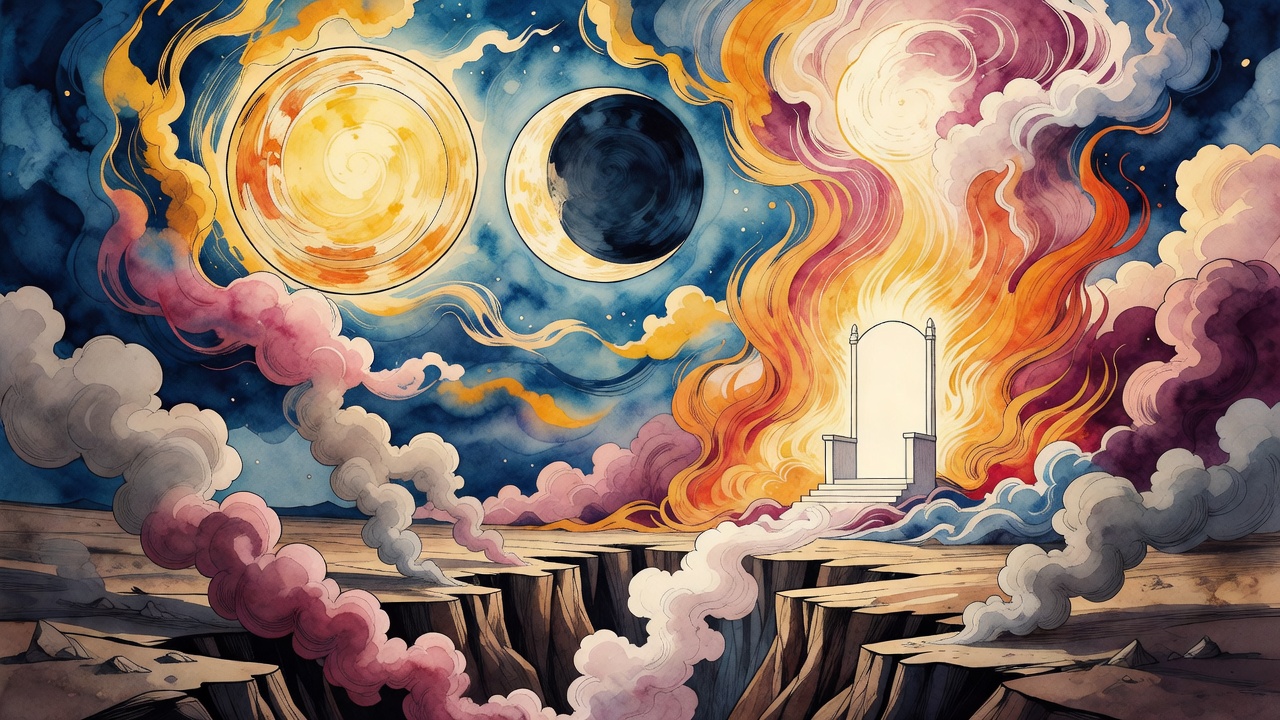
The sun climbed not to its ordinary road but higher, into the chamber called Zebul, and the moon followed. Both lights stood before the Master of the world and spoke as if they had mouths of fire.
"If You act justly toward the son of Amram, we shall go forth," they said. "If not, we shall not go forth."
Below them the camp of Israel still rang with Korach's quarrel. Moses had not yet finished the contest that would open the earth. Above them the lights that had always obeyed the first "Let there be" now withheld the day and the night as a strike in heaven's court.
Darkness pressed the desert. Men who had counted on morning for water and evening for coolness found neither. The lights refused to serve a world that might leave Moses without justice.
Darts for the Wrong Protest
God answered them with darts of light, the same image Habakkuk would later name when sun and moon stay on high and then move only for the light of His arrows (Habakkuk 3:11). The lights went out again under that pressure, not as volunteers of mercy but as servants forced back to their posts.
He rebuked them for the rank of their protest. "For My honor you did not protest, but for flesh and blood you did protest." They had never stopped for idolatry's long centuries. They had stopped for Moses.
Even now, the midrash says, they do not come out clean until they are struck. Dawn is not only habit. It is a repeated sentence that the lights of heaven still remember how they once tried to freeze the sky for a prophet of flesh and blood.
In the camp, people squinted at a sky that would not decide between day and night. Korach's company took the pause as omen. Moses took it as the hush before a different mouth opened, not a mouth of light but of earth.
The Mouth That Was Not New
Moses had said, "If the Lord creates something new, and the earth opens its mouth..." (Numbers 16:30). The quarrel of the verse is old: there is nothing new under the sun (Ecclesiastes 1:9). The newness was not a second creation of dirt. It was the opening of Gehinnom (the underworld place of punishment) drawn up close to the surface under Korach's feet.
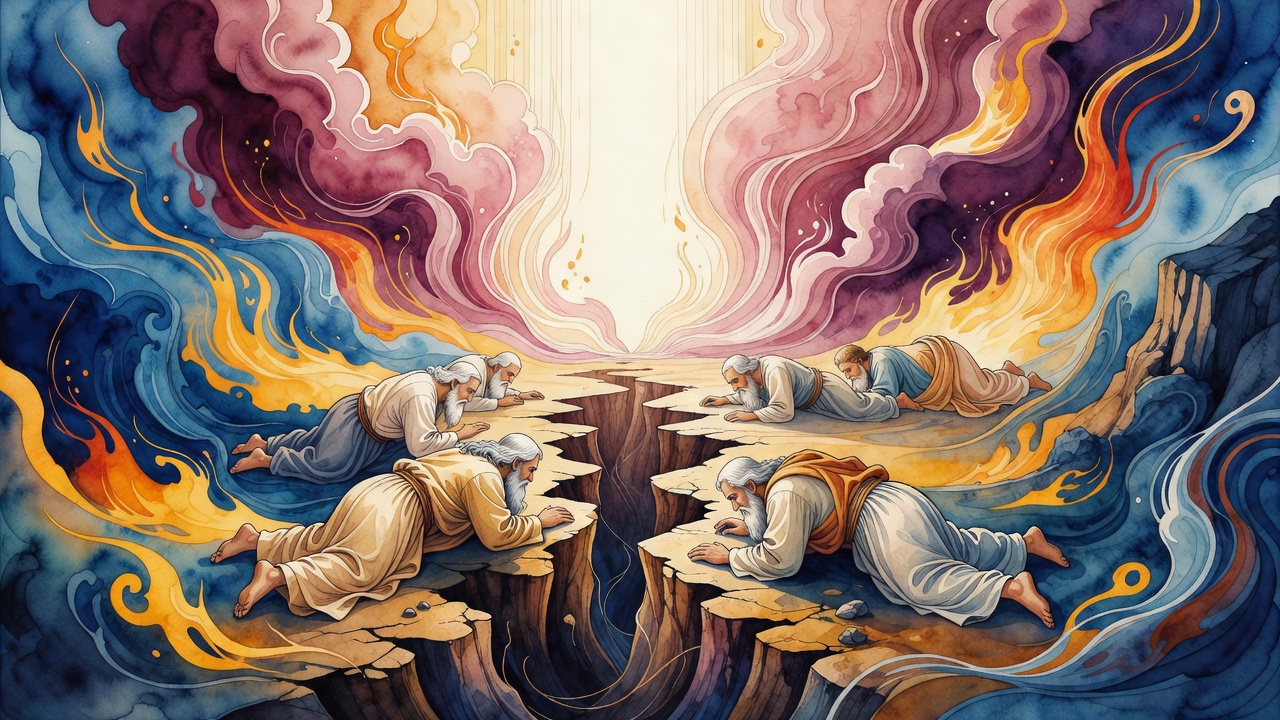
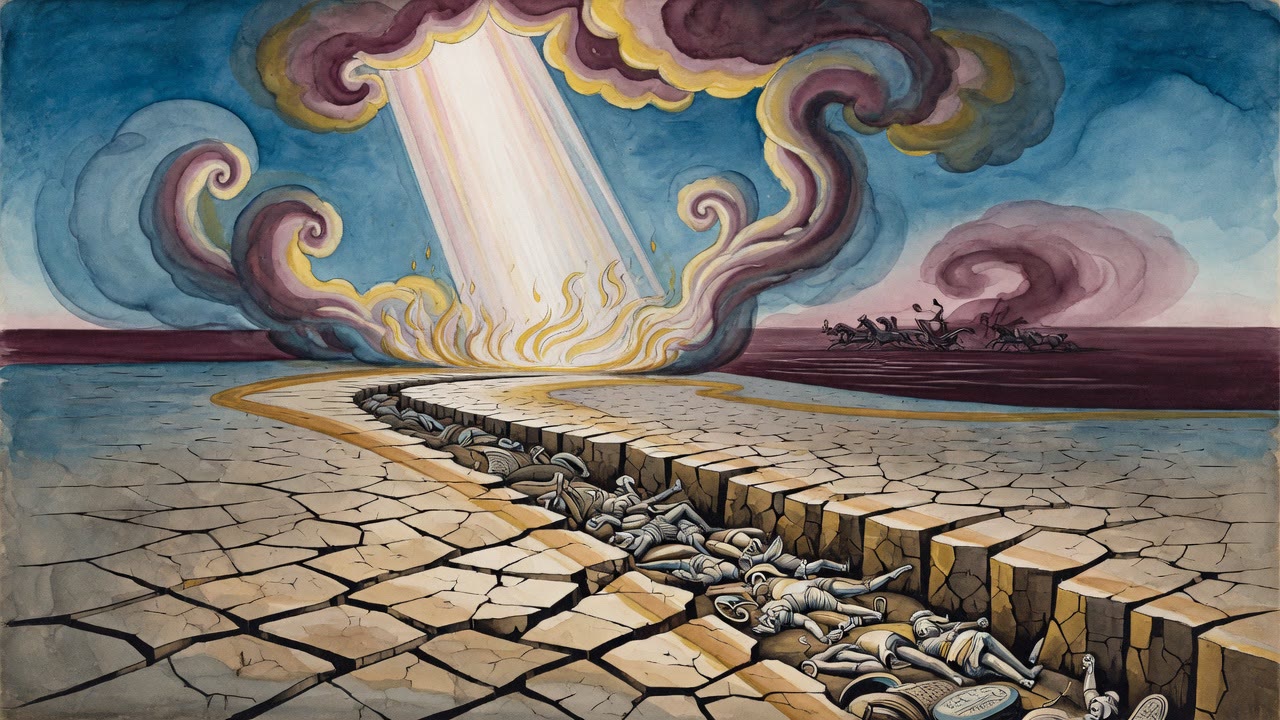
The ground that had held the tents of the rebels became a throat. Korach, Dathan, Abiram, and the company that stood with them went down alive into a place prepared for purification and dread. Smoke rose later from fissures travelers would still show one another on the road.
Not every name in that house died the same death. "The sons of Korach, however, did not die" (Numbers 26:11). A place was set aside for them in Gehinnom (the realm of judgment after death) where they sat and sang hymns. Rebellion's father fell. The sons who pulled back found a ledge of song inside the fire.
Moses stood at the edge of what had been solid ground. The people who had backed Korach's claim to holiness now backed away from a hole that sang and smoked. Justice for the son of Amram had arrived without waiting for the sun's permission.
Smoke, Wool, and a Confession
Generations later, Rabbah bar bar Hanah traveled with an Arab merchant who offered to show him the chasms of Korah. They found two fissures breathing smoke. The merchant took a ball of clipped wool, wet it, set it on a spearhead, and held it over the mouths of the earth.
"Listen," he said. "What do you hear?"
From the smoke rose a sentence still being spoken: "Moses and his Torah represent truth, but they are liars." The rebels who had claimed the whole congregation was holy kept answering from below, and their answer was finally against themselves.
The wet wool smoked. The travelers stepped back. The desert road kept its ordinary dust, but under the dust the court of Korach had not closed.
The Dew That Will Raise What Fell
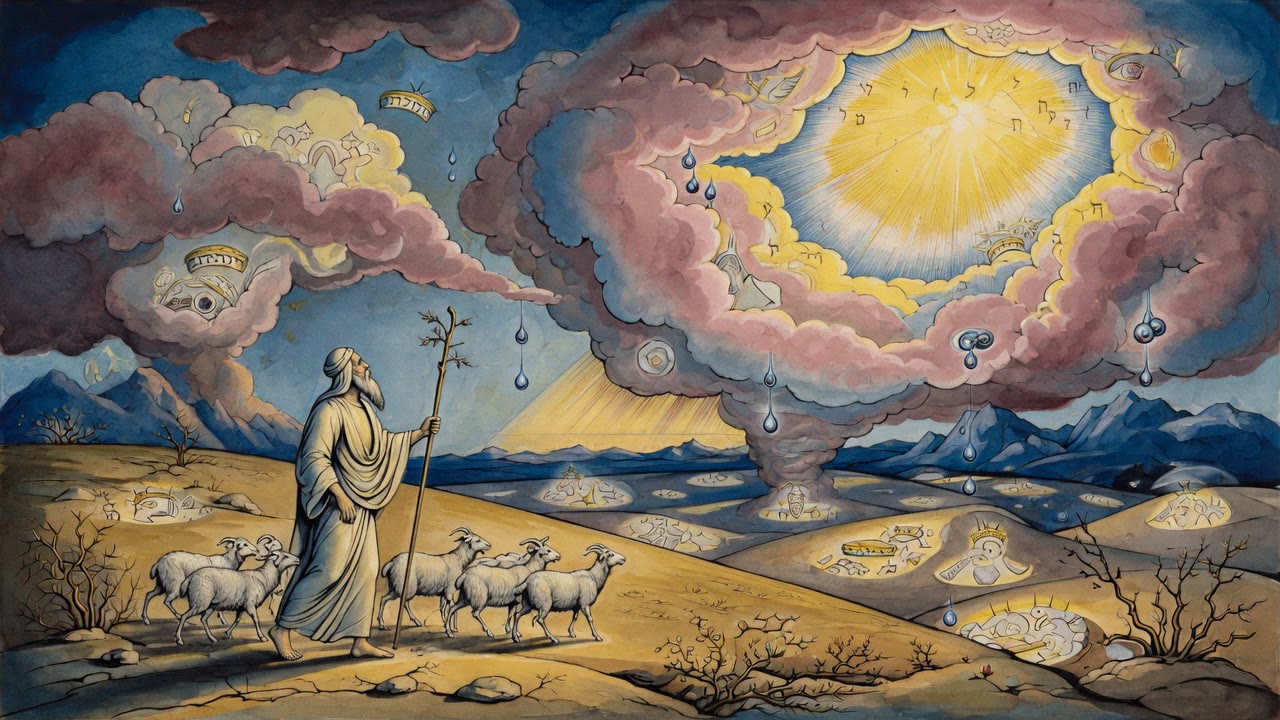
The tradition does not leave every mouth of the earth forever shut. Hannah's song already knew the pattern of descent into Sheol, the underworld of the dead, and return: "The Lord brings death and gives life; He brings down to Sheol and raises up" (1 Samuel 2:6). The same hope that lifts the righteous from dust is the hope that will one day draw even Korach's company into a different account.
At the dawn of that renewal, a reviving dew falls, the dew of light, not of darkness. Those who died with faith in His name live. Bodies that were only carcasses rise for judgment. The earth casts forth the dead. The sons who already sang on a ledge inside Gehinnom are a first sketch of a larger return.
Sun and moon still rise under darts. Korach's fissures still smoke for those who go looking. Between the forced dawn and the wet wool, Israel keeps the harder lesson: heaven will freeze its own lights before it lets Moses' justice fail, and the earth itself can be drafted as a witness when human courts cannot hold the quarrel.
When the dew of light finally falls, the hymn from the ledge will not be the only voice. Until then, every ordinary sunrise is a small reminder that the lights once tried to strike for the son of Amram, and were sent back to work with fire.
← All myths