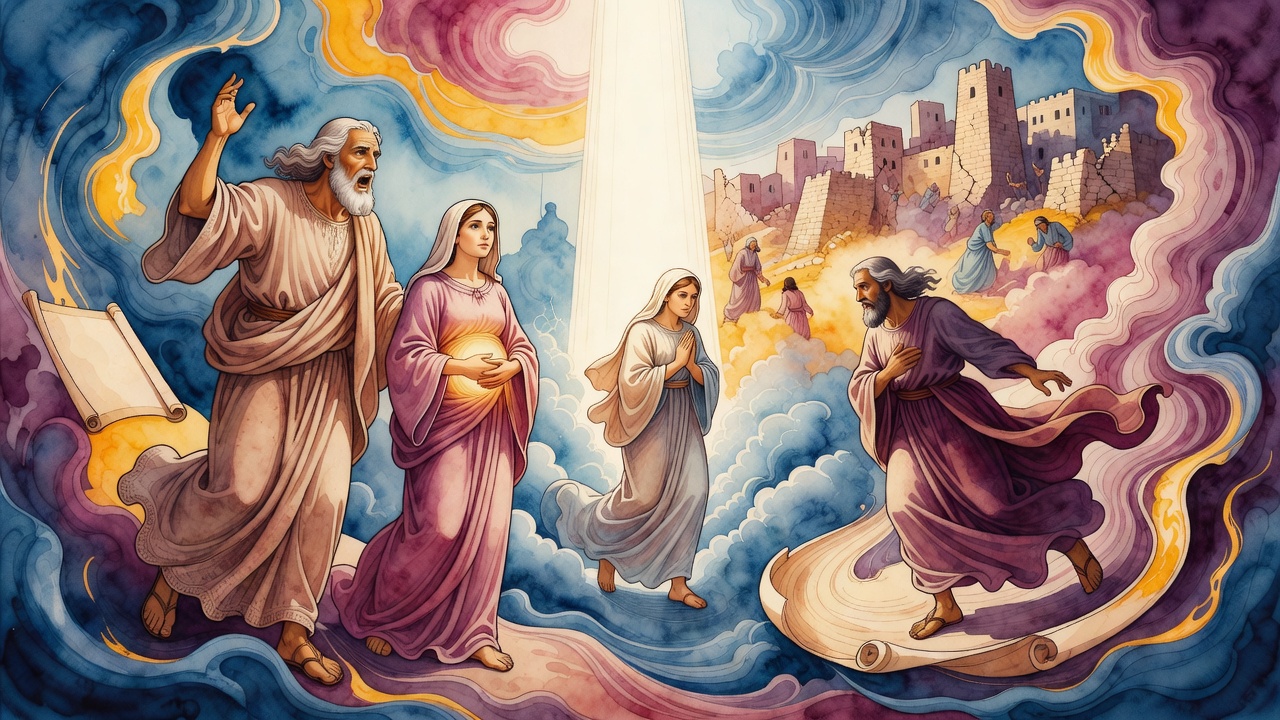
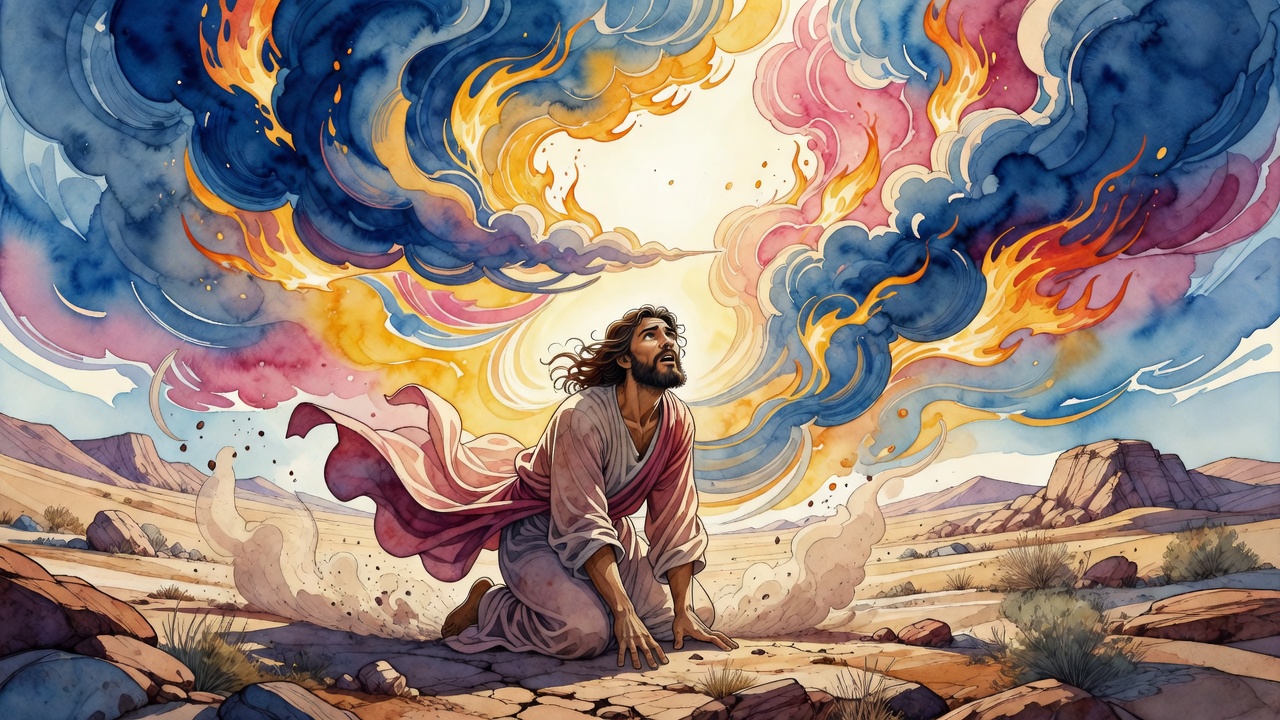
The Night the Sun Set Early on Jacob at Mount Moriah
The sun dropped below the horizon at noon, and Jacob stood in sudden dark at the foot of Mount Moriah, two days from where he meant to be.
Table of Contents
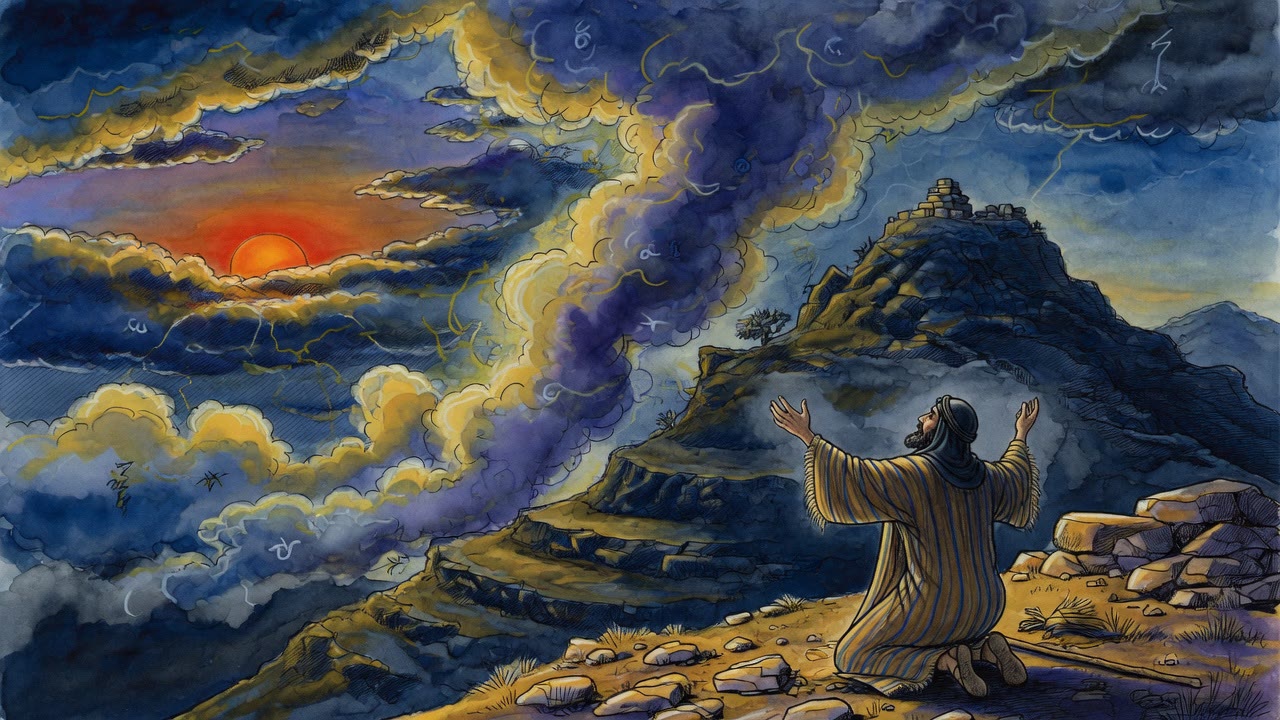
The light went wrong while Jacob was still walking. He had eaten at midday, drunk from the spring that traveled at his heel, and set his face north toward Haran with hours of road left in his legs. Then the heat thinned. The shadows that had pooled tight against his sandals stretched long and blue across the stones, the way they did only at evening. He looked up. The sun was sliding toward the rim of the world, and it had no business being there.
 Click for full size
He stopped. He counted. The sun moves through twelve stages across the sky each day, and it had barely passed the fifth. It should have hung high and white for hours yet. Instead it sank, red and swollen, dropping below the horizon as if a hand had pressed it down. Night came up out of the ground around him, cold and early and impossible.
Jacob Counts the Hours and Finds Them Wrong
He said so out loud. There was no one to hear him except the spring bubbling at his feet, but he objected to the dark the way a man objects to a debt he never took on. He had done nothing. He was not being punished. He had walked hard and honest from Beersheba, and the sun had simply abandoned its course at the height of the day and left him standing where he had not meant to camp.
The spring had brought him here. It had risen wherever his fathers pitched their tents, following Abraham and Isaac across the dry country, and it had followed him too, a thread of water running uphill through the wilderness. He had trusted it the whole way. Now it had pooled and gone quiet at the foot of a hill, and the hill was where the sun had decided he would sleep.
The Hill That Would Not Let Him Pass
It was not much to look at in the failing light. A long ridge, bare stone, a few hard trees. Mount Moriah, though Jacob did not know its name yet, and did not know that his grandfather had climbed it with a knife and a bound boy and come down with both still breathing (Genesis 22). He did not know that one day the weight of the Temple would rest on this ground, the great house of stone holding the innermost room where the Presence would dwell. He knew only that the dark had cornered him against it, and that he was tired, and that he had water and the heel of bread still in his pack.
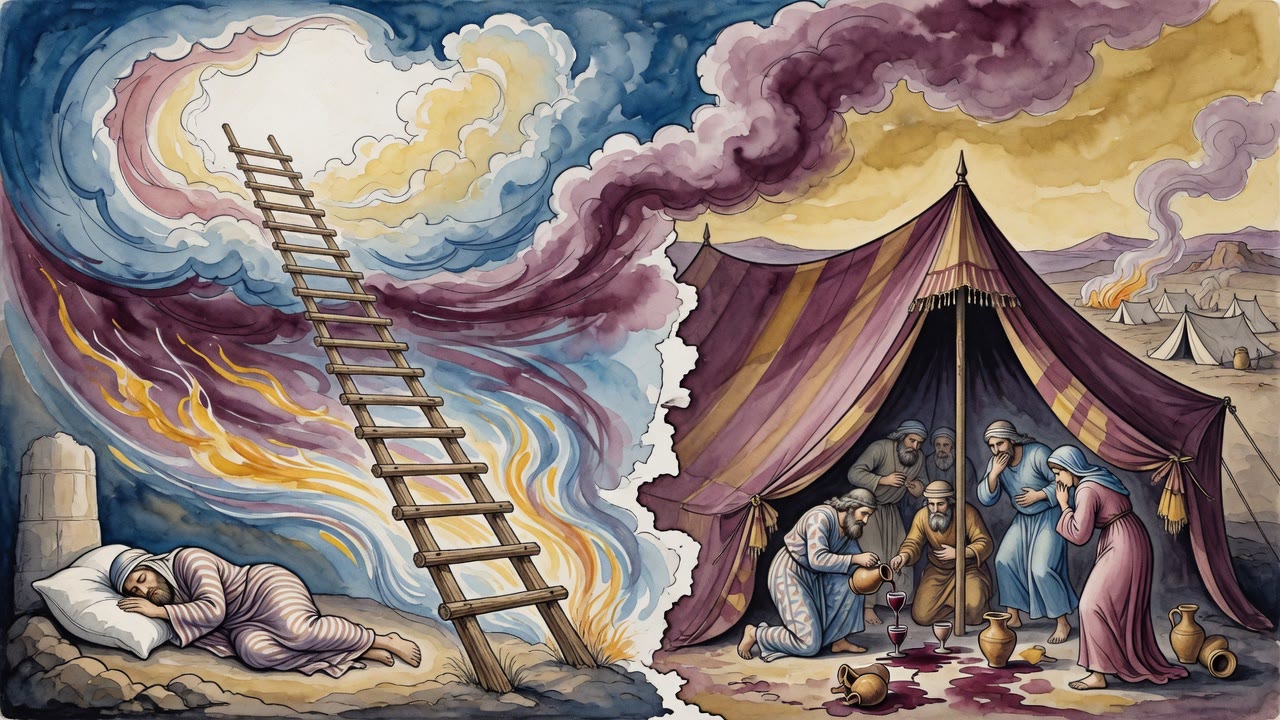
So he gathered stones for his head and lay down on the ridge itself. Not near it. Not in its shadow. On it, his cheek against the rock that the spring had led him to, his body laid out along the spine of the mountain that would one day carry the covenant in cut stone. The land had a claim on him, and the only way to settle it was this, one man asleep on the bare ground, giving the place a night of his weight.
Why the Dark Came When It Did
There were reasons the sun had gone down at noon, and they stacked one on the next like the stones under his head. He needed to lie on this hill, exactly this hill, and the daylight would have carried him past it before he ever felt its pull. That was the first.
The second waited in the dark itself. What Jacob was about to be shown does not come in the noise and glare of the working day. It comes when the world has gone quiet and a man has nothing left to do but close his eyes. The early night was not an accident of the sky. It was a room being made dark so that something could be seen in it.
And the third reason was a man, somewhere behind him on the road. Esau with his grievance and his strength, Esau who had sworn over a stolen blessing. The sudden nightfall put hours between them that the calendar did not allow. The dark that trapped Jacob also outran his brother, folding the day short so that the slower, angrier man fell further behind. The same hand that pressed the sun down was buying Jacob distance he could not have run himself.
The Ground Folds Beneath His Feet
He slept, and was shown things, and woke changed. The morning that found him on the ridge was a morning he had been brought to by force, and he rose from it knowing the place was holy ground. Then he set his face north again toward Haran, the journey still ahead of him, two days of road at the least, the spring once more murmuring at his heel.
And the road was not there. The earth did the thing the sun had done, broke its own rule for him. The ground between Moriah and Haran simply gathered itself, the long miles pleating together like cloth pulled in at both ends, so that one stride set him down at the far edge of where he had meant to walk for days. Mountain and well, the holy ridge and the distant city, snapped together under his sandals. He took a step toward Haran and arrived in it.
The Well That Knew Him
What he found there was water, and a town starving for it. Haran sat in dry country, and its one well was the life of the place, every drop of it paid for, drawn and sold and counted. Jacob came in off the impossible short road, a stranger with a spring at his heel and a night on Moriah behind him.
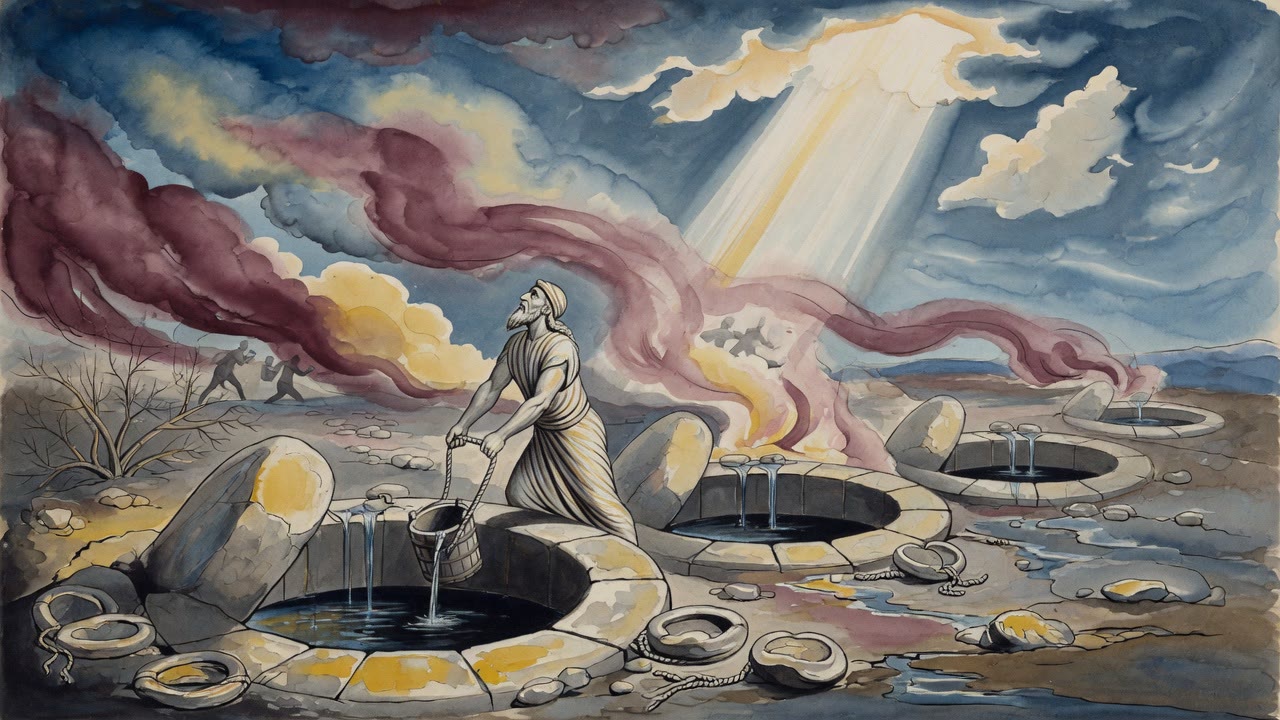
The water answered him. By the weight of his deeds, by the simple fact of his arriving, the sources of the town were blessed, and the shortage that had ruled Haran broke. The well filled. The man who had been carried there by a folded earth, after a sun that set at noon, brought water with him into a thirsty place, and the thirsty place was not thirsty anymore.
← All myths