Parshat Noach5 min read

Nimrod Built Cities Named for His Own Defeat

After the Tower of Babel fell, Nimrod did not repent. He built four cities and named them after what God had done to him. Then he threw children into a furnace.

Curated by Arthur · Told by Maggid ·
Table of Contents
  1. What Kind of Man Names a City After His Own Defeat
  2. The Prophecy That Made Him Dangerous
  3. How Abraham Was Saved
  4. The Empire That Outlasted Its Builder

What Kind of Man Names a City After His Own Defeat

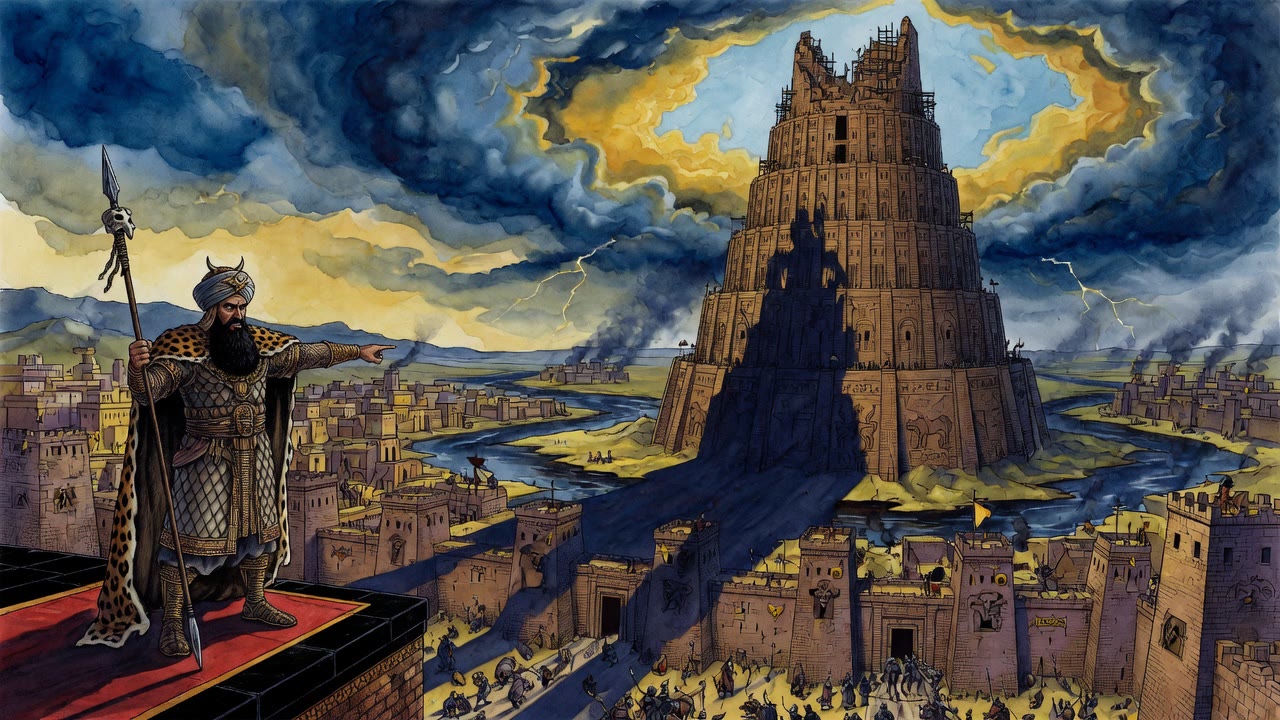
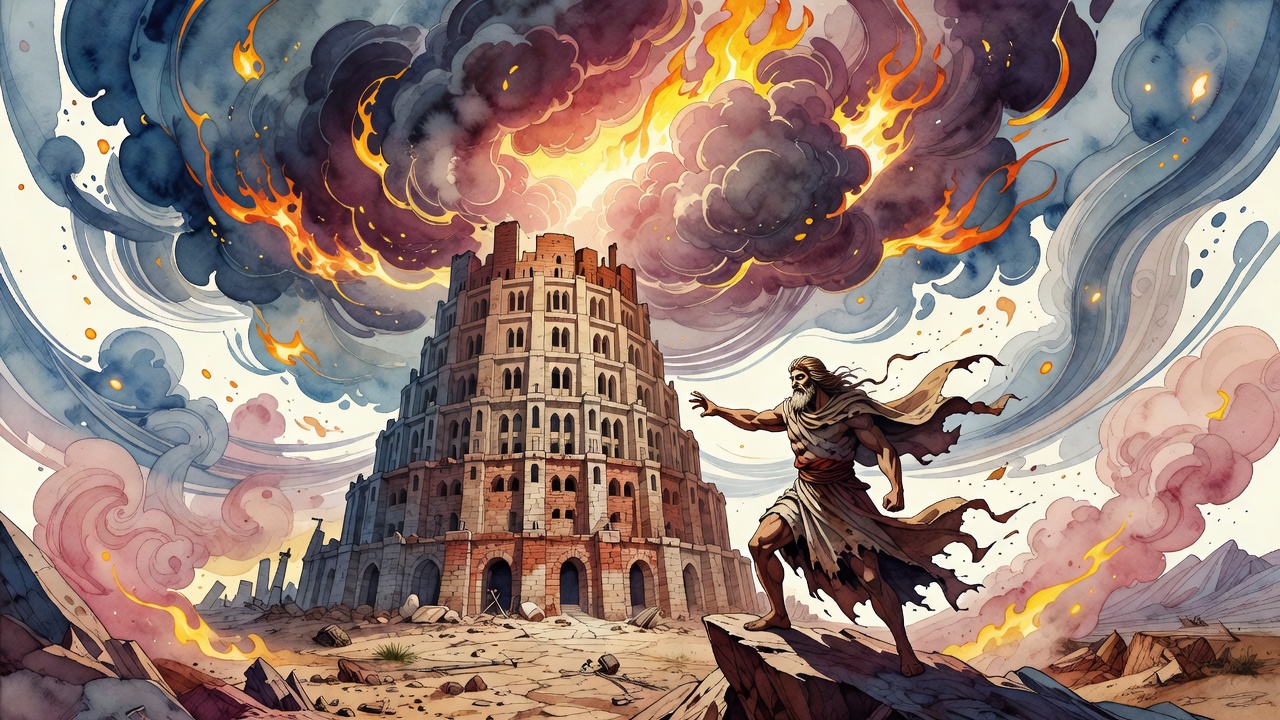
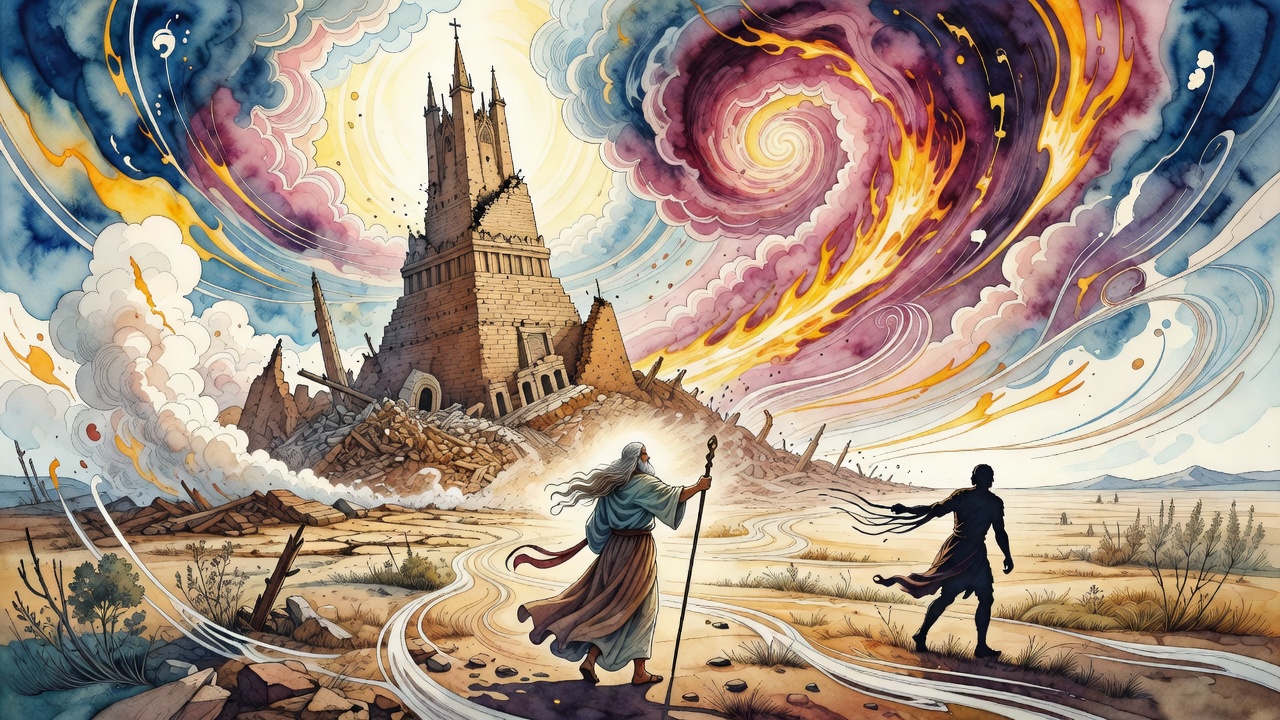
The tower was rubble. The languages had split. The people who had spoken one tongue now could not understand their neighbors, and the project that was supposed to reach heaven had not survived contact with heaven's response. Nimrod watched it fall, and then he did something extraordinary: he built.

The Book of Jasher, an ancient text referenced in the Hebrew Bible at Joshua 10:13 and 2 Samuel 1:18, records what Nimrod's city-building program looked like in the aftermath of Babel. In the land of Shinar, on the ruins of the project God had destroyed, Nimrod constructed four cities. And he named them according to what had happened.

The first: Babel, because the Lord there confounded the language of the whole earth. The second: Erech, because from there God dispersed the people. The third: Eched, a memorial to a great battle. The fourth: Calnah, where Nimrod's own son had died in the collapse of the tower. The names were a record of his humiliation, carved permanently into the landscape that he then ruled from.

This is not how a defeated man names his cities. A defeated man avoids the site of his defeat or builds something entirely new to overwrite it. Nimrod named every city for exactly what God had done to him. The hubris had not diminished. It had calcified. He was commemorating the confrontation in stone.

The Prophecy That Made Him Dangerous

Legends of the Jews, Louis Ginzberg's early-twentieth-century synthesis of rabbinic and post-biblical tradition, turns to a different dimension of Nimrod's story: what he did when astrologers told him a boy had been born whose descendants would inherit the world.

Nimrod was a man who thought on a large scale. He had built an empire. He had constructed a tower meant to challenge heaven. When the astrologers brought him their prophecy, he responded with the logic of a man who had built his entire civilization on the principle that nothing was too ambitious: he would kill every male child born that year before the prophesied heir could grow up.

He commanded his architects to build a massive house, sixty ells high and eighty wide. He ordered every pregnant woman in the kingdom brought there. When they gave birth, if the child was male, it was killed immediately. If female, the child was sent away. Seventy thousand male infants died in that house, according to the tradition, before Abraham was hidden and survived.

How Abraham Was Saved

Terah, Abraham's father, was one of Nimrod's officers. He understood the system because he was part of it. When his wife gave birth to Abraham, Terah hid the child for three years in a cave. He brought Nimrod a different infant, a servant's child, and presented it as his own. The king killed the substitute. Abraham grew up hidden, in a cave, while Nimrod's killing house continued operating in the city above.

The man who built four cities named for God's judgment of him, who killed seventy thousand male children to prevent the fulfillment of a prophecy, who threw the one child who survived into a furnace and watched him walk out unburned: Nimrod had defined himself entirely through resistance to God. Every act of his reign was a refusal to accept what Babel had demonstrated. The languages had split. The tower had fallen. None of it mattered to him. He would build more cities. He would kill more children. He would keep trying.

The Empire That Outlasted Its Builder

The Book of Jasher traces Nimrod's city-building through Assyria as well as Shinar. He constructed Nineveh, Resen, Calah, and Rehoboth. The empire kept expanding. The cities with their humiliating names stood as monuments to a man who would not learn from defeat, who took every evidence of divine power as a challenge rather than an instruction, who looked at the confusion of tongues and built more towers, smaller ones, and named them for the confounding.

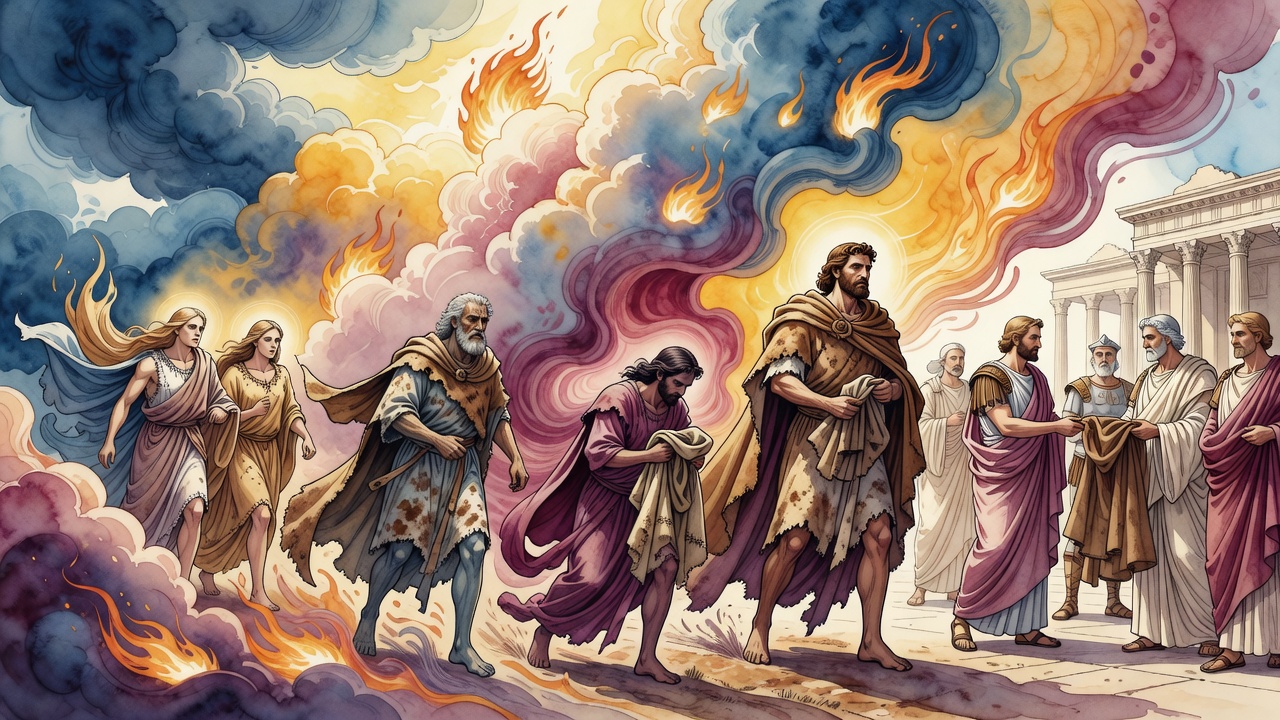
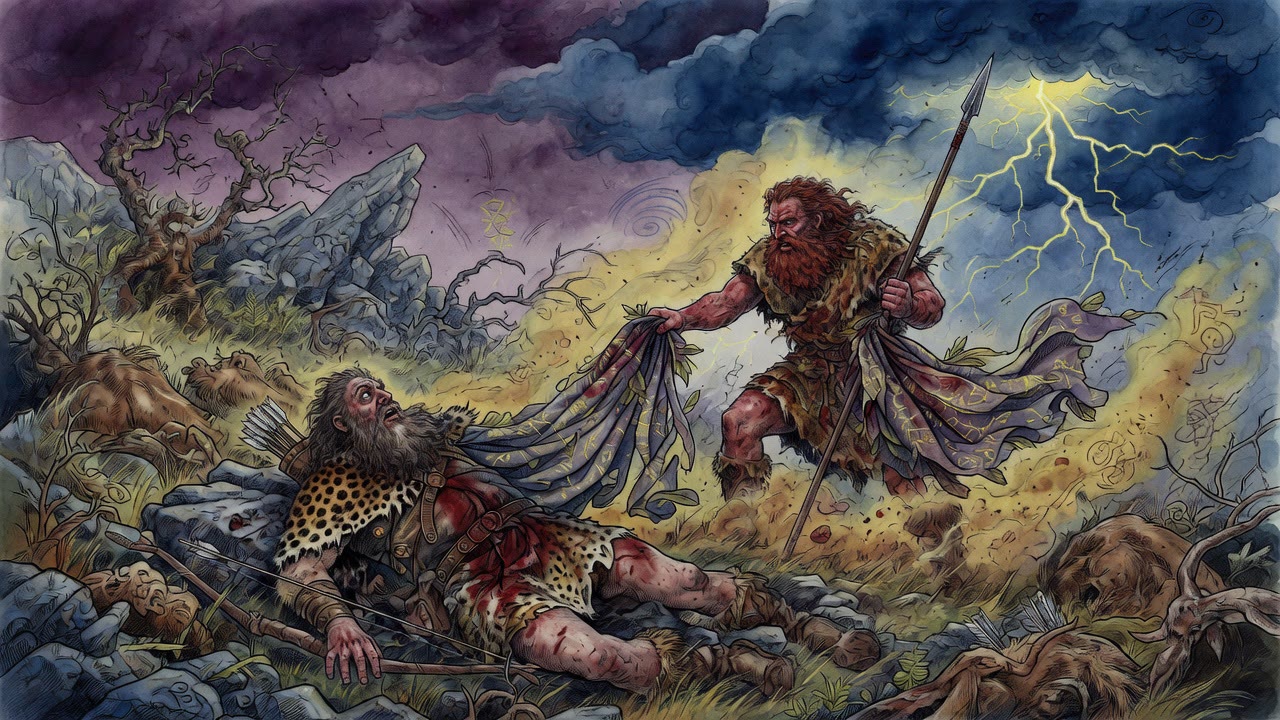
The tradition does not give Nimrod a moment of repentance. He dies later, at the hands of Esau, who kills him for his garments. There is no deathbed accounting, no final recognition of what the tower's fall meant. The man who began his career as a mighty hunter before the Lord ended it as a corpse stripped of the clothes that had given him power over every living thing. The cities he named for his own defeat outlasted him. Nineveh would eventually receive a prophet of its own. The empire went on. The name Nimrod means rebel, and the tradition did not consider this accidental.


← All myths
From the tradition

Sources

2 sources

The texts this telling draws on, in full. Open a card to read inline, or expand it for a wider, quieter read.

Jasher 11Book of Jasher

What about the generations that followed? What were they up to? The Book of Jasher, an ancient text referenced in the Bible itself (Joshua 10:13 and (2 Samuel 1:1)8), offers some fascinating, and sometimes startling, answers.

The story picks up with Nimrod, that mighty hunter we meet in Genesis. According to Jasher, Nimrod wasn't just hunting animals. He was building an empire. He constructs cities in the land of Shinar (that's Mesopotamia, modern-day Iraq). And get this: the names of the cities themselves are a commentary on the Tower of Babel incident!

First, there's Babel, of course, named "because the Lord there confounded the language of the whole earth." Then Erech, because from there God dispersed the people. Eched, a memorial to a great battle. And finally, Calnah, where Nimrod's princes and mighty men were "consumed" because they rebelled against God. Ouch.

Nimrod settles in Babel and, despite the whole tower debacle, doubles down on wickedness. He's even given a new name, Amraphel, because "at the tower his princes and men fell through his means." His son, Mardon, is even worse! The verse reads, "From the wicked goeth forth wickedness." It's a harsh assessment, but it sets the stage for what's to come.

We also hear about a war between the families of Ham, one of Noah's sons. Chedorlaomer, king of Elam, subdues five cities and makes them pay tribute for twelve years. This detail might sound random, but it actually connects to a later biblical narrative involving Abraham and his rescue of Lot (Genesis 14).

But the real heart of this chapter centers on a young Abram. We learn that in the fiftieth year of his life, Abram leaves Noah's house and returns to his father Terah. And here's where things get really interesting. Abram, already knowing the Lord, is appalled by the idolatry he finds in his father's home. Terah, you see, is not just a regular guy. He’s "captain of the host of king Nimrod," and he's deeply involved in serving "strange gods."

The text paints a vivid picture: twelve gods standing in their temples. Abram, filled with righteous anger, vows to destroy them. And he doesn't waste any time.

He confronts his father, asking about the Creator. Terah proudly presents his idols. Abram pretends to be interested in making offerings, even tricking his mother into preparing savory meat for the idols. But of course, the idols do nothing. They can't eat, they can't speak, they can't even move.

Then, the pivotal moment: Abram is "clothed with the spirit of God." He denounces the idols and, in a dramatic act of defiance, he grabs a hatchet and smashes them all! He then cleverly places the hatchet in the hand of the largest idol, setting the stage for a hilarious (and tense) confrontation with his father.

Terah, understandably furious, confronts Abram. Abram, with remarkable audacity, claims the largest idol destroyed the others in a fit of jealousy. Terah, of course, doesn't buy it. "Are they not wood and stone, and have I not myself made them?" he demands.

Abram then turns the question back on his father: "And how canst thou then serve these idols in whom there is no power to do anything? Can those idols in which thou trustest deliver thee?"

The argument escalates, culminating in Abram snatching the hatchet and running away. Terah, enraged, runs to Nimrod, demanding justice.

The scene shifts to a royal court. Nimrod, surrounded by his princes, interrogates Abram. Abram repeats his story about the large idol. When Nimrod scoffs, Abram turns his fire on the king himself, condemning his idolatry and warning him of divine judgment, even referencing the Flood as a consequence of similar wickedness.

Abram concludes with a powerful call to repentance: "Now therefore put away this evil deed which thou doest, and serve the God of the universe, as thy soul is in his hands, and then it will be well with thee." And if not? "Then wilt thou die in shame in the latter days."

The chapter ends with Abram lifting his eyes to heaven, declaring that the Lord sees all the wicked and will judge them. It's a powerful image of faith and defiance in the face of overwhelming opposition.

So, what do we take away from this? The story of Abram's iconoclasm, his smashing of idols, isn't just a tale of youthful rebellion. It’s a foundational narrative about challenging false gods, about speaking truth to power, and about choosing faith over conformity. It sets the stage for the entire Abrahamic tradition, reminding us that sometimes, the most faithful thing we can do is to break the idols in our own lives and in the world around us. And that takes courage, doesn’t it?

Full source
Legends of the Jews 5:6Legends of the Jews

There's another tale, even older, that drips with similar horror: the story of Nimrod.

So, Nimrod, the mighty hunter, the king who, depending on which source you read, either helped or hindered humanity. According to some interpretations, he was the one who led the building of the Tower of Babel. He wasn't exactly known for his…compassion.

Nimrod, uneasy about prophecies surrounding his reign, decided he needed to take extreme measures. He called for his architects and commanded them to build a massive structure – a huge house, sixty ells high and eighty wide (an ell being an old unit of measure, roughly the length of a forearm). Once completed, he issued another decree. This one was chilling: all pregnant women were to be brought to this house and kept there until they gave birth.

Can you imagine the fear and dread that must have filled the kingdom?

Guards were posted everywhere to prevent escape. Midwives were summoned, but not to assist in bringing new life into the world. Their grim task? To slay the male children at their mothers' breasts. But! (And this is a twisted "but" indeed) If a woman gave birth to a girl, she was to be honored, dressed in fine linens – byssus, silk, and embroidered garments – and paraded out of the house.

The scale of this atrocity is staggering. No less than seventy thousand children were slaughtered. Seventy. Thousand. The sheer inhumanity is difficult to even comprehend.

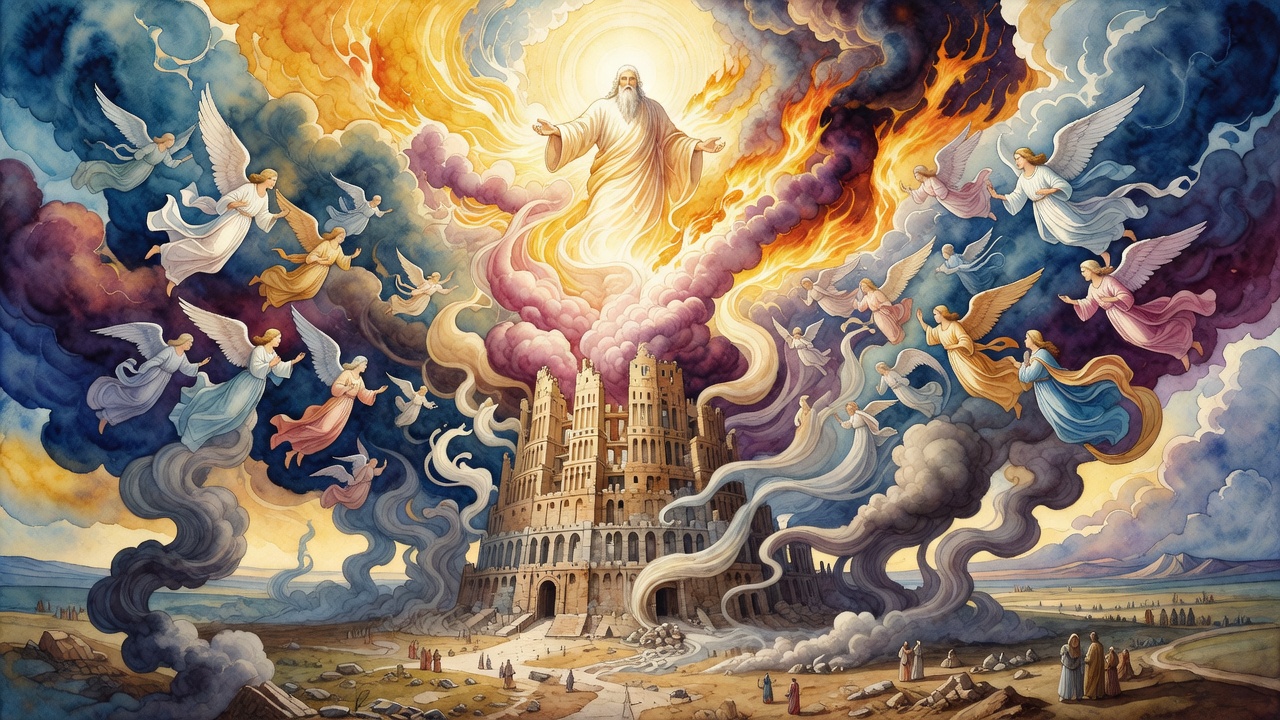
The cries of these innocents, according to the story, didn't go unheard. The angels themselves appeared before God, aghast. "Seest Thou not what he doth, yon sinner and blasphemer, Nimrod son of Canaarl, who slays so many innocent babes that have done no harm?" they cried.

And God responded, "Ye holy angels, I know it and I see it, for I neither slumber nor sleep. I behold and I know the secret things and the things that are revealed, and ye shall witness what I will do unto this sinner and blasphemer, for I will turn My hand against him to chastise him."

It is chilling to read. And the story leaves us hanging, doesn't it? We know retribution is coming, but we don't see it in this particular passage.

So, what does this ancient story tell us? Is it just a gruesome tale of a tyrannical king? Or is it something more? Perhaps it's a stark reminder of the dangers of unchecked power, the lengths to which fear can drive people, and the enduring belief that even in the face of unimaginable cruelty, justice, ultimately, will prevail. What do you think?

Full source