5 min read

No Rainbow While Bar Yochai Held the World

Elijah brings a great sage to Rabbi Shimon, who asks only whether the rainbow has appeared, then refuses a face heaven still needs to warn.

Curated by Arthur · Told by Maggid ·
Table of Contents
  1. A Sky Without Warning
  2. The Cave That Forged a Column
  3. Elijah at the Door
  4. Thirty and One
  5. After Rain Without Color
No Rainbow While Bar Yochai Held the World Click for full size

A Sky Without Warning

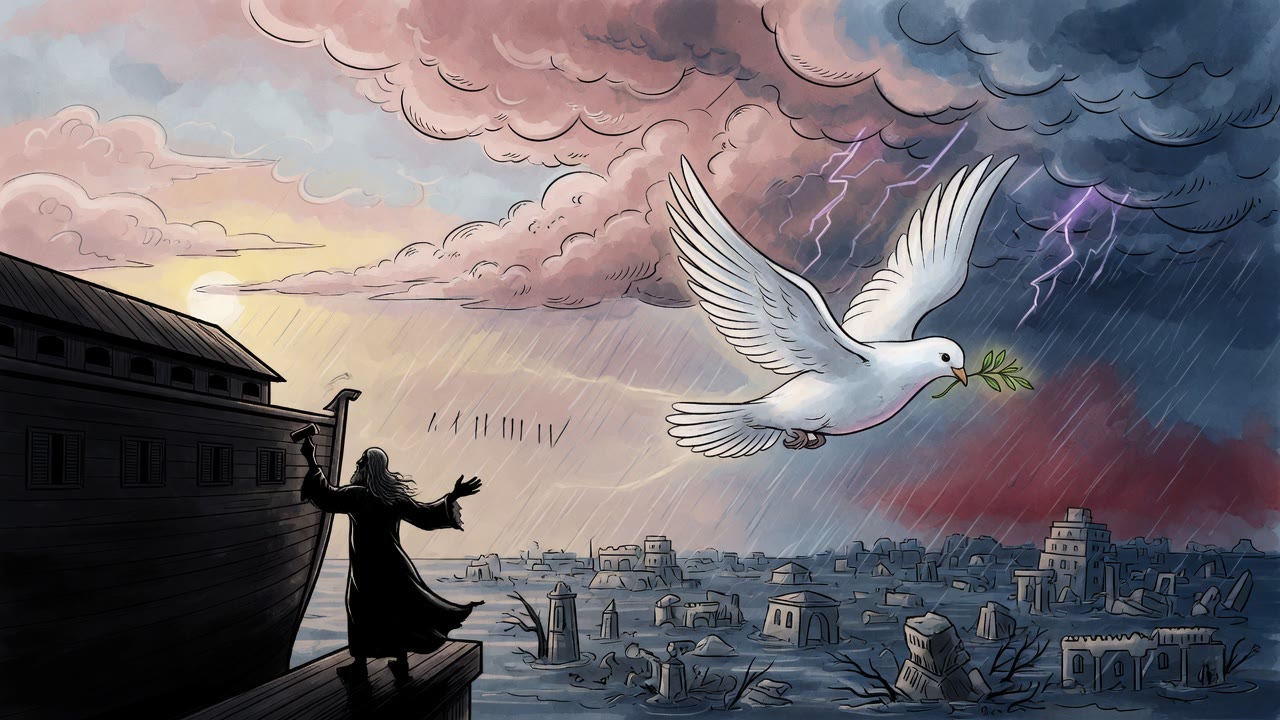
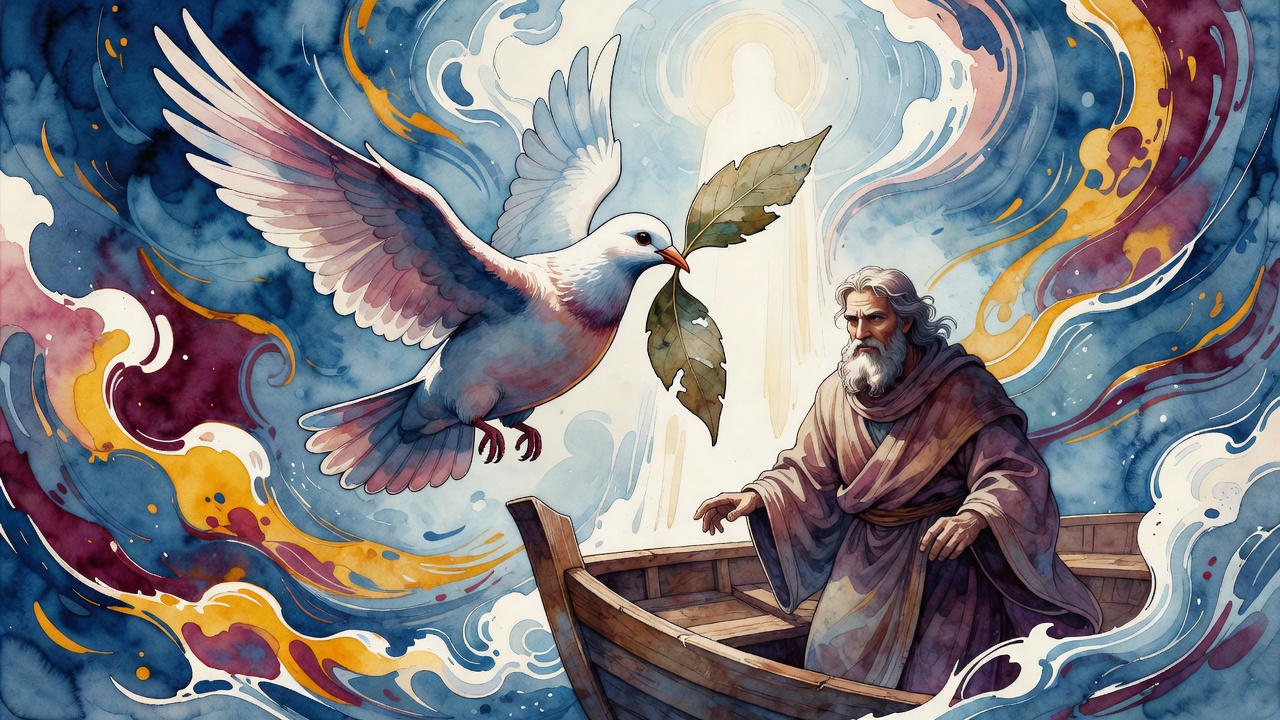
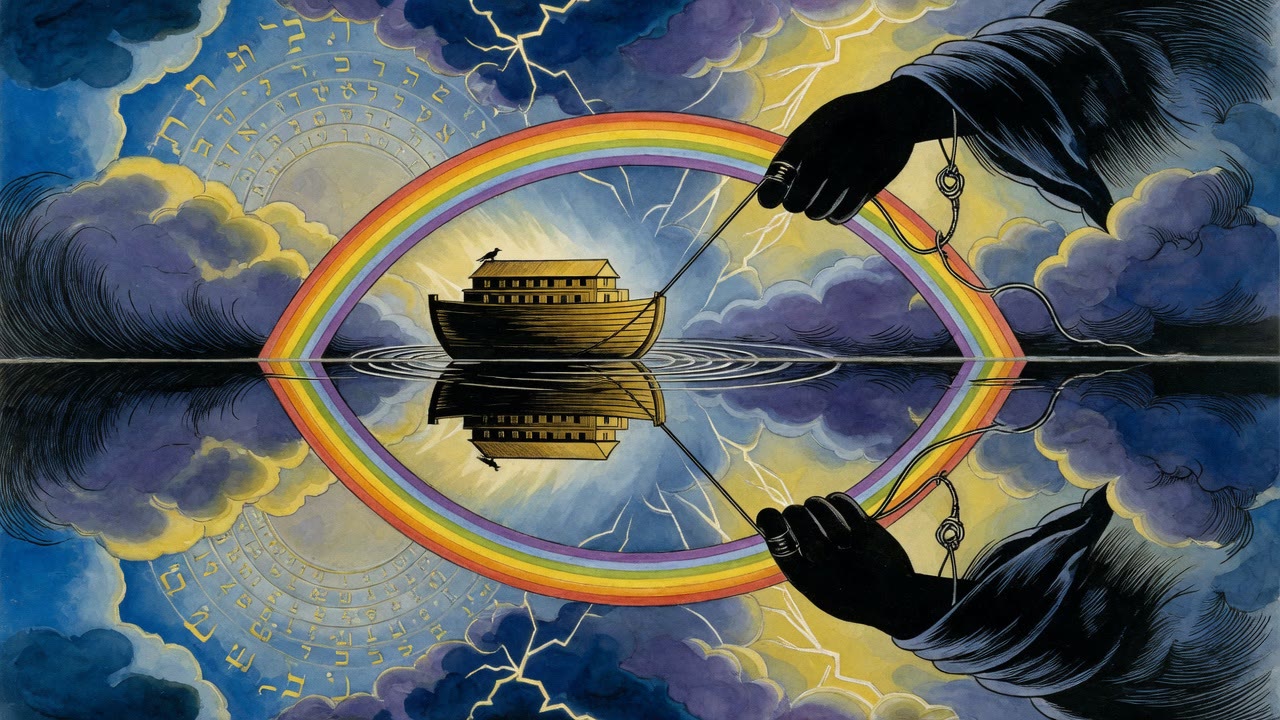
In the days of Rabbi Shimon bar Yochai, the sky over the Land of Israel stayed clean of the covenant bow. No arc after rain. No colored reminder hung between cloud and hill. People noticed the absence the way a village notices a watchman who never sleeps: something held, something quiet, something not needed.

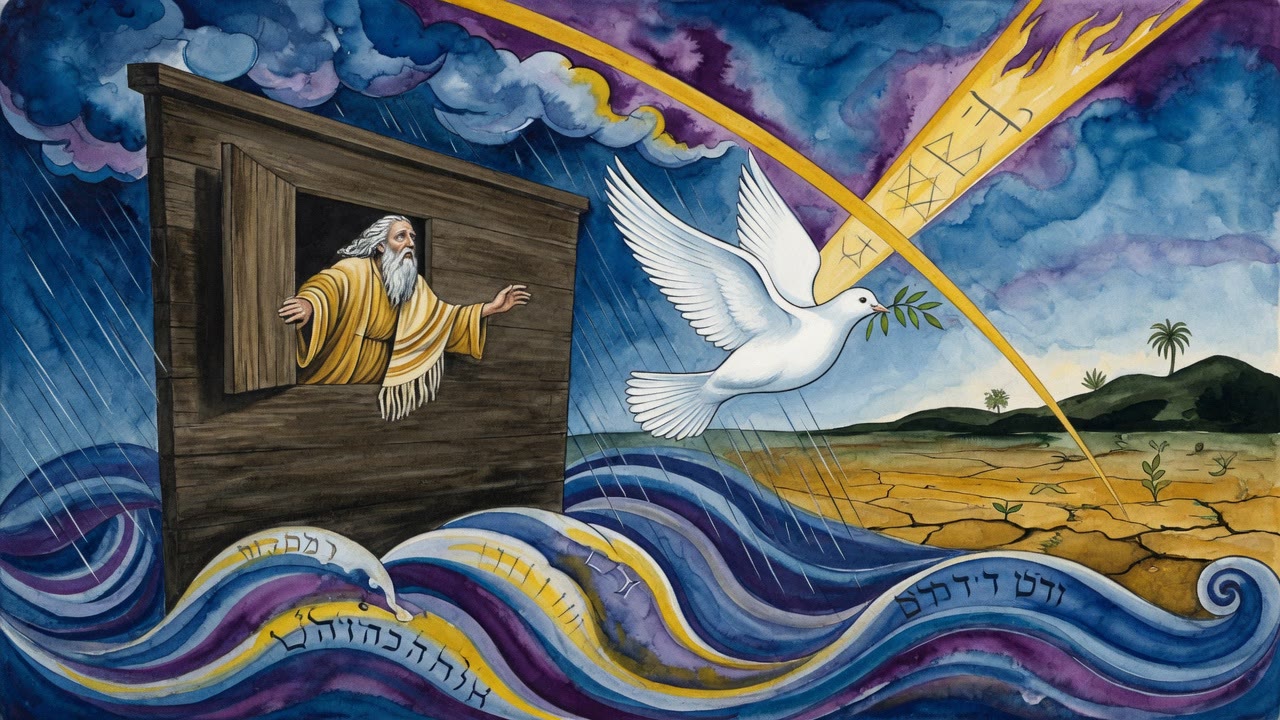
After the Flood, God set the rainbow as a sign never again to wash the world away (Genesis 9:13). The sages read a second meaning inside the first. The bow appears when a generation has earned destruction and mercy must flash a signal to itself. No rainbow means no emergency. Bar Yochai's merit was the emergency that never arrived. Children played in puddles and did not look up for color. Old women who remembered other skies muttered that something heavy was holding the world by the collar.

The Cave That Forged a Column

He had hidden with his son Elazar in a cave while Rome hunted the teachers of Torah. Carob and spring water. Sand for a bed. Years of study so fierce the body thinned and the mind burned bright. When they came out, the world still smelled of empire, but a column had been set under heaven.

Students came to him for the laws of the libations and stayed three days because each time they rose to leave he opened another verse about the bow in the clouds, calling it a sign for the world. He could point at a valley and say, "Fill with golden dinars," and the valley obeyed, the tradition says, because speech and merit had grown into one force. Gold was the least of it. The deeper wealth was a generation that did not need a painted warning after every storm.

Elazar watched his father the way a man watches a beam that holds a roof. If the beam fails, everyone below learns physics the hard way.

Elijah at the Door

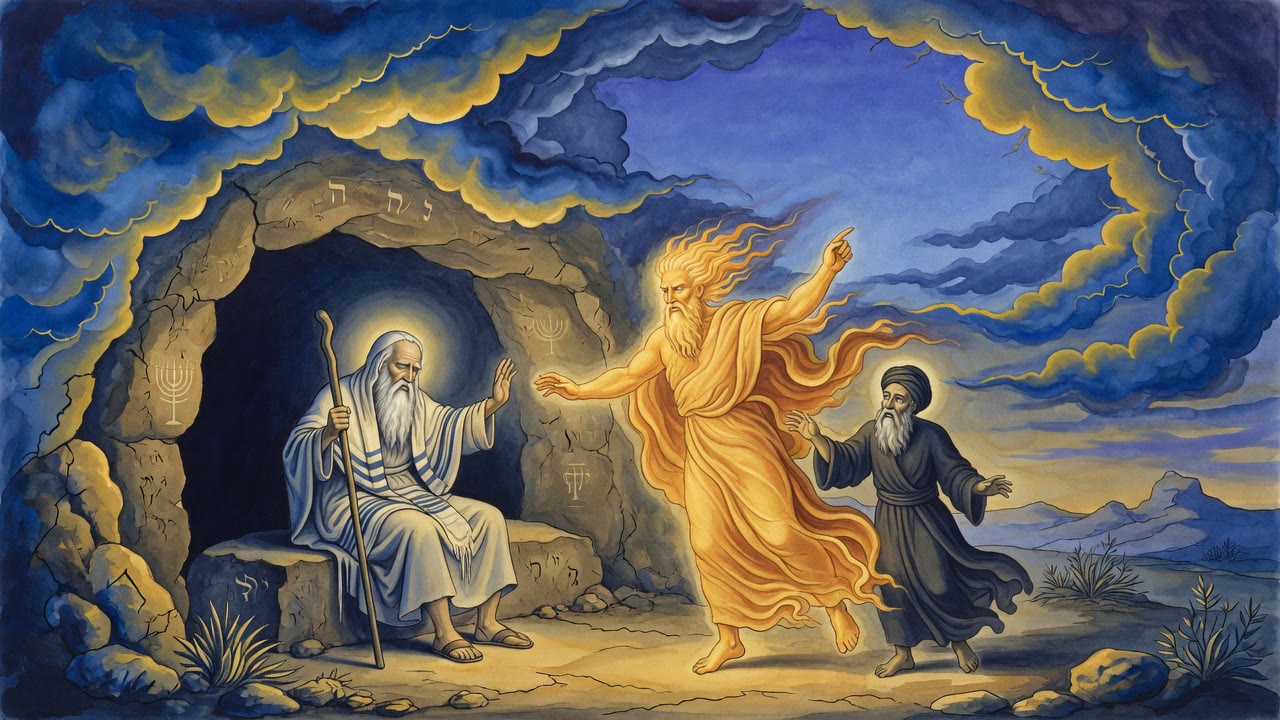
Elijah brought Rabbi Yehoshua ben Levi and introduced him as the great man of the generation. Bar Yochai did not ask about books or miracles. He did not ask how many students sat before the guest. He asked one question.

"Has the rainbow appeared in his days?"

"Yes," came the answer.

"Then he is not worthy that I should look upon his face."

The refusal was not cruelty. It was measurement. A sky that still needs the warning bow is a sky not yet carried by one man's weight. Bar Yochai would not pretend otherwise to flatter a guest, even one led by Elijah. Yehoshua stood in the doorway of a greatness that still required heaven's emergency light. Bar Yochai turned his eyes away rather than dilute the standard.

Elijah did not argue. Prophets know when a scale has spoken.

Thirty and One

He taught that God swore the world is never empty of thirty righteous ones drawn from the letters of Abraham's promise that he would "surely become." And if only one such man stands, Bar Yochai said, "I am he." He offered, in that hard confidence, to span the generations himself if the chain needed a single link from Abraham toward the days of repair.

Students left his table walking under ordinary clouds, listening for rain, half hoping and half fearing to see color after a storm. While he lived, the fear stayed theoretical. The world held without a painted signal. Farmers still planted. Rome still taxed. But the secret ledger of judgment showed a different balance: one life heavy enough to quiet the alarm.

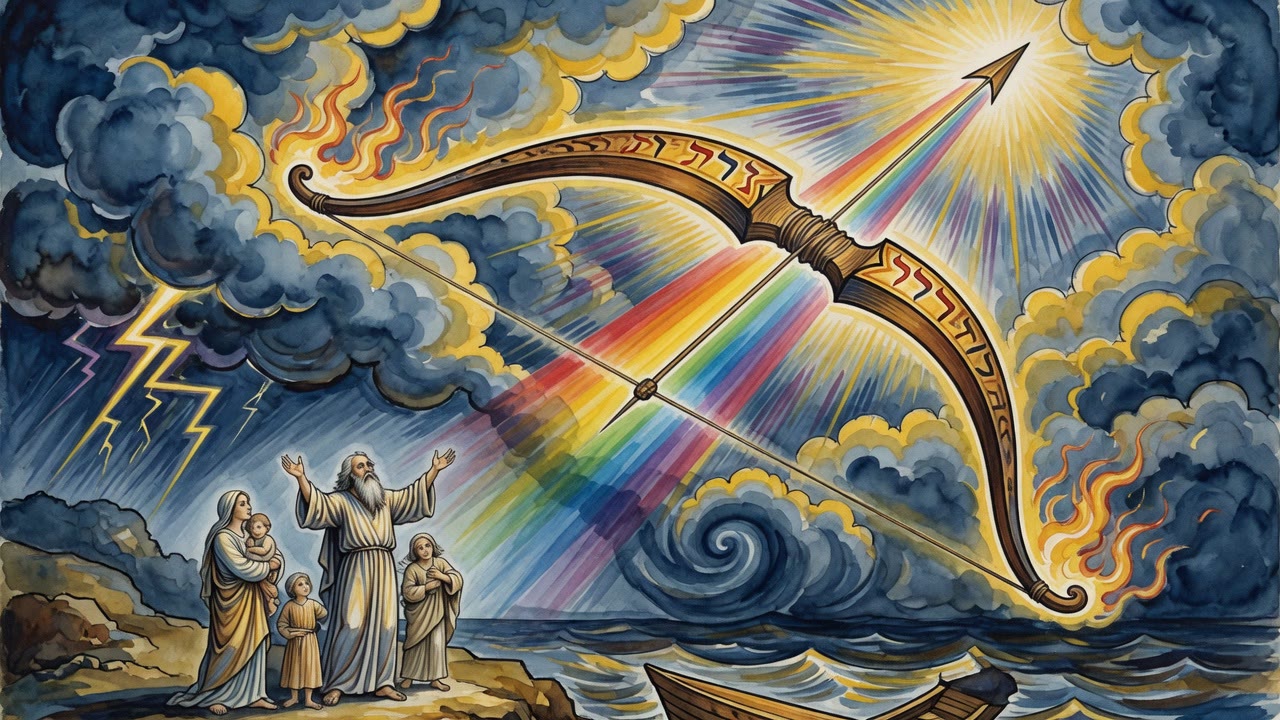
When the bow finally returned in other generations, people understood what they had lost: not a prettier sky, but a quieter judgment. The rainbow is mercy, and it is also a confession that the world almost ended again. Bar Yochai's empty sky was the rarer gift. No color. No warning. Only a man who had become, for a while, the world's unspoken shield.

After Rain Without Color

Farmers in those years watched storms break and looked for the bow out of habit, the way a hand reaches for a latch that is no longer there. Water ran in the furrows. Clouds tore open and closed. No arc. Children asked why the stories spoke of colors they never saw. Parents answered with a name: Bar Yochai is alive. The answer sounded like boast and like prayer at once.

When three rabbis lingered three days for the laws of the libations, they were not only collecting rulings. They were sitting under a roof held up by a man who could refuse even Elijah's introduction without blinking. Merit that thick changes the weather of judgment. It does not cancel human work. It means the alarm stays dark while the work continues.

Elazar, who had shared the cave, knew the cost of that weather. Carob and water and sand do not feel like legend while you live them. They feel like hunger and grit and a father who will not stop learning. The empty sky was paid for in advance, underground, while Rome hunted teachers and the world outside assumed the column would break.


← All myths
From the tradition

Sources

3 sources

The texts behind this telling. Some cards carry a translation of the source; others are our own retelling of it, and each card says which. Every card links out to the original.

Exempla of the Rabbis, No. 205Exempla of the Rabbis (Gaster, 1924)

Retold in our words. Read the original at the link below.The Exempla of the Rabbis, Moses Gaster (1924) · Public Domain

Rabbi Shimon bar Yohai was a sage of such extraordinary righteousness that the rainbow, God's sign of the covenant with Noah, never appeared during his lifetime. The Talmud (Ketubot 77b, Jerusalem Talmud Berakhot 9:2) explains why this was significant.

After the Great Flood, God placed the rainbow in the sky as a reminder of His promise never to destroy the world again (Genesis 9:13). But the very existence of the rainbow implied that the world deserved destruction, the rainbow appeared when God's anger was aroused and He needed to be reminded of His covenant.

In the generation of Rabbi Shimon bar Yohai, no rainbow was needed. His merit alone was sufficient to protect the entire world from divine wrath. God did not need a reminder not to destroy the world, because Rabbi Shimon's righteousness was reminder enough.

The sages counted only a handful of individuals in all of history whose merit was so great that the rainbow did not appear during their lifetimes. Rabbi Shimon was one. The implication was staggering: a single righteous person can sustain the entire world. Without them, the rainbow must do the work that their merit would otherwise accomplish.

This teaching transformed how Jews understood the significance of seeing a rainbow. When you see one, the sages said, you should recite a blessing. But also recognize that the world is in a precarious state. The rainbow is beautiful, but it is also a warning. In a generation that truly deserved God's protection, you would never see one at all.

Full source
Gaster, Exempla No. 205; Ketubot 77bThe Exempla of the Rabbis (1924)

Retold in our words. Read the original at the link below.The Exempla of the Rabbis, Moses Gaster (1924) · PD-US-pre-1929

Rabbi Shimon bar Yochai was so great that, during his lifetime, no rainbow ever appeared in the sky over the Land of Israel.

The rainbow, in rabbinic tradition, is not only a covenantal memory from Noah's flood (Genesis 9:13). It is also a warning signal. When the generation grows so wicked that a new flood would be justified, heaven hangs a rainbow in the sky as a reminder that the Holy One has promised not to destroy the world. The rainbow appears because mercy is having to work overtime.

As long as Rabbi Shimon bar Yochai was alive, no such warning was needed. His merit alone, his Torah, his righteousness, his years hidden in the cave with his son Elazar, held up the generation like a column. Calamity could not enter while he stood.

One day the prophet Elijah and Rabbi Joshua ben Levi approached him. Rabbi Shimon embraced Elijah but refused to look at Rabbi Joshua. When pressed for a reason, he said: "During your lifetime a rainbow was seen. That means your generation deserved to be destroyed and was saved only by the covenant. Your merit was not sufficient to cover them" (Ketubot 77b; Gaster, Exempla No. 205).

The Ma'aseh Book records other wonders about Rabbi Shimon bar Yochai, once, the tradition says, he commanded a barren valley, "Be full of gold," and the valley filled.

The story is astonishing and unsettling. It teaches that the righteous hold up the world in ways we cannot measure, and that a single righteous one's existence can be the reason a generation does not see the warning signs.

Full source
Pesikta DeRav Kahana 11:15Pesikta de-Rav Kahana

Translation of the source text.Pesikta de Rav Kahana according to an Oxford manuscript, Dov Mandelbaum ed., N.Y. 1987 · CC-BY

For example: Rabbi Yudah bar Giyora and Rabbi Isaac and Rabbi Nathan went to hear the section concerning the drink offerings from Rabbi Simeon ben Yohai, and they remained there three days. They said: We must take leave. On the first day they entered before him and he expounded, "I do set my bow in the cloud" (Genesis 9:13); Rabbi Simeon ben Yohai said: It is a sign for the world. On the second day he expounded, "and the bow shall be seen in the cloud" (Genesis 9:14); Rabbi Simeon ben Yohai said: It is a sign for the world.

Rabbi Hezekiah in the name of Rabbi Jeremiah: Thus would Rabbi Simeon ben Yohai say: O valley, valley, fill yourself with golden dinars, and it would fill up.

Rabbi Hezekiah in the name of Rabbi Jeremiah: Elijah, may he be remembered for good, and Rabbi Joshua ben Levi were sitting and studying. They came upon a certain teaching in the name of Rabbi Simeon ben Yohai. Rabbi Simeon ben Yohai passed by. They said: Here comes the master of the teaching; let us arise and ask him about it. They arose and asked him. He said to him: Who is this who is with you? He said to him: He is Rabbi Joshua ben Levi, and he is the greatest man of the generation. He said to him: And has the rainbow appeared in his days? He said to him: Yes. He said to him: If the rainbow has appeared in his days, he is not worthy to behold the sight of my countenance.

Rabbi Hezekiah in the name of Rabbi Jeremiah: Thus would Rabbi Simeon ben Yohai say: The Holy One, blessed be He, swore to our father Abraham that the world should never have fewer than thirty righteous men like himself. And what is the reason? "And Abraham shall surely become (hayoh yihyeh)" (Genesis 18:18). [The letters of yihyeh are counted as numerical values:] yod is ten, heh is five, yod is ten, heh is five, which makes thirty. And if there is only one, I am he.

Rabbi Hezekiah in the name of Rabbi Jeremiah: Thus would Rabbi Simeon ben Yohai say: Let Abraham bring near from his side up to my own, and I will bring near from my side until the King Messiah comes. And if not, let Ahijah the Shilonite join with me, and we will bring near the whole world.

On the third day he expounded, "And he said, Go, sell the oil" (2 Kings 4:7).

Full source