Parshat Beshalach5 min read

On the Far Shore They Named God Fortress

Sand stuck to wet ankles and children coughed salt. Behind them the sea had closed over chariot wheels, ahead lay a desert with no bread. Israel sang.

Curated by Arthur · Told by Maggid ·
Table of Contents
  1. My Strength Is My Stronghold
  2. The God Who Owns the Heavens and the Breath
  3. Wrath Still Stood in the Future Tense
  4. They Sang With Water Still in Their Ears

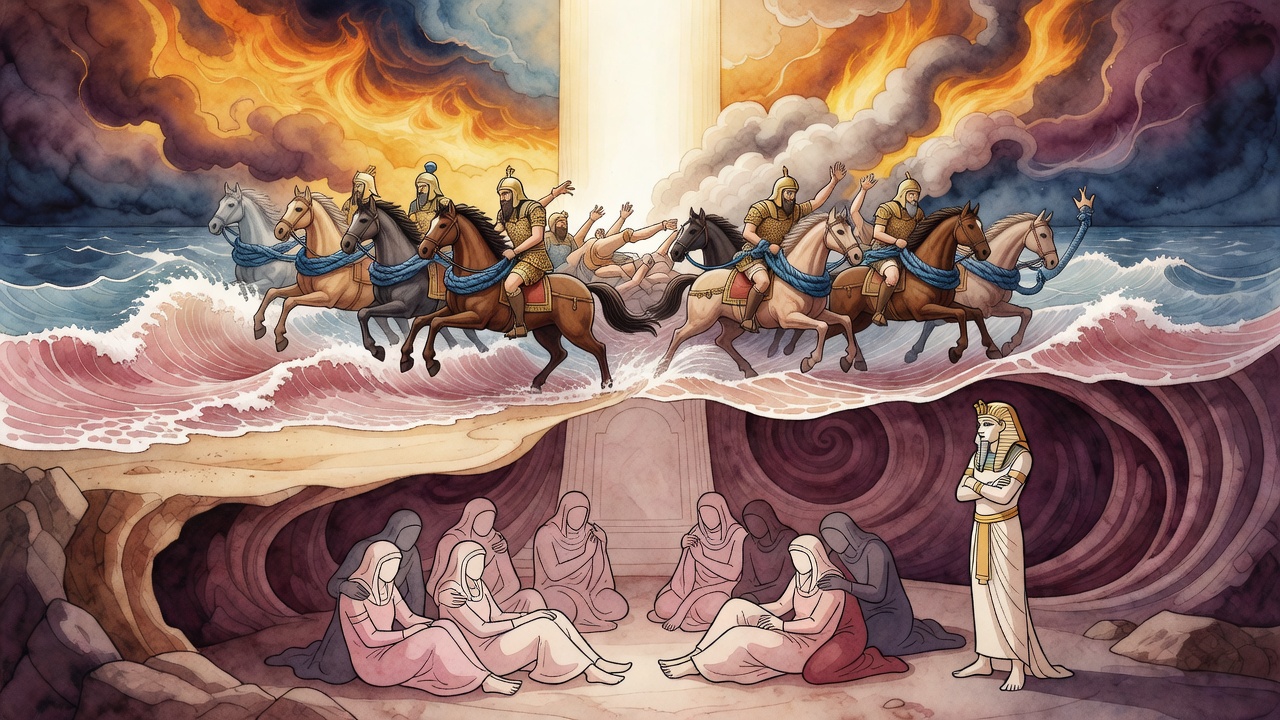
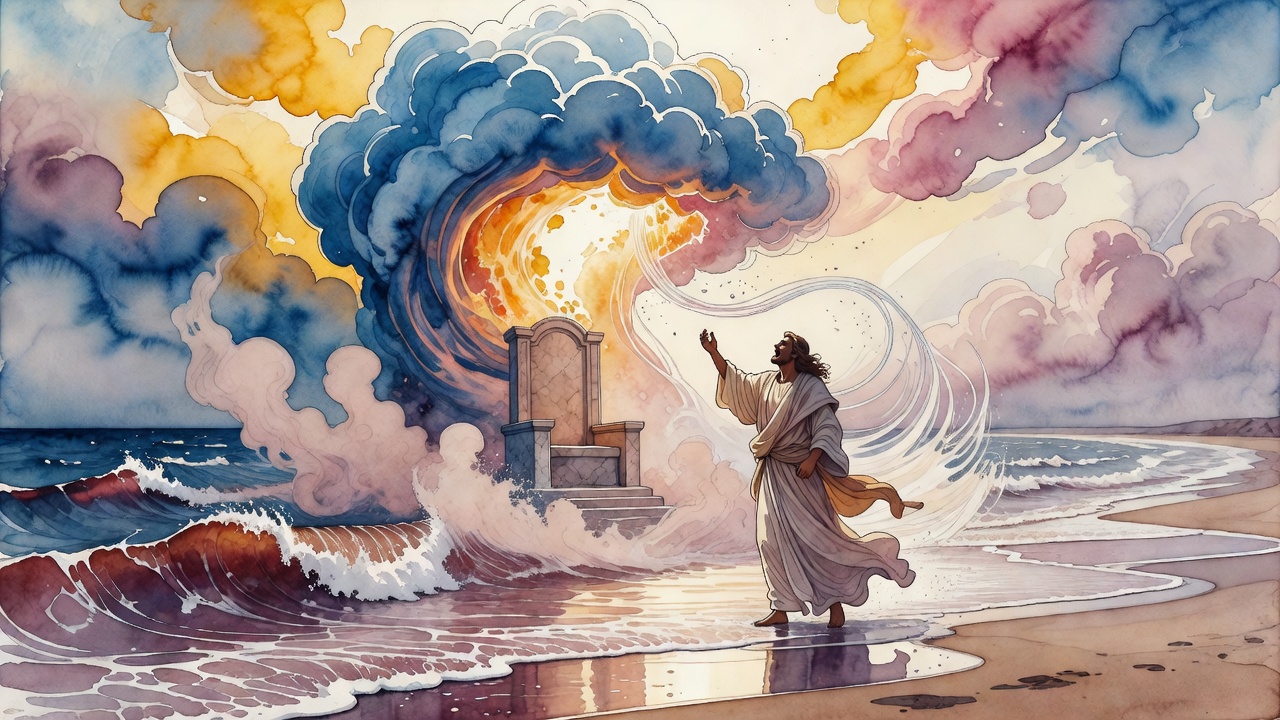
The water still ran off their clothes when the first voice rose. Sand stuck to wet ankles. Children coughed salt. Behind them the sea closed over chariot wheels and the loudest army they had ever known. Ahead of them lay a desert with no bread and no map. Between those two hungers, Israel opened its mouth and sang.
On the Far Shore They Named God Fortress Click for full size

"I shall sing to the Lord," they said, and the song did not wait for dry clothes.

My Strength Is My Stronghold

One word in the song carried more weight than a spear. "My strength." On the far shore it did not mean muscles. It meant a wall a person could put a back against while the enemy drowned.

Later prophets would pair the terms without apology. "The Lord is my strength and my stronghold," Jeremiah would say (Jeremiah 16:19). David would press the same thought into a shield: "The Lord is my strength and my shield. In Him does my heart trust, and I was helped" (Psalms 28:7). Strength, then protection, then trust, then rescue. A chain a survivor can feel in the chest.

On the beach that morning the chain was new. Israel had just watched the strongest force on earth vanish under water that obeyed a command. Their strength was not the staff in Moses' hand alone. Their strength was the One who made the water stand and fall. A fortress does not need to shout. It only needs to hold.

They sang "my strength" the way a person names a house after fire has taken every other room.

The God Who Owns the Heavens and the Breath

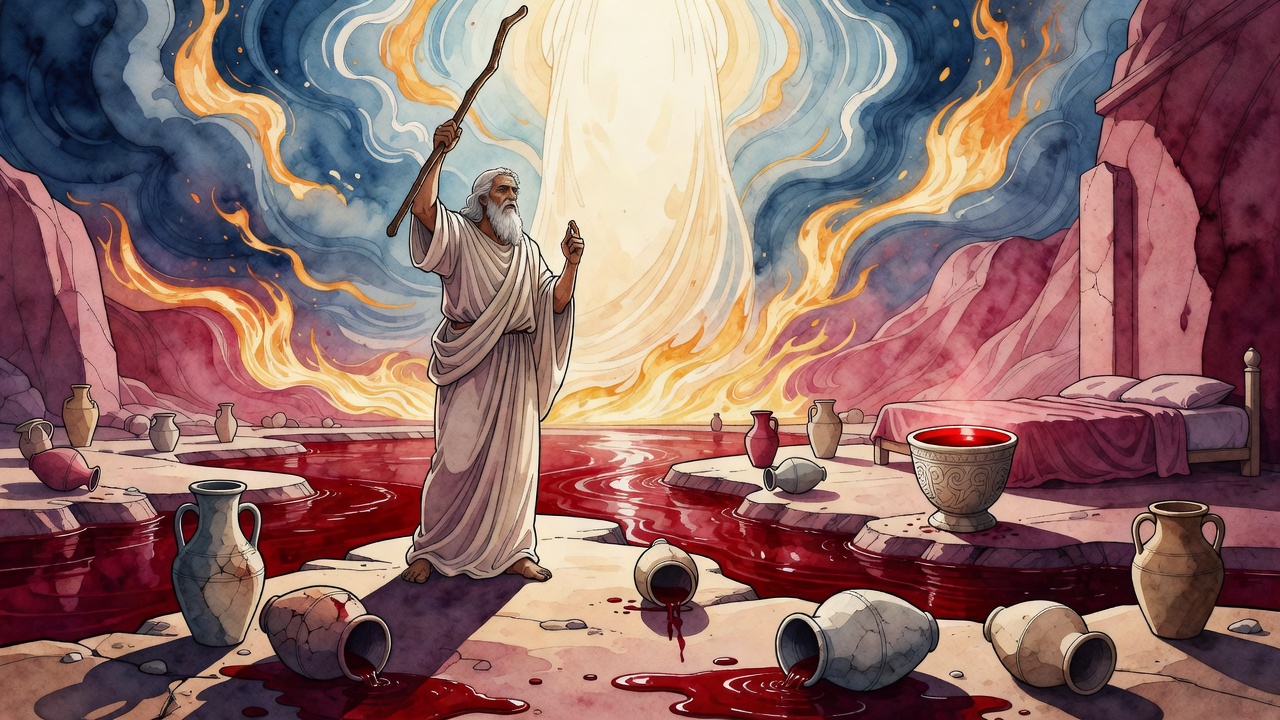
Another reason for song climbed out of the water with them. God is rich. Not rich the way Pharaoh hoarded grain and gold. Rich the way a maker owns the material of the world.

The song pressed the claim from the wide to the near. "To the Lord your God are the heavens" (Deuteronomy 10:14). Then the earth and its fullness (Psalms 24:1). Then the sea He had just used as a weapon and a road (Psalms 95:5). Then silver and gold, every coin still wet in an Egyptian bag (Haggai 2:8). Then the last ownership, the one that ends argument: "All of the souls are Mine. The soul of the father and the soul of the son alike are Mine" (Ezekiel 18:4).

A woman on the shore pressed a child against her ribs and felt that verse without knowing its later chapter. The breath in the child's lungs belonged to the same God who owned the sea that had just closed. Pharaoh had counted bricks. God counted souls. The song named a wealth no warehouse could hold.

They sang because the One who saved them needed nothing from Egypt and owned everything Egypt had borrowed.

Wrath Still Stood in the Future Tense

Not every line of the song looked backward. One verb faced forward with its teeth out. It is not written, "You have sent forth Your wrath," as if the anger had spent itself on the chariots. It is written as a sending still to come. "You will send forth Your wrath."

The bodies on the far side of the sea were not the last page. They were a first pour from a cup that was not empty. Later the psalmist would cry, "Pour Your wrath upon them" (Psalms 69:25). Jeremiah would name the reason without soft language: "Pour Your wrath upon the nations... for they have consumed Yaakov" (Jeremiah 10:25). Nations that ate Jacob to the bone would meet a fury the Red Sea only previewed.

On the beach, a young man who had run all night stared at floating wood and understood something colder than victory. God had judged Egypt. God had not finished judging. The song carried past tense miracles and future tense accounts in the same breath.

Joy and dread shared the same mouth. That is what survival sounds like when memory is long.

They Sang With Water Still in Their Ears

A man who had driven Pharaoh's horses yesterday lay under the surface somewhere the song could not reach. Israel did not cheer that death like a tavern. They named the wall that had stood between them and the wheels. Children asked for water that did not taste of salt. Mothers checked pulses. Old men sat down hard because their legs had not believed the path until the path was gone.

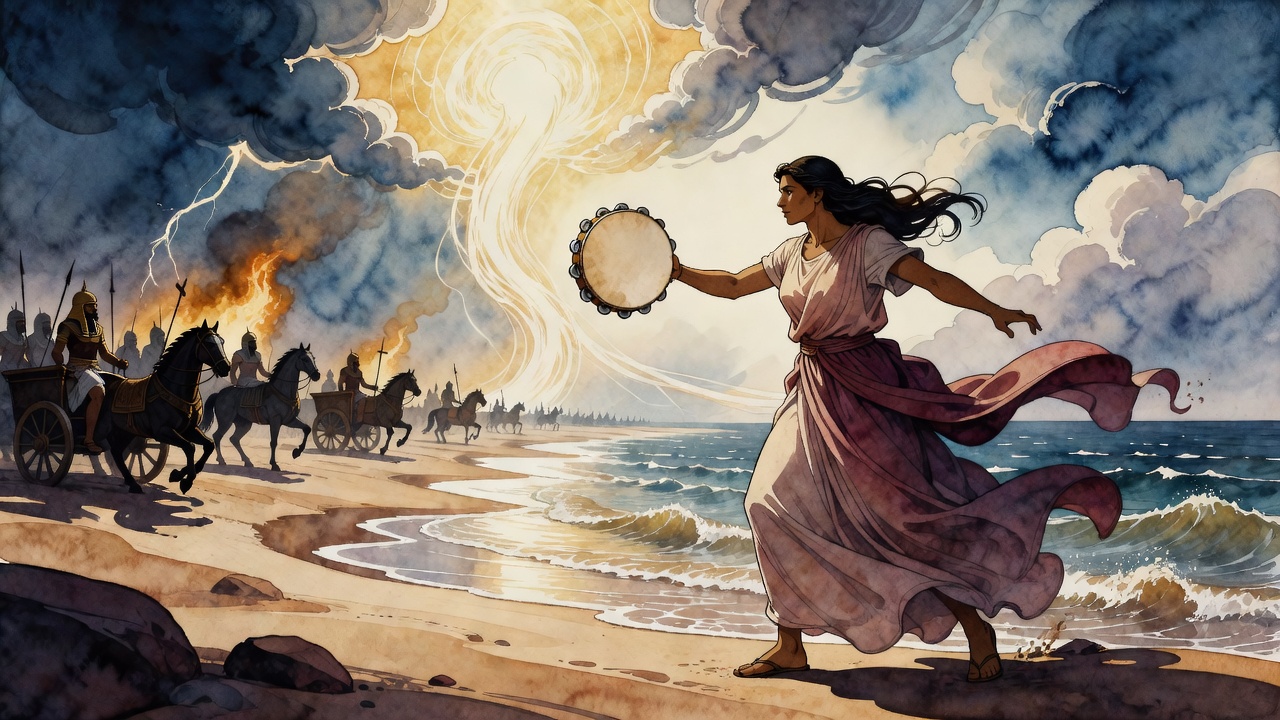
Moses and the people finished the first stanza while the ground was still soft. Miriam took a drum. Women answered. The desert ahead did not yet show manna or snakes or the mountain that would shake. For a few hours the world narrowed to wet sand, a closed sea, and a God who could be called fortress, owner, and judge without contradiction.

No one on that shore owned the sky. No one owned the next well. They owned a song that told the truth about who did. Strength meant stronghold. Wealth meant every soul. Wrath meant a ledger still open against those who devour Jacob.

When the last note thinned into wind, the water kept its new border. Pharaoh's horses did not climb back. Israel turned inland with salt on their lips and a theology already walking with them: the wall behind them was not Egypt's ruin alone. The wall was God, and the wall could move.


← All myths
From the tradition

Sources

3 sources

The texts behind this telling. Some cards carry a translation of the source; others are our own retelling of it, and each card says which. Every card links out to the original.

Mekhilta Tractate Shirah 3:2Mekhilta DeRabbi Yishmael

Retold in our words. Read the original at the link below.Mechilta, translated by Rabbi Shraga Silverstein · CC-BY

The Song of the Sea, sung by Israel after crossing the Red Sea, contains the phrase "my strength." The Mekhilta offers an alternative reading that deepens the meaning considerably. "My strength" is not merely a reference to physical power. It means "my stronghold," a place of refuge, a fortress where one is safe from all enemies.

The proof comes from two biblical verses. (Jeremiah 16:19) declares: "The L-rd is my strength and my stronghold." Here the prophet Jeremiah uses "strength" and "stronghold" as parallel terms, showing that in biblical Hebrew, the concept of strength includes the idea of secure shelter. Strength is not just the ability to strike. It is the assurance of safety.

The second verse, (Psalms 28:7), adds another layer: "The L-rd is my strength and my shield. In Him does my heart trust, and I was helped." The psalmist David connects strength with trust and with being helped. The sequence moves from power to protection to personal reliance to actual deliverance. Strength, in this framework, is not abstract. It is experienced as concrete rescue.

When Israel stood on the far shore of the sea and sang "my strength," they were not flexing. They had just witnessed the most powerful army on earth swallowed by the waters. Their strength was not their own. It was God Himself, functioning as their fortress, their shield, and their deliverer. The Mekhilta's reading transforms a single word in the Song of the Sea into a comprehensive theology of divine protection, where strength means not domination but the absolute security of standing behind an impenetrable wall.

Full source
Mekhilta Tractate Shirah 1:17Mekhilta DeRabbi Yishmael

Retold in our words. Read the original at the link below.Mechilta, translated by Rabbi Shraga Silverstein · CC-BY

The Mekhilta continues its meditation on the Song of the Sea by enumerating the reasons God is worthy of song. "I shall sing to the Lord," the Israelites declared. And one reason is that God is rich beyond all reckoning. Not rich in the way a human king hoards gold. Rich in the sense that everything in existence belongs to Him.

The proof texts cascade across the Hebrew Bible. "To the Lord your God are the heavens" (Deuteronomy 10:14), the entire sky and everything beyond it. "To the Lord is the earth and its fullness" (Psalms 24:1), every continent, mountain, and valley. "His is the sea and He has made it" (Psalms 95:5), the oceans that swallowed Pharaoh's army. "Mine is the silver and Mine is the gold" (Haggai 2:8), all wealth in human hands is merely on loan. And finally, the most profound claim: "All of the souls are Mine. The soul of the father and the soul of the son alike are Mine" (Ezekiel 18:4).

The progression moves from the cosmic to the personal. God owns the heavens, then the earth, then the sea, then precious metals, and finally, the most intimate possession of all, every human soul. The Mekhilta establishes that God's wealth is not a metaphor. It is ontological reality. Nothing exists outside of divine ownership. The Israelites sang at the sea because they understood in that moment what the verses spell out: the God who saved them does not lack anything, has never needed anything, and owns everything, including the very breath in their lungs.

Full source
Mekhilta Tractate Shirah 6:11Mekhilta DeRabbi Yishmael

Retold in our words. Read the original at the link below.Mechilta, translated by Rabbi Shraga Silverstein · CC-BY

The Mekhilta identifies another future-tense verb in the Song at the Sea. It is not written "You have sent forth Your wrath", as if God's anger were already spent. But "You will send forth Your wrath," pointing forward to a judgment still to come.

The implications are enormous. The destruction of the Egyptians at the Red Sea was not the final outpouring of divine anger. It was a foretaste. The real reckoning lies ahead, in the time to come, when God will settle accounts with all the nations that have persecuted Israel.

The Mekhilta brings two prophetic verses as proof. (Psalms 69:25) pleads: "Pour Your wrath upon them." And (Jeremiah 10:25) makes the case explicit: "Pour Your wrath upon the nations." The reason is given in the same verse of Jeremiah: "For they have consumed Yaakov", they have devoured Jacob, meaning Israel, and left nothing behind.

This teaching from the Mekhilta DeRabbi Yishmael (Tractate Shirah 6:11) reveals a pattern in rabbinic interpretation of the Song at the Sea. Each verb in the Song is examined for its tense, and each future-tense verb becomes a window into eschatology. The Red Sea was the past. The wrath to come belongs to the future. And the nations that consumed Israel will discover that the cup of divine fury has not yet been emptied.

Full source