Onkelos Would Not Let God Climb Down to Babel
The builders of Babel raised a tower for their own name. Onkelos changed one verb and turned descent into revealed judgment.
Table of Contents
The builders wanted a name large enough to survive the floodwaters of history.
 Click for full size
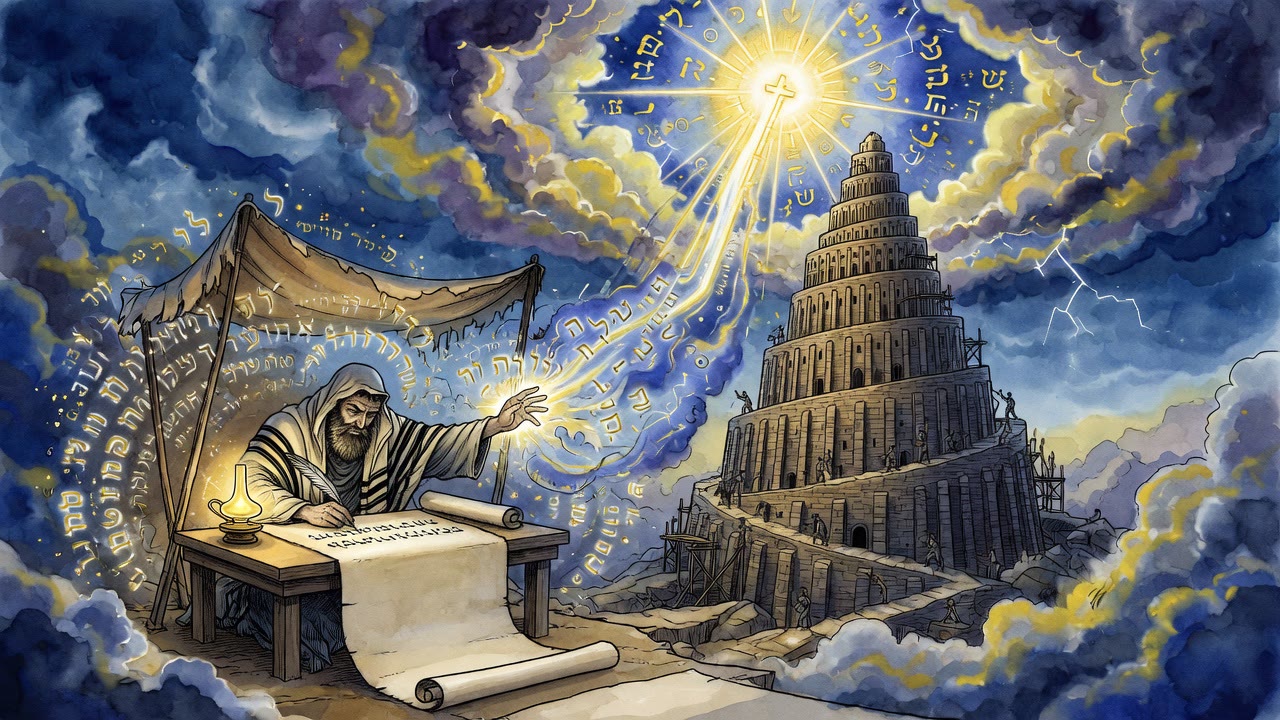
They stood on the plain with brick, bitumen, language, and fear. The world had scattered once under water. Now humanity gathered itself into one voice and one project. A city would hold them. A tower would rise until its head reached heaven. Their name would not dissolve into dust.
Then the verse said God came down.
The Tower Rose From Fear
The bricks hardened in the sun.
Men carried them shoulder to shoulder. Women watched the courses climb. Children learned the same words from every mouth around them. Nobody had to translate. Nobody could hide inside difference. The builders thought unity itself could become a fortress.
They were not merely stacking material. They were trying to make permanence by force. If the heavens had a border, they would touch it. If human beings could be scattered, they would bind themselves together before God could divide them. The tower was a monument to one sentence spoken by many mouths: let us make ourselves a name.
The higher the tower rose, the smaller humility became.
The Dangerous Word Was Descended
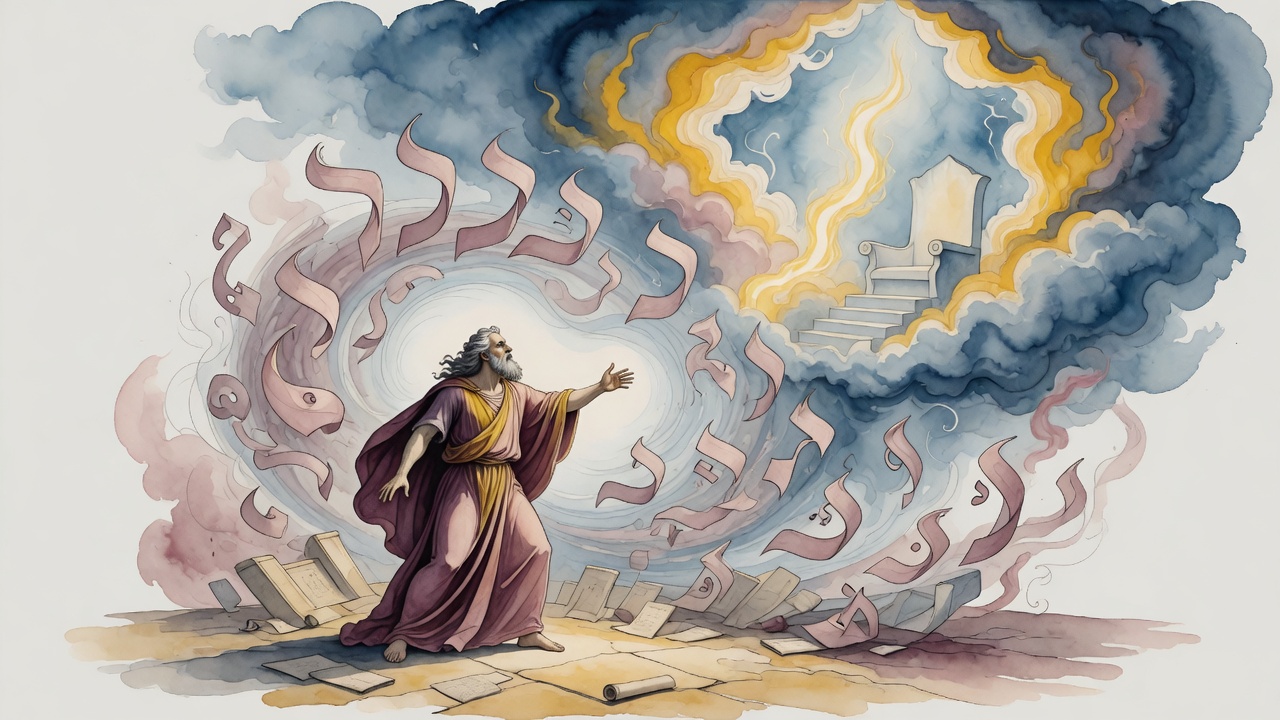
The Hebrew line put a hard image before the translator.
God descended to see the city and the tower.
That sentence could be heard the wrong way. A listener could imagine God crossing distance, moving from above to below, arriving late to inspect human work. A listener could imagine divine knowledge as if it needed a viewpoint, divine judgment as if it began with curiosity.
Onkelos reached that verb and refused its danger.
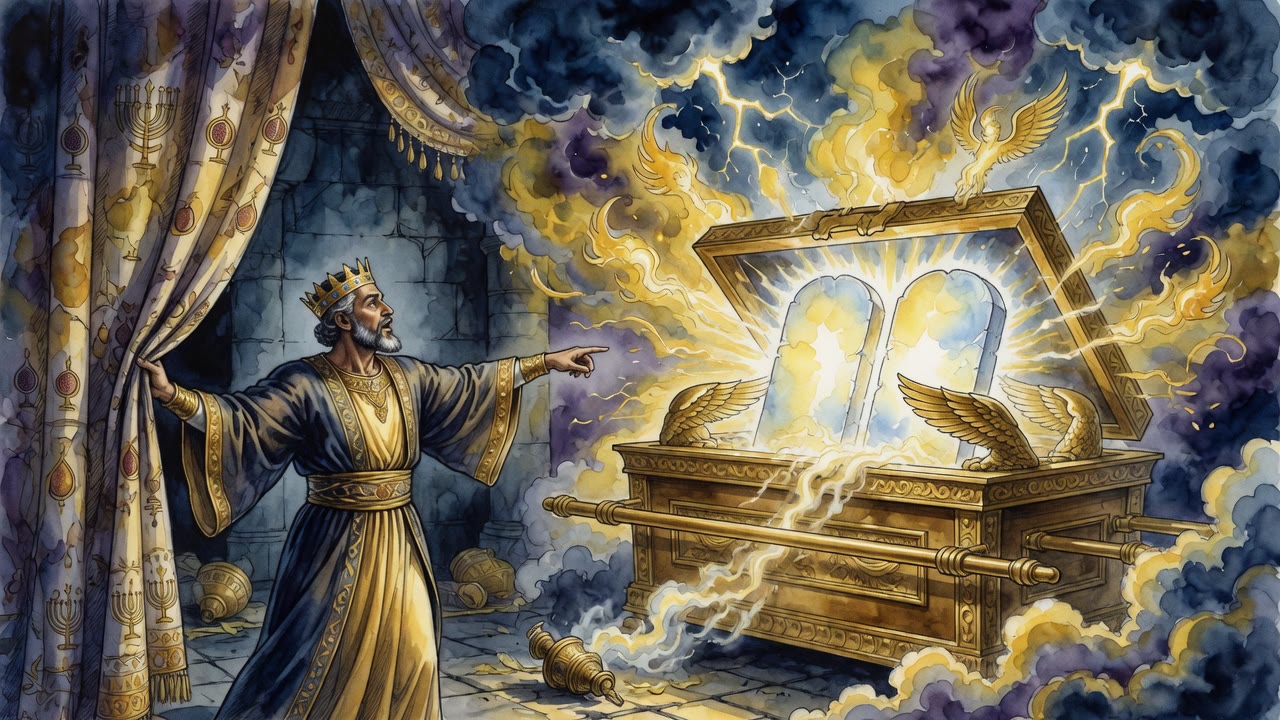
He did not let God climb down a ladder of space. He rendered the moment as revelation for punishment. God became revealed in order to judge the city and the tower. Motion became manifestation. Curiosity became verdict. The builders had tried to push upward into heaven, but the answer was not God lowering Himself into their architecture. The answer was hidden judgment becoming visible.
The Court Came Into View
The next danger came from the plural.
Come, let us descend and confuse their language.
The builders had one language. Heaven answered in the voice of a court. Onkelos kept the plural shape but guarded the meaning. Let us be revealed. The heavenly court could appear for judgment without making God into a body among bodies.
Below, the work broke apart.
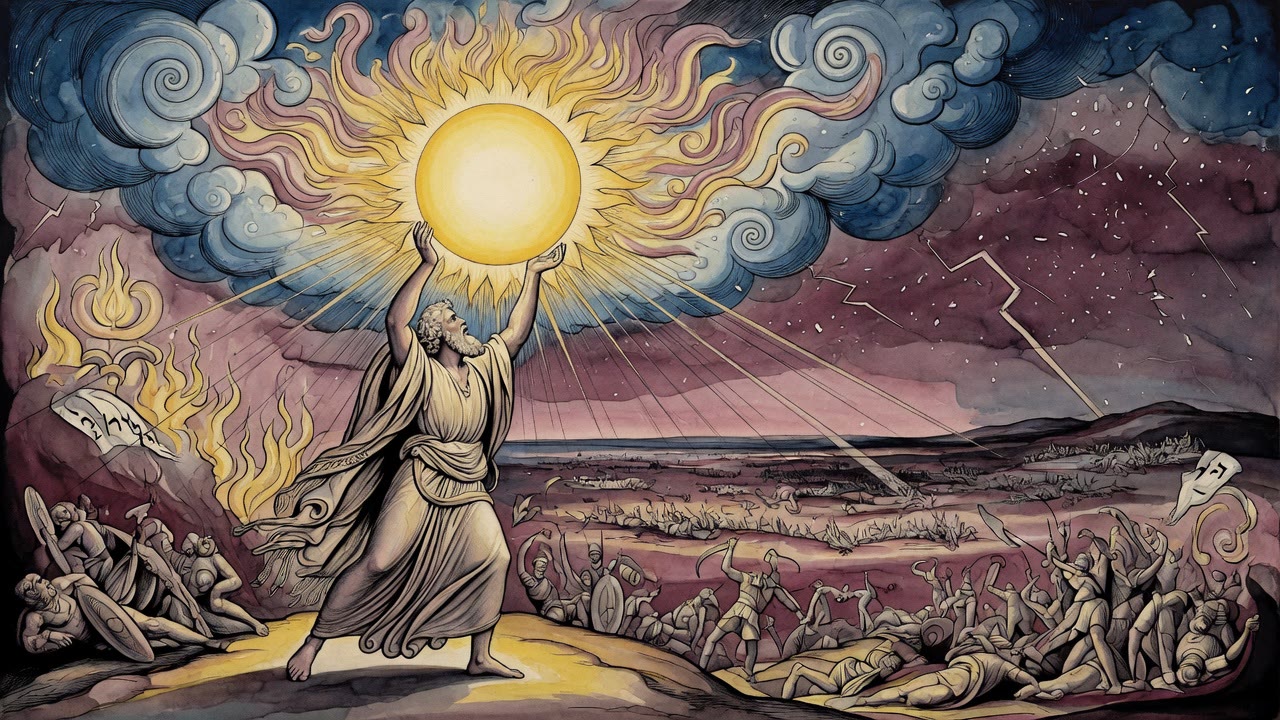
A mason asked for brick and received the wrong tool. A command crossed the air and failed to land. The same language that had made rebellion efficient became fragments in their mouths. The tower did not need to be smashed by a hand from the sky. Its builders lost the one thing that had made it possible to build against heaven together.
Scattering Became Mercy and Sentence
They had feared scattering. They received it.
Families moved away from the unfinished walls carrying new speech in their throats. The plain that had been crowded with one project thinned into roads. Names multiplied. Nations began to take shape. The tower remained as proof that unity can rot when it refuses gratitude.
Bereshit Rabbah looked at the builders and heard the old ingratitude of Adam echoing in them. Adam received a garden and shifted blame. The generation after the flood received a world spared from destruction and turned its shared tongue into a weapon against heaven.
Their city was unfinished, but their verdict was complete.
The Translator Guarded the Sky
Onkelos did more than solve a grammar problem.
He guarded the story's sky. The builders wanted to make God an object at the top of their tower, something reached by height, pressured by architecture, forced to respond to human scale. A careless translation could have helped them by making God sound like another figure moving through space.
So Onkelos changed the path of the sentence.
God did not descend because height is not a barrier before God. God was revealed because hidden judgment had reached its hour. Babel fell not because its tower touched heaven, but because its makers mistook shared power for permission. Their language broke. Their name scattered. The sky stayed clear of their bricks.
That is why the translation matters inside the story. Babel tried to make height the measure of power. Onkelos answered by making revelation the measure of judgment. The builders could pile brick on brick until the plain disappeared beneath their work. They could not make God nearer by building upward, and they could not make themselves safer by giving every mouth the same proud sentence.
← All myths