Pharaoh Begged a Blessing From His Slaves
The king who once sneered at the Lord hands over flocks and gold, then asks the people he whipped to bless him before they go.
Table of Contents
 Click for full size
Surrender in Pieces
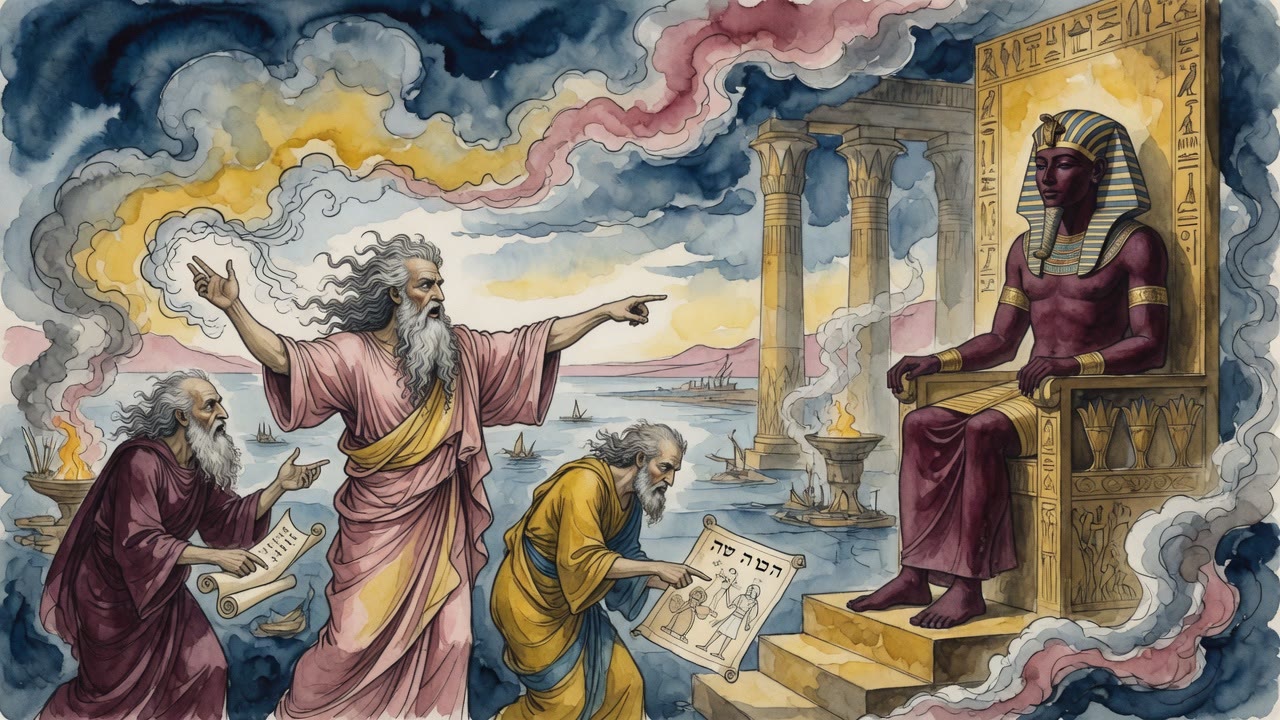
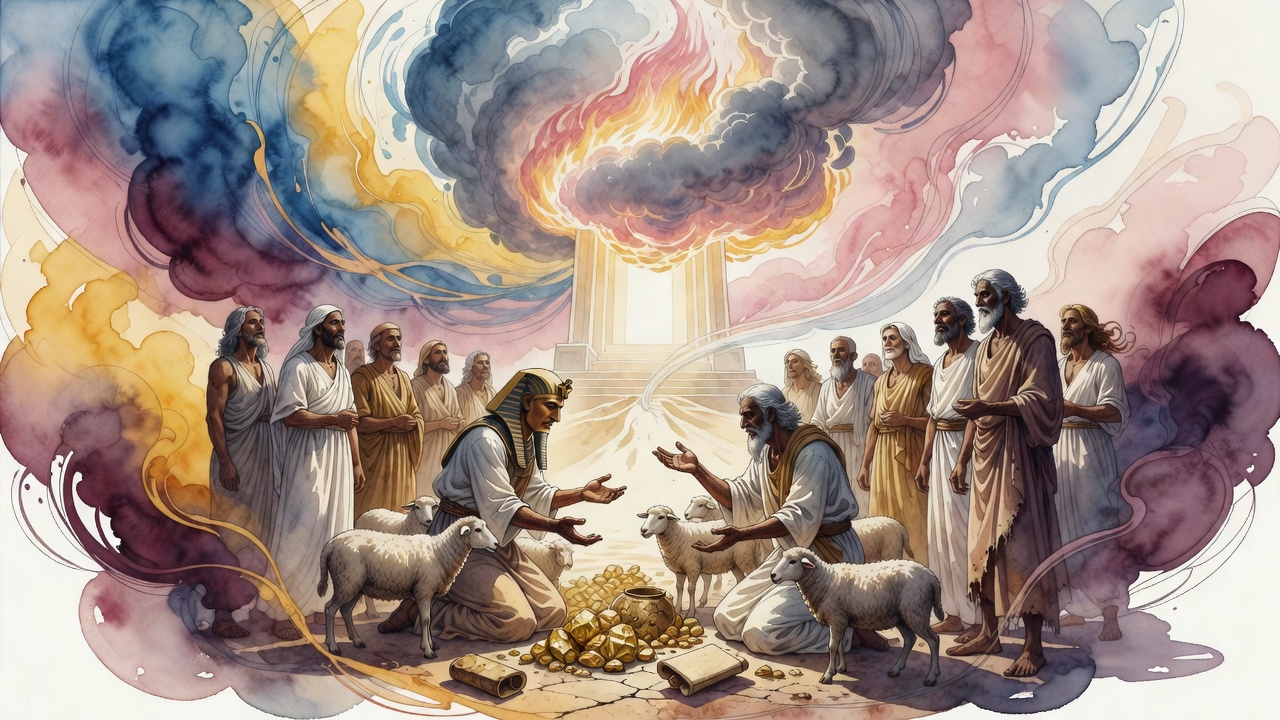
Pharaoh's yes arrived in scraps, never as a single clean act. First he released the flocks Israel already owned, as if returning what was theirs counted as generosity. Then he released the herds belonging to his own officials, the wealth of the court pushed into Hebrew hands under pressure he could no longer hide. Then he said, "Take them, as you have spoken, and go." He was echoing Moses now, who had told him he would hand over sacrifices and burnt offerings with his own hands. Everything the king had refused through plague after plague he now pushed across the table with a shaking arm.
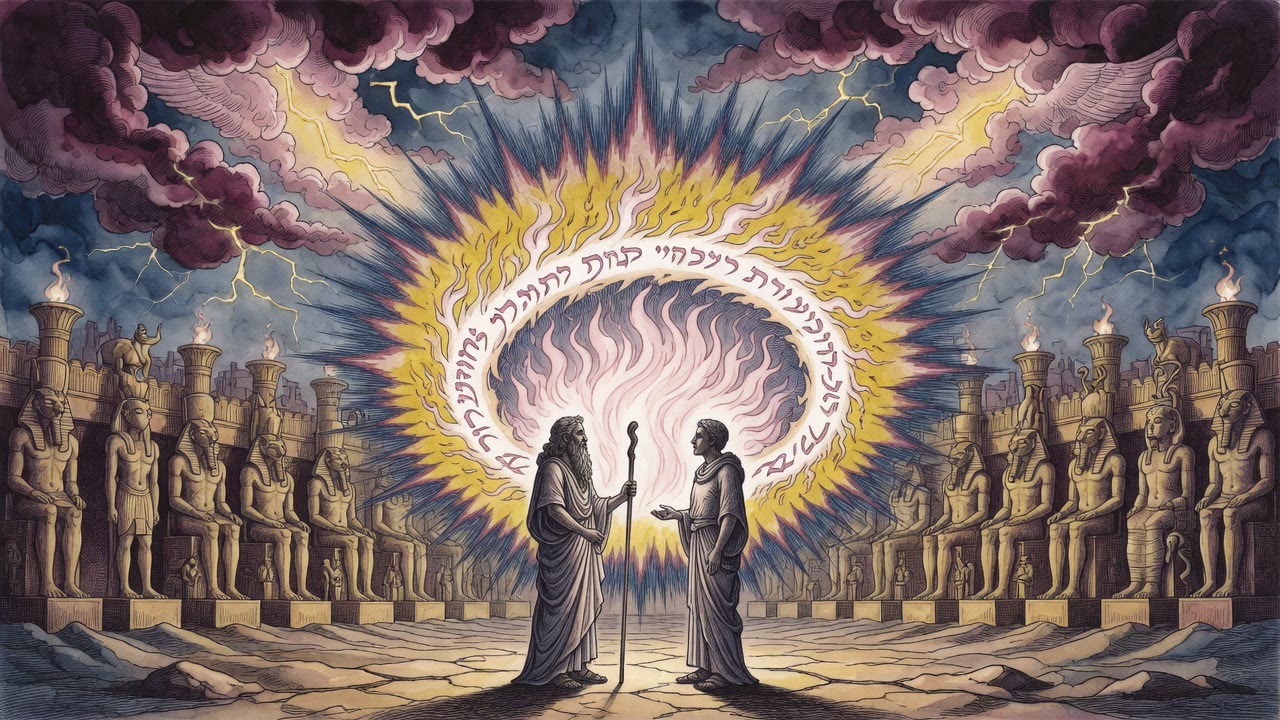
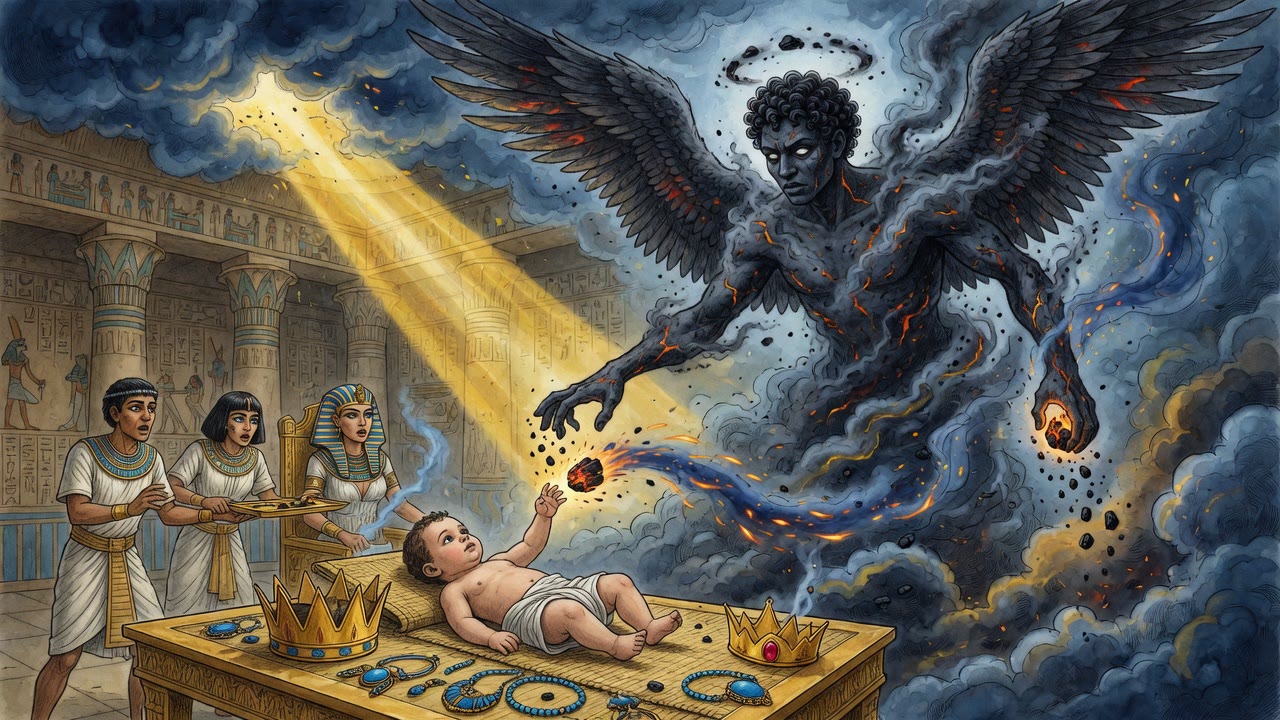
The throne room smelled of death and incense. Advisors stood back. Moses did not soften his face. The man who had once said Israel would not leave even with their children now emptied his barns to speed them out.
Then came the strangest line in the whole quarrel. "And bless me also." The man who had sneered, "Who is the LORD that I should obey His voice," asked his former slaves for a blessing before they walked out of his land. The request hung in the air like a hand that did not know how to beg properly.
Why a Tyrant Needs a Slave's Mouth
The rabbis hear a confession inside the plea. Pharaoh knew the Holy One does not pardon a person until that person has first appeased the one he wronged. Power could not buy the next step. Gold could not. Only a word from the mouths he had tried to crush might open a door heaven had closed. So he begged the people he had broken for words that might do what his gods had failed to do.
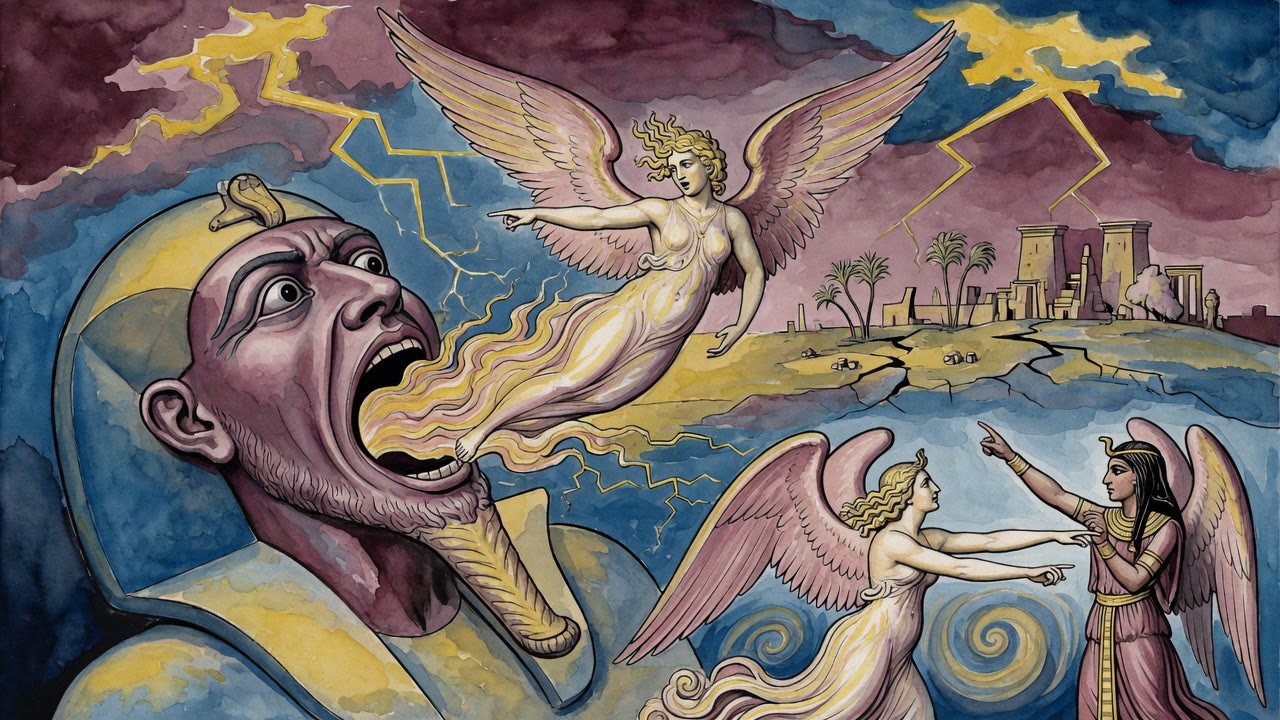
His mouth had already been weighed on a ledger across the whole contest. The same lips that once denied the Name later admitted, "The LORD is the righteous one," and for that admission Israel is told never to despise an Egyptian. The same mouth that boasted, "I will pursue, I will overtake, I will divide the spoil," later cried to flee from Israel, and for that retreat the drowned were granted burial in the swallowing earth rather than being torn by beasts and birds. Even a tyrant's flickers of truth are counted and answered. Heaven does not need his whole heart. It still notes each true sentence that escapes him.
How to Ask Without Looking Like a Thief
While Pharaoh bargained for a blessing, Moses gave Israel a quiet rule about the wealth they would take. Do not drift from neighborhood to neighborhood collecting goods, he warned, so you do not look like swindlers working a con. Take what is offered honestly, in the open, without the appearance of greed circling house to house. The dignity of the request mattered as much as the silver in the hand. Freedom that steals like a thief teaches the next generation the wrong lesson about what liberation costs.
Scripture lists what Israel asked for as vessels of silver, vessels of gold, and garments. Why does clothing come last, after the precious metals? Because, the sages teach, the most cherished item is the one named at the end of the list. The garments were dearer to Israel than even the silver and the gold. After generations in rags, what a freed people wanted most was not only metal to weigh and count but cloth to wear, the visible mark of men and women who were no longer property. Metals could buy a future. Clothing announced the present: these were free bodies now, dressed as such, walking out of Egypt with the wealth of their oppressors on their shoulders.
Gold on Free Shoulders
They walked out dressed in Egypt's best. Children wore colors their parents had never been allowed to touch. Old men felt linen where whip-scars still remembered the lash. Pharaoh stood behind them with his unfinished blessing still hanging in the air. He had given flocks, herds, and treasure. He still needed a word from the mouths he had silenced for generations.
No one turned back to finish his sentence for him. The night air carried the sound of departure, animals, cart wheels, the low talk of people who could not quite believe the gates were open. Someone laughed too loudly. Someone wept without sound. A child asked if they would come back for breakfast, and no adult knew how to answer. The blessing Pharaoh wanted would have to wait on the justice he had refused for so long. Behind him the empty barns. Ahead of them the road that still smelled of brick and blood. Between them a silence that was itself a kind of judgment, thicker than any of the plagues that had filled his house with frogs and dark.
Moses did not turn at the gate. He had already said what needed saying. The people walked, dressed in Egypt's cloth, carrying Egypt's metal, and the king who had owned their labor watched them leave with a request still stuck in his throat.
← All myths