Pharaoh Seized at the Nile as a False God
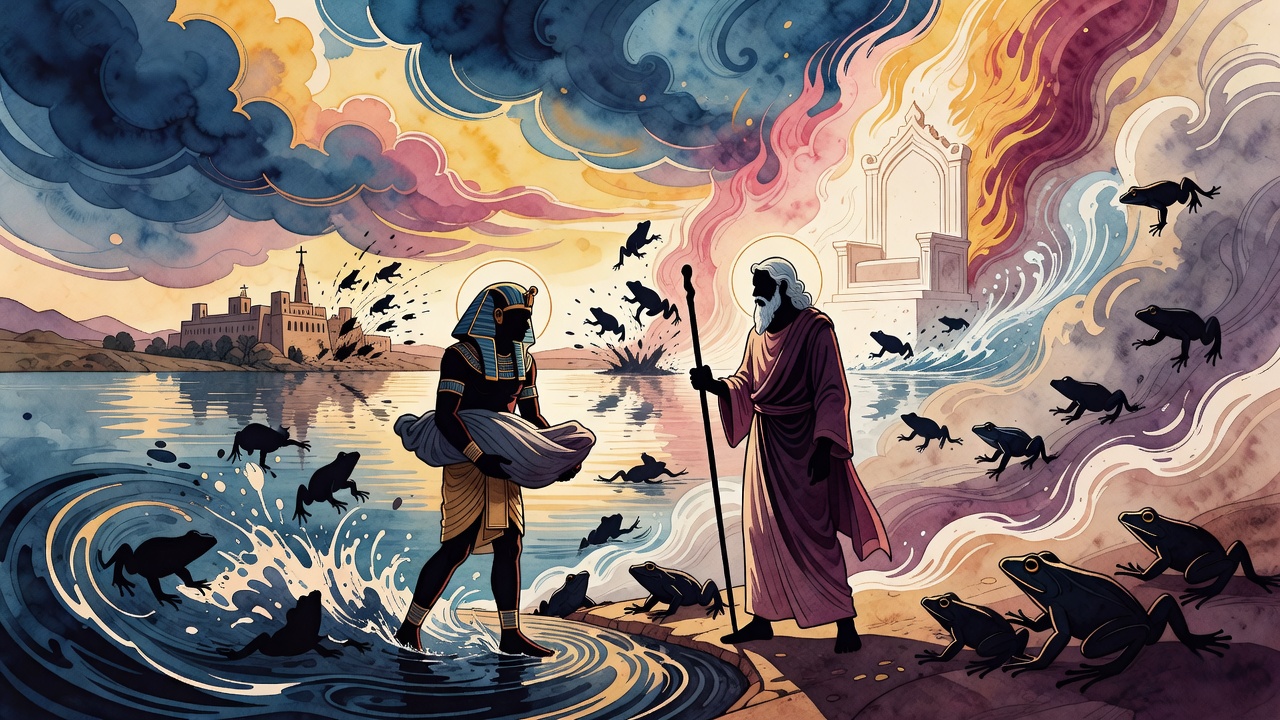
Every dawn Pharaoh slipped alone to the Nile. Moses seized him there and asked if any god must relieve himself.
Table of Contents
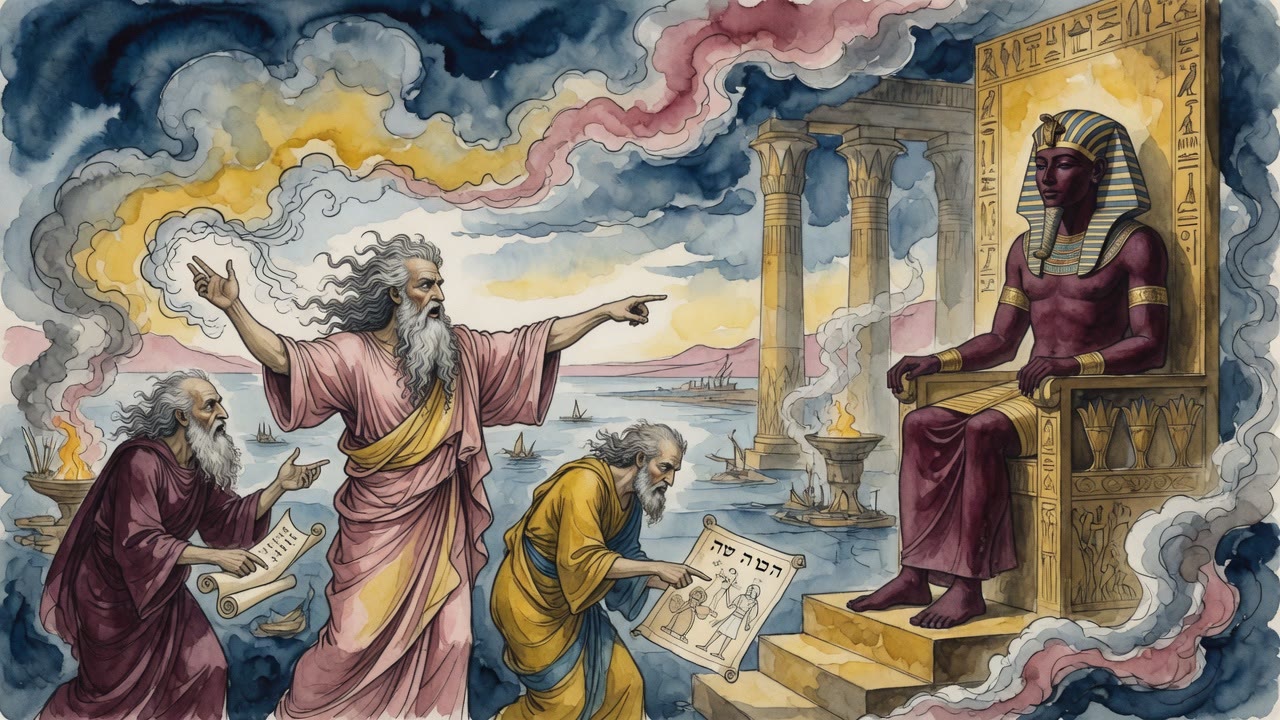
Pharaoh dressed himself in divinity. "The Nile is mine," he boasted, "and I made it. I am the one who fashioned my own self." Egypt believed him. The river that fed the land seemed proof enough of a living god on the throne.
 Click for full size
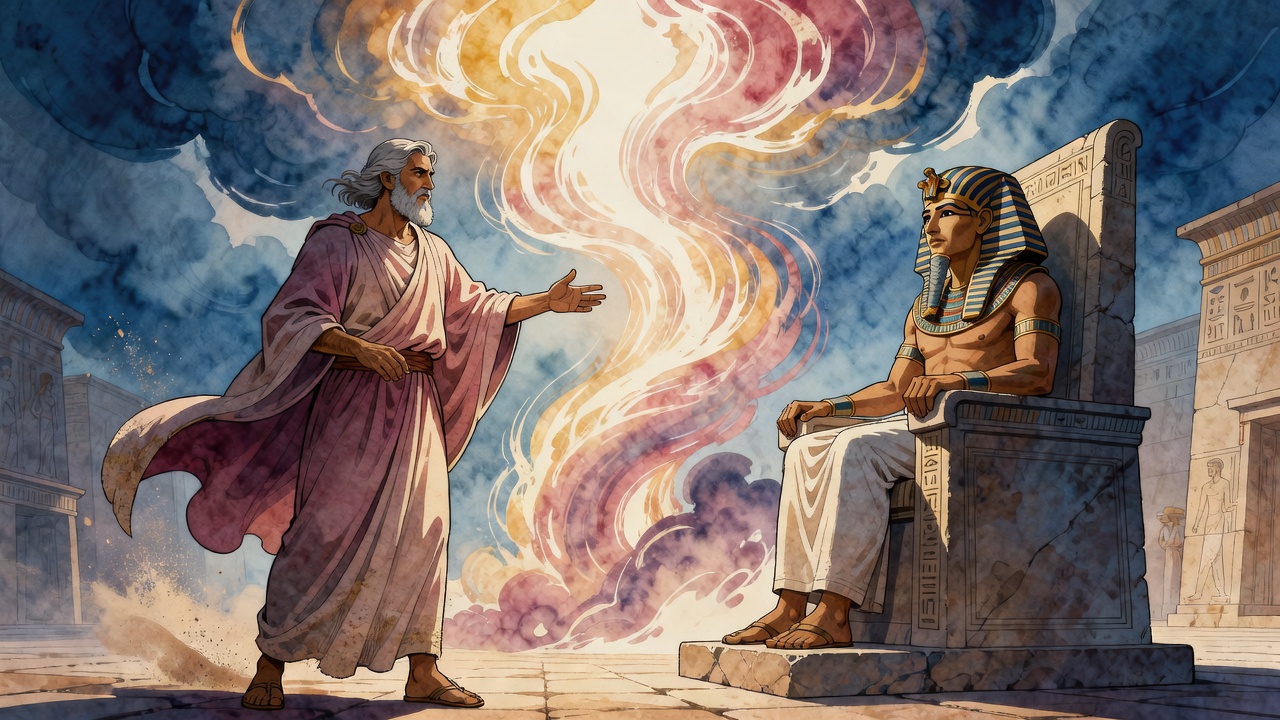
The Holy One knew a quieter fact. Every dawn the king slipped down to the water alone, for he would not let his people see that their god had a body like any beast. "Go at first light," said God to Moses. "Seize him there. Show him he is flesh and blood."
Daybreak at the Riverbank
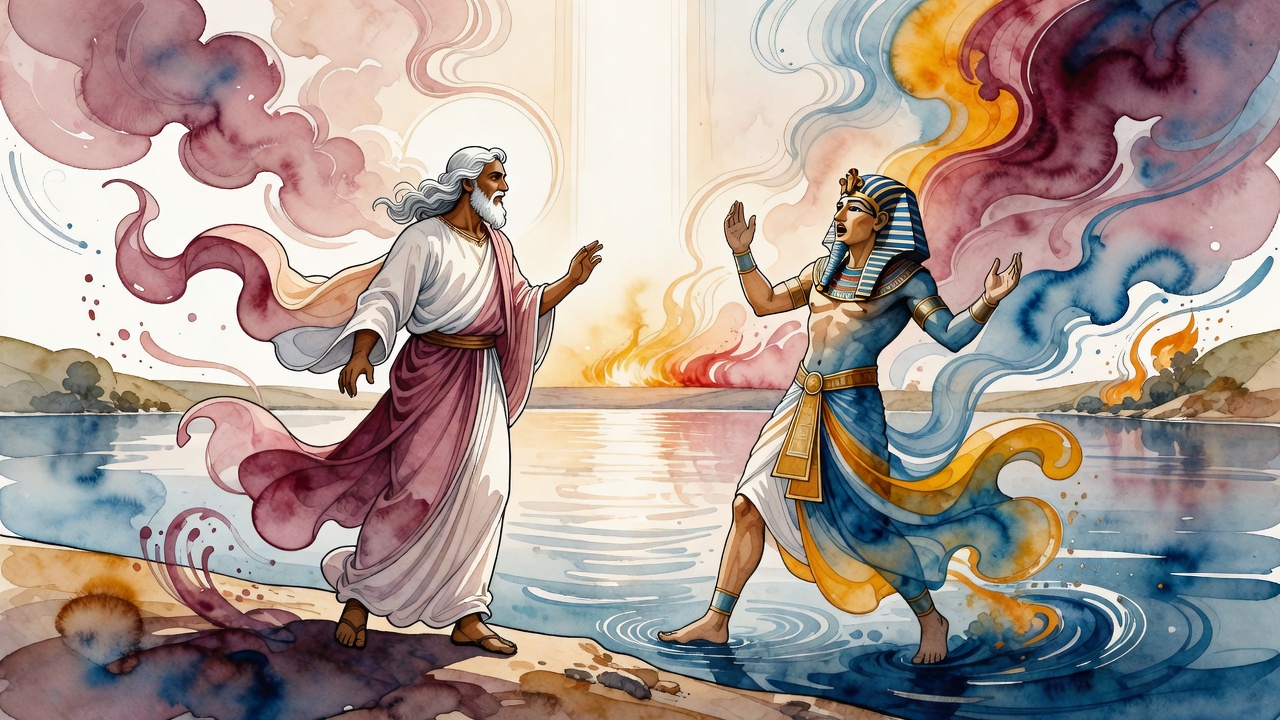
When the word came, "Rise early to Pharaoh," Moses understood both the hour and the place. He came at first light and laid hold of the king at the water's edge. Pharaoh squirmed.
"Let me go," he said. "Let me see to my needs, and then I will speak with you."
Moses did not loosen his grip. He asked the question that toppled an empire's idol. "Is there a god who must relieve himself?" A god does not stoop at the riverbank. Only flesh and blood does that. The crown glittered. The body betrayed it.
Frogs Against a Stubborn Throne
The plagues that followed did not need new weapons from heaven. Creation already held the instruments. When frogs rose over Egypt, the sages heard a harder claim behind the swarm. Even what men call useless was made on purpose. Flies, fleas, mosquitoes, snakes, scorpions: the Holy One said to the prophets that if they refuse His mission He will still accomplish it, even by a frog.
Were it not for frogs, how would He have exacted retribution from the Egyptians? Were it not for the hornet, how would He have struck the Emorites? The land that forced Israel into its fields discovered that every creature on the soil could become a messenger. Pharaoh had called himself maker of the Nile. Heaven answered with things that crawl out of mud and refuse to stay in their place.
Locusts for the Sown Grain
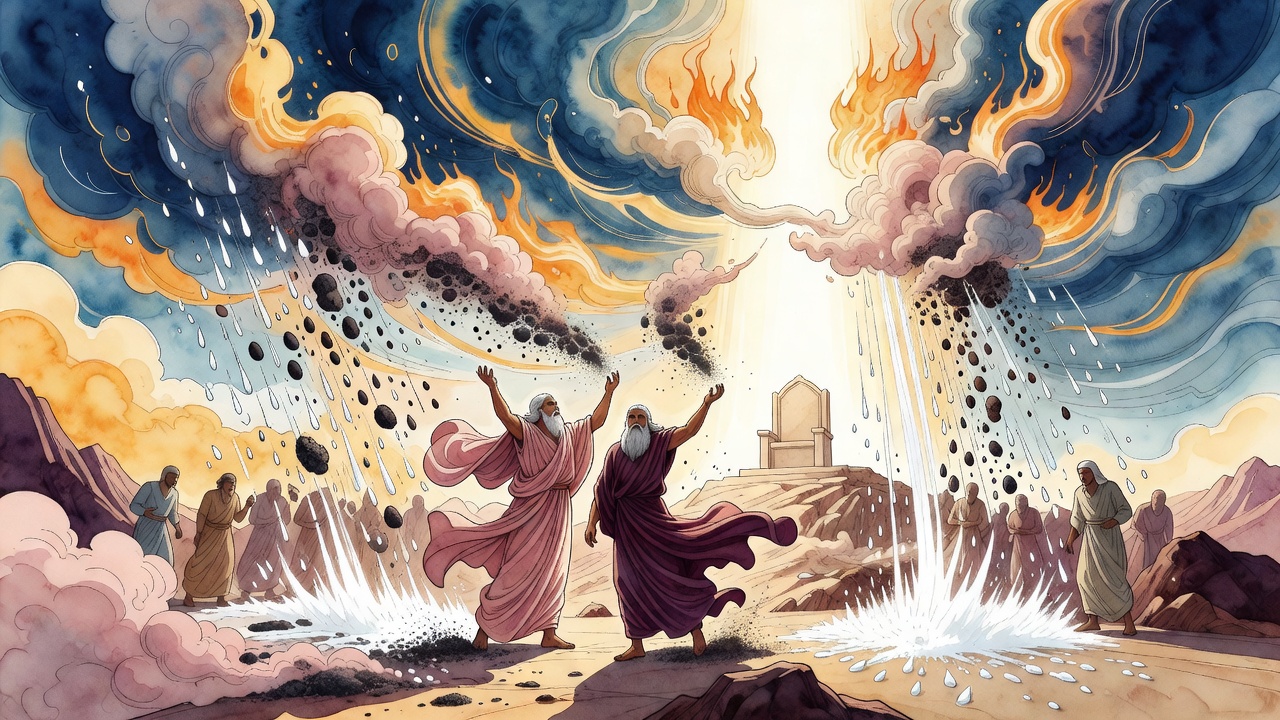
They had driven Israel to sow wheat and barley. Measure answered measure. Locusts came and ate what Hebrew hands had planted for Egyptian masters. Moses stretched out his staff, and an east wind carried the swarm until the green of Egypt vanished under living hunger.
Still a warning ran ahead of the blow, so that Egypt might relent and turn. When the air blackened with wings, Pharaoh cracked. He hastened to call Moses and Aaron. "I have sinned against the Lord your God, and against you." Against the Lord, for he would not let Israel go. Against the messengers, for he had driven them out and thought to curse them with a sneer, "So let the Lord be with you."
He begged forgiveness for this once, that the death be lifted from him. Moses left the court to plead. The swarm thinned. The heart of the king stayed hard as river stone once the danger passed.
What a God Cannot Hide
The court scribes who had written Pharaoh's titles on stone could not write a new body for him. The priests who sang the Nile's praise could not stop the dawn appointment. Moses held a wrist and the whole theology of the throne ran thin as water through fingers. Egypt's god needed privacy the way animals need shade. That need was the whole argument.
Hold the river scene beside the swarm. At dawn the false god needs a private bank. By day he needs Hebrew labor for grain that locusts will later own. Confession comes when the sky is full of teeth, then dries when the wind turns.
The Nile keeps flowing under a king who cannot invent a body without bowels. The frogs and the locusts do not argue theology. They occupy the space where divinity was claimed and leave no room for the claim.
Flesh at the Edge of Water
Later plagues would darken sky and water, but the first true undoing was this small scene: a king caught between need and myth, a shepherd from Midian who would not pretend not to see. The east wind and the locusts only finished what the riverbank began. Once flesh is proven, divinity rented from a river cannot be renewed by decree.
Moses walks away from the bank with the proof still in his hands: a wrist, a struggle, a voice that begged for privacy. Pharaoh returns to the palace to put on linen and titles. Between them the plagues keep their appointment, not because heaven lacks better tools, but because the least of creatures is enough when the Maker of all things sends it.
Egypt will learn the difference between a river and a god. Israel will learn that the man who once fled this court can grip a king's arm at daybreak and not let go. The morning command was never only about timing. It was about catching a lie where the body could not deny it.
← All myths