5 min read

Princes Dig for the Well Moses Cannot Find

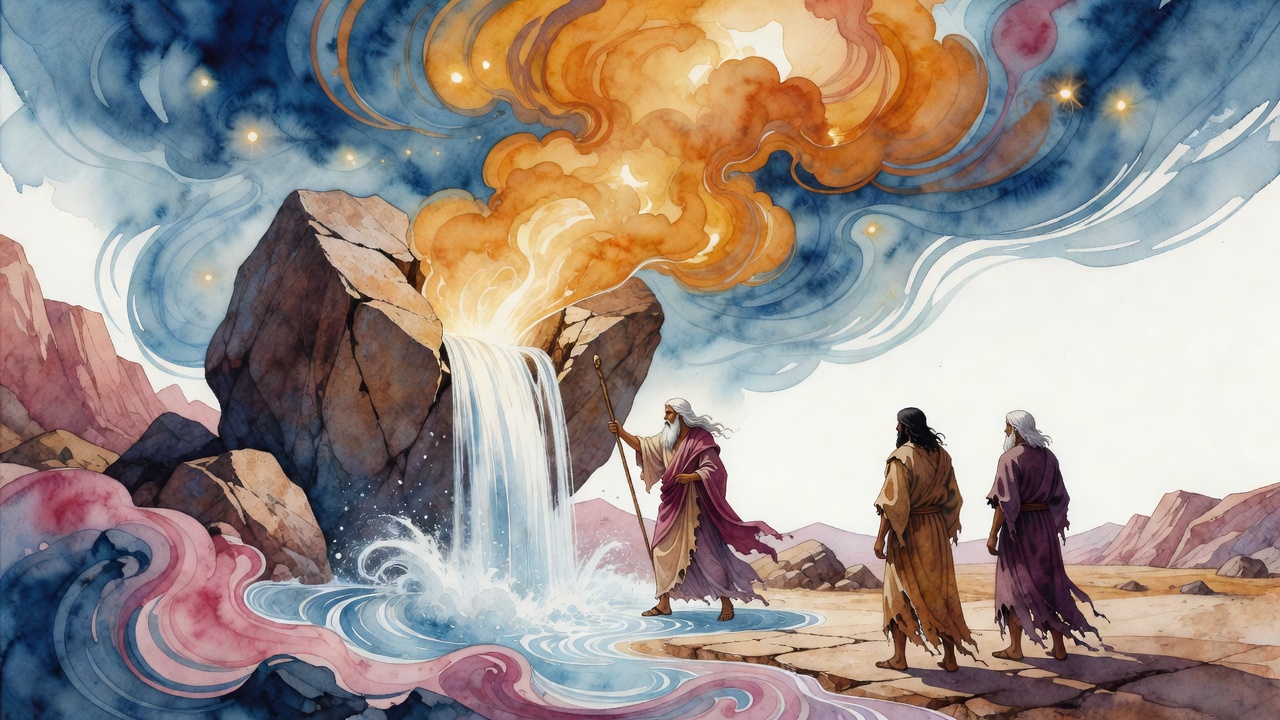
Israel sings when water bursts from rock. Moses and the elders search stone after stone until the Shekhinah, the Divine Presence, marks the one.

Curated by Arthur · Told by Maggid ·
Table of Contents
  1. Song Before the First Swallow
  2. Princes Who Are Not Kings
  3. Digging Means Searching
  4. Water Like Torah
  5. From Rock to Song
Princes Dig for the Well Moses Cannot Find Click for full size

Song Before the First Swallow

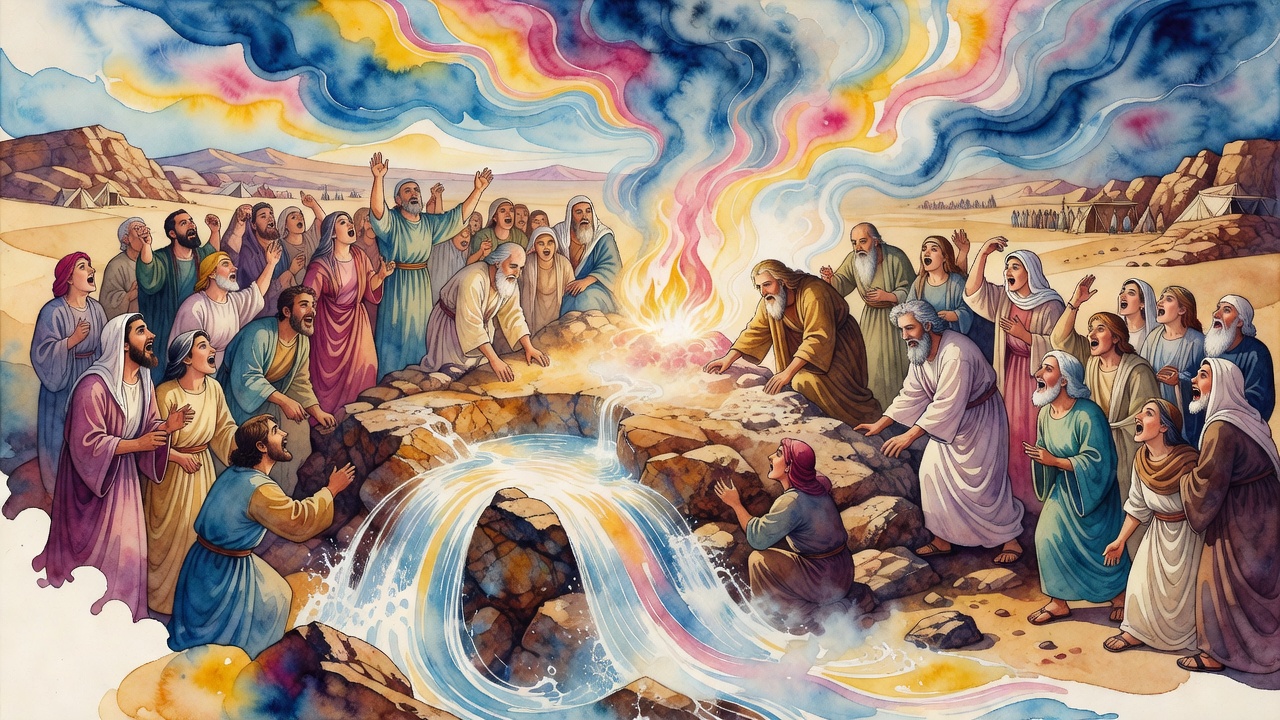
When the well burst forth, Israel answered it with song. They were not merely thirsty travelers grabbing at water. They were a people remembering. Dust still coated their lips. Children still cried from the last dry stage of the road. Then the rock gave way and the camp sang before the Holy One, recalling every drop of the well's mercy from the first gushing to the last.

"A well the princes dug," they sang. The words rose with the water. Men who had complained an hour earlier now had music in their throats. The sound of a full jug set down hard on stone became a drumbeat under the verse. Thirst turned into liturgy before anyone had finished drinking.

Princes Who Are Not Kings

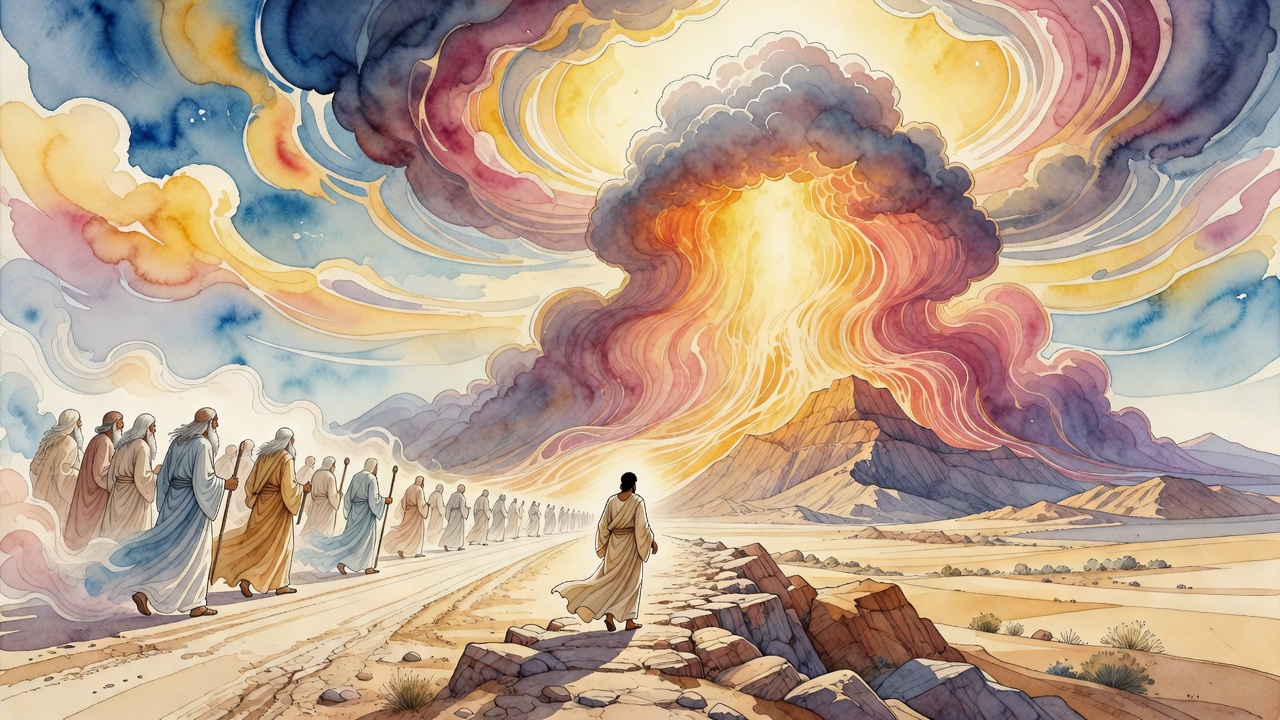
Who were these princes? Not kings of conquest with banners and tribute. Moses and the elders of Israel. When water was first needed, the Holy One had said, "Take with you of the elders of Israel... behold, I will stand before you there on the rock." Mark the wonder. The Master went out ahead of the disciple. The glory arrived before the man who would strike.

So too with Ezekiel, whom God commanded, "Arise, go out to the valley," and behold, the glory of the Lord was already waiting there when the prophet arrived. Leadership in this camp means following a Presence that does not wait to be escorted. The elders walked behind a God who stands on the rock first, and the song later named them princes for that obedience, not for crowns.

Digging Means Searching

Why is it called digging? The same word means to search out, as the spies "searched out the land." Moses did not know which rock among the rocks held the water. He searched. Stone after stone. Dry face after dry face. Heat shimmered. The staff waited in his hand. Only when the Holy One revealed the sign, that the Shekhinah (שכינה), the divine Presence, had rested upon one particular rock, did Moses know. The miracle was found, not seized.

A man can stand in a field of boulders and still miss the one that sings. Authority does not grant second sight. Moses, who spoke with God's face to face, still had to hunt the rock until Heaven marked it. The princes dug with eyes and feet and patience before any blow fell. Searching was the first labor of the well.

Water Like Torah

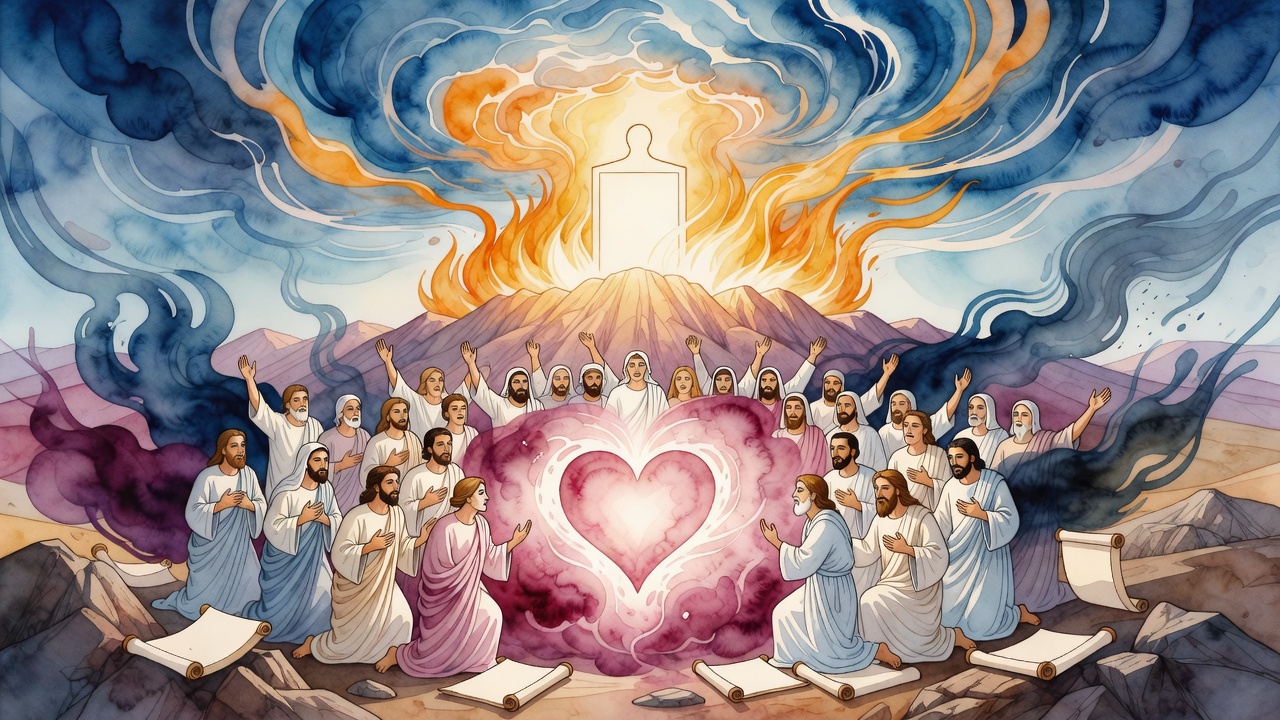
The sages set water beside Torah until the two cannot be pried apart. "Ho, every one that thirsteth, come ye to the waters," cries Isaiah (55:1), and they hear the delight of learning. Water comes from the heavens. Torah came from the heavens. At Sinai Israel saw that God spoke from the heavens. Both arrive free. "Come, buy wine and milk without money and without price." Wisdom is not sold to the highest bidder at the well or at the mountain.

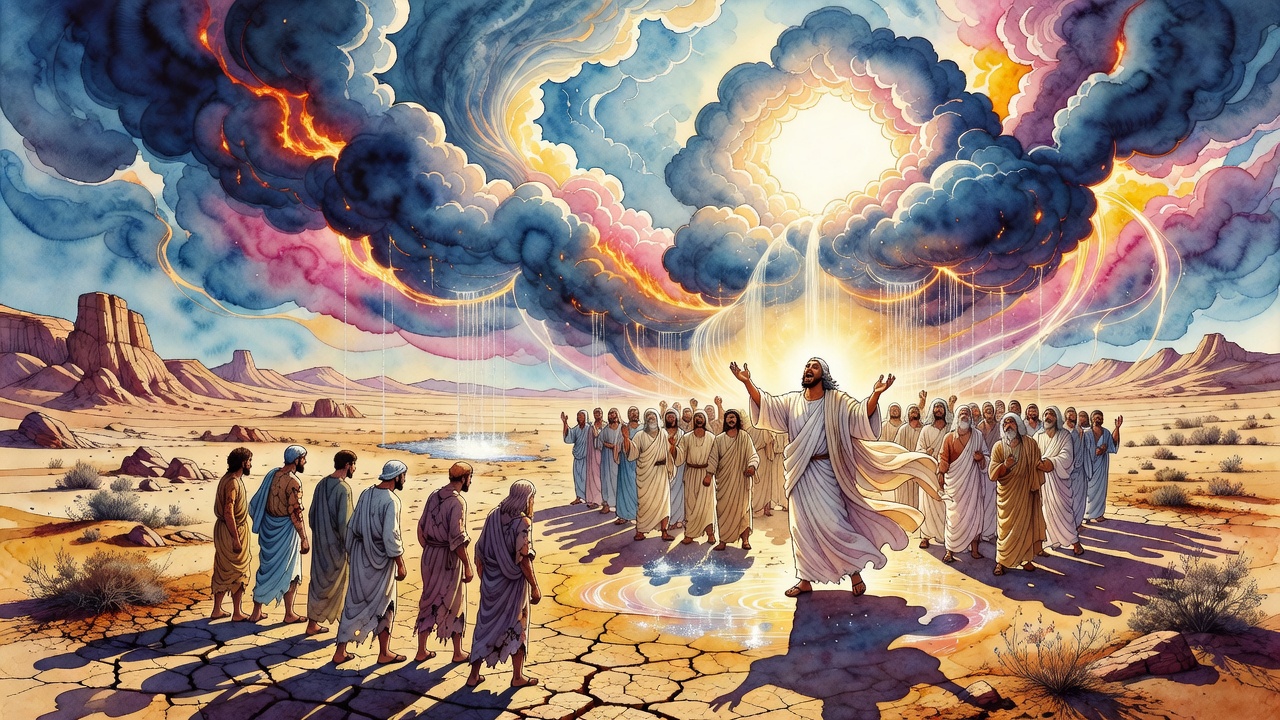
Water often comes with thunder. "The voice of the Lord is upon the waters." The giving of Torah came with thunder and lightning on the third day. Without water the body withers. Without Torah the life of Israel withers. "For it is not an empty thing for you." The well in the wilderness and the words at Sinai drink from the same logic. Mercy that keeps a people alive is never empty, whether it fills a jug or a heart.

From Rock to Song

So the princes dig, the Presence rests, the rock opens, and the song begins. Moses does not invent the water. He finds the place Heaven already chose. The elders do not own the well. They are named in the song because they walked out to search when the camp was still dry. Children cup their hands. Animals lower their heads. The complaint of an hour ago becomes a melody that remembers every stage of mercy.

Long after the wilderness, when Israel thirsts again in other deserts, the same pattern holds. Search until the sign rests. Dig until the Presence marks the stone. Drink, and then sing the whole history of the drops, not only the last one that saved you. The rock Moses could not find alone remains a warning against swagger. Even the humblest prophet on earth still needs the Shekhinah (the Divine Presence) to point.

The song itself becomes a second well. "A well the princes dug" is not only geology. It is memory set to work so the next dry stretch cannot erase the last rescue. Water from heaven. Torah from heaven. Free to the one who comes thirsty. Moses leads the elders out, finds what God already chose, and the camp learns that searching is part of the miracle. Without the search, the rock is only another stone in the heat. With the search, and with the resting Presence, it becomes the place the song begins.


← All myths

From the tradition

Sources

2 sources

The texts behind this telling. Some cards carry a translation of the source; others are our own retelling of it, and each card says which. Every card links out to the original.

Midrash Aggadah, Numbers 21:17Midrash Aggadah

Translation of the source text.Midrash Aggadah (Buber), Public Domain, on Sefaria · CC-BY-SA

"Then Israel sang", they uttered song before the Holy One, blessed be He, over the miracle, and they praised the Holy One, blessed be He, for the good things He had done for them by means of the well, from beginning to end. They began to recall how the Creator had given [it] from beginning to end. This is what is written: "A well the princes dug" (verse 18), this is Moses and the elders of Israel, as you say, "Take with you of the elders of Israel, etc.; behold, I will stand before you there on the rock" (Exodus 17:5–6), the master preceded the disciple. And so with Ezekiel: "Arise, go out to the valley, and there I will speak with you," "And I arose and went out to the valley, and behold, there the glory of the LORD" (Ezekiel 3:22–23). And what is "dug"? Like "and they searched out for us the land" (Deuteronomy 1:22), for Moses did not know which rock it was, until the Holy One, blessed be He, told him the sign of that rock, that the Shekhinah had appeared upon it; then he knew that it was the rock.

Full source
Midrash Tehillim 1:16Midrash Tehillim

Retold in our words. Read the original at the link below.Rabbi Mike Feuer, Jerusalem Anthology · CC-BY

It draws a powerful parallel between water and Torah, showing how both are essential for life, growth, and well-being. The midrash (rabbinic interpretive commentary) begins by referencing the verse from Isaiah (55:1), "Ho, every one that thirsteth, come ye to the waters," linking it directly to the delight one finds in the Torah. Where does water come from? The heavens. As Jeremiah (10:13) says, "At the sound of His giving a multitude of waters in the heavens." And where did the Torah come from? Also from heaven! Remember when we stood at Sinai? Exodus (20:15) tells us, "You yourselves have seen that I spoke to you from the heavens." It's not just a coincidence; it's a deliberate connection.

Like water, the Torah is freely available to all. Isaiah (55:1) urges us to "Come, buy and eat, yea, come, buy wine and milk without money and without price." The wisdom and guidance of the Torah aren't restricted to a select few; they're meant to nourish everyone.

The midrash continues, drawing more parallels. Water often comes with thunder and lightning – think of (Psalm 29:3), "The voice of the Lord is upon the waters." Similarly, the giving of the Torah was accompanied by dramatic displays. Exodus (19:16) recounts, "And it was on the third day, when it became morning, and there were thunder and lightning." The intensity of both experiences underlines their significance.

Most importantly, water is life. Without it, we wither. Proverbs (4:22) states that the words of Torah "are life to those who find them, and healing for all their flesh." And Deuteronomy (32:47) reinforces this idea: "For it is not an empty thing for you." The Torah isn't just a collection of stories and laws; it's a source of vitality, a path to healing, and a guide to living a meaningful life.

The beauty of water also lies in its gradual accumulation. It starts with single drops, eventually forming streams and rivers. In the same way, our understanding of Torah grows over time. The rabbis suggest that learning one halacha (Jewish law) a day, day after day, eventually leads to a flowing stream of knowledge. It's a marathon, not a sprint.

Rabbi Onia adds another layer to this metaphor. What's water for? To nourish gardens and orchards, helping them flourish. The Torah, too, is meant to cultivate growth and goodness. As Hosea (14:10) says, "For the ways of the Lord are straight."

Another rabbi points out that water covers the "nakedness" of the sea, providing a sense of wholeness. Similarly, the Torah covers the "nakedness" of Israel, offering protection and redemption. Proverbs (10:12) teaches us that "love will cover all sins," and Torah, at its heart, is an expression of divine love.

The Midrash Tehillim even touches on humility in learning. Just as a great person isn't ashamed to ask a smaller one for a drink of water, so too should a scholar not hesitate to learn from someone less experienced. And just as we readily seek water when thirsty, we should eagerly pursue Torah learning. The midrash even alludes to a story about Rabbi Yossi going to learn from his teacher, emphasizing the importance of seeking knowledge.

The Torah is a heritage, as Deuteronomy (33:4) says, "A heritage for the assembly of Jacob." This heritage is for everyone, including converts – all who gather within the community.

So, the next time you take a sip of water, remember this teaching from Midrash Tehillim. Think about the parallels between that life-giving liquid and the Torah. Consider how both sustain us, nourish us, and connect us to something larger than ourselves. And ask yourself: am I drinking deeply enough from the well of Torah?

Full source