5 min read

Rachel Named Joseph and Split the Tribes Without Knowing It

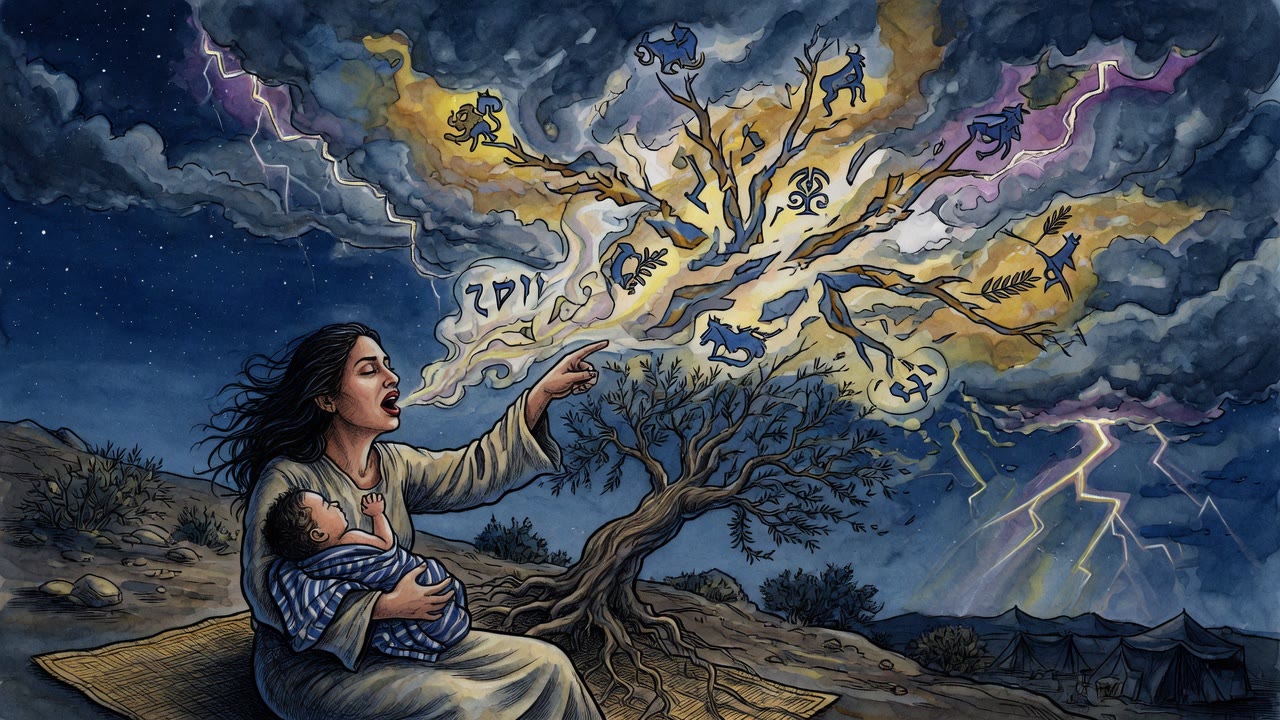
When Rachel named her firstborn son Joseph, she was expressing hope for one more child. She did not know she was predicting the exile of the northern tribes.

Curated by Arthur · Told by Maggid ·
Table of Contents
  1. The Name She Chose
  2. What Bereshit Rabbah Heard in the Name
  3. What She Knew That She Did Not Know She Knew
  4. The Name and the Split Kingdom

The Name She Chose

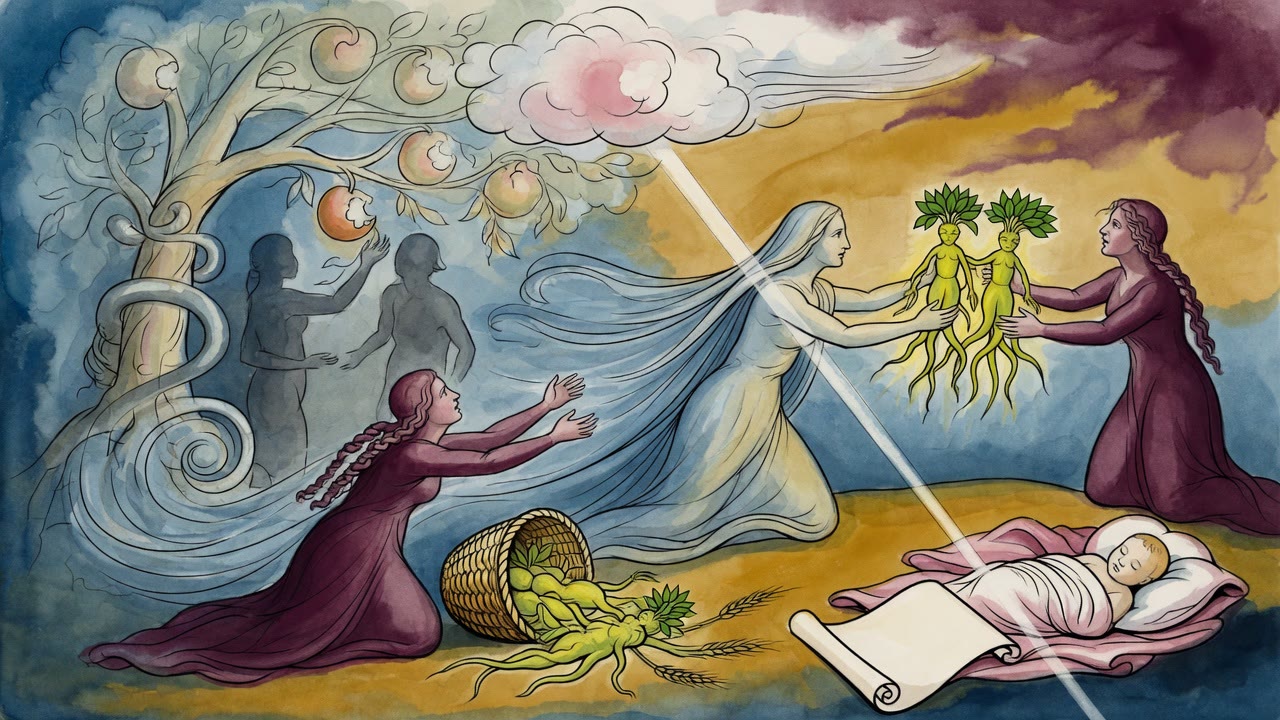
Rachel had waited through years of watching her sister give Jacob son after son. She had prayed and argued with Jacob and bargained with Leah over mandrakes and watched her handmaid Bilhah give Jacob two sons that went in Rachel's column. None of it had been as simple as what happened next: God remembered Rachel, the Torah says, and Rachel conceived and bore a son. The long wait was over. The child was in her arms.

She named him Yosef. In Hebrew the word is a verb, the act of adding, the act of giving more. She said: may God add another son for me. She was naming her relief and her hope simultaneously, giving the child a name that looked forward even in its thanksgiving. She had her son and she already wanted another. The name encoded both.

What Bereshit Rabbah Heard in the Name

The rabbis of Bereshit Rabbah, the great 5th-century Palestinian midrash on Genesis, pressed on the word add and heard more than a mother hoping for another son. Rabbi Yehuda ben Rabbi Simon read the word as pointing toward exile. Another in terms of exile: the tribes of Israel were destined to go into captivity twice, once from the southern kingdom and once from the northern, and both exiles would be connected to these sons of Rachel. Judah would lead the exile to Babylon. Joseph's descendants, the northern tribes of Ephraim and Manasseh, would be taken by Assyria centuries earlier and never return.

Rachel had said: may God add another. The rabbis heard: the adding would produce a second exile on top of the first. She named her joy with a word that contained, pressed into it without her knowledge, the shape of two national catastrophes that were still a thousand years in the future when she stood over the child in her arms.

What She Knew That She Did Not Know She Knew

Legends of the Jews preserves a different angle on the same moment. According to the tradition there, Rachel named Joseph knowing she would bear exactly one more son. Not hoping. Knowing. She had prophetic vision at the birth, a perception of what was coming that went beyond a mother's wish. The name Yosef was not just an expression of desire but a declaration of certainty: there will be one more. God will add him.

The addition turned out to be asymmetric in a way she could not have calculated. Benjamin, the son added, had ten sons. Joseph, the original, had two. But those two, Ephraim and Manasseh, became tribes of their own through Jacob's adoption, so that Joseph's portion in the land was effectively doubled. Meanwhile the ten sons of Benjamin produced ten tribes in the reckoning of some traditions. An increase added on by God is larger than the original capital itself, the tradition notes, working through the numbers with the precision of an accountant who has noticed something remarkable in the ledger.

The Name and the Split Kingdom

When the kingdom divided after Solomon's death, it split along lines that Rachel's two sons had drawn. Judah in the south with Benjamin attached to it, loyal to David's house. The ten northern tribes following Jeroboam, the kingdom called Israel as distinct from Judah, the kingdom whose great figures came from the line of Ephraim and Manasseh. The split that happened at Rehoboam's coronation was already encoded in the name Rachel gave her first child, in the word add that looked innocent enough as a mother's hope and contained, hidden inside it, the logic of a division that would take centuries to emerge.

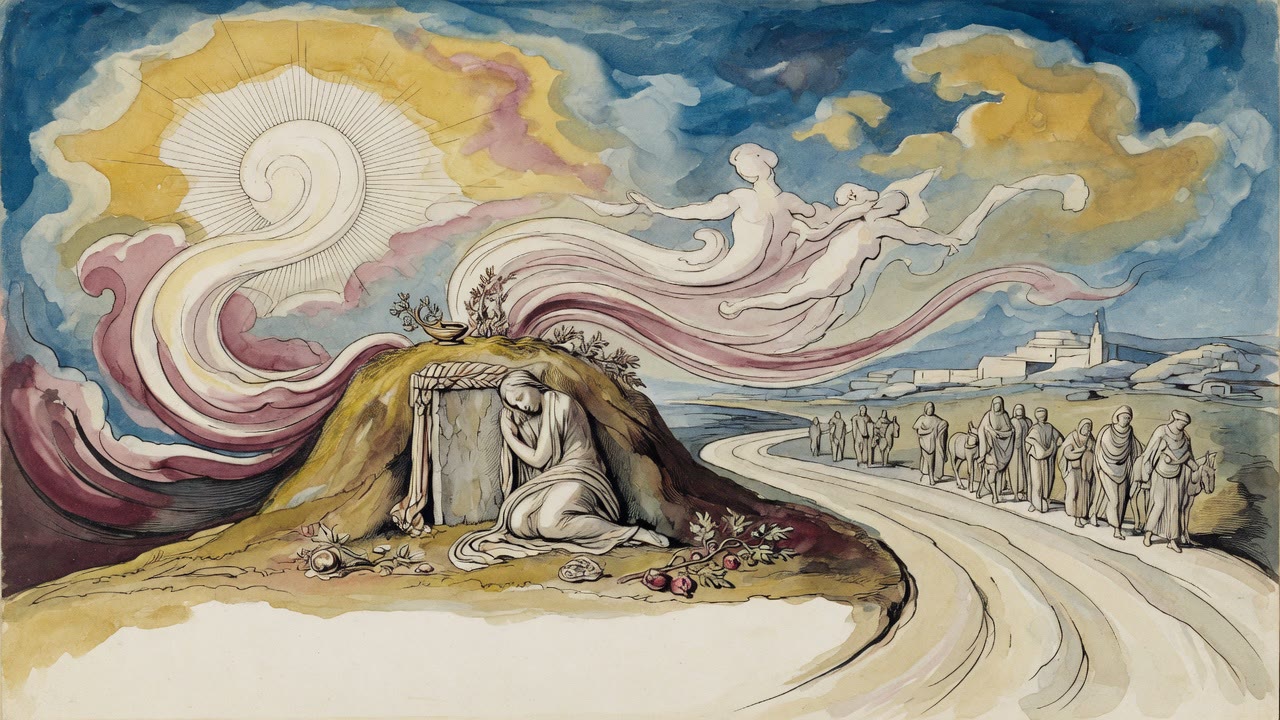
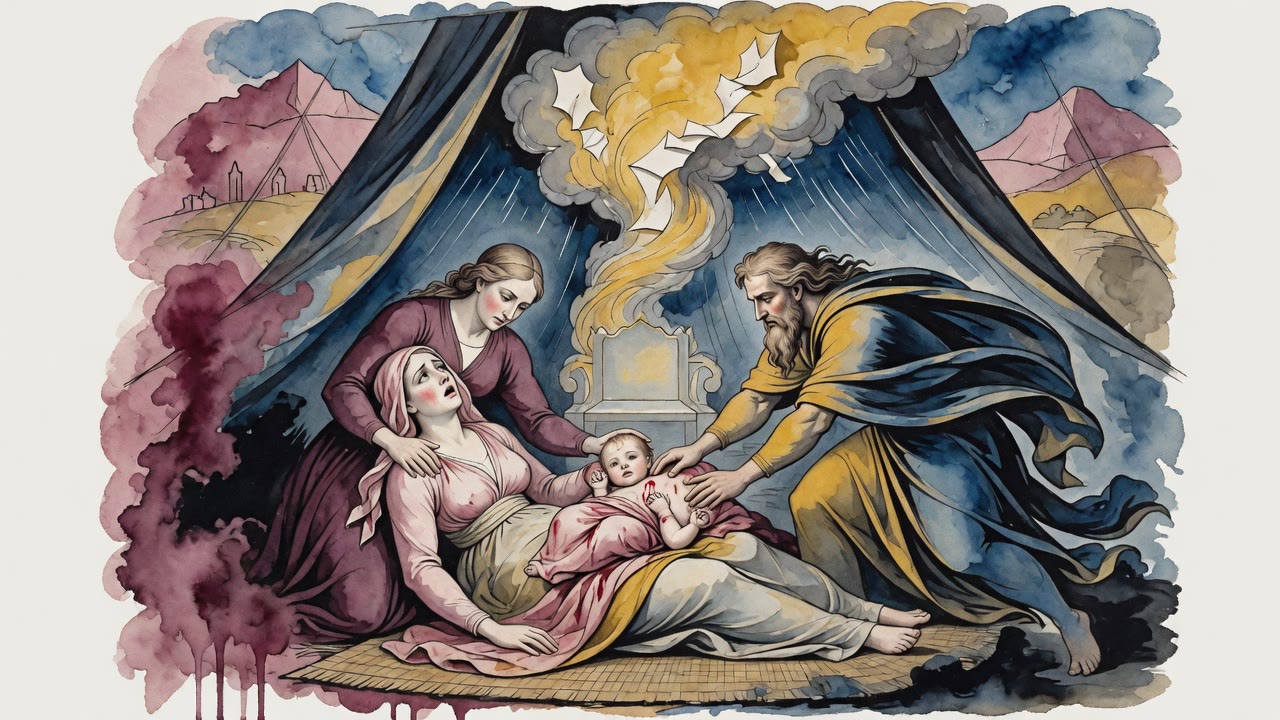
Rachel died giving birth to the second son. She did not see Joseph go to Egypt or come back to power. She did not see Benjamin grow up. She did not see the kingdom that would carry her sons' names inherit the land and then divide it. She named one child with hope and got a prophecy about two kingdoms. She got the adding she asked for, and the adding changed everything.


← All myths

From the tradition

Sources

3 sources

The texts this telling draws on, in full. Open a card to read inline, or expand it for a wider, quieter read.

Bereshit Rabbah 73:6Bereshit Rabbah

Take Rachel, for example. When she names her son Joseph, it’s more than just a sweet moment. It’s packed with layers of meaning, hinting at destinies yet to unfold.

"She called his name Joseph, saying: May the Lord add another son for me" (Genesis 30:24). Simple enough. But the Rabbis of Bereshit Rabbah, that treasure trove of early interpretations of Genesis, see something deeper. They ask, why repeat the phrase "She called his name Joseph, saying: May the Lord add another son for me"? Surely there's more than meets the eye.

The key, they suggest, lies in the word "add" – or in Hebrew, yosef, which shares a root with Joseph's name. It's not just about having another child. It’s about another… what? Rabbi Yehuda ben Rabbi Simon sees it as "another in terms of exile." Hmm. The tribes of Judah and Benjamin experienced exile differently than the other ten tribes of Israel. The ten tribes, famously, vanished beyond the mysterious Sambatyon River – a river said to rest on the Sabbath, making it impossible to cross on that day. Their fate remains one of history's great unsolved mysteries. Judah and Benjamin, on the other hand, were scattered, yes, but scattered amongst known lands.

Rabbi Pinḥas offers another take. He sees the word "another" – aher in Hebrew – as "other in terms of division." Because of Rachel’s prayer, he suggests, Judah and Benjamin never fully aligned with the other ten tribes. Did Rachel, in her heartfelt plea, unknowingly influence the future tribal dynamics? It's a tantalizing thought. As Bereshit Rabbah says, from Rachel's prayer, the tribe of Judah and Benjamin did not take a portion with the ten tribes. Benjamin remained with Judah when the kingdom was divided.

And there's still more! "Another" might even refer to those who perform "other actions" – aherim – a veiled reference, some say, to idol worship. The text alludes to figures like Jeroboam, whose actions led the people astray.

So, what does it all mean? Maybe Rachel's naming of Joseph wasn't just about a new baby. Perhaps it was a prophetic act, a prayer that subtly shaped the destinies of her descendants, shielding them from the complete and utter disappearance that befell the ten tribes. Perhaps it was a premonition of the divisions to come.

It makes you wonder, doesn’t it? How much of our lives are pre-ordained, and how much is shaped by the seemingly small choices we make along the way? And maybe, just maybe, the names we carry hold more power than we realize. Just like Joseph.

Full source
Legends of the Jews 6:146Legends of the Jews

Her story, as told in Legends of the Jews by Louis Ginzberg, is filled with love, loss, and a touch of the mystical.

When her son Joseph was born, she named him Yosef, which means "increase," explaining, "God will give me an additional son" (Genesis 30:24). A beautiful sentiment. But according to tradition, Rachel's prophetic vision went even deeper. She knew she would have another son.

Rachel's choice of words had consequences. "an increase added on by God is larger than the original capital itself."

So, what's that supposed to mean?

Well, Benjamin, the second son, whom Rachel perhaps saw as simply an "add-on," ended up having ten sons. Joseph, on the other hand, only had two. Now, consider this: these twelve sons, belonging to both Joseph and Benjamin together, represented the twelve tribes connected to Rachel.

The narrative in Legends of the Jews suggests that if Rachel hadn't used the specific phrase "The Lord add to me another son," she herself might have been the mother of all twelve tribes with Jacob. Whoa.

It's a powerful idea, isn't it? The very words we use, especially in moments of profound emotion or spiritual insight, can shape the future. It makes you wonder about the unseen forces at play in our lives, the subtle ways our intentions manifest in the world.

This idea reminds me of the teachings we find in texts like the Zohar, which often explores the hidden meanings and cosmic implications of even the smallest details in the Torah. And it echoes themes we see throughout Midrash Rabbah, where the Rabbis explore the nuances of biblical language to unlock deeper truths.

So, next time you're choosing your words, remember Rachel. Remember the potential they hold, the power they carry. What increase are we hoping for? And what are we calling into being with the very language we choose?

Full source
Yalkut Shimoni on Torah 130:4Yalkut Shimoni on Torah

"God has gathered up my disgrace" (Genesis 30:23). Before a woman gives birth, the blame for any mishap is hung upon her: Who ate this dish? Who broke this jug? But once she gives birth, the blame is hung upon her child: Who ate this dish? Her son. Who broke this jug? Her son. "God has gathered up my disgrace": in the matter of the concubine at Gibeah, "Cursed be the one who gives a wife to Benjamin" (Judges 21:18). "God has gathered up my disgrace": in the days of Jeroboam, "and Jeroboam recovered no more strength."

"And she called his name Joseph, saying, May the LORD add to me another son" (Genesis 30:24). "Another" points to exile: the ten tribes were exiled to beyond the river Sambatyon, while the tribes of Judah and Benjamin are scattered through all the lands. "Another son" points to division: through the prayer of Rachel, the tribes of Judah and Benjamin did not divide off with the ten tribes. "Another" means one who does the deeds of others.

"And it came to pass, when Rachel had borne Joseph" (Genesis 30:25): once the adversary of Esau was born. For Rabbi Samuel bar Nahmani said: A tradition of aggadah is in our hands that Esau will fall only by the hand of the sons of Rachel, as it is written, "surely the least of the flock shall drag them away" (Jeremiah 49:20). And why does he call them "the least of the flock"? Because they are the youngest of the tribes.

Full source