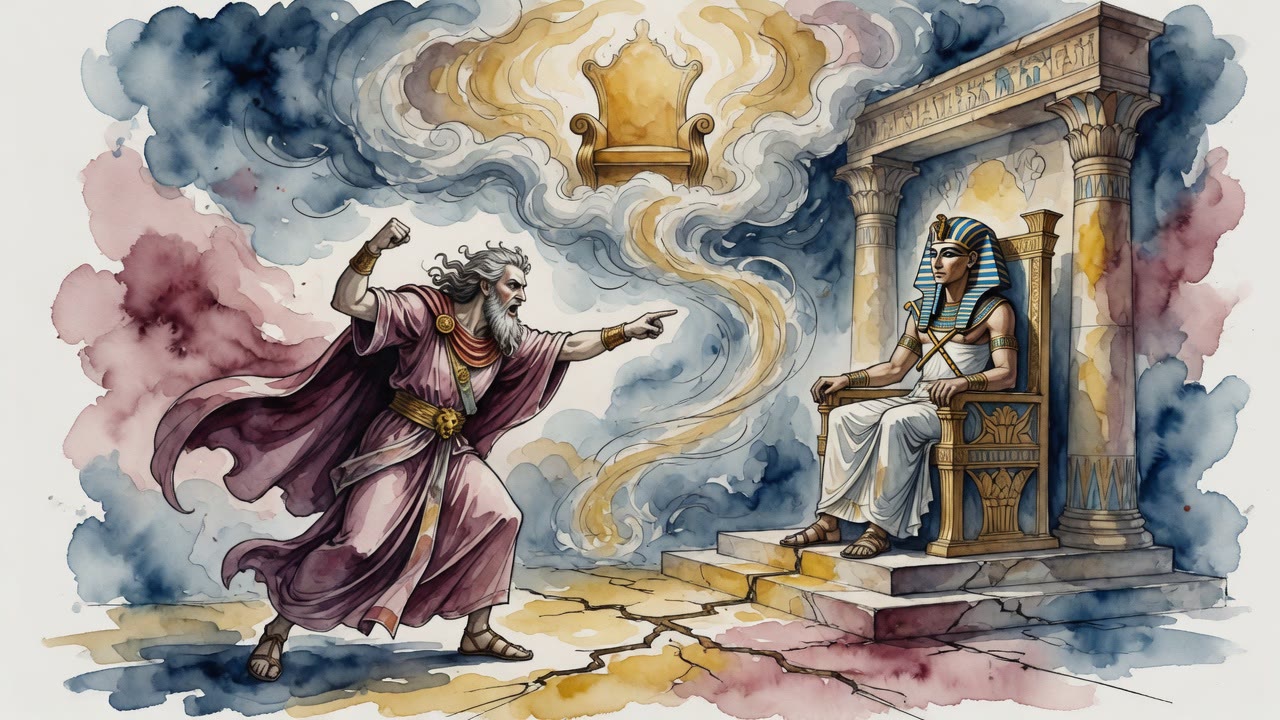
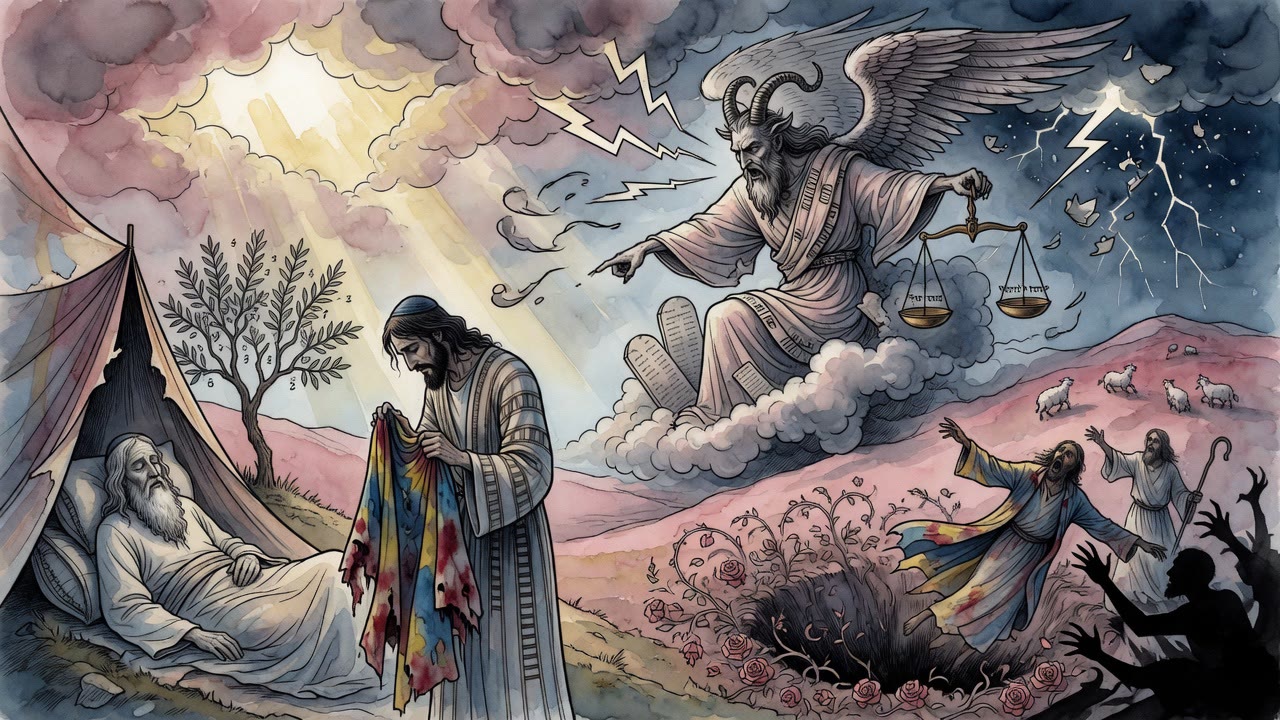
Reuben Poured Out Like Water at Jacob's Bedside
The firstborn stood closest to the bed. Jacob looked past him and asked for the son who could get a coffin across the border.
Table of Contents
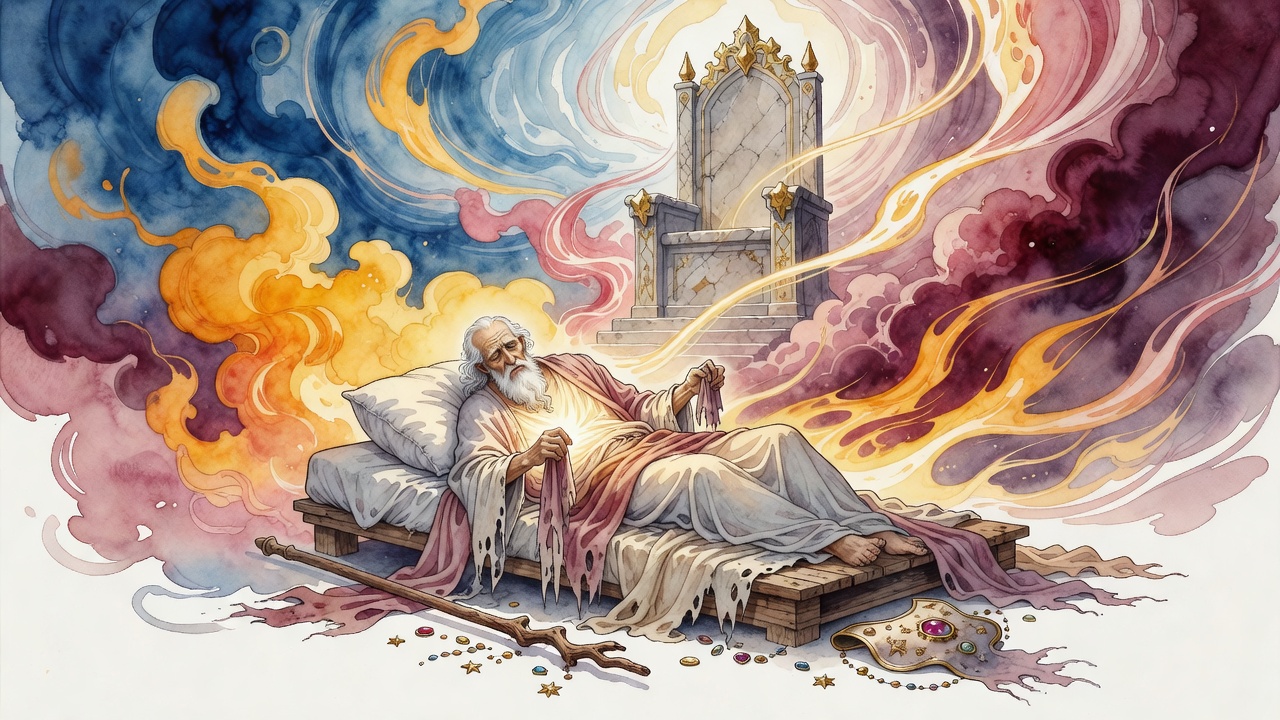
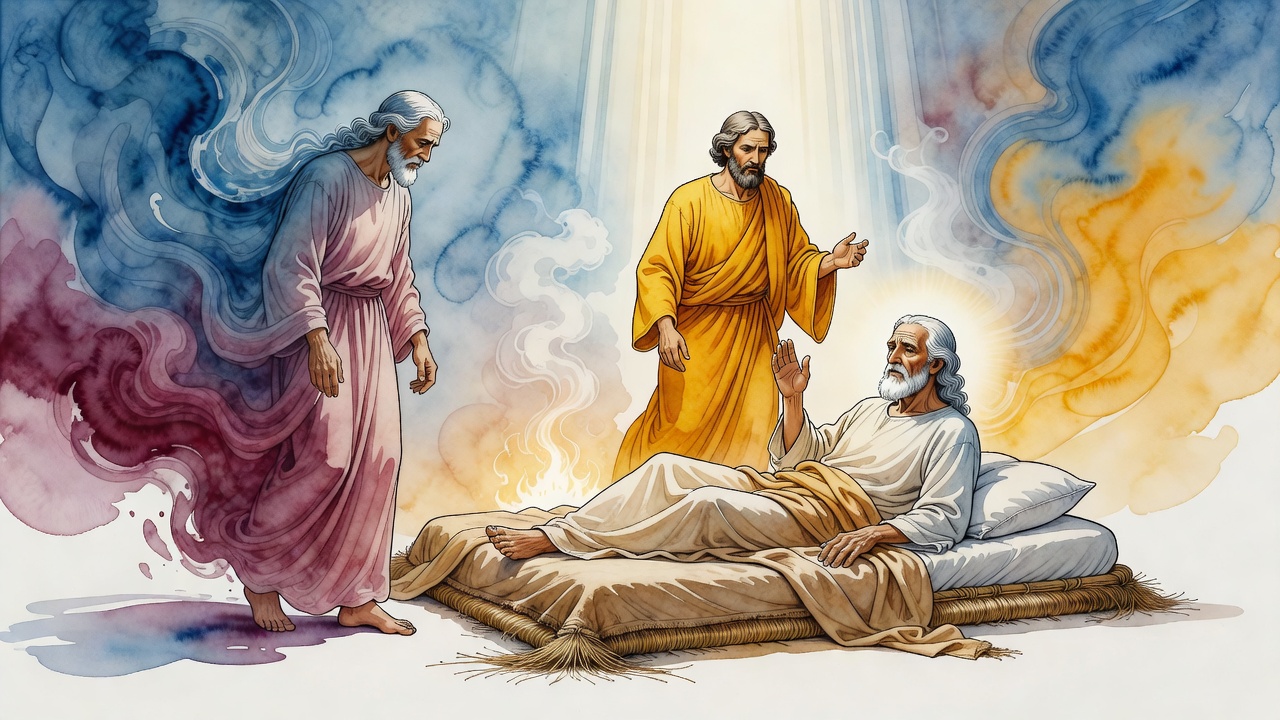
Jacob was dying in Egypt, and he did not call the firstborn.
 Click for full size
He did not call Judah either. Judah already carried a king's future in his blood. Jacob called for Joseph.
He Called for Joseph
The room smelled of oil and old linen. Servants waited at the door. The other sons were somewhere in the house. Jacob asked for the one who wore Pharaoh's ring.
"Call my son Joseph," he said.
Reuben heard it from the doorway. He was the firstborn. By right he should have stood at the bed and taken the last charge. Judah was the one the brothers would bow to, the one from whom the scepter would not depart. Jacob laid a hand on neither of them. He needed a grave in Canaan, not a title in the room.
Joseph came in and bent close. Jacob told him to put his hand under his thigh and swear. Do not bury me in Egypt. Carry me up from this land. Lay me with my fathers in the cave. Joseph put his hand under the dying man's thigh and swore. Reuben's hands stayed empty. Birthright cannot open a border. A future crown cannot move a coffin past Pharaoh's guard. Only the son who already stood before a king could do the deed. "And he called for his son, for Joseph" (Genesis 47:29).
Reuben Stood for the Blessing
Later the twelve sons gathered, and Jacob turned to Reuben first.
"Reuben, you are my firstborn, my might, the beginning of my strength" (Genesis 49:3).
Reuben's shoulders lifted a fraction. Then the next sentence landed.
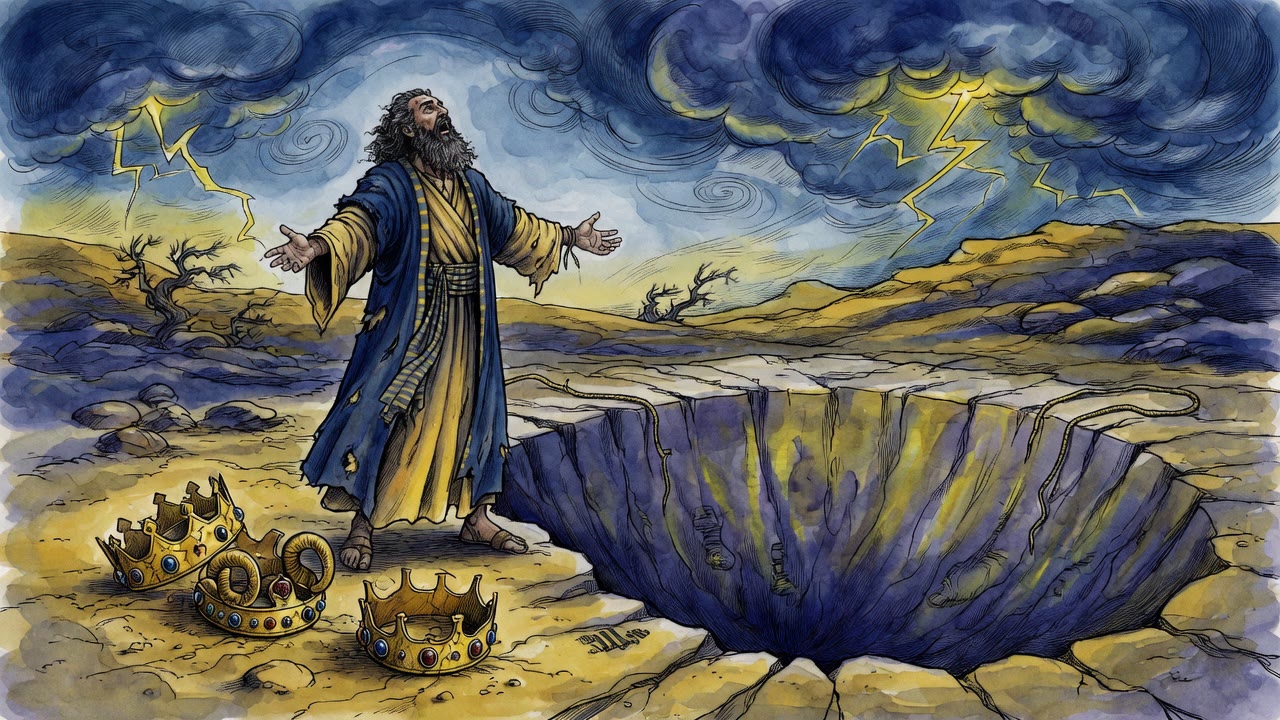
"Unstable as water, you shall not excel" (Genesis 49:4).
The firstborn title was still in the air. The water was already running through it.
Unstable as Water
Jacob did not stop at the verse. He made Reuben see a jar.
A man empties honey and a sweet film clings to the walls. A little remains. Pour out water, and the jar keeps nothing, not a drop. "You poured yourself out," Jacob said. "You kept back no merit. Unstable as water. You saved nothing."
Reuben stood still. Another way of hearing the same pour rose in the same breath. Honey and oil leave a stain. Sin leaves a stain. Water leaves the vessel clean. Water washes. If Reuben had emptied himself of the sin as well, then the pour that ruined him had also washed him.
He could not tell which reading his father meant. The dying man left both in the room. Reuben had to live inside a pour that either wasted him or purified him.
Eighty-Four Years
"You are my firstborn," Jacob said again, and the praise had an edge.
"You are a firstborn. I am a firstborn. For eighty-four years I guarded my body so that no stain came on me in the night. Not once. See how we have worn the same name."
Reuben heard the years like a rod. The dignity of the firstborn was not given by the order of birth alone. It was kept or forfeited by how a man mastered himself. In one phrase Jacob praised and reproved. Reuben had to weigh which firstborn he had chosen to be.
He remembered the night he tried to save Joseph from the pit and did not finish the rescue. He remembered Bilhah. Water runs. Water does not always return to the jar with a plan.
Rank Without a Hand
When the summons had gone to Joseph's door, Reuben had already learned a hard fact. Feeling is not a road. The bones of Israel had to move, and only the man with Pharaoh's seal could move them.
Now, in the blessing, he was named. He was rebuked. He was not chosen for the last task. Judah stood with a future crown and empty hands for this hour. Joseph stood with no claim of firstborn in this moment, and he was the one who could fulfill the word.
Jacob sorted offices. Blessing is not burial. Rank is not the power to act. The pour of water may be waste or purity. Neither reading digs a grave in Canaan. The son who rules Egypt must lift the bones.
Reuben left the bedside with both names on him, firstborn and water, and with the knowledge that the coffin would travel under another brother's hand.
← All myths