Sarah Held a Promise Spoken Years Earlier
Sarah's body had finished hoping when the old sentence landed in her arms as a child. God finished words first spoken when inheritance still seemed lost.
Table of Contents
 Click for full size
The Laugh That Became a Name
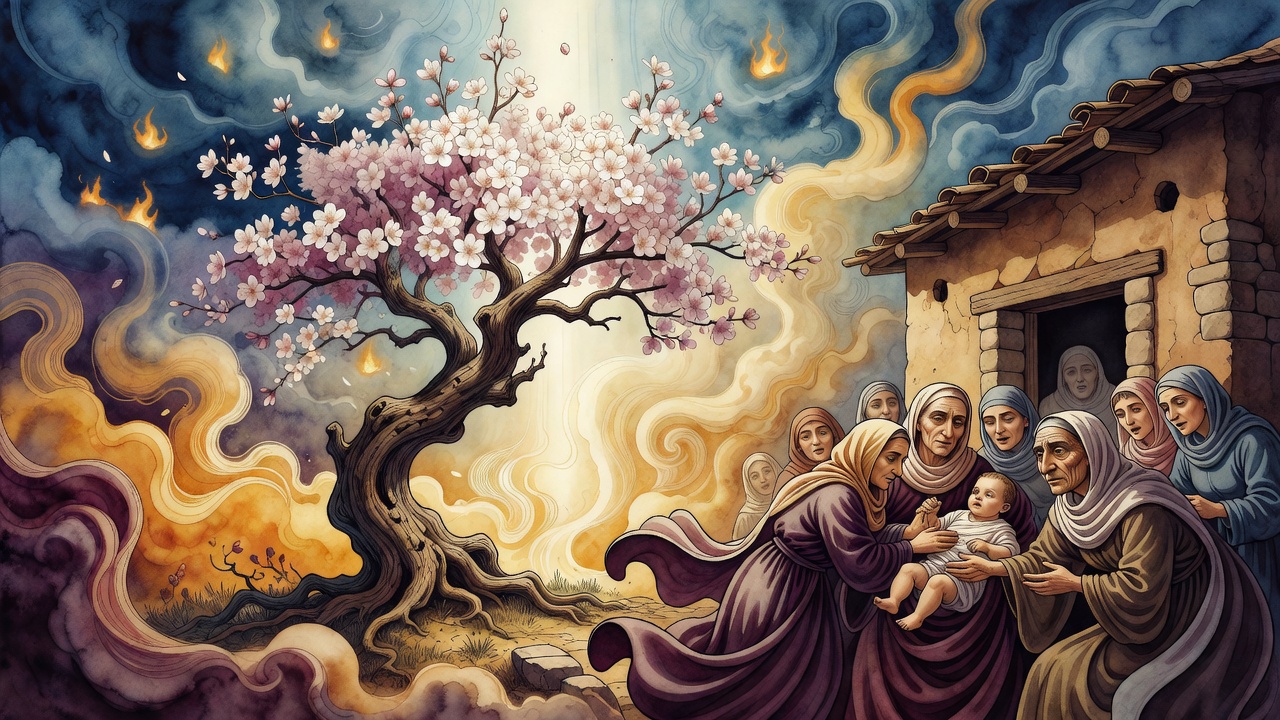
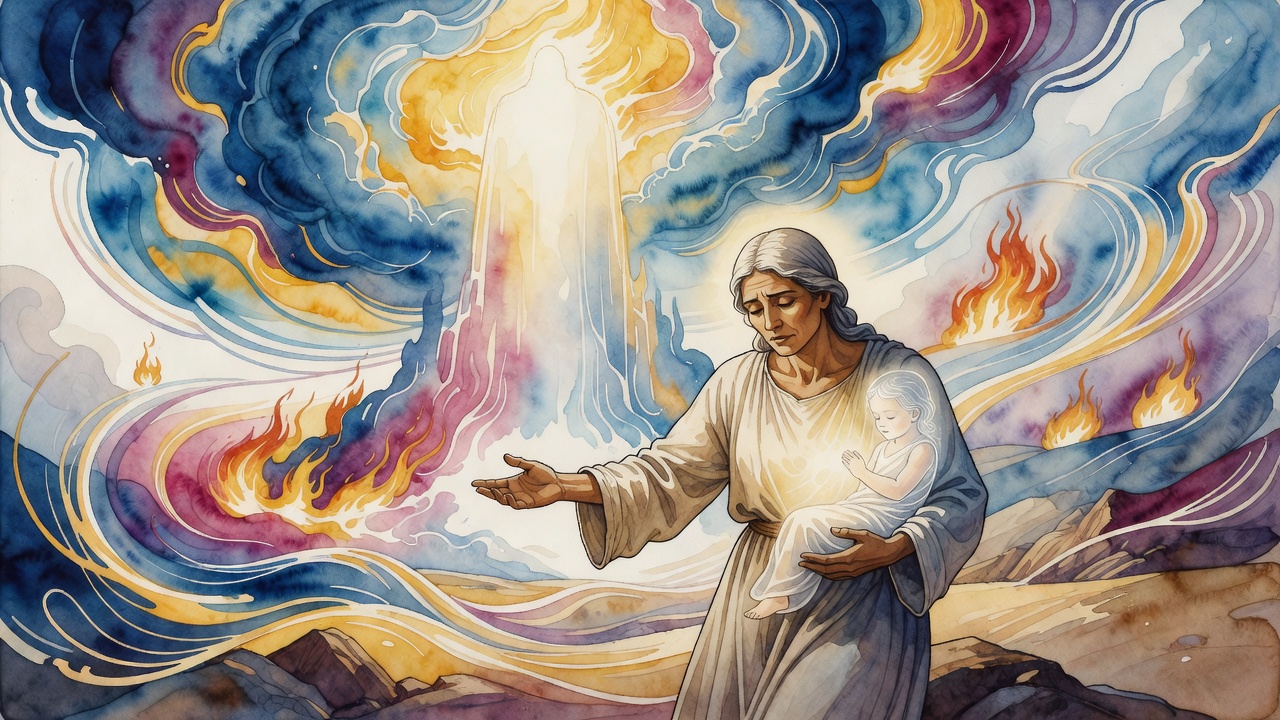
Sarah held the infant against a chest that had spent decades learning the shape of empty. Milk was a miracle with a temperature. Outside the tent, heat rose off the sand as if the ground itself were surprised. Inside, she counted fingers the way a person counts proof.
"And the Lord did for Sarah as He had spoken." The sentence sounds simple until a reader walks backward through the years and finds the first speaking. Long before this hour, God had told Abraham that Ishmael would not be the heir of the covenant. The implication had been a second son, a child of Sarah's body, a promise that outlived her monthly reckonings and her last practical hope.
She had laughed once in the doorway. Now the laugh lived in a name, Isaac, and the name lived in her arms. Fulfillment is not always a new decision. Sometimes it is the second half of a sentence God began when no one else was ready to hear the end.
The Long Middle of a Divine Word
Years sat between the speaking and the doing. Abraham aged. Sarah aged. The household filled with other noise, other blood, other claims. A promise that is true can still feel late. Sarah knew the bitterness of late truth, the way it arrives after the body has already negotiated with despair.
The teachers of the Mekhilta trained students to hunt those back-references. When Torah says God acted "as He had spoken," they ask where He spoke it. The hunt is not pedantry. It is a defense against the fear that heaven improvises and forgets. Nothing uttered is wasted. Nothing is mislaid in the ledgers of the Name.
Sarah did not need a school to feel the pattern. She had lived inside the gap. Every gray hair was a commentary. Every year without a child of her own was a midrash written on bone. When the boy finally cried, the gap closed with a sound too ordinary for how much theology it carried.
Three Fathers, No Ladder of Rank
Later, at a bush that burned without being consumed, God would name Himself to Moses as the God of Abraham, the God of Isaac, and the God of Jacob, in that order. Elsewhere He remembers Jacob first, then Isaac, then Abraham. The orders reverse. Rank is not the point. Equal weight is the point.
Sarah's son became the middle name in both lists, the quiet hinge. Isaac does not travel as far as Abraham or wrestle as hard as Jacob in the popular telling, yet the covenant refuses to let him become a lesser rung. The mother who waited holds the proof that middle does not mean minor.
She watched Abraham's face when he looked at the boy. The man who had argued for cities and walked toward a knife he did not yet know would also walk toward this child with a softness that frightened him. Promise makes warriors careful. Promise makes old men new.
Named Before the Womb
The same tannaitic stream teaches that the names of the righteous and their deeds are known before birth, as Jeremiah heard: before I formed you in the womb, I knew you. The wicked too are seen from the start in a harder light. Free will still burns in the middle of that knowing, a fire the schools never fully put out.
Sarah could not see the whole ledger. She could see a mouth seeking her. She could feel a future pressing against her wrist in a small pulse. If Isaac's name had been known above before it was spoken below, then her waiting had never been empty space. It had been the time required for a known name to put on flesh.
She whispered the name again, not for heaven, for herself. Isaac. He will laugh. She had laughed in disbelief. Now she laughed in the other direction, the direction that has milk on its tongue and a future kicking against the cloth.
What the Tent Kept
Night came. The desert cooled. Abraham slept the uneven sleep of a man who has lived too long on promises and has finally been paid in a currency he can hold. Sarah stayed awake longer, listening to the boy breathe as if breath itself might slip back into the realm of maybe.
She did not thank the years for their cruelty. She also did not pretend the cruelty had been imaginary. The promise had been spoken early and kept late, and the late keeping did not erase the early wound. It only proved that the Speaker does not abandon His own sentences.
In the dark of the tent, a mother and a covenant shared the same small body. Outside, stars hung in their old places. Inside, a word finished arriving.
← All myths