Simon Maccabeus Built Freedom From Tax Relief
A royal decree promised freedom from tribute, but Simon Maccabeus had to turn paper relief into fortified cities, Jewish settlement, and public trust.
Table of Contents
Most people remember the Maccabees for the first blaze of revolt. The actual Jewish memory in The Book of Maccabees I, a Second Temple narrative likely shaped in the late second century BCE, spends just as much time on what comes after victory: taxes, treaties, empty houses, broken gates, and the terrifying question of whether freedom can survive ordinary administration.
A king can sign a decree in purple ink. A people still has to wake up the next morning and find bread, walls, judges, soldiers, and a place for its children to sleep.
The Promise Written by a King
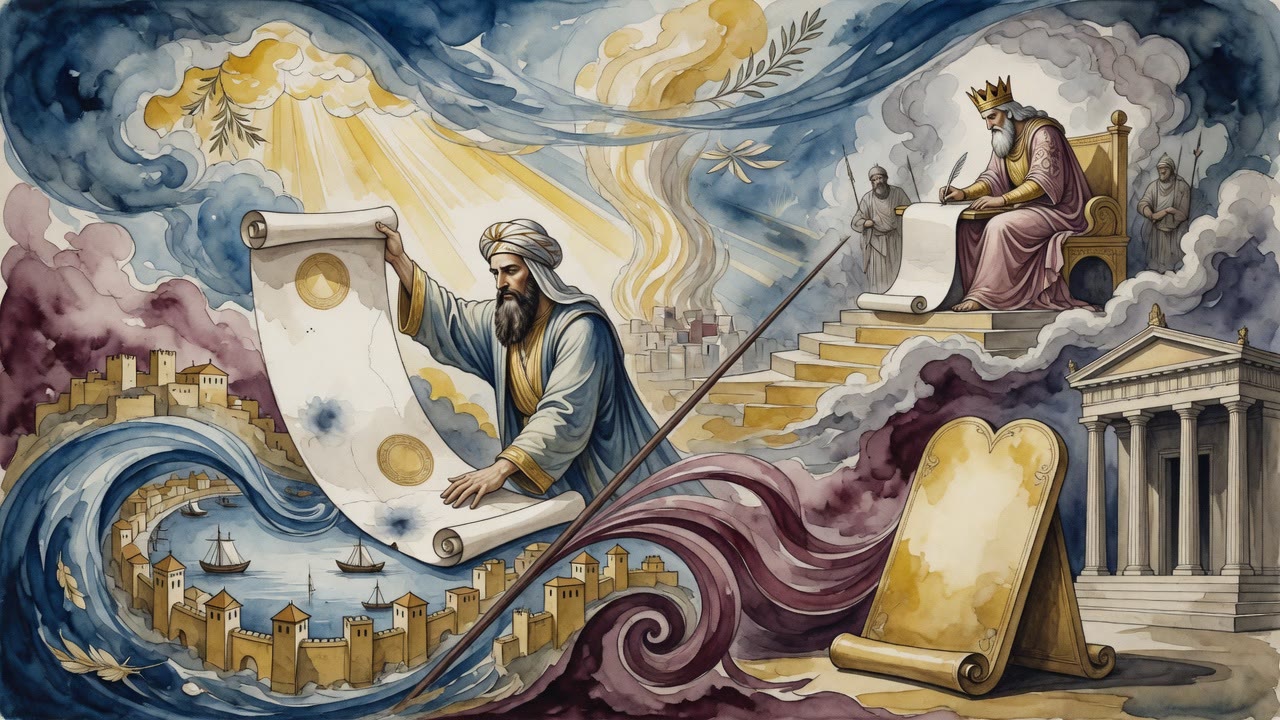
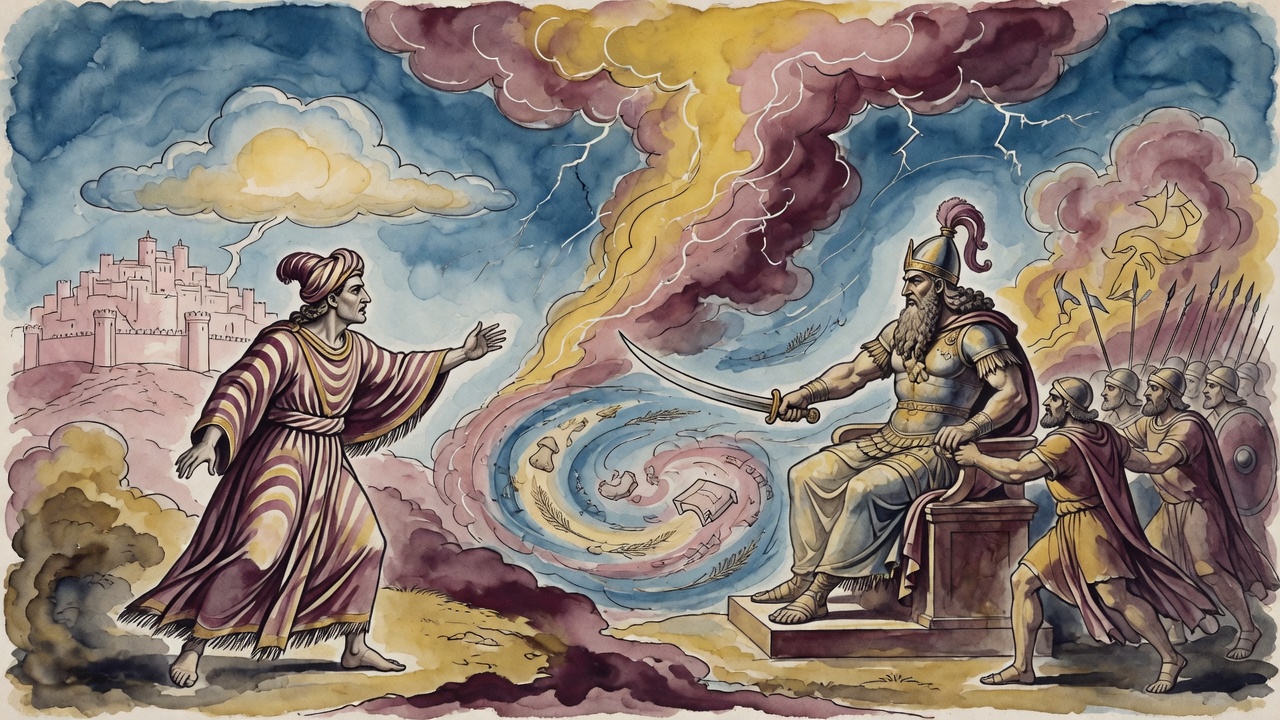
The first promise comes wrapped in royal courtesy. In the Seleucid year 160, about 153 to 152 BCE, competing kings needed Jewish loyalty. One letter praises the Jews because they kept covenant, remained friends, and refused to join the king's enemies. Then the offer becomes practical. The king frees them from tribute, salt tax, crown tax, a third of the seed, and half the fruit of the trees.
That is not poetry. That is grain in a farmer's hand.
In the decree of relief from tyranny, freedom does not arrive first as a song. It arrives as a canceled tax bill. The field that once fed a foreign treasury may now feed a Jewish household. The orchard that once bent under royal claims may now shade a family trying to rebuild after years of fear.
The promise goes even wider in the royal decree for freedom from tribute. Jerusalem is to be holy and free. The tower in the city is yielded to the high priest. Captives are to be released. Officers are told to remit burdens even from the cattle. The king speaks as if he can loosen every chain by command.
Anyone who has lived under a frightened government knows the danger in that kind of mercy. It can be real. It can also be revoked.
When Relief Is Not Redemption
The Book of Maccabees I belongs to the Apocrypha collection on JewishMythology.com, where Second Temple Jewish memory often sounds less like a sermon than a ledger written during a storm. Names matter. Years matter. Fortresses matter. So do taxes, because tyrants do not only attack the sanctuary with spears. They attack it with receipts.
The letter promises immunities and rewards because the Jews have been useful allies. That is the problem. The king is not speaking from Sinai. He is bargaining from a throne. His generosity depends on politics, and politics changes faster than a harvest ripens.
So the story pushes forward. A paper promise must become a lived order. Jerusalem must not only be called free. It must be made defensible. Judea must not only receive exemptions. Its people must be able to stand in their own gates without wondering which army will arrive before morning.
This is where divine justice in Maccabean memory becomes harder and more adult. It is not lightning striking the wicked while the righteous watch from a safe hill. It is a people learning that God's mercy can come through courage, but courage must become institutions or it vanishes.
Simon Steps Into the Breach
After Jonathan dies, the enemies of Judea see the opening. The sanctuary is vulnerable again. The country has a wound where leadership used to stand. Simon son of Mattathias, from the priestly line of Jarib, rises in that wound.
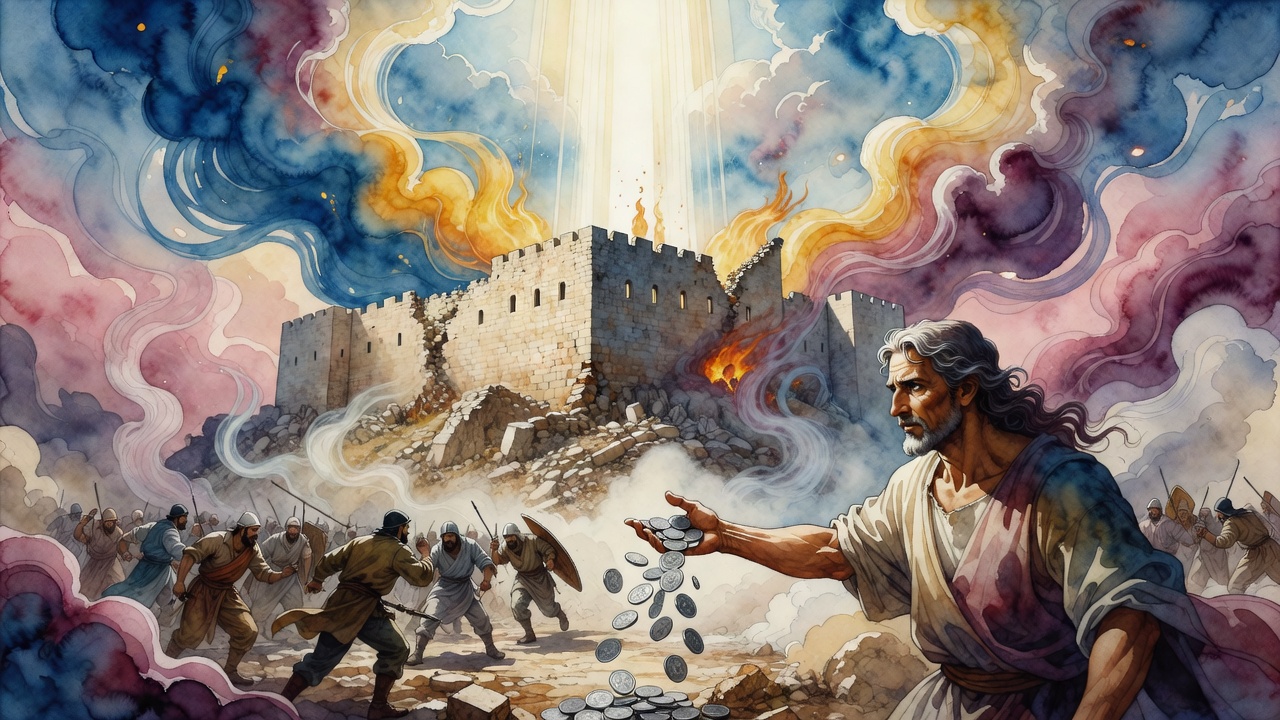
In the account of Simon rising after Jonathan's death, he does not begin with a speech about destiny. He spends his own wealth. He arms the valiant men of the nation. He gives them wages. He fortifies the cities of Judea and places a Jewish garrison in Bethsura, where enemy weapons had once been stored.
There is something painfully honest about that detail. Simon does not defeat fear by pretending the danger has passed. He walks straight to the places where the enemy kept armor and changes who holds the keys.
That is the movement from royal favor to Jewish responsibility. The king can promise relief. Simon must make sure the promise has walls.
Joppa, Gazera, and the Shape of Home
Then the camera moves west, toward the sea. Joppa lies on the Mediterranean coast. Gazera borders Azotus. These are not abstract symbols in the late second century BCE. Joppa is a port, a way for goods and messages to move. Gazera is a frontier place, where control of the land is tested by who can stay there when the fighting stops.
Simon fortifies both. More than that, he places Jews there and gives them what they need for repair. In the story of Simon fortifying Joppa and Gazera, the conquest is incomplete until people can live there.
Picture the first families entering those towns. Some carry tools. Some carry infants. Some carry memories of the people who did not survive long enough to see this day. Soldiers may have opened the road, but settlement asks a slower courage. A wall can be raised in fear. A home must be built in hope.
The people see what Simon is doing. They sing his acts, not because he has won one dramatic battle, but because he seeks to exalt his nation. The text gives the reason with two words that carry the whole weight of his leadership: justice and faith. Mishpat and emunah, judgment rightly ordered and loyalty held steady.
Until a Faithful Prophet Arises
The great congregation eventually writes Simon's authority on bronze tablets in the Seleucid year 172, about 141 to 140 BCE, in the third year of his high priesthood. Priests, people, rulers, and elders gather. They remember the wars. They remember the sanctuary. They remember that Simon and his brothers put themselves in danger for the law and the nation.
Then comes the strange restraint. Simon is accepted as governor and high priest until a faithful prophet should arise.
That line keeps the story Jewish in its bones. Power is necessary, but it is not ultimate. A leader may wear authority because the hour demands it, because walls need raising and armies need paying, but somewhere above the bronze tablets stands the possibility of a true word from God. The people can honor Simon without pretending history has ended.
That is why the Maccabean story does not let the royal tax decree have the last word. Relief from tribute matters. It saves farms, releases captives, and gives Jerusalem room to breathe. But the deeper freedom comes when a wounded people can repair Joppa, settle Gazera, guard the sanctuary, and still leave space for prophecy.
The king promised less burden. Simon built places where Jewish life could stand upright. On the coast, by the gates, with tools in hand, the people began to sing.