Sinai Tipped the Jar and Poured Every Commandment
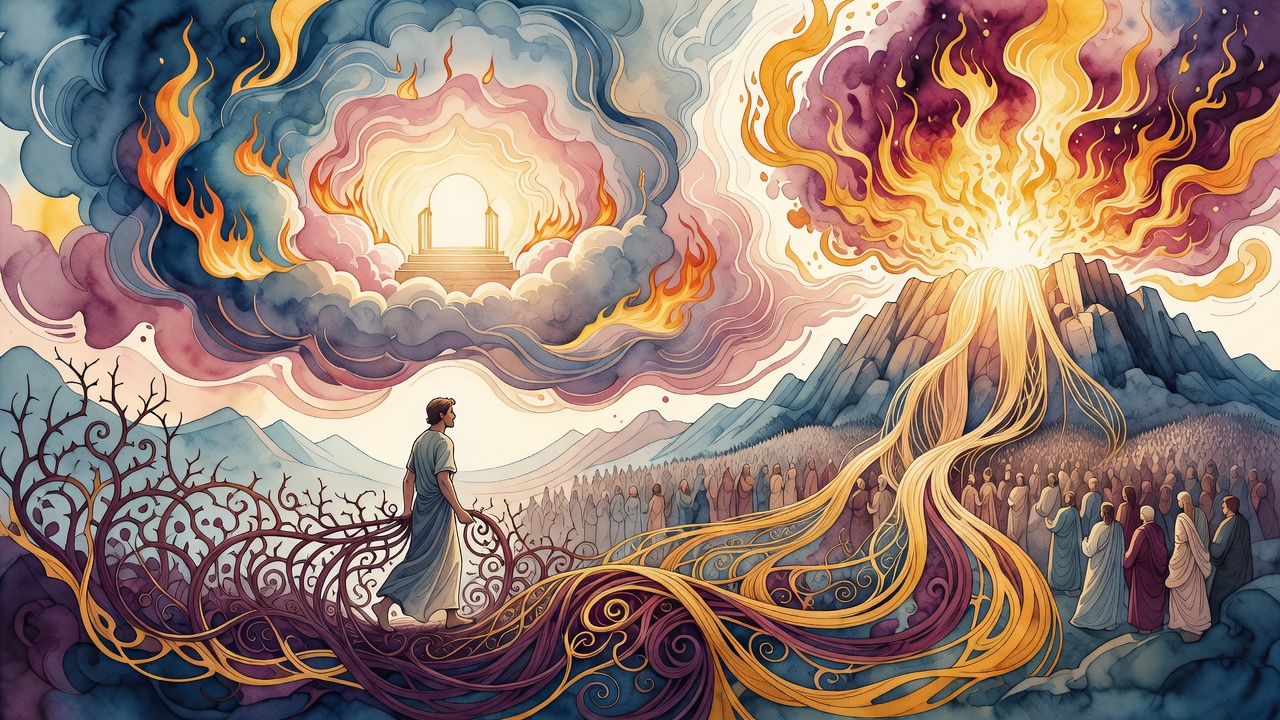
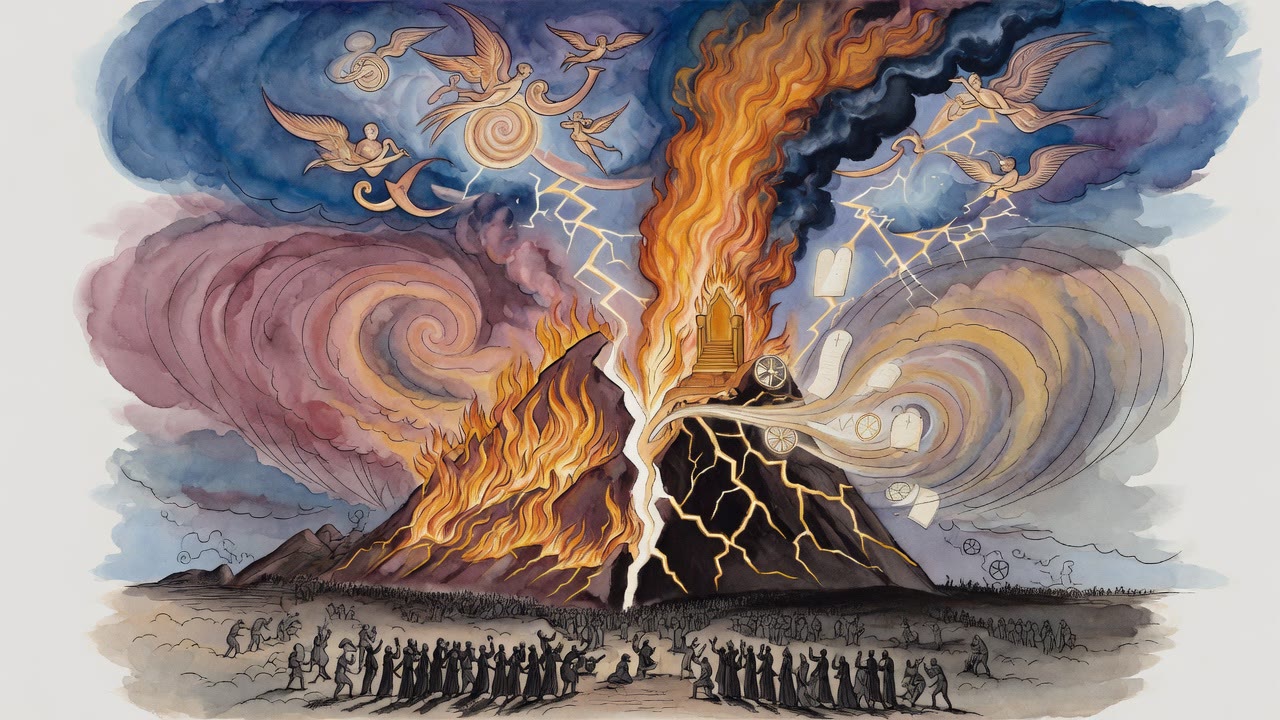
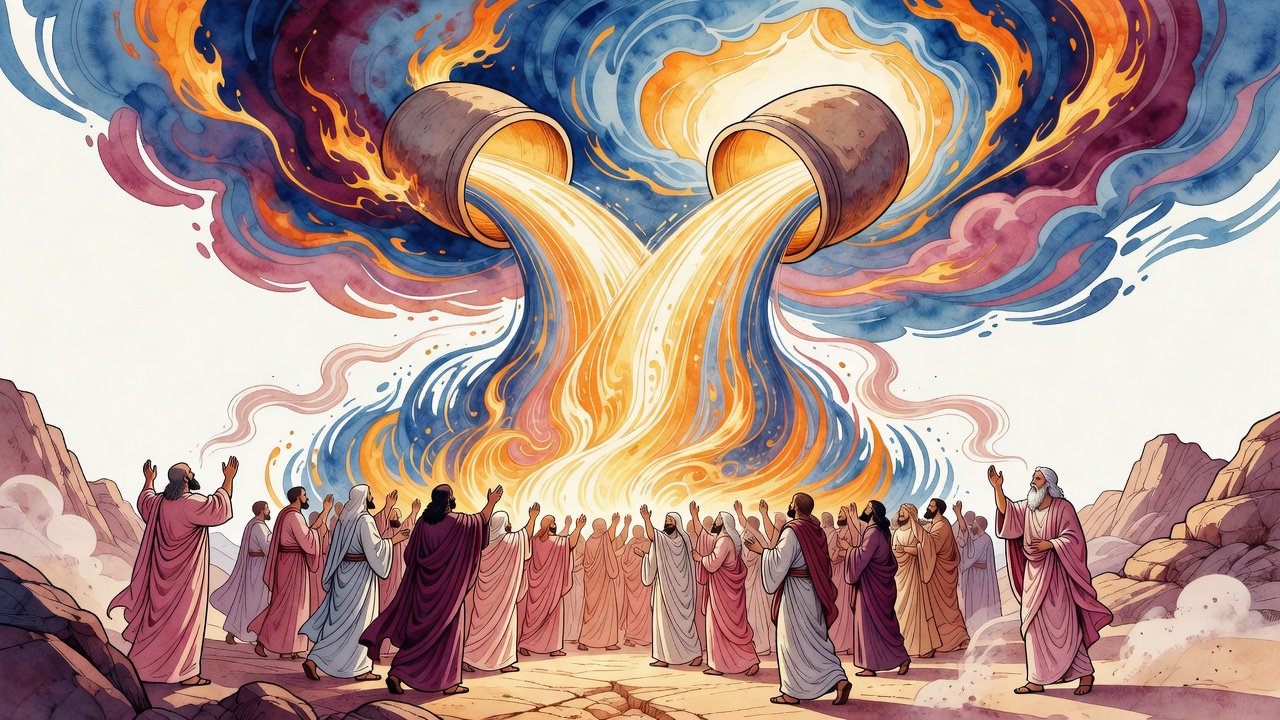
Adam and Noah received only a fragrance of law. At Sinai God tipped the jar and poured every commandment onto Israel.
Table of Contents
 Click for full size
The Number That Sealed the Mountain
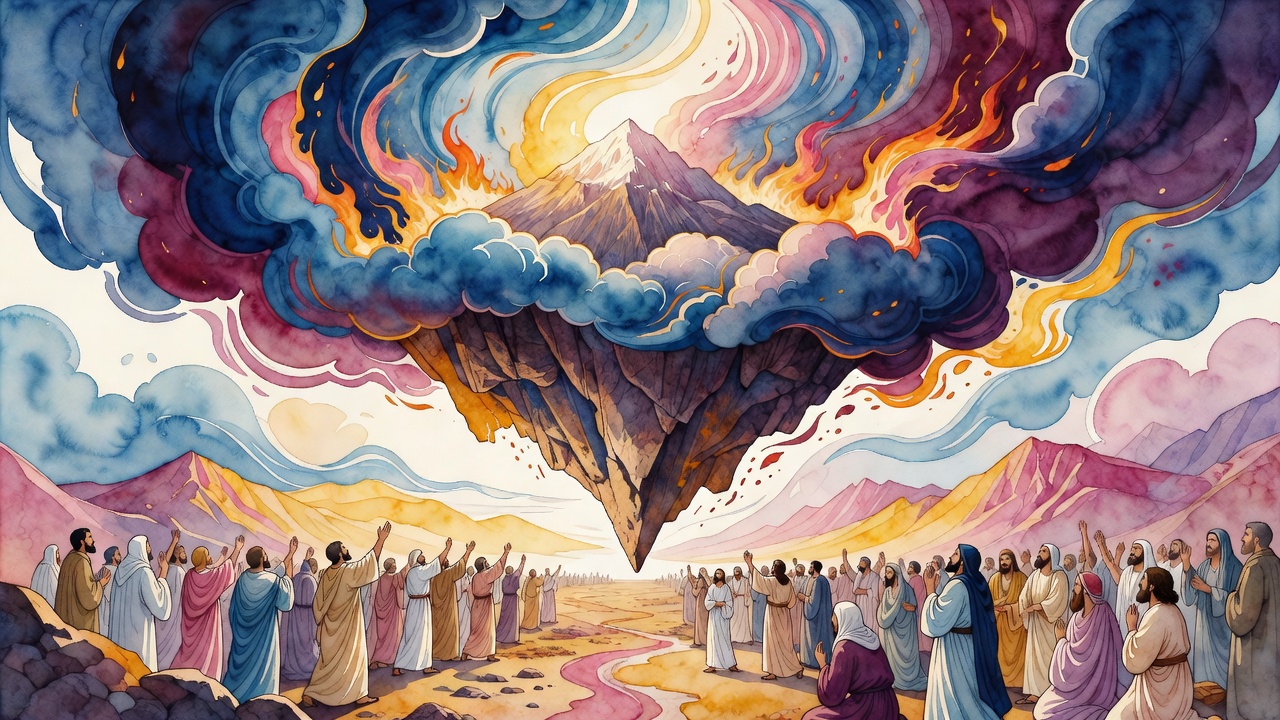
Why did the Torah wait for the third month to descend upon Sinai? Because everything about its giving was threefold, and the number three was its seal. The mountain did not receive a random hour. It received a signature written in counts that a careful people could later recite like a pedigree.
Scripture itself stands in three: Torah, Prophets, and Writings. Its letters open in three: alef, bet, gimel. The fathers who carried the covenant were three: Abraham, Isaac, and Jacob. The man chosen to bring it down was wrapped in threes. Moses was the third who stood between, as he said: "I stood between the LORD and you" (Deuteronomy 5:5). The letters of his name are three. He came from the third of the tribes, for Levi follows Reuben and Simeon. He was the third of three siblings, Moses, Aaron, and Miriam. When his mother saw him, she hid him three months until the basket took him to the river (Exodus 2:2).
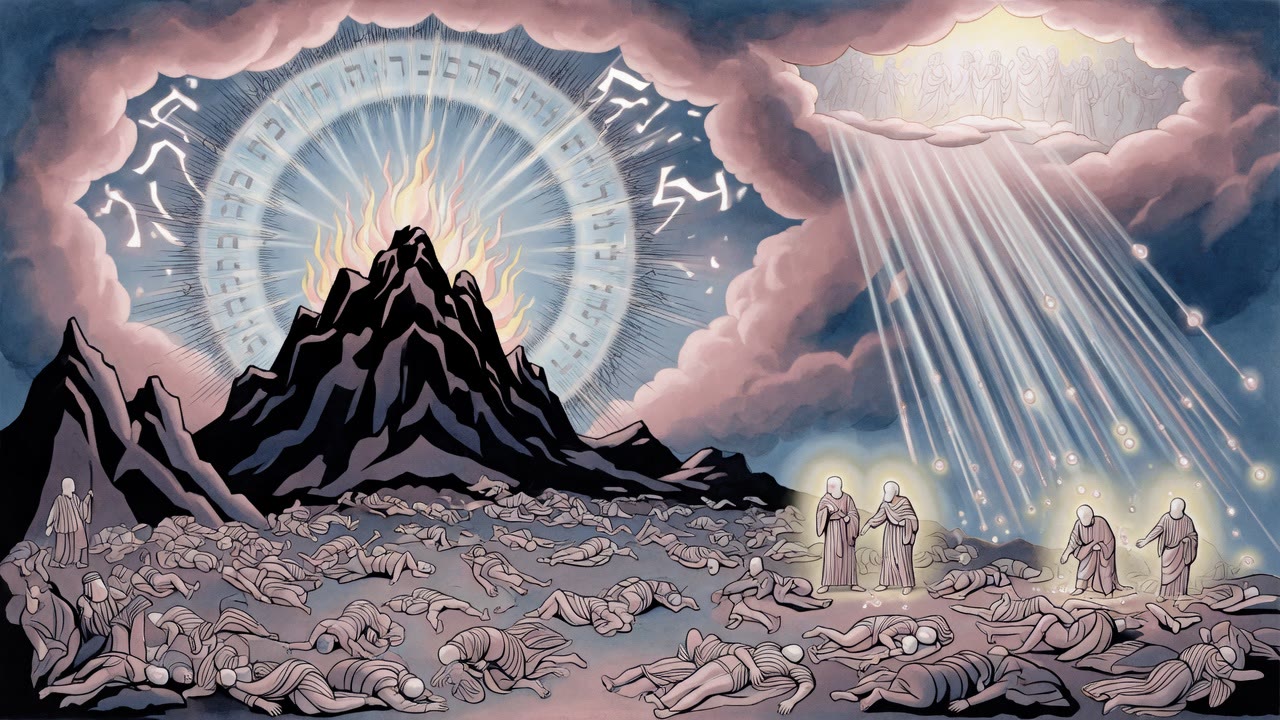
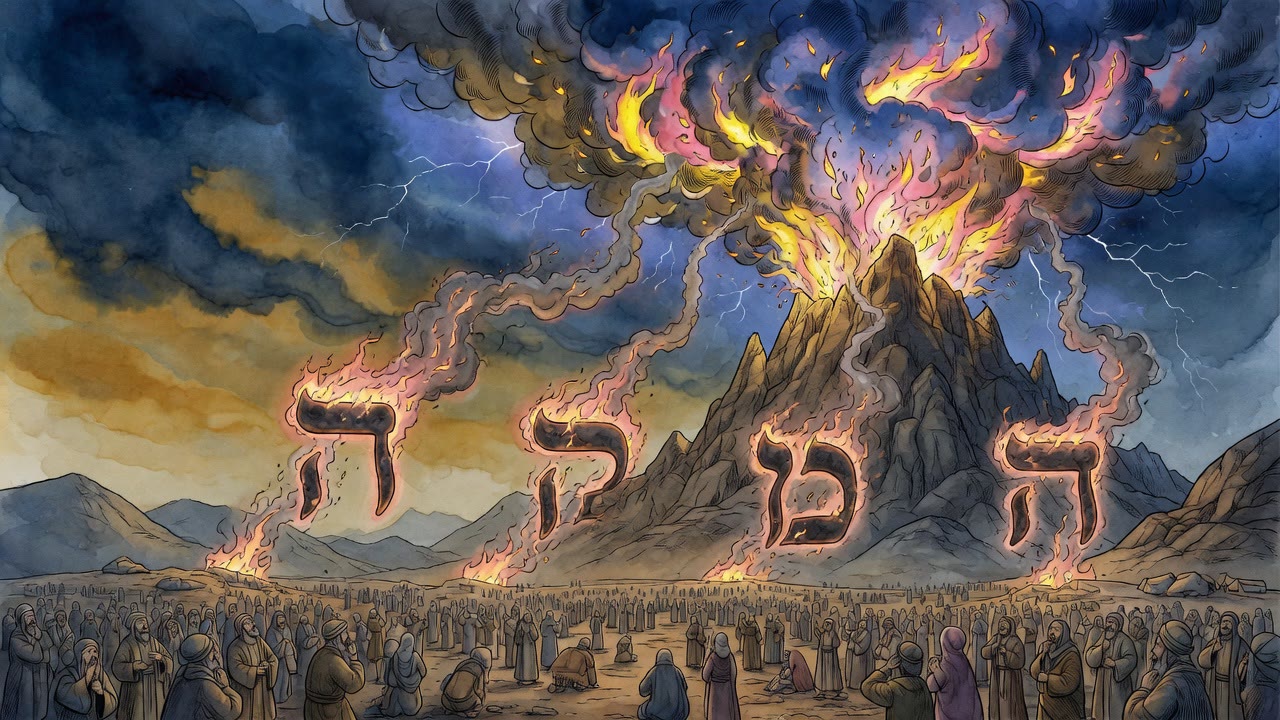
So when the LORD came down, He came on the third day, in the third month. Nothing here was chance. The pattern was the signature. Israel was meant to feel, even before the first word left the fire, that the gift had been measured and matched to them alone.
Fragrance, Then the Full Flask
When Jethro heard what had been done for Israel, Song of Songs leaned close: "For the fragrance of your goodly oils" (Song of Songs 1:3). Rabbi Yannai heard a history of measure in that scent. Not every generation received the same pour from Heaven's flask.
To the first generations the Blessed One gave only the fragrance of the oil, not the flask itself. To Adam, seven commandments. To Noah and his sons, seven again. A scent on the air. A hint of righteousness enough to draw the nostrils, never enough to fill the cup. The world could smell justice. It could not yet bathe in it or wring it from its sleeves after a full immersion.
Then came Sinai. Picture a person who tips the jar clean over and lets it run from its mouth until the vessel stands empty. So the Holy One poured out upon Israel the whole of the commandments, holding back not a single drop. "Your name is oil poured out," the verse sings. At the mountain the fragrance became a flood. The perfume of the world's beginning became, for Israel, the full anointing of Torah. Hands and gates and beds and courts and festivals and debts all shone with the same slick light of law.
Aquila Before Hadrian
Centuries later a convert named Aquila stands before the emperor Hadrian and says he intends to join this people. Hadrian has crushed them. He cannot understand the choice. What do you see in a nation I have humiliated? The emperor's question is a sneer dressed as curiosity, and the court waits for Aquila to flinch.
Aquila answers without flattery. The least among them knows how the Holy One created the world, what was made on the first day and the second, how long it has been since creation, what the world stands upon. Their Torah is truth. A crushed people still carries the architecture of the first week in ordinary mouths, and that knowledge is worth more to Aquila than imperial favor.
Hadrian offers a compromise that is not a compromise. Go study their Torah, but do not circumcise yourself. Aquila refuses the half-door. Even a hundred-year-old sage of the empire cannot truly enter the teaching without the covenant cut into the body. "He declares His words to Jacob, His statutes and His ordinances to Israel. He has not dealt so with any nation" (Psalms 147:19-20). The ordinances are not a public library. They are a people's sealed gift, oil that soaks only the cloth that belongs to the King.
Why the Pouring Chose One Cup
Threefold timing, full oil, and a convert who will not accept Torah without belonging: the three claims lock. The mountain does not scatter commandments like seed on every wind. It pours into a cup that has been shaped for three patriarchs, three months of Moses' infancy, three parts of Scripture, and a body willing to carry the mark that Hadrian mocked.
Other nations may catch a fragrance of justice. Israel is asked to live under the emptied jar. That is both honor and weight. The same oil that anoints also stains. It gets into every seam of the day until private life and public law smell of the same mountain.
The Anointing That Still Stains
Oil does not leave the skin quickly. Sinai's pour is not a ceremony finished at dawn. It is the reason a Roman emperor cannot understand a convert, and the reason the convert cannot accept a Torah without a people. The third month was never a calendar accident. It was the hour when fragrance became flood, and flood became a law that still names Jacob and no other nation in the same breath of Psalm and midrash.
Stand at the foot of the mountain in the mind. Count the threes. Smell the jar tipping. Hear Aquila refuse the uncut study. The gift and the people arrive together, or they do not arrive as Torah at all, only as fragrance that never becomes a life.
← All myths