Sodom Forgot the Wayfarer and the Fire Forgot Sodom
Sodom's stones held sapphire and its dust held gold, so the city closed its roads to the wayfarer. The fire answered.
Table of Contents
The bread came up out of the ground. That was the first thing a traveler noticed on the road into Sodom, that the loaves seemed to ripen from the soil itself, golden and warm, and the man on the road would slow his step and stare. The soil here did not behave like soil anywhere else. Crack a stone open and there was sapphire inside it, blue as deep water. Sift the dust between your fingers and gold caught the light (Job 28:5-6). A land from which bread had issued forth, its stones the place of sapphire, its dust threaded with gold. No wonder the men who lived on it walked the way they walked, slow and certain, eyes half closed against the sun, looking at no one.
 Click for full size
The City That Counted Its Own Riches
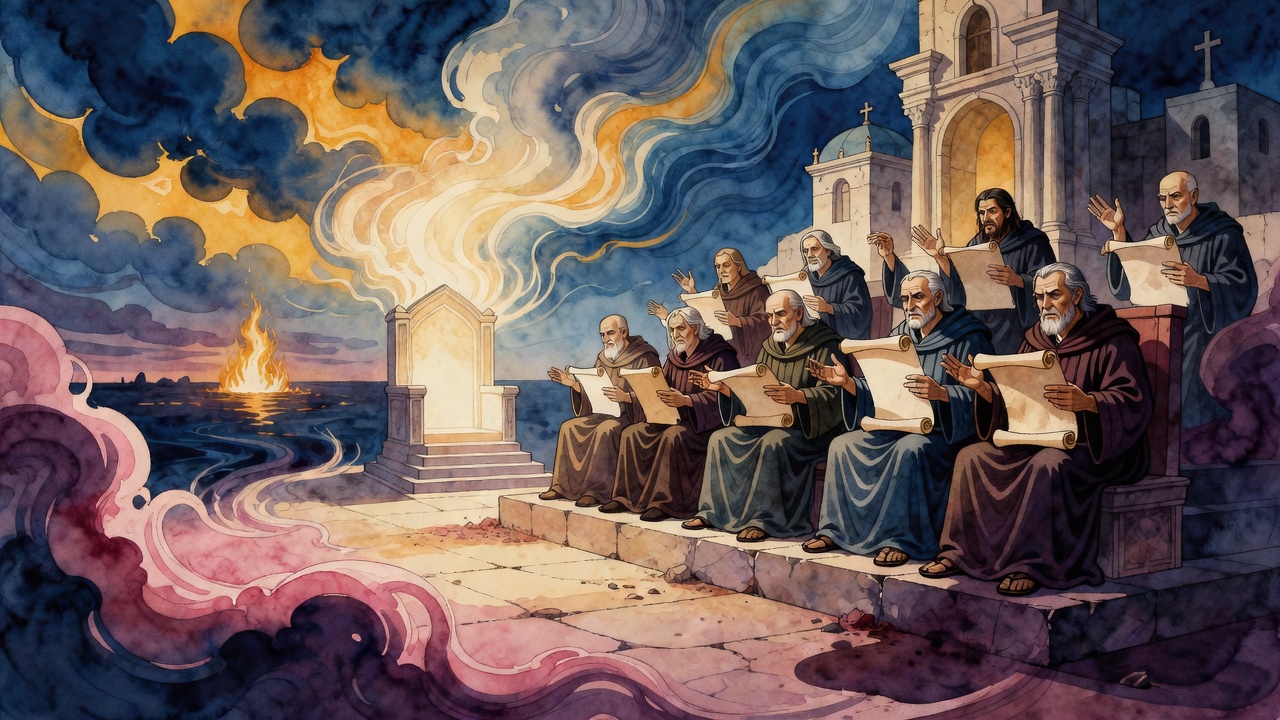
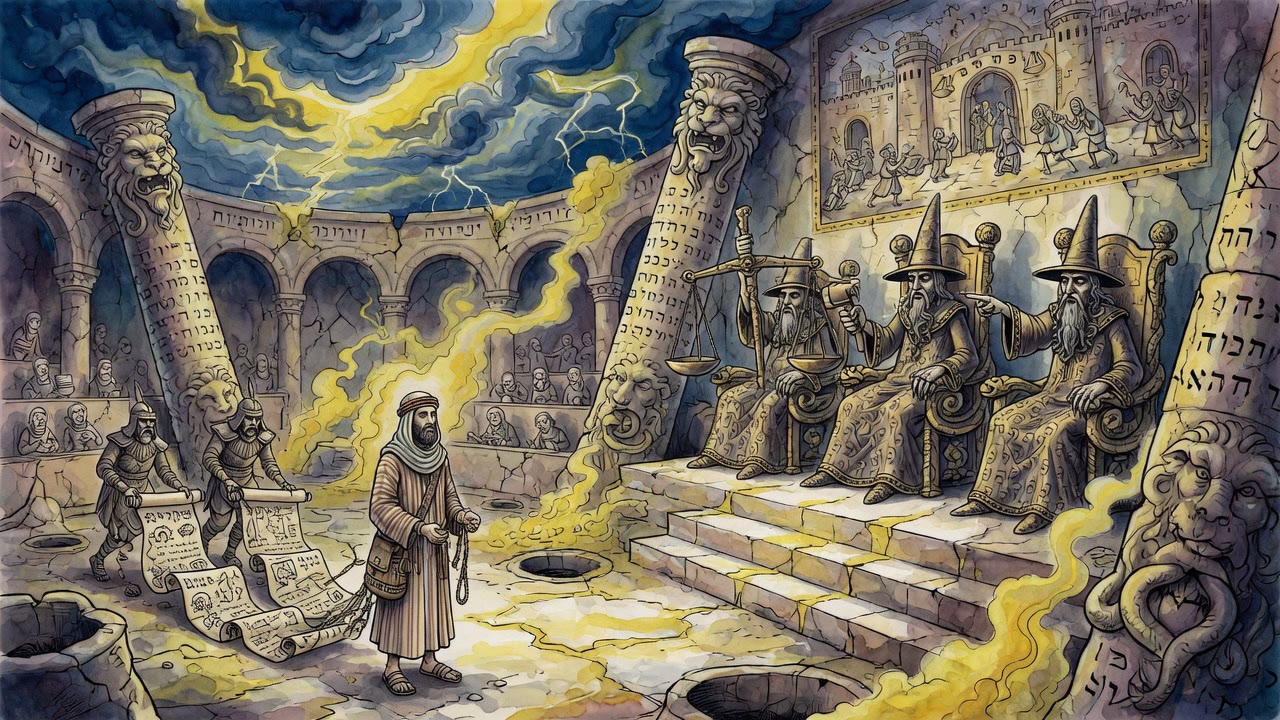
Picture the council of the city gathered in the cool of the evening, the elders seated on stone benches still warm from the day. One of them lifts a handful of the dust and lets it run out of his fist, and the flecks of gold spin down. Look, he says. Food sprouts from us. Silver and gold sprout from us, and precious stones, and pearls. He says it plainly, the way a man states a thing he has measured and found true. The others nod. The orchards hang heavy at the edge of town. The wells never run dry. Everything a body could want grows here, out of this ground, for these men.
So a question forms, and it is a reasonable question, which is what makes it terrible. If everything we need comes up out of our own ground, what is the wayfarer to us? He arrives with empty hands. He eats and drinks and lies down in the shade and gives back nothing. He takes from the abundance and adds nothing to it. He is a mouth and not a field.
The Decision to Forget the Road
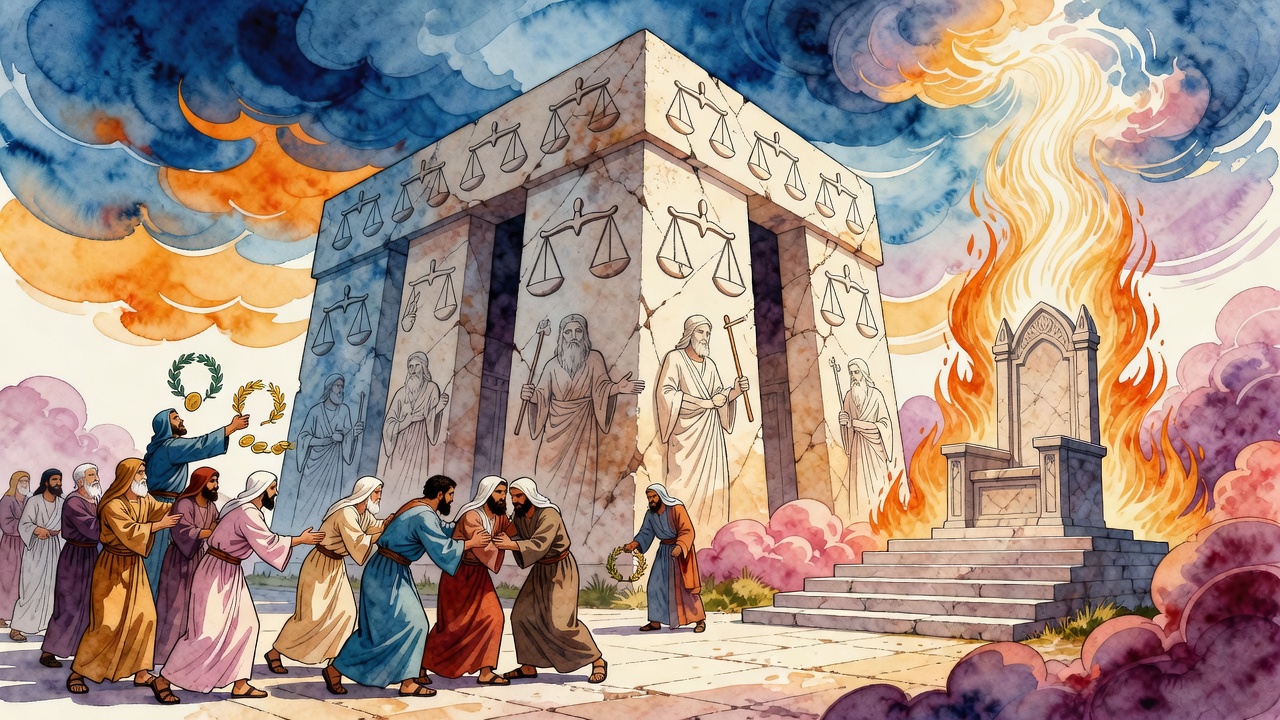
And so the elders reason their way to a thing crueler than cruelty, because cruelty at least feels something. They feel nothing. They simply conclude. Let us forget the way of the wayfarer from our land. Not drive him off in anger. Forget him. Unmake the very memory of the road that brings him, so that the foot of the stranger finds no path into Sodom and the city sits alone in its plenty, gates shut, accounts closed, needing no one.
The work of forgetting begins. The roads that once carried merchants and beggars and tired men with their families go quiet. The beds laid out for guests are folded away. A traveler approaching the walls feels it before he understands it, the way a place can look at you and decide you are not there. The sapphire glints in the gateposts. The gold lies in the dust at his feet. And no door opens.
The Voice That Called Them Fools
Above the closed and self-satisfied city, the One who made the ground answers them, and the answer is not a thundercloud. It is almost quiet. Fools that you are. You stand on a gift and you call it your own labor. The bread you say sprouts from you, who buried the seed of it in the world? The sapphire you boast of in your stones, the gold you let run through your fingers, whose hand laid it down there in the dark of the earth before your fathers were born?
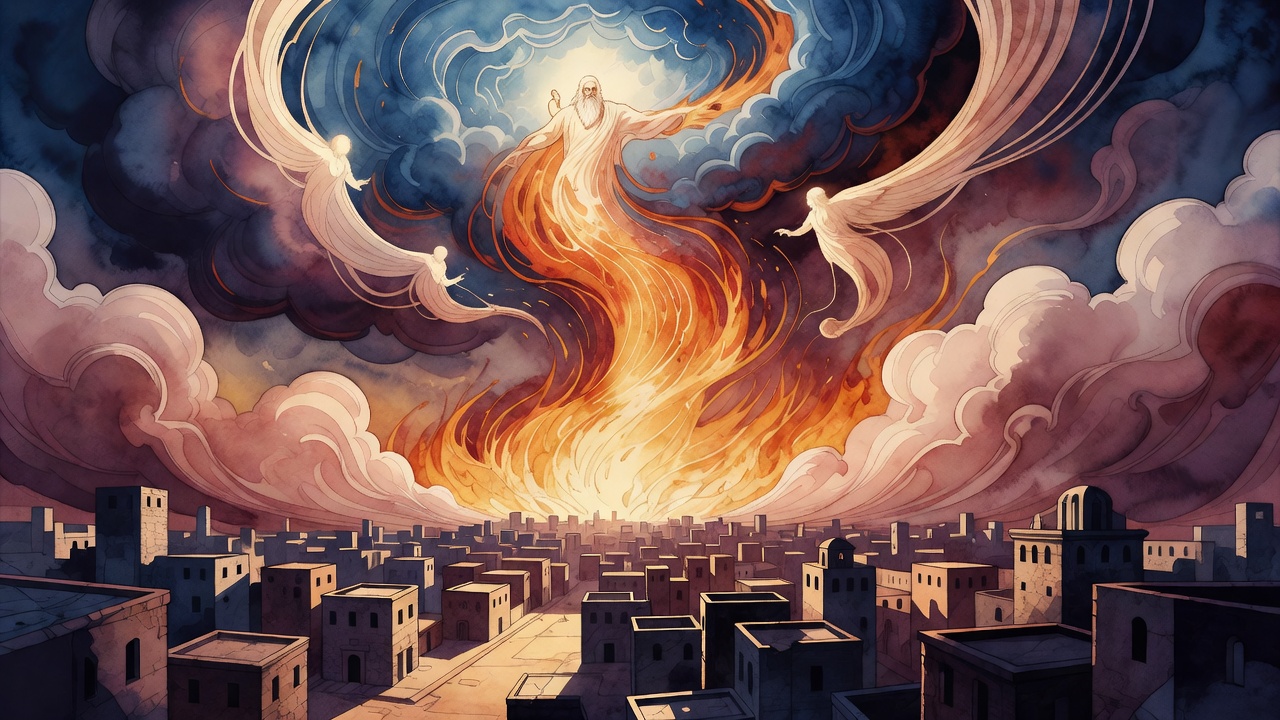
You have said, the voice goes on, let us forget the way of the wayfarer from our land. You would erase the road of the man with empty hands. Then hear the measure of it. As you would forget him, so will I forget you. Not punish you in the loud way of a king. Forget you. Lift you out of the memory of the world the way you tried to lift the traveler out of yours.
The Stream of Fire and Brimstone
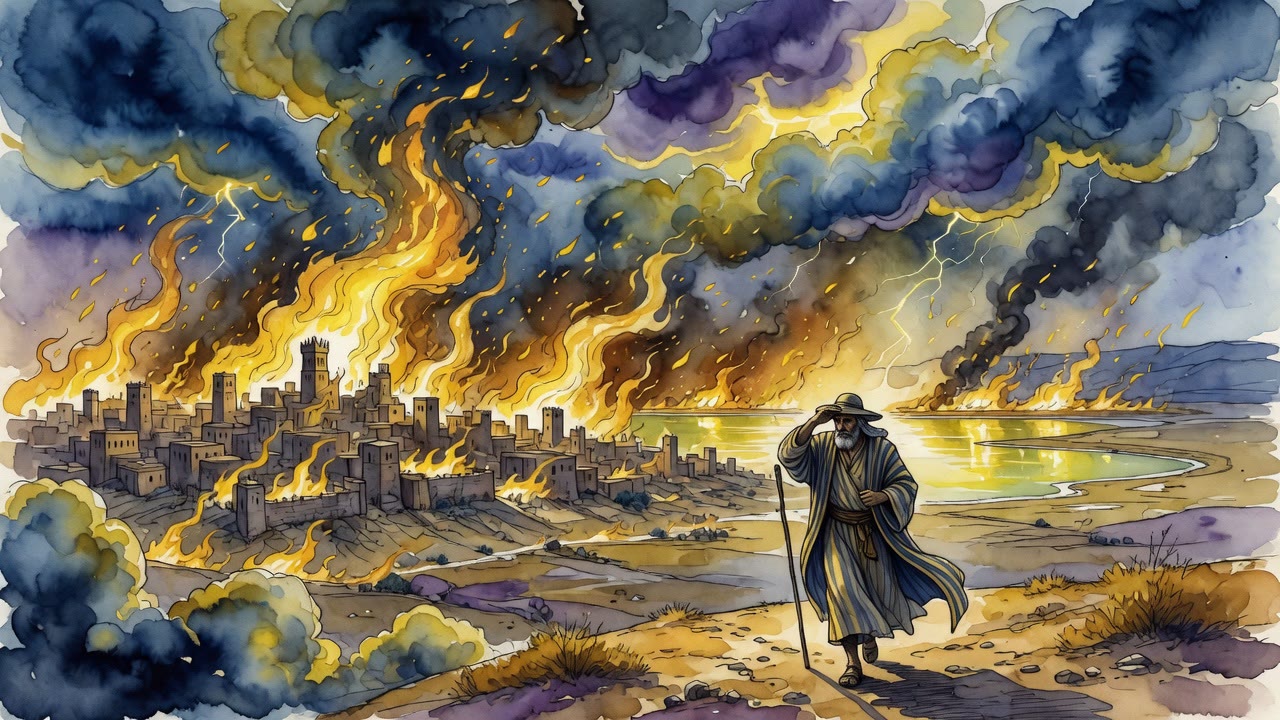
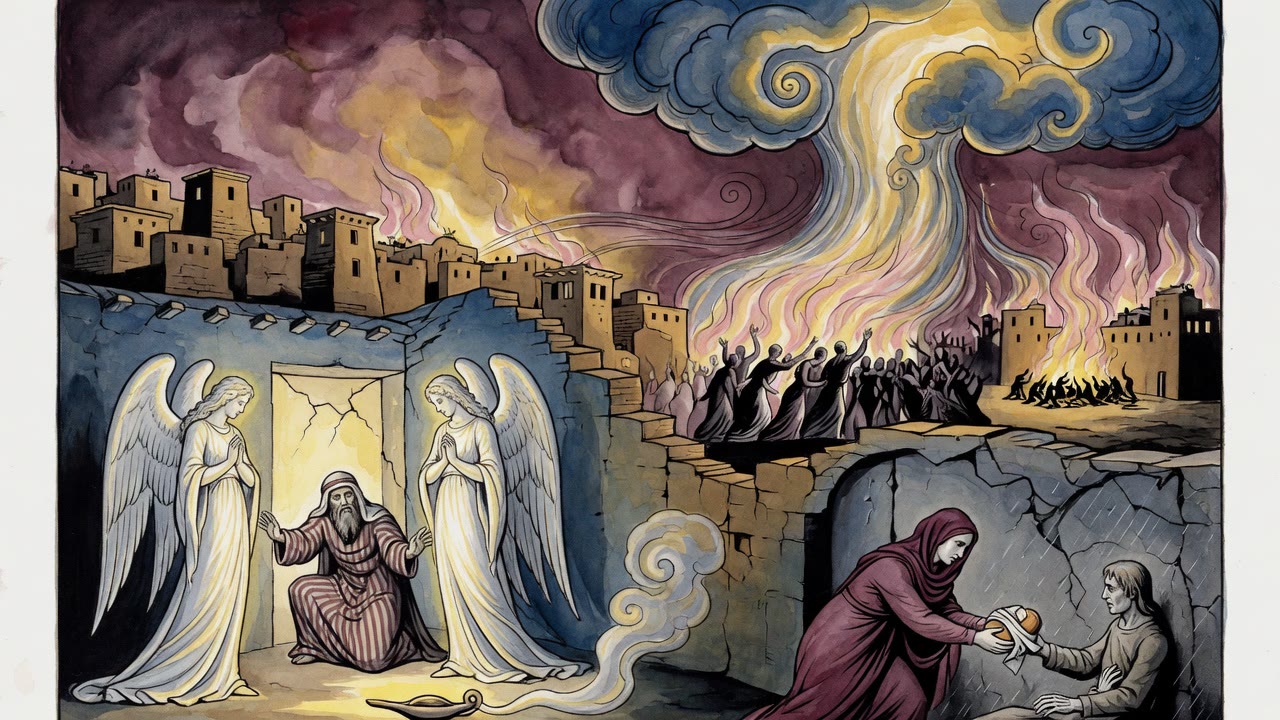
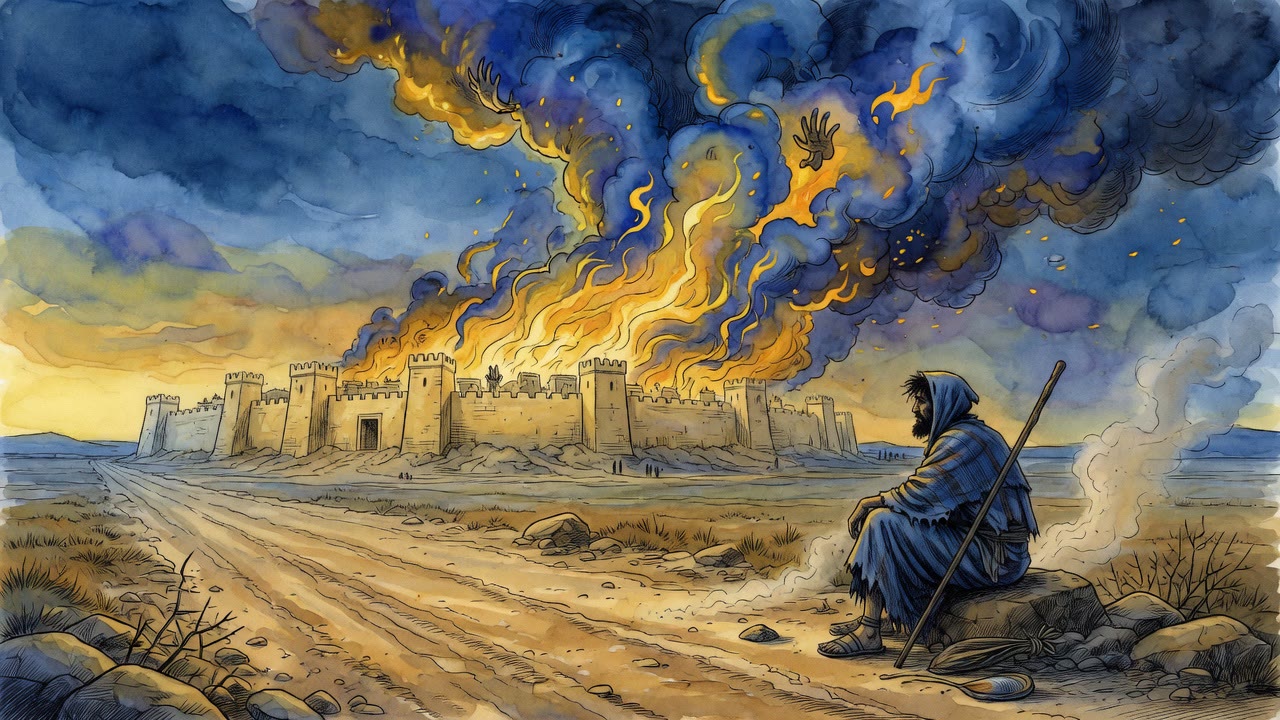
What came was a stream. Fire and brimstone fell on the orchards and the wells and the council benches still warm in the evening, and the city that had been like the garden of the Lord was overturned as if consumed by fire. The bread did not come up out of the ground anymore. The stones kept their sapphire and the dust kept its gold, and there was no one left to crack a stone or sift a handful. A land that had fed multitudes became a path unknown, a place no brigand bothered to cross, unseen by the falcon's eye, untrodden by the proud beasts, not crossed by the lion (Job 28:7-8).
The forgetting was complete. The men who had closed the roads so thoroughly that a stranger could not find them had themselves become the thing no stranger could find. The plenty they had clutched at lay scattered under the ash, useful to no one, sweet to no one, a wide bright nothing where a city used to count its riches by lamplight.
The Land Itself Burned Clean
What burned was not only the people. The ground itself, the ground they had bragged about, went under the fire and brimstone, scoured down to ruin, as though the wickedness had soaked into the soil and the soil had to be burned to take it out. Sodom was made an end of, destroyed and left destroyed, set up forever as the sign of what happens to a place that fattens itself and shuts its gates, that hoards a gift until the gift turns to poison and the poison turns to flame.
← All myths