The Angels Changed Guard as Jacob's Body Melted to Wax
At the border of Canaan one host of angels climbs and another descends to take the watch, and word of Esau's four hundred men turns Jacob to wax.
Table of Contents
 Click for full size
The Watch Changed Where the Land Ended
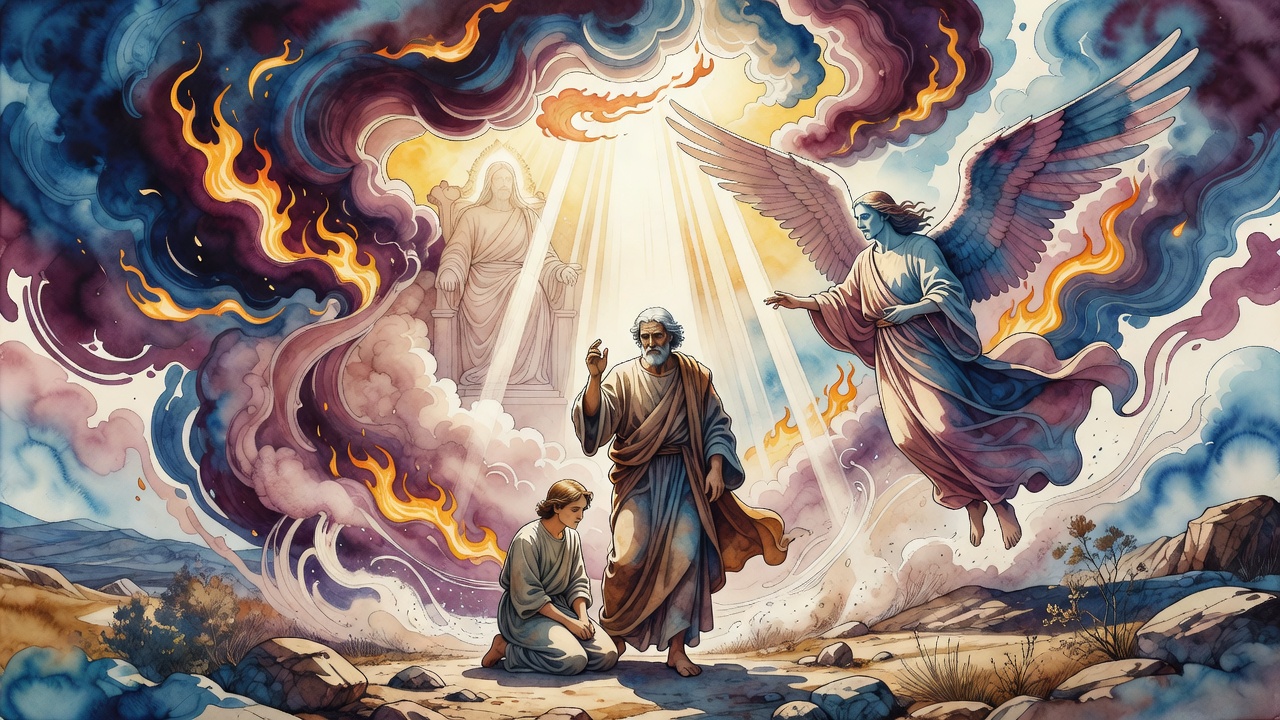
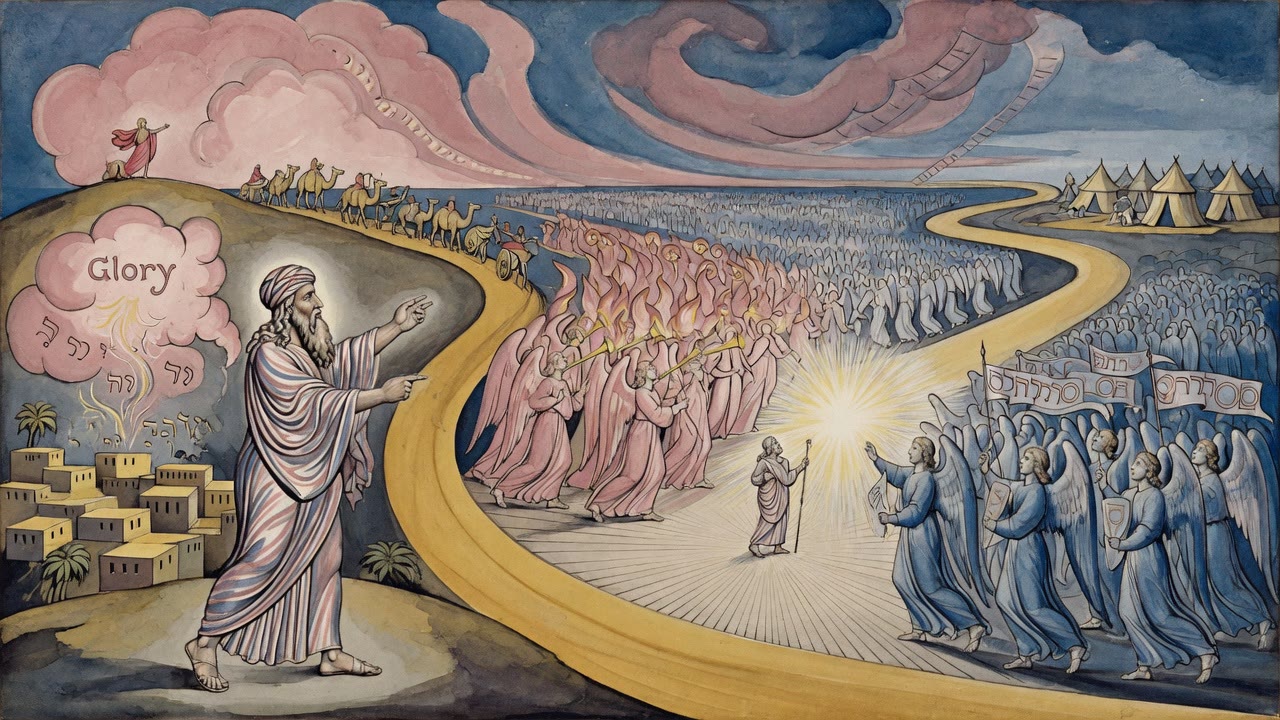
On the road down from Paddan-aram, at the seam where the Land of Israel ends and the outer country begins, the air thickened with wings. Jacob did not see the first company leave. He felt the change the way a house feels different when one set of guests has gone and the next has not yet spoken. Above him the angels who had walked the fields of Canaan with him climbed the rungs of light and went up, and from the far side of the border a second company came down to take the watch. It had happened once before, years earlier, when he first fled toward Haran and lay with a stone under his head. Then he had seen a ladder set on the earth with its top in heaven, and the angels of God going up and coming down on it. Up first, then down. Anyone who descends has first to climb, so the order should have run the other way. It did not. The ones who had guarded him inside the Land rose, and strangers took their place to guard him in exile.
Two Camps Met Him at Mahanaim
Now, coming home, the exchange ran in reverse. The exile-angels who had kept him alive among the flocks of Laban went up. The homeland-angels came down to meet him. Jacob lifted his eyes and saw both companies standing on the road, the ones who had brought him out and the ones who had held the border while he was gone. He named the place for what he saw. Not "camp," in the singular, but Mahanaim, two camps, because two hosts of heaven stood there at once. A plan formed in him. He had more messengers on that road than any king could field, and he would take some from this company and some from that, and send them ahead of him.
The Messengers He Sent to Esau
So Jacob sent angels ahead of him to Esau his brother, into the country of Seir. If it seems strange that a man should command the hosts of heaven as couriers, consider the smallest and least of his house. Years later he would say to his youngest son, Joseph, "Go now, see whether it is well with your brothers." The boy went looking and lost his way, and a man found him wandering in a field. "What are you seeking?" the man asked. Joseph said he was seeking his brothers. "They have journeyed from here," the man told him, "for I heard them say, let us go to Dothan." That was no shepherd. He was an angel, and the name of the place he spoke, Dothan, held the reason he was standing there, for it sounds out dat Yah, the religion of God, and he was set to guard the covenant the boy carried. If a lost boy could be answered by an angel on an empty road, and if even Hagar the maidservant, cast out with her son and a waterskin, had angels call to her from heaven, three of them by one counting, then it was no wonder at all that Jacob could send them.
His Body Turned to Wax
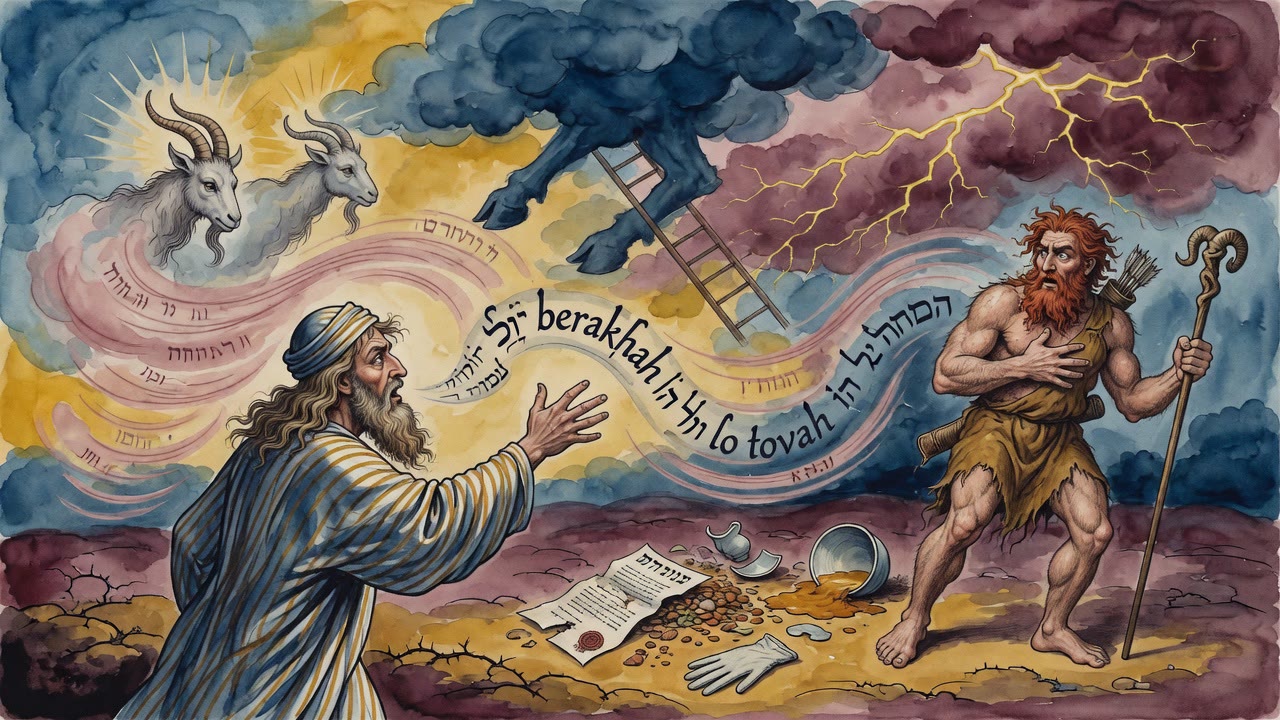
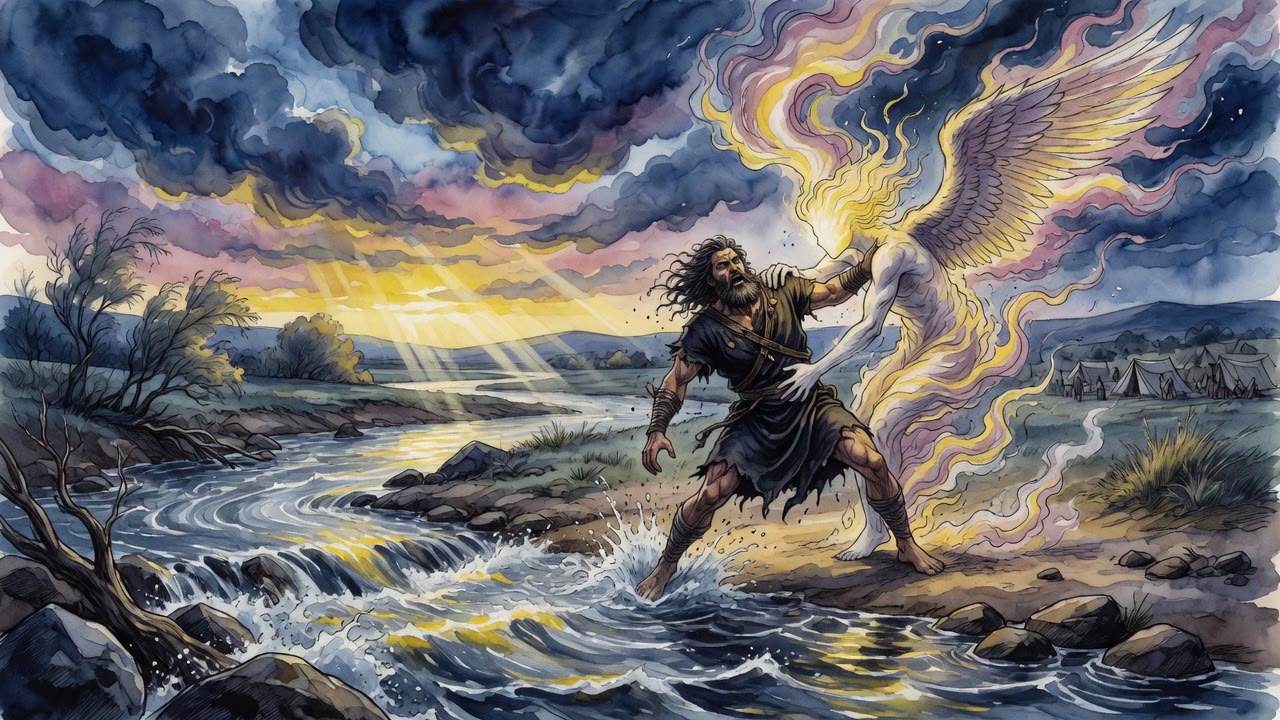
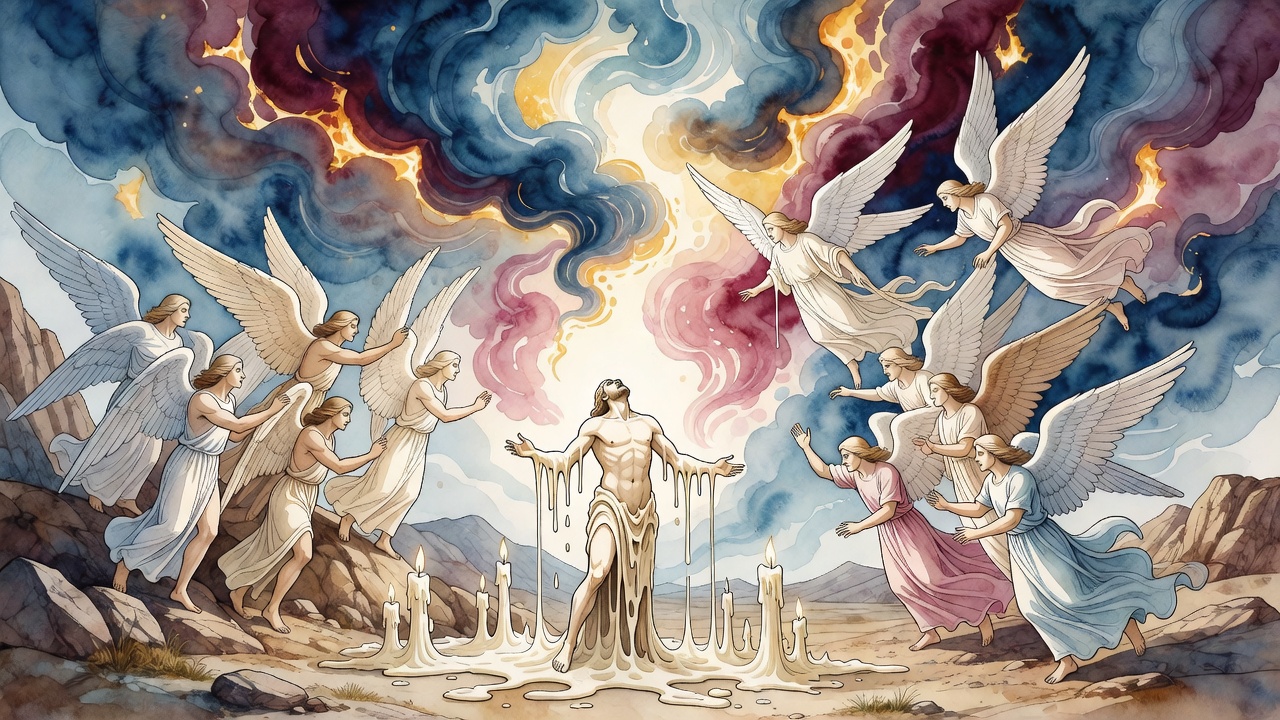
Then the messengers came back, and the news broke him. Esau was coming to meet him, and four hundred men were coming with him. Jacob had bought a birthright and taken a blessing, and now the brother he had outrun for twenty years was on the road with an army. Fear went through him and did not stop at fear. His body began to soften and run like wax held too near a flame, the flesh losing its own shape on the ground. A voice, the Holy Spirit itself, called down over him a hard word: "If you faint in the day of adversity, your strength is small." It was not comfort. It was a rebuke aimed at the very center of the man who was pouring out of his own skin.
God Set Michael and Gabriel at His Side
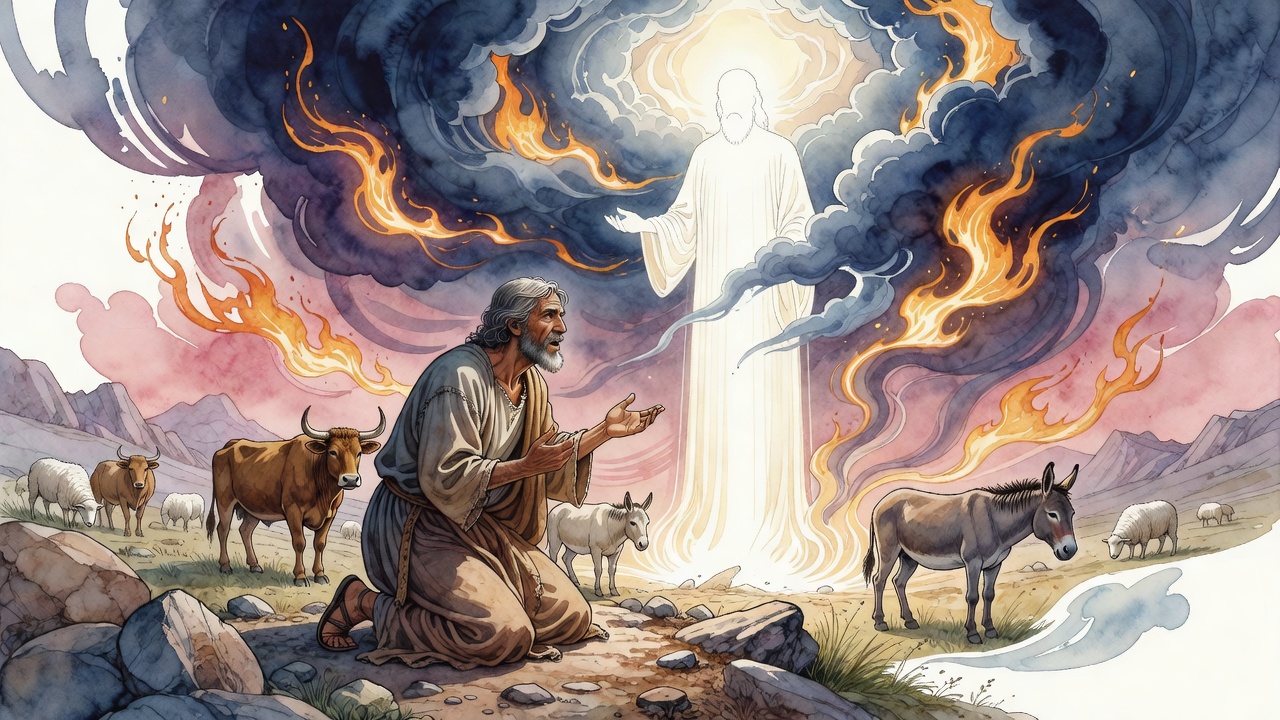
In that hour the Holy One spoke to him. "Fear not, for I am with you. Be not dismayed, for I am your God. I will strengthen you, yea, I will help you, I will uphold you with the right hand of My righteousness." Every clause was a body sent to stand beside him. "I will strengthen you" meant Michael, set at his right hand. "I will help you" meant Gabriel, set at his left. The wax cooled. The shape came back. And the promise he had first heard on the night of the ladder returned to him now at the border, in the same words: "Behold, I am with you."
He Made Ready for Prayer, Gift, and War
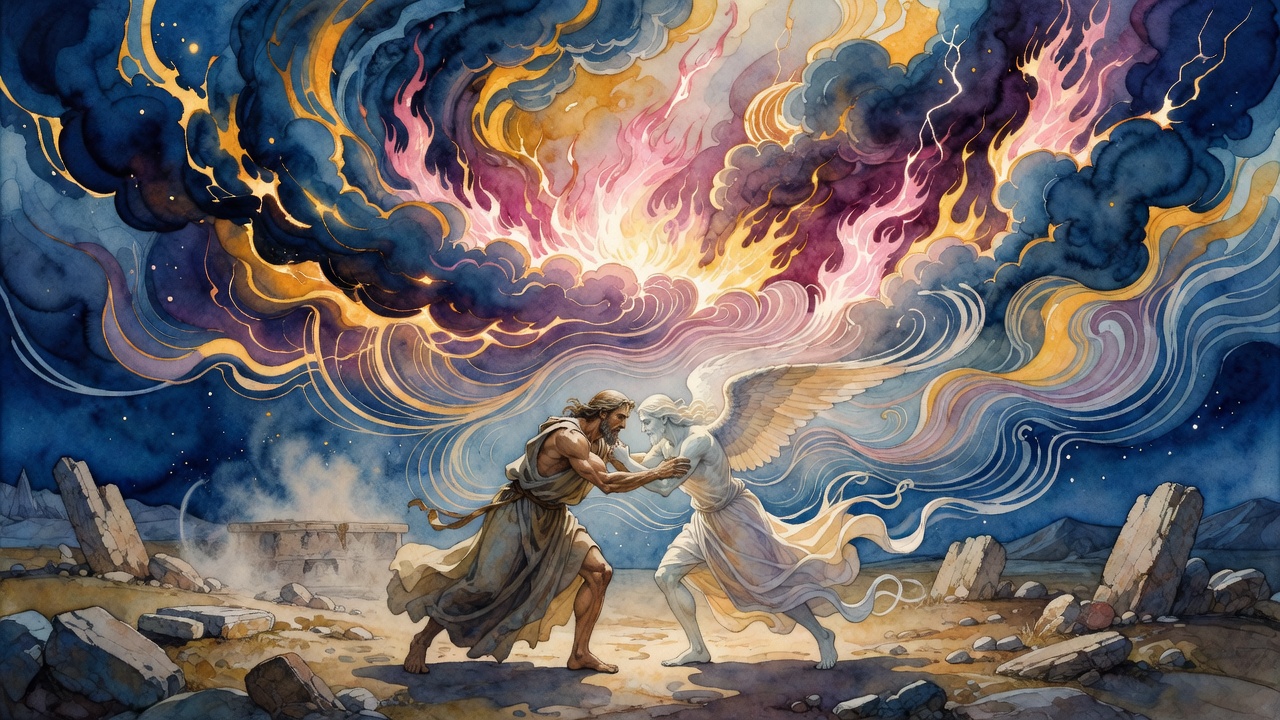
Then Jacob, a man again and no longer running on the ground, divided the people who were with him into two companies. He armed them under their clothes and dressed them in white on the outside, so that whoever met them would see peace and find iron. He made himself ready three ways at once. A gift went out ahead of him across the ford, drove after drove, to soften a brother's face. His hands made ready for war, if Esau came against the one camp and struck it. His knees made ready for prayer. "O God of my father Abraham and God of my father Isaac," he said, "I am unworthy of all the kindnesses and all the truth You have shown Your servant. Deliver me, I pray, from the hand of my brother, from the hand of Esau." The Holy One heard him out and answered the fear beneath the words. "You have called upon Me," He said. "By your life, I will deliver you." Two angels stood on the road where a man had almost poured out of his own body, and beyond the ford four hundred swords were still coming on.
← All myths