6 min read

The Barrel of Pearls Breaks Open and Solomon Ends Behind Sixty Swords

Sixty armed men stood around the king's bed every night because he was afraid of the dark. He had once ruled from one end of the earth to the other.

Curated by Arthur · Told by Maggid ·
Table of Contents
  1. The King Who Went Hunting for Teachers
  2. The Throne That Judged Without Witnesses
  3. The Song He Signed With His Father's Name
  4. I Can Take Them All and Not Sin
  5. Down to One Bed

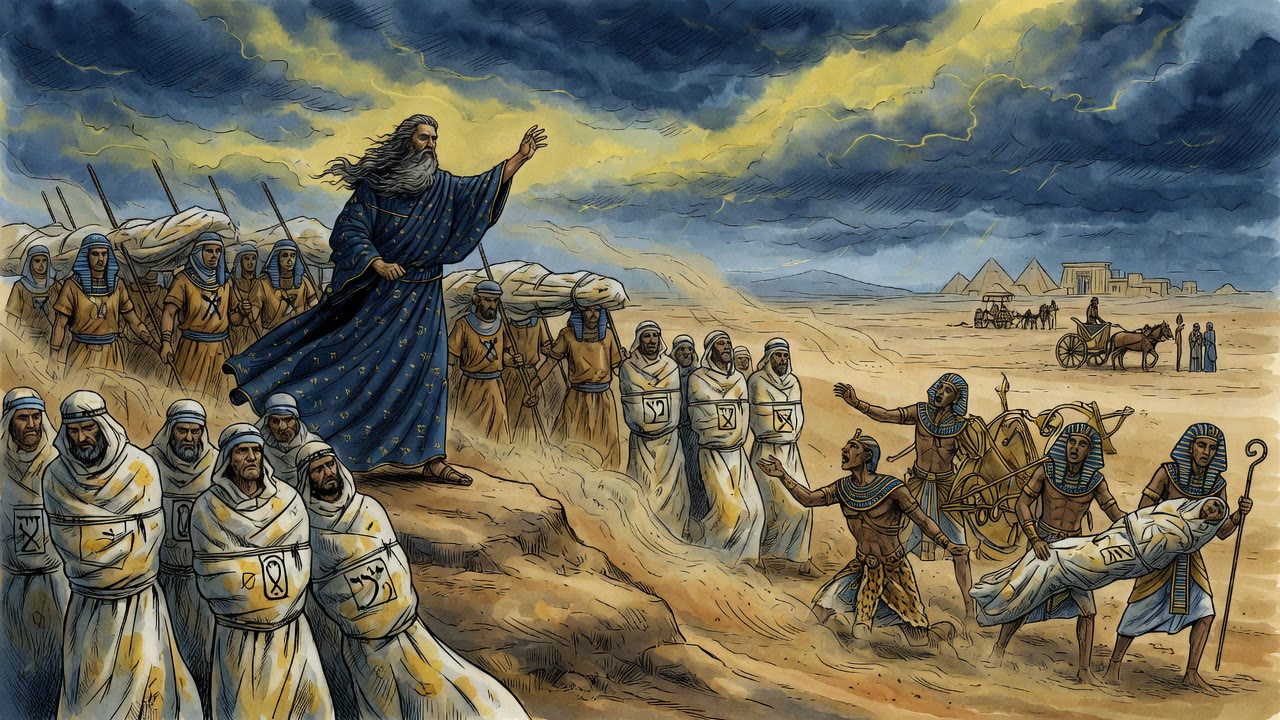
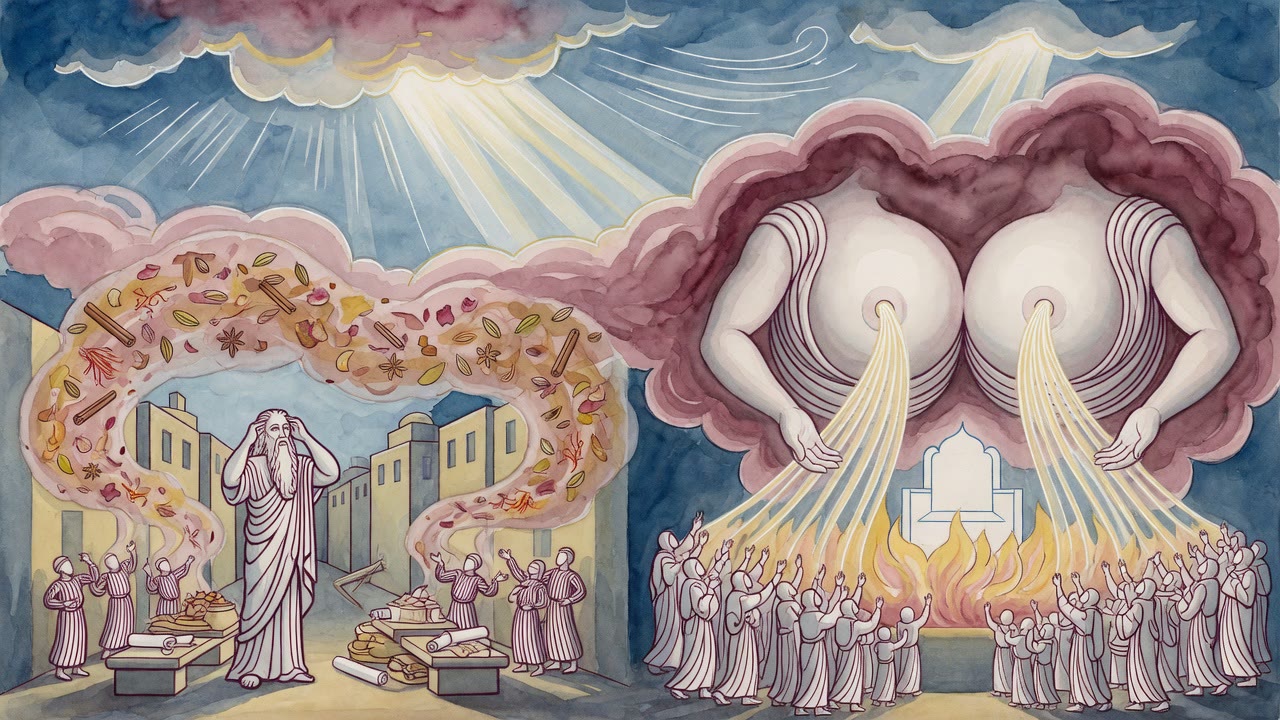
There was a barrel standing in the corner of a room, lid hammered down tight, and everybody walked past it for years. Nobody knew what was in it. Then one day a man pried the lid off and turned it over, and gems and pearls went across the floor, and the whole street knew.
The Barrel of Pearls Breaks Open and Solomon Ends Behind Sixty Swords Click for full size

Solomon was that barrel with the lid still on. A heart packed full and a mouth that had not yet opened.

The King Who Went Hunting for Teachers

He went after wisdom the way the spies went into Canaan. Same word for it. He scouted.

If a man was expert in Scripture, Solomon went to him. If a man was expert in Mishnah, Solomon went to him. He filled the alphabet with songs and then kept going five letters past the end of it, because a thousand and five is what the record says, and a poet who stops at the last letter has only done what he was asked.

He did not stop at Torah either. He went at everything done under the sun, down to how a cook takes the bitterness out of mustard and how a farmer sweetens mandrakes.

God watched him hunting and said, "You scouted after Torah. By your life, I am not holding back your wages." The Spirit came down on him then, and the lid came off. Out came Proverbs. Out came Ecclesiastes. Out came the Song of Songs.

The Throne That Judged Without Witnesses

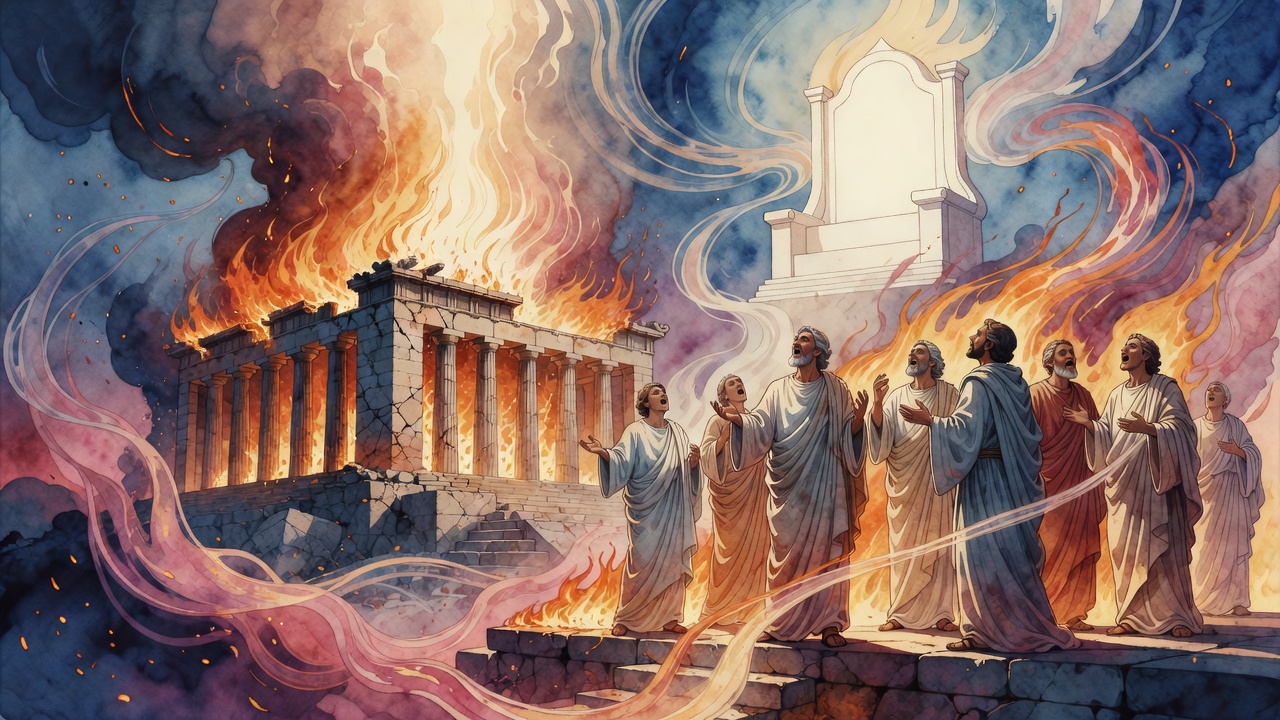
He climbed in three steps. First the whole country across the River. Then every kingdom from the River to the border of Egypt. Then a line that made the study halls stop: Solomon sat on the throne of the LORD as king.

Rabbi Yitzhak refused to let it pass. God is a consuming fire. His throne is sparks of flame and a river of fire pours out from in front of it. Put a man in that seat and the man is ash. How does anyone read this?

Like this, they answered him. God's throne rules from one end of the earth to the other, and so did his. God's throne passes sentence with no witnesses called and no warning given, and so did his.

Two women came in holding one live baby and one dead one, each swearing the live one was hers. No witnesses. Nothing to weigh. Solomon sent for a sword and told the guard to cut the child in half and give each woman a piece, and one of the women said fine, divide it, and the other one broke and said give it to her, only let him live. He handed the baby to the one who broke.

Who were those women? Rav said they were spirits. Other teachers said they were childless widows waiting on levirate marriage, with everything riding on which infant had lived. Rabbi Simon said they were exactly what the verse calls them, two harlots off the street, and a king who ruled the world stopped his court for them.

The Song He Signed With His Father's Name

There is a psalm for the dedication of the House with David's name on the top of it, and David was dead before the first stone went down.

Solomon wrote it and put his father's name on it, because David had spent his last years hauling in the cedar and the gold and the iron for a building he had been told he would never be allowed to raise. The son sang. The father got the credit. In the Song, the beloved's neck is a tower of David, and the teachers who read it heard the Temple standing in that line, stone and love welded together past separating.

I Can Take Them All and Not Sin

Seven names hung on him. Yedidyah, beloved of God. Kohelet. Solomon. And four more scattered through his own books: Agur, son of Yakeh, Lemuel, Itiel.

Lemuel is the one that bites. It comes apart into a man speaking to God with his whole heart, and what he said with his whole heart was this: I can gather it all in and not sin.

So he gathered. Horses out of Egypt, six hundred pieces of silver a chariot and a hundred and fifty a horse, until his stables held twelve thousand. Women, hundreds of them, foreign, from every nation he had been warned about. Silver until silver stopped meaning anything, lying around Jerusalem like paving stones, and the stones were ten cubits and eight cubits so no thief could lift one, and the market weights were solid gold.

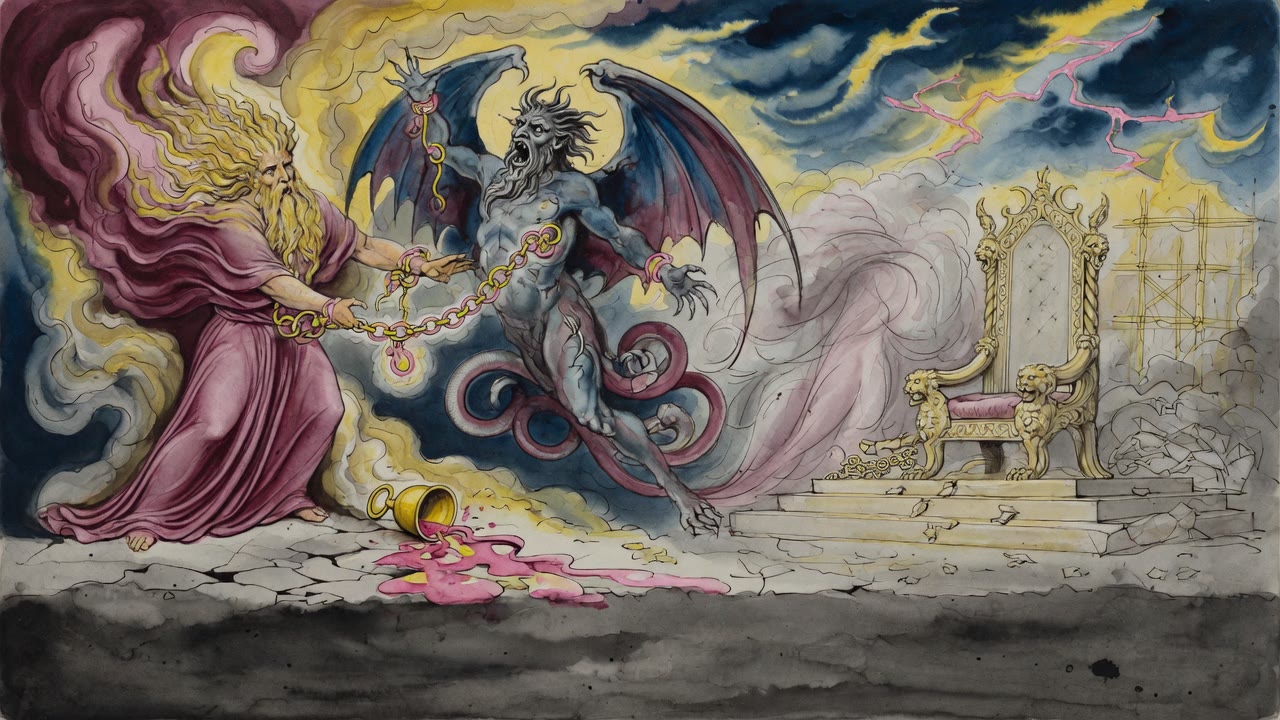
God raised up Hadad the Edomite against him. Then Rezon son of Eliada. Then Jeroboam, out of his own workforce.

Down to One Bed

He came down in three steps too, the same stairs he had climbed.

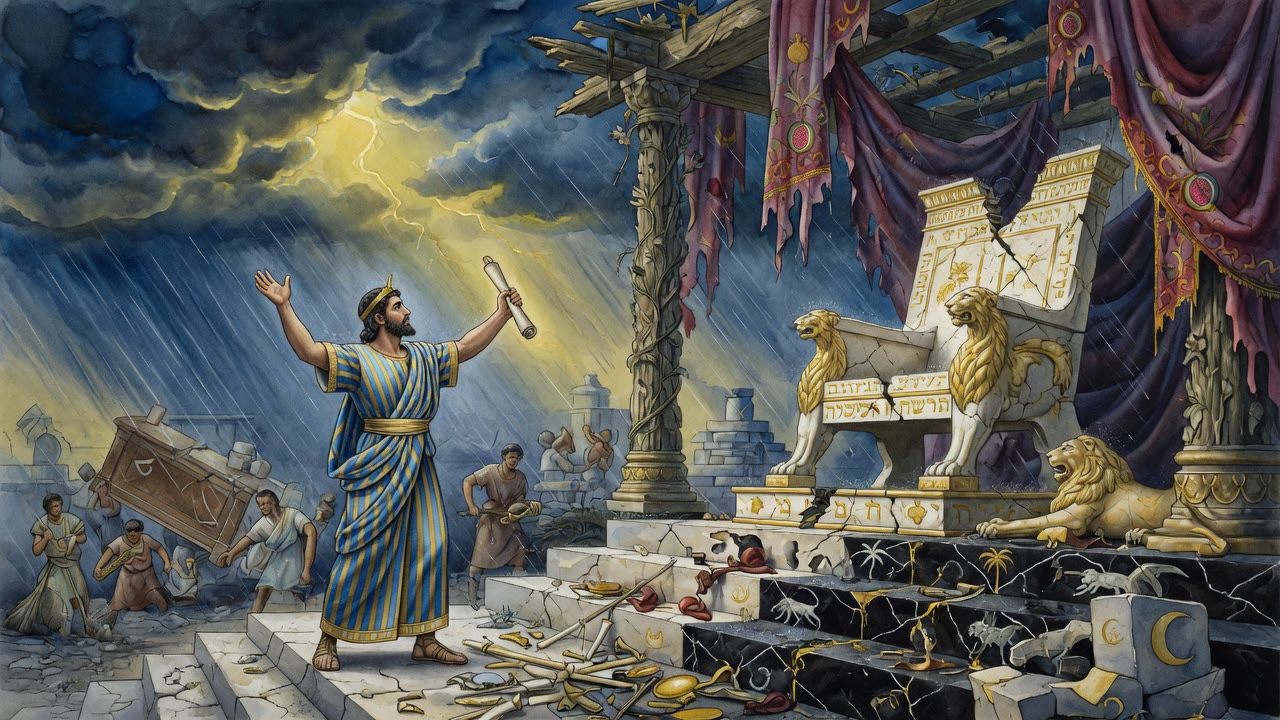
The king of the whole earth became king of Israel. The king of Israel became king in Jerusalem and nothing outside its wall. The king in Jerusalem became king of his own house.

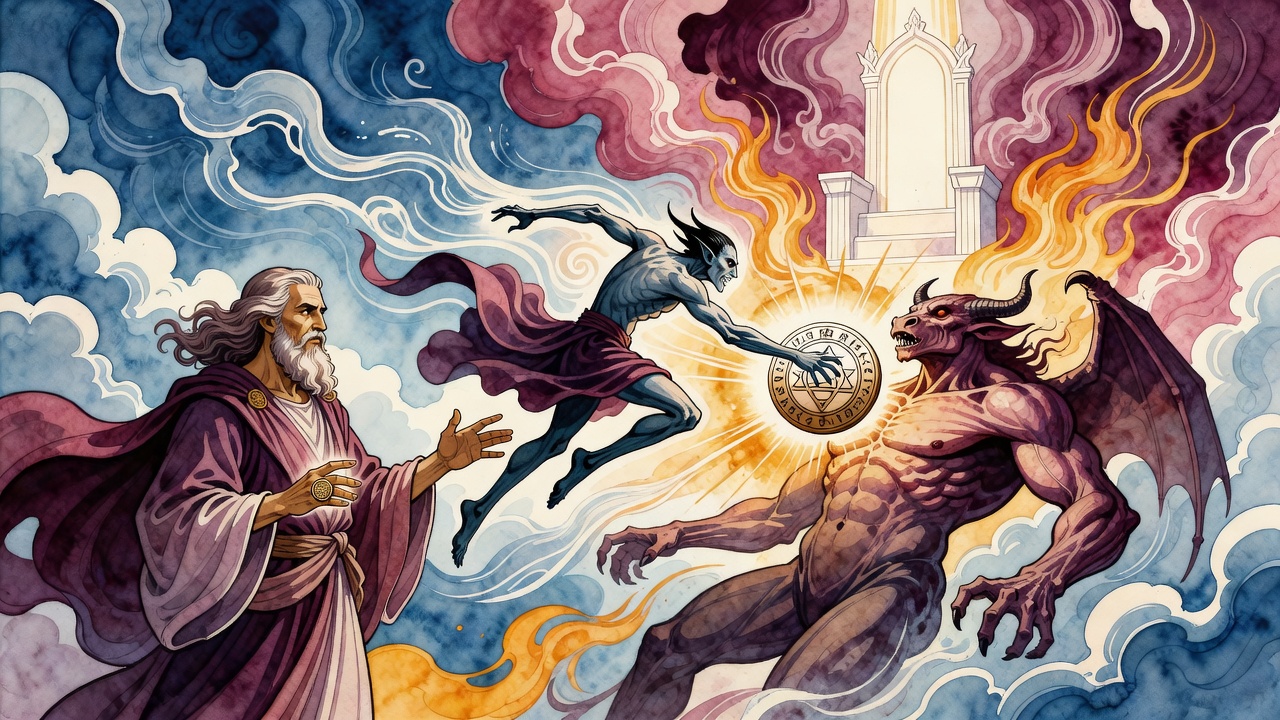
And then not even that. Sixty men stood around his bed every night with drawn swords, every one of them a fighter, every sword ready on the thigh, because of the fear in the nights. He was not king of the bed either. The spirits that had pulled him off the throne were what he was afraid of, and sixty swords do not cut a spirit.

Agur, they explained, means he gathered up Torah. Bin Yakeh means a son who threw it all back up, the way a basin gets filled and then emptied out. Solomon learned it and lost it and learned it again.

The barrel had been opened and turned over and the floor had been swept long ago. The books were out in the world where anyone could pick them up. The man they came out of lay awake behind sixty drawn swords, listening.


← All myths
From the tradition

Sources

2 sources

The texts behind this telling. Some cards carry a translation of the source; others are our own retelling of it, and each card says which. Every card links out to the original.

Shir HaShirim Rabbah 1:10Shir HaShirim Rabbah

Retold in our words. Read the original at the link below.The Sefaria Midrash Rabbah, 2022 · CC-BY

In fact, the Shir HaShirim Rabbah, a collection of rabbinic interpretations of the Song of Songs, dives deep into its meaning and context, revealing some pretty surprising ideas.

Rabbi Aivu and Rabbi Yehuda debated this very point. Rabbi Aivu suggested that the phrase "Song of Songs" implies three songs – "song" (singular), "of songs" (plural), totaling three. But Rabbi Yehuda bar Simon argued it’s entirely one song. So, what about the other two? He identifies them as "A song of ascents for Solomon" (Psalms 127:1) and "A psalm, a song for the dedication of the House, by David" (Psalms 30:1).

Here’s a twist: You might assume David wrote Psalm 30, especially since it's attributed to him. But the Midrash (rabbinic interpretive commentary) clarifies that it was actually Solomon who composed it and attributed it to David, because David made all the preparations for building the Temple. Think of it like the Song of Songs itself: Solomon wrote it, but it's connected to David, as we see in the verse "Your neck is like the tower of David" (Song of Songs 4:4), which the Midrash sees as a reference to the Temple itself.

The Midrash continues, drawing parallels between King Solomon and God. It suggests that all of Solomon's actions happened in threes. We see Solomon rising to three levels of power, as described in I Kings. First, he ruled a region; then, he ruled all the kingdoms to the border of Egypt; and finally, "Solomon sat on the throne of the Lord as king" (I (Chronicles 29:2)3).

Wait a minute…sit on God’s throne? Rabbi Yitzḥak challenges this idea. How can a mortal sit on the throne of the Almighty, described as a consuming fire in Deuteronomy and whose throne is sparks of fire in Daniel? The answer? Just as God's throne rules the entire earth, so too did Solomon's. And just as God's throne judges without witnesses, so did Solomon's, famously demonstrated in the story of the two harlots in I Kings.

Speaking of the harlots, who were they? Rav says they were spirits! The Rabbis say childless women awaiting levirate marriage. But Rabbi Simon, in the name of Rabbi Yehoshua ben Levi, says they were actual harlots, and Solomon used his divine wisdom to judge without the need for typical legal proceedings.

But Solomon’s story isn’t all about rising. The Midrash also describes three descents. First, he was a king ruling the world, then only Israel, then only Jerusalem, and finally, only over his bed! Or, perhaps, not even that, as the Midrash says he feared the spirits even in his own bed (Song of Songs 3:7-8).

The Midrash then explores three "worlds" Solomon experienced. Rabbi Yudan describes them as king, commoner, king – wise, fool, wise – wealthy, indigent, wealthy. Rabbi Ḥunya reverses the order, arguing that Solomon ended his life as a commoner, a fool, and indigent, based on the verse "I am Kohelet, I was king over Israel in Jerusalem" (Ecclesiastes 1:12). The "I was" implies a past glory that's no more.

According to the Midrash, Solomon also violated three prohibitions outlined in Deuteronomy: amassing horses, women, and silver and gold. But here, too, there are different interpretations. Did he amass too many women? Did he marry foreign women, violating the command "You shall not marry them" (Deuteronomy 7:3)? Rabbi Yosei ben Ḥalafta offers a more charitable view: Solomon married them to convert them and bring them closer to God!

The Midrash also reminds us that three adversaries confronted Solomon (I (Kings 11:14), 23, 25): Hadad the Edomite, Retzon son of Elyada, and possibly Jeroboam.

And let's not forget Solomon's wisdom. He stated three proverbs, as mentioned in the opening verses of the book of Proverbs. He spoke of three vanities (Ecclesiastes 1:2). And he recited three songs, bringing us full circle back to our discussion of the Song of Songs.

Solomon was known by many names: Yedidya, Solomon, Kohelet. Rabbi Yehoshua ben Levi adds Agur, Yakeh, Lemuel, and Itiel, bringing the total to seven! Rabbi Shmuel bar Naḥman explains that Agur means he "amassed matters of Torah," and Lemuel means he "spoke to God with all his heart."

Finally, the Midrash asks: In what order did Solomon write his three books: Proverbs, Ecclesiastes, and Song of Songs? Rabbi Ḥiyya the Great says Proverbs first, then Song of Songs, then Ecclesiastes. But Rabbi Yonatan argues for Song of Songs, Proverbs, then Ecclesiastes, reflecting the progression of life from youthful song to mature proverbs to the reflections of old age.

So, what does all this tell us? Perhaps that the Song of Songs, and indeed the entire biblical narrative, is far more complex and multi-layered than we might initially assume. It's a story of rise and fall, wisdom and folly, love and loss, all intertwined and open to endless interpretation. And maybe, just maybe, that’s the point.

Full source
Shir HaShirim Rabbah 1:7Shir HaShirim Rabbah

Retold in our words. Read the original at the link below.The Sefaria Midrash Rabbah, 2022 · CC-BY

They begin by referencing (Proverbs 16:23): “The heart of the wise will make his mouth prevail.”

The idea is that a wise person’s heart overflows with wisdom. But what proves it? What shows the world that this person is truly wise? According to the Rabbis, it's their mouth. It's the way they articulate and share that inner wisdom.

That’s where the image of a sealed barrel comes in. No one knows what treasures lie within. But then, someone comes along and empties the barrel, revealing all its splendor to the world.

The Rabbis suggest that King Solomon was like that barrel. His heart was full of wisdom, but it remained hidden until the Shekhinah, the Divine Presence, rested upon him. Then, he composed his three famous books – Proverbs, Ecclesiastes, and the Song of Songs – and everyone recognized his profound wisdom.

But what does it mean to "scout" for wisdom, as the verse in Ecclesiastes (1:13) says: “I applied my heart to seek and to scout [velatur] wisdom”? The Rabbis connect this word velatur to the scouting done in the land of Canaan (Numbers 13:2): “So they may scout [veyaturu] the land of Canaan.” It means seeking out those who are experts in Torah and Mishna. Going to them and learning from their knowledge.

There's another layer, too. The Rabbis suggest that “to seek and to scout [latur]” also means “to fulfill the quota [latur] and go beyond [lehotir].” Think about a poet composing an alphabetic acrostic poem. Sometimes they finish the alphabet, sometimes they don't. But Solomon, in his wisdom, not only completed the acrostic but added lines for five additional letters! The text reads: “His songs were a thousand [alef] and five” (I (Kings 5:1)2). The word "thousand" (alef) is interpreted as a reference to Aleph, the first letter of the Hebrew alphabet, implying an alphabetic acrostic poem.

And Solomon didn't just explore matters of Torah. He delved into "everything that is done under the sun" (Ecclesiastes 1:13), from sweetening mustard to sweetening mandrakes. As the Rabbis suggest, the Holy One, blessed be He, recognized Solomon's dedication to seeking wisdom in all things and rewarded him by resting the Divine Spirit upon him. This led to the composition of Proverbs, Ecclesiastes, and the Song of Songs.

So, what can we learn from this? Perhaps it's that wisdom isn't meant to be hoarded. It's meant to be shared, explored, and expanded upon. And maybe, just maybe, by sharing our own unique perspectives and insights, we too can help illuminate the world around us.

Full source