5 min read

The Corpse Rotted While the Soul Waited at the Gate

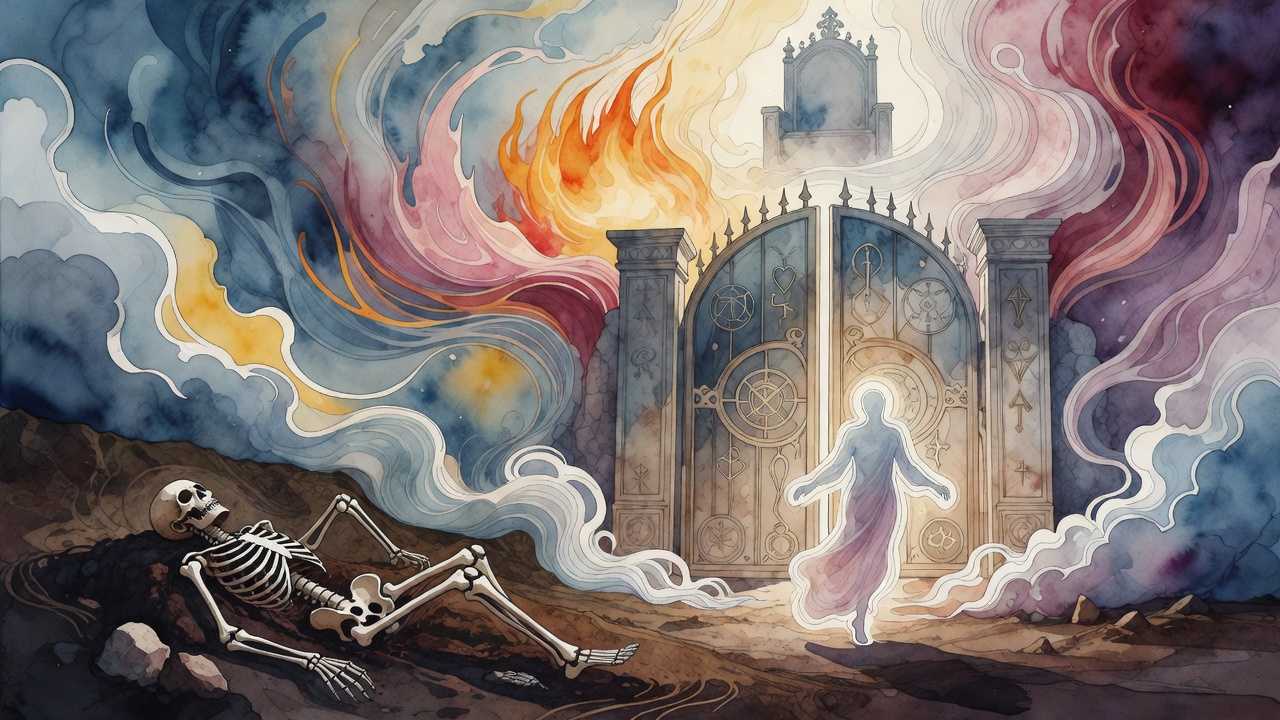
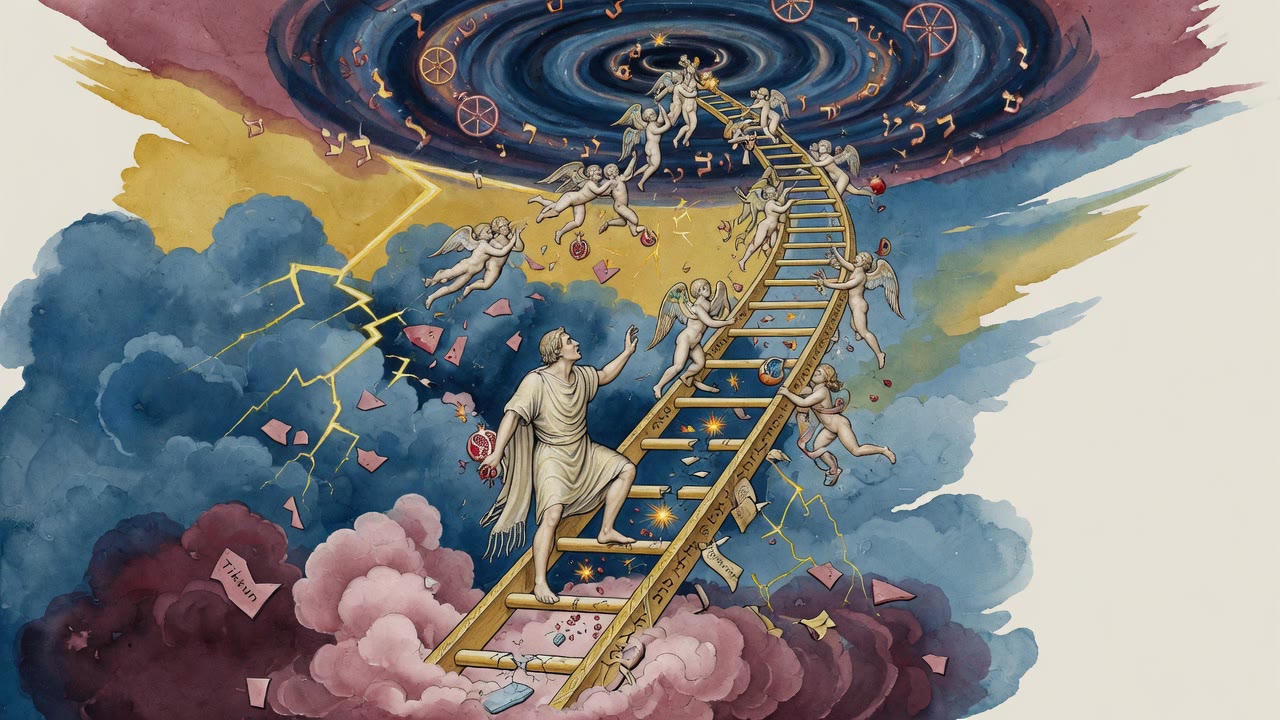
Bones softened under earth while a soul paced outside Eden. The gate would not open until the body was gone. Later the scars would return first.

Curated by Arthur · Told by Maggid ·
Table of Contents
  1. Outside the Garden Gate
  2. Two Systems in One Lifetime
  3. Why Bring the Old Shell Back
  4. Desire Learning a New Gravity
  5. When Nothing of the Body Remains
The Corpse Rotted While the Soul Waited at the Gate Click for full size

Outside the Garden Gate

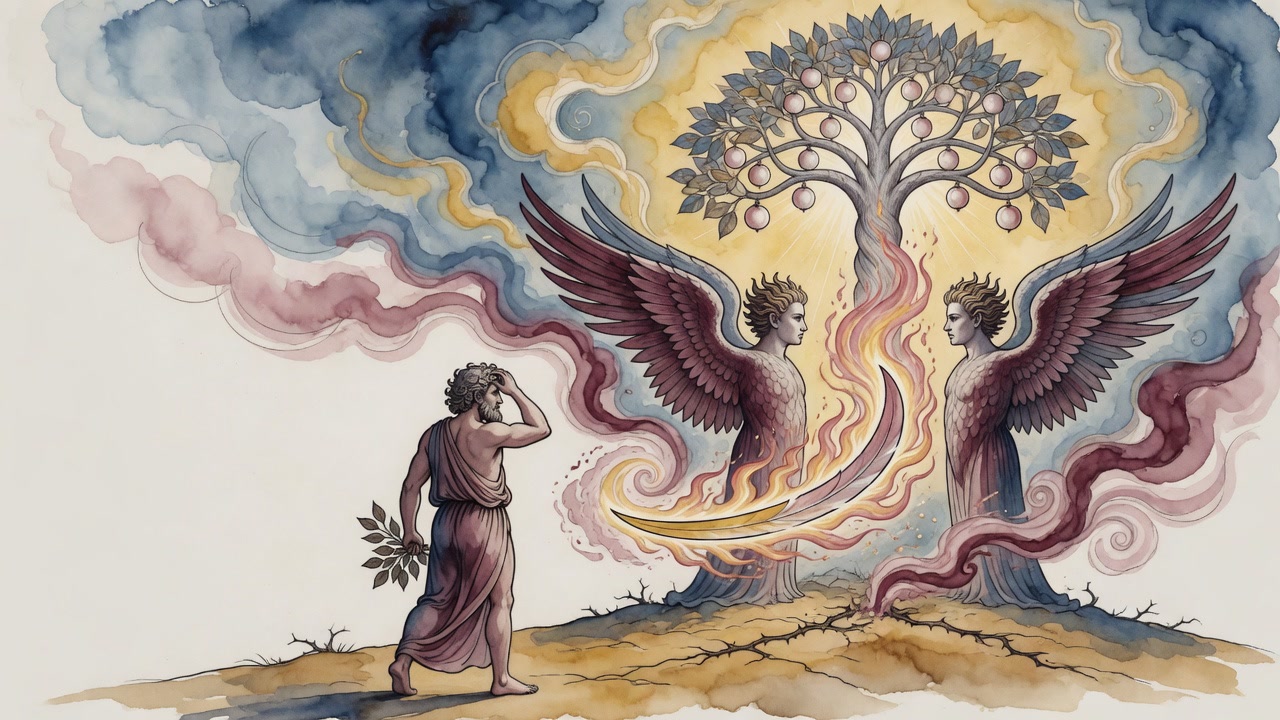
The soul stood outside Gan Eden (the garden of paradise where souls rest) and smelled its own body rotting a world away. The gate did not open for bright intention alone. Until the flesh under the soil had finished its work, until bone and tendon and the last stubborn thread of form had gone to nothing, the soul could not take its seat among the living lights. Waiting tasted like iron. Waiting also tasted like mercy delayed until identity could no longer be faked.

Below ground the corpse did what corpses do. It softened. It surrendered color. It returned heat to the clay that had loaned it. The soul felt each stage as a rope slackening. The Zohar's hard line held. No ascent into the proper place of delight while a body still claimed the name in the dark of the grave.

Someone on earth still said the name in prayer. The sound arrived at the gate like a knock with no hand. The soul could not answer yet. The body had not finished dying.

Two Systems in One Lifetime

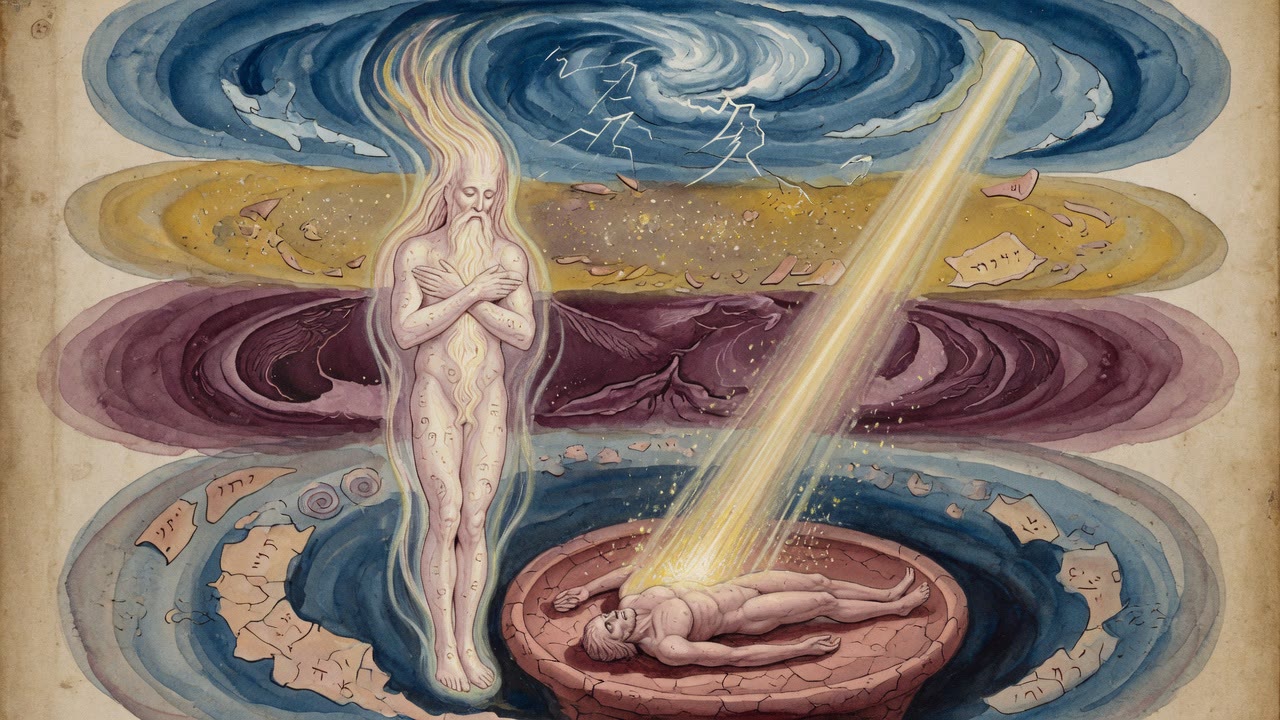
Before the grave there had been six thousand years of shared weather, body and soul pressed into one garment. Baal HaSulam maps that pressure as two systems built into the human: a desire to receive for the self alone, and a desire that can be turned toward giving, toward bringing satisfaction to the Creator without a private profit. The body is not a villain with a cape. It is the vessel that wants. The soul is not a tourist. It is the force that can retrain wanting.

They pass through purity and through the sitra achra, the other side, until they are enclothed in each other, mitlabshot, wound strand through strand. A life is that braid under tension. Torah and mitzvot (commandments) are not decorations on the braid. They are the slow turning of the receive-for-self into receive-in-order-to-give. Across the long ages allotted to this world, that turning is the work. Without it the grave only freezes a quarrel. With it the grave finishes a stage.

The soul at the gate remembered the years when the body won every morning and the soul stole back a few hours after dusk. It did not hate the body for winning. It needed the body to be fully gone so the argument could end cleanly before the next summons.

Why Bring the Old Shell Back

Resurrection, when it comes, will not debut a polished stranger. The dead rise first with their scars, their missing limbs, their familiar limps, so no witness can say, that is not the one who lived. Recognition is a kind of justice. The same mouth that lied must be seen before it is healed. The same hand that gave bread must be known before it is made whole.

Then healing arrives. Blind eyes open. Lame legs steady. The imperfections that proved identity yield to a second act of making. God does not skip the proof. He stages it, then mends it. Delight of the soul alone, without that return, would leave the story of the body unfinished, a garment thrown away without judgment or repair.

The soul at the gate understood the economics of that future. Decay now. Identity later. Healing after identity. The body is not trash. It is evidence that will be recalled into court and then into mercy.

Desire Learning a New Gravity

In the years of flesh, the two systems fought for every coin and every kindness. A coin kept was a vote for the receive-alone. A coin given with intention to please the Maker was a vote for the other gravity. Six millennia is a long ballot. Most days the body stuffed the box. Some days the soul managed a slim majority for an hour.

That struggle does not make God the author of a second god. Both systems sit inside one design. The other side is permitted as pressure, not as a rival throne. The soul waiting outside Eden still felt the old tug of wanting, even without a stomach. Habits outlive organs. Repair outlives habits only if the work was begun while blood still moved.

A wind came from inside the garden that smelled like first fruit. The soul stepped closer. The gate stayed shut. Under the earth a last ligament let go.

When Nothing of the Body Remains

Silence changed quality. The rope to the corpse went slack entirely. No claim remained in the soil that could answer to the old name. The gatekeeper, if a gate can be said to keep, no longer had a reason to bar the way on account of unfinished decay.

The soul entered the place prepared for it, not as a victor over flesh, but as a partner whose partner had completed a hard assignment. Later, at the end of ends, that partner would be called back scarred and recognizable, then healed in public. For now the waiting ended in light that did not need lungs.

Far below, grass covered a mound that no longer held a tenant. The name still lived in the mouths of the living. The soul, at last seated, could hear those mouths without being dragged by them. The long braid of body and soul had been untied for a season. The knot would be tied again when history demands witnesses who can be known by their wounds before they are known by their wholeness.


← All myths
From the tradition

Sources

3 sources

The texts behind this telling. Some cards carry a translation of the source; others are our own retelling of it, and each card says which. Every card links out to the original.

Baal HaSulam's Introduction to Zohar 3:2Baal HaSulam's Introduction to Zohar

Retold in our words. Read the original at the link below.Sefaria-hosted English translation · CC-BY

This physical form, this body of ours, it's. well, let's be honest, it's kind of a mess. Imperfect, prone to illness, and ultimately, destined for decay. The Zohar itself minces no words. It states (in Teruma, if you want to look it up) that the soul can’t even ascend to its rightful place in the Gan Eden – the Garden of Eden – until the body has fully decomposed, until there's absolutely nothing left. So, if that's the case, what’s the point of resurrection? Why bring this old shell back? Couldn’t God just, you know, delight the soul directly, without all the extra baggage?

It gets even stranger. The Sages, those brilliant minds of our tradition, tell us that when the dead are resurrected, they'll come back with all their original imperfections. Yep, every little flaw, every missing limb, every scar. All there, initially. The Zohar (Emor) tells us this explicitly. The reason? So that no one can claim, "Hey, that's not the same person!"

Here's the kicker: after this initial, imperfect resurrection, God then steps in and heals those imperfections. The blind see, the lame walk, and all are made whole.

So, let's break this down. Why, oh why, would God go to all the trouble of recreating our defects, only to then fix them? Why this elaborate charade? What's the purpose of making sure everyone recognizes us in our flawed state, only to then erase those flaws?

Why would God care so much that someone might mistake us for someone else? It seems like a very human concern to project onto the Divine. What's the deeper meaning here? What profound truth about ourselves, about our connection to the Divine, is hidden within this seemingly bizarre picture of resurrection?

Perhaps, and this is just a thought, it’s about the journey. Maybe it’s about acknowledging the imperfections, the struggles, the very things that make us us, before we can truly be healed and made whole. Maybe it's about recognizing the continuity of our identity, even through the veil of death and rebirth.

The tradition invites us to confront these questions, to wrestle with the mysteries of life and death, and to find our own meaning within the tradition of Jewish thought. It's a journey of exploration, a lifelong quest for understanding. And, frankly, it's a journey I'm glad we're taking together.

Full source
Baal HaSulam's Introduction to Zohar 14:2Baal HaSulam's Introduction to Zohar

Retold in our words. Read the original at the link below.Sefaria-hosted English translation · CC-BY

Enter Baal HaSulam, Rabbi Yehuda Leib HaLevi Ashlag, whose introduction to the Zohar is like a masterclass in Kabbalistic thought.

He talks about these six thousand years, the lifespan of our world as we know it. During this time, humanity is split, almost down the middle, into two systems: the body and the soul. It’s a dualistic existence, a constant push and pull.

What's our job during this cosmic timeframe? To engage in the service of Torah and mitzvot (commandments), commandments. But it’s not just about following rules. It’s about transformation. Our mission, should we choose to accept it, is to transform our inherent desire to receive – our selfishness, if you will – into a desire to give, to bring satisfaction to our Creator, not for personal gain.

To actively work against our own self-interest. But that’s the core of it. During these six thousand years, Baal HaSulam explains, our bodies don’t actually get "fixed." Only our souls do. Meaning, the focus isn't on physical perfection, but on spiritual refinement.

The goal is to eliminate every trace of selfish receiving from our souls. That aspect of receiving? That's the "body" part. What we want to be left with is pure giving. Only then do we truly embody the form of the soul's desire.

Here's something else to ponder: even the souls of the righteous, those who live exemplary lives, can't fully enjoy the pleasures of Eden, Gan Eden, after death until their bodies have completely decomposed in the grave. It’s a stark reminder that this physical existence, this "body," holds us back, even after death. It's that final shedding of the self-centered shell that allows the soul to truly ascend.

So, what does this all mean for us, here and now? It means that every act of kindness, every moment of selflessness, every effort to connect with something larger than ourselves is a step towards that transformation. It's about actively choosing to give, to contribute, to make the world a little brighter, even when it's hard. Even when our bodies, our desires, scream for us to do otherwise. It's a lifelong journey, a constant process of refinement, of peeling away the layers of self until we reach the core of pure, selfless giving. And in that, perhaps, lies the true purpose of our existence.

Full source
Baal HaSulam's Introduction to Zohar 12:1Baal HaSulam's Introduction to Zohar

Retold in our words. Read the original at the link below.Sefaria-hosted English translation · CC-BY

The great kabbalist Baal HaSulam offers a powerful answer, deeply rooted in the wisdom of the Zohar. And it all starts with desire.

In Baal HaSulam’s “Introduction to Zohar, ” that inherent desire to receive, that core drive within each of us, is actually built into the very blueprint of our souls. It's part of the plan. But. And this is a big but, that desire needs repair. It needs refinement.

Think of it like this: God created not one, but two systems. Two opposing forces. Baal HaSulam calls them the system of purity and the system of impurity, also known as the sitra aḥra, the "other side.” Souls, on their journey, pass through both.

What happens when they do? They become separated, almost like two strands being woven together. The body and the soul become intertwined – or as Baal HaSulam puts it, mitlabshot, enclothed in one another. But it also speaks to the inherent tension within us.

So, how do we fix this? How do we repair that primal desire to receive?

Through Torah and mitzvot (commandments). Through study and commandments. These aren’t just arbitrary rules. They're the tools, the very mechanisms, by which we can transform our desire to receive into a desire to give. It’s a process, a lifelong journey of turning our focus outward.

And what happens after that transformation? Then, and only then, can our souls truly receive all the goodness that was intended for us from the very beginning. We become worthy of a deeper, more profound connection with the Divine. Why? Because through our service, through our commitment to Torah and mitzvot, we begin to align our very essence, our form, with that of the Creator.

This, Baal HaSulam tells us, is the ultimate stage of tikkun (spiritual repair), of repair. The final act in the grand cosmic drama.

And when this happens, something incredible occurs: there will no longer be a need for that impure "Other Side." It will be eliminated, banished from the earth. Death itself, as we know it, "shall be swallowed up forever." It’s a powerful image of redemption, of a world perfected.: all the service, all the effort, all the Torah and mitzvot performed throughout the six thousand years of the world's existence – and even the seventy years of our own lives – all of it is ultimately geared toward achieving this final stage of repair. It's about aligning our forms, our innermost selves, with the Divine. It’s about becoming more like God.

It means that every act of kindness, every moment of study, every conscious choice to give rather than receive, is a step towards that ultimate redemption. It's a step towards a world where desire is no longer a source of separation, but a pathway to unity.

Full source