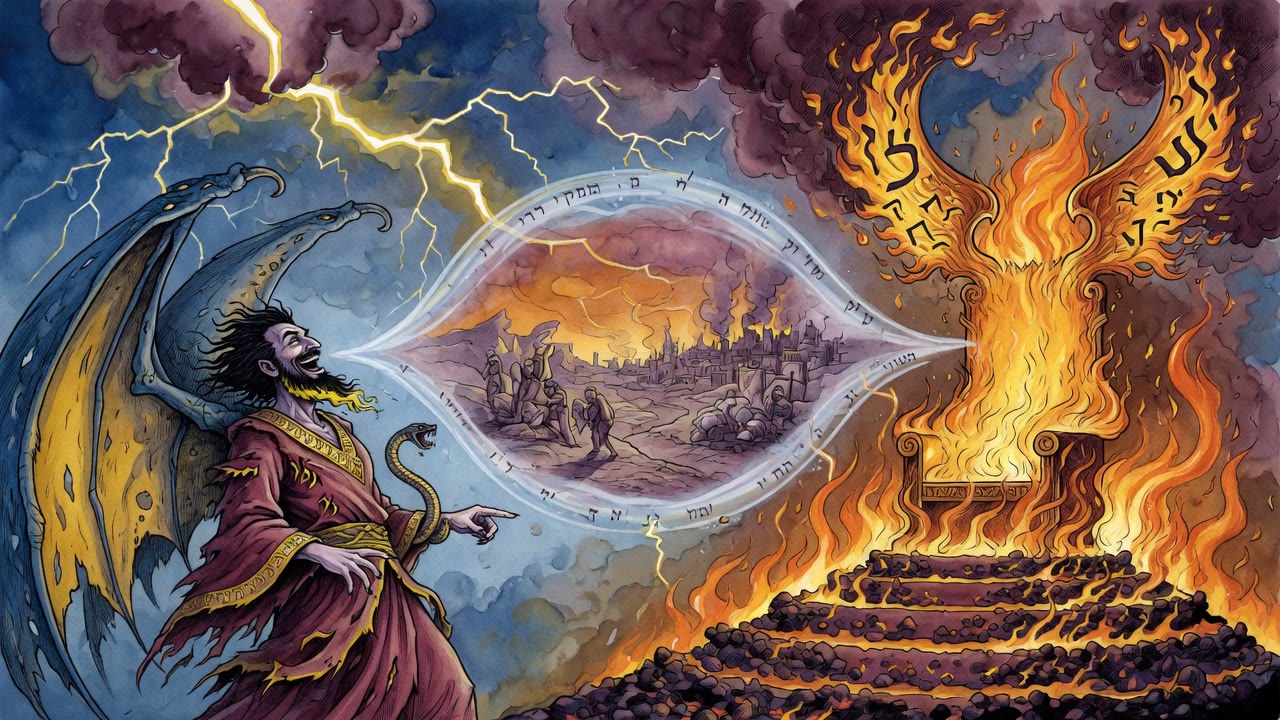
The Cuthite Sold Dreams Until Rabbi Yishmael Broke Him
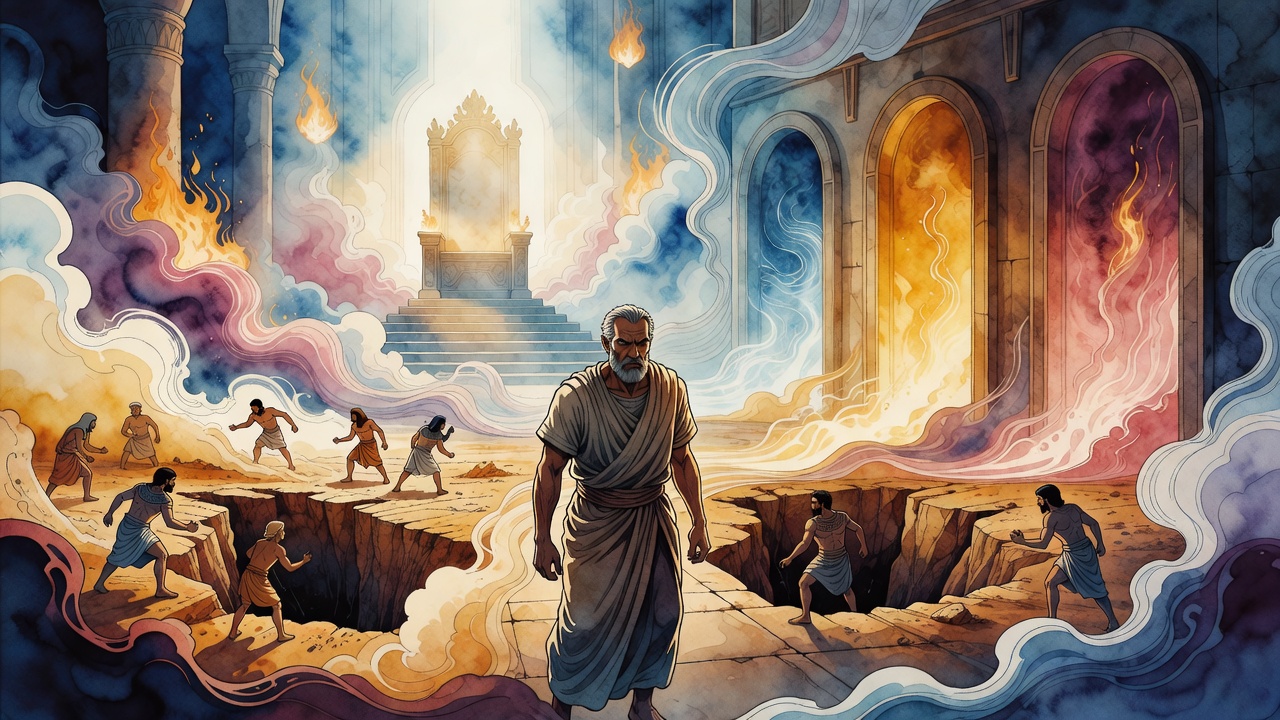
Every vision meant light, the stallkeeper said. Olive trees, stars, a ledger. Rabbi Yishmael sat down and named the crimes the dreams were hiding.
Table of Contents
A Cuthite sat in the marketplace and sold dreams. For a coin he turned every vision into light. Olive trees, stars, ledgers, ears of grain: all of them, he said, meant the dreamer would see great light. People paid, smiled, and walked away lighter than they had come.
 Click for full size
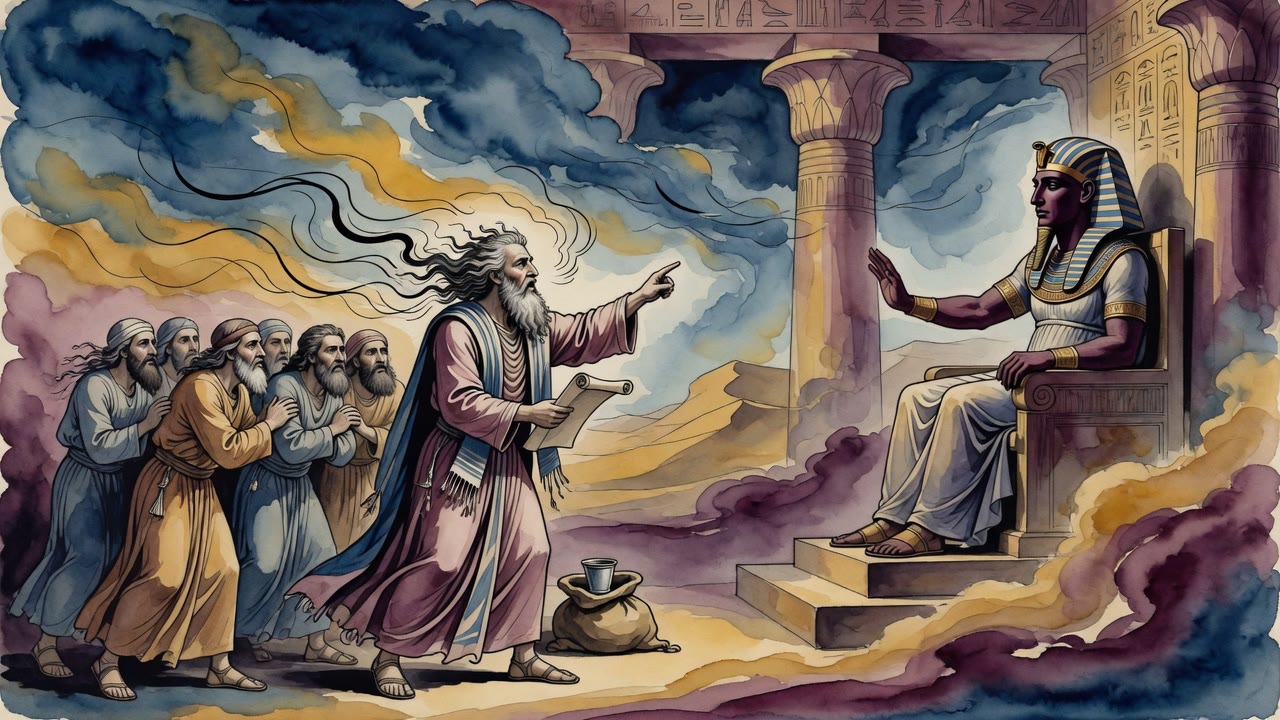
Rabbi Yishmael ben Rabbi Yosei heard of him and went to sit alongside the bench. Shall I not see this foolish Cuthite who deceives people? he said under his breath. He did not announce a trial. He only waited for the next customer and folded his hands as if he were one more idler in the square.
An Olive Tree Overthrew the Stall
A man came and said, "I saw an olive tree irrigated by oil." The Cuthite answered, "The olive tree is light and the oil is light; you will see light in great light." Rabbi Yishmael cut across him before the coin could change hands. "May the soul of that man expire. He has known his mother."
The soft reading cracked in public air. The customer's smile died. The crowd leaned in.
Another man said, "I saw one of my eyes swallow its counterpart." The Cuthite promised light upon light and reached for payment. Rabbi Yishmael answered that the dreamer had two children and one of them had been intimate with the other. No one laughed.
A third said, "I swallowed a certain star." The Cuthite blessed him again with the same empty dawn. Rabbi Yishmael said he had killed a Jew. He read the star through the promise to Abraham: look now to the heavens and count the stars (Genesis 15:5). Seed is light. Swallowing a star is swallowing a life from that seed. The man stepped back as if the square had turned into a court.
Four Ears and a Patched Coat
A man with three eyes in his dream was named a baker: two eyes his own, and one the oven's round mouth staring up from the pots. A man with four ears whom all the people heeded was named a gatherer of thorns. When he was laden, everyone fled from before him. A man carrying a ledger of twenty-four pages, writing and erasing on both sides, was named a wearer of a garment with twenty-four patches, sewn here and torn there.
The Cuthite's mouth kept offering glory. Rabbi Yishmael's mouth kept handing down verdicts that left no room for the next flattering lie. Men who had come for blessing left with names for their own crimes. The marketplace stopped being a game of luck and became a court with no gavel but a sage's voice.
Joseph Would Not Soften the Baker
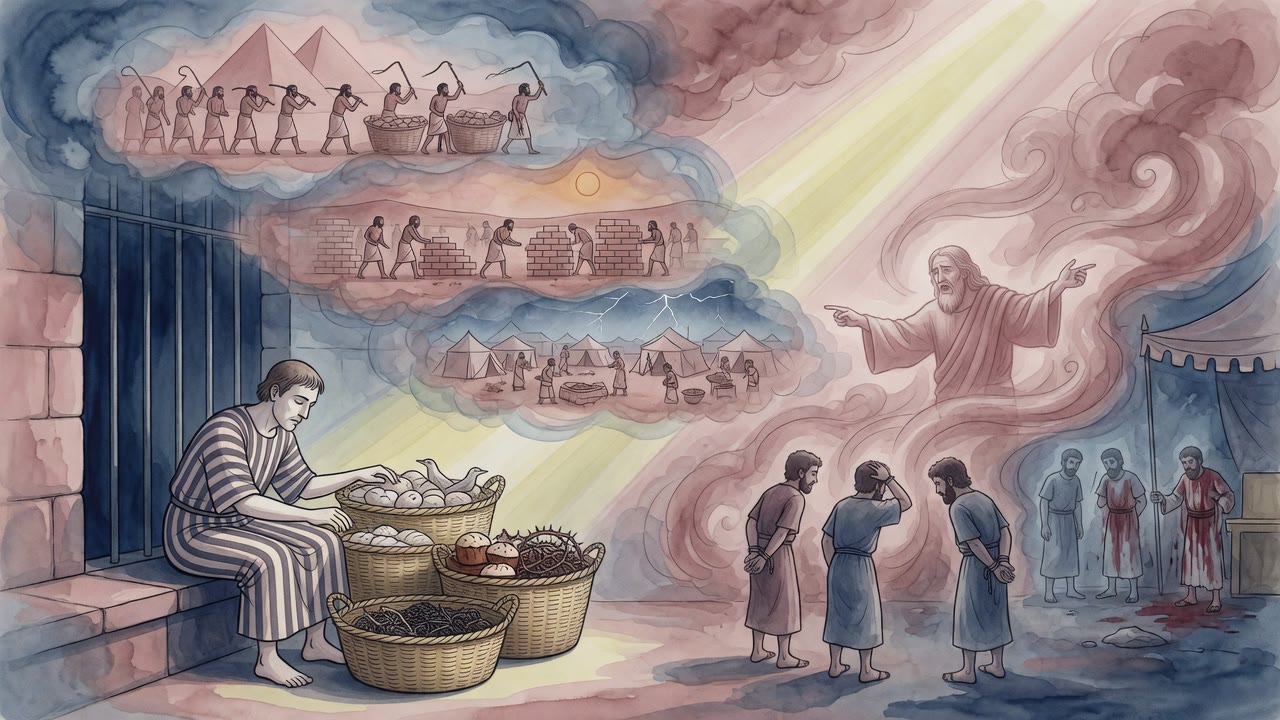
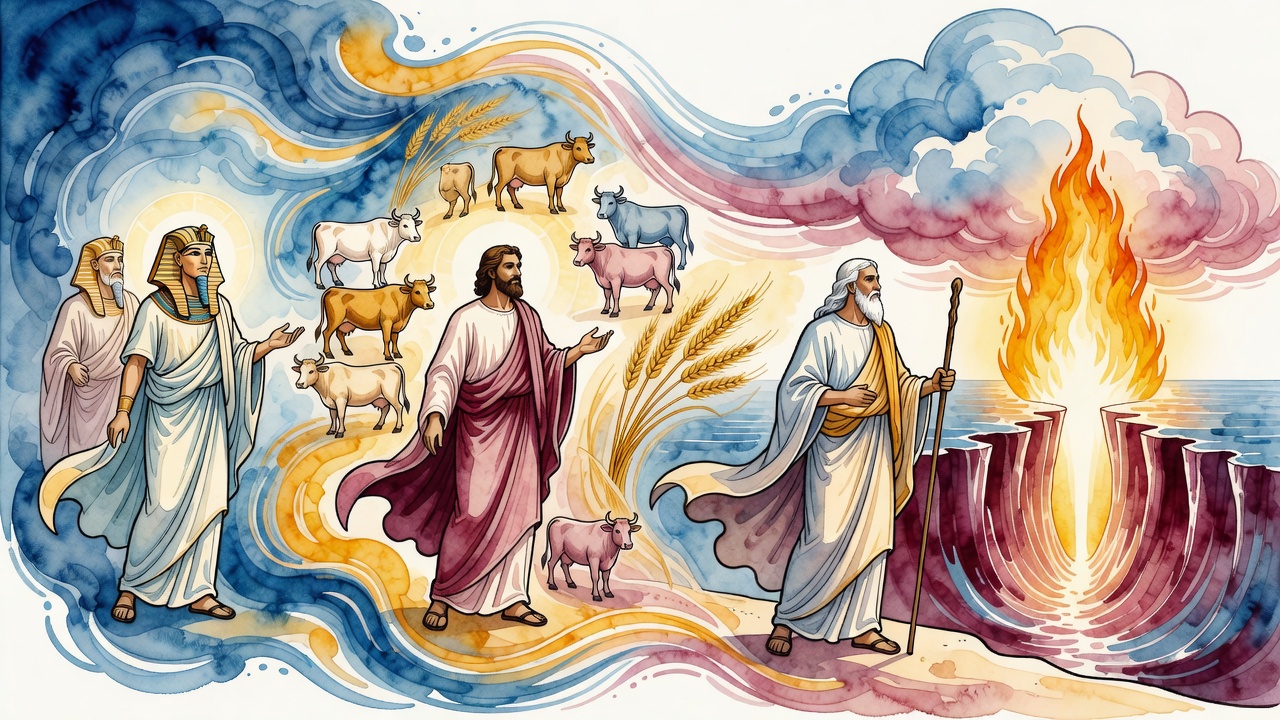
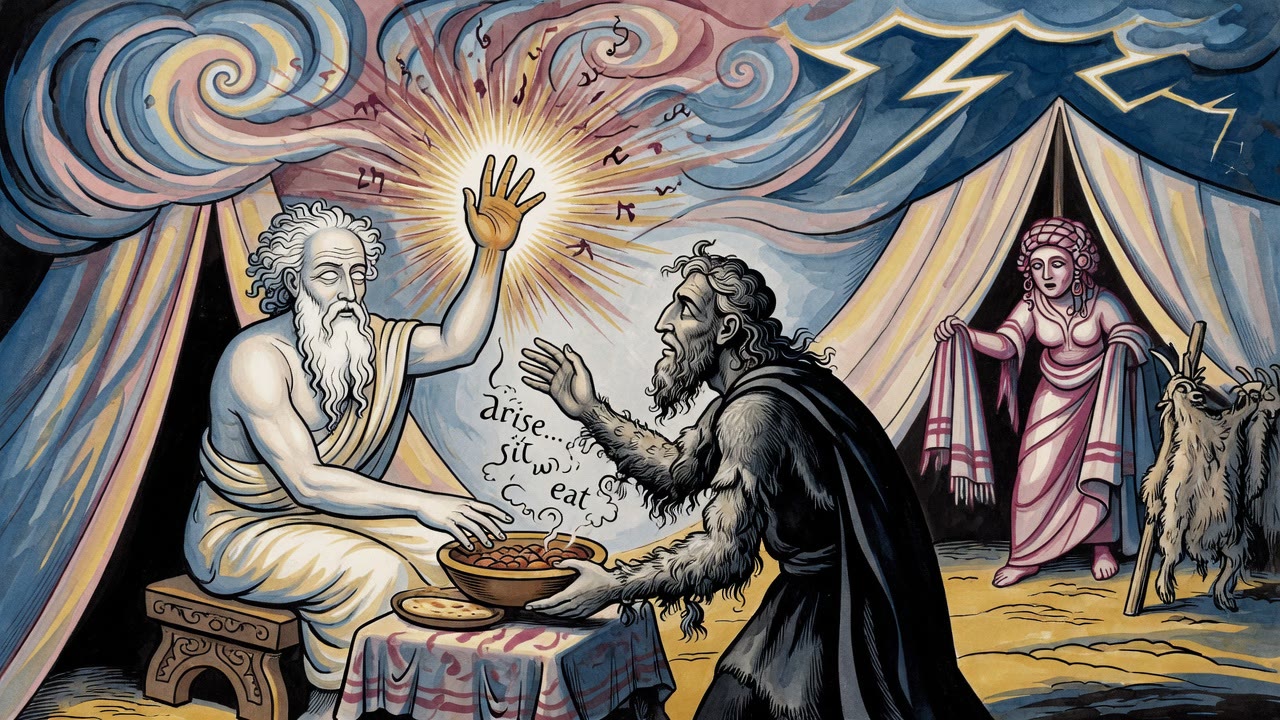
Long before that square, Joseph sat in an Egyptian prison and heard two dreams that did not both end in light. The chief butler dreamed vines and cups. Joseph told him he would rise back to Pharaoh's side in three days. The chief baker dreamed three wicker baskets on his head, with birds eating the baked goods from the uppermost basket.
The baker opened with "I too," claiming partnership with the butler's good fortune. That small word already smelled of wrath. Joseph told him the truth with a heavy heart. In three days Pharaoh would lift his head from him and hang him, and the birds would eat his flesh (Genesis 40:16-19). Joseph did not sell comfort. He read what the dream carried and let the baker's face fall.
On the third day Pharaoh's birthday feast raised one head and struck off the other, exactly as Joseph had said. One man walked free. One man hung where the birds could reach him. Dreams in that house sorted lives. The Cuthite had forgotten that, or never known it. He had turned the craft into a stall of sweet oil, a place where no one ever had to hear that the rope was coming.
Hatred Begins When a Dream Is Spoken
Joseph once dreamed sheaves and stars and told his brothers in the field. "Please, hear this dream that I dreamed" (Genesis 37:6). They hated him more for the hearing. He could not speak peaceably with them after that, because what was in their hearts spilled from their mouths. The brothers did not hide resentment. They let it stand open in every answer they gave him.
A dream spoken can lift a man toward a throne and can also put him in a pit. Joseph learned both. The Cuthite offered only thrones of light for coin, never pits, never ropes, never birds at a hanged man's flesh. He took money to keep men from knowing themselves.
The Bench Goes Empty
The Cuthite tried to keep his smile. The coins slowed, then stopped. Incest, murder, patched poverty, a baker's oven, a load of thorns that drove neighbors away: each false light met a harder name. The sage did not take a fee. He took the false dawn out of the air until no one stepped forward for the old bargain.
When the last petitioner stepped back, the Cuthite sat alone at a bench that no longer drew a line. Rabbi Yishmael rose and left the square without looking back. He had not come to replace one business with another. He had come to stop a man from selling people their own darkness dressed as morning.
Somewhere in Egypt a butler still remembered a true reading that saved him, and a baker's bones had already proven the other kind. In the marketplace of a later age, the same pressure held. A dream that only flatters is not interpretation. It is theft wearing a prophet's cloak, and a sage who sits down beside it can end the trade in a single afternoon.
← All myths