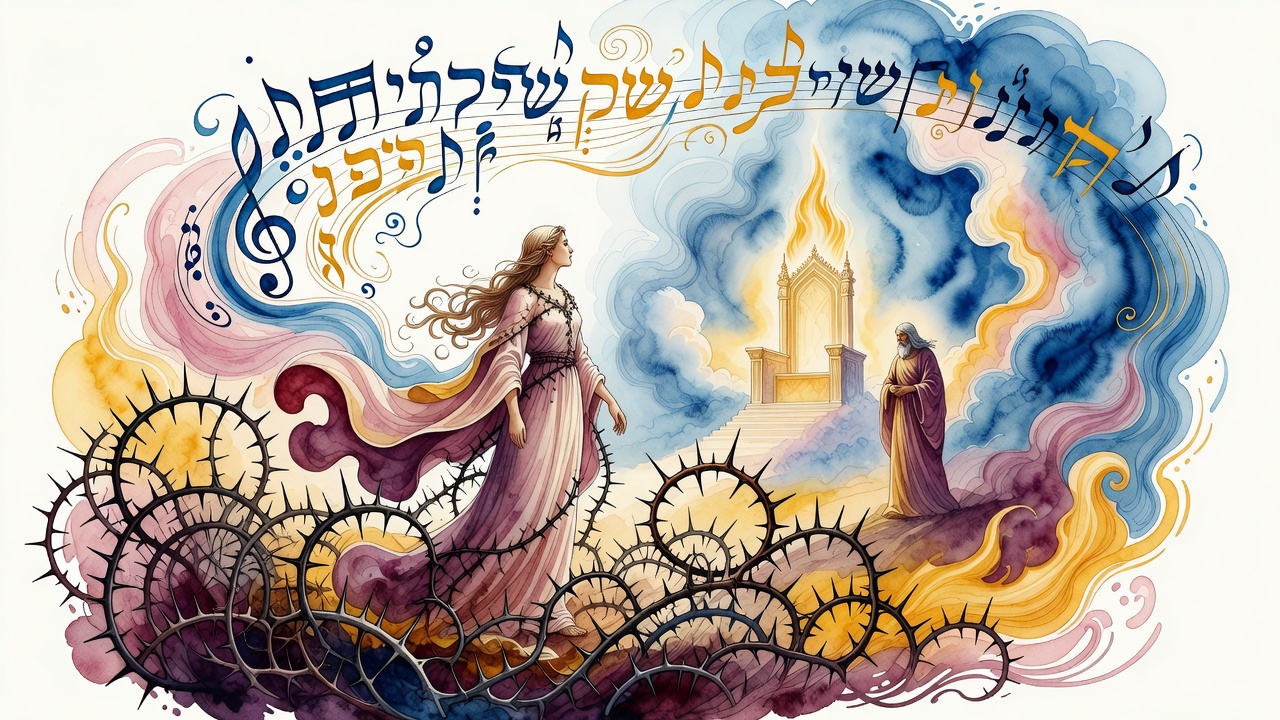
The Elder Who Called Holy Light to Candles
A seam opened in the plaster, and an older man stepped through without raising dust. He told the teacher to light candles, because that was a commandment.
Table of Contents
 Click for full size
A Seam Opened in the Plaster
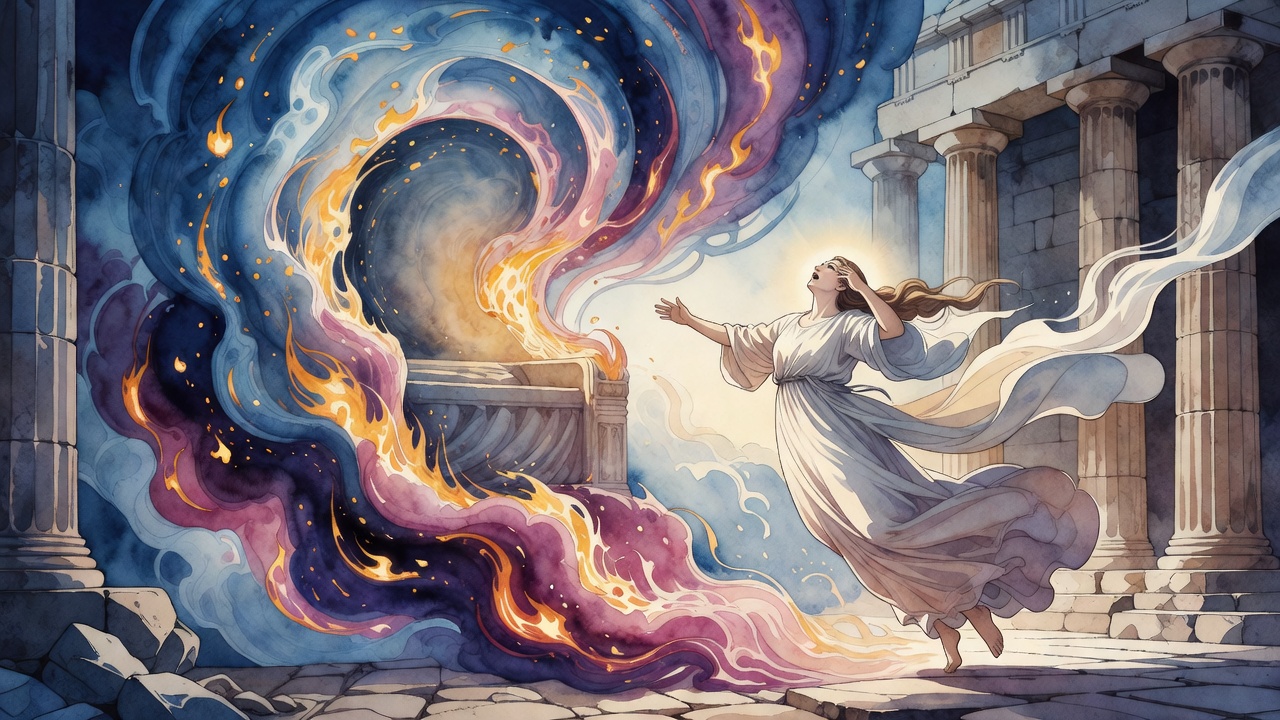
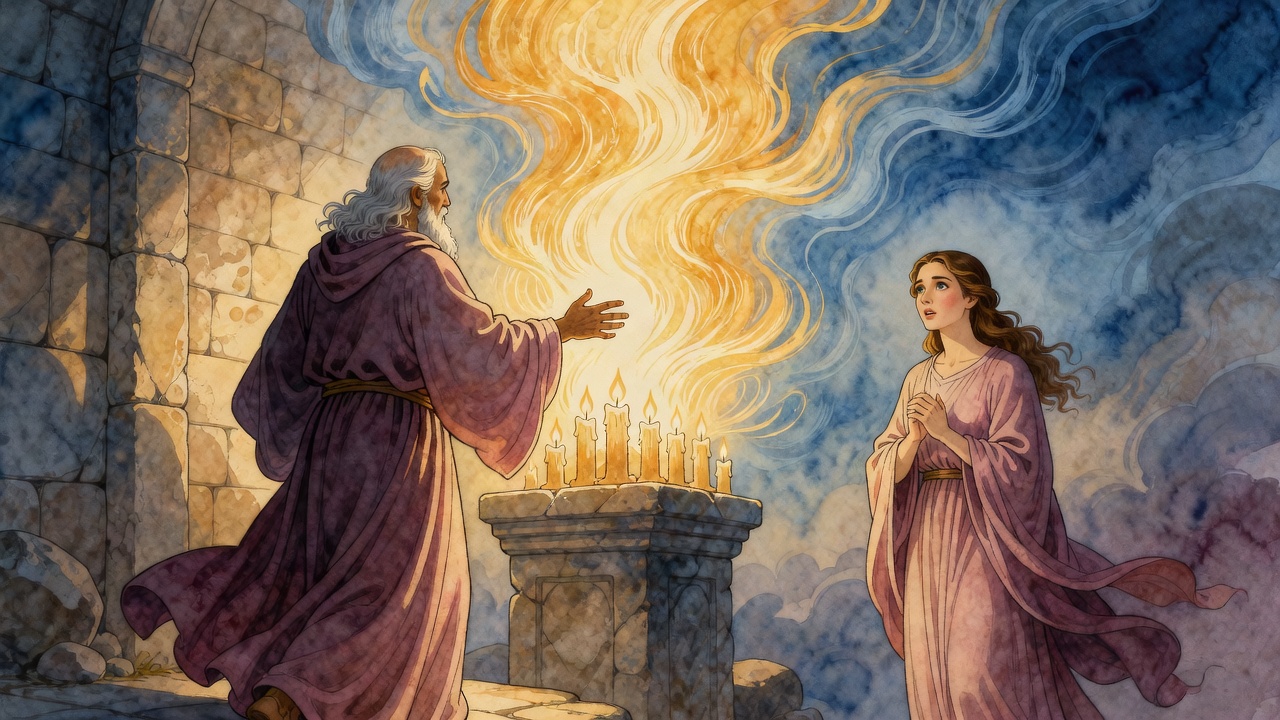
The wall was ordinary plaster until it was not. A seam of shadow opened, and an older man stepped through as if the room had always had a second door. Dust did not fall from him. Light did. He looked toward the teacher seated by the lamp and raised a hand that had held many books.
"Rebbe, my teacher, the Holy Light," he said, "come and light candles, for that is a mitzvah."
The students had been arguing over a difficult line. Chairs scraped. Mouths closed. The elder did not wait for them to finish the argument. He quoted the verse about an everlasting fire on the altar that must not be extinguished (Leviticus 6:6). The command was not only for priests and cut stone. In his mouth it became the eternal flame inside a soul, the spark that waits for someone to tend it.
"To light the eternal flame," he said, "is the work of drawing near. Come, light it with her."
Fire That Must Not Go Out
The "her" hung in the air without a name, and everyone in the room already knew the name: the Shekhinah (שכינה), the Presence that dwells, the nearness of God that can be met in a commandment as small as a wick. Walls in this teaching are the barriers people build against their own potential. The elder did not smash the wall. He walked out of it.
A student who had spent months arguing whether the text was only metaphor felt the argument go thin. Metaphor does not smell like wax. Metaphor does not tell a seated teacher to stand. The teacher set his book aside. His hands, which had written many pages, reached for a thin stick of flame.
The Bride Who Is a Still Thin Voice
Elsewhere the same stream of teaching equates the Bride with the still, thin voice that Elijah heard after wind, earthquake, and fire (1 Kings 19:12). God was not in the spectacle. God was in the quiet that followed. The Bride is not a softer god beside a harder one. She is the Shekhinah as the channel through which blessing reaches a world that cannot bear unfiltered light.
When the elder called for candles, he was calling for that quiet intensity, not for theater. Marriage language in this mysticism is not romance for its own sake. It is the joining of upper and lower, the moment when the Presence is not only known about but welcomed. The Bride waits for a people willing to light something small with full intention. Elijah's cave becomes every room where noise has failed and a thinner voice is finally audible. The students had come for thunder. They were offered a wick.
Awe on the Left, Love on the Right
She is both yirah (יראה), awe, and ahavah (אהבה), love, at once. Awe comes from the left side of judgment, the boundary that keeps a relationship from becoming casual. Love comes from the right side of mercy, the warmth that keeps the boundary from becoming a wall of ice. She is also Torah from the aspect of the Middle Pillar, the path that holds justice and compassion in one walking. She is Anokhi, the "I" of the first word of the Ten Commandments, the Presence that speaks as a self and invites answer.
A man who lights a candle only with love may grow soft and careless. A man who lights only with awe may grow cold and proud of his fear. The elder's invitation held both. Come light with her. Come meet the One who is near enough to love and holy enough to frighten. The left without the right is cruelty wearing phylacteries. The right without the left is sentiment wearing perfume. The middle is a flame that stays on the wick.
Wicks in a Dark Room
The teacher rose. One wick took. Then another. The room changed temperature without getting hotter. Students who had been arguing over a difficult line fell quiet. The elder watched the first steady points of light and nodded, as if a debt had been paid on time.
Outside, the city made its ordinary noises. Inside, the altar-command and the Bride's whisper and the double face of awe and love folded into one small act. No one saw the wall open again. When they looked back, the elder was gone, or had become the part of themselves that knows when to stop talking and start kindling.
That night a student walked home with the smell of wax on his sleeves. He did not feel that he had solved a text. He felt that a text had solved him for a moment, enough to keep a flame from going out. The everlasting fire is not only in the sanctuary. It is the work of refusing to let the inner altar go dark while the world offers louder gods of wind and quake and show. He lit a single lamp at his own table before sleep and did not explain it to anyone.
← All myths