Parshat V'Zot HaBerachah5 min read

The Fire That Each Nation Handed Back at Seir and Paran

God carried the Torah first to Esau and Ishmael, who heard one command they could not bear and handed the fire back, until Israel said yes.

Curated by Arthur · Told by Maggid ·
Table of Contents
  1. The Fire Dawns Over Seir
  2. What Ishmael Could Not Surrender
  3. The Children of Lot Walk Away
  4. Israel Standing at the Foot of the Mountain

The earth shook before a single word of law had been spoken. Mountains ran like water, cedars cracked, and the houses of every nation filled with a light that had no source anyone could name. The peoples of the world ran to Balaam and demanded to know what was happening. "Is the Holy One bringing another flood?" they asked. He told them no. God had sworn after Noah that no flood of water would come again. "A flood of fire, then?" Neither, Balaam said. "The Holy One wishes to give the Torah to His people." When they heard that, they turned and went, each back to his own place. But God did not let them go so easily.

The Fire Dawns Over Seir

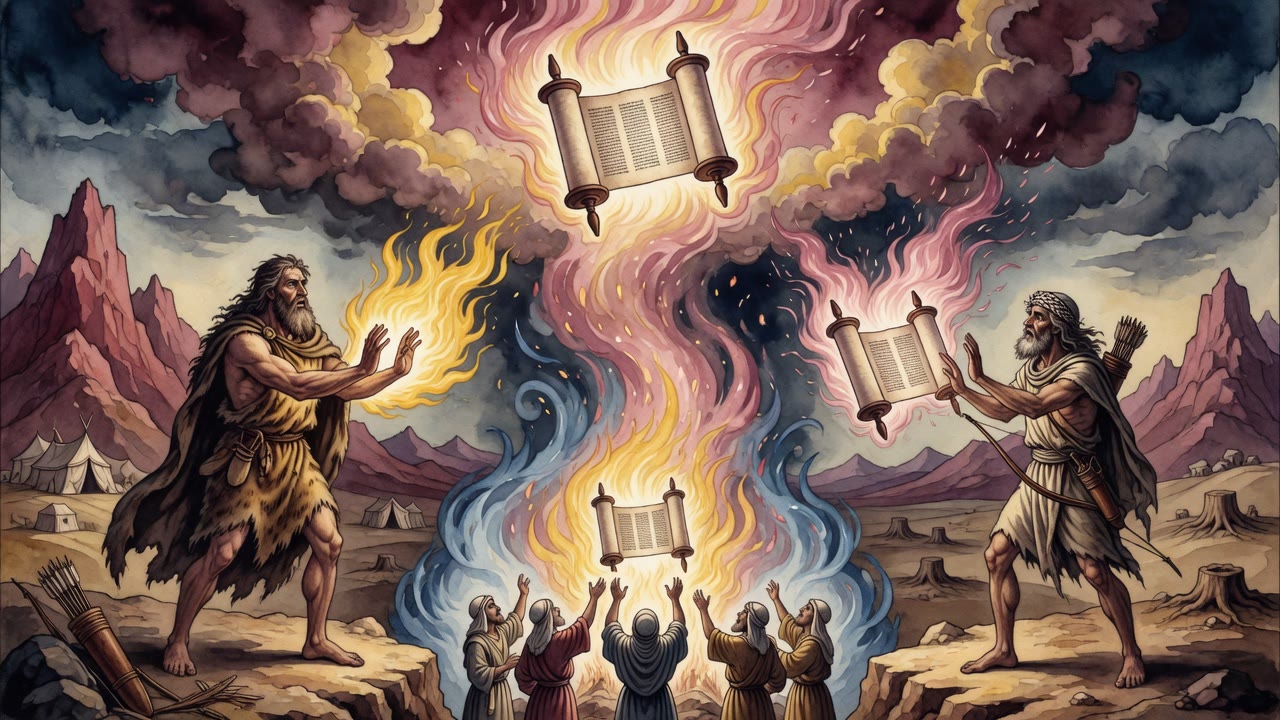
Before the Torah ever reached the foot of Sinai, God carried it elsewhere first. He dawned over Seir, the red country of the children of Esau, and offered the fire to them. "Will you accept the Torah upon yourselves?" The sons of Esau did not say yes and did not say no. They asked the question every nation would ask. "What is written in it?" And God answered them with a single command. "You shall not murder."

They handed the fire back. "This is the inheritance our father left us," they said. They remembered the blessing the blind Isaac had laid on Esau in the tent, the words that could not be unsaid. "By your sword you shall live." A law against killing was a law against their own bones. They could not take it and remain themselves.

What Ishmael Could Not Surrender

God shone next from Mount Paran, where the children of Ishmael lived in the wilderness, and held the same fire out to them. "Will you accept the Torah upon yourselves?" They asked it too. "What is written in it?" This time the command was different. "You shall not steal."

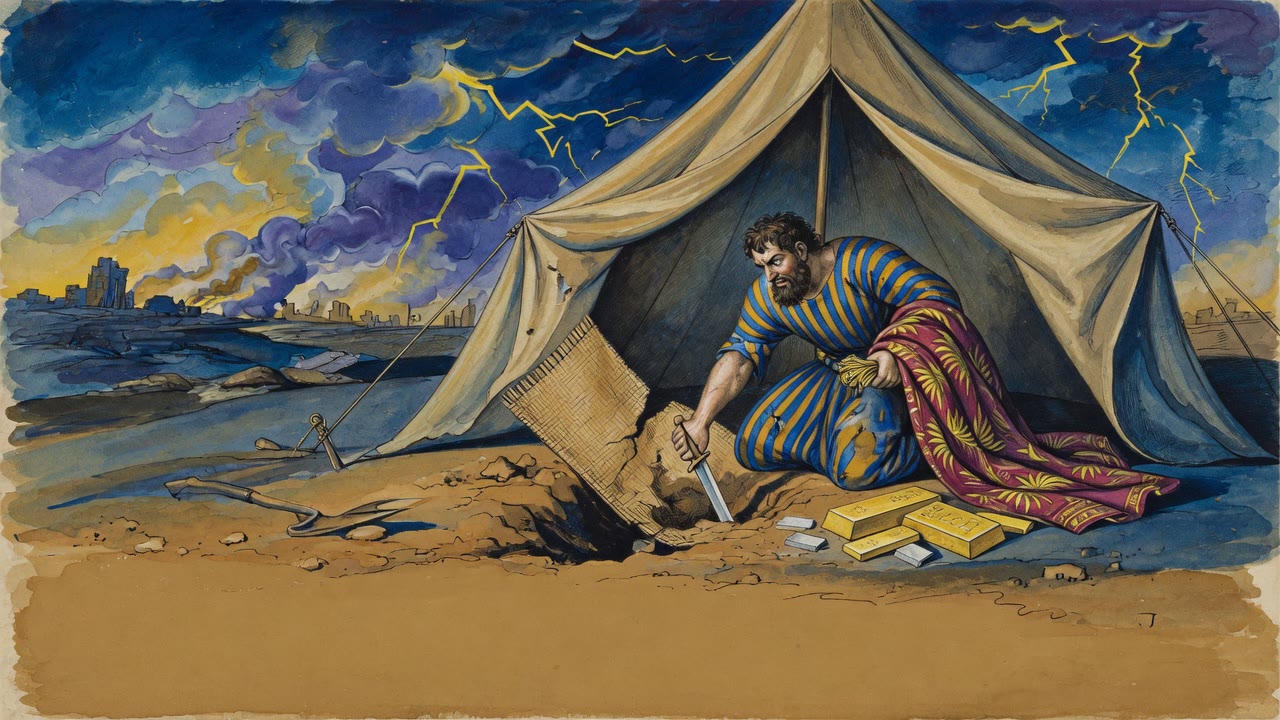
The sons of Ishmael shook their heads. Their father had been called a wild man, his hand against everyone, and taking was the trade their blood had carried since the desert. To prove it they reached for an old wound that was not even theirs to claim, the cry of Joseph from his Egyptian prison. "I was stolen away out of the land of the Hebrews." If theft was a thing the Hebrews themselves wept over, why should the sons of Ishmael swear it away? They gave the fire back.

The Children of Lot Walk Away

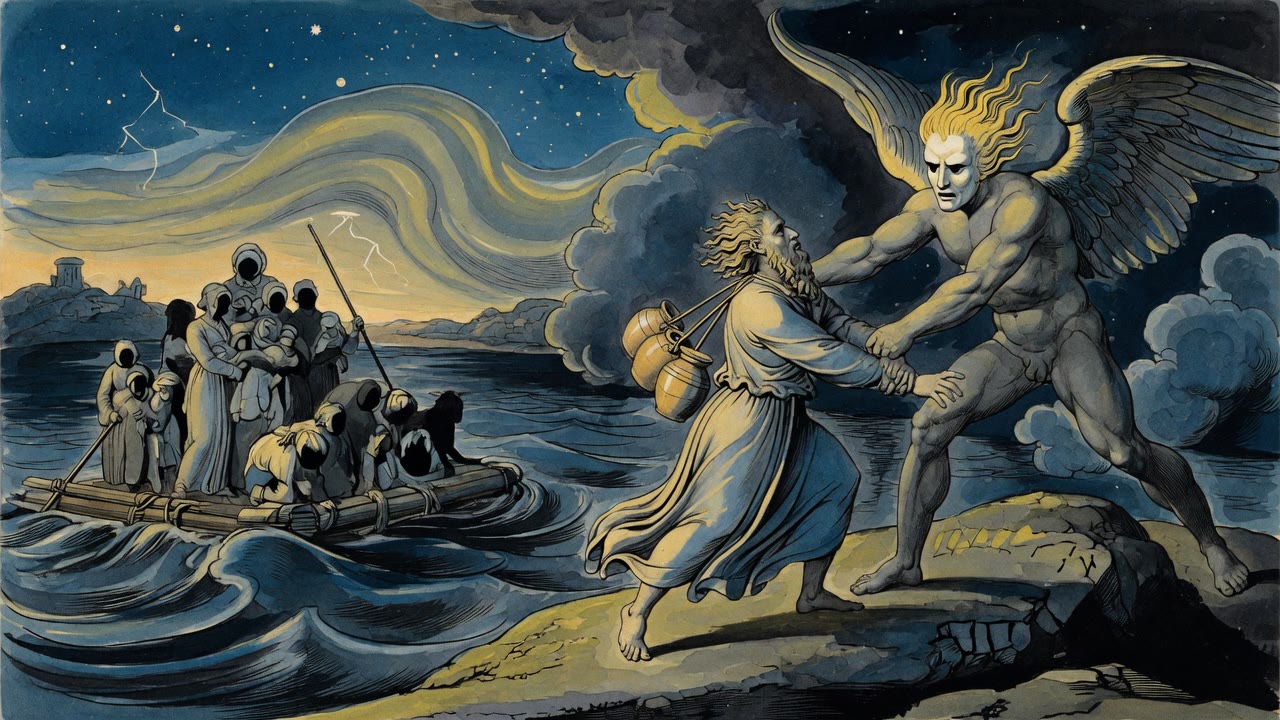
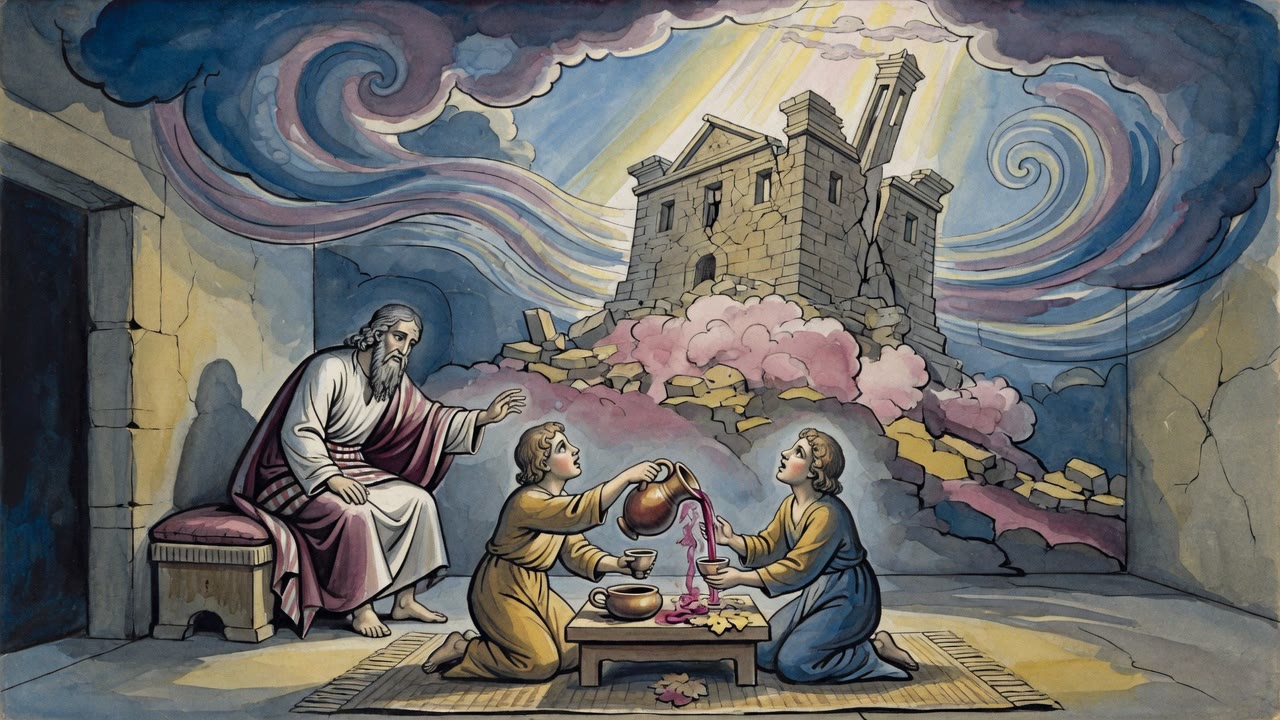
God turned to the children of Ammon and Moab and asked again. "Will you accept the Torah?" And again the answer came as a question. "What is written in it?" He told them. "You shall not commit adultery." They could not bear it. Their whole nation traced its line to the night the daughters of Lot lay with their own father in the cave above the ruins of Sodom, certain the world had ended and they were the last women alive. Both of them had conceived. A law against forbidden union condemned the very cave they had been born from. They walked away.

So it went, nation after nation. To the rest of the world God offered the first word of all. "You shall have no other gods before Me." They answered plainly that they took no delight in the Torah, and told Him to give it to His own people. Every door He knocked on opened to a refusal shaped exactly like the nation behind it. Each one heard the one command that named its oldest habit, and each one handed the burning law back into His hands.

Israel Standing at the Foot of the Mountain

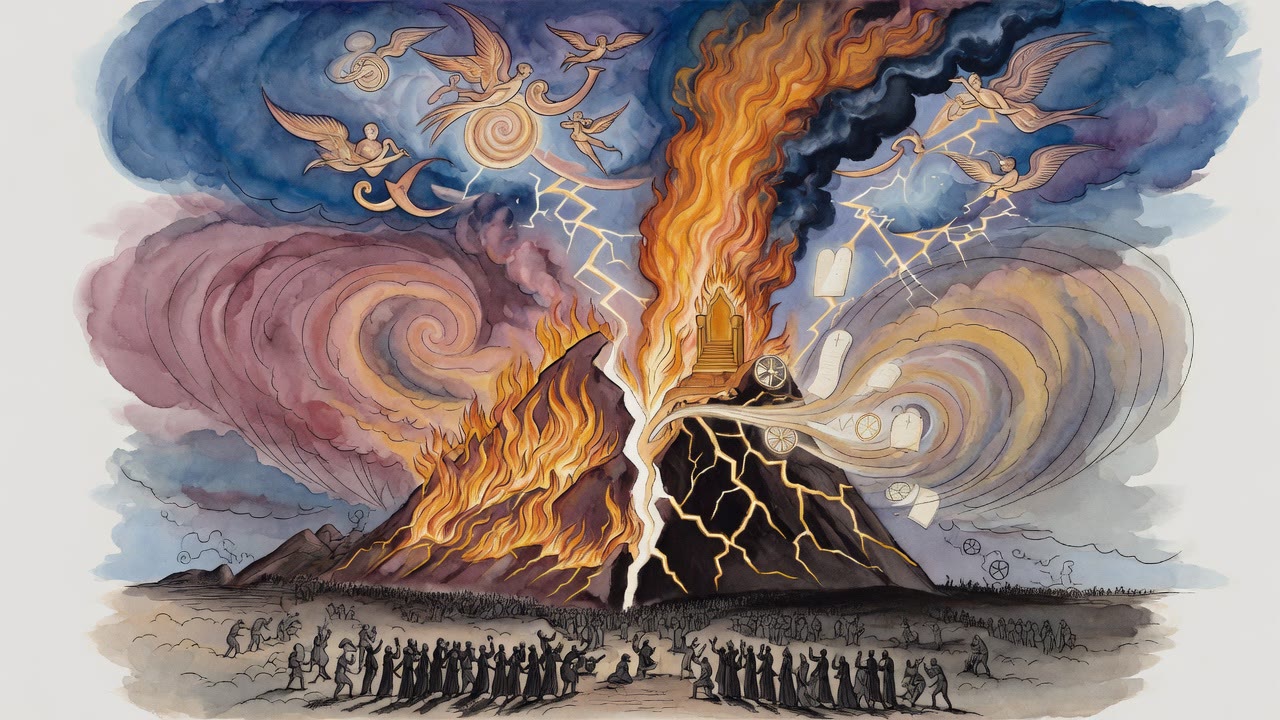
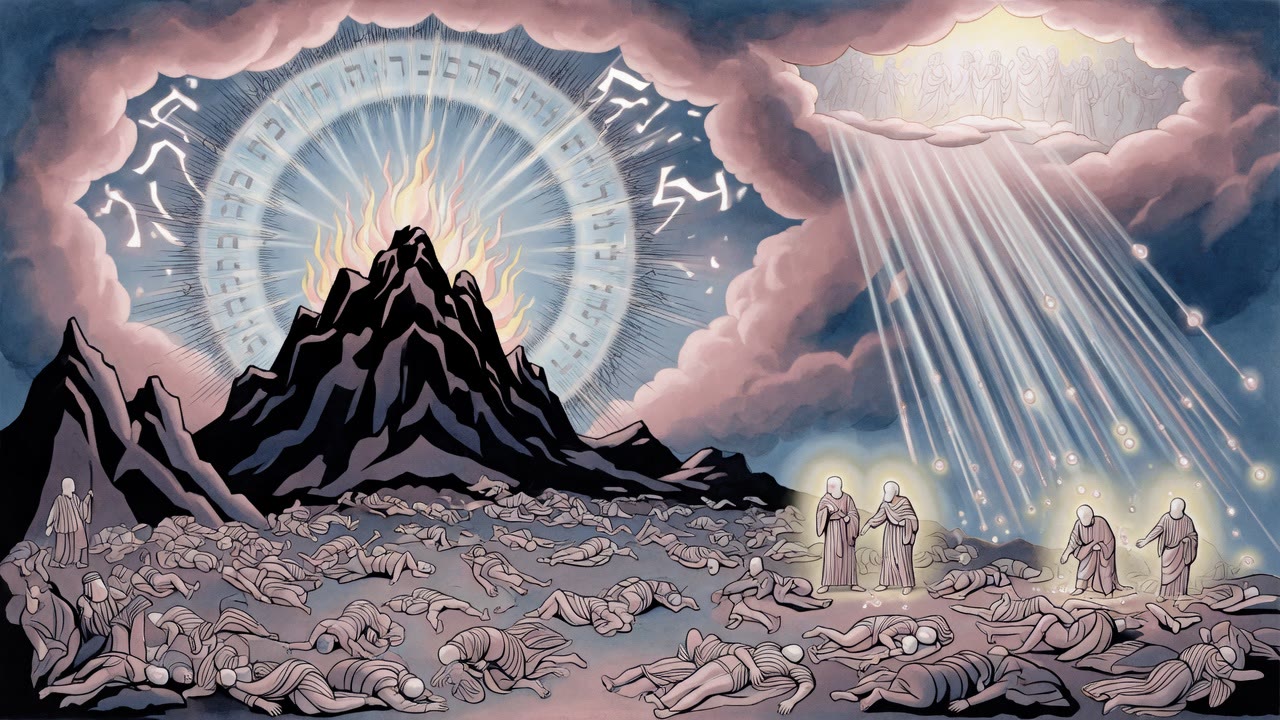
Only one people was left, gathered at the base of a smoking mountain in a wilderness that belonged to no kingdom. When God came to Israel, His right hand held the fiery law out toward them, twenty thousand holy ones at His side and chariots beyond counting. He did not begin with the question this time. The law was already burning at His right hand.

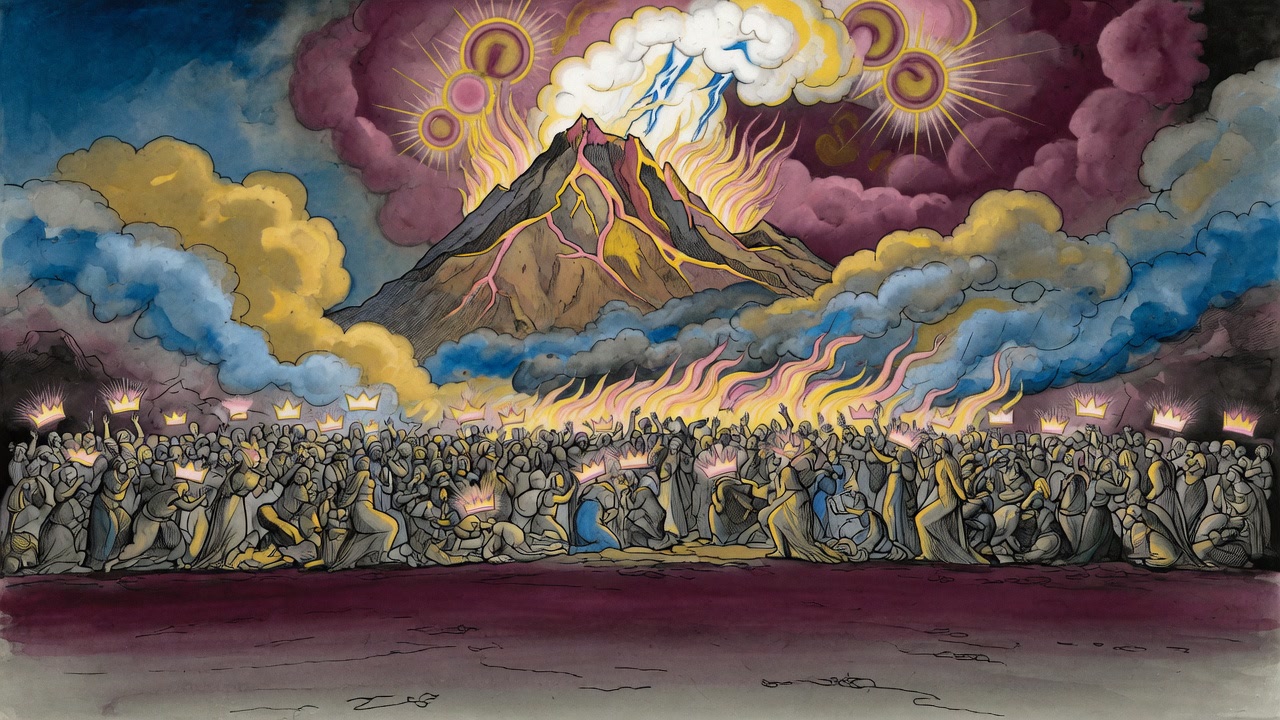
Israel did not ask what was written in it. They did not bargain over a single command or measure it against their fathers. They opened their mouths together and said the words that the other nations had been too careful to say. "All that the LORD has spoken we will do, and we will hear." They promised the doing before they had even heard the terms. The fire that every other nation had pushed away came down and stayed.

God stood and measured the earth, and made the nations leap. The peoples who had handed back the law scattered to their places, and the one people who had taken it without counting the cost stood inside a covenant the whole world had been offered and had refused.


← All myths
From the tradition

Sources

2 sources

The texts this telling draws on, in full. Open a card to read inline, or expand it for a wider, quieter read.

Midrash Tanchuma Buber, V'Zot HaBerachah 3:1Midrash Tanchuma Buber, V'Zot HaBerachah

(Deut. 33:2:) "AND HE SAID, THE LORD CAME FROM SINAI," etc. This teaches that the Holy One, blessed be He, brought the Torah around to the nations of the world, and they did not accept it, until He came to Israel, and they accepted it. As it is stated (ibid.): "AND DAWNED UPON THEM FROM SEIR", these are the children of Esau, who are the children of Seir. "HE SHONE FORTH FROM MOUNT PARAN" (ibid.), these are the children of Ishmael, as it is stated, "And he dwelt in the wilderness of Paran" (Gen. 21:21). And it is written, "He stood and measured the earth; He looked and made nations leap" (Hab. 3:6), for He saw that they did not wish to accept the Torah, and He made them leap into Gehinnom, just as it says, "to leap with them upon the earth" (Lev. 11:21). And in another place it says, "All the kings of the earth shall give You thanks, O Lord, for they have heard the words of Your mouth" (Ps. 138:4). Yet we still need to say: perhaps they wished to listen. Micah the Morashtite came and settled the matter, as it is stated, "And in anger and in wrath I will execute vengeance upon the nations that have not listened" (Mic. 5:14). Behold, you have learned that they did not wish to accept the Torah. David came and gave thanks to the Holy One, blessed be He, over this, as it is stated, "You are the God who works wonders; You have made known Your strength among the peoples" (Ps. 77:15). David said: Master of the Universe, the wonders You have done in Your world, that You made Your Torah known to the nations of the world! "Your strength" is nothing but Torah, as it is stated, "The Lord will give strength to His people" (Ps. 29:11). Rabbi Abbahu said: It was revealed and known before the One who spoke and the world came into being that the nations of the world would not accept the Torah. And why then did He approach them? Rather, such are the measures of the Holy One, blessed be He: He fulfills His obligation toward His creatures, and afterward drives them from the world, because the Holy One, blessed be He, does not come upon His creatures with tyranny. [A second measure, why did He approach them? Because of the appeasement of the patriarchs.]

Full source
Pirkei DeRabbi Eliezer 41:2Pirkei DeRabbi Eliezer

Chapter 41 gives us a glimpse into a rather… unique sales pitch, shall we say.

Rabbi Tarphon recounts a scene where the Holy One, blessed be He, doesn't just give the Torah, but actively offers it around. Imagine God, Himself, going door-to-door!

First stop: the descendants of Esau. As (Deuteronomy 33:2) tells us, "The Lord came from Sinai, and rose from Seir unto them." Here, "Seir" refers to Esau, as (Genesis 36:8) states, "And Esau dwelt in Mount Seir." So, God asks them, "Will you accept the Torah?" They want to know what's in it, of course. God replies, "Thou shalt do no murder" (Exodus 20:13).

Their response? A polite, but firm, "No, thank you." They explain that they can't abandon the blessing Isaac gave Esau: "By thy sword shalt thou live" (Genesis 27:40). Essentially, violence is in their DNA, or at least, they believe it is.

Next, God turns to the children of Ishmael. (Deuteronomy 33:2) says, "He shined forth from Mount Paran." "Paran," we learn, signifies the sons of Ishmael, as (Genesis 21:21) says, "And he dwelt in the wilderness of Paran." Again, the offer: "Will ye accept for yourselves the Torah?" They ask the crucial question: "What's written therein?" The answer: "Thou shalt not steal" (Exodus 20:15).

And their response? Another polite rejection! They can't abandon the "usage which our fathers observed," referring to the story of Joseph being sold into Egypt, as Joseph himself laments in (Genesis 40:15): "For indeed I was stolen away out of the land of the Hebrews." So, stealing is… a family tradition? Yikes.

At this point, God sends messengers to all the nations of the world. He asks them the same question: "Will ye receive for yourselves the Torah?" They, too, want to know the contents. This time, God says, "Thou shalt have no other gods before me" (Exodus 20:3).

Their answer is pretty blunt: "We have no delight in the Torah." They suggest He give it to His own people, quoting (Psalm 29:11): "The Lord will give strength unto his people; the Lord will bless his people with peace." Ouch!

Finally, God turns to the children of Israel. (Deuteronomy 33:2) tells us, "And he came from the ten thousands of holy ones." The expression "ten thousands," we discover, refers to the children of Israel, supported by (Numbers 10:36): "Return, O Lord, unto the ten thousands of the thousands of Israel." The text goes on to paint a majestic picture: "With Him were thousands twice-told of chariots, even twenty thousand of holy angels, and His right hand was holding the Torah, as it is said, 'At his right hand was a fiery law unto them' (Deut. 33:2)."

So, what does this all mean? Is it a literal account? Probably not. But it’s a powerful way of illustrating that accepting the Torah requires a willingness to change, to let go of ingrained habits and beliefs. It highlights the unique relationship between God and the Jewish people. Perhaps it wasn't just that God chose us, but that we were the only ones willing to choose Him, and the challenging path of the Torah. It's a humbling thought, isn't it?

Full source