Parshat Vayigash6 min read

The Flame at Joseph's Birth and Jacob's Descent to Egypt

When Joseph was born the Holy Spirit fell on Jacob and showed him a flame to burn Esau, and that same fire drove his frightened house down to Egypt.

Curated by Arthur · Told by Maggid ·
Table of Contents
  1. The Flame Born in Rachel's Tent
  2. The Errand That Emptied the Valley of Hebron
  3. The Clock That Began in Abraham's Field
  4. The Old Man Who Would Rather Die in Canaan
  5. The Voice in the Night at Beersheba

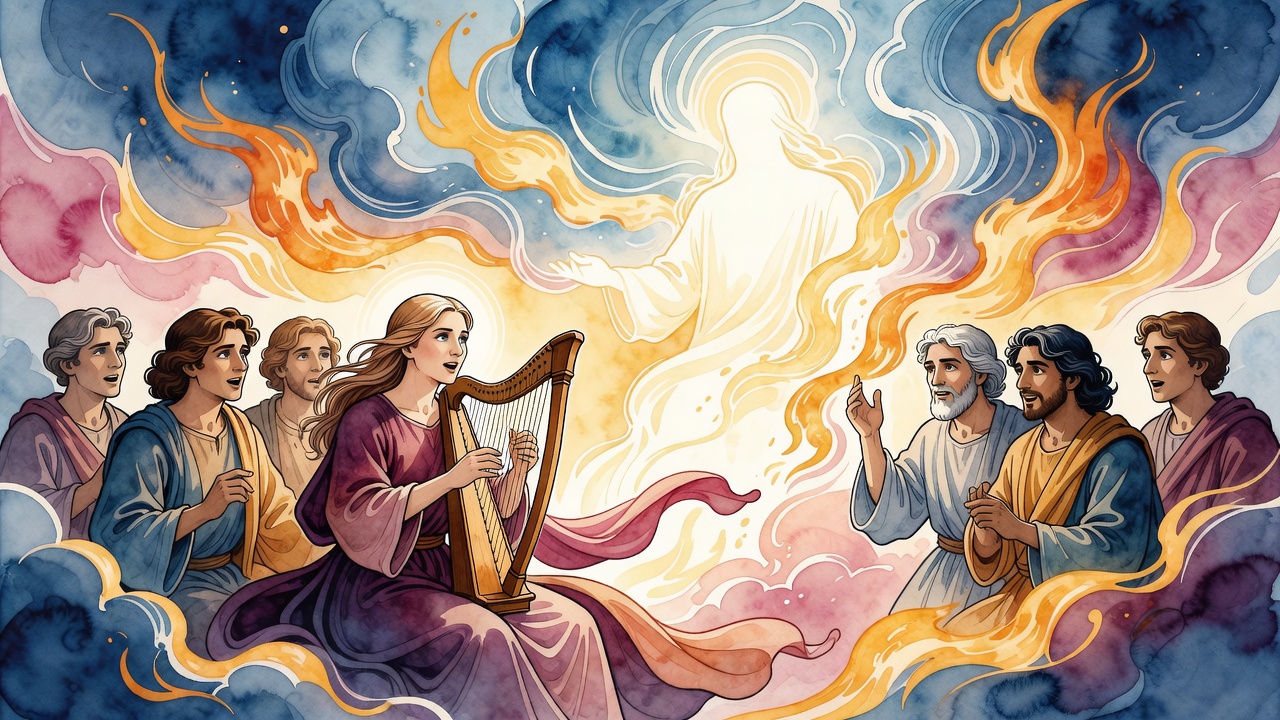
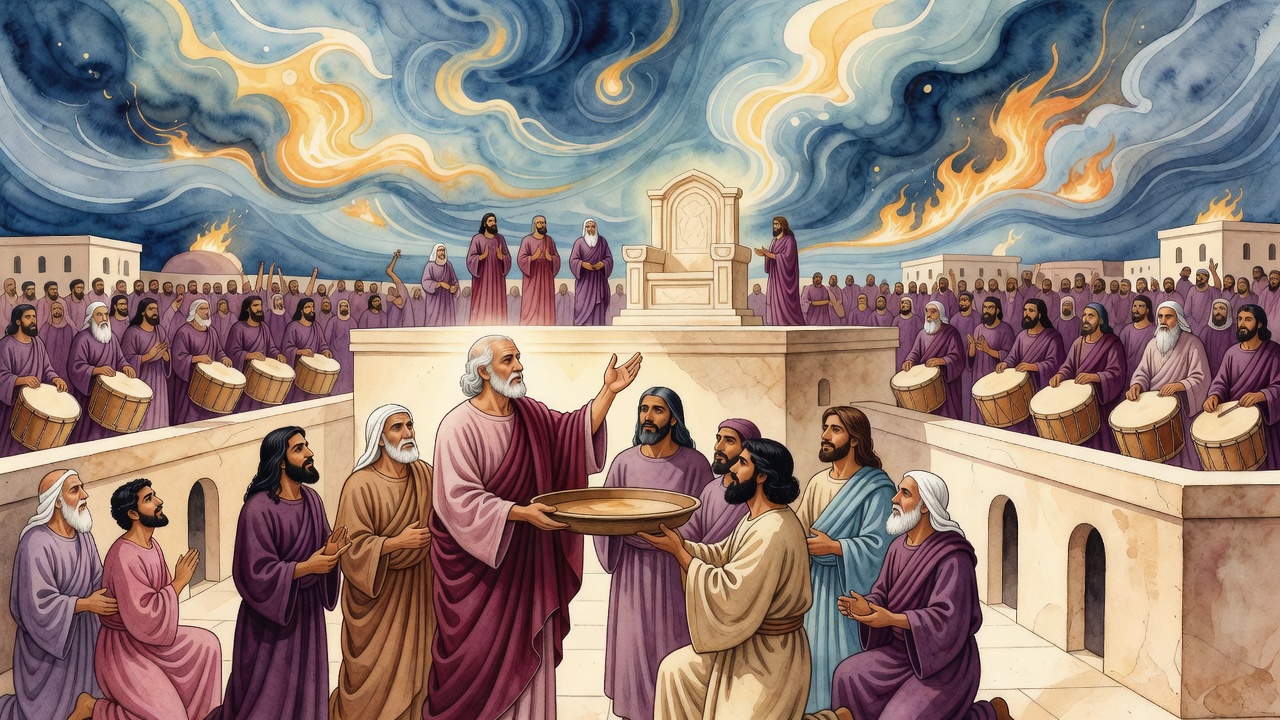
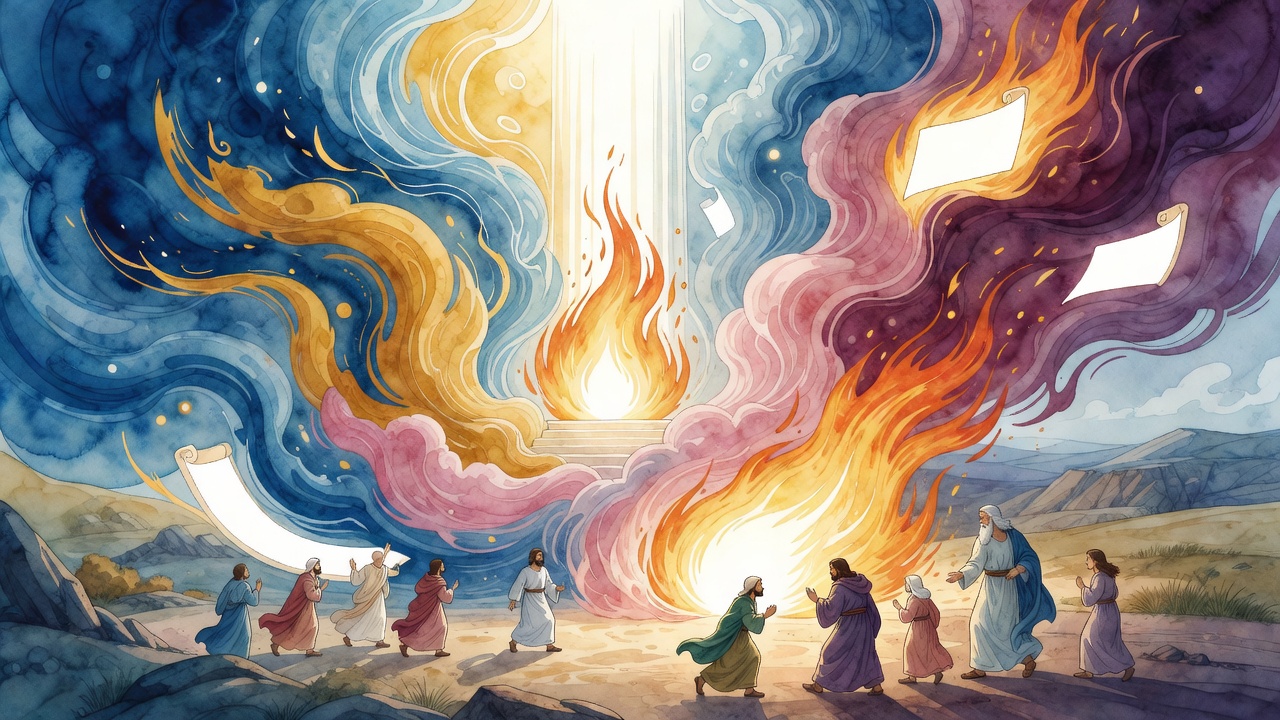
Rachel's cry had barely stopped when the change came over Jacob. He was standing near the tent where his newest son had just been washed and wrapped, and the Ruach HaKodesh, the Holy Spirit, came down and rested on him. His eyes went past the tent, past the flocks, past Laban's fields, and forward across the generations. He saw a flame. It rose out of the house of this newborn and it caught. Across from it stood the house of his brother Esau, dry as stubble left standing after a harvest, and the flame leaned toward it.
The Flame at Joseph's Birth and Jacob's Descent to Egypt Click for full size

The Flame Born in Rachel's Tent

For fourteen years Jacob had served Laban and swallowed the same request, unspoken. Send me away. He had wanted to leave and had not dared. Now he had seen why he could. His children would not be kindling for Esau's legions. One of them, this one, wet and new in the wool, would be the fire that reached Esau first.

So he turned to Laban and finally said it. "Send me away, that I may go to my own place and to my country." He did not ask because he was tired of the man. He asked because he had just watched his own descendants burn down the house of his brother, and a man who has seen that far ahead stops being afraid of the road home.

Rachel had named the boy Joseph. Jacob had seen him as a torch.

The Errand That Emptied the Valley of Hebron

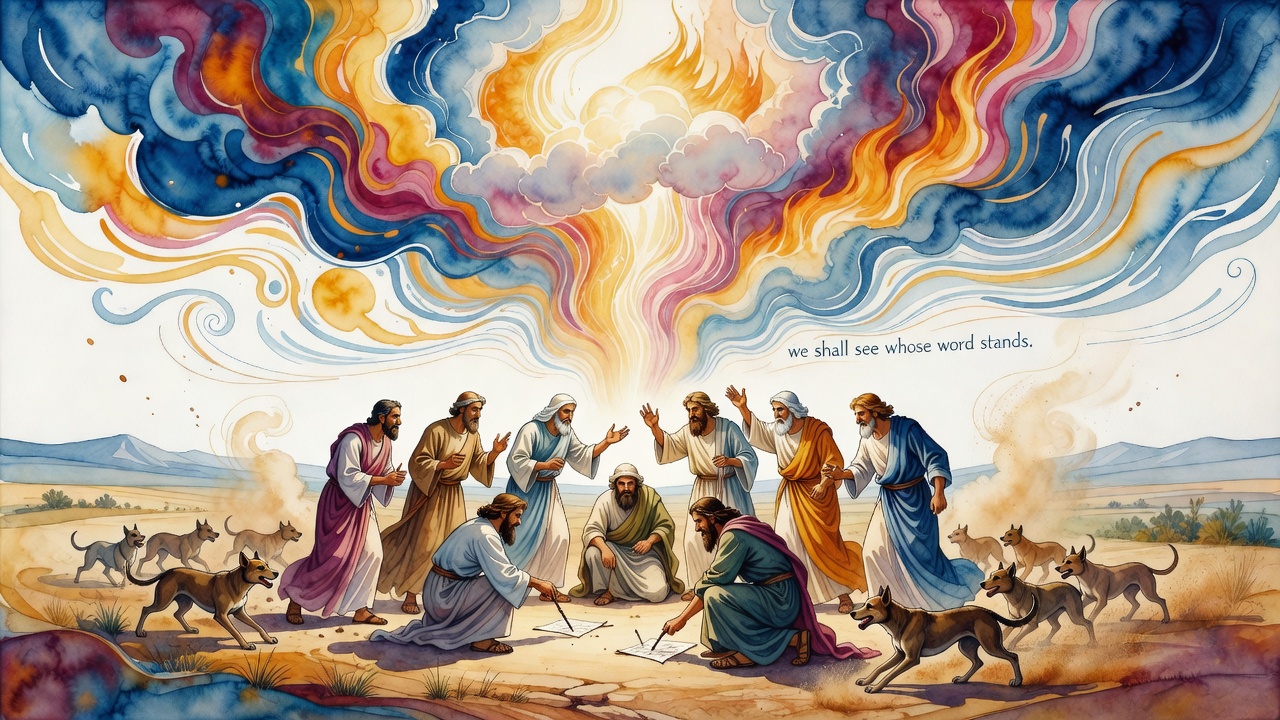
Years folded over. The torch was seventeen now, hated by his brothers for his dreams and his coat, and Jacob was living in the valley of Hebron. One day he called Joseph and gave him what sounded like an ordinary errand. Go and see whether it is well with your brothers and well with the flocks, and bring me back word.

But the word Jacob used for valley was emek, and emek also means depth. Bring me back word, he said, to the deep counsel. Not the depth of the valley. The depth of a promise. It was in Hebron, in that same ground, that God had once spoken a counsel to Abraham, and on the day Joseph walked out of the tent, that counsel began to come true.

Joseph did not know it. He said only, "Here I am," and went looking for his brothers. Behind him the valley held its breath. Hebron had heard the covenant. Hebron now released its first captive, and the road that Joseph took toward Shechem bent, without anyone seeing it bend, toward Egypt.

The Clock That Began in Abraham's Field

The counsel was old. Decades before Joseph's birth, God had cut a covenant with Abraham between split carcasses in the dark, and had told him a thing no one wants to hear about his children. "Know for certain that your offspring will be strangers in a land that is not theirs, and they will be enslaved and afflicted for four hundred years."

Four hundred years. The promise had a number, and the number had a starting gun. Nobody knew when it would fire. It fired the day a father sent a boy to check on some shepherds. The pit, the caravan, the sale to the Ishmaelites, the slow descent into Pharaoh's house, all of it began with a small assignment and a boy who said, "Here I am." The slavery, the plagues, the sea splitting, the fire on Sinai, every part of it was already folded inside that errand, waiting.

The Old Man Who Would Rather Die in Canaan

Now bring the story down many more years, to an old man on the edge of leaving his land. Famine had bent the family. Joseph, long thought dead, was alive and ruling in Egypt, and he had sent wagons to carry his father down to him. Jacob should have run. His lost son was breathing.

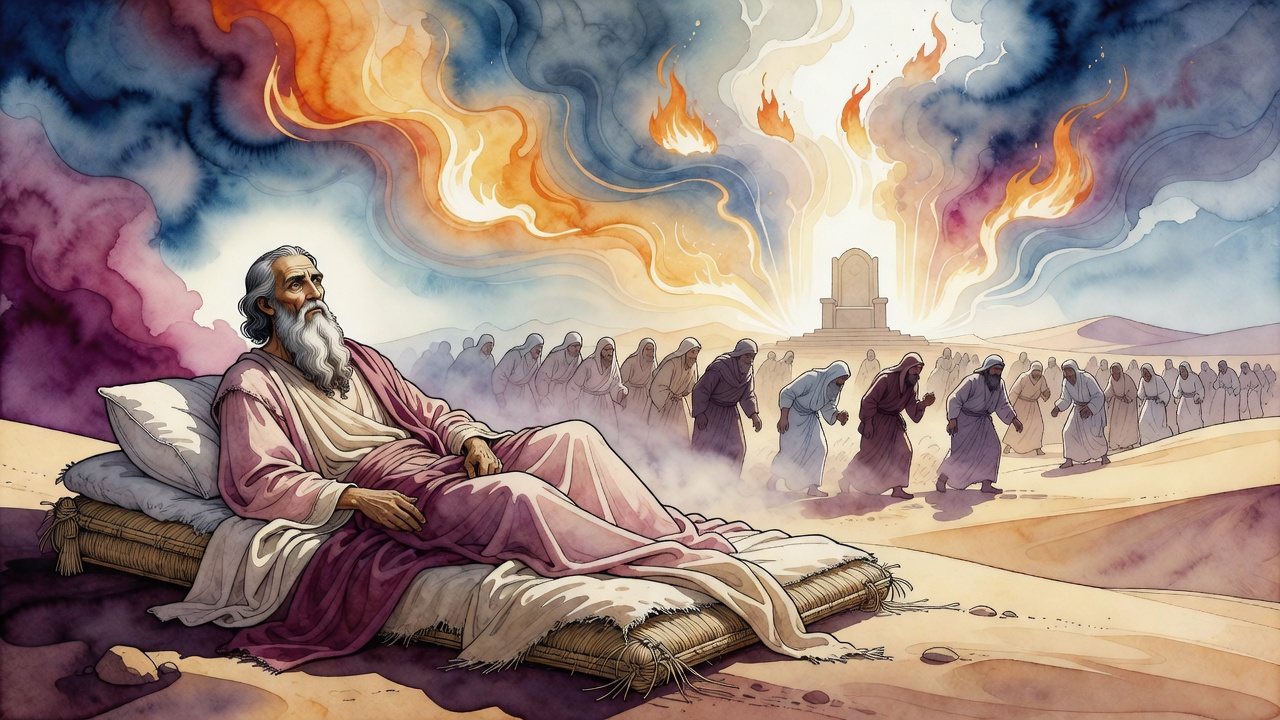
Instead Jacob was afraid, and he knew exactly what he was afraid of. He could count. If he went down into Egypt with his household, the four hundred years began. He would be the man who triggered the slavery, the father of the generation that walked into chains. He would rather be buried in Canaan than be that man. So on the way south he stopped at Beersheba, and he built an altar, and he offered sacrifices to the God of his father Isaac, and he waited to see whether heaven would let him go on.

The Voice in the Night at Beersheba

God answered him in a vision of the night, and called him by name. "Jacob, Jacob." And Jacob said, "Here I am," the same words his son had said in the valley.

Then came the sentence that only makes sense inside this tradition. "I am God, the God of your father. Do not be afraid to go down to Egypt." Do not be afraid of the very slavery decreed to Abraham. "For I will make you into a great nation there."

There. In Egypt. In the exact place of the bondage. The seventy souls climbing into Joseph's wagons would come out a people. The Egypt that would break their backs was the Egypt that would multiply them past counting. The descent Jacob dreaded was not the grave. It was the cradle.

Jacob rose from the altar. He did not argue. He climbed into the wagon his son had sent, an old man riding down into a prophecy he had feared his whole life, and the flame that had been lit in Rachel's tent went down with him toward the land that would burn and grow him into Israel.


← All myths
From the tradition

Sources

3 sources

The texts behind this telling. Some cards carry a translation of the source; others are our own retelling of it, and each card says which. Every card links out to the original.

Targum Pseudo-Jonathan on Genesis 30:25Targum Pseudo-Jonathan on Genesis

Retold in our words. Read the original at the link below.The Targum of Jonathan ben Uzziel, trans. J. W. Etheridge, London, 1862 · Public Domain

The moment Rahel gave birth to Joseph, something shifted in Jakob. Targum Pseudo-Jonathan tells us that the Ruach HaKodesh, the Holy Spirit, settled upon him, and he looked ahead across centuries. He saw the house of Joseph rising like a flame, and the house of Esau as dry stubble waiting for the spark.

Only then did Jakob turn to Laban and say the words he had been holding back for fourteen years: send me away. The prophecy had given him the courage. He saw that his descendants would not be consumed by Esau's legions, because one of his own sons would be the fire that consumed them first (Genesis 30:25).

The Maggid teaches: Jakob did not ask to leave because he was tired. He asked to leave because he finally knew who his children would become. Sometimes the courage to leave comes only after the vision of what you are leaving toward.

Full source
Targum Pseudo-Jonathan on Genesis 37:14Targum Pseudo-Jonathan on Genesis

Retold in our words. Read the original at the link below.The Targum of Jonathan ben Uzziel, trans. J. W. Etheridge, London, 1862 · Public Domain

The Torah says Jacob sent Joseph from the Valley of Hebron. The word valley, emek, also means depth. Targum Pseudo-Jonathan on (Genesis 37:14) pounces on the double meaning.

Jacob told Joseph to check on his brothers and return me word to the deep Counsel. What counsel? The deep counsel which was spoken to Abraham in Hebron; for on that day began the captivity of Mizraim.

The reference is to the Covenant Between the Pieces. God had told Abraham, decades earlier: your descendants will be strangers in a land not their own, and they will be enslaved and afflicted four hundred years (Genesis 15:13). The promise had been spoken in Hebron. And now, from that same valley, Jacob sent Joseph. And the prophecy began to come true on that very day.

The Targumist is doing something staggering. He is telling us that Joseph's descent into Egypt was not an accident, not a family tragedy, not even a consequence of his brothers' jealousy alone. It was the fulfillment of a promise made two generations earlier. The clock on the four hundred years started ticking the moment Joseph left his father's tent.

Jacob did not know this. But the land remembered. Hebron had heard the covenant, and Hebron now released the first captive. The whole story of Israel in Egypt, the slavery, the plagues, the Exodus, the giving of the Torah at Sinai, was compressed inside a father's errand to check on some shepherds. History, the Targum teaches, often begins with a small assignment and a boy who says Behold me.

Full source
Targum Pseudo-Jonathan on Genesis 46:3Targum Pseudo-Jonathan on Genesis

Retold in our words. Read the original at the link below.The Targum of Jonathan ben Uzziel, trans. J. W. Etheridge, London, 1862 · Public Domain

Jacob pauses at Be'er Sheva on his way to Egypt. He offers sacrifices. He waits. He listens. And the Holy One speaks to him in a night vision.

"He said, I am God, the God of thy father; fear not to go down into Mizraim on account of the servitude I have decreed with Abraham: for a great people will I make thee there" (Genesis 46:3). Targum Pseudo-Jonathan preserves the reason Jacob needed reassurance. He was afraid of the shibbud, the slavery foretold to his grandfather at the Covenant Between the Pieces (Genesis 15:13-14), where God told Abraham that his descendants would be "strangers in a land not theirs" for four hundred years.

Jacob does the arithmetic at Beersheba. If he descends to Egypt with his family, the four-hundred-year clock begins. He does not want to be the one who triggers the slavery. He would rather die in Canaan than be the father of the generation that enters bondage.

The Holy One answers with a paradox that only makes sense in Jewish theology. Fear not to go down. The descent is not the tragedy. The descent is the cradle. "A great people will I make thee there", in Egypt, in the very place of the decreed slavery, the seventy souls of Jacob's family will grow into a nation.

The sages teach that exile and peoplehood are paired in Judaism. The klal Yisrael, the national body of Israel, is forged in the crucible of Mitzrayim. The same Egypt that enslaves is the Egypt that multiplies. The suffering that Abraham was told about is real, but so is the promise on the other side of it: a great people, a covenant nation, an Exodus.

Jacob listens. He accepts. He rises from the altar and continues the journey. God has just turned his fear into a blessing.

Full source