Parshat Bereshit6 min read

The God Who Stooped to Clothe Adam and Lift David

David sang that God's humility crowned him. The rabbis found the same stooping God waiting on naked Adam and beating Ezekiel to the plain.

Curated by Arthur · Told by Maggid ·
Table of Contents
  1. The Garden Held Its Breath
  2. The Shepherd Who Noticed
  3. The Master Thanked His Students
  4. God Was Already at the Plain
  5. The Shield Beneath the Throne
The God Who Stooped to Clothe Adam and Lift David Click for full size

The Garden Held Its Breath

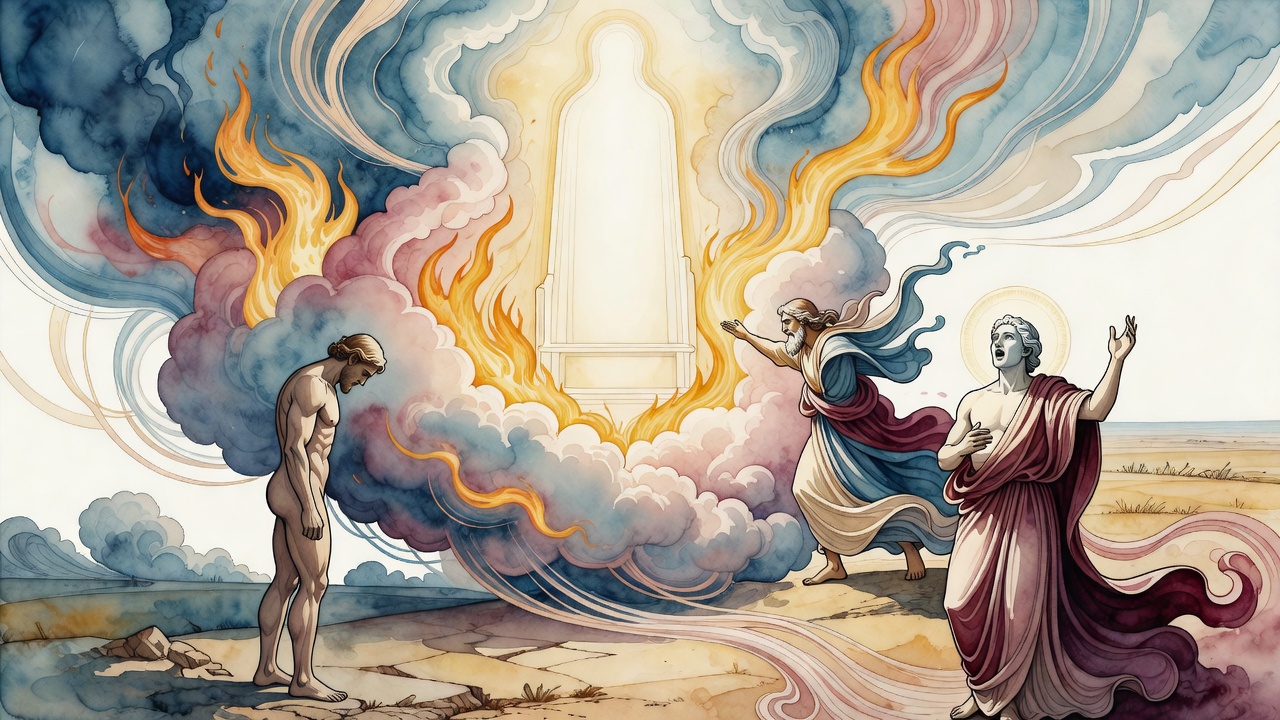
The fruit was already eaten, and Adam stood among the trees with his hands full of fig leaves, stitching, tearing, stitching again. The leaves would not cover enough of him. His fingers shook. Somewhere past the branches the light was changing, and he knew what the change meant. God was coming to walk in the garden, and Adam had nothing to wear but shame.

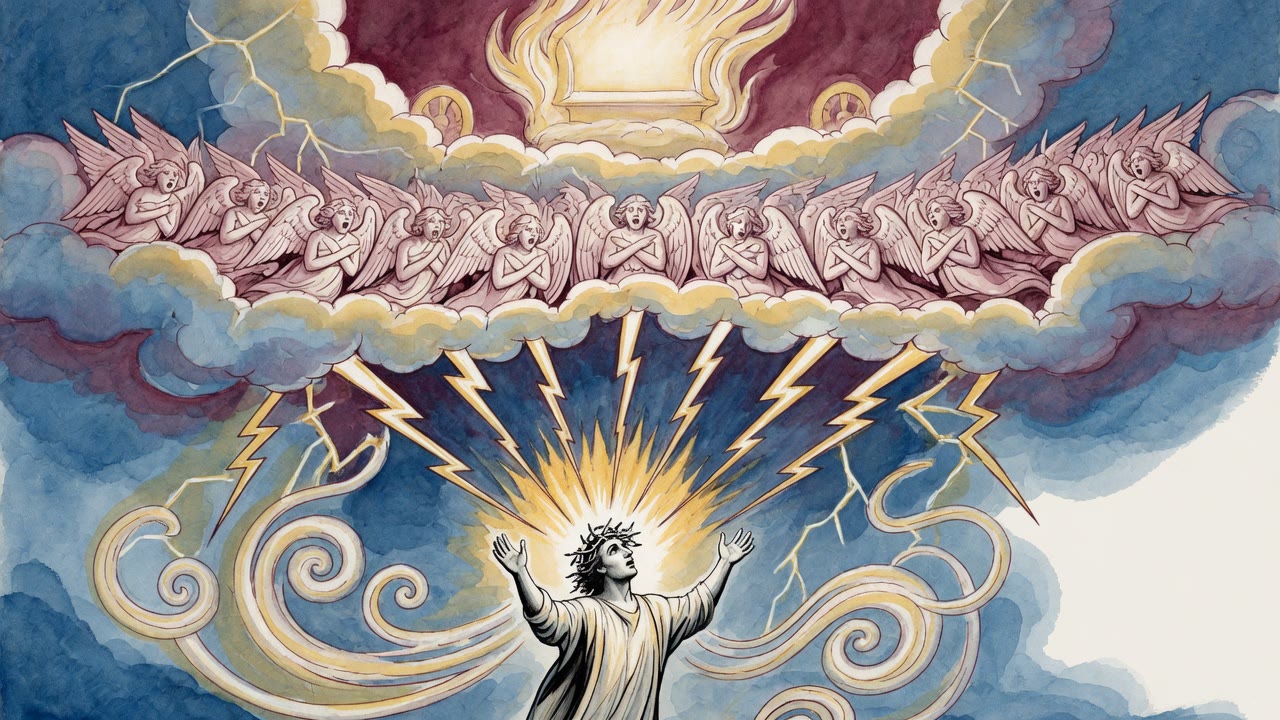
Then he heard the angels. Their voices carried the way sound carries across water, and they were talking about him. "God betakes Himself to those who dwell in Paradise," one announced, and Adam pressed his back against a trunk. Another asked, plainly astonished, "What, does he still walk about in the garden? Is he not dead yet?"

But God did not step out from the light. Not while the man was clawing at leaves. The one who had shaped Adam from wet clay, who had breathed into his nose and set him among the four rivers, held back behind His own trees. One does not stand and watch a person in the hour of his disgrace. So the Maker of the garden waited until Adam had covered what he could, and only then let Himself be seen and let Himself be heard.

The Shepherd Who Noticed

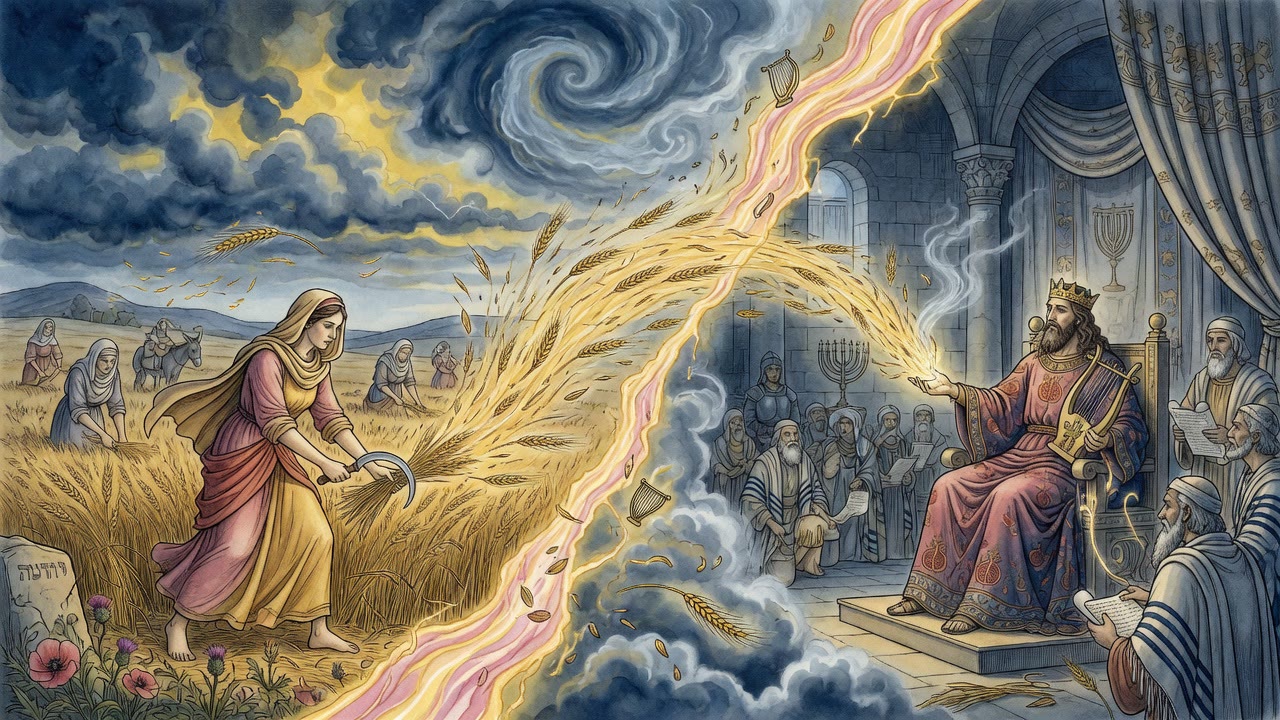
Generations later a shepherd turned king sat with a harp in his lap and sang a thing no one expected. David had come up out of the sheepfold to a throne, and when he counted the reasons for it, he did not sing about his own arm or his own cunning. "You have given me the shield of Your salvation," he sang, "and Your right hand has held me up, and Your humility has made me great."

His humility. Not His power. The sages who later bent over that line turned it every way, sure they had misread it, and every time it came out the same. The God who split the sea and cracked the mountains had lifted a shepherd to a crown not by towering over him but by stooping to him. David had watched God stoop his whole life, in the field, in the cave, in the palace, and now he said it out loud.

The Master Thanked His Students

Rabbi Abba bar Aha reached for a study house to make sense of the line. A pupil sits at his teacher's feet through the whole lesson, and when it ends the pupil stands and says, "How I have wearied you, my teacher." That is the order of the world. The small one thanks the great one for the trouble of coming down to teach him.

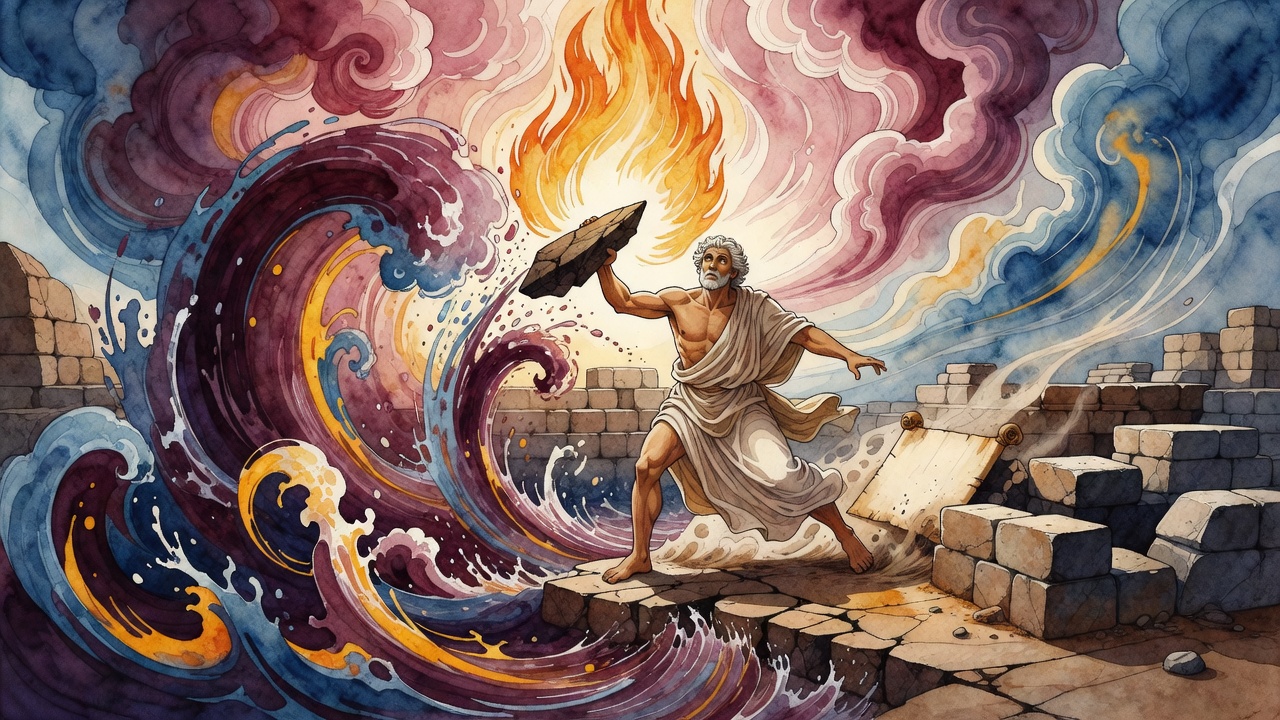
Then the rabbi pointed at Sinai. Israel had stood at the foot of the mountain, and for days the fire on the summit had taught them face to face. When the camp finally prepared to move, the words that came down were not the students thanking the Teacher. They were the Teacher thanking the students. "You have stayed long enough at this mountain," God said, the way a master releases a class He is grateful to have held. Israel had learned from the mouth of the Holy One, and the Holy One spoke to them at the end as though they stood level with Him.

God Was Already at the Plain

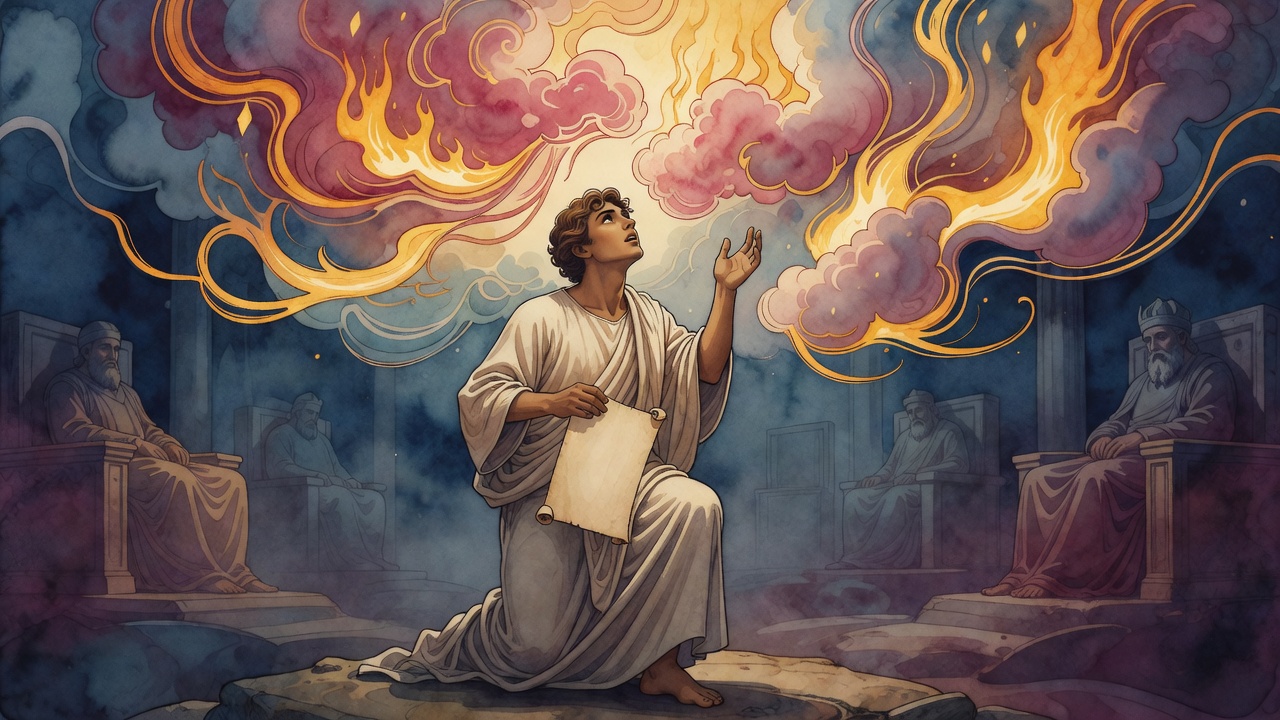
Far from any mountain, in a camp of exiles beside a canal in Babylon, a priest named Ezekiel heard the command to walk. "Arise, go out into the plain, and there I will speak with you." He knew the etiquette. A student is told to go on ahead to some appointed place, and he goes, and he waits, because the teacher always arrives after. So Ezekiel rose and went out to the bare dirt of the plain, bracing to stand alone under the open sky until his God should come.

He was not alone. He came over the last rise, and the glory of the Lord was already there, settled on the empty ground as if it had been standing in that dust the whole time, waiting for him. The greater had come first. The one who could have descended in thunder the instant the prophet knelt had gone ahead of him instead, so that a worn exile would not stand a single breath by himself in the open. The plain had been made holy before Ezekiel ever set his foot on it.

The Shield Beneath the Throne

This was the shield David had sung about. Not a wall of fire between him and his enemies, though he had seen those too. The shield was a God willing to lower Himself. To hang back in a garden so a ruined man could hide his nakedness. To thank the very people He had just finished teaching. To reach a barren plain ahead of His own prophet. A king who will not come down to his subjects rules no one worth ruling, and a teacher who will not sit at the level of his student teaches no one worth teaching. The God David served did both without being asked, and had been doing it since the first man stood shaking among the leaves.

So the shepherd set down his harp. The throne beneath him had never rested on his sling or his songs. It rested on the shoulders of a God who stooped, and the stooping had begun in a garden, with one naked man and a handful of torn leaves.


← All myths
From the tradition

Sources

3 sources

The texts behind this telling. Some cards carry a translation of the source; others are our own retelling of it, and each card says which. Every card links out to the original.

Legends of the Jews 2:59Legends of the Jews

Retold in our words. Read the original at the link below.The Legends of the Jews by Louis Ginzberg (1909) · Public Domain

It wasn't just a guilty conscience. According to some fascinating traditions, the very air around him crackled with divine activity.

Adam, suddenly aware of his nakedness, frantically trying to cover himself. The text says that while he was in this state of shame, searching for a way to escape his embarrassment, God didn't appear. There’s a beautiful sensitivity in that. The tradition teaches us that one shouldn't "strive to see a man in the hour of his disgrace."

Even before God spoke, Adam knew. How? He heard the angels.

According to Legends of the Jews, a monumental work compiled by Rabbi Louis Ginzberg, Adam overheard the angels announcing, "God betaketh Himself unto those that dwell in Paradise." Basically, "God is coming to Paradise!"

But it gets even more intense. Adam also heard what the angels were saying about him – to each other, and to God! The angels, astonished, exclaimed: "What! He still walks about in Paradise? He is not yet dead?"

That’s a pretty harsh assessment!

Then, as we find in Legends of the Jews, God responds. God says: "I said to him, 'In the day that thou eatest thereof, thou shalt surely die!' Now, ye know not what manner of day I meant--one of My days of a thousand years, or one of your days. I will give him one of My days. He shall have nine hundred and thirty years to live, and seventy to leave to his descendants."

So, there you have it. Adam didn't just suddenly realize he'd messed up. He heard the celestial gossip, the heavenly judgment, and the divine decree all unfolding around him.

Full source
Midrash Tanchuma Buber, Bereshit 4:1Midrash Tanchuma Buber, Bereshit

Retold in our words. Read the original at the link below.Midrash Tanhuma, S. Buber Recension, trans. John T. Townsend (1989) · CC-BY

David, in (Psalm 18:36), sings a sentence so audacious that the rabbis read it again and again looking for the trick. "You gave me Your shield of salvation, and Your right hand sustains me, and Your humility has magnified me." Midrash Tanchuma Buber, Bereshit 4:1 insists the translation is correct. God's humility, not His power, is what made David great.

The three pieces of the verse

The midrash breaks the verse into three teachings. "Your shield of salvation" points back to (Psalm 18:31), "He is a shield for all who take refuge in Him". And applies to Israel as a whole. "Your right hand sustains me" refers to the Torah, because (Deuteronomy 33:2) calls Torah a "fiery law at God's right hand." And the third phrase, "Your humility has magnified me," is the shocker. How can God, the Creator of the universe, be called humble?

R. Abba bar Aha's parable

R. Abba bar Aha offered a beautiful image. A student sits before his master learning Torah. When the lesson ends, the student says: "How I have tired you, my master!" The roles are conventional. The junior thanks the senior for the effort.

Look at Sinai. Israel had been learning directly from the Holy One for days. When they finally prepared to move on, it was not Israel who said "we have tired You." It was God. (Deuteronomy 1:6) records the Divine line: "The Lord our God spoke to us in Horeb, saying: you have sat long enough at this mountain." The Master thanks the students for their attention. The Creator treats the created as equals.

R. Abba's conclusion: "Ergo. Your humility has magnified me."

What humility means for God

Jewish theology has always insisted that God is great, but equally insisted that greatness and humility are not opposites. A ruler who cannot lower himself to meet his subjects has no subjects worth ruling. A teacher who cannot come down to the level of the student has no students worth teaching. The God of the Torah, the midrash argues, does both constantly, descending to Abraham's tent, to Moses on the mountain, to David in his palace.

David understood this. His throne rested on the shoulders of a God willing to bend. That bending was the real shield.

The takeaway: the most surprising attribute of the Jewish God is not majesty. It is humility. And it is the quality that, the midrash insists, makes everything else possible.

Full source
Midrash Tanchuma Buber, Bereshit 4:2Midrash Tanchuma Buber, Bereshit

Retold in our words. Read the original at the link below.Midrash Tanhuma, S. Buber Recension, trans. John T. Townsend (1989) · CC-BY

By who shows up first. Midrash Tanchuma Buber, Bereshit 4:2 offers a second riff on (Psalm 18:36)'s line about divine humility, and this one turns on a small detail in the book of Ezekiel.

The ordinary protocol

R. Simeon ben Zera began with how human teachers behave. A student says: "Rabbi, teach me one chapter." The teacher replies: "Go on ahead, meet me at such and such a place." The student walks to the appointed location. The teacher arrives later. Deference runs downhill. The junior waits for the senior.

What the Holy One did with Ezekiel

Look at (Ezekiel 3:22). God tells the prophet: "Go out into the plain, and I will speak with you." Ezekiel obeys. And when he arrives, the next verse is shocking: "Then I arose and went out to the plain; and, lo, there was the glory of the Lord" (Ezekiel 3:23).

God was already there.

The student was told to come. He came. And the Master was waiting for him. R. Simeon reads this as a deliberate inversion of the expected hierarchy. Human etiquette makes the lesser wait for the greater. Divine humility makes the Greater wait for the lesser.

The implication for every prophet

Ezekiel, a priest exiled to Babylon in 597 BCE, was meeting his God not in the Temple but on a dirt plain outside his refugee settlement. The text could have presented God as descending from on high after Ezekiel arrived. Instead, it presents God as already present, as if the plain had been hallowed before the prophet ever got there.

The midrash's message is both personal and theological. The Holy One does not stand on ceremony. When you are told to meet God, God is already on the way, has, in fact, already arrived. The only question is whether the student will show up.

Humility as presence

This teaching continues a chain of midrashim in Bereshit 4 that all pivot on the same verse: "Your humility has magnified me" (Psalms 18:36). Each rabbi finds a different scene where God's willingness to lower Himself produces human greatness. Here, the humility is spatial. God arrives early. God waits for the prophet. The universe bends toward the one who is coming.

The takeaway: when you are called by God, you are never the first one there. The plain is already occupied. Your only job is to keep walking.

Full source