Parshat Vayeshev6 min read

The Hungry Door and the Pit That Spared Joseph

A doorway with a will of its own waits three fingerbreadths from paradise, while a father mourns a son the empty pit had already spared.

Curated by Arthur · Told by Maggid ·
Table of Contents
  1. The Door That Waits Three Fingerbreadths From Paradise
  2. The Hand That Reaches Out of the Dark
  3. Reuben Goes Down to the Empty Pit
  4. The Ban That Silenced Even Heaven
  5. A Father Who Would Not Be Comforted
The Hungry Door and the Pit That Spared Joseph Click for full size

The Door That Waits Three Fingerbreadths From Paradise

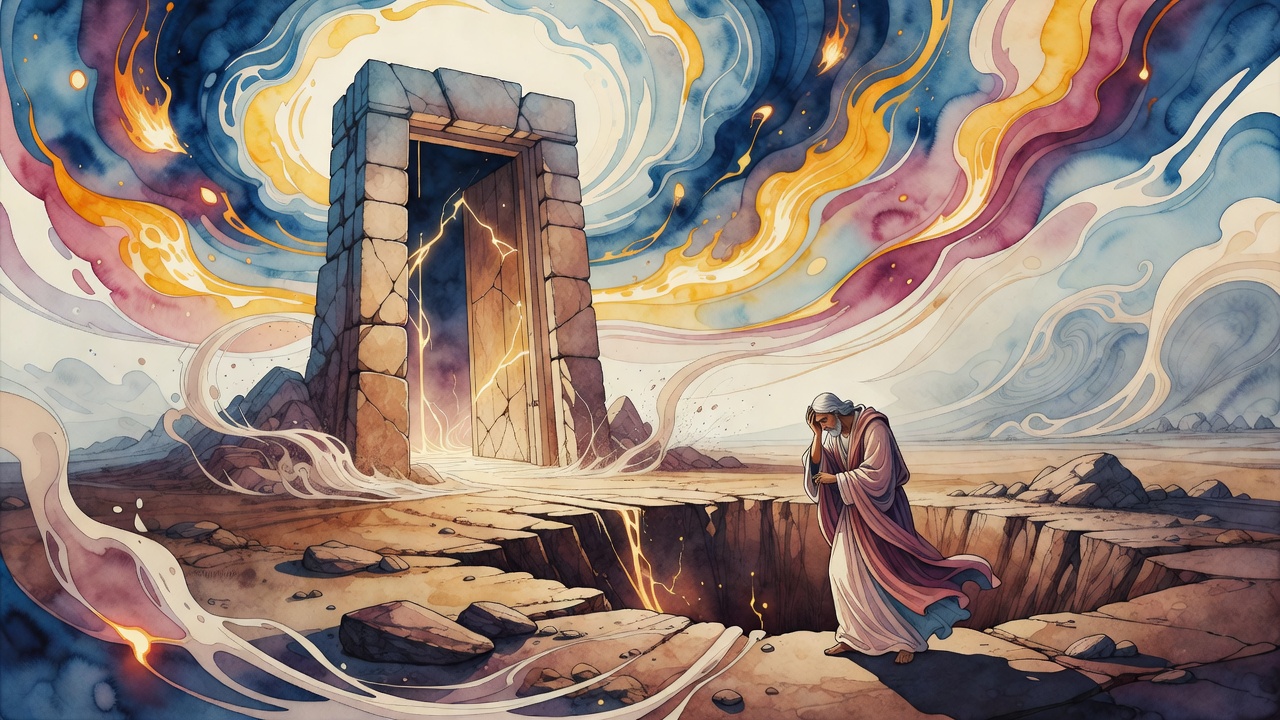
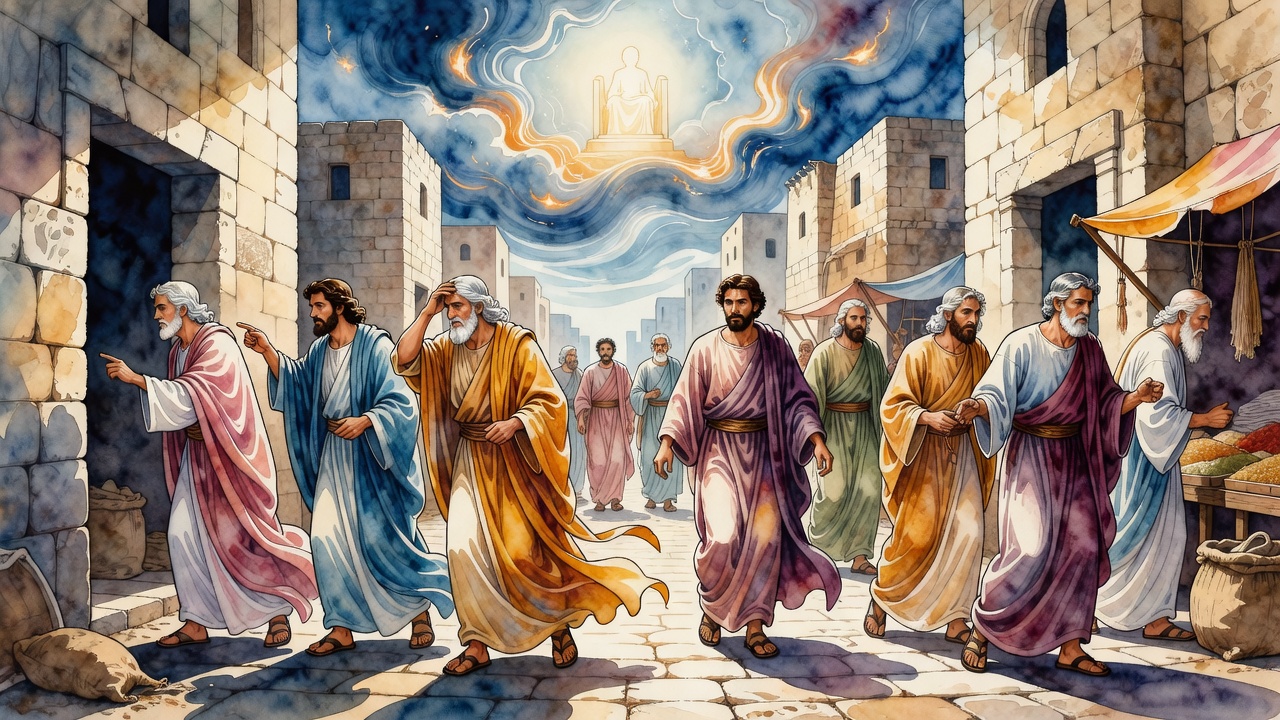
Between the garden and the fire there is a wall, and the wall is thinner than it has any right to be. Gan Eden on one side, with its rivers and its light. Gehenna (the realm of judgment after death) on the other, its furnaces breathing. The sages who measured the gap did not speak of leagues, or of some great gulf fixed between the two. They spoke of three fingerbreadths. Lay two fingers and a thumb across the space and you have crossed from the feast of the righteous to the mouth of the pit.

Somewhere along that wall stands a door.

It is not a gate that a keeper opens and shuts. It is not quiet wood hanging on its hinges, waiting to be pushed. This door has a will inside it. It watches. It hungers. It knows the sound of a footstep that has wandered too near, and it waits for that footstep the way a beast waits at the lip of its den.

The Hand That Reaches Out of the Dark

A man walks. He is thinking of nothing, or of everything, of bread and debts and the road home. He does not know how close he has drifted. He does not feel the heat leaking through the seam.

Then the door swings open.

No warning comes first, no groan of the hinge, no voice of command. A hand reaches out of the dark on the far side, and the hand closes on him, and it drags. He has time for one cry. The door swings shut behind him, the seam goes cold again, and the wall is as smooth as if nothing had ever opened there. The man is gone. No one saw where. No one will find him. The garden was three fingerbreadths away and he never reached it.

The old tellers did not frighten their listeners with a lake of fire in some far country. They frightened them with this. A threshold at the edge of an ordinary road, alive and patient, close enough to brush with a sleeve.

Reuben Goes Down to the Empty Pit

There was another mouth in the ground once, and a whole family learned how a pit can swallow a man, and how it can spare one.

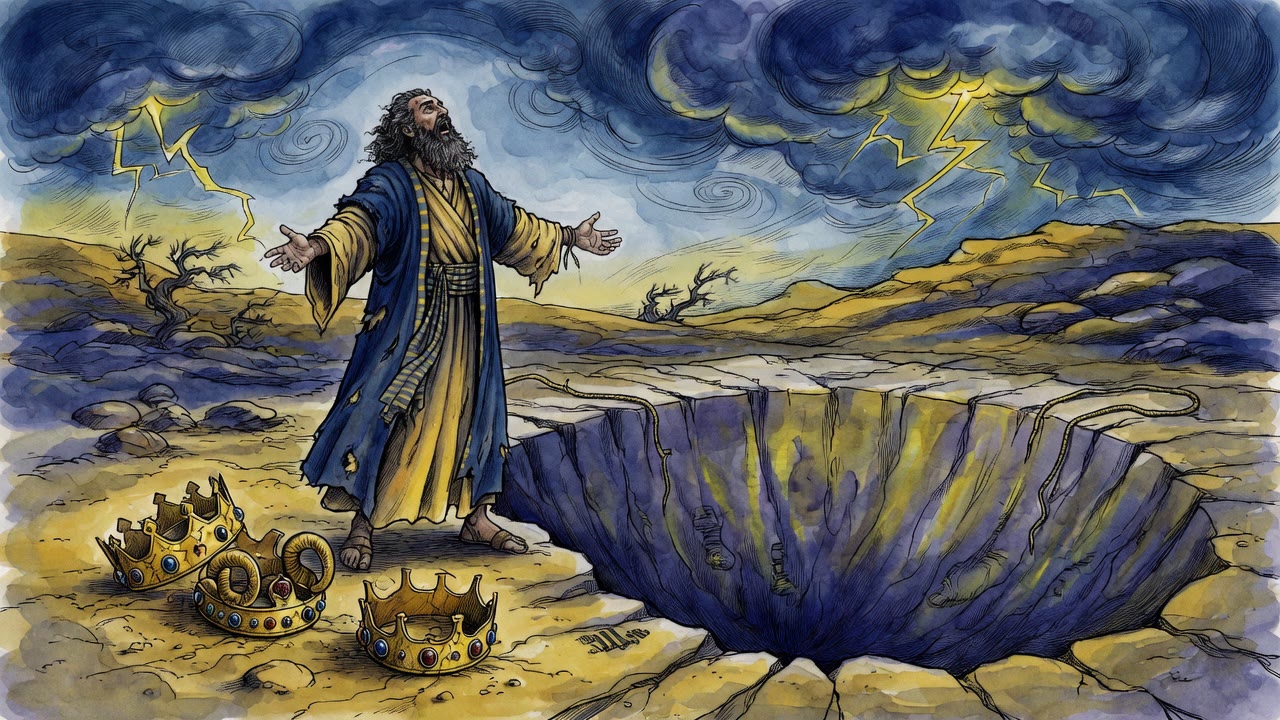
The brothers of Joseph hated the coat their father had draped across his shoulders. They hated the dreams he told at the table, the sheaves that bowed to his sheaf, the sun and moon and stars that knelt to him. So they seized him, stripped the coat away, and threw him down into a pit in the wilderness. Then they sat to eat.

Reuben, the eldest, could not keep the bread down. That night, while the others slept, he went back to the pit alone. He would lift the boy out with his own arms. He would carry him home and unmake the whole black day. He came to the edge in the dark and looked down.

The pit was empty.

Joseph was not in it. While Reuben's back was turned, the others had sold the boy to a passing caravan, and the pit that should have been a grave had let its prisoner go, alive, walking south in a stranger's train. Reuben knew none of it. He knew only the black hole and the silence rising out of it.

"The child is not," he cried, "and I, where shall I go?"

The Ban That Silenced Even Heaven

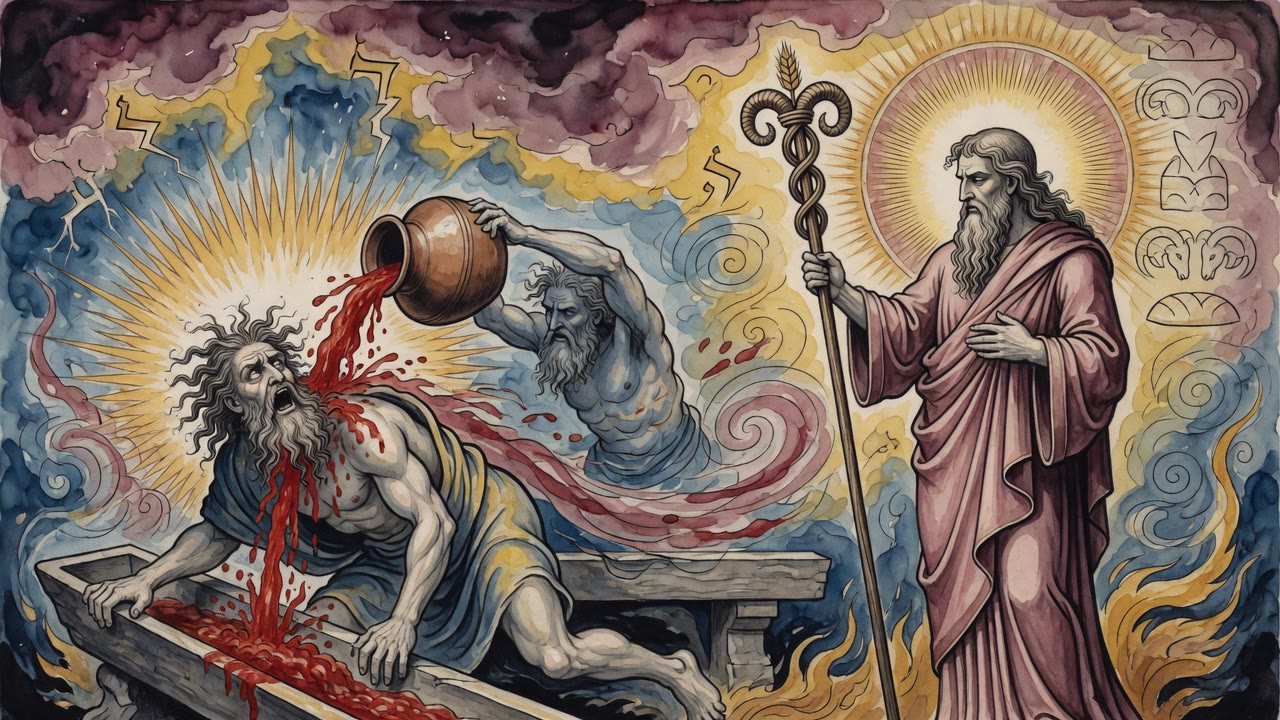
The brothers gathered and made their guilt into law. They swore a cherem, a ban, and bound one another beneath it. Not one of them would ever say what had been done. No tongue would carry the word to their father. And Reuben, who had come to save the boy, heard the ban and said nothing. He folded the truth inside himself and let the seal close over it.

The ban had a reach the brothers never imagined. God declares His word to Jacob, His truth to Israel. But a cherem (property devoted and forbidden) sworn by the sons of Israel became a wall the divine word would not cross. Heaven held the truth and heaven kept it shut. Joseph lived, and the one father who would have wept for joy was left standing on the wrong side of a silence as final as any slammed door.

A Father Who Would Not Be Comforted

They brought Jacob the coat. They had dipped it in the blood of a goat, and they held it out and asked him to name it. He knew it at once. He had sewn its colors with his own hands.

"An evil beast has devoured him," Jacob said. "Joseph is without doubt torn in pieces."

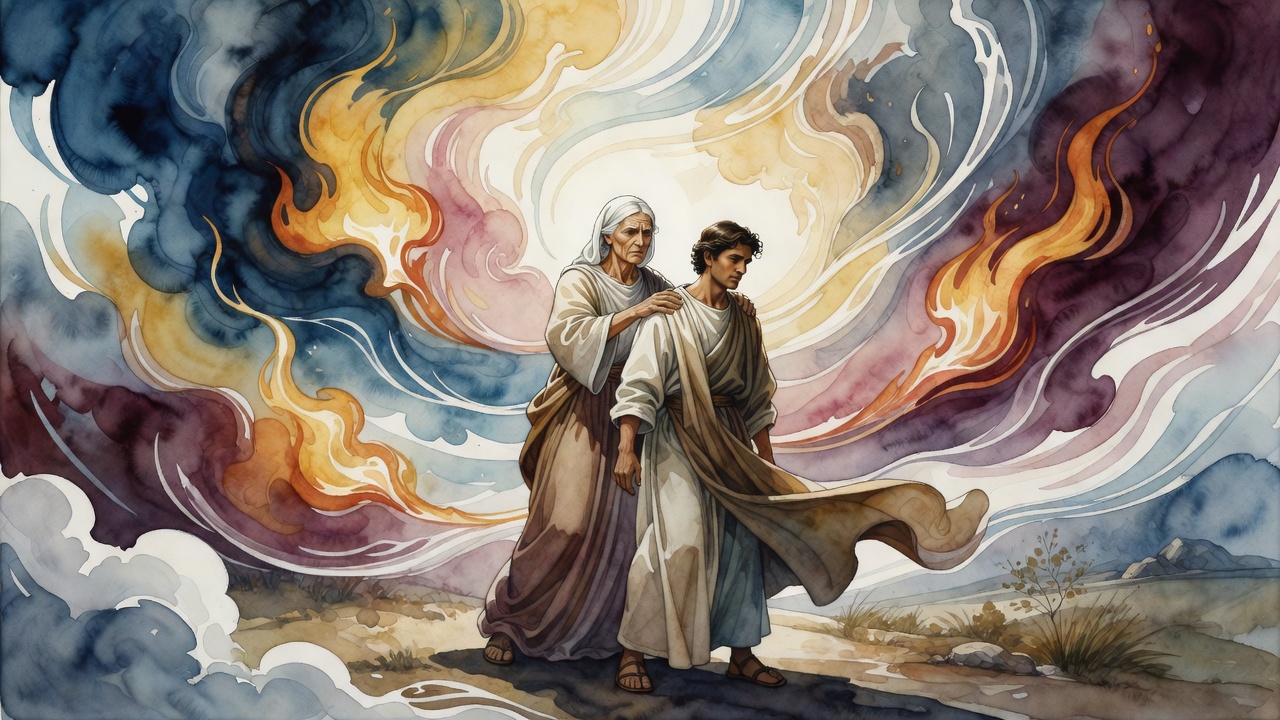
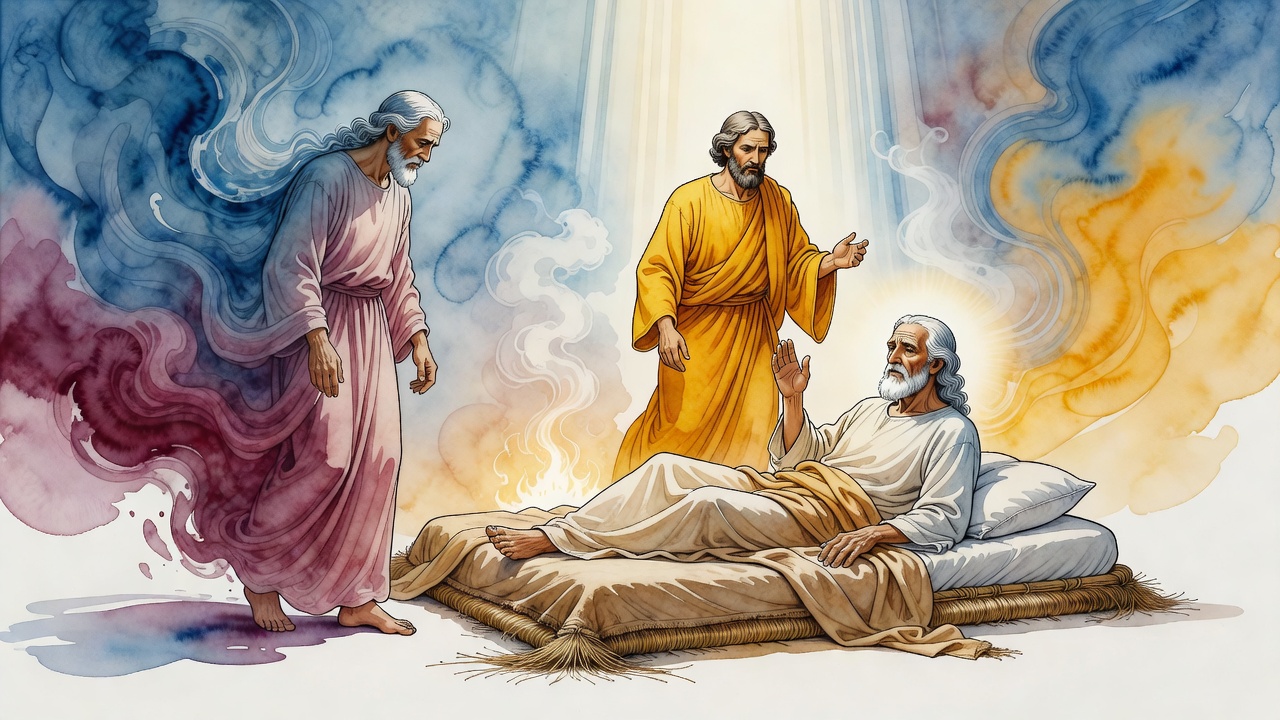
He would take no comfort. His sons stood around him, and his daughters, and he pushed away every hand they offered. He said he would go down to the grave still mourning for his son, down into the dark after him, and no voice could talk him back up into the light. Without knowing it, he had come to the edge of his own pit. The fire that waits three fingerbreadths from the garden has a claim on grief like his, on a man who wants nothing anymore except to descend.

But the boy he mourned was not torn. The pit had spared him. Somewhere on the road to Egypt Joseph breathed and walked and rose, while the wall between the father's despair and the truth stood three fingerbreadths thick and did not open for twenty-two years.


← All myths
From the tradition

Sources

2 sources

The texts behind this telling. Some cards carry a translation of the source; others are our own retelling of it, and each card says which. Every card links out to the original.

Ms. Oxford Bodleian OR 135Manuscript Sources

Retold in our words. Read the original at the link below.Sefaria-hosted English translation · CC-BY

Jewish tradition definitely taps into that fear. In fact, there's this image, a really chilling one, of a literal doorway to Gehenna – often translated as Hell, though it’s more accurately a place of purification.

This isn't just any door. This is a door with a mind of its own, a malevolent presence. Just minding your own business. And without warning, wham! It swings open! A hand shoots out, grabs you, and drags you into the abyss. The door slams shut, and you're gone. Vanished. Never to be seen again.

Pretty scary. This motif of the forbidden door, the threshold you just don't cross, it echoes through folklore around the world. Think of Bluebeard's castle, that one room he tells his wife she must never, ever enter. Of course, she does, and… well, you know what happens. It's that same primal fear, that tantalizing and terrifying pull of the forbidden.

It reminds us of Eve and the fruit from the Tree of Knowledge – that single, simple act of disobedience that changed everything. Or Pandora, in ancient story, and her box. Curiosity, temptation, and the devastating consequences that follow. These stories resonate because they speak to something deep within us, that awareness of boundaries and the potential for disastrous transgression.

How close are we, really, to that "doorway?" The Talmud tells us that Gan Eden (Paradise) and Gehenna are only three fingerbreadths apart!! That’s practically nothing. It suggests that the line between good and evil, between right action and wrong, is incredibly thin. The potential to stumble, to fall, is ever-present. That door to Gehenna, in a sense, confronts us at every turn.

You can find a Jewish folktale based on this image, called "The Door to Gehenna," in the book Lilith's Cave. It really digs into that feeling of creeping dread. And if you want to delve deeper into the punishments and torments described in Gehenna, Samuel J. Fox's Hell in Jewish Literature is a great resource, collecting many of these ancient sources.

This particular image of the door comes from an old manuscript, Ms. Oxford Bodleian OR 135, which was published in a collection of Jewish tales edited by Israel Levi in Revue des Etudes Juives (that's the Review of Jewish Studies) back in 1897. So, this isn't some modern invention; it's a piece of our collective past, a reflection of anxieties and beliefs that have been with us for centuries.

Remember the hand reaching out. Maybe, just maybe, it will give you pause. Maybe it will remind you that some doors are best left unopened. Does this image of Gehenna as a place we can so easily fall into make you more careful, or does it feel like an unfair trap?

Full source
Pirkei DeRabbi Eliezer 38:12Pirkei DeRabbi Eliezer

Retold in our words. Read the original at the link below.Pirke de Rabbi Eliezer, trans. Rabbi Gerald Friedlander, London (1916) · CC-BY

Pirkei DeRabbi Eliezer turns to Joseph, Jacob and the Fires of Gehenna.

We find ourselves in Pirkei DeRabbi Eliezer, Chapter 38, a fascinating text that fills in the gaps in the Torah's narrative. It’s a kind of midrash (rabbinic interpretive commentary), if you will, expanding on the original story to give us a richer, more nuanced understanding.

Remember the scene? Joseph, the favored son, is thrown into a pit by his jealous brothers. A terrible act, born of envy and resentment. But what happened next? The Torah tells us the brothers sold Joseph into slavery and then showed their father, Jacob, Joseph's bloodied coat, leading him to believe his beloved son was dead, torn apart by wild beasts.

Pirkei DeRabbi Eliezer gives us a glimpse behind the curtain. It tells us that Reuben, the eldest brother, had a change of heart. He went down to the pit at night, intending to rescue Joseph. Imagine the scene: the darkness, the fear, the weight of his brothers' actions. But when he arrived, Joseph was gone.

"Ye have slain Joseph," Reuben cries out in despair, adding "and I, whither shall I go?" He knows what this means for his father. And the brothers confessed.

Then comes the truly heartbreaking part. The brothers had proclaimed a cherem (חֵרֶם), a ban, forbidding anyone to reveal what they had done. And Reuben, hearing this ban, remained silent. This is where the story takes a truly devastating turn. Because of this ban, even the Holy One, blessed be He, didn't reveal the truth to Jacob. "He sheweth his word unto Jacob" (Psalm 147:19). God reveals his word, his truth, to Jacob. But not this time. The ban was so powerful, so binding, that it blocked even divine intervention.

And so, Jacob is left to believe the lie. "Joseph is without doubt torn in pieces" (Genesis 37:33), he laments, a father's heart shattered by a deception fueled by silence.

What does this tell us? Perhaps it speaks to the immense power of secrets, the way they can fester and poison relationships, even severing connections to something greater. It also shows how human actions can, in a way, impact the divine flow of information, so to speak.

The story of Joseph is filled with incredible twists and turns, moments of betrayal and redemption. But in this small detail from Pirkei DeRabbi Eliezer, we see the devastating impact of silence, and the enduring pain of a father who never knew the truth.

Full source