Translation of the source text.Tanna debei Eliyahu Rabbah, Warsaw 1880 · Public Domain
"Draw me after you, let us run; the King has brought me into his chambers" (Song of Songs 1:4). This is the assembly of Israel, which was drawn after the Holy One, blessed be He, as it is said, "The LORD appeared to me from afar: I have loved you with an everlasting love; therefore I have drawn you with lovingkindness" (Jeremiah 31:3). It does not say, "I have loved you with a great love," but "I have loved you with an everlasting love." Lest you say the love of the Holy One, blessed be He, lasted three years, or ten years, or one hundred years, therefore it is said, "I have loved you with an everlasting love." Therefore it is said, "Draw me after you, let us run; the King has brought me into his chambers."
A parable: a king was sitting on his throne, and his servants were standing before him. He set his eyes on the one whom he loved, seized him by the hand, and brought him into his innermost chambers. So the Holy One, blessed be He, brought Israel into His innermost chambers, as He did not bring any nation or language. Therefore it is said, "The King has brought me into his chambers."
Another interpretation: "The King has brought me into his chambers." Just as the Holy One, blessed be He, has innermost chambers in His Torah, so the disciples of the sages each have innermost chambers in their Torah. If you see that sufferings are feeling their way toward you and coming upon you, run to the chambers of words of Torah, and immediately the sufferings flee from you, as it is said, "Come, My people, enter your chambers" (Isaiah 26:20). Therefore it is said, "The King has brought me into his chambers."
"We will rejoice and be glad in You" (Song of Songs 1:4), because You made us great, occupied Yourself with us, lifted us up, and tied for us a great bond in the words of Torah from one end of the world to the other, until You left the four hundred ninety-six thousand myriads of ministering angels and came and cleaved to Israel forever. Because it is said of You, "Before Me no god was formed, and after Me there shall be none" (Isaiah 43:10), You called us sons, brothers, and servants. Because it is said of You, "I am the LORD, and there is none else; besides Me there is no god" (Isaiah 45:5), You called us elohim, judges or divine beings. Because it is said of You, "a righteous God and a savior; there is none besides Me" (Isaiah 45:21), You caused Your great Name to rest upon the name Israel, and You joined the name Israel to Your great Name.
Concerning that hour it says, "I sleep, but my heart is awake. The voice of my beloved knocks: Open to me, my sister, my companion, my dove, my perfect one" (Song of Songs 5:2). And what is written above it? "I have come into my garden, my sister, my bride; I have gathered my myrrh with my spice; I have eaten my honeycomb with my honey; I have drunk my wine with my milk. Eat, friends; drink, and be drunk with love" (Song of Songs 5:1). Therefore it is said, "We will rejoice and be glad in You."
"We will remember Your loves more than wine" (Song of Songs 1:4). Just as the Holy One, blessed be He, may His great Name be blessed forever and to all eternities, remembers and praises the deeds of the righteous and the fit, claps His two hands together, and says, "Why was the whole world not filled with people like Abraham, Isaac, Jacob, Moses, and David?" so a person should remember and praise the Holy One, blessed be He, in prayer, in words of Torah, and in the words of the sages in every place. In the end, his way will be before the Holy One, blessed be He, as it is said, "Who is wise, that he may understand these things? discerning, that he may know them? For the ways of the LORD are straight, and the righteous walk in them" (Hosea 14:10). Therefore it is said, "We will remember Your loves more than wine."
When does the Holy One, blessed be He, remember and praise the deeds of the righteous and the fit, clap His two hands together, and say, "Why was the world not filled with people like Abraham, Isaac, Jacob, Moses, and David?" When Israel were in the wilderness and spoiled their deeds, the Holy One, blessed be He, said: How many miracles and mighty acts I performed for them, and still they did not enter beneath the wings of the Shekhinah. But for Jacob I never performed miracles, and all his days he was straight before Me, as it is said, "Jacob was a wholehearted man" (Genesis 25:27). Whole from robbery, whole from transgression, whole from an ugly thing. When the Holy One, blessed be He, remembers him, He claps His two hands together over him, as it is said, "Israel then shall dwell in safety alone, the fountain of Jacob... His heavens too..." (Deuteronomy 33:28).
Even when Amos the prophet stood and sought mercy for Israel before the Holy One, blessed be He, he said before Him: Master of the world, if there is no one in the world like Jacob, let the whole world be destroyed. Our Father in Heaven, may Your great Name be blessed forever and to all eternities. May You have satisfaction from Israel Your servants in all their dwelling places, for You did not leave Your servant Amos the prophet until You answered him at once, as it is said, "Thus the Lord GOD showed me: behold, He formed locusts at the beginning of the shooting up of the late growth; and behold, it was the late growth after the king's mowings. And it came to pass, when they made an end of eating the grass of the land, then I said, O Lord GOD, forgive, I pray; how shall Jacob stand, for he is small? The LORD relented concerning this. It shall not be, said the LORD" (Amos 7:1-3). This is the first line. In the second line, what does it say? "Thus the Lord GOD showed me: behold, the Lord GOD called to contend by fire... And I said, O Lord GOD, cease, I pray; how shall Jacob stand, for he is small? The LORD relented concerning this also. This too shall not be, said the Lord GOD" (Amos 7:4-6).
Behold, the Holy One, blessed be He, revealed through Amos the prophet two times. The Holy One, blessed be He, said to Amos: Did I not write in My Torah through Moses your teacher, "Happy are you, O Israel; who is like you, a people saved by the LORD" (Deuteronomy 33:29), in any case, whether wicked or fit? Of Moses, what does it say? "Remember the Torah of Moses My servant, which I commanded him at Horeb" (Malachi 3:22). In the days of Hosea son of Beeri, Joel, Amos, Micah the Morashtite, and all the other prophets, they did not know how to pour out mercy and seek supplications for Israel as Moses your teacher poured them out. Therefore it is said, "Remember the Torah of Moses."
But is it Moses' Torah? Is it not Yours, the Torah with which You delighted nine hundred seventy-four generations before Adam was created, which You refined and gave to Israel? What, then, does Scripture mean by "Remember the Torah of Moses My servant"? Since Moses stood in prayer four and five times and saved Israel from death, Scripture accounts it to him as though the entire Torah were Moses'. Therefore it is said, "Remember the Torah of Moses My servant."
But what does it say concerning the days of the kings of Israel and the days of the kings of Judah? The great men would go and sit before the kingdom, and the lesser one would set his eyes on one greater than himself and say to him: even though you speak according to halakhah and I do not speak according to halakhah, let your words pass away and let my words stand, even if the whole world is destroyed. So too in the later generations. Concerning them Scripture says, "All the sinners of My people shall die by the sword, who say, The evil shall not draw near or come before us" (Amos 9:10). What is written after it? "On that day I will raise up the fallen booth of David, and I will fence up their breaches, raise up its ruins, and build it as in days of old" (Amos 9:11).
Another interpretation: "We will remember Your loves more than wine." The remembrance of words of Torah and the words of sages in every chamber and place is better than old wine for a king in innermost chambers. Therefore it is said, "We will remember Your loves more than wine." "The King has brought me into his chambers" refers to one among thousands upon thousands and myriads upon myriads of innermost chambers that the Holy One, blessed be He, has in His Torah, and He told Moses to say them to Israel, as it is said, "He called to Moses, and the LORD spoke to him from the Tent of Meeting, saying" (Leviticus 1:1).
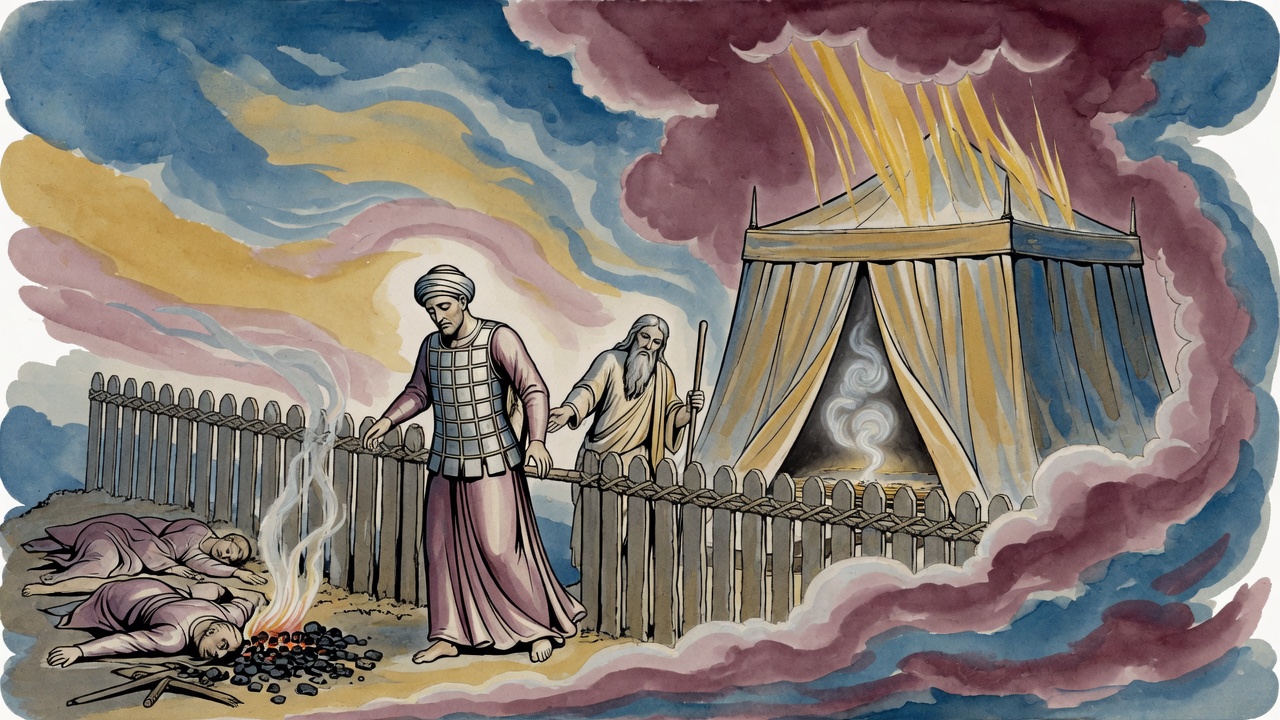
Another interpretation: "He called to Moses." From here they said: any Torah scholar who has no da'at, no mature discernment, a carcass is better than he is. Know that this is so. Go and learn from Moses our teacher, father of wisdom and father of the prophets. He brought Israel out of Egypt; through him signs and wonders were performed in the land of Egypt and the land of Ham; through him awe-inspiring things were performed at the Red Sea; he ascended to the heavens above and brought down the Torah from heaven; he occupied himself with the work of the Tabernacle. Even so, he did not enter the innermost place until He called him. Therefore it is said, "He called to Moses."
Another interpretation: "He called to Moses, and the LORD spoke to him from the Tent of Meeting, saying." Elsewhere it says, "The LORD saw that he turned aside to see, and God called to him from within the bush" (Exodus 3:4). At the bush, He stopped speaking to him there; but when He speaks in the Tent of Meeting, there is no interruption as there was at the bush. To what may this be compared? To a king who became angry with his servant and confined him in prison. When he commands the messenger, he commands him only from outside. But in the Tent of Meeting, where He rejoices in His children and the members of His household and they rejoice in Him, when He commands the messenger, He commands him only from inside, as though He seated him between His knees, like a man with his son. Therefore it is said, "He called to Moses, and the LORD spoke to him from the Tent of Meeting, saying."
"Speak to the children of Israel and say to them: Adam, when a person from among you brings an offering..." (Leviticus 1:2). Adam is a language of brotherhood, a language of entreaty, a language of companionship. So the Holy One, blessed be He, said to Ezekiel the priest, "son of man," meaning: son of fit people, righteous people, doers of kindness, who demean themselves for My honor and for Israel's honor all their days.
Another interpretation. To what may this be compared? To a king whose wife and sons sinned against him. The king rose and pushed them and put them outside his house. Afterward he sent and brought one son from her and said to him: son of so-and-so, come and I will show you your house and the house I built for you and your mother. Has My honor diminished? Or has the house I built for your mother diminished? Ezekiel is compared to this, as it is said, "It came to pass in the thirtieth year... and I was among the exiles... the word of the LORD came to Ezekiel son of Buzi the priest" (Ezekiel 1:1-3). This is the first line. In the second line, what does it say? "I saw, and behold, a storm wind came from the north... and from within it the likeness of four living creatures" (Ezekiel 1:4-5), and the whole matter.
After the Holy One, blessed be He, showed Ezekiel His glory, the Holy One, blessed be He, said to him: son of man, this is My glory, by which I raised you above the idol-worshiping nations. Has My glory diminished, or has the house I built for you diminished? As it is said, "You, son of man, tell the house of Israel about the house... This is the law of the house: upon the top of the mountain, all its boundary around..." (Ezekiel 43:10, 12). Perhaps you will say: I have no one to serve Me. Behold, I already have four hundred ninety-six thousand myriads of ministering angels, who stand and sanctify My great Name every day without ceasing, from sunrise until sunset saying before Me, "Holy, holy, holy is the LORD of hosts..." (Isaiah 6:3), and from sunset until sunrise saying, "Blessed is the glory of the LORD from His place" (Ezekiel 3:12), not to mention the seventy languages on earth. Why, then, do you do ugly things and unfit things, and kick at the sufferings that come upon you? But what shall I do? Behold, I act for My great Name's sake, so that it not be profaned.
"Speak to the children of Israel and say to them: Adam, when a person from among you brings an offering to the LORD" (Leviticus 1:2). Why does it not say here as it says elsewhere, "They shall take, each man, a lamb for a father's house" (Exodus 12:3)? Here too it could have written, "A man, when he brings from among you." Why does it say adam, a person? To include the convert. "From among you" excludes one who has apostatized to idolatry, for he does not bring burnt-offerings.
Rabban Shimon ben Gamliel said: the court enacted seven things, and this is one of them. One who sent his burnt-offering from overseas, if he sent its libations with it, they are offered from his own; if not, they are offered from communal funds. Likewise, a convert who died and left offerings, if he has libations, they are from his own; if not, they are offered from communal funds. It was also a stipulation of the court concerning a High Priest who died, that his meal-offering should be offered from communal funds. Rabbi Yehudah says: from the heirs. And it was offered whole. They also enacted concerning the salt and the wood, that the priests may benefit from them; concerning the red heifer, that one is not liable for misuse of its ashes; and concerning disqualified bird-offerings, that they come from communal funds. Rabbi Yose says: the supplier of the bird-offerings supplies the disqualified ones. An old version adds: as though the supplier of the flour-offerings supplies the disqualified portions.
Once I was walking on the road. A certain man found me and came toward me forcefully, as one comes upon his fellow with power. He said to me: you say that seven prophets arose for the idol-worshiping nations, and they testify against them that they descend to Gehinnom. I said to him: my son, this is how it was said to me. From the seven prophets onward, the idol-worshiping nations could say: the Torah was not given to us, and they still did not testify against us, so why do we descend to Gehinnom? I said to him: my son, this is what the sages taught in the Mishnah. A Kuti who comes to convert, we stretch out a hand to bring him beneath the wings of the Shekhinah. A printed variant adds: from here onward, the converts of a generation testify in that generation. "From the animals, from the cattle and from the flock, you shall bring your offering" (Leviticus 1:2). If it says "from the animals," why does it say "from the cattle and from the flock"? And if it says "from the cattle and from the flock," why does it say "from the animals"? From here they said: we accept kinds of sacrifices from the wicked of Israel in order to bring them beneath the wings of the Shekhinah, except for an apostate, one who pours libation wine for idolatry, and those who desecrate Sabbaths publicly.
Blessed is the Omnipresent, blessed is He, who counted Himself with the righteous. Adam fulfilled what is written in the Torah about bringing an offering, and brought up an ox upon the altar, as it is said, "This also shall please the LORD more than an ox or a bull with horns and hooves" (Psalms 69:32). Noah fulfilled what is written in the Torah about bringing an offering, as it is said, "Noah built an altar to the LORD" (Genesis 8:20). Abraham fulfilled everything written in the Torah, as it is said, "Because Abraham listened to My voice and kept My charge, My commandments, My statutes, and My Torahs" (Genesis 26:5). Isaac fulfilled everything written in the Torah and was cast before his father like a lamb to the slaughter, as it is said, "He bound Isaac his son" (Genesis 22:9). Jacob fulfilled everything written in the Torah, as it is said, "Jacob said... Remove the foreign gods" (Genesis 35:2). Judah fulfilled what is written in the Torah concerning the commandment of levirate marriage, as it is said, "Judah said to Onan, Go in to your brother's wife and perform levirate marriage with her" (Genesis 38:8). Joseph fulfilled the entire Torah: honor your father; do not murder; do not commit adultery; do not steal; do not bear false witness; do not covet. The Torah had not been given to them, yet they fulfilled it of themselves. Therefore the Holy One, blessed be He, loved them with complete love and made their name equal to His great Name.
Concerning them it says, "Happy are those whose way is wholehearted, who walk in the Torah of the LORD" (Psalms 119:1). And it says, "The Rock, His work is whole" (Deuteronomy 32:4). And it says, "God, His way is whole; the word of the LORD is refined" (II Samuel 22:31; Psalms 18:31).
"He shall slaughter the young bull before the LORD" (Leviticus 1:5), and concerning the ram it says, "He shall slaughter it on the north side of the altar before the LORD" (Leviticus 1:11). They said: on the day Abraham bound Isaac his son upon the altar, the Holy One, blessed be He, established two lambs, one in the morning and one in the evening, as it is said, "The one lamb you shall offer in the morning..." (Exodus 29:39). Why all this? So that when Israel bring up the continual offering upon the altar and read this verse, "on the north side before the LORD," the Holy One, blessed be He, remembers the binding of Isaac.
Another interpretation: "On the north side before the LORD" corresponds to Abraham, Isaac, and Jacob, who are hidden, tzefunim, before the LORD. From where do you know this language? As it is said, "New and old, my beloved, I have hidden for you" (Song of Songs 7:14). "New" refers to the company of Moses, the company of Joshua, the company of David, and the company of Hezekiah king of Judah. "Old" refers to the company of Ezra, Hillel the Elder, Rabban Yochanan ben Zakkai, Rabbi Meir, and his colleagues. Concerning them it says, "New and old, my beloved, I have hidden for you."
Why does it say concerning the bull, "its innards and its legs he shall wash in water" (Leviticus 1:9)? What is the difference between a ram and a bull? The printed phrase is obscure: a bull is said to lack "two and crosswise," while a ram does not lack "two and crosswise." And why is bringing near, hakravah, said concerning the ram, as it is said, "the innards and the legs... and the priest shall bring near the whole and burn it upon the altar" (Leviticus 1:13), while concerning the bull bringing near is not said, as it is said, "its innards and its legs he shall wash in water, and burn..." (Leviticus 1:9)? The sages said: we learn bringing near for the bull from the ram. I said to them: my teachers, twelve princes stood for the dedication of the altar and brought a burnt-offering for this one and for that one, a sin-offering for this one and for that one, and peace-offerings for this one and for that one, and there bringing near is said concerning the bull and the ram. Here bringing near is said concerning the ram and not concerning the bull. Why? So that a person should not say to himself: I will go and do ugly things and unfit things, and then bring a bull, which has much meat, and bring it up upon the altar. Perhaps the Holy One, blessed be He, will show favor to me. Rather, let a person do good deeds, learn Torah, bring a ram that is lean in flesh and wholly for the fires, and bring it up as a burnt-offering upon the altar, and behold, I am with him in mercy and accept him in repentance. Therefore bringing near is said concerning the ram and is not said concerning the bull.
There are two meal-offerings, as it is said, "If your offering is a meal-offering on a griddle" (Leviticus 2:5), and "If a meal-offering of the deep pan" (Leviticus 2:7). Concerning both it says, "you shall bring." What is the difference between a griddle and a deep pan? This one is mixed with oil, and this one is made with as much oil as it needs. Thus the sages taught in the Mishnah: the deep pan is deep and its product is soft; the griddle is flat and its product is hard. How so? A person should not say to himself: I will go and do ugly things and unfit things, and then bring a griddle meal-offering mixed with oil because of my love for the Omnipresent. The Holy One, blessed be He, says to him: My son, why did you not mix your deeds with words of Torah and good deeds? For oil means nothing other than Torah, and oil means nothing other than good deeds, as it is said, "Because of the fragrance of your good oils, your name is oil poured forth; therefore the maidens love you" (Song of Songs 1:3).
"Therefore the maidens love you" (Song of Songs 1:3). Even if the idol-worshiping nations recognized the wisdom, understanding, knowledge, and insight and reached the body of Your Torah, they would love You with complete love, whether it was good for them or bad for them. Therefore it is said, "therefore the maidens love you." Another interpretation: "therefore the maidens love you" refers to the ages of the world. Say: how many years are called an olam, an age or world? You must say that fifty years are called an olam, as it is said concerning Hannah, "Hannah did not go up... and he shall remain there forever" (I Samuel 1:22), and fifty years said concerning Samuel of Ramah is called olam. Fifty years said concerning a Hebrew servant is also called olam, as it is said, "he shall serve him forever" (Exodus 21:6). Therefore it is said, "the maidens love you."
Another interpretation: "therefore the maidens love you." If a person has read Scripture but has not studied Mishnah, he is still standing outside. If he has studied Mishnah but has not read Scripture, he is still standing outside. If he has read and studied Mishnah but has not served Torah scholars, he is like one from whom Torah has been hidden, as it is said, "After I returned, I repented, and after I was made known..." (Jeremiah 31:19). But if a person read Torah, Prophets, and Writings; studied Mishnah, Midrash, halakhot, and aggadot; and served Torah scholars, then even if he dies or is killed for the Torah, he is in joy forever in the World to Come. Therefore it is said, "the maidens love you."
The deep pan is deep and its product is soft. How is there a likeness of this in a person? A person who has Torah and guards himself so that he does not come into sin and iniquity, the Holy One, blessed be He, says to him: My son, blessed are you, and may you have satisfaction in the world, and may the words of Torah be kept and hidden in your mouth forever. Happy is the person who has words of Torah in his hand, guarded in his hand, and knows how to answer with them in his place. Concerning him it says, "Counsel in the heart of man is deep water, but a person of understanding will draw it out" (Proverbs 20:5). And it says, "Out of the depths I have called You, LORD" (Psalms 130:1).
"This is the law of the burnt-offering" (Leviticus 6:2), "this is the law of the meal-offering" (Leviticus 6:7), "this is the law of the sin-offering" (Leviticus 6:18), "this is the law of the guilt-offering" (Leviticus 7:1), and "this is the law of the peace-offerings" (Leviticus 7:11). What is the difference between these and those? These have an extra letter and those lack a letter. And furthermore, why does it say, "This is the law of the burnt-offering," and not simply, "This is the burnt-offering"? So that a person should not say to himself: I will do ugly things and unfit things, and then bring a burnt-offering, which is wholly for the fires, and bring it up upon the altar. Perhaps the Holy One, blessed be He, will show favor to me. Rather, let a person do good deeds and learn Torah for its own sake, bring a meal-offering that costs a sela or an issar, and bring it up upon the altar, and behold, I am with him in mercy and accept him in repentance. Therefore "this is the law of the burnt-offering" is written lacking one letter, while "this is the law of the meal-offering" has an extra letter. Therefore it is written, "This is the law of the burnt-offering," and it does not simply say, "This is the burnt-offering."
Why does it say, "This is the law of the sin-offering"? So that a person should not say to himself: I will go and worship idolatry, and then bring a sin-offering and be atoned by it. The sages taught in the Mishnah: one who says, "I will sin and repent," is not given the opportunity to repent. Therefore it is said, "This is the law of the sin-offering." Why does it say, "And this is the law of the guilt-offering"? Thus the Holy One, blessed be He, said to Israel: My children, I told you that My desire is only for blessing and for one who has no transgressions. Then I returned in My words: even if a person commits one hundred transgressions, one above another, and then returns and repents, lowers himself to the earth, sees himself as half innocent and half guilty, and sees himself as though he were liable every day for a suspensive guilt-offering, behold, I am with him in mercy and accept him in repentance. I will give him children of stature, occupied with Torah and keeping commandments, and the words of Torah will be hidden in his mouth forever, as it is said, "The LORD desired to crush him, making him ill; if his soul makes itself a guilt-offering, he shall see seed, he shall prolong days, and the desire of the LORD shall prosper in his hand" (Isaiah 53:10).
The Holy One, blessed be He, said to Israel: My children, do not accuse Me by saying that I desire this sick one who is neither among the living nor among the dead. Rather, let a person humble himself, as it is said, "if his soul makes itself a guilt-offering." As the sages said: let him bring a guilt-offering and atone for his soul. Then surely "he shall see seed and prolong days," and his learning will endure in his hand, as it is said, "the desire of the LORD shall prosper in his hand." Another interpretation: "He shall see seed" in this world, "he shall prolong days" in the World to Come. Therefore it is said, "And this is the law of the guilt-offering."
Why does it say, "And this is the law of the sacrifice of peace-offerings"? Thus the Holy One, blessed be He, said to Israel: My children, do My will and good deeds, and bring peace-offerings, which belong wholly to the owners, for nothing from them goes up on the altar except the blood and the sacrificial portions, and behold, I am with you in joy forever. Therefore it is said, "And this is the law of the sacrifice of peace-offerings." But when Israel are not in their proper state, it says of them, "Thus says the LORD of hosts, the God of Israel: Add your burnt-offerings to your sacrifices and eat flesh. For I did not speak to your fathers, nor command them... but this thing I commanded them, saying: Listen to My voice" (Jeremiah 7:21-23). And it says, "For I desire kindness and not sacrifice, and knowledge of God more than burnt-offerings" (Hosea 6:6).
So the Holy One, blessed be He, said to Jeremiah: go say to Israel, How long will you load yourselves with ugly things and unfit things and say about Me, He deliberately did this to our ancestors and to us in all our ways? As it is said, "For behold, I call all the families of the kingdoms of the north... and I will speak My judgments against them concerning all their evil, for they have forsaken Me" (Jeremiah 1:15-16). Therefore the Holy One, blessed be He, said to Jeremiah, "Go and proclaim these words toward the north, and say: Return, backsliding Israel, says the LORD; I will not let My face fall upon you, for I am kind, says the LORD; I will not keep anger forever" (Jeremiah 3:12).

 Click for full size