Hoshaya Told a Philosopher Wheat Must Be Ground for Bread
A philosopher called the covenant cut pointless. Hoshaya asked about the shaved head, then pointed at wheat still waiting for the mill.
Table of Contents
The philosopher did not knock as a student knocks. He leaned in already smiling. "If circumcision is so dear to Him," he said, "why was it not given to Adam, the first man?"
 Click for full size
Rabbi Hoshaya looked at the man's head, not at the ceiling. The question was not a question. It was a claim that the cut was a pointless wound on a body already finished.
He Asked About a Shaved Head
"Why," Hoshaya asked, "do you shave the hair on the side of your head, but leave the hair on the corner of your beard?"
The philosopher touched his own jaw, still smiling. "The hair on my head grew when I was foolish. When I was a child."
Hoshaya pushed the smile off the table. "If that is the case, then you should pluck out your eye, cut off your hands, and break your legs. They also grew during your foolish childhood."
The philosopher bristled. "Have we really sunk to such frivolous arguments?"
"I cannot send you away with no answer," Hoshaya said. "Everything created in those six days needs something more. It needs an action to bring it to its finished state."
The joke about hair had never been only a joke. It was a door into an unfinished world, and the philosopher had already walked through it without meaning to.
Mustard Still Needed Sweetening
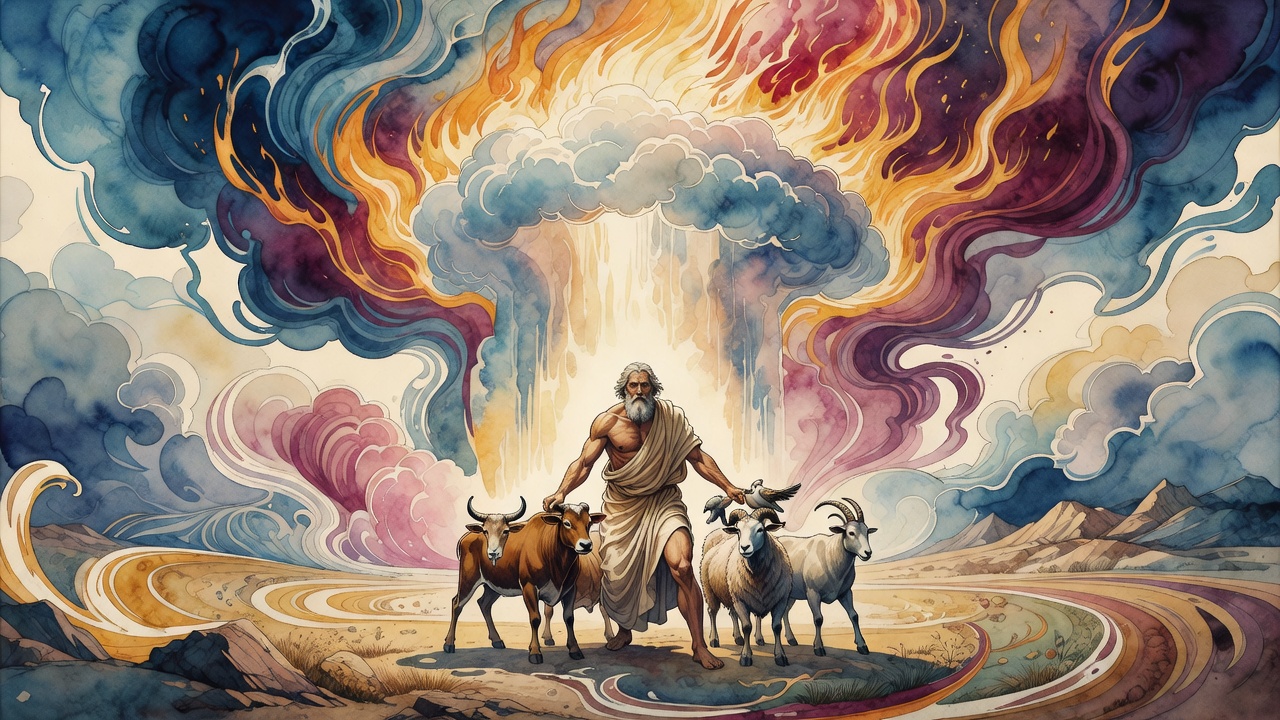
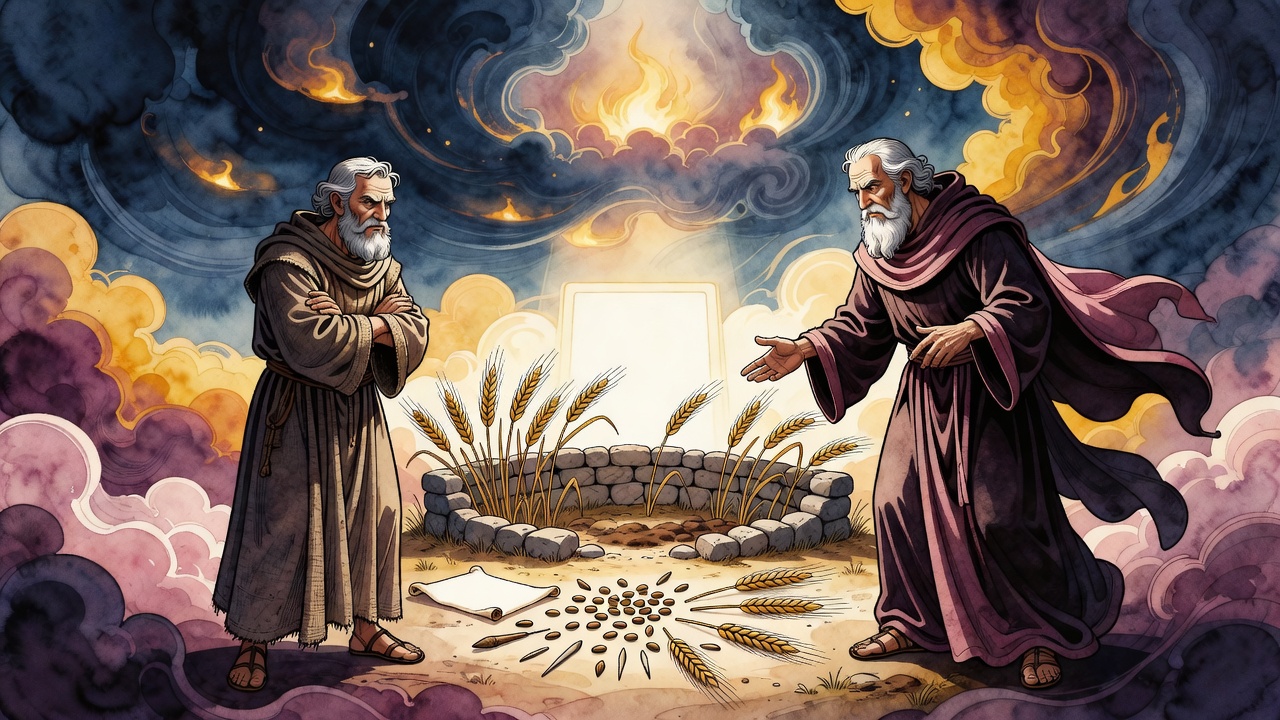
Hoshaya set the kitchen on the bench between them. Mustard needs sweetening before a mouth will take it. Lupines need sweetening before they can be eaten. Wheat needs to be ground into flour before anyone bakes bread. A man, too, needs a completing act.
"Creation is potential," he said. "Human hands and commanded marks bring things to their realized form. The knife is not an insult to the body. It is the body's entrance into covenant work, the way grinding is wheat's entrance into bread."
The philosopher wanted nature left alone. He wanted a world that had arrived complete on the sixth day, with nothing asked of him but to admire it. Hoshaya answered that the six days left tasks for the people of the seventh. To refuse the completing act is not reverence for the body. It is a refusal to work with the Creator who left the world needing work.
The philosopher's hand went to his shaved temple again, then dropped. Mustard sat there, still bitter without the next step. Wheat sat there, still not bread.
Then Finish Every Nation, He Said
The philosopher recovered enough to press. "If the world is unfinished for everyone, finish every nation. Why a knife for your house and not for all flesh?"
Hoshaya did not widen the command to make the argument easier. He narrowed it.
"It was given through Abraham," he said. "You and your seed after you. Not every man who walks. Abraham, and the seed called in Isaac." He spoke the verse as a gate, not as a slogan. "For in Isaac shall seed be called to you" (Genesis 21:12).
"Ishmael is Abraham's son," the philosopher said.
"In Isaac," Hoshaya said. "Not in every son."
"Esau comes from Isaac."
"In Isaac, not all of Isaac." Only the branch that carries the covenant. The sons of Keturah are drawn in by the warning against breaking it. The sign is fenced on every side. Completion is real. Universality is not automatic.
The philosopher had come to mock a wound. He was being shown a door that does not open for every nation, and a mill that still waits inside Abraham's house.
The Eighth Day Pushed the Sabbath
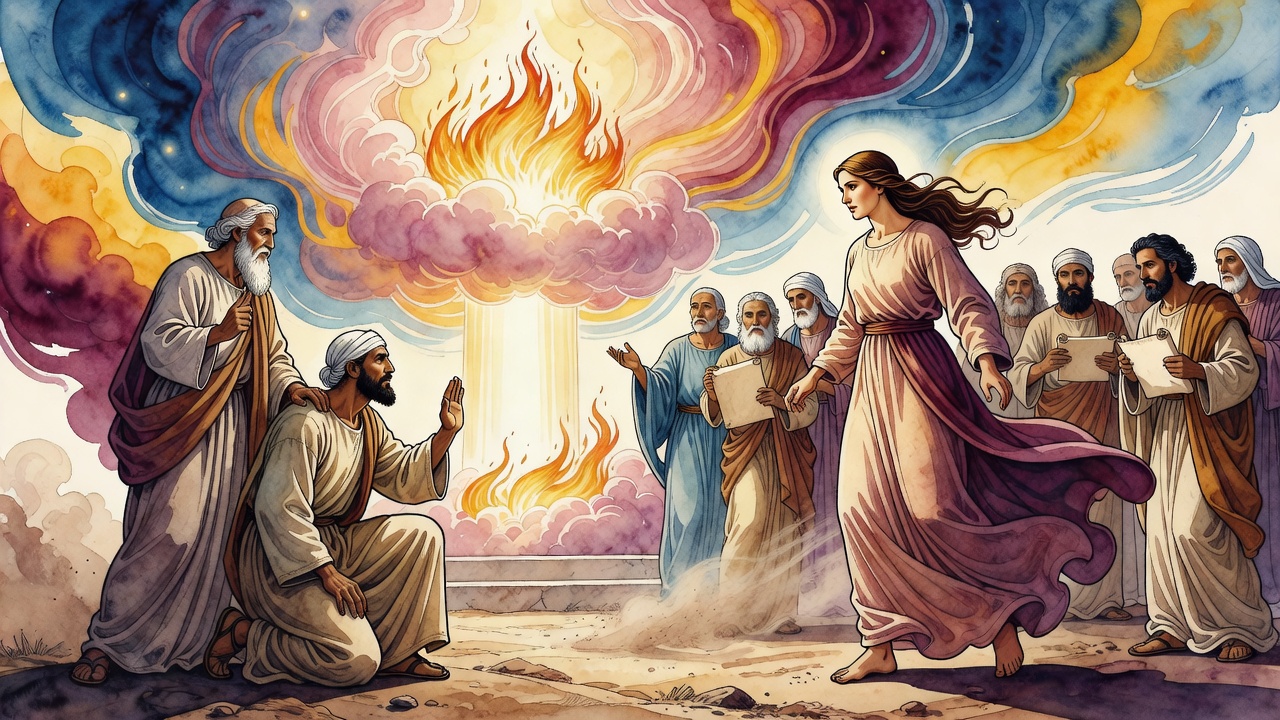
A student who had been listening from the bench found his voice. "A rule says anything first given to the sons of Noah and then repeated at Sinai binds everyone. Circumcision was given to Abraham and spoken again. 'And on the eighth day he shall be circumcised' (Leviticus 12:3). By that rule it should bind all humanity."
"The Sinai verse was not a second giving to the nations," Hoshaya said. "It came so the eighth day would override even the Sabbath. From the start the command was to Abraham alone, to him and his seed after him."
The student sat back. The philosopher stood. Two different hungers had asked the same question, and both had been refused a universal knife.
No one in the room pretended the cut was light. They only refused the claim that lightness is the highest religious value. Some commands complete. Some commands fence. This one does both.
Wheat Waiting for the Mill
Hoshaya left the mustard on the table. The philosopher's shaved head still argued with his beard. Wheat still needed grinding. A body the visitor had called finished still waited, in Abraham's line, for its completing mark on the eighth day, even when that day was Shabbat.
The philosopher wanted a world that needs nothing from him. He walked out of a room that still needed sweetening, grinding, and a name spoken as a gate. Isaac's name stayed on the air after the door shut.
The knife lay in the argument like a millstone, not like an insult. Finish what the six days began. Name who was asked to wear the finish in the flesh. The two jobs do not cancel. They sit on the same bench, as Hoshaya had made the philosopher sit, until the sneer had nowhere left to stand.
← All myths