5 min read

The Sea Saw the Covenant Mark and Fled Back

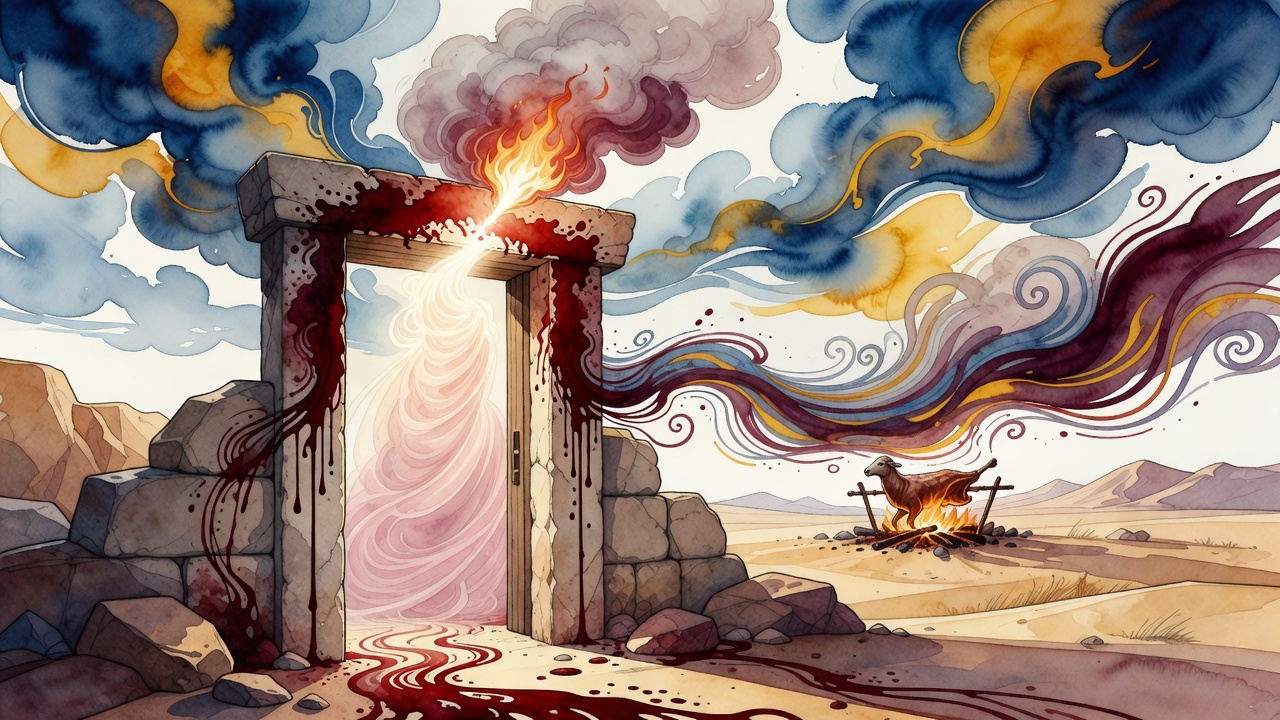
At the Reed Sea the waters rose to drown a rebellious people, then saw the covenant of circumcision and fled, splitting only for that mark.

Curated by Arthur · Told by Maggid ·
Table of Contents
  1. Redeemed by a Promise Already Old
  2. Forty Years Without the Knife
  3. High Hands That Break the Same Bond
  4. Clothes Hung on Water

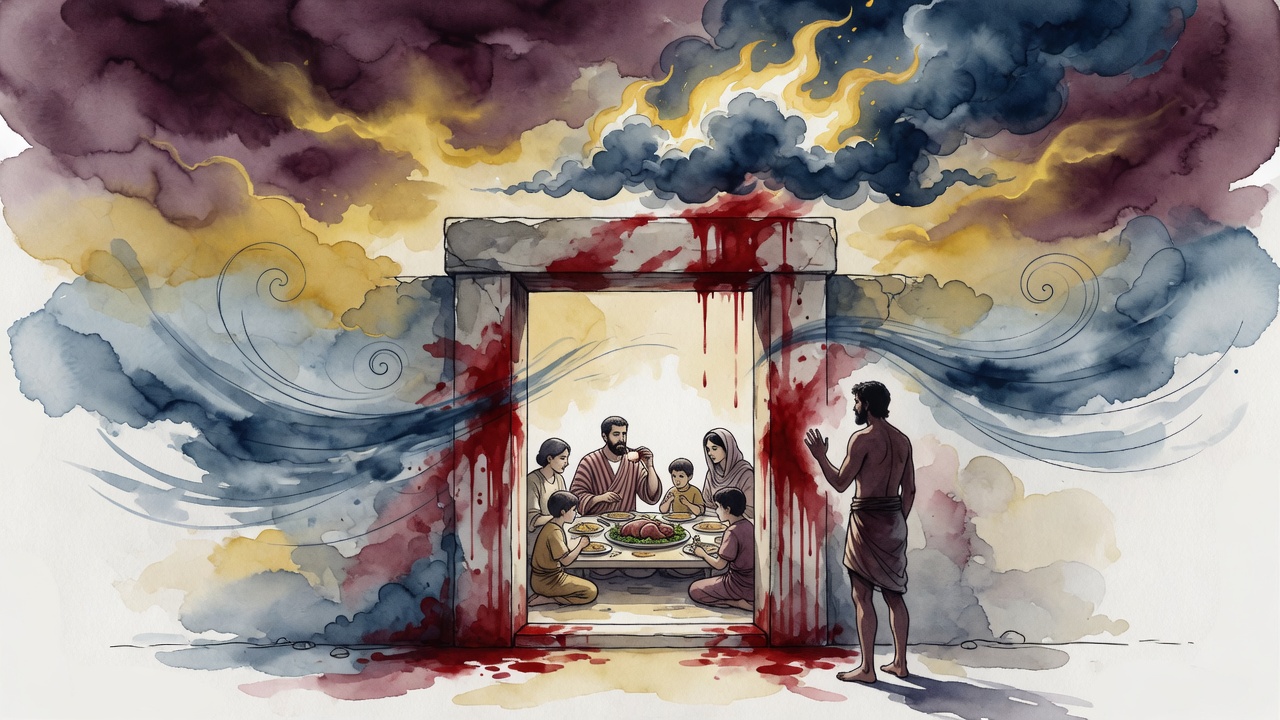
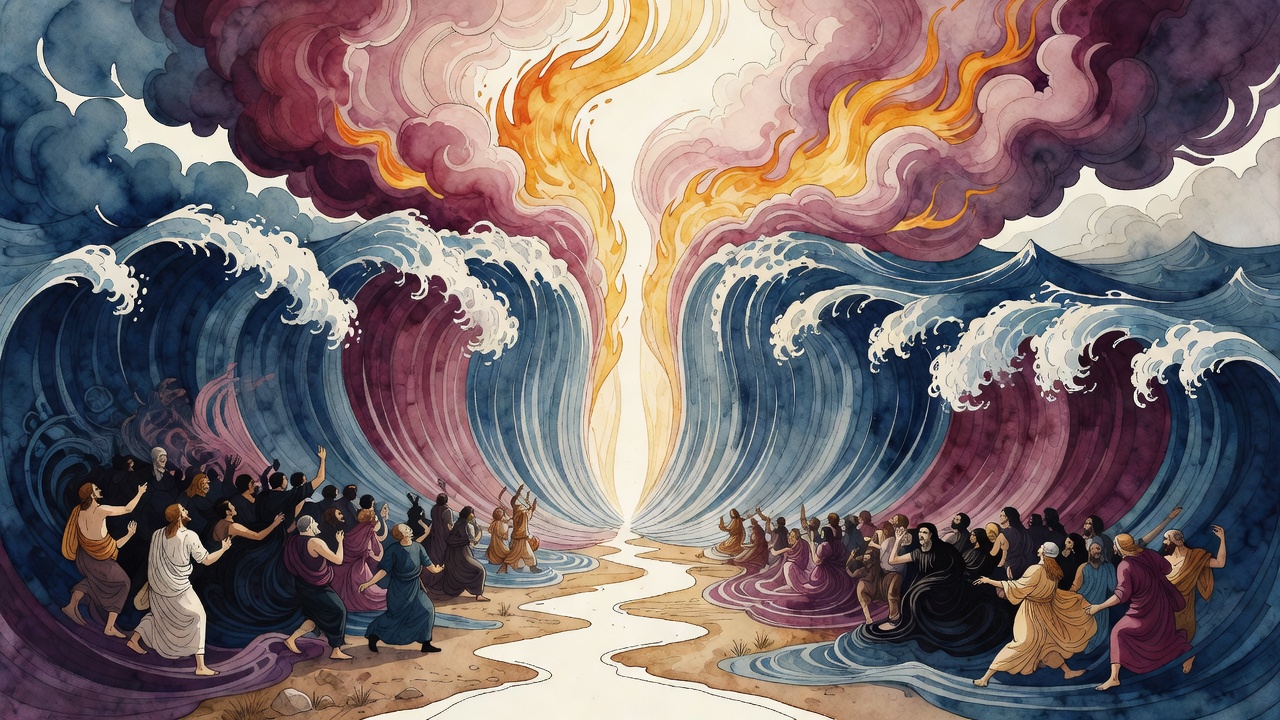
The water climbed their clothes. Fabric lifted and hung on the rising wall as if the sea meant to dress them for drowning. Israel had left Egypt under a remembered covenant, then rebelled at the edge of freedom, and the deep answered with anger. Then the water saw something on their bodies and reversed. "The sea saw and fled" (Psalm 114:3). What did it see? The midrash answers: the covenant of circumcision.
The Sea Saw the Covenant Mark and Fled Back Click for full size

Redeemed by a Promise Already Old

Jeremiah's line opens the gate: if not for the covenant of day and night, the fixed order of heaven and earth would not stand (Jeremiah 33:25). The midrash turns that logic toward Israel. Look to the covenant even when deeds run thin. In Egypt they had bowed to idols, yet God redeemed them because He remembered the covenant (Exodus 2:24; Exodus 6:5). The exit was not a pure merit story. It was a memory story.

At the sea the same memory became physics. The waters sought to drown. They saw the mark and fled. The split was not only staff and wind. It was a boundary recognizing a cut in flesh older than the chase of chariots.

Forty Years Without the Knife

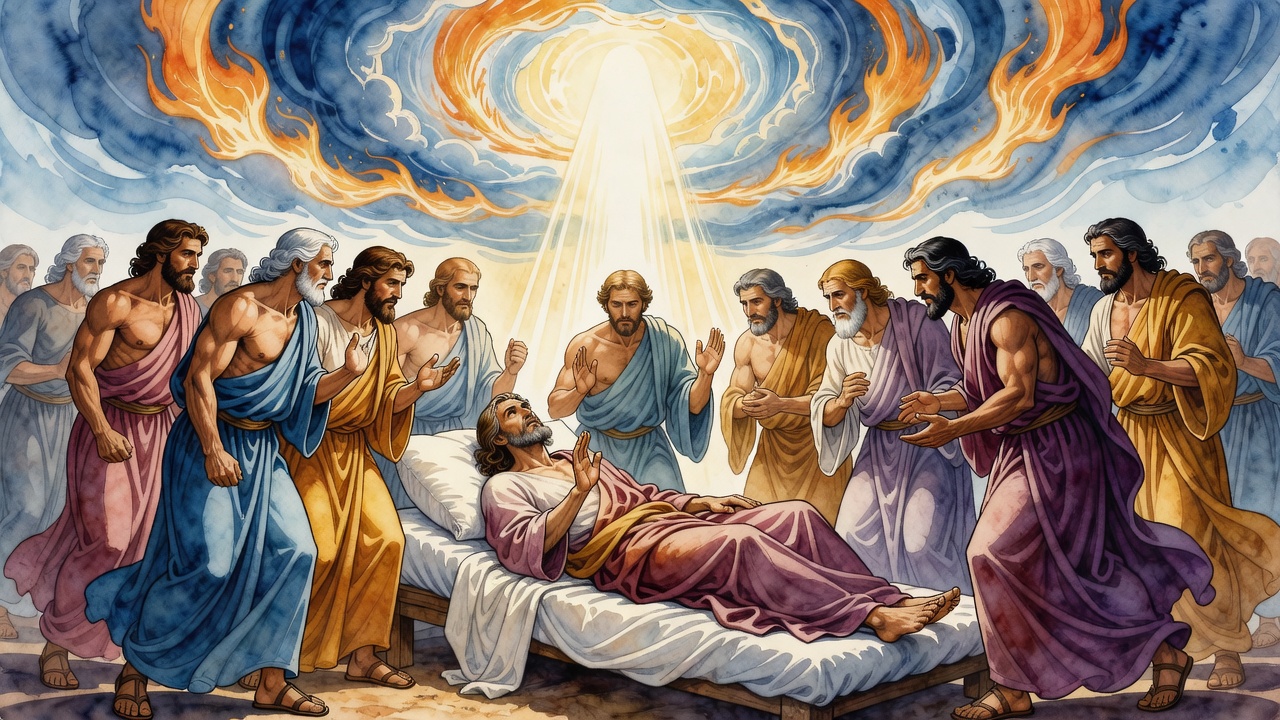
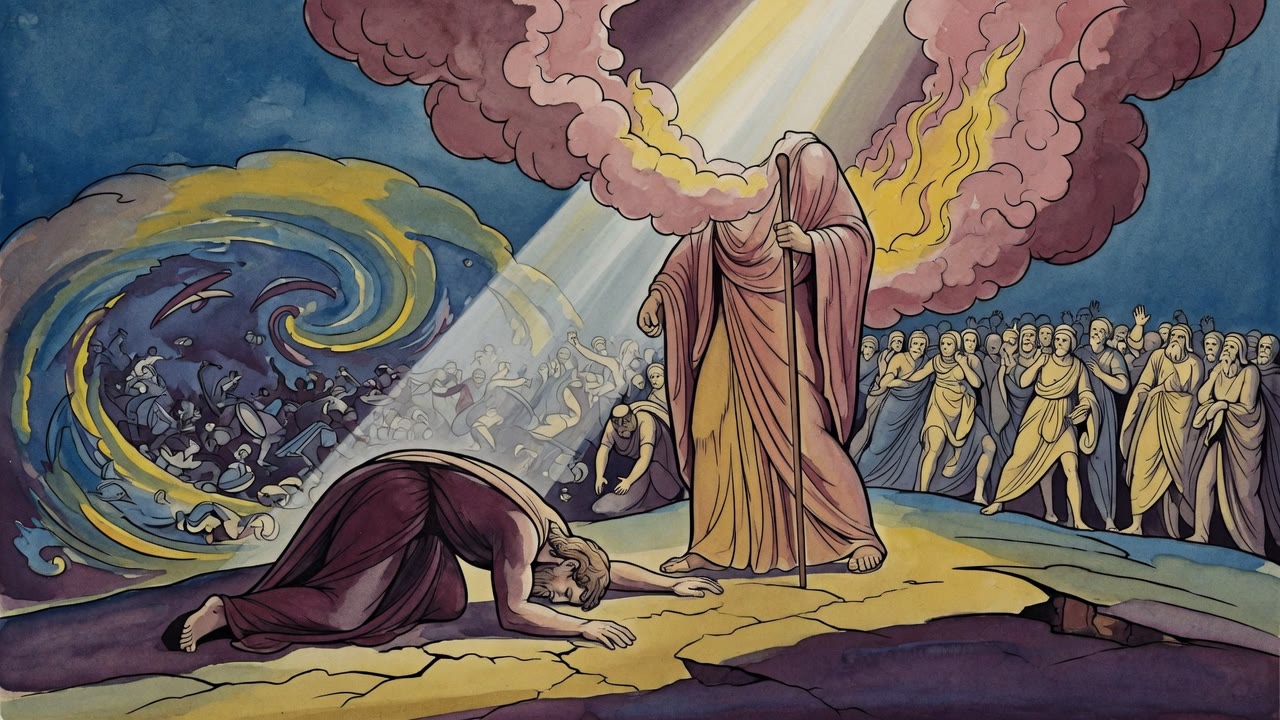
In the wilderness most of Israel neglected circumcision for forty years. Only the tribe of Levi kept the covenant mark on their children. When the people later crossed the Jordan, Levi carried the Ark while others still bore the shame of delay. The river, like the sea, watched for the sign. Heaven crowded sixty thousand between the poles of the Ark so the difference could be seen, and the Jordan turned back (Joshua 3:13-17).

The midrash makes the poles a narrow theater. Bodies pressed between wood. Marks visible. Water deciding. Covenant is not abstract loyalty in these scenes. It is a physical claim the elements themselves are forced to read.

High Hands That Break the Same Bond

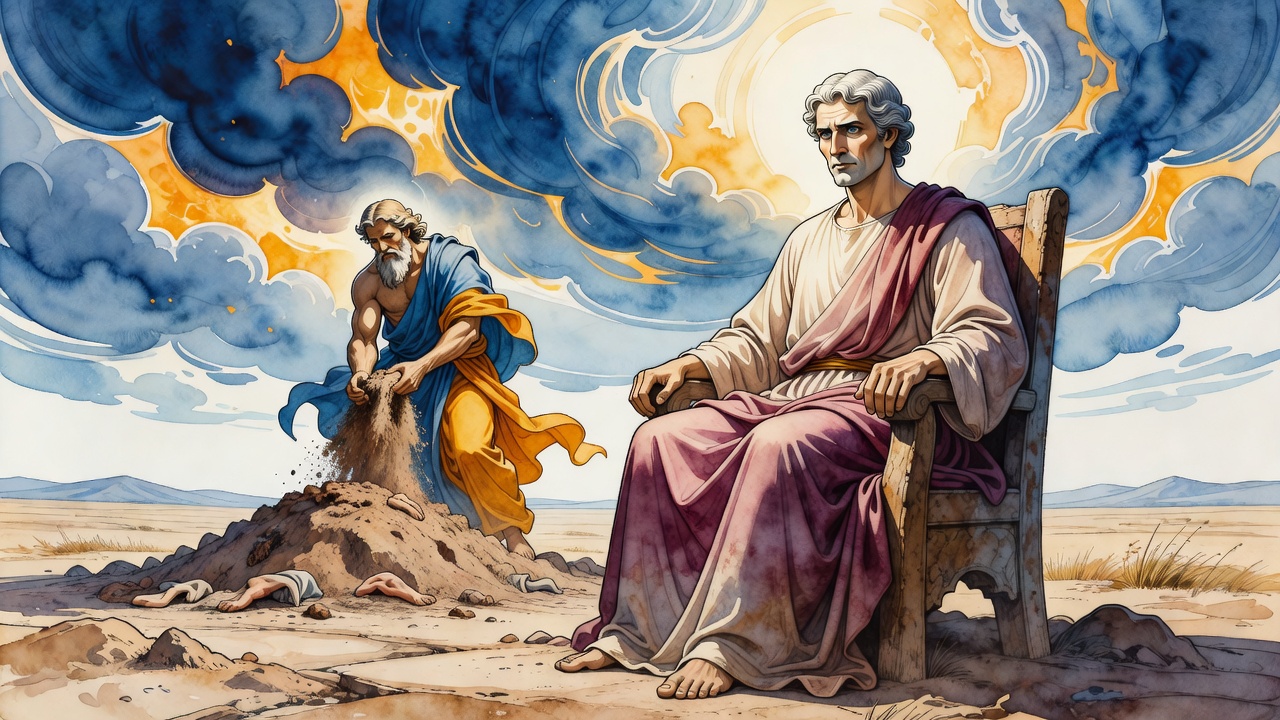
Sifrei Bamidbar names another way to assault that bond: the high-handed soul who despises the word of the Lord and breaks His commandment, including the one who breaks the covenant of circumcision. Menasheh's mockery of "needless" verses sits in the same family of contempt as discarding the mark that made the sea retreat. One sneers at text. One erases flesh-sign. Both scrape the dish of obligation clean.

Karet, cutting off, answers the high hand with a mirrored severing. The sea's flight answers the kept mark with a path through death-water. The tradition places both outcomes close enough to feel the hinge: honor the covenant and the deep opens; despise the word and the line itself is threatened with cut.

Clothes Hung on Water

Return to the first image. Clothes hung from the rising sea like flags of panic. Then the water read the bodies and fled. Psalm and midrash refuse to let the Exodus be only a political escape. It is also a moment when creation itself checks a people for the sign of belonging and rearranges its walls.

Chariots still thunder in memory. The staff still rises in story. Under them, Aggadat Bereshit insists on a quieter engine: a covenant remembered in Egypt, neglected in sand, carried by Levi, recognized by sea and river. The mark that looks small on a body turns out large enough to turn back a sea.

Pharaoh's horses still screamed in the spray when the wall of water held. The midrash's claim is almost scandalous in its smallness: the decisive sight was not chariot wheels or a raised staff alone, but a mark on Israelite bodies the sea was forced to honor. Creation becomes a reader of covenant. Elements take attendance.

Levi's fidelity in the wilderness years makes the later Jordan crossing a split screen. Some bodies bear the sign; some do not. The Ark's poles become a narrow aisle of revelation. Sixty thousand pressed close enough to see and be seen. Water again makes a moral decision look like hydrology. The tradition will not let the conquest begin without reopening the question of the mark.

High-handed scorn of that same covenant is not a modern problem only. Menasheh's generation and every generation that calls Torah details needless stand under the Sifrei's warning. The sea fled for a mark some later mouths would mock. The midrash sets those mouths next to drowning water so the cost of contempt stays wet and near.

Psalm 74's cry, "Look upon the covenant," becomes operational in these scenes. Looking is not a polite glance. Looking is how God redeems Egypt's groaners and how water decides whether to kill or open. The people who forget the mark in the desert discover at the Jordan that memory can be enforced by a river. Covenant is patient, then sudden.

Clothes hung on water like a warning flag, then hung on empty air as the wall retreated. That image should stay. The Exodus is full of large miracles. Aggadat Bereshit adds a small, sharp one: the deep reads skin and changes policy. Scorn of that mark later is not sophistication. It is amnesia next to a rescued shoreline.


← All myths
From the tradition

Sources

2 sources

The texts behind this telling. Some cards carry a translation of the source; others are our own retelling of it, and each card says which. Every card links out to the original.

Aggadat Bereshit 17Aggadat Bereshit

Retold in our words. Read the original at the link below.Sefaria Community Translation · CC0

"The Lord says to my Lord: 'Sit at my right hand'" (Psalm 110:1). This verse launches one of the most complex readings in Aggadat Bereshit, about how the Holy One loves and exalts Israel by investing their ancestors with greatness that flows forward through every generation.

The right hand of God is not incidental. In the ancient world, the right hand was the position of honor, of power, of the closest ally. When God places someone at His right hand, He is saying: you are my closest partner. You speak for me. You share my authority. The rabbis read this verse as a promise first made to Abraham, then to the patriarchs collectively, and ultimately to Israel as a whole, a nation elevated not by military might but by proximity to the divine.

The psalm calls the righteous ones in the land "the excellent ones, in whom is all my delight" (Psalm 16:3). The rabbis read "his greatness shall be from him" (Jeremiah 30:21) as a reference to the forefathers, meaning everything Israel has ever received flows from those first three figures. Abraham, Isaac, Jacob: the right hand that never fails, the protection that never lifts. Not because Israel always deserves it. Because the covenant is located in the ancestors, and the ancestors sit at God's right hand, and the right hand holds on.

Full source
Sifrei Bamidbar 112:2Sifrei Bamidbar

Retold in our words. Read the original at the link below.Sifrei by Rabbi Shraga Silverstein · CC-BY

Sifrei Bamidbar turns to Acting With a High Hand - Menasheh Who Mocked the Torah.

So, what does it mean to act "with a high hand?" Bamidbar 15:30 tells us, it's about more than just breaking a rule. It's about actively perverting the Torah, like Menasheh ben Chezkiah, who, as the text recounts, would mock the Torah itself. He'd say things like, "Why did it need to mention Reuven going out in the wheat harvest?" or "Why tell us about Timna being Lotan's sister? But the implication is serious: a deliberate undermining of the sacred text, a casting of ridicule "in the face of the L-rd."

What’s the problem with a little bit of mockery? Well, according to this passage, it's a slippery slope. Like Isaiah warns us (5:18), sin starts like a strand of a spider's web, thin and easily broken. But if left unchecked, it becomes as stout as wagon ropes, binding us and dragging us down.

Rabbi takes this idea even further. He says that a single mitzvah lishmah, a good deed done purely for the sake of Heaven, can pull along many more. Conversely, a single transgression can drag us down a path of further misdeeds. Mitzvah "tows" mitzvah, and transgression, transgression. The idea that our actions have a ripple effect, creating a chain reaction of either good or bad.

The text then uses some pretty strong language to describe the consequences of this kind of deliberate defiance. R. Eliezer b. Azaryah compares it to someone who doesn't just eat the food, but scrapes the dish clean, leaving nothing behind. Issi b. Akiva says it's like scraping the dish and leaving nothing in it. It's the ultimate insult, a complete disregard for what is sacred. The punishment? Karet, "cutting off", cessation of the family line, childlessness. Ouch.

So, who are these people who despise the word of the L-rd and break His commandments? The text offers a few interpretations. Some say it's the Sadducees or heretics. Others say it's someone who distorts the Torah or breaks the covenant of circumcision. R. Elazar Hamodai even says that someone who desecrates offerings, cheapens festivals, and breaks the covenant of circumcision should be "thrust" from the world, even if they’ve performed many mitzvot (commandments)! Strong words,.

But it gets even more nuanced. What about someone who says the entire Torah is from Heaven, except for one thing that Moses said on his own? Or someone who accepts the entire Torah, except for one particular inference? The text says that even that constitutes despising the word of the L-rd. We have to engage with it thoughtfully and respectfully.

And what about those who learn Torah but don't teach it to others? Or those who are able to learn but choose not to? R. Nathan even says it applies to someone who pays no heed at all to words of Torah. According to R. Yishmael, the verse speaks of idolatry and the first commandment, "I am the L-rd your G-d… There shall be unto you no other gods before Me."

The consequences, according to R. Akiva, are dire: "Cut off" in this world, and "shall be cut off" in the world to come. R. Yishmael offers a different interpretation, saying that the Torah speaks in the language of man.

And what happens after death? The text says that for most, death atones for their sins. But for those who die with their transgression still clinging to them, "its transgression is in it," as it says in (Ezekiel 32:27), "And their transgressions shall be upon their bones." But what if they repented? The text clarifies that this applies only when "its transgression is in it," and not when he has repented.

R. Nathan sees a silver lining in this. He says that if someone isn't properly eulogized or buried, or if their body is eaten by an animal, or if rain falls upon it, it's actually a good sign. It means their transgressions are being exacted of them after death, paving the way for them to merit life in the world to come.

Finally, R. Shimon b. Elazar uses this passage to argue against the beliefs of the Samaritans, who didn't believe in the resurrection of the dead. He points to the phrase "its transgression is in it" as evidence that the soul is destined to give an accounting on the day of judgment.

So, what are we to make of all this? This passage from Sifrei Bamidbar is a powerful reminder that our actions have consequences, both in this world and the next. It challenges us to examine our own attitudes towards tradition, to engage with it thoughtfully and respectfully, and to avoid the trap of acting "with a high hand. Maybe that's a little less scary than wagon ropes.

Full source