The Sea Split by the Covenant Cut in Flesh
Israel stood at the water with the eighth-day mark in their flesh. Moses sang one word, and the sea tore along that cut.
Table of Contents
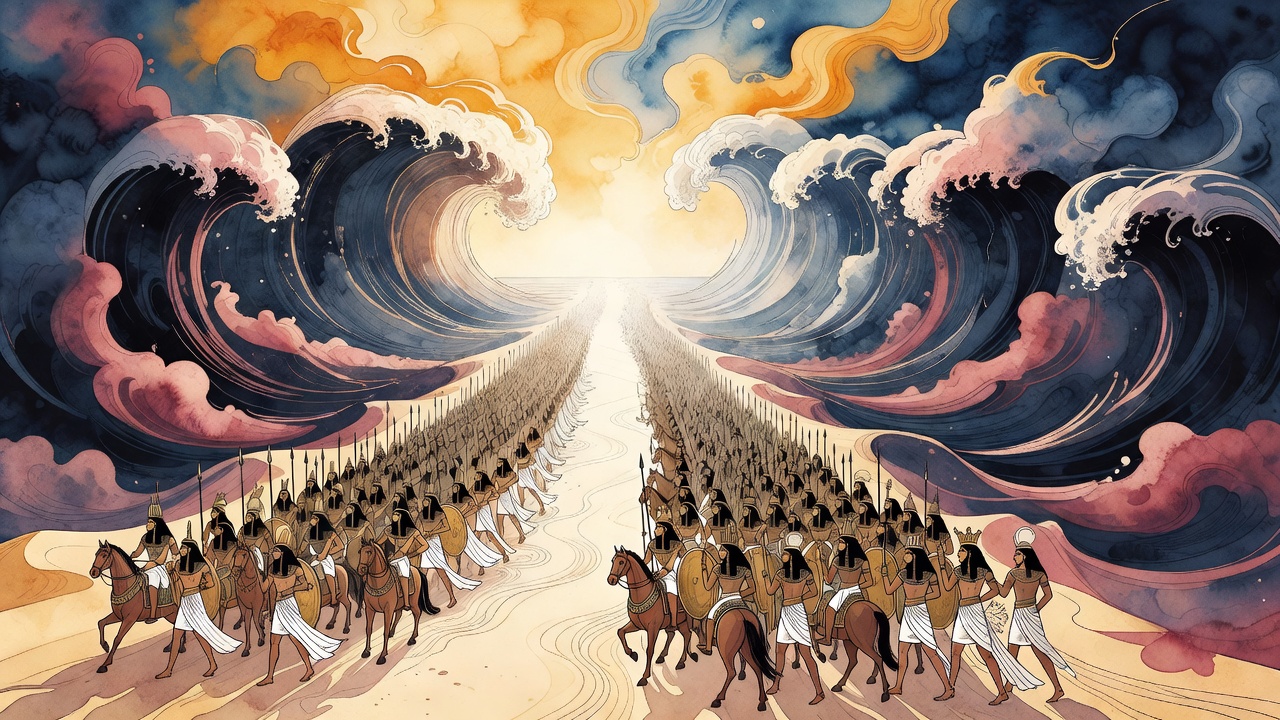
Chariots pressed from behind. Water stood in front. Israel waited in the mud with a mark that had been cut on the eighth day, the covenant in the flesh of Abraham's children, quiet under slave cloth and desert dust.
 Click for full size
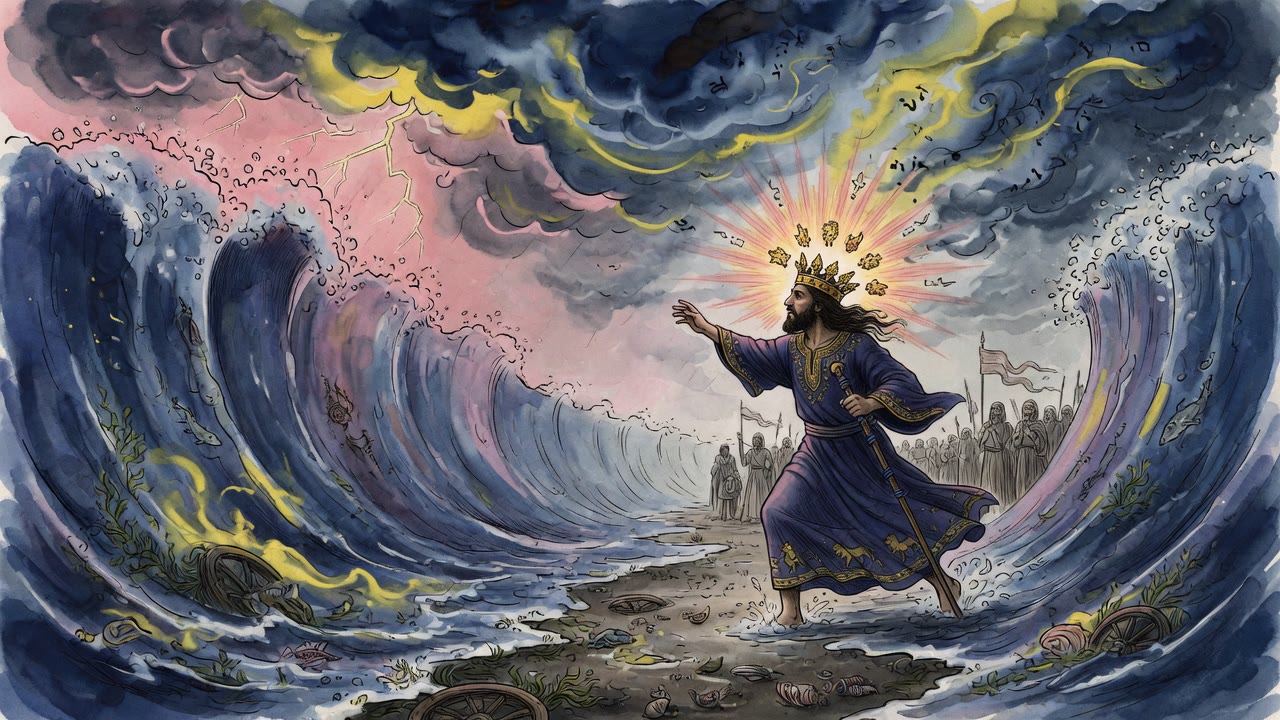
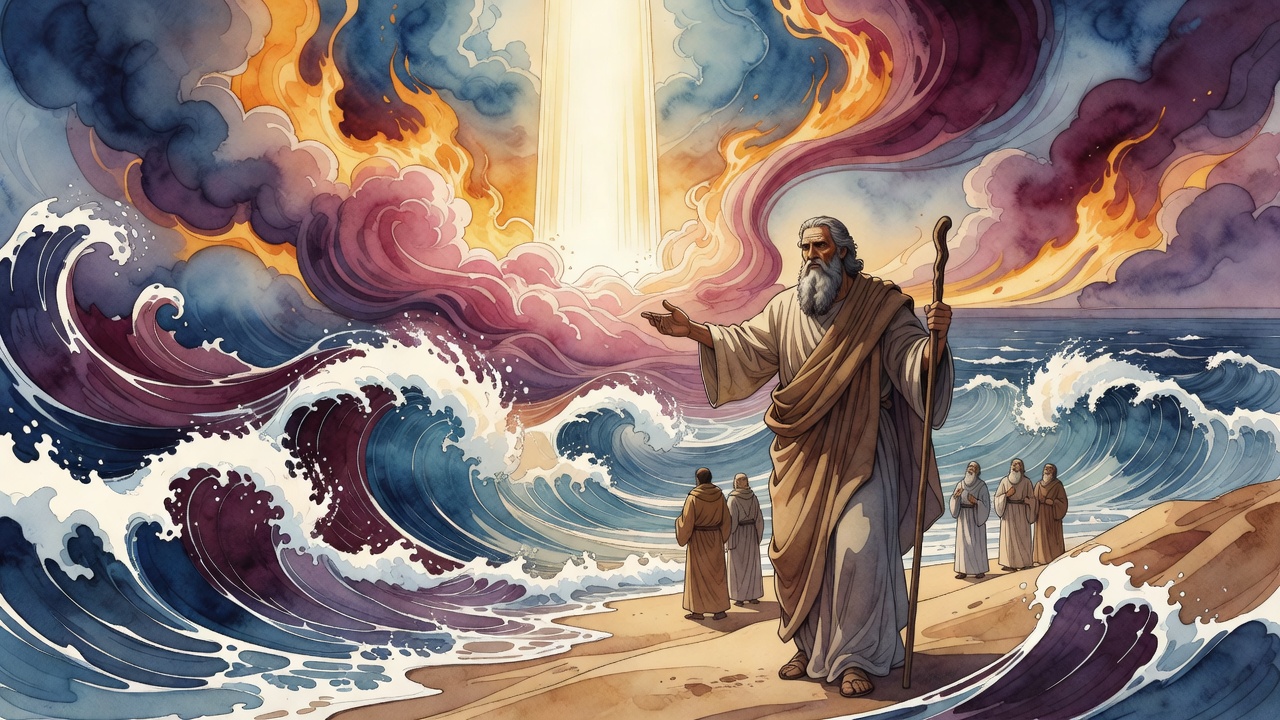
Moses stretched out his hand. The sea tore. Walls of water rose on either side of a people who carried that cut. Dry ground ran between trembling walls. Fish stared from rooms that had never been rooms.
Then he sang. The first word was Az. "Then sang Moses."
Eight Lived in the First Word
He felt the word in his mouth before he counted it. Alef is one. Zayin is seven. Together they make eight. And what was given on the eighth day? The covenant of circumcision, commanded for the child eight days old (Leviticus 12:3).
Not by sword. Not by chariot. By the merit of that ancient cut, the sea had opened. Moses praised the Holy One with a word whose letters spelled the number of the covenant.
Rabbi Levi later stood over another verse and heard the same cut in another tongue. "To Him who split the Reed Sea into pieces, gezarim" (Psalms 136:13). In Aramaic the circumcised are called gezurim, the cut ones. The same root that names the seal upon the body names the splitting of the water. Song began where the covenant began, in flesh that remembered its God.
The Tenant Cried Woe
Far inland another cry rose when Pharaoh let the people go. Not only Egypt wailed. The Canaanites heard that the people had been let go, and they heard a woe inside the news.
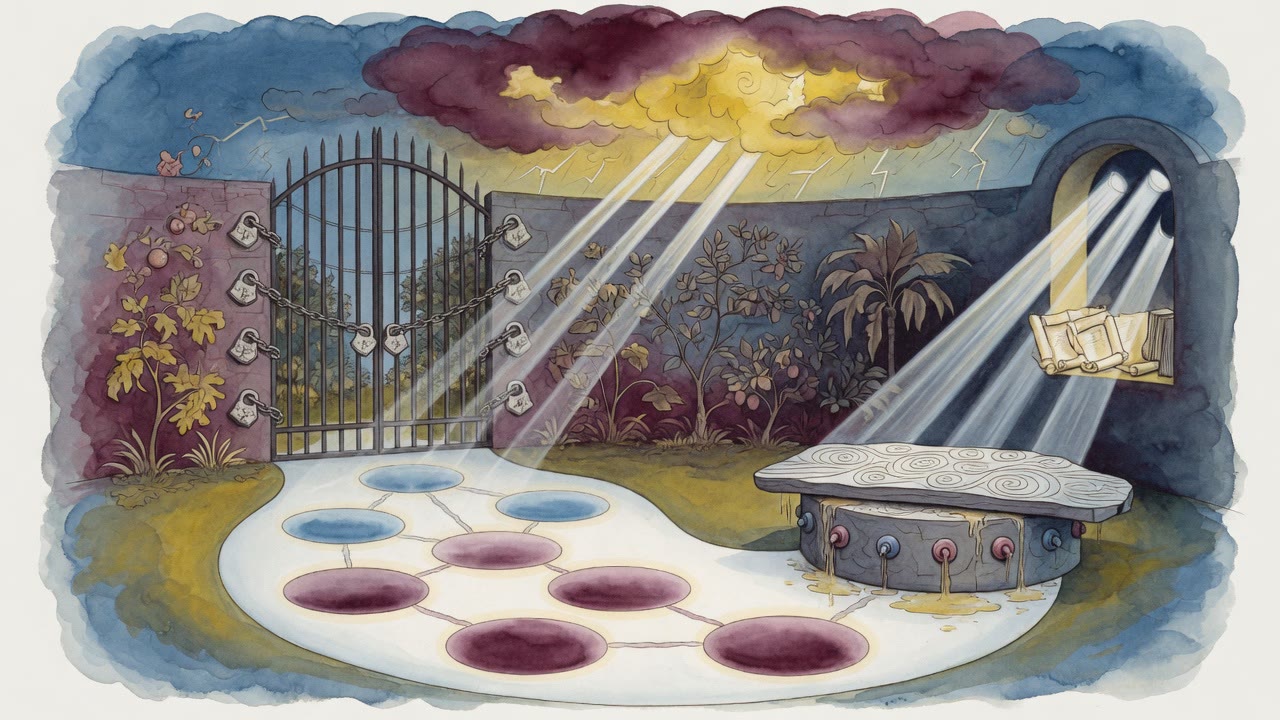
A king had a young son and a fine orchard. The king had to sail, so he handed the orchard to a tenant. "Guard it. Eat of its fruit. Only until my son comes of age." The tenant settled in, harvested, grew comfortable, almost forgot the boy was not his own. Then the prince returned to claim what had always been his, and the tenant broke into a cry: "Woe!"
While Israel labored in Egypt, the Canaanites dwelt in the Land and ate its fruits as if the estate were theirs. The land was held in trust. When word came that the rightful heir was marching home, the tenants of Canaan shrieked. The sea had opened for the heir. The orchard heard the footsteps.
Sheep on the Path, Humans at the Wage
"He led forth His own people like sheep" (Psalms 78:52). Between the walls they walked as a flock that can snap young trees and still not exhaust the owner's patience. The Holy One bore with them when they stumbled, slow to anger, unwilling to count every fault as a final verdict.
But Ezekiel spoke a stranger word: "And you, My flock, the flock of My pasture, you are humans" (Ezekiel 34:31). Rabbi Yochanan unlocked the double name in a hall years later. Sheep is the name of mercy at the hour of punishment, when judgment must come and Heaven measures gently. Humans is the name of dignity at the hour of reward, when commandments are kept and Heaven pays the full wage of the deed.
The people who walked between walls of water were both. Fragile under rebuke. Honored under faithfulness. The same feet that the sea had made a road for would need both names before they reached the far shore.
The Presence Left the Walls to Meet Them
The song at the sea reached past that morning. The Song of Songs would later double a summons: "With me from Lebanon, O bride, with me from Lebanon shall you come." One call would have been enough. The repetition stretches the promise across the ages.
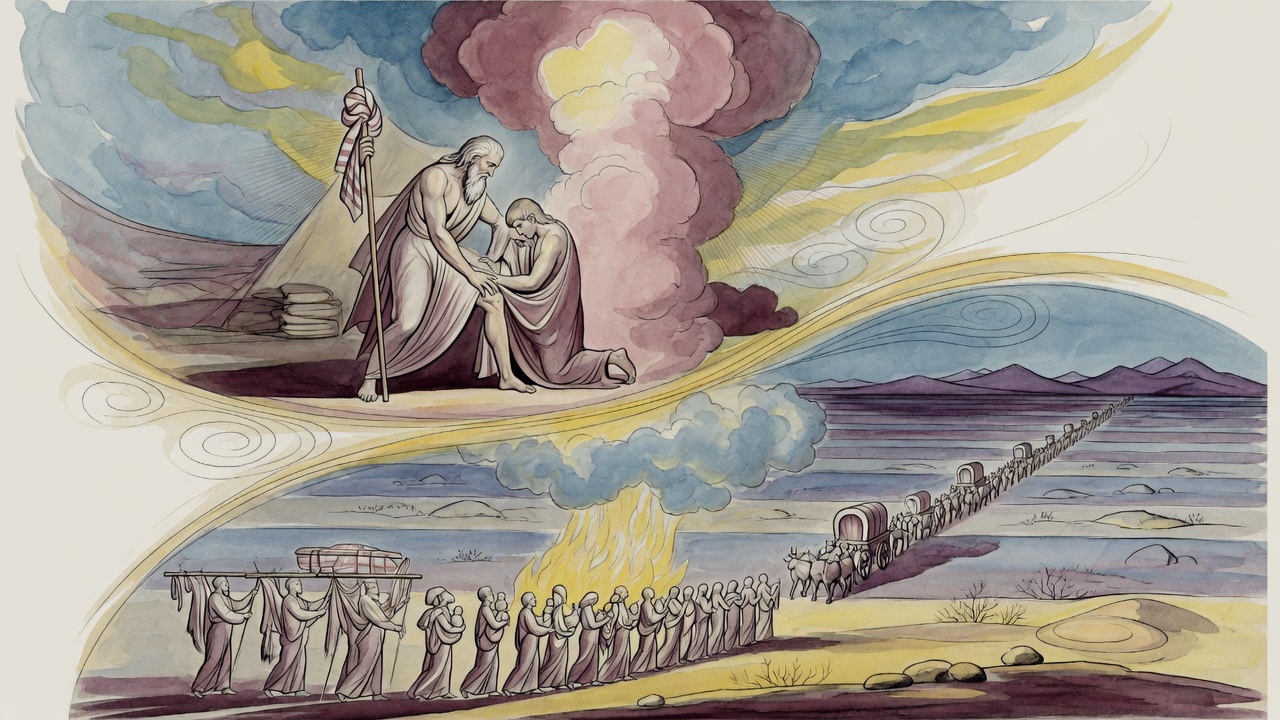
In the world to come the Holy One will gather the scattered exiles from every corner where they were driven. They will walk up toward Jerusalem. And the Shechinah (שכינה), God's divine presence, will not wait within the walls. She will go out to the depths where they were lost, escorting her people home as a groom leads a bride.
The same sea that split for the cut covenant becomes an early echo of a later return. Behind Israel the chariots of Egypt still pressed in memory. Ahead the path of dry ground still ran between trembling walls. Moses' first word held the number of the cut. Canaan already felt the lease ending. The flock moved under two names. The Presence that would one day walk out from the city already leaned toward the road.
← All myths