Parshat Metzora6 min read

The Seven Souls Barred From the World for Evil Speech

The sages counted the kings and commoners shut out of eternity, and almost wrote Solomon among them, until fire drove them from the benches.

Curated by Arthur · Told by Maggid ·
Table of Contents
  1. The Fire That Came for Solomon's Name
  2. The Four Whose Tongues Buried Them
  3. The Covenant Written on the Leper's Skin
  4. The Scholars Who Knew Every Face of the Law and Fell
  5. The Idolaters Who Guarded Their Mouths and Won

Bent over the benches, the sages counted the seven souls who would never rise. Three kings first. Jeroboam, who set golden calves at Dan and Bethel. Ahab, who fed the prophets of Baal at his own table. Manasseh, who filled Jerusalem with blood. Named, sealed, shut out of the world to come.
The Seven Souls Barred From the World for Evil Speech Click for full size

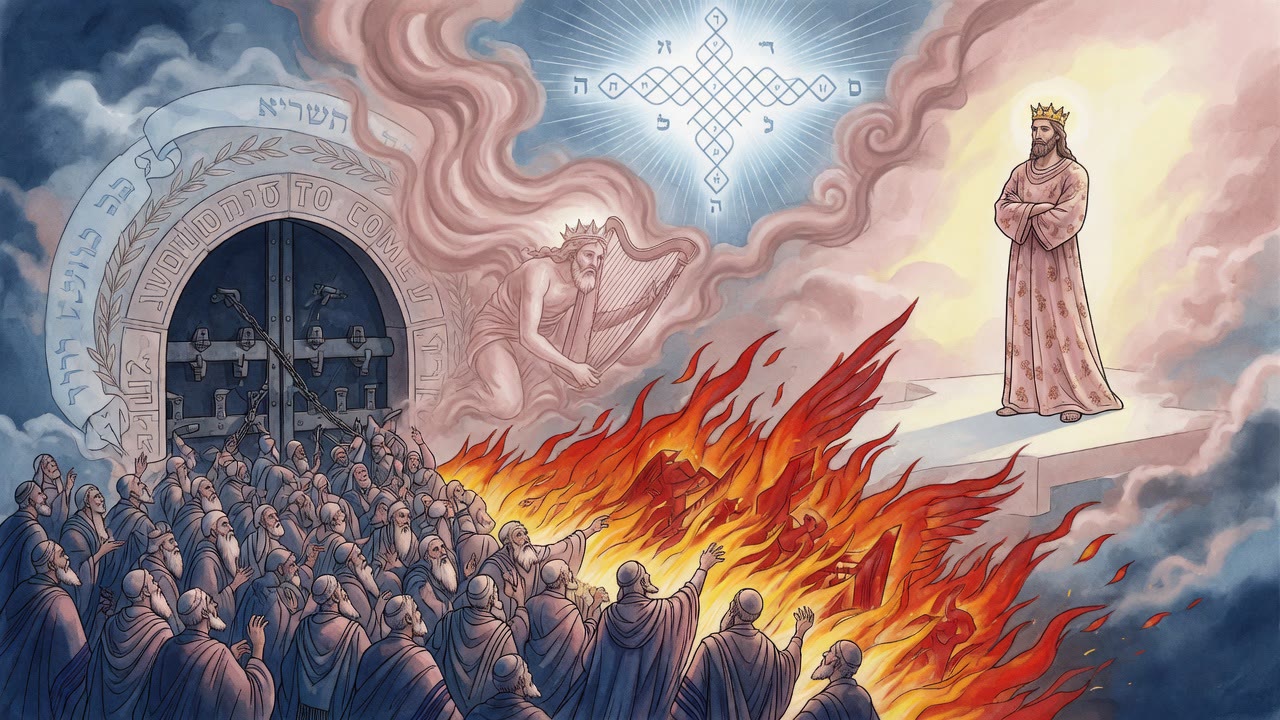
Then a hand reached for a fourth crown.

Solomon. The wisest of men, builder of the Temple, in old age a lover of foreign women who turned his heart after their gods. The verse lay open on the table. "Solomon did what was evil in the eyes of the LORD." A fourth king. The pen was ready.

The Fire That Came for Solomon's Name

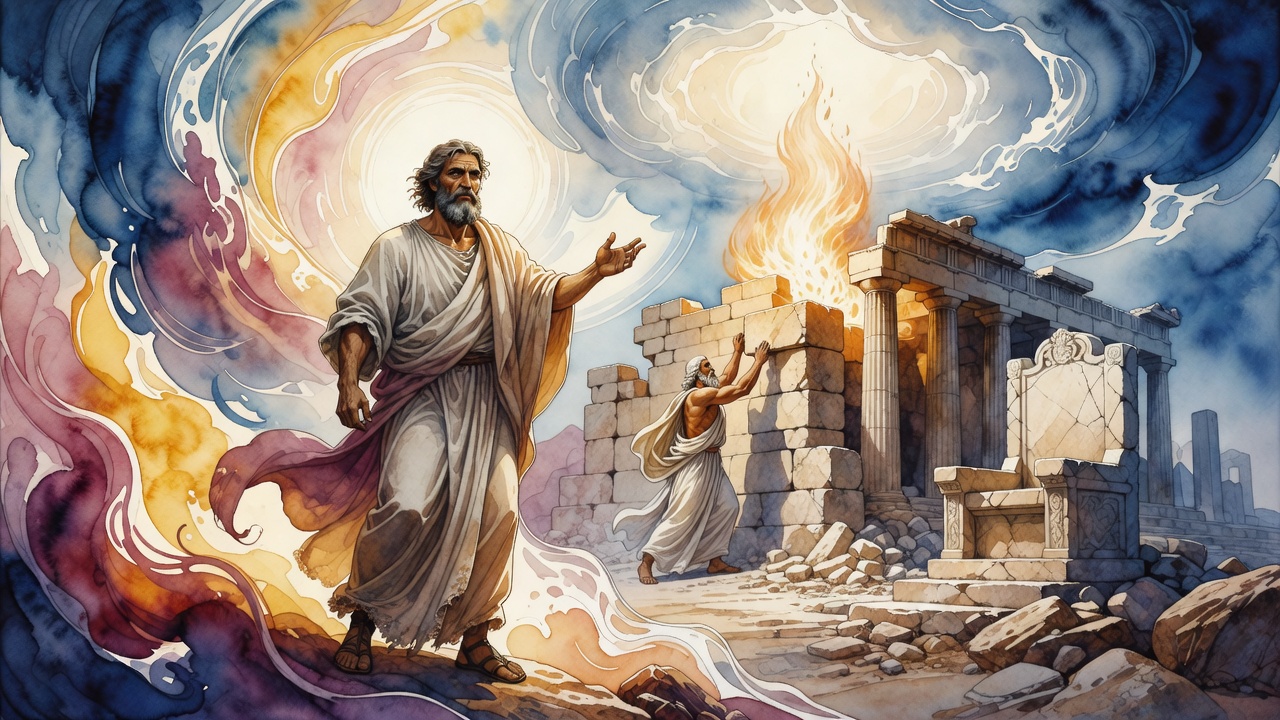
A voice broke from heaven. "Touch not My anointed ones." The sages froze and set down the pen. But the verse would not close. Solomon had sinned, and the law is the law. One day they returned to write his name among the damned. Fire came down from the sky and scorched the wood where they sat. The voice came again, harder now. "Should He repay it as you would, because you have refused?" Still they pressed, because it stood written that the king had done evil, and a court does not flinch from a verse.

The Four Whose Tongues Buried Them

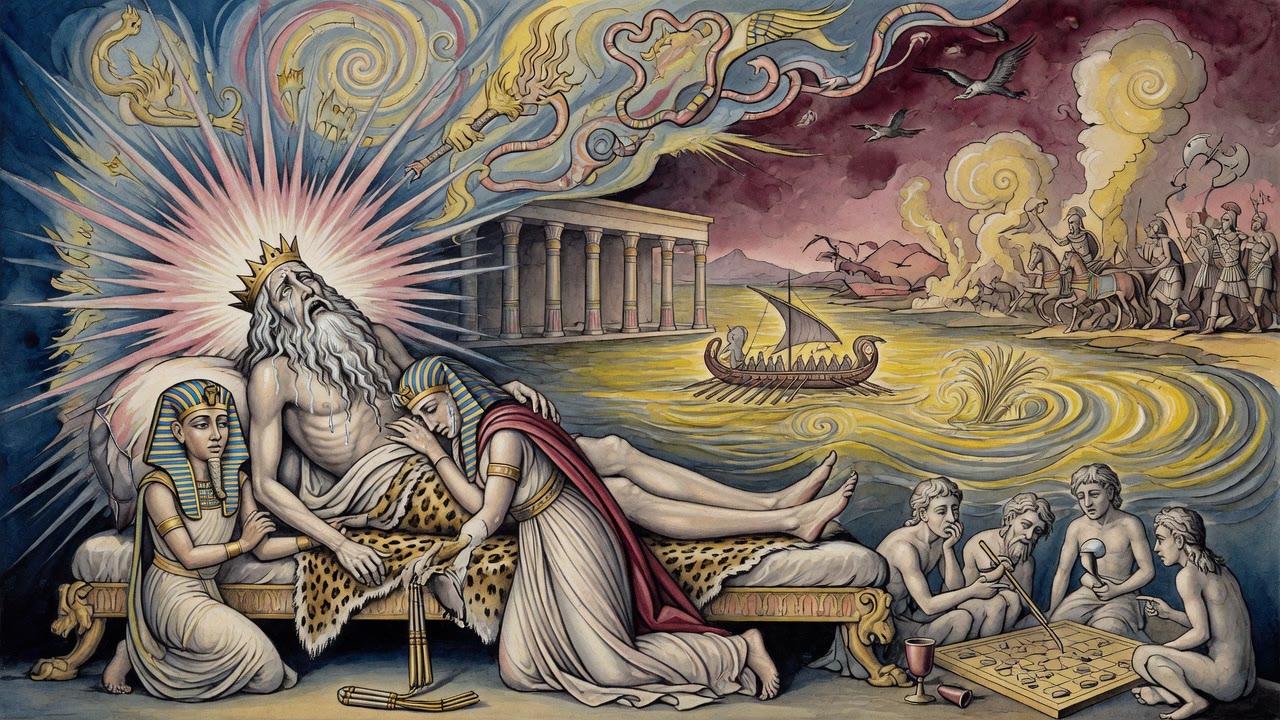
If the kings could hide behind their crowns, the four commoners had nothing. Balaam, Doeg, Ahitophel, and Gehazi. The sages looked closer. These four were not thrown out for idols or for blood, but for evil speech, each buried by his own tongue.

Balaam went down first. He had stood among the exalted, in the partition of the patriarchs. Then he opened his mouth to curse Israel for a Moabite king's gold, and the same mouth carried him down. "From Aram Balak has brought me," he said, and brought me means only the road down to Gehinnom (the realm of judgment after death).

Doeg the Edomite came next. When David fled from Saul to Nob, the city of priests, Ahimelech the high priest fed him and put a sword in his hand. Saul, half-mad, gathered his servants. "Not one of you uncovers my ear." Then Doeg, who had watched it all, stepped forward and spoke. By the time his words landed, eighty-five priests who wore the ephod lay dead, and Nob was put to the edge of the sword. One tongue emptied a city.

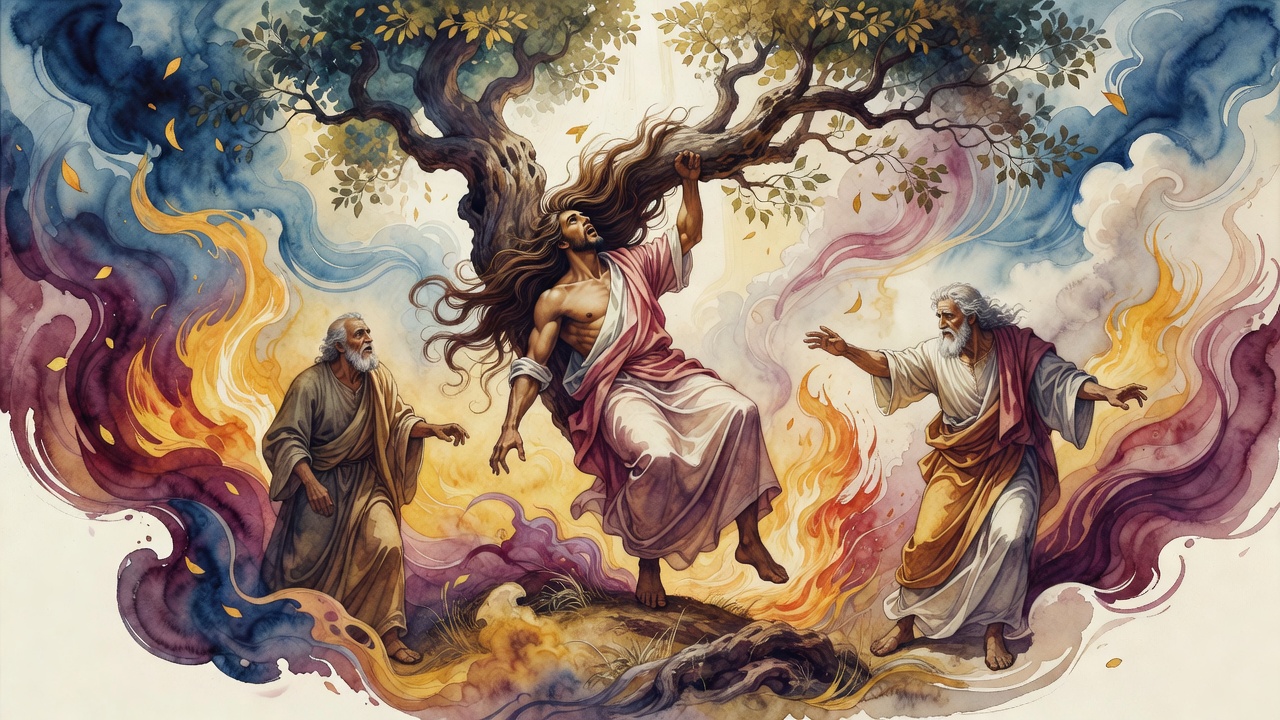
Ahitophel gave the finest counsel in Israel, sought like the word of God. When Absalom would not follow it, Ahitophel rode home, set his house in order, and hanged himself. The mouth that ruled kings turned on the man who owned it.

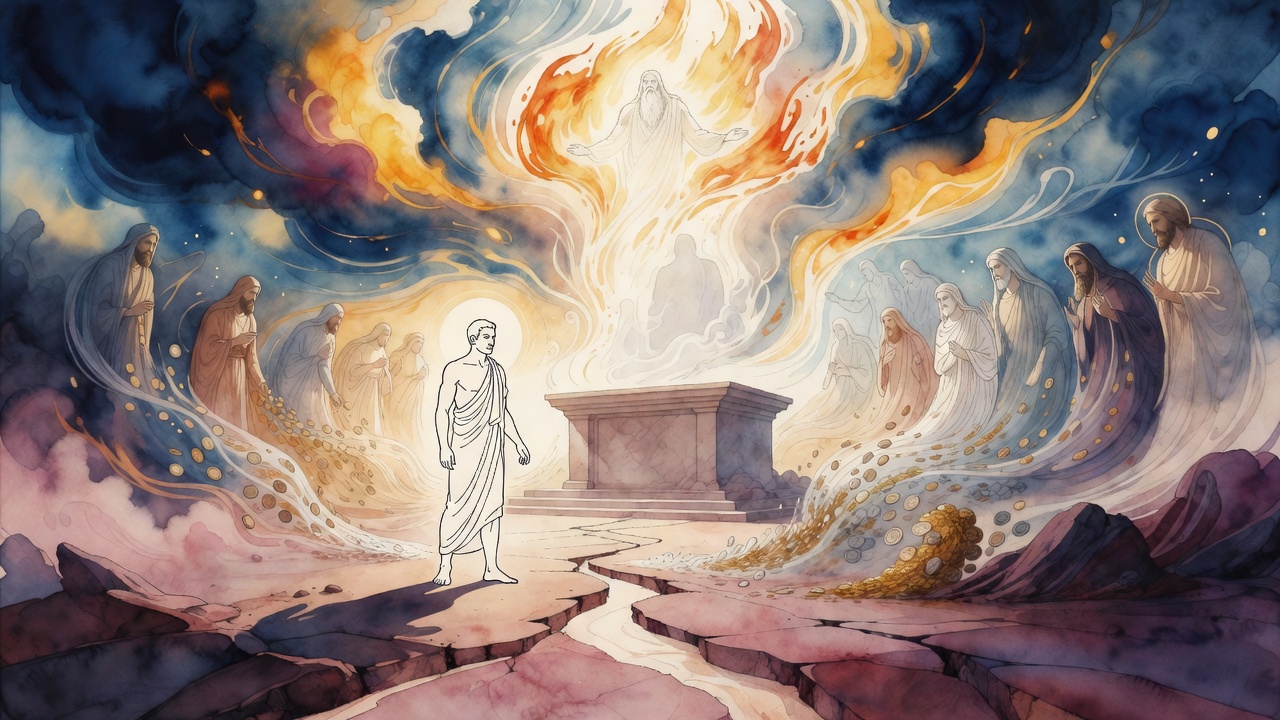
Gehazi served the prophet Elisha. When Naaman the Aramean, cleansed of his leprosy, pressed silver and gold and garments on Elisha, the prophet refused every coin. Gehazi watched the treasure walk away. "My lord has spared this Naaman," he muttered, and ran after the Aramean for a share. He took idolater's silver. Elisha met him at the door. "The leprosy of Naaman shall cleave to you and to your seed forever." Gehazi walked out white as snow.

The Covenant Written on the Leper's Skin

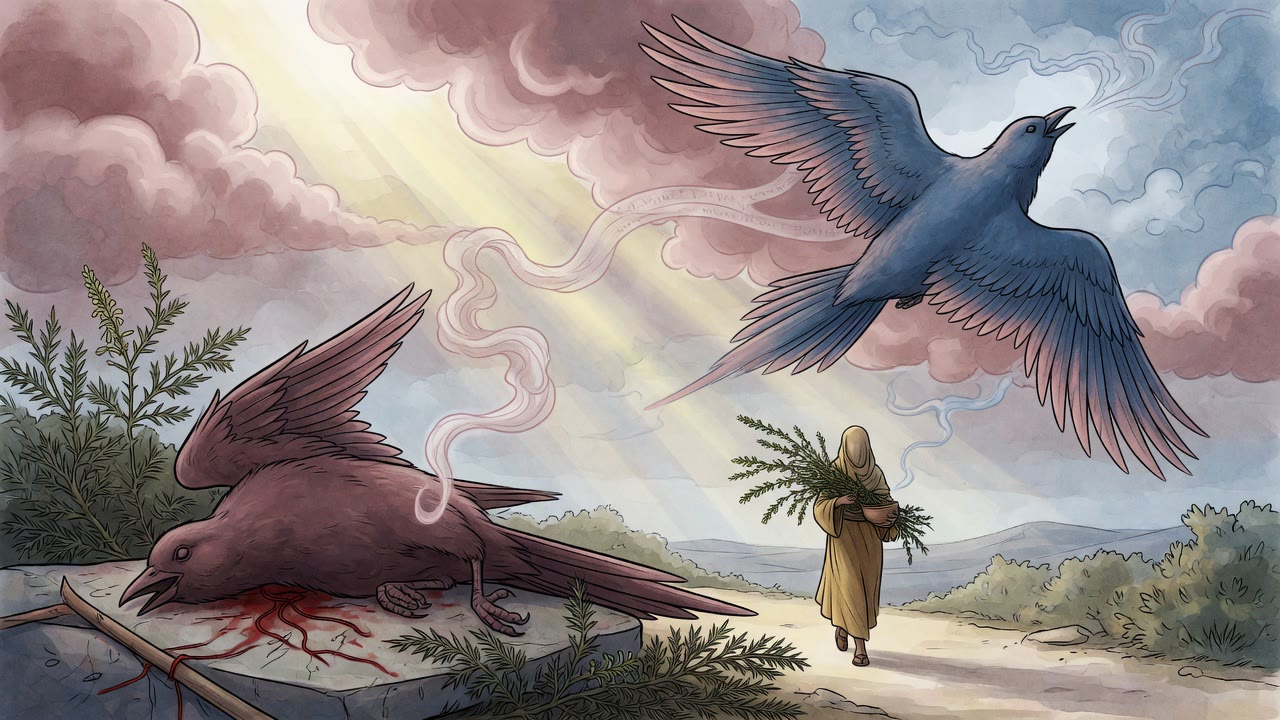
Then Rabbi Pedat named the law running under all of it. A covenant was cut by the Holy One at the world's founding, he said, that whoever speaks lashon hara is struck with leprosy. The opening verse of the whole matter lay before them. "This shall be the law of the leper." The leper, in the Hebrew, is ha-metzora. Broken open, the word splits into ha-motzi ra, the one who brings forth evil. The skin does not lie. The white blossom on the arm is the mouth's own sentence made flesh.

The Scholars Who Knew Every Face of the Law and Fell

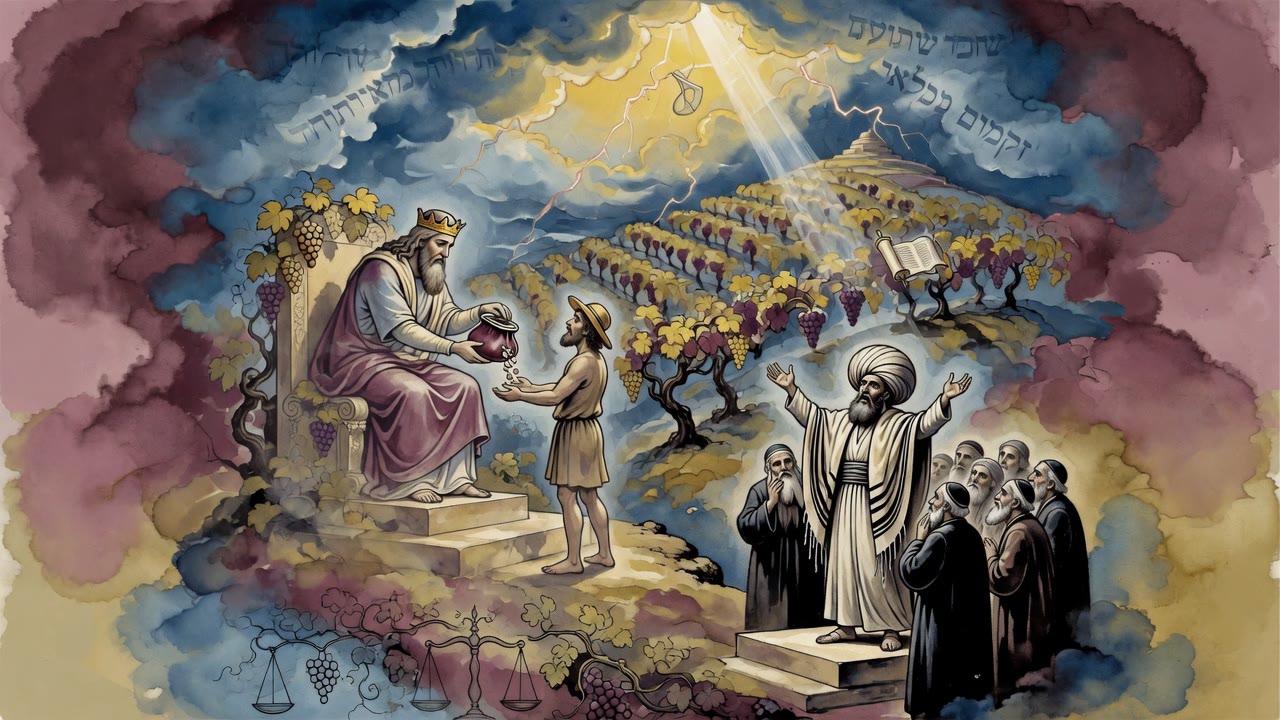
Rabbi Joshua of Sikhnin told the other half in the name of Rabbi Levi. In David's day there were children who had not yet tasted sin, able to turn a single law through forty-nine faces to declare it pure and forty-nine to declare it impure. David prayed over them. "You, O LORD, will keep them," guard their Torah in their hearts, keep them from a generation ripe for ruin.

And still they marched out to war and fell in the field. Brilliant, clean in the law, and dead. David knew the reason. "My soul is in the midst of lions," he sang. Abner and Amasa were lions in the Torah. But among them lay men aflame after slander, Doeg and Ahitophel once more. The men of Keilah, whom David had rescued, schemed to hand him back to Saul. The Ziphites climbed to Saul with word, "Is not David hiding among us?" Teeth like spears, tongues like drawn swords. David could not stand in that camp. "Be exalted above the heavens, O God," he cried, lift Your Presence up and away from them. Torah in every mouth, and slander in just enough of them to lose the war.

The Idolaters Who Guarded Their Mouths and Won

Turn to the house of Ahab, and the whole accounting flips. Every man in that generation bowed to idols. And they marched out to war and won. While Jezebel hunted the prophets, Obadiah hid a hundred of them in caves and carried them bread and water through the drought. Then Elijah stood on Mount Carmel and cried, "I alone am left a prophet of the LORD." Every man on that mountain knew he was not alone. They knew the hundred prophets breathing in the dark. Not one of them carried the word to the king. A whole idolatrous nation held a deadly secret. No informer. No whisper. And when they took the field, they came home alive.

On Mount Carmel a nation of idol-worshipers kept its tongue still and lived. In David's camp the finest minds in Israel opened forty-nine faces of the law and lay dead in the field, because a handful could not keep silent.


← All myths
From the tradition

Sources

2 sources

The texts behind this telling. Some cards carry a translation of the source; others are our own retelling of it, and each card says which. Every card links out to the original.

Midrash Tanchuma Buber, Metzora 1:1Midrash Tanchuma Buber, Metzora

Translation of the source text.Midrash Tanchuma (Buber), Public Domain, on Sefaria · CC-BY-SA

(Leviticus 14:2:) "This shall be the law of the leper," etc. Let our master teach us: How many human beings have no share in the world to come? Thus our Rabbis taught (in Mishnah Sanhedrin 10:1-2): These are they who have no share in the world to come. Three kings and four commoners have no share in the world to come. The three kings are Jeroboam, Ahab, and Manasseh.

Rabbi Judah the Levite bar Shalom said: The sages of the Mishnah wished to teach four kings and to count Solomon among them. But a heavenly voice (bat kol) went forth and said (Psalms 105:15): "Touch not My anointed ones." Even so, they returned one day to teach it; fire came from the heavens and scorched their benches. It returned and said (Job 34:33): "Should He repay it as you would, because you have refused?" Why did they teach it at all? Because it is written (1 Kings 11:1, 6): "Now King Solomon loved many foreign women," etc., "and Solomon did what was evil in the eyes of the LORD."

And the four commoners are Balaam, Doeg, Ahitophel, and Gehazi. You find that these were condemned to Gehinnom on account of the speech of their mouths. Balaam was thrust into Gehinnom by means of his tongue, as it is said (Numbers 23:7): "From Aram Balak has brought me (yanheni), the king of Moab." I was among the exalted ones; I was from the partition of the patriarchs. Balak brought me (yanheni) and cast me into Gehinnom. And "brought me" (yanheni) means nothing but Gehinnom, as it is said (Ezekiel 32:18): "Son of man, bring down (neheh) the multitude of Egypt and cast it down, etc., to the lowest parts of the earth."

And so Doeg was banished on account of his tongue. When? At the time when David fled to Nob, the city of priests, {to Ahimelech}, and {Ahimelech} received him. Saul perceived it and gathered all his servants, and said to them: "Well do you do to me, for David does all that he wishes, and not one of you uncovers my ear," as it is said (1 Samuel 22:8): "For all of you have conspired [against me, and there is none who uncovers my ear, etc.]." Doeg began to speak slander (lashon hara), as it is said (1 Samuel 22:9): "Then Doeg the Edomite answered, who was standing over the servants of Saul." And by his hand eighty-five priests who bear the ephod were slain, and Ahimelech the high priest; and Nob, the city of the priests, he smote with the edge of the sword.

And so Ahitophel was banished on account of his tongue, as it is said (2 Samuel 17:23): "And when Ahitophel saw that his counsel was not followed, etc., he set his house in order and hanged himself."

And Gehazi was banished on account of his tongue. At the time when Naaman was stricken with leprosy and was healed by means of Elisha, Naaman began to give silver and gold and gifts to Elisha, and he would not accept. Gehazi was ministering before Elisha; he saw the silver and the gold and the garments, and he said (2 Kings 5:20): "My lord has spared this Naaman," etc. "And the leprosy of Naaman [shall cleave to you and to your seed forever]" (2 Kings 5:27). Why? Because it is said (Deuteronomy 13:18): "And there shall cleave nothing of the devoted thing to your hand." Now Naaman and the king of Aram served idolatry, and it is written (Deuteronomy 7:26): "You shall not bring an abomination into your house," etc. And you said (2 Kings 5:20): "I will take from him something." By your life, you shall take his blemish, as it is said: "And the leprosy of Naaman shall cleave to you."

Rabbi Pedat said: A covenant has been cut by the Holy One in the world, that everyone who speaks slander (lashon hara) is stricken with leprosy. Whence? From what is written on the matter: "This shall be the law of the leper (ha-metzora)", the one who brings forth evil (ha-motzi ra).

Full source
Midrash Tanchuma Buber, Chukat 7:1Midrash Tanchuma Buber, Chukat

Translation of the source text.Midrash Tanchuma (Buber), Public Domain, on Sefaria · CC-BY-SA

[(Psalms 12:7:) REFINED SEVENFOLD.] Rabbi Joshua of Sikhnin said in the name of Rabbi Levi: The infants who lived in the days of David, before they had tasted the taste of sin, knew how to expound the Torah with forty-nine faces declaring a thing impure and forty-nine faces declaring it pure. And David would pray for them and say (Psalms 12:8): "You, O LORD, will keep them; You will guard him from this generation forever." "You, O LORD, will keep them", guard their Torah in their hearts. "You will guard him from this generation forever", [from a generation] that is worthy of destruction.

And yet after all this praise, they would go out to war and fall, [because there were slanderers among them]. This is what David says (Psalms 57:5): "My soul is in the midst of lions; I lie down among those who are aflame, the children of man whose teeth are spears and arrows, and whose tongue is a sharp sword." "My soul is in the midst of lions", these are Abner and Amasa, who were lions in the Torah. "I lie down among those who are aflame", these are Doeg and Ahithophel, who were aflame after slander. "The children of man whose teeth are spears and arrows", these are the men of Keilah, as it is said (1 Samuel 23:11): "Will the lords of Keilah surrender me?" "And whose tongue is a sharp sword", these are the Ziphites, as it is said (Psalms 54:2): "When the Ziphites came and said to Saul: Is not David hiding himself among us?" At that hour David said (Psalms 57:6): "Be exalted above the heavens, O God", remove Your Divine Presence from among them.

But the generation of Ahab were all worshipers of idols, and because there were no slanderers among them, they would go out to war and win. This is what Obadiah said to Elijah (1 Kings 18:13): "Was it not told to my lord what I did... and I sustained them with bread and water?" If bread, why water? Rather, because the water was harder to bring them than the bread. And Elijah proclaimed on Mount Carmel and said (1 Kings 18:22): "I alone am left a prophet of the LORD." And all the people knew it, yet they did not make it known to the king.

Full source