The Shekhinah Left Jacob on the Road from Esau
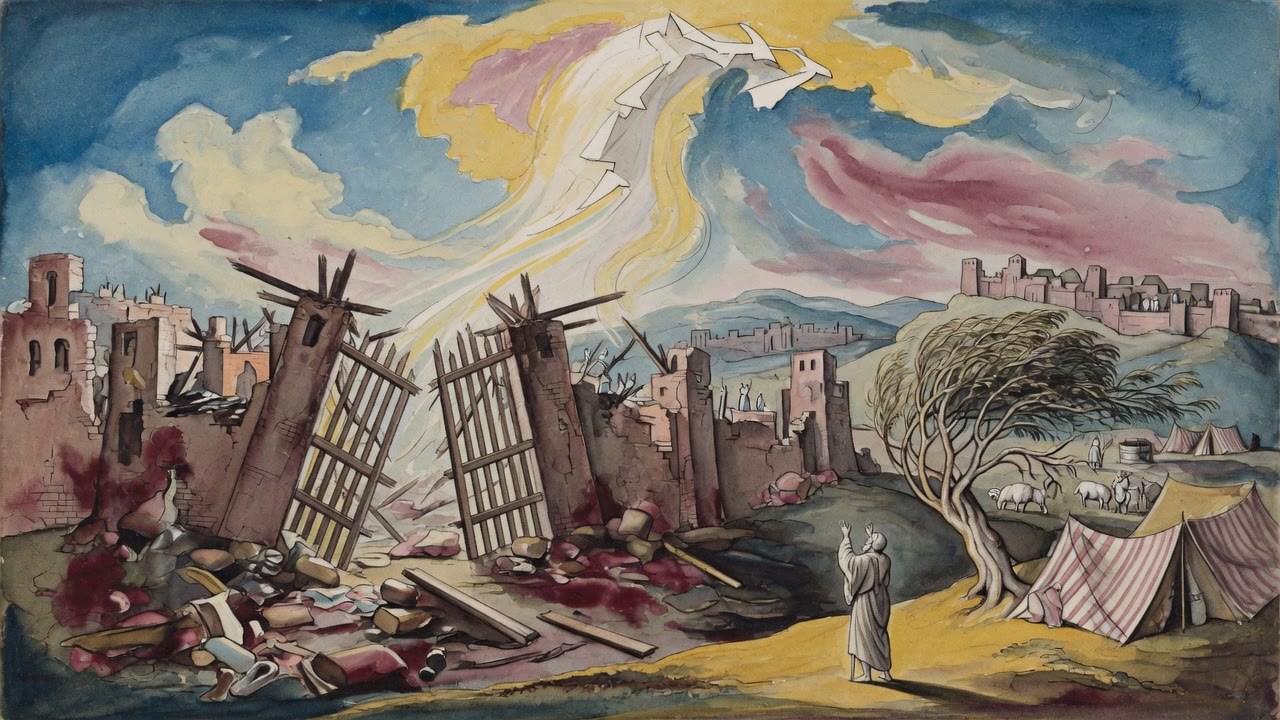
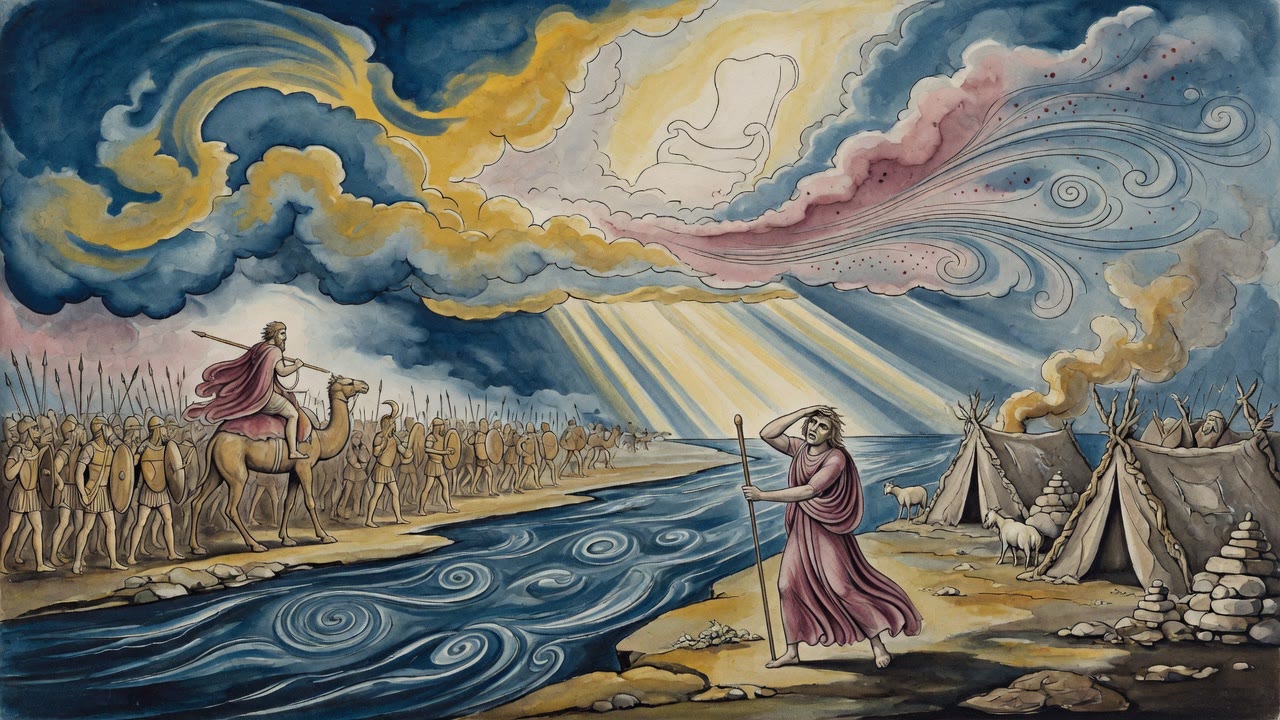
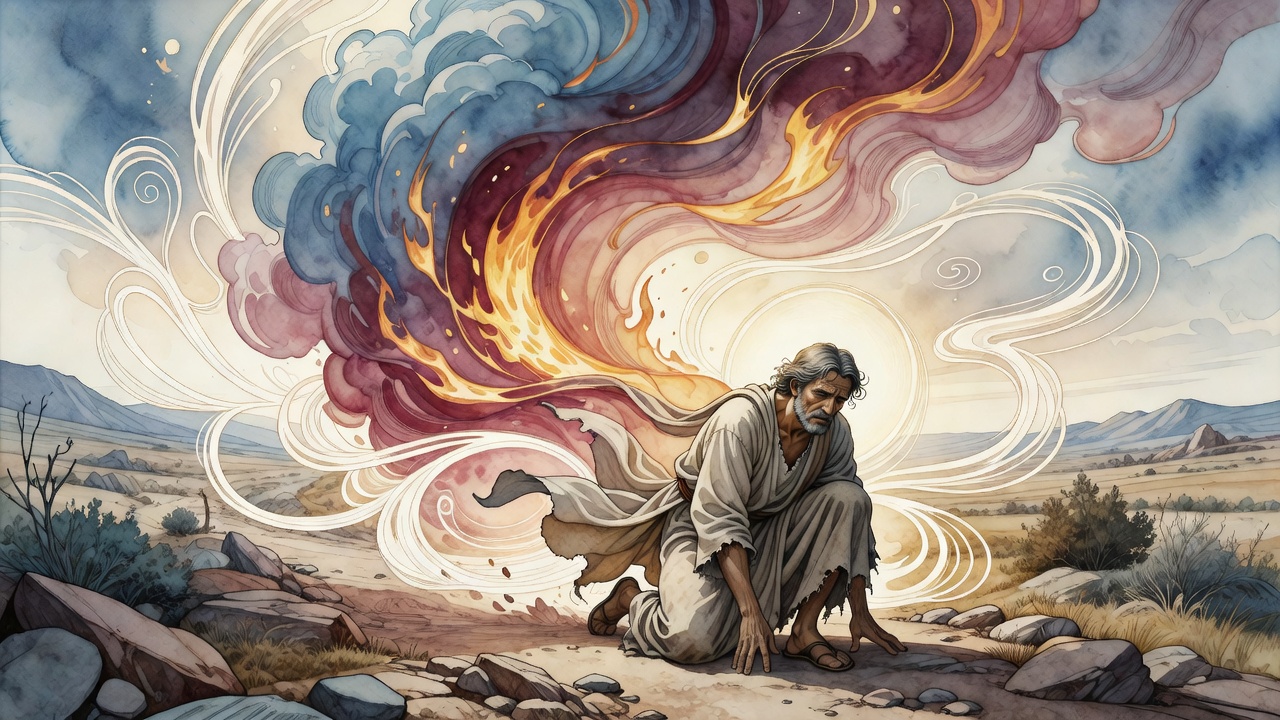
Jacob sat in the dust with Esau behind him and no prayer left. The presence that had ridden his life went out, and the road became only a road.
Table of Contents
Jacob's staff lay across his knees. His mouth was dry. He did not pray. Prayer requires a future, and he had only the taste of dust and the knowledge of a brother's hate.
 Click for full size
He had not left home like a man setting out. He had left like a man already half dead. Esau's fury sat behind him with a bow and a memory of a stolen blessing. Ahead lay Haran, and Laban, and years he could not yet count. Between those two fires he walked, and then he sat. Fear still runs. Despair sits down in the middle of the road and waits for the end as if the end were a kindness.
The Presence Went Ordinary
The Shekhinah (שכינה), the divine presence that had ridden his life the way a flame rides oil, left him.
Not in anger. In distance. The air around him went ordinary. The road became only a road, stones only stones, sky only weather. No hush of accompanying holiness. No sense that heaven was still interested in whether he took the next step. A man can live many years without noticing that presence. Jacob noticed its absence the way a body notices the sudden stop of a heartbeat it never had to hear before.
He thought, I will die here. And the thought itself nearly made the sentence true. The withdrawal was not punishment for the blessing. Heaven does not keep close company with a soul that has already buried itself.
The Angels Argued Over a Silent Man
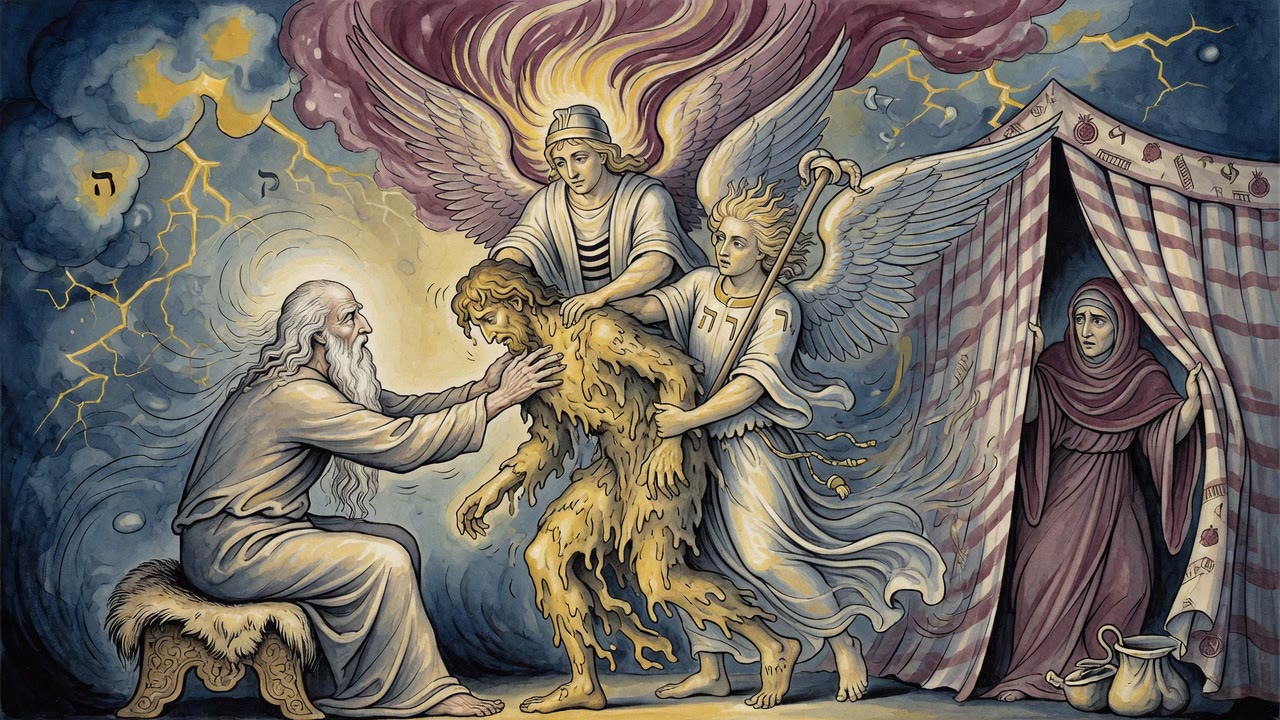
Above him the angels did not wait for a better mood. They argued the way advocates argue when the defendant has gone silent.
"This one is meant to father a nation," they said before God. "If he dies of his own grief on the road, the promise dies with him. Esau's rage is not the only threat. Hopelessness is killing him faster than any arrow."
God listened. The Shekhinah returned the way breath returns to a drowning man who has just been hauled onto the bank. Warmth first. Then weight. Then the old awareness that he was seen. Jacob stood. His legs shook. The road still led to Haran. Esau was still somewhere behind him with his grievances. But the ordinary air had become charged again, and he walked as a man under a vow he had not yet fully understood.
Eighty-Four Years Old in Laban's House
He would need that return. Ahead waited Laban's dark tent, seven years that became fourteen, a wedding night that woke to the wrong face. In Haran he worked for Rachel and told his uncle the thing the road had almost erased. "The Lord destined me to be the father of twelve tribes. I am now eighty-four years old, and if I do not take thought of the matter now, when can I?"
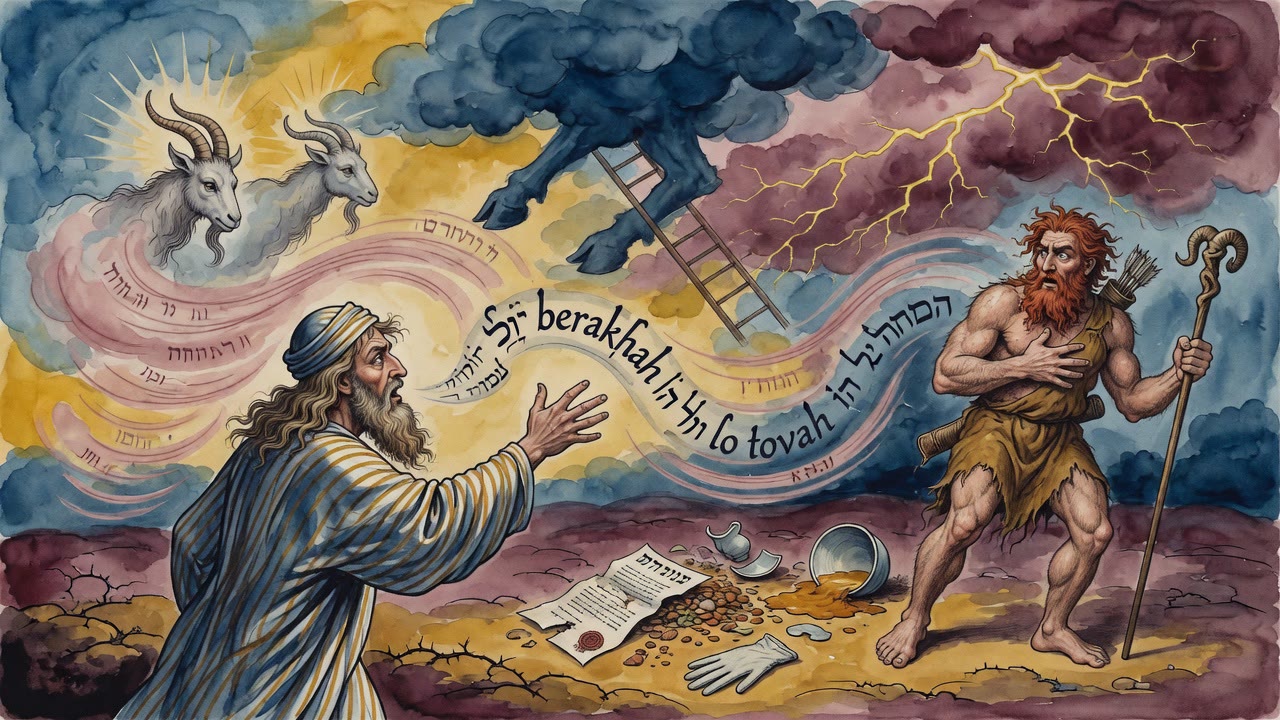
Laban consented. He also assembled the town. He took pledges from the guests so none of them would warn the bridegroom, and with those pledges he bought the wine and the meat for the feast. The guests ate a meal they had themselves paid for. Late at night they tried, even so, to give Jacob a hint. In the marriage song they used the refrain "Halia," hoping he would hear Ha Leah, This is Leah. He heard nothing. Joy makes a man deaf.
Leah Answered to Rachel's Name
They led the bride into the chamber and put out the candles. In the dark Jacob called Rachel, and Leah answered. Morning undid the deafness. He reproached her. "O you deceiver, daughter of a deceiver, why did you answer when I called Rachel's name?"
Leah did not flinch. "Is there a teacher without a pupil? When your father called you Esau, did you not say, Here am I?" Deception had a pedigree. It had sat at his father's bedside. Now it sat in his marriage bed.
God opened Leah's womb first, not because Jacob loved her, but because heaven answers the unloved before the secure. She had been gossiped about on the roads and at the looms, the woman who looked pious and had still taken her sister's night. A son at seven months put a stop to some of that talk. She named him Reuben, See, a son. The man who had sat in the road with no future was holding a child in a house that had begun with a lie. The near-death was not a footnote. Without the Shekhinah's return there would have been no wedding, no name, no Israel waiting in the boy's bones.
← All myths