Parshat Vayigash6 min read

The Son Who Goaded Joseph's Brothers to Burn Down Egypt

Joseph planted his own son at the palace gate to record the brothers' names, then closed every grain station but one and goaded them toward war.

Curated by Arthur · Told by Maggid ·
Table of Contents
  1. The Recorder at the Grain Gate
  2. The List Read by Lamplight
  3. Every Station Shut but One
  4. Naphtali Counts the Quarters
  5. The Roar That Shook the Court
The Son Who Goaded Joseph's Brothers to Burn Down Egypt Click for full size

The Recorder at the Grain Gate

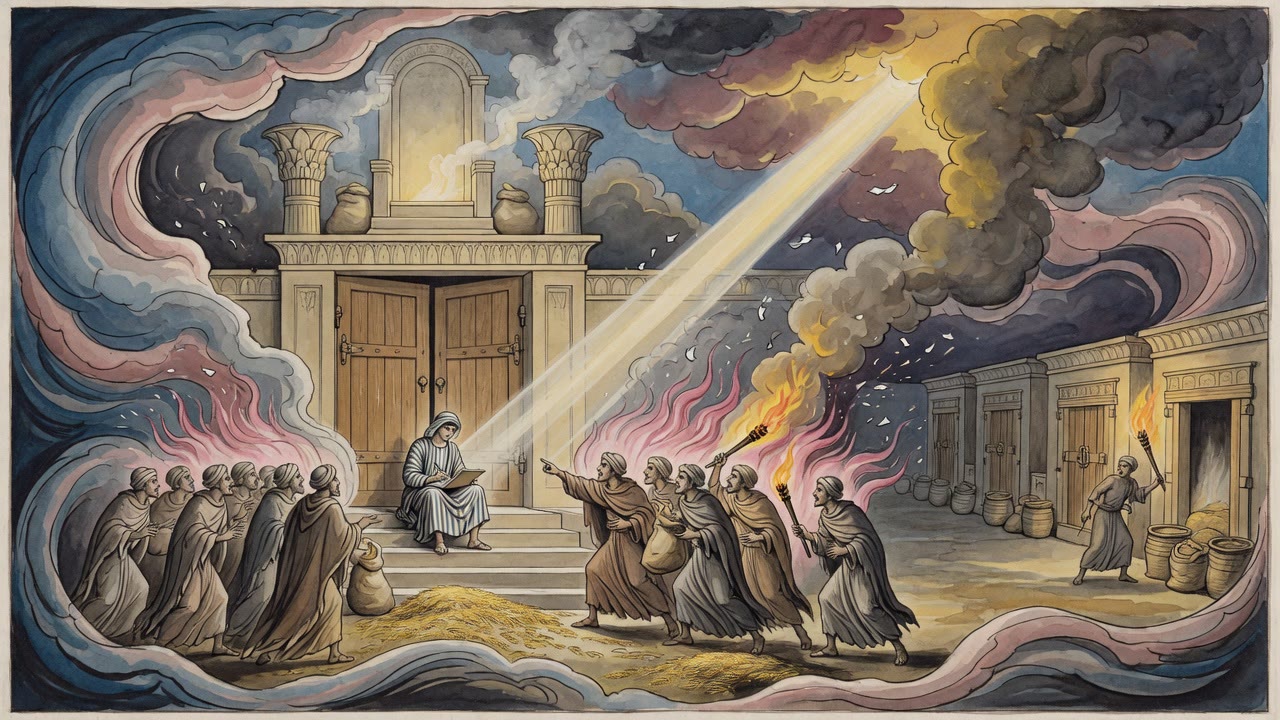
The famine drove them south, ten men from Canaan with empty sacks and hard faces, and at the gate of the Egyptian grain house a clerk stopped them before they could pass. He wanted names. Not only their own. He wanted the name of their father, and the name of their father's father, taken down in a careful hand while the line behind them shuffled and waited in the heat.

The clerk was a young man who carried himself like the palace. His name was Manasseh, and he was the son of the very lord who ruled all the grain in Egypt, though the strangers before him could not have guessed it. He asked, they answered, and his stylus moved. Reuben. Simeon. Levi. Judah. The sons of one man in Hebron, set down in Egyptian ink by a boy who already knew exactly who they were.

They did not like it. Once they were through they drew together and spoke low. "Let us go into the town," one of them said, "and we shall see whether this taking down of our names be a matter of taxes. If it be so, we shall not demur. But if it be something else, we shall see tomorrow what can be done in the case." They were soldiers among themselves, and they knew the difference between a tax roll and a hunt.

The List Read by Lamplight

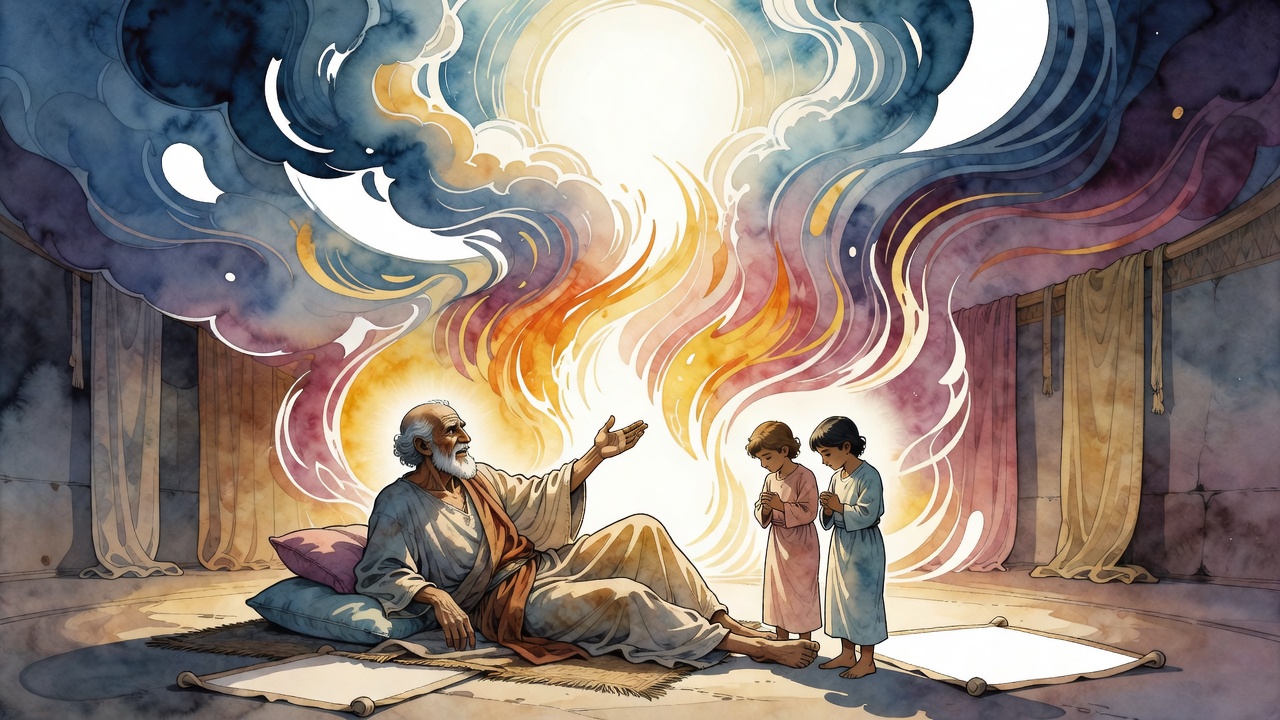
That evening the lord of Egypt did what he did every evening. He called for the day's registers and read them by lamplight, name after name of the men who had come begging for bread. Years before, Joseph had been thrown into a pit by his own brothers and sold out of it into this country as a slave. Now he sat above all of it, and he ran his eye down the column until it stopped.

There they were. The men from Hebron, written out in his son's hand.

He did not send for them. Not yet. A slower thing was forming in him, and he built it through the night.

Every Station Shut but One

By morning he had turned the whole grain trade into a snare. He ordered every selling station in the city closed, all of them, save one. At that single station no man could carry off so much as a measure of wheat without first giving his name to be written down. And to the overseer there Joseph handed a short list, ten names, with an order plain as a blade. When these men come, seize them.

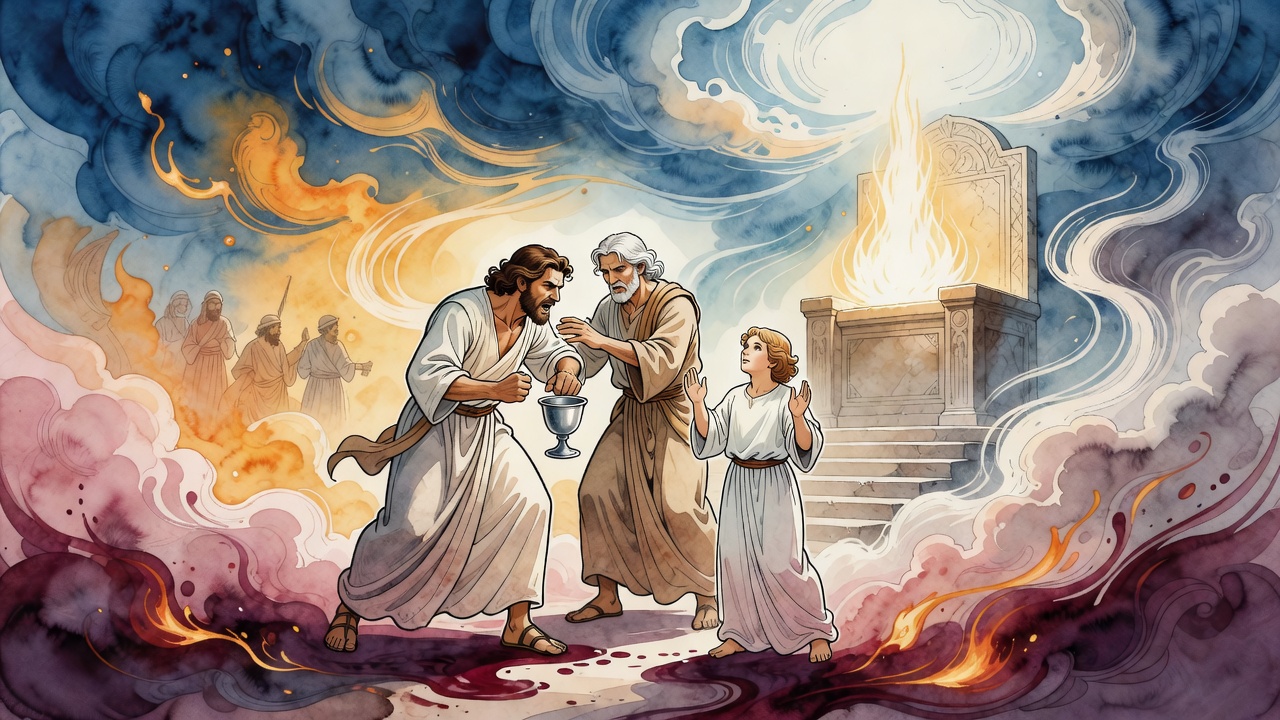
Then he called for Manasseh again. Muster the city, he told his son. Every inhabitant, every fighting man, on horseback and on foot, drawn up and ready. The boy who had taken the names at the gate would stand between his father and the strangers as the mouth that carried Joseph's words across to them, and the words Joseph meant to send were not soft ones. He did not want the trap merely to shut on his brothers. He wanted it to press on them, to needle them, to push until whatever they carried inside came up hot.

Naphtali Counts the Quarters

The brothers smelled the trap closing, and Judah moved first. He sent Naphtali ahead to take the measure of the place, because Naphtali was faster than any of them, so light on his feet that he could cross a field of standing grain and not bend a single stalk. Naphtali ran the streets and came back with a number. The city was laid out in twelve quarters.

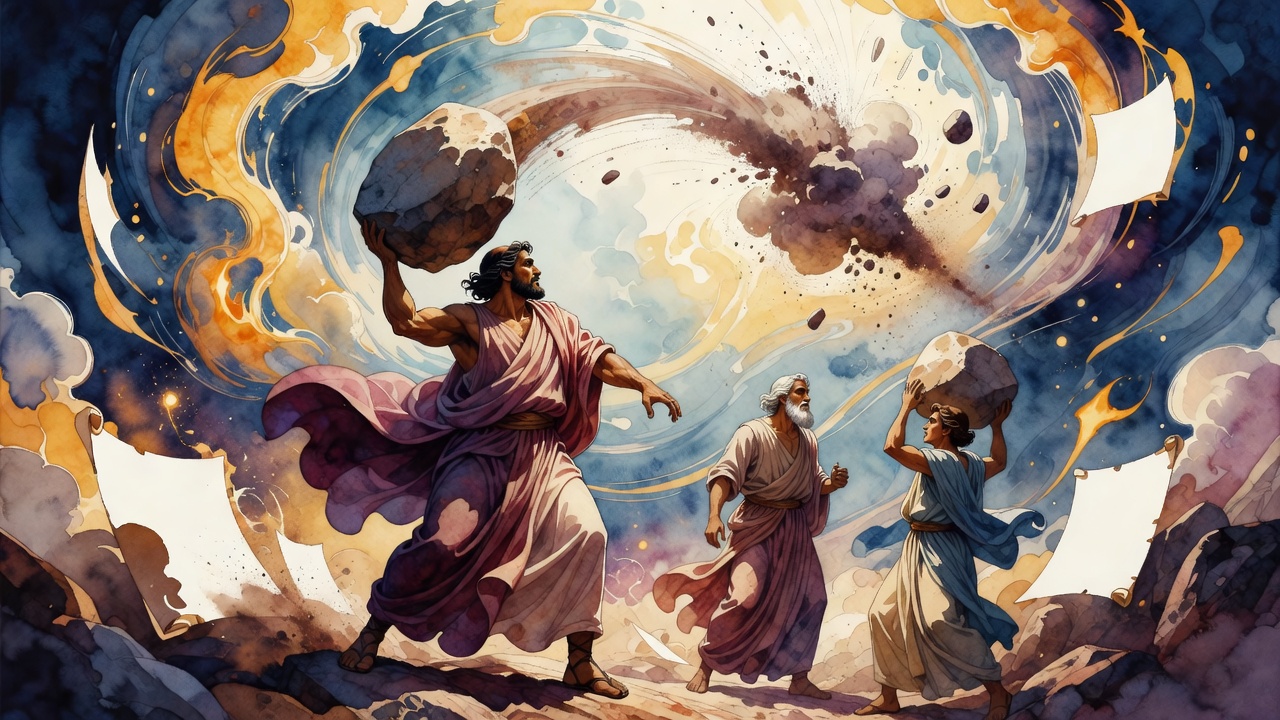
Twelve. Judah heard the count and split the work like a general dividing ground before a battle. He would break three quarters himself, with his own hands. To each of his brothers he gave one more to level. Ten men against a kingdom, and Judah carving it into portions as though it were a carcass to be shared out among them before the sun climbed much higher.

The Roar That Shook the Court

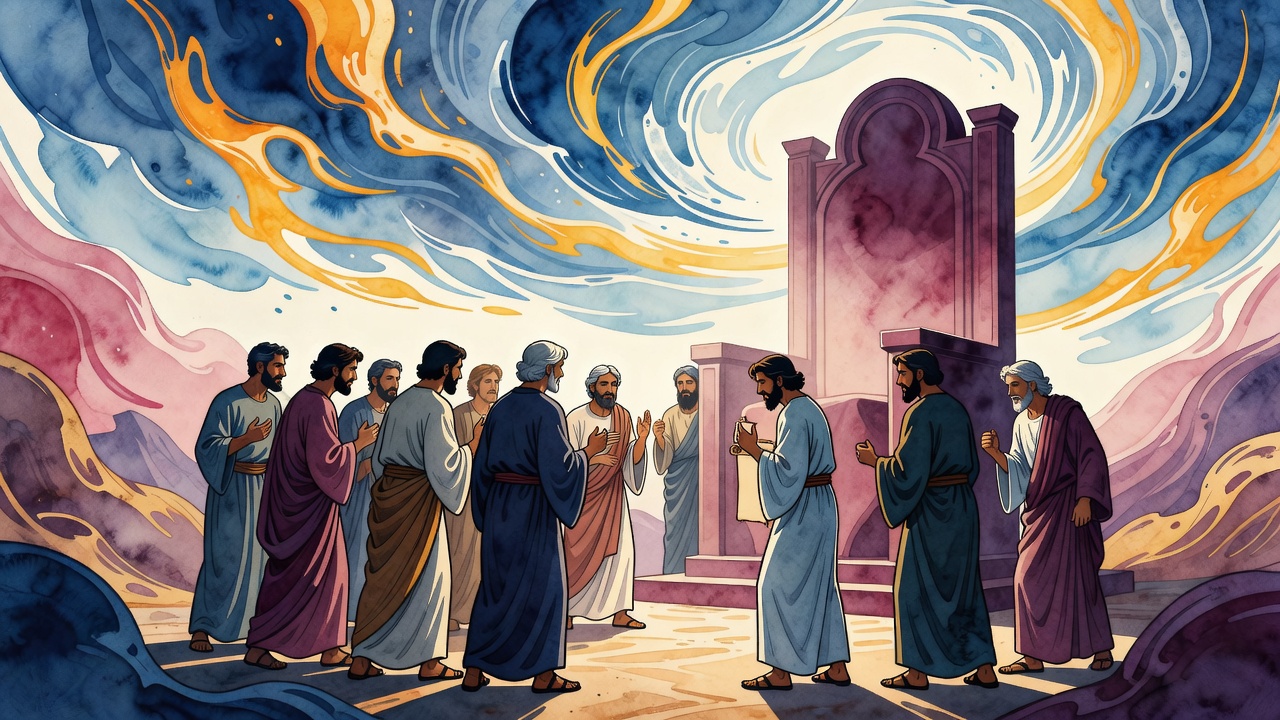
When they walked back into the great city they did not see a great city. To the sons of Jacob, with the killing already agreed among them, the whole of Egypt looked no wider than a village of ten households, a little hamlet they could flatten between them and be gone. They came ready for anything.

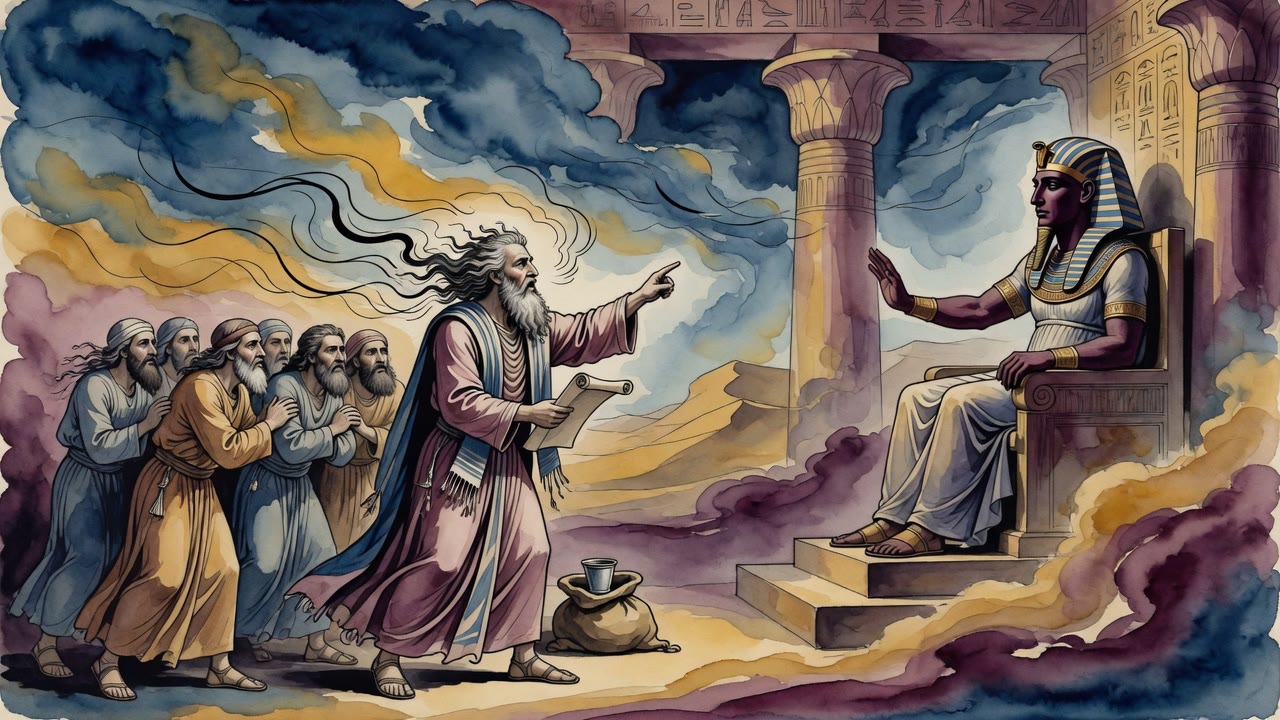
They were brought to the lord, and he did not meet them out in the open court where all of Egypt could stand and watch. He received them in his own house. He had a reason to keep them from the eyes of the city, though they did not know that reason yet. They came in, and every one of them went down on his face before him, foreheads pressed to the floor. Somewhere far back in the years a boy's dream turned over in the dark and came true. Eleven stars, bowing.

And still Judah burned. Down on the ground with the others, his fury with nowhere to go, he said to his brothers under his breath, "Verily, this man hath forced me to come back hither only that I should destroy the city on this day." The words moved through the room like heat off a forge. Men of the household felt the air change around these ragged foreigners from Canaan, felt how narrow the ground had become between an ordinary morning and the whole kingdom burning. And the two who held that fire between them were a father seated on his throne and the son at his side who had written down the names.


← All myths
From the tradition

Sources

3 sources

The texts behind this telling. Some cards carry a translation of the source; others are our own retelling of it, and each card says which. Every card links out to the original.

Legends of the Jews 1:297Legends of the Jews

Retold in our words. Read the original at the link below.The Legends of the Jews by Louis Ginzberg (1909) · Public Domain

Let me tell you a story, one ripped from the pages of Legends of the Jews, that might just give you a taste.

Joseph, elevated to power in Egypt, is finally face-to-face with his brothers after years of separation. They don't recognize him, of course. They speak freely, unaware that Joseph understands their Hebrew. And what he overhears sets a plan in motion.

In Ginzberg's retelling in, Legends of the Jews, Joseph, upon hearing his brothers' words, turns to his son Manasseh (yes, that Manasseh) and instructs him to gather the entire population of Egypt – every last inhabitant, every valiant warrior – on horseback and on foot. Why? Because things are about to get very, very interesting.

Meanwhile, Naphtali, known for his incredible speed – the kind that allows him to run across a field of grain without disturbing a single stalk – is dispatched by Judah. Judah, ever the strategist, sends Naphtali to scout out the city. He's as swift as a deer, we are told!

Naphtali returns with crucial information: The city of Egypt is divided into twelve quarters. And here's where it gets really dramatic. Judah, brimming with confidence and a burning desire for… well, we'll find out for what… orders his brothers to destroy the city. He, himself, takes responsibility for razing three entire quarters.

Three quarters!

And the remaining nine? He assigns one quarter to each of his other brothers. The weight of expectation?

What’s driving Judah's actions? What could possibly motivate such a drastic, destructive plan? That, my friends, is a story for another time. But remember this: even in the most familiar narratives, there are always layers of intrigue waiting to be uncovered.

Full source
Legends of the Jews 1:199Legends of the Jews

Retold in our words. Read the original at the link below.The Legends of the Jews by Louis Ginzberg (1909) · Public Domain

When Joseph's brothers arrived in Egypt seeking to buy grain, they were asked their names, and the names of their father and grandfather. The guard taking down their information was none other than Manasseh, Joseph’s own son!

The brothers, suspicious of this interrogation, cautiously suggested, "Let us go into the town, and we shall see whether this taking down of our names be a matter of taxes. If it be so, we shall not demur; but if it be something else, we shall see to-morrow what can be done in the case." (Legends of the Jews) They were trying to figure out if this was just bureaucracy or something far more sinister. They had no idea, of course, just how closely they were being watched.

That very evening, Joseph, who, as we know, was now a powerful figure in Egypt, reviewed the daily lists – a habit (Legends of the Jews). And there they were: the names of his brothers, the men who had betrayed him. The wheels began to turn.

Joseph then orchestrated a rather elaborate trap. He commanded that all but one grain-selling station be closed. And at that one remaining station? No sales were allowed without first recording the buyer's name. (Legends of the Jews)

But here’s the kicker: Joseph gave the overseer a specific list of names – his brothers' names. He instructed them to seize those men the moment they appeared. (Legends of the Jews) Can you feel the weight of that moment? The hunter was now the hunted, and Joseph, the long-lost brother, was about to orchestrate a reunion neither he nor they could have ever anticipated.

What was Joseph feeling at this moment? Was it revenge? A desire for reconciliation? Or perhaps a bit of both, all tangled up in the complexities of family and fate. It's evidence of the enduring power of these ancient stories, and the questions they still provoke within us today.

Full source
Legends of the Jews 1:262Legends of the Jews

Retold in our words. Read the original at the link below.The Legends of the Jews by Louis Ginzberg (1909) · Public Domain

It can make you feel like you can take on the world.

That's the feeling that must have coursed through Joseph's brothers as they strode back into the Egyptian city. Remember, these weren't just any brothers – these were the sons of Jacob, a lineage destined for greatness. And right now, they were feeling anything but humble.

In Legends of the Jews, Ginzberg recounts how they saw this massive metropolis as nothing more than a tiny village, a mere “hamlet of ten persons,” easily crushed.

They were led to Joseph, the very Joseph they had betrayed years ago. But something was different this time. He wasn't holding court in the usual public forum. No, he was waiting for them at home. Why? Ginzberg suggests it was to spare them public humiliation. A fascinating detail, hinting at Joseph's complex emotions, wouldn't you say?

As they entered his presence, they prostrated themselves before him. The dream Joseph had so long ago, the one that had fueled their jealousy and hatred – it was coming true. The eleven stars bowing down – a prophecy fulfilled.

But beneath the surface of this seemingly submissive act, a storm was brewing. Judah, fierce and loyal, was seething. "Verily," he said to his brothers, "this man hath forced me to come back hither only that I should destroy the city on this day."

Talk about a dramatic turn! It's a stark reminder that even in moments of apparent surrender, the embers of defiance can still burn bright. Was it loyalty to his brothers? A sense of injustice? Or something else entirely? This moment, thick with tension, sets the stage for what's to come. And leaves us wondering: what will Judah do?

Full source