The Soul Sees Sinners Lashed in Gehinnom
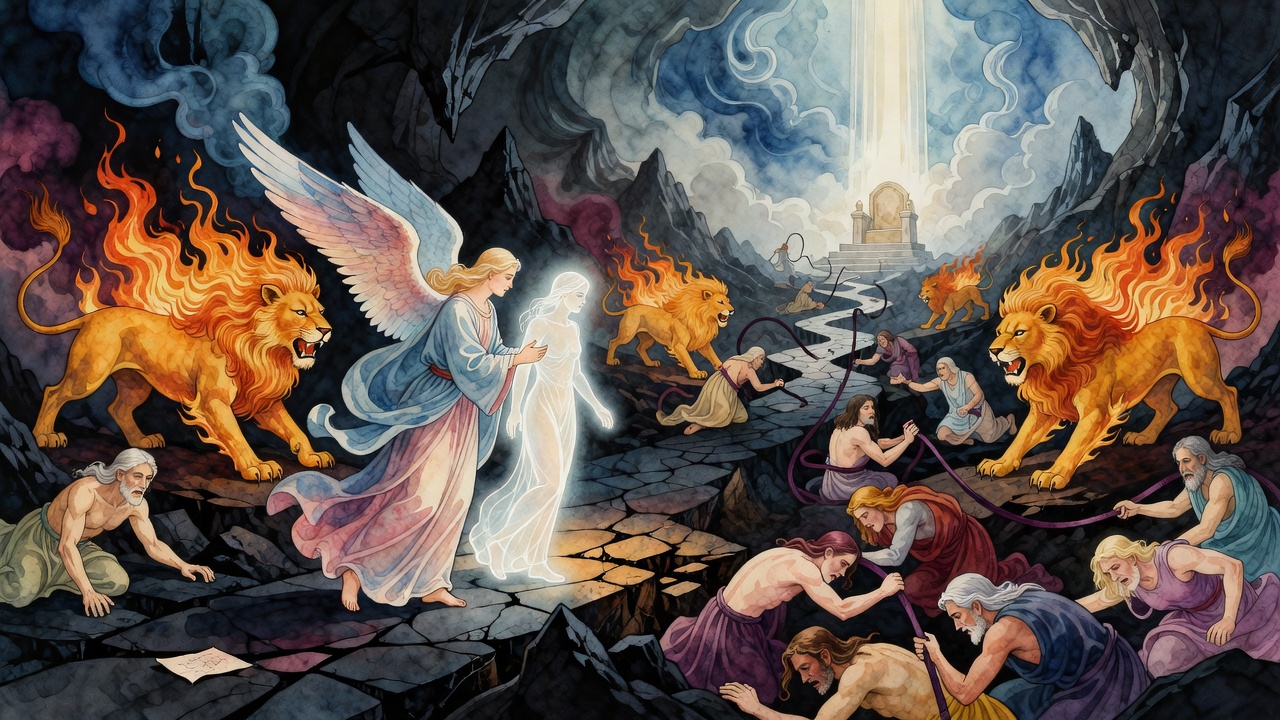
An angel walks a new soul past fire-lions and scourges in Gehinnom (afterlife of judgment), naming the damned as once-living people who ignored Torah.
Table of Contents
 Click for full size
Evening After the Last Breath
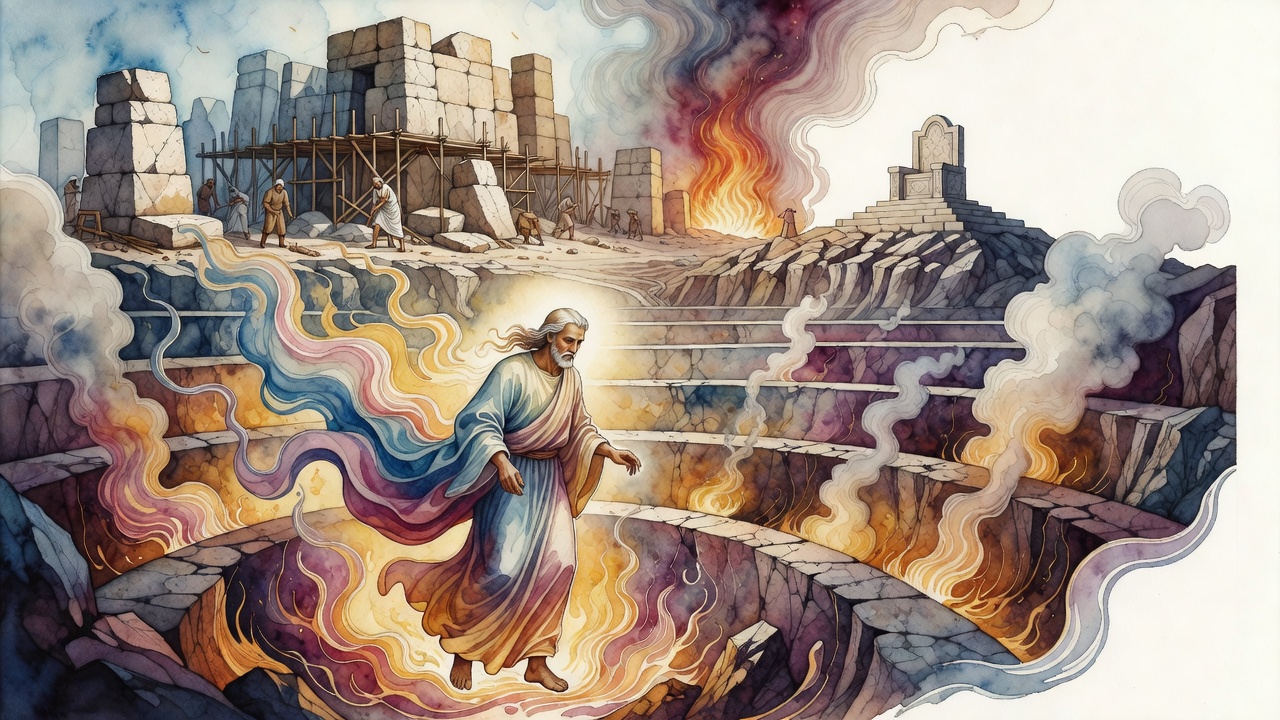
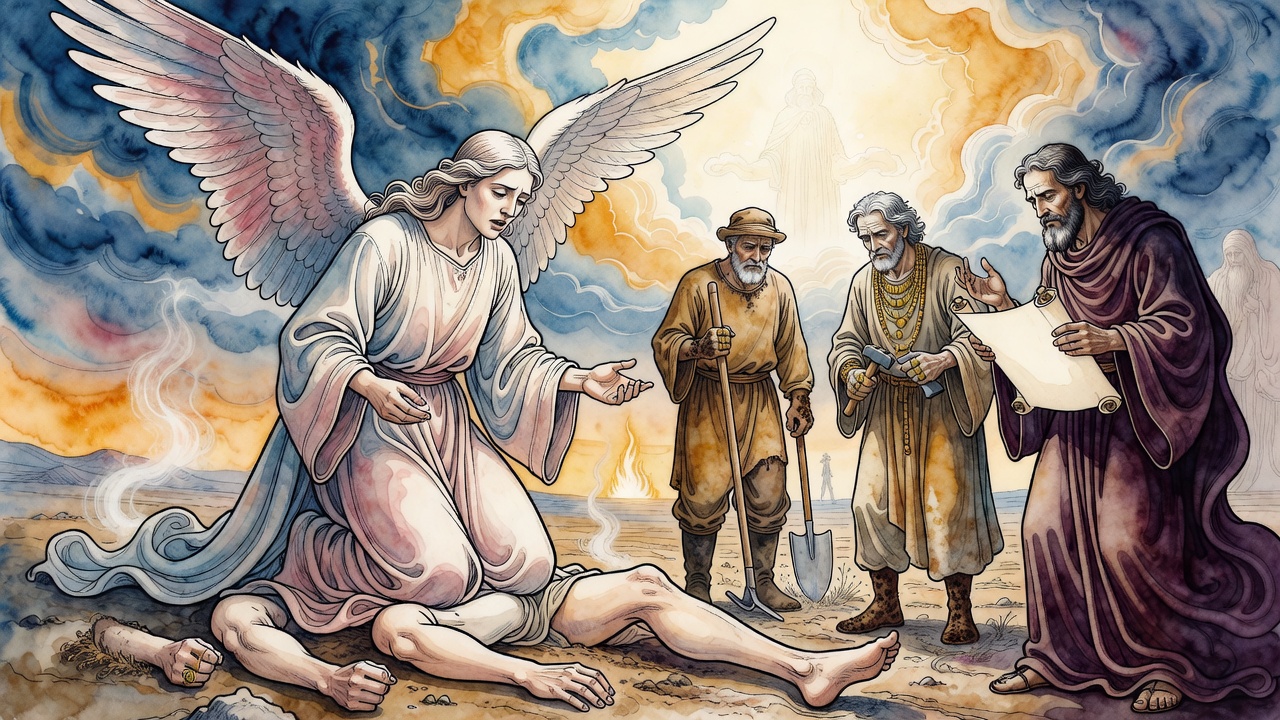
Evening fell on a soul that no longer owned lungs. An angel took its arm without flesh and steered it down, not up. The road did not smell of spice or song. It smelled of scorched iron and wet ash. Ahead, the Angels of Destruction raised fiery scourges and brought them down on bodies that still remembered how to scream.
"Woe! Woe!" the punished cried, and the air swallowed the word the way a forge swallows heat. No one answered with mercy. The escort angel turned to the new soul and asked, as if the scene needed a name, "Dost thou know who these are?"
The soul said no. Ignorance was still clinging to it like dust from the grave clothes. The angel did not soften the answer. "These who are consumed with fire were created like unto thee. When they were put into the world, they did not observe God's Torah and His commandments. Therefore have they come to this disgrace which thou seest them suffer."
The Warning That Walks Beside Fear
The tour was not sightseeing. It was a sentence spoken sideways. "Know, thy destiny is also to depart from the world. Be just, therefore, and not wicked, that thou mayest gain the future world." The soul felt the words land where a heart had been. Gehinnom (the realm of judgment after death) was not a rumor told to frighten children. It was a chamber with sound, heat, and a mirror held up to the living.
Ninety thousand Angels of Destruction, so the tallies run in the gathered legends, keep the levels. Seven sections open into seven subdivisions. Rivers of fire and rivers of hail cross one another, each river a thousand ells wide and deep, three hundred long, feeding the next channel like a city of punishment that never sleeps. The new soul did not count ells. It watched a scourge rise and fall and understood, too late for the damned and still in time for itself, that Torah ignored becomes a furnace remembered.
Somewhere above, the living world kept markets and marriages. Down here the only trade was pain for forgotten commandments.
Rabbi Joshua at the Fiery Gates
Another night, another traveler. Rabbi Joshua ben Levi wanted to see Gehinnom while still alive. The Messiah refused him. "It is not fitting for the righteous to see it," he said, "for there are no righteous people in hell." Joshua pressed until the angel Qipod led him to the gates of fire.
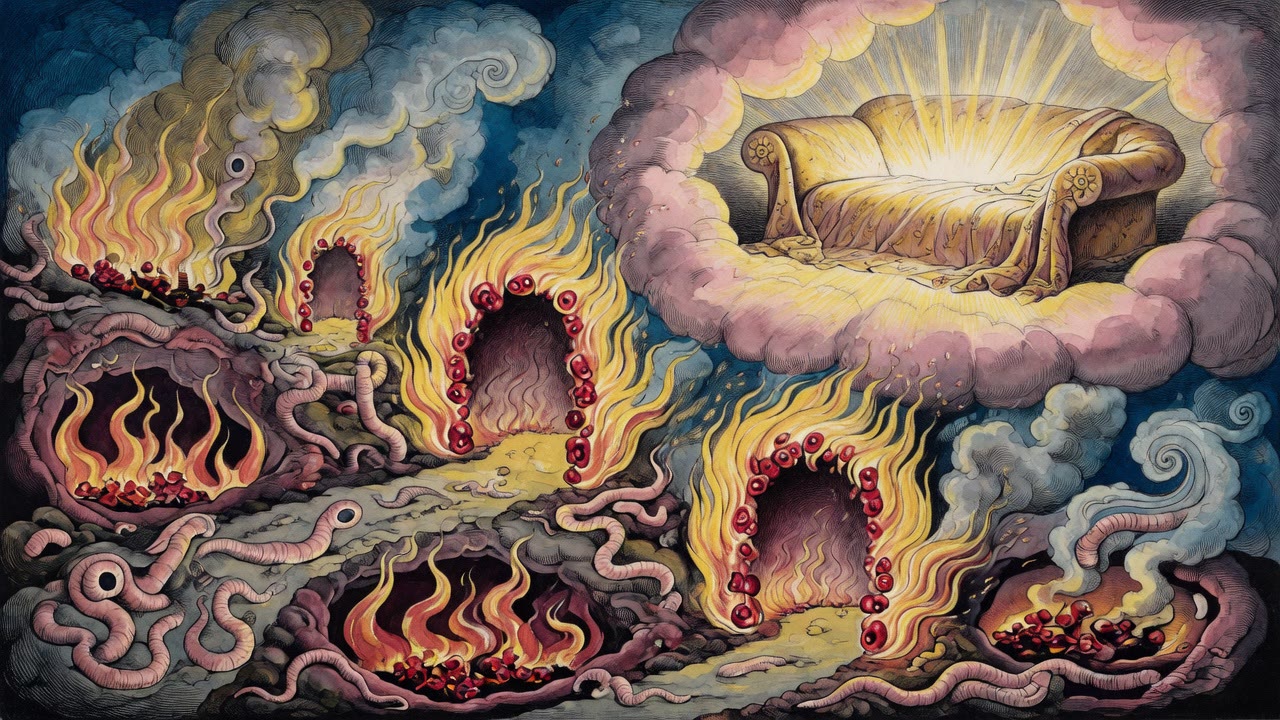
The first compartment stretched a mile by a mile, open pits and lions made of flame. Wicked souls fell into the pits. The fire-lions cast them back into the blaze. Two brooks ran through the heat and gave no comfort. When the Messiah's light touched the gate, the punished cried out that this one would bring them out. The light did not become a key. It became a brief bright hope that burned and left them still inside.
In the second chamber the nations of the world gathered under Absalom. They argued with him. If we are punished for rejecting Torah, what did you reject? Your fathers took the commandments. Absalom answered with a son's failure, not a scholar's brief. "Because I did not listen to my father." The angel Qushiel struck with a rod of fire seven times by day and three by night. Absalom's answer hung in the smoke longer than the rod's swing.
Limbs That Hang by Their Own Work
Elijah once took Joshua on another road and asked if he wished to see the gates. Joshua said yes. Then the matching began. Men hung by their hair, grown long for attraction toward sin. Others hung by their eyes, for gazes that ran ahead of the law. Tongues for slander. Hands for theft. Feet for running toward evil. Women hung by their breasts for deliberate enticement. Deeper still, men ate fiery coals for blasphemy.
Each punishment wore the shape of the act that fed it. Gehinnom, in this telling, is not random cruelty. It is memory made physical. The body that chose becomes the body that teaches. Joshua walked. Elijah pointed. The gates did not flatter either of them.
The living rabbi returned to study halls and roads. The new soul of the first tour had no road back. It carried only the angel's question and the scream of people who had once been "created like unto thee."
What the Scourge Leaves Behind
Legends braid the evening tour with the sevenfold map and the limb-for-limb vision into one pressure. A soul that still thinks death is a soft door learns otherwise. A righteous man who insists on seeing learns that mercy does not cancel architecture. Fire-lions and hail rivers keep their posts whether a visitor is escorted after death or bargains for a glimpse in life.
Be just. The angel said it without poetry. The levels said it with ninety thousand enforcers. Absalom said it by naming a father's unheard voice. The new soul, if it still had a choice left in some earlier hour of flesh, would have heard that single charge louder than any lecture on destiny.
Night on earth continued. Somewhere a child learned the first letters of Torah. Somewhere a scourge rose again. Between those two sounds, Jewish myth sets the tour, the chambers, and the warning that refuses to let death arrive as a surprise without a curriculum.
← All myths