Parshat Beshalach6 min read

The Ten Songs of History and Who Dared to Sing First

History is scored by ten great songs. At the split sea, angels and Israel raced to sing first, and one mortal voice set the melody.

Curated by Arthur · Told by Maggid ·
Table of Contents
  1. The Night Heaven Leaned In to Sing
  2. God Silenced the Choir for the Sake of His Children
  3. The King Whose Son Came Back From Capture
  4. The Word That Meant They Finally Believed
  5. One Song in a Chain of Ten
The Ten Songs of History and Who Dared to Sing First Click for full size

The Night Heaven Leaned In to Sing

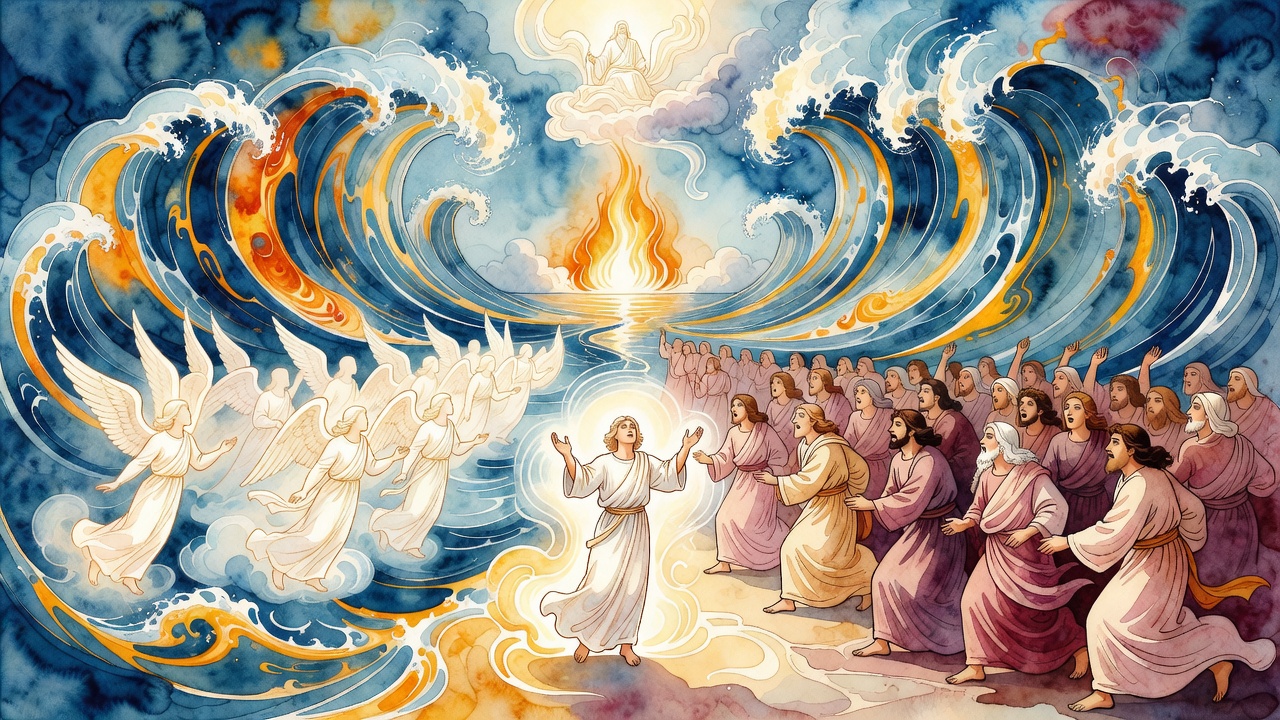
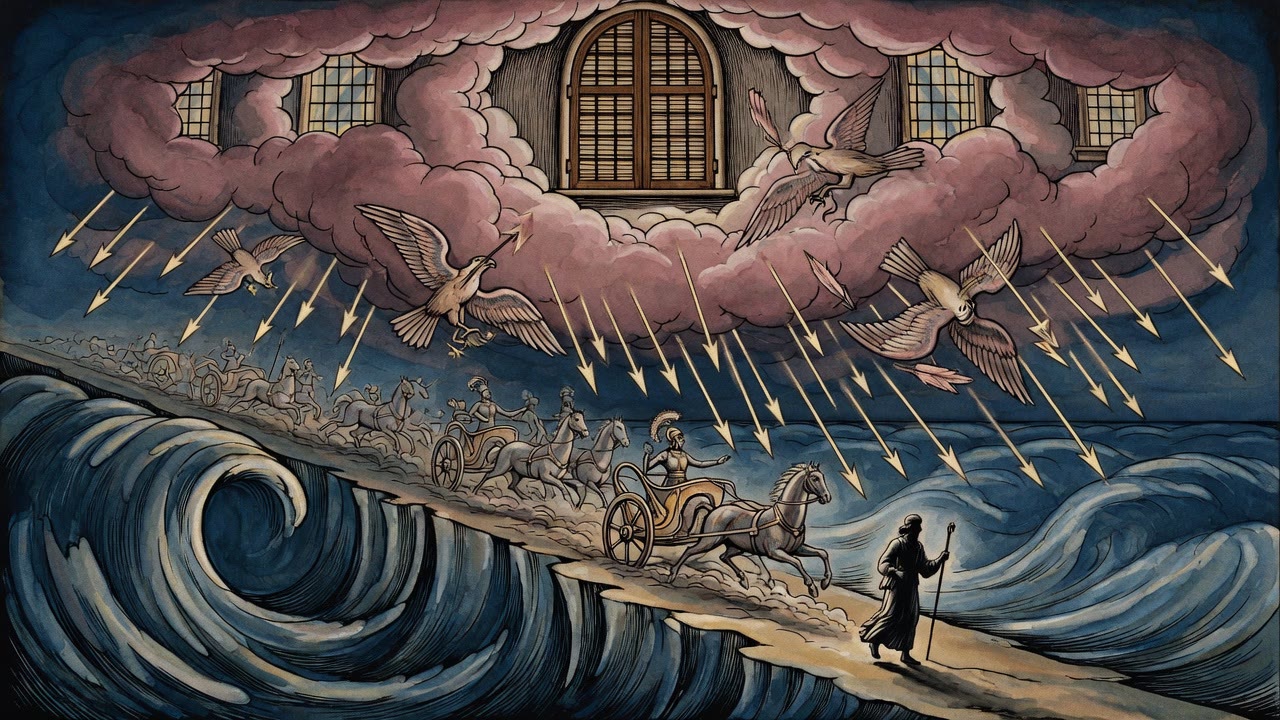
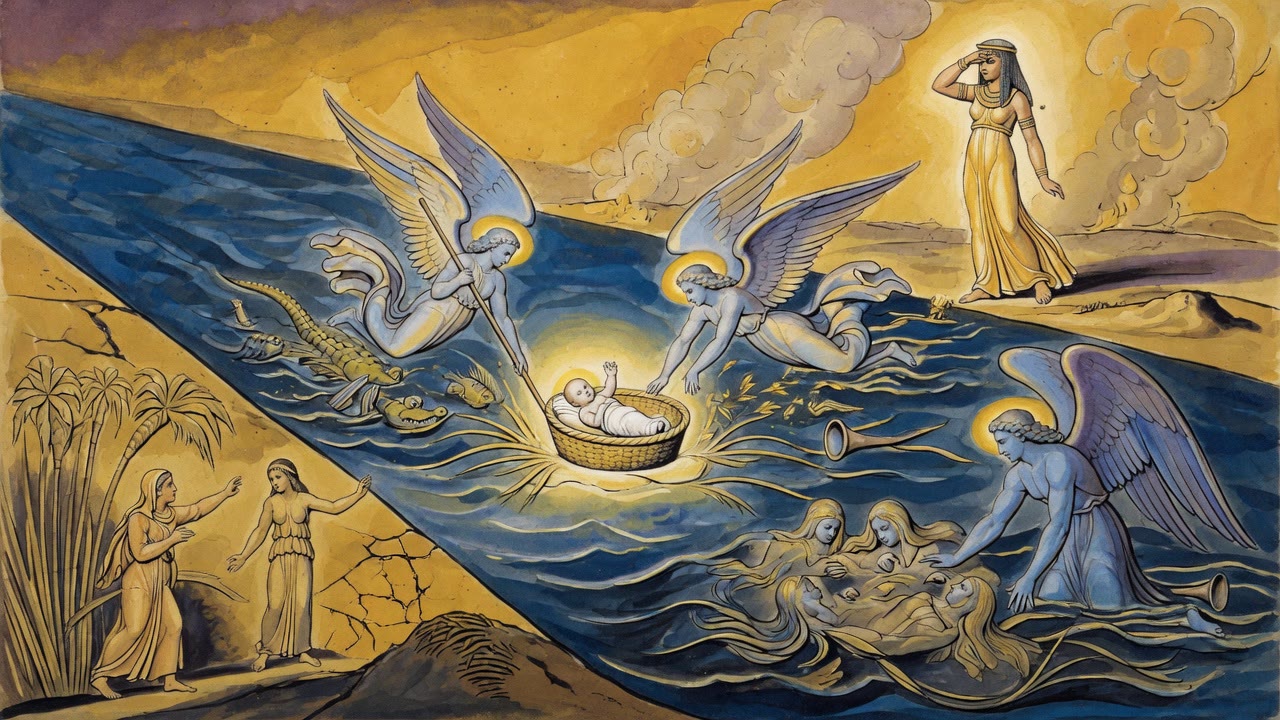
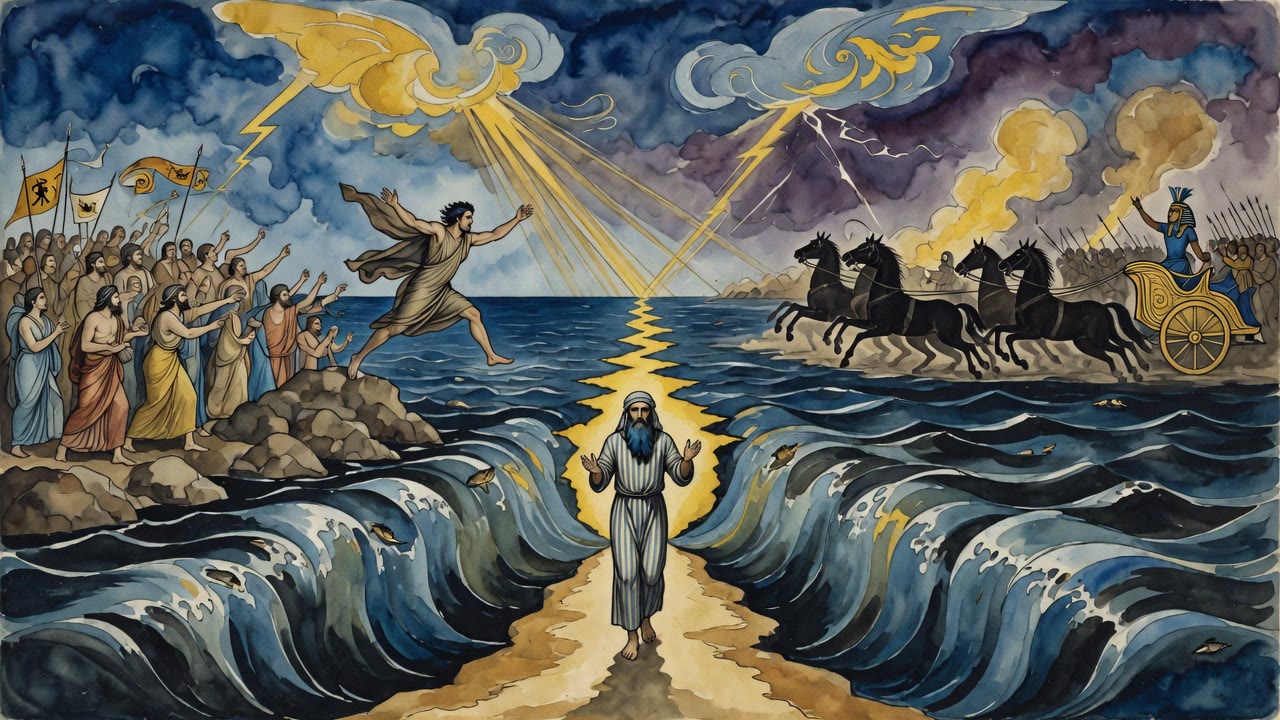
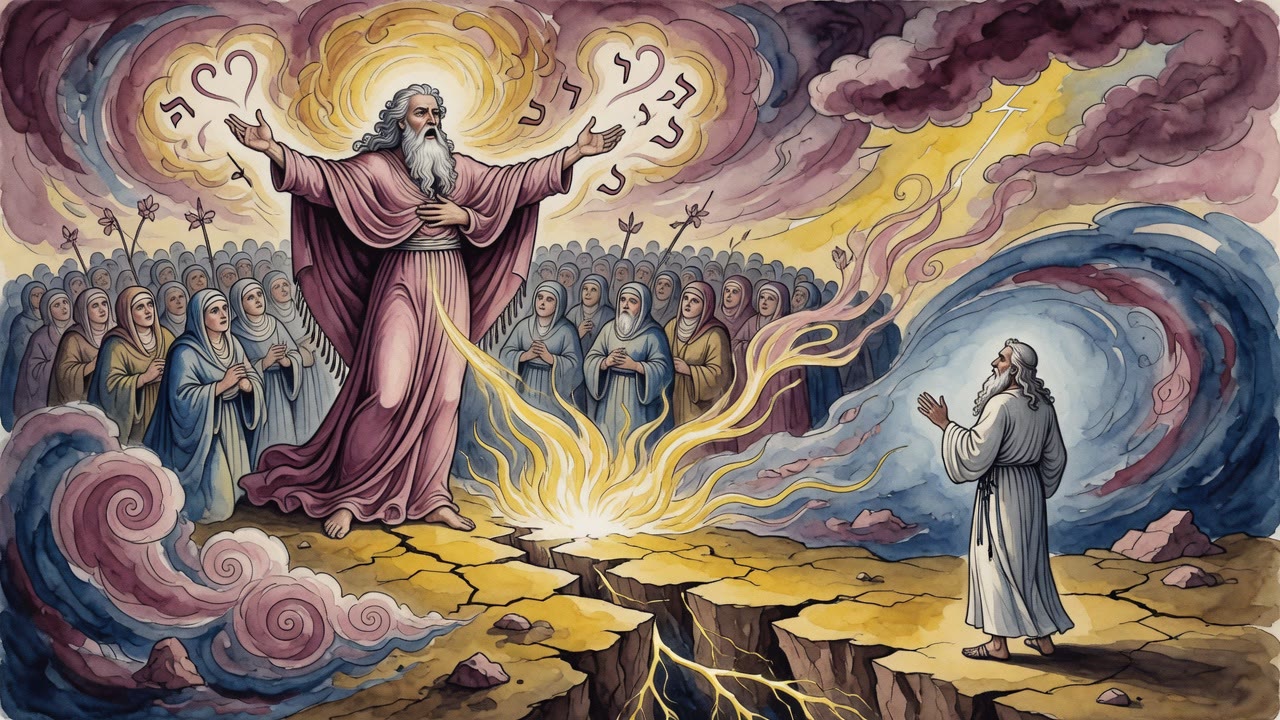
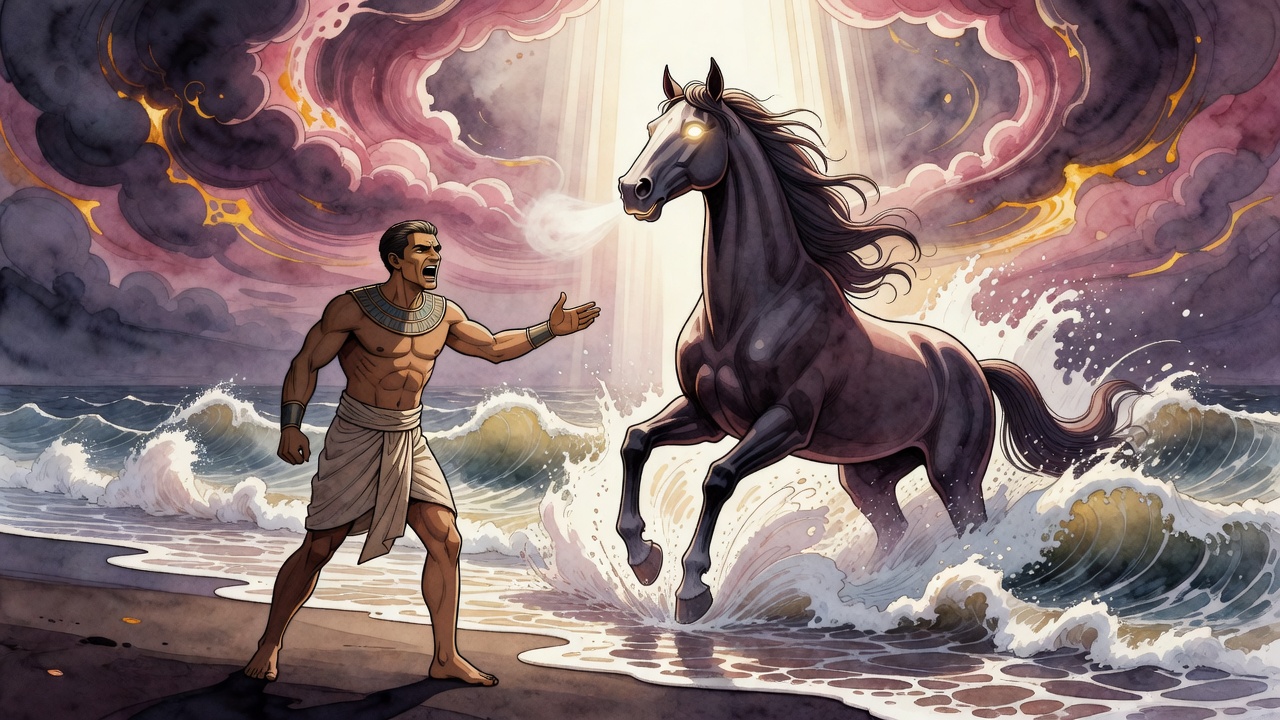
The sea stood open in two walls of water, and the water did not fall. Down the corridor of wet sand the last of Pharaoh's chariots slid backward into the returning waves, wheels still spinning, and the sound of drowning men carried across the channel. High above the throne the angels leaned forward with their mouths already shaping the first note.

They had watched all night. They had seen the pillar of cloud stand between the two camps, seen the waters rear back before a wind that blew until morning, seen a whole nation walk out of slavery on a dry road cut through the deep. Now the enemy was gone under the sea, and every host of heaven wanted to be first to praise the One who had done it.

God Silenced the Choir for the Sake of His Children

"My hosts are in distress," God said, "and you would recite song before Me?"

The angels went still. All that night the two camps had stood across the divided water and one had not approached the other. The same words that measured the distance between Israel and Egypt, this one calling to that one, were the words heaven kept for its own holiest music, when one burning creature calls across to another and they answer that the Lord of hosts fills the whole earth with His glory. On the night of the sea that calling stopped. The seraphim who never tire of singing were told to wait, because the children who had just come up out of the grave of the water had not yet opened their mouths.

The King Whose Son Came Back From Capture

It was, heaven learned, like a king whose son had been seized and carried off, and then brought home alive. When the boy was returned, the whole household pressed forward to praise the king for the rescue. But the king raised his hand. Let the son speak first, he said. He is the one who was bound. He is the one who tasted the fear.

So it was at the water. The servants of the palace could sing tomorrow, or in a thousand years, for they do not die. The children of Israel were flesh and blood, and flesh and blood must sing while it still has breath. There is a word at the head of their song, and the word does not say "then they sang." It leans toward "then they will sing," as if a door were being held open for a voice that had not yet come. Let Moses and the children of Israel sing first. Only after them the musicians of heaven.

The Word That Meant They Finally Believed

Rabbi Abahu stood over a knot in the verses and would not let it go. In Egypt, before a single plague had fallen, it was already written that the people believed. And another verse says their ancestors in Egypt did not comprehend His wonders at all. Which was it? Had they believed, or had they not?

Both, he taught, and neither was yet the whole of it. In Egypt they had a belief that came and went, a hope that flickered when the taskmaster turned his back and died when the whip came down. Real faith, the kind that forces a song out of a throat, had not yet been born in them. It was born at the sea. When they watched the hand that grasps judgment close on their masters, when they saw the water fold the chariots under and not one rider rise, then they believed.

The song opens on one small word, az (אז), "then." Abahu heard faith hidden inside it. It is the same word that follows Joseph through the house of his Egyptian master. From the hour Potiphar set him over everything he owned and the blessing came upon the house, Scripture marks the turn with that same "then." It is the word of a master who hands over every key and keeps nothing back, the word of total trust. On the shore that trust broke open in Israel all at once. The spirit of God settled on them, and the song came up out of them like water finding its level.

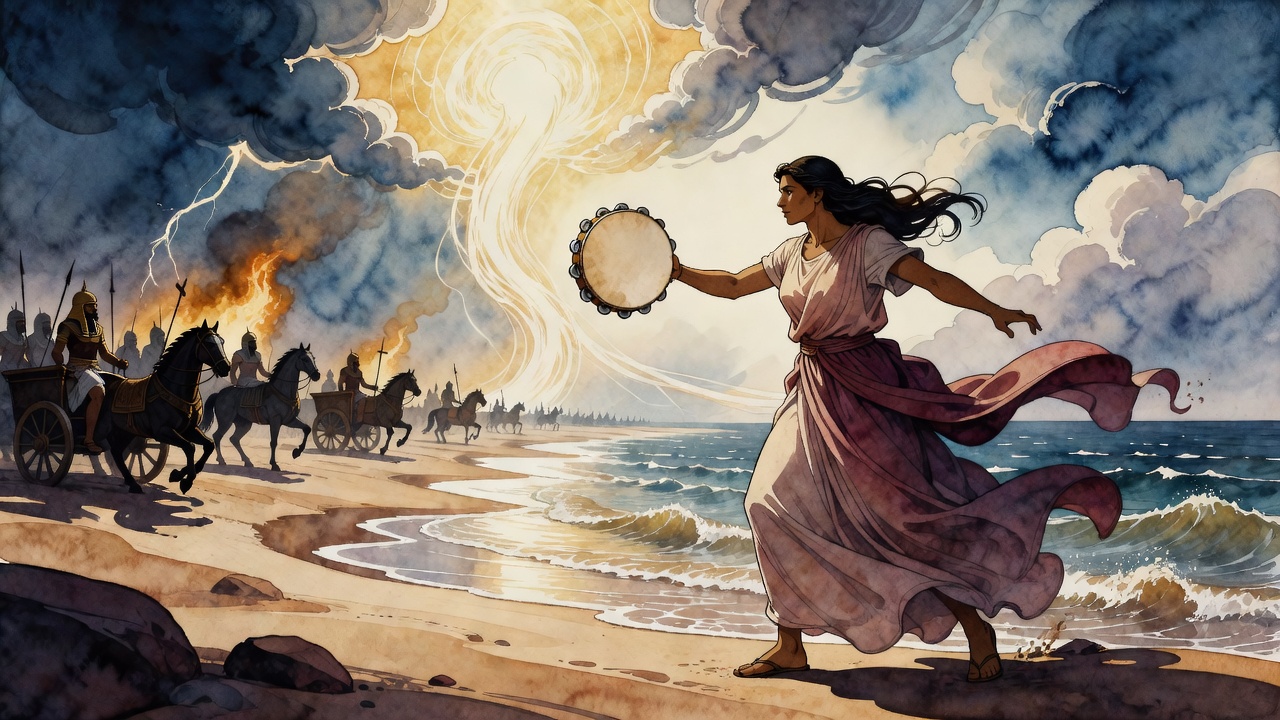
The women went out after the men with drums already in their hands, and Miriam the prophetess led them, dancing, into the sound that had begun.

One Song in a Chain of Ten

The song at the sea was not the first song, and it would not be the last. The sages count ten of them strung across all of time, ten moments when rescue broke into the world and someone answered it aloud. The night of the Passover in Egypt had its song. The sea had this one. There would be a song at the well in the wilderness, a song at Sinai when the mountain smoked, the songs of kings and prophets, and at the far end of the count a song not yet sung, kept for the age when the last enemy falls and does not rise again.

Every link in that chain remembers a morning. The morning God looked down through the cloud on the Egyptian camp and threw it into panic. The morning the ground lay white with manna. The morning the mountain shook and a whole people stood trembling at its foot. And behind each rescue stood the same refuge, the fortress that held against Pharaoh, against Amalek, against every hand that would ever rise to swallow them. Moses stood on the wet sand with the water still walled on either side, and he opened his mouth, and the melody he set that morning is the one heaven has been waiting its turn to sing ever since.


← All myths
From the tradition

Sources

3 sources

The texts behind this telling. Some cards carry a translation of the source; others are our own retelling of it, and each card says which. Every card links out to the original.

Shemot Rabbah 23:6Shemot Rabbah

Retold in our words. Read the original at the link below.The Sefaria Midrash Rabbah, 2022 · CC-BY

" around the Passover table, I promise you that. Our Sages understood that the Exodus wasn't just a one-time event; it was a template for all future salvations. And music? Well, music is the language of the soul, especially in times of both distress and deliverance.

Shemot Rabbah, a classical collection of Midrashic (rabbinic interpretive commentary) interpretations on the Book of Exodus, gives us a peek into this very idea. It asks: what exactly were Moses and the Israelites singing about at the Sea of Reeds?

The verse in question is (Exodus 15:1), "Then Moses and the children of Israel sang this song to the Lord." But the Midrash doesn't just take it at face value. Instead, it connects this moment to other verses in the Hebrew Bible, creating a tradition of meaning.

It starts by linking the song at the sea to (Psalm 59:17): "But I will sing of Your might; I will sing aloud of Your mercy in the morning, [You were a fortress for me and a refuge on the day of my distress]."

Now, on the surface, this looks like a simple statement of praise. But the Midrash sees layers. "I will sing of Your might" – this, it says, refers to the future, to a time of ultimate redemption. As (Isaiah 12:1-2) puts it: "Behold, God is my salvation; I will trust and I will not fear; for God is my might and song." It’s a song of future hope, a promise of God's unwavering strength.

And what about "I will sing aloud of Your mercy in the morning"? The Midrash connects this to the morning of judgment, a time of reckoning. As (Isaiah 21:12) says, "The watchman said: Morning comes and also night." It’s a time of both hope and trepidation, of new beginnings emerging from darkness.

Then there's the line "You were a fortress for me and a refuge on the day of my distress." According to the Midrash, this speaks to specific future trials: the conflicts with Edom, and the apocalyptic battles against Gog and Magog. These are not just historical events, but symbolic representations of the ongoing struggle between good and evil.

But let’s bring it back to the Sea of Reeds. The Midrash then asks: when did this singing of might occur? And it answers: when Israel was standing at the sea, reciting the song. What did they say? "The Lord is my strength" (Exodus 15:2). It's a cyclical thing: the song inspires, and then it echoes through the ages.

The Midrash goes on to explore the significance of "the morning" in the song. Was it the morning when God looked down on the Egyptian encampment (Exodus 14:24)? Or the morning when manna first appeared in the desert (Exodus 16:13)? Or perhaps the morning of the giving of the Torah at Mount Sinai (Exodus 19:16)?

Each of these mornings represents a moment of divine intervention, a turning point in Israel's journey. Each one a reason to sing. Each one a new opportunity for hope.

And finally, the Midrash connects God being a "fortress" and "refuge" to specific enemies: Pharaoh and Egypt, and Amalek. These are not just enemies of the past, but timeless symbols of oppression and hatred.

So, what does all this mean?

The song at the Sea of Reeds wasn't just a one-off celebration. It was a powerful declaration of faith, a recognition of God's enduring strength and mercy. It was a song that echoed through history, connecting past, present, and future. It was a song that reminded the Israelites, and reminds us today, that even in the darkest of times, God is always there, a fortress and a refuge. What are the songs that sustain you? What verses do you cling to when facing your own personal "Pharaohs" and "Amaleks"? Perhaps the ancient songs of our ancestors can offer us a timeless source of strength and hope, reminding us that even after the longest night, the morning always comes.

Full source
Shemot Rabbah 23:7Shemot Rabbah

Retold in our words. Read the original at the link below.The Sefaria Midrash Rabbah, 2022 · CC-BY

The story begins, as The familiar version gives us, with the parting of the Red Sea. A moment of unimaginable salvation for the Israelites, fleeing slavery in Egypt. Moses leads the people, and as they cross to safety, the waters crash down on Pharaoh's pursuing army. Liberation! Naturally, everyone wanted to sing God's praises.

Who goes first?

The Shemot Rabbah, a compilation of rabbinic interpretations on the Book of Exodus, explores this very question in section 23. It quotes (Psalm 68:26), "The singers first, then the musicians." But who are these singers and musicians?

Rabbi Yoḥanan offers a fascinating perspective. He suggests that the angels themselves wanted to sing praises to God that very night. The celestial choir, ready to burst into song. But, according to Rabbi Yoḥanan, God wouldn't allow it.

Why? Because, as God says, “My legions are in distress, and you are reciting song before Me?” The text alludes to (Exodus 14:20), "One did not approach the other [zeh el zeh] throughout the night.” Zeh el zeh, literally "this to this," echoes the angels' own cries of holiness in (Isaiah 6:3): "One called the other [zeh el zeh] and said: [Holy, holy, holy, is the Lord of hosts; the whole earth is full of His glory]."

So, the angels are ready, willing, and able. But God tells them, essentially, to hold their horses. Let the Israelites sing first. It’s not that God is diminishing the angels, but rather, prioritizing the vulnerable.

Shemot Rabbah explains that God says, “Let My children go first.” It points out that the verse in (Exodus 15:1) doesn't say "az shar" (then sang, past tense), but rather "az yashir" (then will sing, future tense). The Divine decree is, "Let Moses and the children of Israel sing [yashir] first.”

It’s like a king whose son was captured and then rescued. The palace residents want to celebrate the king, but the son, the one who was actually in peril, also wants to express his gratitude. Who should go first? Naturally, the son!

The Midrash (rabbinic interpretive commentary) explains that the Israelites, flesh and blood, needed to sing their song before they succumbed to mortality. The angels, being immortal, could sing anytime. This is about giving precedence to those who experienced the salvation most directly, those whose lives were on the line.

That's why David says, "The singers first" – these are the Israelites who stood at the sea. "Then the musicians" – these are the angels.

And let's not forget the women! (Psalm 68:26) continues, "In the midst of young women drumming." This refers to the women, led by Miriam the prophetess, who took up their timbrels and danced in celebration, as we see in (Exodus 15:20). It was a full-throated, embodied expression of joy and gratitude.

So, what does this all mean for us? It highlights the importance of recognizing and prioritizing the voices of those who have directly experienced hardship and salvation. And it suggests that even the angels can wait their turn, allowing human voices to rise in praise first.

Full source
Shemot Rabbah 23:2Shemot Rabbah

Retold in our words. Read the original at the link below.The Sefaria Midrash Rabbah, 2022 · CC-BY

The ancient Israelites, fresh out of Egypt, knew that feeling all too well.

We find a fascinating glimpse into this in Shemot Rabbah, a collection of rabbinic interpretations on the Book of Exodus. Specifically, (Exodus 15:1). But what prompted this song? What was the spark that ignited their praise?

The verse "They believed in His words, they sang His praise" (Psalms 106:12) provides the key. Rabbi Abahu points out a crucial tension. It says in (Exodus 4:31), "The people believed" while they were still in Egypt. So, were they already believers? Did they already have faith?

, says Rabbi Abahu. He then quotes (Psalms 106:7): "Our ancestors in Egypt did not comprehend Your wonders." It’s a stark reminder that belief isn't always a straight line. It's a journey, a process of fits and starts. They might have thought they believed in Egypt, but true faith, the kind that inspires song, was still to come.

So, what changed? What pushed them over the edge from tentative hope to full-throated praise? The sea. The moment they witnessed the full might of God, the way He enacts justice, as it says, "My hand grasps judgment" (Deuteronomy 32:41) and saw the Egyptians swallowed by the waves. That's when "They believed in God" (Exodus 14:31).

Az. That little Hebrew word, meaning "then." "Then Moses and the children of Israel sang." Shemot Rabbah tells us that az signifies faith. It's more than just a temporal marker; it's a spiritual marker. The text draws a parallel to (Genesis 39:5), "It was from when [me’az] he appointed him in his house." This refers to Potiphar trusting Joseph completely and putting him in charge of his household. The word az, in this context, shows a complete trust, a total faith.

In other words, the song wasn't just a reaction to being saved. It was an expression of a newfound, unwavering faith. Az – the moment of true belief, the moment the Divine Spirit rested upon them, and the moment the song burst forth. "They believed in His words, they sang His praise."

Perhaps it's a reminder that faith isn't a static thing. It's not a box we check and then move on. It's something that needs to be constantly renewed, constantly tested, constantly deepened. And sometimes, it takes seeing the awesome power of the Divine, witnessing a miracle, to truly believe. It takes an az moment.

Full source